

Comparing CBD Oil vs Gummies for Pain, Anxiety, and More

0

CBD shows promising results in easing various conditions. Preliminary research and feedback from consumers reveal that the cannabinoid may help with wellness issues like pain, anxiety, depression, and insomnia. The market offers a wide range of CBD products to use, and CBD oil and gummies are the most popular options. They come in different potencies to ensure every user gets the CBD strength they need. Below is a guide comparing CBD oil vs gummies to help you decide which product to utilize for relief. 

Key Differences Between CBD Oil and Gummies 

CBD oil and gummies differ in various ways. One obvious difference is form. CBD oil is a liquid that comes mostly in dropper bottles. Many brands offer CBD oil in 30ml bottles, and some provide higher quantities like 60ml.  Manufacturers also provide CBD oil in different strengths to match the needs of consumers. The added dropper on the packaging helps you measure accurate servings of CBD oil. The market has unflavored CBD oil and flavored options like mint, citrus, mint, and vanilla. 

On the other hand, CBD gummies are delicious chews that come in pouches and jars. Some brands give you one flavor per container, while others include gummies of different flavors in each jar. Besides, each gummy contains a proportioned amount of CBD, so you do not have to measure servings. 

The two products also vary in the mode of consumption. The recommended way to use CBD oil is sublingually, where you administer drops under the tongue and wait for a few seconds before swallowing. This method allows fast absorption of CBD oil for quick relief. CBD gummies go through your digestive system before you can feel the effects of CBD in your system. For that reason, it takes longer for the effects to kick in when using CBD gummies. 

Which One Is Better for Anxiety, Pain, and Sleep

The better product between CBD oil vs gummies depends on the effect you are looking for and the symptoms you have.  If you need the effect of CBD to last longer in your system, gummies give you that advantage. You can take them in the morning and enjoy CBD benefits throughout the day. However, these edibles can take up to an hour for you to feel the effects.  

When you need quick relief from anxiety, or depression, taking CBD anxiety relief oils is the product to use. However, taking the oil may also provide relief from pain and reduce stress level for better sleep. Sublingual consumption delivers CBD oil quickly into your system through the blood vessels in the mouth. Holding CBD oil under your tongue for a few seconds ensures more absorption before the rest of the formulation enters your gut. 

Both CBD oil and gummies may alleviate anxiety, pain, and insomnia. The difference is in the absorption rate and how long the effects last.  You should feel the effects of CBD oil in 15-20 minutes. If you are taking CBD gummies for sleep, ensure you ingest them early enough before bedtime.  

Pros and Cons of CBD Oil

CBD oil has several advantages. The product comes in various strengths, including low, mid-range, and high. Some brands provide as high as 7500mg of CBD in 30ml bottles. That way, every user uses the CBD concentration suitable for their bodies. Besides, adjusting the dosage using the provided dropper is easy. 

CBD oil also absorbs fast in the body to provide quick relief in a few minutes. The sublingual method increases its bioavailability to ensure your body takes in as much CBD oil as possible. 

On the downside, using CBD oil requires you to measure servings, which can be an inconvenience when on the go. Moreover, applying the oil under your tongue is not a discreet way to use CBD. You might attract unwanted attention when in public.

Pros and Cons of CBD Gummies

All CBD gummies come in mouth-watering, flavored options like berry, citrus, and tropical. They are easy to consume when busy. It is a matter of throwing one in your mouth and begin enjoying the benefits. Additionally, gummies have a pre-measured amount of CBD, so you do not have to measure servings. They ensure discreet CBD consumption since they resemble ordinary gummies. The effect of CBD gummies also lasts longer than that of CBD oil. That is not all. Gummies come in various quantities. 

Many CBD brands offer them in 30-count packs, but some provide larger packs like 120-count and 60-count options and lower sizes like 5-count and 20-count pouches. If you are new to CBD gummies, starting with a smaller pack would be prudent, as it allows you to establish if you like the flavor and effect. Some brands even provide sample packs for CBD gummies.  

However, adjusting the CBD dose in gummies is not easy. Low-potency edibles can be easier to adjust the dosage since you can take more than one chew per serving. Gummies also take longer to be effective in the body. They can take as much as an hour for you to feel the relief you need. 

It All Comes Down to User Preference, Right? 

There is no better choice between CBD oil vs gummies. Both products provide relief for pain, insomnia, and anxiety, among other symptoms. They differ in consumption methods, how fast the effects kick in, and how long the relief lasts. When one product has a downside in one aspect, the other has the upside. 

Choosing between CBD oil vs gummies comes down to preferences. CBD oil offers relief faster and has high bioavailability, but it is not discreet, and its CBD effect does not last as long as gummies.

On the other hand, CBD gummies are delicious, discreet, convenient for on-the-go use, and their effects last longer than oil. However, CBD gummies have a lower bioavailability than oil and take longer for the effects to kick. Choose the product you prefer depending on the comparisons we have discussed.   

So, Which One Should You Pick? 

Despite both products being great choices, CBD oil has the upper hand. The market provides flavored CBD oil, and you get the formulation in different potencies. Besides, it has a higher bioavailability and absorbs faster into your body than CBD gummies. Furthermore, you can easily adjust CBD oil dosage, unlike CBD gummies. The effect of CBD oil can last for 2-4 hours, while that of gummies can go for 4-6 hours. The discrepancy is not that huge.


What You Need to Know Before Taking Out a Loan

0

Online loans, in general, have made it possible for individuals to access quick cash from anywhere, anytime. However, with the many fast loans available today, people need to be keen to ensure they make the right decision regarding taking out a loan. 

Below are a couple of things individuals need to know before taking out a loan. 

Your Credit Score Matters

An individual’s credit score plays a significant role in taking out a loan, especially unsecured online loans. A person’s credit history demonstrates their demonstrated responsibility in paying loans. 

With this information, lenders can determine how much money they can give the borrower, the interest rates they’ll charge the borrower, whether or not they’ll give the individual a loan in the first place, and so on. 

There are many things that determine a person’s credit score. This includes their loan repayment history, the length of their credit history, and the number of unpaid loans under their name, to name a few. 

So, individuals need to ensure that they have a good credit score to be on the good side with most lending institutions.

Don’t Settle On the First Lender You Come Across

The beauty of the internet is that individuals can find out about almost anything. So, people shouldn’t settle on the first lender they come across. 

Take time and compare fast loans from different lenders. Find out about their interest rates, additional fees, and loan repayment terms. It’s also best for individuals to determine whether or not that particular lender is legit. 

Pay Attention to the Loan’s Terms And Conditions

All online loans have a particular set of terms and conditions that basically state the borrower’s expectations. This includes the period they are given to repay the loan and the interest they are supposed to pay. 

Individuals should go through these terms and conditions before taking out online bank loans. For starters, it will help them know their obligations in regards to paying back the loan. For instance, one will know when they will be making their monthly loan repayments. 

What’s more, these terms and conditions will help the individual make a more informed decision on whether or not that particular consumer credit is the ideal one for them. 

There Are a Set of Qualifications One Has to Meet to Qualify for a Loan

Other than the credit history, there are other qualifications borrowers have to meet to qualify for bank loans or loans from other lending institutions. Of course, these requirements vary from one lender to another.

Some common qualifications include a stable income source and a low debt-to-income ratio, to mention a few. Borrowers need to be aware of the lender’s requirements to know whether or not they qualify to apply for consumer credit.

There Are Additional Fees You’ll Need to Pay Other Than the Interest

Apart from the interest, lenders charge borrowers additional fees once they qualify for a loan. The most common is the origination fee, also known as the service fee. Loan lenders charge this fee for processing a borrower’s loan. 

Some lenders deduct this fee from the initial loan amount, while others allow borrowers to pay for it when repaying their loans. Other common charges include prepayment fees, late loan repayment penalties, and loan application fees, to mention a few. 

Knowing about these charges will give the borrower a rough idea of the overall cost of the loan. This, in turn, helps them decide whether that particular loan is the best one for them. 

Not All Lenders Are Trustworthy

With the many people needing online loans today, scammers have found an opportunity to scam unsuspecting individuals. Borrowers need to look past the attractive offers lenders have, such as low-interest rates, and no qualifications required, to name a few. 

So, how can one know whether or not a lending platform is legitimate? For starters, the lender doesn’t have any requirements. They promise people they can get loans regardless of their credit score, income, etc. 

Sure, some lenders offer loans to borrowers with poor credit scores. However, these lenders have different requirements, such as proof of a stable source of income and a co-signer. But, if a lender assures individuals that they can get loans without meeting qualifications, they must have a trick up their sleeve. 

Another sign that a lender may be a fraudster is if they ask for confidential information. It could be credit card details or bank account details, to mention a few. Usually, reputable lending platforms don’t ask for this information. Instead, they ask for the borrower’s bank account and credit card statements. 

Finally, individuals should check reviews about a particular lender before taking out a loan. Nowadays, many trustworthy review sites provide honest reviews about different lending institutions. Some even take a step further by having a blocklist of fraudster lenders. 

Conclusion

Taking out a loan is a big financial decision, regardless of the purpose of the loan. That is why borrowers need to consider as many factors as possible to ensure they make the right decision on whether or not that loan is the ideal one for them.

Start-Up Companies Land Support from Charlotte’s Joules Accelerator

0

The Duke Energy Foundation will fund a program that will allow college students to help energy startups – working with local neighborhoods to bring decarbonization programs to underserved communities in the Carolinas.


The Foundation recently awarded $96,000 to Joules Accelerator – a Charlotte-based nonprofit that helps foster clean energy startups.

“Duke Energy has been a long-time supporter of Joules Accelerator,” said Brian Savoy, Duke Energy’s chief strategy and commercial officer. “This grant will bring students into the program to help energy startups integrate cleantech programs in our local areas.”

The grant will support the creation and deployment of a new program – Joules Camp. Six student interns will work alongside energy startups to provide sustainable energy solutions for communities throughout the Carolinas.

A student intern will work with each pilot effort to improve resiliency and sustainability for a community, provide revenue for small businesses and provide a comprehensive “Joules Camp Story” that showcases how the funding is benefiting the community.

“These are the early days of what we’re now calling Cleantech 2.0,” says Bob Irvin, executive director of Joules Accelerator. “Today, we see an explosion of interest in meeting climate goals through corporate innovation, venture capital investment, university and national laboratory research and national policy initiatives. Our focus is providing early-stage entrepreneurs with the right advisory team to gain market traction in the Carolinas.”

The camp will advance the principles of diversity, equity and inclusion – ensuring that at least one-half of interns are from underrepresented backgrounds, and half the pilot communities are underserved.

Joules Accelerator works to identify, advise, connect and deploy early stage climate startups with the energy network of the Southeast and beyond. Joules moves quickly to make warm connections to relevant stakeholders and to find revenue-generating pilots and other commercialization opportunities for startups. Network members include Duke Energy, Microsoft, S&C Electric, EY, UNCC, the city of Charlotte and more.

Joules presents 12 startups through two cohorts per year. Each cohort lasts 90 days and requires two-four hours per month for meeting with potential customers. The program is free for startups, free to apply and does not take equity.

Crescent Communities Launching Charlotte’s First Single Family Build-to-Rent Business

0

Charlotte’s own Crescent Communities has just announced the addition of an interesting new product segment – build-to-rent homes.

They’ve selected the high-growth markets of Atlanta, Charlotte, Charleston, and Raleigh to test out the new concept.

Each built-to-rent community will consist of approximately 100 – 200 residences, with a combination of three- and four-bedroom townhomes and/or detached single-family houses.

Recognized for innovative leadership and design, Crescent Communities currently builds over 10,000 homes annually and has developed over $6.3 billion of multifamily and commercial developments across the country.

“As a best-in-class real estate developer, we have an opportunity to address the growing demand of single-family rentals and to create additional housing in the U.S. through a highly desired product in purpose-built rental communities,” said Crescent’s Tony Chen, who will be spearheading the new concept.

What do you think about the new idea? 

3.6 Magnitude Earthquake Knocks Out Power For Hundreds in South Carolina

0

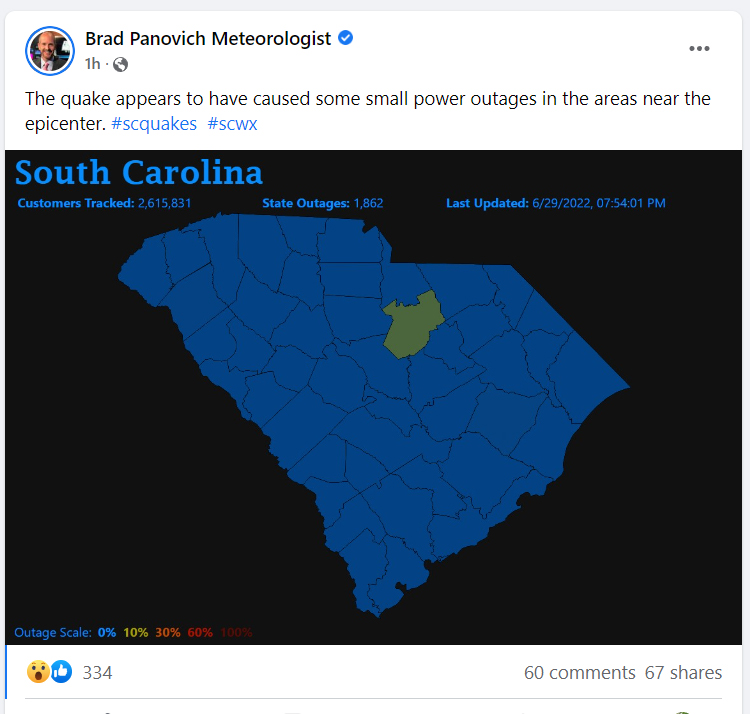
Two of the biggest earthquakes South Carolina has seen in decades have just rattled the heart of the Palmetto State and knocked out the power for hundreds of residents.

According to the USGA, the quakes struck about 4 hours apart from each other a few miles East of Elgin, SC. The shaking was felt as far away as North Charlotte and North Charleston.

According to meteorologist Brad Panovich, the larger of the 2 quakes (3.6m) knocked out the power for over 1,800 residents.

The rumbling of the Palmetto State started last year when a significant 3.3 magnitude earthquake struck Elgin, South Carolina (about 50 miles south of Charlotte) the day after Christmas, followed quickly by 2.5, 2.1, and 1.7 magnitude aftershocks.

According to the USGA, the quakes had epicenters roughly halfway between Lugoff and Elgin, SC – all about an hour south of Charlotte.

Earthquakes have been increasing in frequency around the Charlotte region over the past few years. Last year, we experienced the largest earthquake in over 100 years when a 5.1 magnitude quake hit Sparta, NC, and since then, dozens of aftershocks have continued to rattle our state.

According to USGS.gov, “Moderately damaging earthquakes strike the inland Carolinas every few decades, and smaller earthquakes are felt about once each year or two.”

Have you felt any of the quakes? 

NC’s “Task Force Dragon” Returning Home From Eastern Europe

0

Over 300 U.S. Army paratroopers from North Carolina have just touched down at Pope Army Airfield

The squad was part of ‘Task Force Dragon‘, a strategic assembly of various military forces commissioned with deterring Russian aggression in Eastern Europe’s NATO countries amid the ongoing war in Ukraine. The task force was established in South Eastern Poland, consisting of over 5,000 troops from the 82nd Airborne, 101st Airborne, and 16th Military Police Brigade.

Yesterday afternoon, in the hanger of Fort Bragg’s Green Ramp, hundreds of military family members held welcome home signs and anxiously waited to reunite with loved ones.

Fort Bragg said more paratroopers will be returning home from Europe in the coming weeks.

3rd CMPD Officer Shot Yesterday in NoDa

0

Yesterday a CMPD officer was shot in the leg while responding to call of a shooting in an occupied dwelling.


According to the official report, the officer was rushed to the hospital with non-life-threatening injuries.

The officer did not return fire and the suspect is still at large.

This now marks the 3rd incident in a week where CMPD officers have faced gunfire during a call for service.

CMPD Chief Johnny Jennings released the following message about yesterday’s incident and the recent rise in officers being shot.

The Shark Week Blimp Is About To Fly Over Charlotte

0

Discovery Channel’s legendary Shark Week is about to fly their massive Shark Week blimps over select cities in promotion of this year’s series.

There will be 2 blimps this year, one flying over select East Coast cities, and a second one flying over select West Coast cities. The East Coast blimp will be taking off on July 1st from Nashville, then will fly over Charlotte and Ocean City, MD on its way up to New York City.

Traveling approximately 250 miles per day, the East Coast blimp measures 128-feet long x 44ft high.

You can follow the blimps progress at Discovery.com/shark-week/blimp

The Future of Injectable Component Manufacturing: Trends and Innovations

0

Injectable components, which include devices and containers used for drug delivery, play a vital role in the healthcare sector. With the ever-increasing demand for precision medicine, biologics, and personalized healthcare, the injectable component manufacturing industry is evolving rapidly. Manufacturers are striving to keep up with these changes, adopting new technologies, improving materials, and ensuring the highest standards of safety and efficiency. 

Injectable component manufacturer plays a pivotal role in the development and production of high-quality devices used for drug delivery. These manufacturers are responsible for ensuring that injectable components, such as syringes, vials, cartridges, and autoinjectors, meet rigorous standards for safety, performance, and patient satisfaction. The complexity of biologic drugs and the rise of personalized treatments demand that manufacturers not only produce components that are compatible with these therapies but also ensure that they are easy to use, cost-effective, and compliant with global regulatory standards.

Key Trends Shaping the Future of Injectable Component Manufacturing

1. Rise of Biologics and Biosimilars

Biologics, including monoclonal antibodies, gene therapies, and vaccines, represent a significant portion of new drug development. These complex therapies often require injectable delivery systems due to their nature (e.g., proteins, peptides, and nucleic acids). As biologics continue to gain popularity, the demand for injectable components that can safely and effectively deliver these drugs will increase.

Biosimilars, the follow-on versions of biologics, also require advanced injectable delivery systems. Manufacturers will need to develop components that ensure consistency, stability, and safety across batches of these highly complex drugs. This shift towards biologics and biosimilars will drive innovations in injectable components, such as the development of more sophisticated prefilled syringes, vials, and autoinjectors.

2. Personalized Medicine and Custom Injectable Devices

As personalized medicine continues to emerge, there will be a growing demand for tailored drug delivery solutions. Personalized treatments, which are customized based on a patient’s genetic makeup, disease state, and response to therapy, may require individualized injectable components. These could include specialized syringes, custom drug formulations, or devices with dosage adjustments tailored to each patient’s needs.

The future of injectable component manufacturing will likely see the introduction of smart devices that can monitor patient conditions and adjust drug delivery accordingly. These devices will incorporate features such as connectivity for remote monitoring, automatic dose adjustments, and data collection for better treatment outcomes. This trend will lead to innovations in both drug delivery devices and their integration with digital health technologies.

3. Prefilled Syringes and Autoinjectors: Growing Demand

Prefilled syringes (PFS) and autoinjectors have been gaining popularity due to their convenience and safety. Prefilled syringes are particularly beneficial for patients who need frequent injections, such as those with chronic conditions like rheumatoid arthritis, diabetes, and multiple sclerosis. These devices eliminate the need for manual filling, reducing the risk of contamination and dosing errors.

Autoinjectors, which are designed to allow patients to self-administer injections, are especially important for biologic therapies. As the number of chronic conditions requiring injectable biologics grows, the demand for these self-administration devices will rise. Manufacturers will need to focus on improving the ergonomics, ease of use, and reliability of these devices to ensure patient compliance and reduce the risk of incorrect use.

The future of prefilled syringes and autoinjectors will also involve innovations in the materials used, with manufacturers exploring options like biocompatible plastics and silicone-free components to improve device performance, especially in sensitive drug formulations.

4. Advancements in Materials Science

The materials used in injectable components are constantly evolving. As injectable therapies become more complex, manufacturers are focusing on developing materials that ensure compatibility with biologic and high-risk drugs. For example, glass and plastic components are commonly used in the production of vials, syringes, and cartridges. However, glass can be prone to breakage, while certain plastics may interact with the drug formulation, leading to issues like leaching or degradation.

Future innovations in materials science will likely focus on improving the biocompatibility and stability of injectable components. Manufacturers are exploring the use of new polymeric materials, such as polyethylene terephthalate (PET), which are less likely to react with drugs and can be sterilized more effectively. Additionally, coatings and surface treatments will continue to evolve to enhance drug compatibility and prevent issues like protein aggregation or oxidation.

5. Needle-Free Injection Systems

Needle-free injection systems are poised to become an important trend in injectable component manufacturing. These devices use a high-pressure jet to deliver medications through the skin without the need for needles. This method of drug delivery is especially appealing for patients who have a fear of needles or require frequent injections.

Needle-free devices are already being used for vaccines and some biologic therapies, and their potential to improve patient comfort and compliance is significant. However, these devices face challenges in terms of cost, efficiency, and suitability for different drug types. Future innovations will focus on enhancing the design and functionality of these systems to make them more affordable, reliable, and widely applicable.

6. Integration with Digital Health Technologies

As digital health technologies continue to evolve, there is a growing trend toward integrating injectable components with mobile apps, sensors, and cloud-based platforms. These systems enable real-time monitoring of medication usage, patient adherence, and drug efficacy. Smart syringes and autoinjectors equipped with sensors can track the amount of medication delivered, send notifications to healthcare providers, and ensure that patients follow their prescribed regimen.

The integration of digital health technologies into injectable components will not only improve patient outcomes but also provide valuable data for clinical trials, product development, and post-market surveillance. This trend will drive innovation in both the design of injectable devices and the broader healthcare ecosystem.

7. Sustainability and Eco-Friendly Practices

As sustainability becomes a top priority across industries, injectable component manufacturers are increasingly focusing on reducing their environmental impact. This includes efforts to minimize waste, use recyclable or biodegradable materials, and reduce the carbon footprint of manufacturing processes.

For example, some manufacturers are exploring reusable injectors and packaging solutions that reduce the need for single-use devices and packaging. Additionally, the shift toward green chemistry and environmentally friendly manufacturing techniques will play a key role in the future of injectable component manufacturing.

Innovations to Look Forward To

1. 3D Printing for Custom Injectable Devices

3D printing, or additive manufacturing, has the potential to revolutionize the production of custom injectable devices. Manufacturers can create prototypes quickly and efficiently, leading to faster product development and the ability to design devices tailored to individual patients’ needs. This technology could also allow for the creation of more intricate, patient-specific drug delivery devices with complex features, such as personalized dosing regimens or ergonomic designs.

2. Biodegradable Injectable Components

With an increasing focus on sustainability and reducing plastic waste, biodegradable components are likely to become more common in injectable devices. Materials that break down over time without leaving harmful residues are being researched, and these could be used for syringes, needles, and even packaging.

Conclusion

The future of injectable component manufacturing is marked by rapid innovation and the adoption of new technologies aimed at improving patient outcomes and enhancing drug delivery. From the rise of biologics and personalized medicine to advancements in materials science, digital health integration, and sustainability, injectable component manufacturers must adapt to an ever-changing landscape. As these trends continue to evolve, the industry will witness more efficient, safer, and more patient-friendly drug delivery systems, ultimately contributing to better healthcare worldwide. The future looks promising for injectable component manufacturers, with exciting innovations on the horizon that will shape the way we approach healthcare delivery.

Truist Commits $120M to Strengthening Black, Latinx and Women-Owned Small Businesses

0

Yesterday, Bill Rogers, Chairman & CEO of Truist Financial Corporation, and Lynette Bell, President of Truist Foundation announced the bank’s $120 million commitment to strengthening and supporting Black, Latinx and women-owned small businesses across the country during an event at their Uptown Charlotte headquarters.  

As part of that overall commitment to small businesses, the company will make a $5 million national investment in Grameen America, including a $500,000 grant to Grameen America’s Charlotte portfolio, which will ultimately help generate $1.4 million in disbursements via 270 microloans to women entrepreneurs in one year. 

The bank’s new 2022 national commitment includes loans, investments and grants to organizations across the country, including:

  • Florida Community Loan Fund (FCLF) – $10 million
  • Local Initiatives Support Corporation (LISC) – $10 million
  • Empower the Change – $10 million
  • Grameen America – $5.5 million
  • Entrepreneur Backed Assets Fund (EBA) – $5 million
  • Minority Business Accelerator Fund (in conjunction with Cincinnati USA Regional Chamber) – $3 million
  • Asset Funders Network – $300,000
  • CommunityWorks – $300,000