Day 11 Of Charlotte’s COVID-19 ‘Stay At Home Order’ – Crowded Parks and Arrested Christians

0

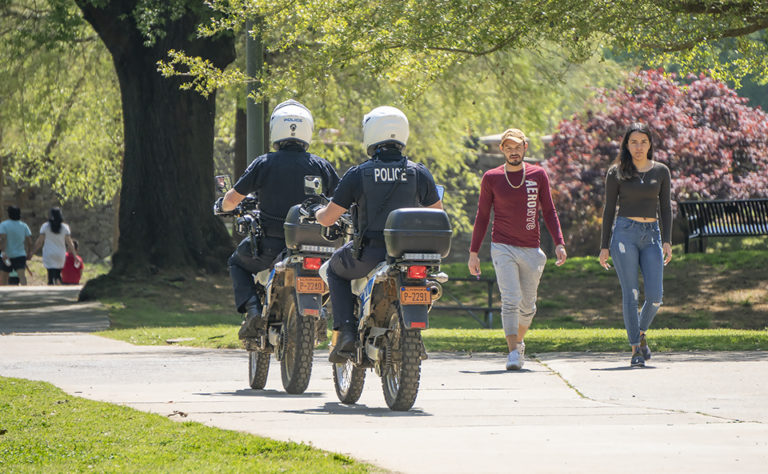
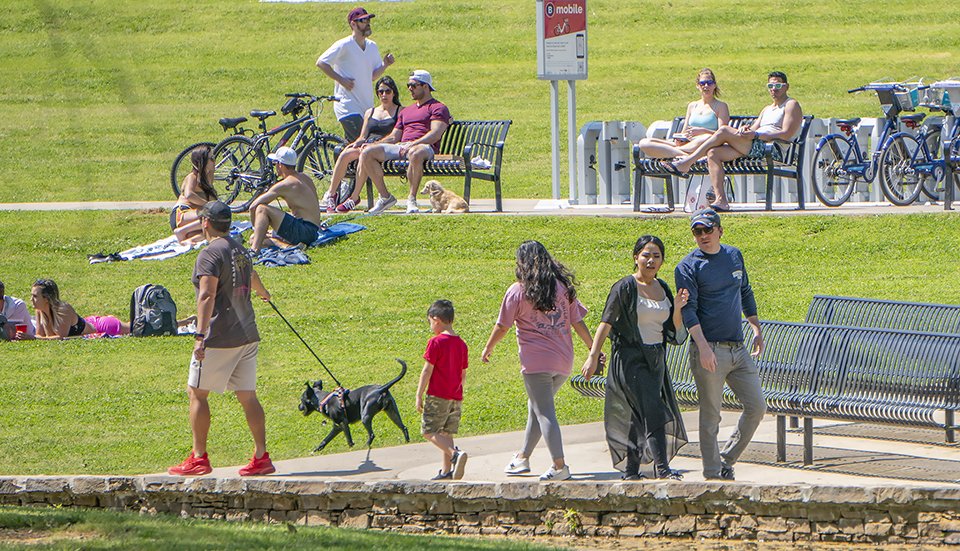
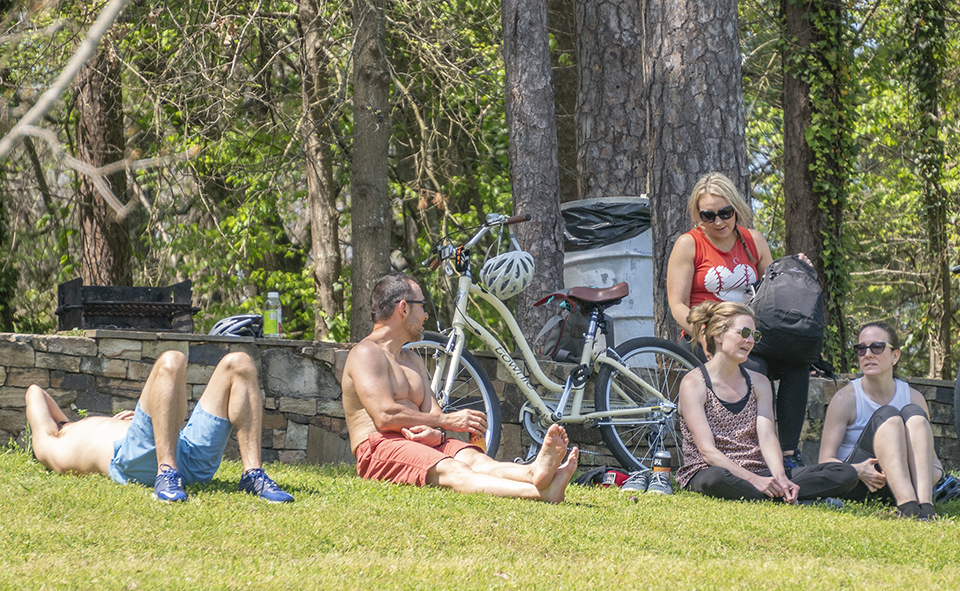
Last week I drove around Charlotte to see if the ‘Stay At Home Order‘ was being enforced, and to my surprise, I saw crowded basketball courts, crowded parks, and crowded river banks.

This weekend I drove around again to see if anything had changed.

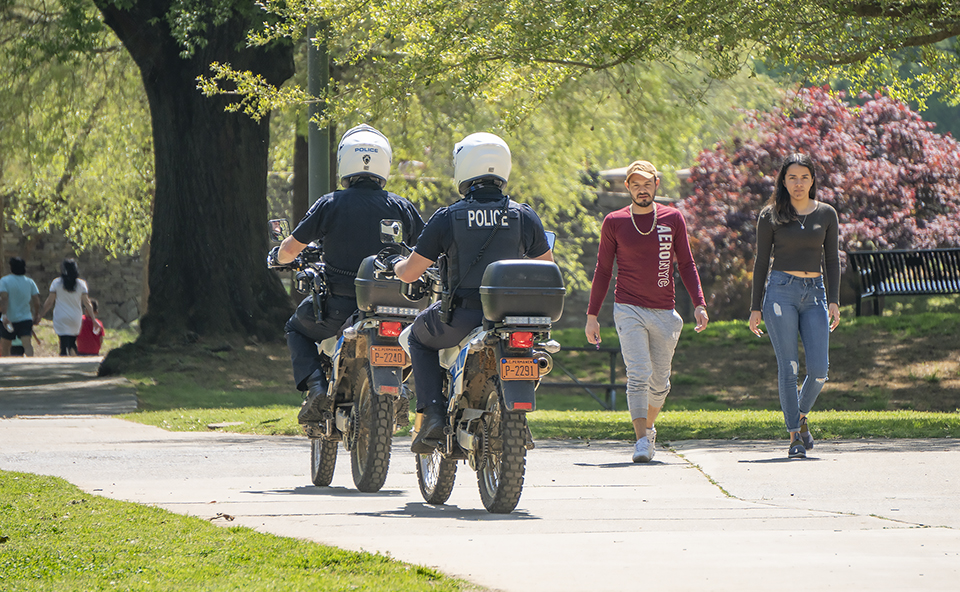
Today at about 2:00pm in Freedom Park, there were police officers stationed at the front entrance and paroling the paths, but I did not see any groups being broken up.

I saw even larger groups in close proximity this afternoon in Uptown Charlotte’s Romare Bearden Park and on the Catawba River.

This video was posted today by WBTV showing a volleyball game that took place today in Romare Bearden Park:

No arrests were made today.

Yesterday, however, several Christians with the Cities 4 Life ministry (deemed ‘essential’ under the order) were arrested in front of A Preferred Women’s Health Center on Latrobe Drive (Charlotte’s busiest abortion clinic);

The arrests got the attention of former presidential candidate Ted Cruz, who tweeted that it was an “unconstitutional arrest”.

Mecklenburg County now has 664 confirmed cases of COVID-19 and 6 confirmed COVID-19 related deaths.

What are your thoughts on our overall response to COVID-19? 

There Are Now Over 4,000 Confirmed Cases of COVID-19 and 53 Deaths Across The Carolinas

0

As of 10am on Saturday, April 4th, there are now over 4,000 documented cases of COVID-19 and 53 deaths from the virus across the Carolinas.

North Carolina Health Officials are now reporting a total of 2,336 cases and 19 deaths (601 cases and 3 deaths in Mecklenburg County) and South Carolina Health Officials are reporting 1,700 cases and 34 deaths, according to data collected by Johns Hopkins University.

In light of the spiking number of new cases, the CDC is now recommending that everyone wear “cloth face coverings in public settings where other social distancing measures are difficult to maintain (e.g., grocery stores and pharmacies)”. 

Beginning today, several major stores will be limiting the number of customers who are allowed to be in the store at the same time, including Walmart and Home Depot.

According to the CDC, patients with confirmed CoVID-19 infection have reportedly had mild to severe respiratory illness with symptoms of:

  • fever
  • cough
  • shortness of breath

CDC believes at this time that symptoms of CoVID-19 may appear in as few as 2 days or as long as 14 after exposure.

Large Gift From Belk Endowment Pushes Charlotte COVID-19 Response Fund to $15 Million

0

The John M. Belk Endowment announced it is donating $1 million to the COVID-19 Response Fund, a community-wide effort to assist Mecklenburg County residents affected by the coronavirus pandemic. The gift pushed the fund to the $15 million mark.

“Our team is honored to support the community at a time when the need is so vast,” said MC Belk Pilon, president and board chair of the John M. Belk Endowment. “Now more than ever, our community must come together to rise above these trying times.”

Foundation For The Carolinas and United Way of Central Carolinas launched the effort on March 16 to support a range of nonprofit organizations meeting the basic needs of those affected by the crisis, such as food, shelter, housing and emergency financial assistance. Individuals are urged to donate at HelpCharMeck.org.

The fund recently announced its first round of direct grants: $3 million to 14 nonprofits assisting those affected by the crisis. Local agencies and nonprofits are experiencing increased needs as local unemployment rates increase, school cancellations and stay-at-home orders cause disruptions, the economy tightens and those without health insurance face additional challenges getting the care they need.

“With this commitment to our community, MC Belk Pilon carries forward the John M. Belk Endowment’s critical work to provide opportunities that transform lives,” said Foundation For The Carolinas President and CEO Michael Marsicano. “Thanks to the John M. Belk Endowment and a host of community leaders and organizations, we’ve now raised more than $15 million in just over two weeks. While there’s more to do, I cannot thank enough all who have given so far.”

Donations have ranged from a two-dollar commitment from an anonymous online donor to $1.3 million from Mecklenburg County. Other gifts include $250,000 gifts from the Charlotte Mecklenburg Community Foundation, the Weisiger Fleming Family Fund and EY; $500,000 each from Ally Financial, the Duke Energy Foundation and the Knight Foundation; and $1 million gifts from LendingTree, the City of Charlotte, the Howard R. Levine Foundation, Truist Financial Corporation, Bank of America, the David A. Tepper Charitable Foundation, Lowe’s, the C.D. Spangler Foundation and Coca-Cola Consolidated.

A competitive grant cycle is now open for future grant awards. Mecklenburg County 501(c)3 nonprofits that meet eligibility requirements may apply. Grants are awarded by an advisory group of community members. Visit uwcentralcarolinas.org/grants/COVID for eligibility requirements and to apply.

“Generous donors like the John M. Belk Endowment ensure we can try to help all those who desperately need help,” said United Way of Central Carolinas President and CEO Laura Yates Clark. “The needs of our community are quickly escalating as our friends and neighbors lose their jobs or are forced to stay at home. Local nonprofits are besieged with requests to help, and it’s up to us to be there for them.”

The fund is administered through a partnership between Foundation For The Carolinas and United Way of Central Carolinas, in close coordination with the City of Charlotte and Mecklenburg County.

To contribute to the COVID-19 Response Fund, visit HelpCharMeck.org.

Charlotte Hospitals Request Field Hospital at UNCC Before Surge of Thousands of COVID-19 Cases

0

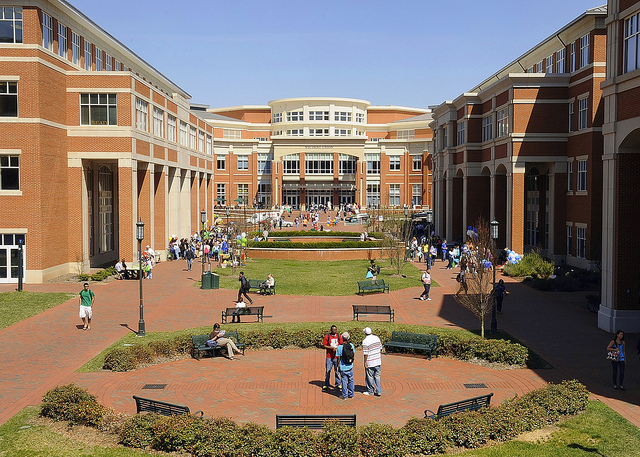
Leaders at Charlotte’s Atruim and Novant Health systems have just requested that Mecklenburg County and its partners build a massive “care field hospital” that would have the ability to treat up to 3,000 additional COVID-19 patients during the anticipated surge of infections.


Yesterday, Atrium CEO Eugene Woods and Novant CEO Carl Armato sent an official joint letter to the county saying that in spite of all actions taken thus far to curb the spread of the virus, their hospitals will likely be overrun in the coming weeks.

“Our models suggest the surge will occur between mid-April and mid-May 2020. As seen in other cities across the nation, such a surge can quickly overwhelm hospitals, and a field hospital can act as an important relief valve. Therefore, the time to act is now to implement solutions needed to adequately care for our patients and community.

That is why we are requesting the County, in coordination with the State of North Carolina, take immediate action to provide the funding and resources required to establish a field hospital on the campus of the University of North Carolina at Charlotte.”

At this point, Mecklenburg County has 533 residents who have tested positive for COVID-19, and 3 reported deaths.

According to the CDC, patients with confirmed CoVID-19 infection have reportedly had mild to severe respiratory illness with symptoms of:

  • fever
  • cough
  • shortness of breath

CDC believes at this time that symptoms of CoVID-19 may appear in as few as 2 days or as long as 14 after exposure. This is based on what has been seen previously as the incubation period of MERS viruses.

North Carolina has the 2nd Biggest Increase in Unemployment Due to Coronavirus

0

With the U.S. experiencing a record number of initial unemployment claims, WalletHub today released its report on the States with the Biggest Increases in Unemployment Due to Coronavirus.

To identify which states have experienced the largest unemployment increases, the site compared the 50 states and the District of Columbia across two key metrics. These metrics compare initial unemployment claim increases for the week of March 23, 2020 to both the same week in 2019 and the first week of 2020.

Increase in North Carolina Unemployment Due to Coronavirus (1=Worst, 25=Avg.):

  • 6064.54% increase in the Number of Unemployment Insurance Initial Claims – from 2,772 the week of March 25, 2019 to 170,881 the week of March 23, 2020. 4th highest increase in the U.S.
  • 4771.18% increase in the Number of Unemployment Insurance Initial Claims – from 3,508 in the first week of the year to 170,881 the week of March 23, 2020. 3rd highest increase in the U.S.

States with the Biggest Increase in Unemployment Due to Coronavirus

Overall Rank State Increase in Unemployment Claims (2020 vs. 2019)* Increase in Unemployment Claims (March vs. January 2020)**
1 Louisiana 5772.15% 5800.48%
2 North Carolina 6064.54% 4771.18%
3 Indiana 7093.46% 3198.22%
4 New Hampshire 6240.42% 3878.84%
5 Florida 4179.79% 4815.55%
6 Virginia 5333.52% 3479.17%
7 Michigan 6467.15% 2255.46%
8 Kentucky 5099.54% 2078.28%
9 District of Columbia 3822.96% 2991.06%
10 New Mexico 3291.34% 3427.16%
11 Tennessee 3702.49% 2963.94%
12 Ohio 4291.30% 2429.31%
13 Nevada 3447.89% 3054.55%
14 Massachusetts 4779.06% 1813.17%
15 Hawaii 3812.01% 2577.32%
16 Colorado 3998.72% 2400.37%
17 Delaware 4367.53% 2069.94%
18 Kansas 3573.76% 2611.19%
19 Mississippi 3515.19% 2526.99%
20 North Dakota 4633.46% 1406.10%
21 South Dakota 4359.73% 1569.60%
22 Nebraska 3606.18% 2135.85%
23 Vermont 3538.04% 2023.97%
24 Maryland 3386.48% 1997.84%
25 Rhode Island 4082.86% 1323.28%
26 Arizona 2281.39% 2743.68%
27 Washington 3327.81% 1770.52%
28 Pennsylvania 3758.17% 1386.85%
29 Utah 3240.35% 1781.42%
30 Alabama 3463.82% 1577.88%
31 Minnesota 3482.01% 1406.87%
32 Maine 3381.51% 1315.21%
33 California 2180.75% 2293.05%
34 Texas 2135.72% 2128.49%
35 Missouri 3161.43% 1194.27%
36 South Carolina 3487.17% 768.10%
37 Iowa 3005.90% 1174.60%
38 New Jersey 2881.07% 1241.04%
39 Oklahoma 2535.99% 1428.03%
40 Montana 2687.45% 1156.59%
41 Georgia 3073.96% 676.00%
42 Idaho 2606.97% 990.29%
43 New York 2716.53% 717.02%
44 Illinois 1829.93% 1412.29%
45 Arkansas 2110.34% 945.96%
46 Alaska 1537.32% 1380.43%
47 West Virginia 2089.49% 805.75%
48 Wyoming 2202.96% 606.19%
49 Wisconsin 1850.05% 761.40%
50 Connecticut 1591.23% 322.59%
51 Oregon 920.21% 533.04%

You can read the full report here.

University City Based Organization Responds to Community Needs During COVID-19 Outbreak

0

UCITY Family Zone, a community organization focused on geography in and around University City, is helping to meet community needs during the coronavirus outbreak. Ignited by Family Zone partners, UCITY Family Zone COVID-19 Response Group was created for residents to mitigate needs in and around zip codes 28262 and 28213. The group has members volunteering in the community and has created a suite of resources for area residents and businesses.

“We appreciate so much the leadership and commitment of our community partners to come together and support our neighbors,” said Mark DeHaven, Distinguished Professor of Community Health, UNC College of Health and Human Services and Founding Director of UCITY Family Zone. “The needs of our community are great – but so are our resources. It is truly inspirational what we can accomplish and how we can lift the entire community when we work together with everyone pulling in one direction.”

UCITY Family Zone COVID-19 Response Group holds three virtual meetings each week to discuss urgent community needs and coordinate action plans. For example, immediately following the initial announcement of Charlotte Mecklenburg Schools closings, the response group identified neighborhoods with children in need of access to meals during the day. Heal Charlotte, The Community Hub, Men of Destiny, Stonebridge Community Church and other UCITY Family Zone members worked with area food pantries, restaurants like 5Church and volunteers to deliver meals each weekday to neighborhoods in need. Through collaboration with the Response Group, Faith CME Church, HOPE Street Food Pantry, and other local food pantries that were facing shortages have received donations from University City United Methodist Church and other local partners to supplement the supplies they would normally receive from Loaves and Fishes, which has faced shortages due to high-demand.

In addition to food security, the COVID-19 Response Group is addressing other areas of need for the UCITY Family Zone community. The complete areas of focus include:

  • Food security: access to meals and updates on food pantry hours and availability
  • Economic stability: sharing resources for utility assistance and discounted or free services
  • Education: tutoring, wifi access for tablet and laptop access
  • COVID-19 Safety: sharing updated mandates and tips for self-isolation and sheltering in place, hand washing tips and transportation options
  • Grants and funding: emergency response funds and newly available grants
  • Health: updates from hospitals, clinics, pharmacies and the like
  • Housing: where and how to request rental and mortgage assistance, or delays for evictions

UCITY Family Zone is seeking resources and needs on a continuous basis throughout the coronavirus outbreak. Those seeking to support efforts, or report needs should email info@ucityfamilyzone.com.

Second Person in Mecklenburg Died From COVID-19 As Case Count Rises To 465

0

According to the Mecklenburg County Health Department, a second person in our county has just died from COVID-19. The person’s name, age, and specific location in the county was not released.


Gaston County also just announced their first death from COVID-19.

This brings the total number of COVID-19 deaths in North Carolina to 13.

In a press release this morning, county health officials also noted that there are now a total of 465 confirmed COVID-19 cases in Mecklenburg County.

“As the number of COVID-19 cases continue to rise in Mecklenburg County, the Charlotte-Mecklenburg Emergency Management Office has announced a Stay at Home order for County residents. This order supersedes all previous and other local orders and state orders. The State has issued a Stay at Home Order for the State of North Carolina effective at 5 p.m. March 30. The most restrictive Order in any situation has authority.”

If you have any questions about the the Stay at Home order, please call the Stay at Home Order Call Center at 704-353-1926.

According to the CDC, patients with confirmed CoVID-19 infection have reportedly had mild to severe respiratory illness with symptoms of:

  • fever
  • cough
  • shortness of breath

CDC believes at this time that symptoms of CoVID-19 may appear in as few as 2 days or as long as 14 after exposure. This is based on what has been seen previously as the incubation period of MERS viruses.

Some of the best ways to stay healthy include;

Rents are on the rise in Charlotte – April 2020 Charlotte Rental Report

0
In spite of rental rates flattening out across the nation, Charlotte’s rates have continued to increase at record paces.
ApartmentList.com just released their April 2020 rent report, showing the 4th straight month that our city has seen rent increases after a decline in November of last year.
Here are some of this month’s highlights for Charlotte:
  • Rents in Charlotte have increased 0.2% over the past month, and are up 2.5% year-over-year.
  • Charlotte’s median two-bedroom rent of $1,158 is below the national average of $1,197.
  • Over the past year, rent increases have been occurring not just in the city of Charlotte, but across the entire state – of the largest 10 cities that we have data for in North Carolina, 9 of them have seen prices rise.
If you’d like to check the full report, you may find it here.

As Coronavirus Spreads, NC Rural Health Care Providers Shoulder Unique, Outsized Burden

0

As the coronavirus rages across the United States and rural health care providers brace for the impact of the pandemic among some of the most vulnerable, a new report released by Piedmont Rising highlights why so many rural hospitals in North Carolina struggle, why others have ultimately closed, and examines the continued impact of those closures on the community.

“As North Carolina’s rural health care providers face an extraordinary health crisis that threatens to drain their resources, we must ensure they receive the equipment, resources, and immediate federal relief they desperately need to remain financially viable,” said Casey Wilkinson, Piedmont Rising Executive Director. “When rural hospitals suffer, the entire community suffers. It’s never been more important for Senator Tillis and Senator Burr to consider every tool available to guarantee essential resources and affordable care for all North Carolina families, no matter where they live.”

KEY FINDINGS:

  • North Carolina has experienced more rural hospital closures than almost any other state in the country.
  • Only Texas, Tennessee and Georgia have had more rural hospitals close in the last 10 years. All, including North Carolina, are states that have refused Medicaid expansion.
  • In 2019, 19 hospital closures occurred in the United States  — more than any other year since 2005.
  • A lack of Medicaid expansion in North Carolina has had a direct, negative impact on rural health care providers due to the economic burden caused by uncompensated care costs.

How Much Space Can You Buy For $200k in Charlotte vs. Largest US Cities

0

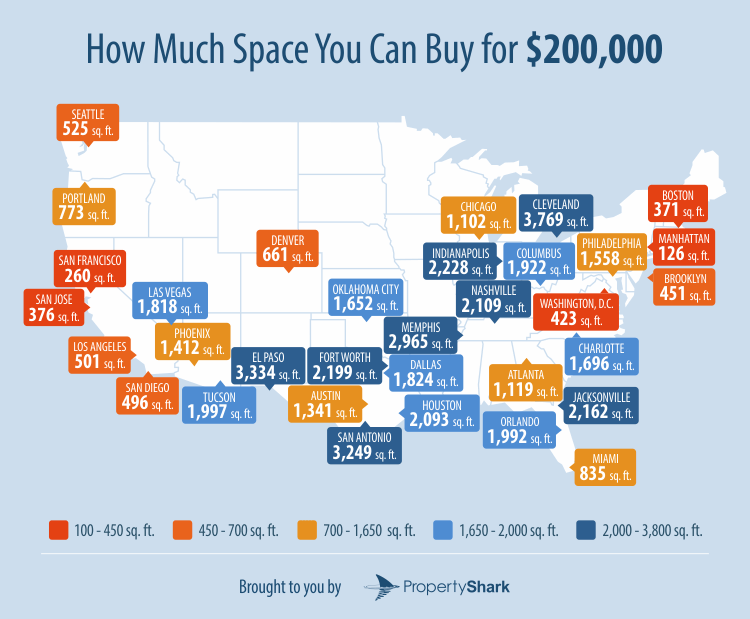
We all know that location is essential when looking for a home to buy, but price and size also carry considerable weight. A recent report by Property Shark compared exactly how much house you would get for $200,000 in the largest US cities.

It turns out that a homebuyer can get about 13 times more house in Charlotte (1,696 sq. ft.) than in Manhattan (126 sq. ft.) for $200k.

Here are a few other key findings from the study:

  • Cleveland, OH offers the most bang for your buck in terms of home size– here, a 3,769-sq. ft. mansion could be yours for the price of a 126-sq. ft. Manhattan studio.
  • El Paso, San Antonio and Memphis are also on the affordable side of the spectrum, offering about 10 times more house for $200k than San Jose, Boston or San Francisco.
  • For the same amount of money, a home in Nashville or Orlando would offer you around 2,000 square feet of living space, while in Los Angeles or San Diego you can only buy a 500-sq. ft home with $200k.

To determine how big of a home $200k would buy in each city, the report calculated the median price per square foot we divided the median home sale price with the median home size in each location and used the rounded amount ($200,000) of the national median home price of $214,000.