Betting Big on AI: Duke Energy’s $103 Billion Plan Signals Rising Debt and Rapid Growth

0

Charlotte-based Duke Energy just unveiled the largest spending plan in company history — a staggering $103 billion through 2030 — as artificial intelligence and data centers drive what executives describe as unprecedented electricity demand, according to their latest earnings release. Even more striking, the utility has already locked in 4.5 gigawatts of new data center load, with another 9 gigawatts waiting in the pipeline.



The record-breaking capital plan represents a 13.7% increase — or $16 billion more — than Duke’s previous five-year outlook. Company leaders said the surge in demand, particularly from AI-powered data centers across the Carolinas and Southeast, is forcing utilities to scale faster than ever before.

Duke reported fourth-quarter revenue of $4.9 billion, up 7% year over year. Executives told investors that energy-hungry data centers are now one of the fastest-growing parts of their customer base.

To meet that demand, Duke plans massive investments in generation, grid upgrades, and transmission infrastructure. However, the expansion also means higher borrowing levels. The company acknowledged it will rely heavily on long-term financing to fund the buildout, while aiming to maintain credit stability and steady earnings growth.

Duke Energy projected adjusted 2026 earnings between $6.55 and $6.80 per share and expects annual earnings growth near 9% through 2030.

The biggest takeaway from the report is clear: AI is reshaping the power industry. Data centers now represent one of the most significant load growth stories in decades, and Duke Energy is positioning itself to become one of the primary power providers fueling that digital expansion across the Carolinas.

Cost Segregation Firms: 4 Options for Real Estate Investors

0

Depreciation is one of the few tax breaks real estate investors get automatically. Cost segregation is what happens when someone actually engineers that break instead of letting it trickle out over decades. A study reclassifies parts of a building, wiring, fixtures, and certain site improvements, into shorter recovery periods, which front-loads deductions into the early years of ownership instead of spreading them over 27.5 or 39 years.

The firms that do this work range from boutique specialists to divisions inside massive advisory groups. Some only touch cost segregation. Others fold it into a much broader menu of tax and consulting services. That distinction matters more than it sounds like it should, because who else the firm serves and what else it’s doing with its time shapes how much attention your building actually gets. Strong internal processes can also help firms streamline operations while keeping client work organized and responsive. 

Here are four firms worth knowing if you’re an investor, CPA, or financial advisor weighing where to send a cost segregation study.

Best for Dedicated Cost Segregation Focus – R.E. Cost Seg

R.E. Cost Seg helps property owners accelerate depreciation, reduce taxes and improve cash flow through a cost segregation study. It’s built as a firm that does this one type of work rather than a general tax practice that offers it as an add-on.

That singular focus tends to show up in the depth of the analysis and how quickly a study gets turned around, since the team isn’t splitting attention across audits, filings, or unrelated advisory work. For an investor comparing quotes, that’s a real difference from a generalist CPA squeezing a study in between other client work.

CPAs and financial advisors who don’t want to run a study in-house can hand off the entire process, the technical engineering side and the direct client communication and stay focused on their own advisory relationship. That matters for firms that want the tax benefit delivered to their clients without adding a new service line themselves. Reviews of the firm’s work are a reasonable starting point if you want to see how that partnership plays out in practice before committing to a study.

Best for Bundled Specialty Tax Credits – CSSI

CSSI sits at the intersection of a few different incentive programs rather than cost segregation alone. Alongside cost segregation for property owners, it also handles R&D tax credits for businesses and 179D deductions for energy-efficient buildings.

That range is useful if a client’s tax picture involves more than just a building. An owner who’s also investing in research or energy upgrades can potentially work with one firm across multiple credit types instead of coordinating separate specialists. Investors whose situation is a straightforward single-property cost segregation study may not need that breadth, but it’s a genuine advantage for anyone juggling several types of incentives at once.

Best for High-Volume Study Output – ETS

ETS is an independent, professionally licensed engineering firm built to help clients around the country reduce income taxes through legal, strategic planning. It performs over 10,000 cost segregation, 179D and R&D tax studies a year, a volume that suggests a firm with established internal processes for moving studies through efficiently.

That kind of scale can be reassuring if you want a firm that’s clearly done this work at high volume. It can also mean less of a boutique, hands-on relationship than a smaller shop offers, since a firm processing that many studies annually is running a more standardized pipeline than a firm dedicated purely to one-on-one engagements.

Best for Global Innovation Funding and Tax Support – Leyton Deutschland

Leyton describes itself as a global market leader in innovation funding. It’s a meaningfully different service than a U.S. Property depreciation study. It suits businesses looking for funding and compliance support tied to Germany and the EU rather than American real estate investors chasing accelerated depreciation. Worth knowing about if your tax questions cross into that market, less relevant if they don’t.

Which One Is Right for You

The right firm depends on what else you need alongside the depreciation study itself. If your tax situation already touches R&D credits or energy incentives, a firm like CSSI that bundles multiple programs saves you from coordinating separate vendors. If you’re already deep into multi-state or international tax planning, a firm structured like McGuire Sponsel or Baker Tilly folds cost segregation into a bigger advisory relationship you may already want. High-volume shops like ETS suit investors who value established process and scale and a figure like Seneca’s average first-year deduction gives you a quick benchmark to sanity-check quotes against.

But if the study itself, its depth, its speed and how much depreciation it actually recovers, is the whole reason you’re calling, a firm built around nothing else has an edge. R.E. Cost Seg’s entire practice is studying buildings and reclassifying their components and for investors or advisors who want a partner that treats the study as the main event rather than one line item on a longer service menu, that focus is hard for a broader firm to match. CPAs who’d rather hand off the technical and client-facing work entirely get that same advantage without giving up the relationship with their own client.

Compare quotes before choosing a cost segregation provider, and ask each firm what a typical turnaround looks like for a property like yours. Review the scope of each study and confirm what engineering and tax expertise the firm provides. You should also weigh whether you want a dedicated specialist or a broader advisory firm that can handle several areas of your tax strategy. Consider the firm’s experience with properties similar to yours, its communication process, and how clearly it explains potential deductions. A lower fee does not always mean better value if the study lacks depth or misses qualifying components. The right provider should make the process easier while helping you understand the potential benefits and limitations. Taking time to compare your options can help you choose a firm that fits your investment strategy and long-term financial goals. 

North Carolina Women Rank Among the Nation’s Most Mentally Overwhelmed

0

The errands may eventually get done. The work of remembering them rarely does.

For many women, pressure does not come from one dramatic source. It accumulates quietly: work deadlines, household bills, grocery lists, medical appointments, childcare, aging relatives and the expectation that someone will remember what needs doing next.

AMFM Mental Health Treatment surveyed 3,004 women to examine the weight of this largely invisible mental load – and determine where women are feeling it most acutely.

The study ranked states according to the percentage of women who said they feel mentally overwhelmed at least a few times a month. The results suggest that women in some parts of the country are carrying a considerably heavier burden than those elsewhere.

Maine Has America’s Most Mentally Overwhelmed Women

Maine topped the ranking, with 82% of women surveyed in the state saying they regularly feel mentally overwhelmed. That equates to an estimated 496,987 adult women statewide.

North Carolina placed 7th nationally, with 69% of women surveyed in the state saying they feel mentally overwhelmed at least a few times a month. Based on North Carolina’s adult female population, that equates to an estimated 3,168,840 women statewide. Put another way, a significant proportion of women are regularly contending with the feeling that they have too much to think about, organize, or remember. The findings suggest that, for many North Carolina women, feeling overwhelmed is not an occasional response to a particularly difficult day but a recurring part of everyday life.

At the opposite end of the table, Nevada recorded by far the lowest rate, at 25%.

Estimated numbers were calculated using the underlying unrounded survey results and adult female population figures.

For Nearly Half of Women, Overwhelm Is a Near-Daily Experience

69% of women said they feel mentally overwhelmed at least a few times a month. For many, however, it happens considerably more often:

  • 21% feel overwhelmed every day.
  • 25% experience it several times a week.
  • 9% feel that way about once a week.
  • 13% experience it a few times a month.
  • 23% said they rarely feel overwhelmed.
  • Just 8% said they never do.

Even when women manage to carve out a little time for themselves, switching off is not necessarily part of the package. While 53% said they find it easy to mentally disconnect, 42% find it difficult. A further 6% said they almost never have time to themselves in the first place.

Money Is the Biggest Weight on Women’s Minds

Finances emerged as the single largest source of mental load, named by 37% of women – more than twice the share who selected any other area of life.

The leading sources of pressure were:

  • Money and finances: 37%
  • Personal health: 15%
  • Household responsibilities: 13%
  • Work: 11%
  • Relationships or marriage: 6%
  • Parenting and children: 6%
  • Caring for aging parents or relatives: 4%
  • Another person’s health: 4%
  • Social and family obligations: 4%

The household workload was spread across a long list of individual responsibilities. Grocery shopping and cleaning were the most commonly identified, each accounting for 10% of responses. Household bills, supplies, meal planning and medical appointments also featured prominently.

The List Is Getting Longer

For most women, the mental load is either holding steady or increasing.

More than half said the number of things they are responsible for remembering has grown over the past five years: 31% said it had increased significantly, while another 26% said it had increased somewhat. One-third reported no real change, and only 10% said their responsibilities had decreased.

Yet much of that pressure remains hidden. Almost three-quarters of women – 72% – admitted that they have concealed how overwhelmed they felt because they did not want others to worry or believed they needed to keep everything running.

That instinct to carry on quietly may also come at the expense of getting support. Half of those surveyed said they had delayed seeking help for their mental well-being simply because they did not feel they had the time.

Sleep, Exercise and Appointments Get Pushed Aside

When other people’s needs take priority, women’s own rest and well-being are often the first things removed from the schedule.

Women reported postponing:

  • Sleep or rest: 16%
  • Personal errands: 12%
  • Exercise: 12%
  • Medical appointments: 12%
  • Seeing friends: 11%
  • A hobby: 10%
  • A vacation or break: 9%
  • Dental appointments: 8%
  • Mental health support or therapy: 8%
  • Career development: 4%

Nearly half of women (47%) also said they sometimes feel guilty about spending time on something purely for themselves.

Taking a break does not always provide much relief, either. Three-quarters said time off can simply create more work for them later, including 30% who experience this very often and 45% who said it happens sometimes.

“What Can I Do?” May Be the Wrong Question

The survey also revealed a clear preference when it comes to receiving help at home.

While 31% of women would prefer a partner or household member to ask what they can do, 69% would rather that person identify what needs doing and take care of it without being asked.

That distinction matters. Asking for instructions may offer help with the physical task, but it can leave the work of noticing, planning and delegating firmly in the same hands.

Perhaps unsurprisingly, 61% of women said the people closest to them do not fully understand how much they are mentally keeping track of.

Trump Returning to Gastonia Ahead of November Election

0

President Donald Trump is returning to the Charlotte region next week, bringing a major campaign rally to Gastonia just weeks before Election Day.

Trump will appear Wednesday, Sept. 16, at Gastonia Municipal Airport to support Republican U.S. Senate nominee Michael Whatley. The event begins at 7 p.m., according to the campaign.

The Gastonia airport is familiar territory for Trump. He previously held a campaign rally there during the 2024 presidential election.

Whatley previously chaired the Republican National Committee and North Carolina Republican Party. He is running against former Democratic Gov. Roy Cooper for the open U.S. Senate seat.

Republican Sen. Thom Tillis is not seeking another term, leaving the seat open in November. The race has attracted national attention as both parties compete for control of the Senate.

Trump’s visit will put Gastonia and the western Charlotte region in the national political spotlight as campaigning intensifies.

The rally begins at 7 p.m. Wednesday, Sept. 16. Registration is free and required.

USGS Announces $64B in Previously Undiscovered Lithium Under Hurricane Helene’s Rubble

0

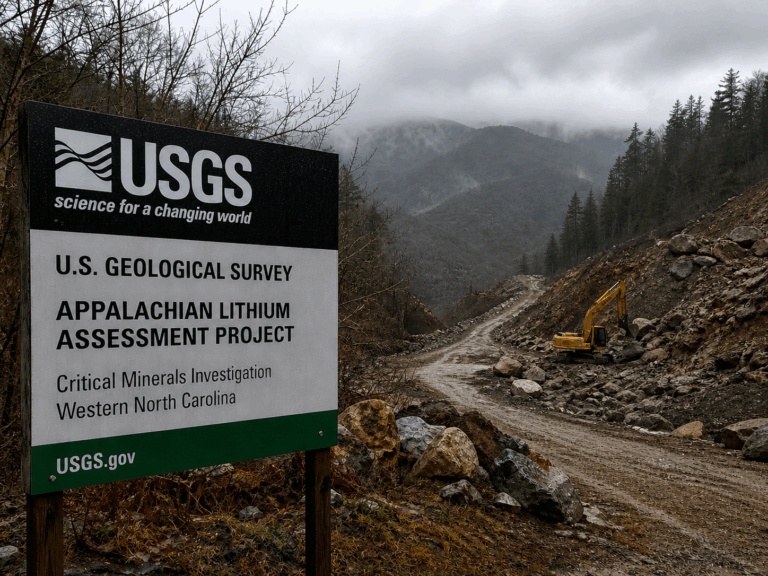
A new report released by the U.S. Geological Survey (USGS) has just confirmed that the Appalachian Mountains are sitting on a massive, previously undiscovered lithium deposit worth an estimated $64 billion.

According to the federal data, the region contains 2.3 million metric tons of recoverable lithium—enough to power the United States’ energy needs and replace over 300 years of imports from China.

“This research shows that the Appalachians contain enough lithium to help meet the nation’s growing needs – a major contribution to U.S. mineral security, at a time when global lithium demand is rising rapidly,” said USGS Director Ned Mamula in a press release“USGS mineral science is the leading edge in the effort to restore America’s mineral independence by mapping our nation’s mineral resources. Everything else follows on the science: permitting reform and other policy changes to support investment in clean, responsible mining to 21st century standards, and mining workforce training for new American jobs. The United States was the dominant world producer of lithium three decades ago, and this research highlights the abundant potential to reclaim our mineral independence.” 

While lithium mining is a known industry in the region, this discovery is different. For decades, the focus was centered on the Kings Mountain site in Cleveland County, which has been dormant since the 1980s. But this new USGS assessment identifies a massive concentration of lithium-rich pegmatite stretching far beyond the old mines, with much of it located in the very areas of Western North Carolina that were devastated by Hurricane Helene.

Exposed by the Storm?

In the months following the catastrophic 2024 storm, conspiracy theories flooded social media, with many locals claiming the government was “clearing the land” to access hidden minerals. At the time, officials and fact-checkers dismissed these claims as baseless, noting that the lithium mine in Cleveland County was nearly 100 miles away from the hardest-hit zones like Chimney Rock and Asheville.

However, the new 2026 USGS findings suggest the skeptics may have been onto something. The report reveals that the “undiscovered” lithium was identified through systematic geochemical sampling and geophysical surveys that were accelerated following the 2024 landslides. In many cases, the literal “rubble” and exposed mountainsides carved out by Helene’s floodwaters provided geologists with unprecedented access to the deep-crust pegmatites that hold the “white gold.”

A “Great Find” with a Complicated History

The head of the EPA has called the find a “game-changer” for national security, noting that it could finally break the U.S. dependence on China for the critical minerals needed for EVs, smartphones, and defense tech.

But for residents of Western North Carolina, the news is bittersweet. The 800-acre Albemarle site in Kings Mountain recently secured a $90 million purchase agreement from the Department of Defense to restart operations, but this new discovery opens the door for massive mining expansion into the heart of the Appalachian foothills.

Was the “Crazy” Theory Right?

For many who lived through the “Helene Lithium” social media firestorm, the $64 billion discovery feels like a strange validation. While there remains no evidence that the hurricane was “manipulated,” the fact that a world-altering mineral deposit has been confirmed exactly where theorists said it was—under the very ground shifted by the storm—has shifted the conversation from “conspiracy” to a very real debate over land rights and corporate interest.

As the federal government moves to fast-track extraction in the southern Appalachians, Charlotte-area residents are left wondering: Is this an economic miracle for the Carolinas, or the beginning of a fight for the soul of the mountains?

Trailer Tires: How Often Should You Replace Them?

0

You can often find lots of helpful instructions and guidance about how to operate and safely drive a trailer. An example of that would be when you are given the information required to learn how to tow an enclosed trailer in the right way.

Any hints and tips you can get on that score will always be helpful, and it should ensure that you are more competent and safer when you are towing your trailer. It will also help to learn some important maintenance basics, such as how to check your trailer tires and when to replace them.

Here’s some useful pointers on trailer tire safety, together with a look at some of the obvious signs that are telling you it’s time to change your tires.

Prepare for the unexpected

Ultimately, you want to be able to enjoy a safe trip with your trailer. That means preparing for your journey by checking the state of your tires and taking preventative action when you see that they are damaged or worn.

The last thing you want is to have to change your tire in the pouring rain by the roadside. You also don’t want to risk your safety by using a tire that really should have been replaced.

More often than not, there are some clear telltale signs that are giving you sufficient warning that it’s time to replace a tire, or get a new set completely.

Take the time to check the condition of your trailer tires on a regular basis and don’t ignore what your eyes are telling you when you inspect them.

Signs of wear and tear

Many of us are perhaps guilty of taking an optimistic view about a fault or signs of wear and tear, in the hope of getting a few extra miles before having to shell out for a replacement.

When it comes to tires, that is a risky and potentially dangerous strategy. Your tires play a vital role in keeping your vehicle safe and driveable. If a tire is damaged or badly worn that could lead to a problem that could have been avoided.

You don’t often have to wait too long in your journey to see a shredded tire by the roadside. That is a classic example of how someone has ignored the early warning signs and attempted to get a bit more mileage out of their worn or damaged tire.

If you can see significant wear in the center of the tire that can be a sign of a tire that has been overinflated. If you see that your trailer tire is more worn on the outside that could be an indication that your wheels have been incorrectly aligned, which has led to uneven wear.

Whatever the scenario, if you spot significant or uneven wear you should check what is causing the problem, and also consider whether you need to replace the tire at the same time.

Knowing when it’s time to replace

As well as looking for obvious signs of damage to your trailer tires, there will also come a point where natural wear and tear takes its toll. The problem here is that the degradation of your tires is usually a very gradual process, which can make it tricky to predict when it’s time to replace them.

Another added complication is that tires can often last beyond the recommended replacement time, if you look after them. With that in mind, it pays to use some hard and fast rules to guide you. One of the best methods is to regularly check the tread depth indicators built into the tires so that you can see when the manufacturer is suggesting your tire has reached the end of its life.

Trailer tires don’t get subjected to the same driving conditions as normal car tires. This means you should not purely rely on the depth of the tread to decide what action to take. You should always check for uneven wear and damage at the same time as checking how much tread is left on each tire.

Things to look for

There are various issues that can impact the quality and performance of your trailer tires. The best thing to do is to keep an open mind and be vigilant when inspecting your tires so that you can spot a specific problem that needs addressing.

A major factor to look out for is when there is noticeably significant wear on one part of the tire in comparison to other areas.

Generally speaking, uneven wear is something that urgently needs investigating  as it is usually pointing to an underlying problem that needs fixing. When you see signs of uneven wear it could be telling you that it is a simple case of incorrect inflation, too much, or not enough air in the tire. However, it could also be telling you something more serious is causing the uneven wear. This could be poor axle alignment, or a bent axle, for instance.

If you notice that your tire is damaged, it’s a good idea to try and figure out how this happened. It could be that you may have hit a curb or some sort of debris in the road at some point. Alternatively, it is not uncommon for tire walls to crack when you leave your tires exposed to the sun, and you don’t use your trailer on a regular basis.

Another good tip to help preserve the longevity of your trailer tires would be to avoid leaving a heavy load on the trailer for any longer than you need to. In other words, don’t leave your trailer in store with any sort of heavy load still on it. This will make your tire degrade at a faster rate when it is subjected to long periods of stress and pressure.

The main thing to remember when thinking about trailer tire care and maintenance is that it’s best not to over complicate things. If you notice damage, or obvious signs of wear and tire, changing the tire is the best thing to do.

On top of that, learning how to drive your trailer in the correct way will help preserve the life of your tires, and keep you safe.

Boosting Data Accuracy with AI in Security Systems

0

Modern security systems generate a staggering amount of data every second. Video feeds, access control logs, and sensor alerts flood organizations with information. The real challenge isn’t a lack of data, but too much of it, and much of that is irrelevant or harmless. This data overload can hide actual threats and lead to “alert fatigue,” making security personnel less responsive to constant notifications. To be effective, security infrastructure needs to move beyond just collecting data and start interpreting it intelligently.

The Challenge of Raw Security Data

A constant stream of raw data from security devices often creates more problems than it solves. A motion sensor might trigger because of a stray animal, a camera could send an alert for swaying tree branches, and an access card reader might log hundreds of routine entries daily. Trying to manually sort through all this information to find a real security event is like looking for a needle in a haystack. This process is not only inefficient and costly, but it also leaves a lot of room for human error.

This “data noise” has significant consequences. When most alerts turn out to be false positives, security teams can become complacent. A critical alert might get missed because it’s buried in a long list of non-events. This fundamental weakness means that even the most advanced hardware won’t provide real security if the data it produces isn’t properly managed and analyzed. The goal is to make data work for you, not against you.

AI’s Role in Filtering and Validating

Artificial intelligence offers a powerful way to deal with data noise. By using machine learning algorithms, modern systems can learn to tell the difference between normal activity and potential threats with impressive accuracy. AI can analyze video footage to distinguish between someone acting suspiciously and a harmless passerby. It can also combine data from multiple sensors to confirm an event, which reduces false alarms. For example, if a door sensor triggers but video analytics show no one is there, the system can flag it as a potential malfunction instead of a security breach.

This smart filtering is a core part of modern physical security. Instead of overwhelming operators with every single event, an AI-powered system provides a curated list of validated and prioritized alerts. This lets human personnel focus their attention where it’s most needed, improving response times and overall effectiveness. The AI acts as a tireless and highly efficient first line of analysis, making sure operators work with clean, relevant data.

From Data to Actionable Intelligence

Once data is filtered and validated, the next step is to turn it into useful intelligence. AI is excellent at finding patterns and anomalies that a human would never spot. By analyzing past data, an AI can establish what “normal” activity looks like for a specific environment. Any deviation from this baseline can then be flagged for review. This is a key principle of AI in threat detection.

For instance, an AI might notice that a specific access point is being used at an unusual time of day, or that a vehicle has been circling a parking lot for an extended period. These subtle indicators can be early warnings of a potential security incident. The system can then automatically respond, perhaps by notifying security personnel, locking down an area, or tracking a subject across multiple cameras. This proactive ability shifts security from reacting to events to predicting them, allowing organizations to address threats before they escalate.

Ensuring System Reliability and Trust

For any AI-powered system to be effective, its users need to trust what it tells them. If security operators don’t have confidence in the alerts they receive, the system’s value decreases. Building this trust requires focusing on reliability, transparency, and constant improvement. AI models must be trained on diverse, high-quality data sets to minimize bias and ensure they perform well in real-world situations.

It’s also crucial for the system to explain its decisions. When an AI flags an event, it should be able to show the operator why, presenting the relevant video clips or data points that triggered the alert. This transparency allows for human oversight and helps operators understand how the system thinks. Furthermore, maintaining strong AI data security is essential to protect the system’s integrity from manipulation or compromise. A reliable system is both accurate and secure.

Future-Proofing Your Security Data

The security landscape is always changing, with new threats and technologies appearing constantly. An effective security strategy must be adaptable. AI-powered systems are designed to evolve this way. Because they use machine learning, they can be retrained and updated to recognize new types of threats. As your organization grows or your security needs change, the system can adapt with you.

When choosing a security platform, it’s important to think about its capacity for future growth. Look for open-architecture systems that can integrate with a wide range of devices and software from different vendors. This prevents you from being stuck with a single ecosystem and gives you the flexibility to adopt the best technology as it becomes available. A future-proof system not only solves today’s problems but is also ready for tomorrow’s challenges.

Ultimately, integrating AI is about empowering security professionals, not replacing them. By handling the tedious work of data filtering and analysis, AI frees up human operators to focus on higher-level tasks like investigation, strategic planning, and incident response. This partnership between human expertise and machine intelligence is the key to building a truly effective and resilient security operation.

W Hotels Is Coming To Charlotte – Building Our City’s Highest Rooftop Bar

0

Charlotte’s skyline is getting a new luxury destination — including what developers say will become the highest rooftop bar in the city. W Hotels plans to open a 200-room hotel inside the major redevelopment of 400 South Tryon.

The hotel will occupy floors one through nine of the former office tower. Plans include 173 guest rooms, 27 suites and a signature penthouse.

However, the project’s biggest attraction will sit 34 stories above Uptown. An 18,000-square-foot rooftop restaurant and bar will offer unobstructed skyline views. Developers expect it to become Charlotte’s highest rooftop bar.

W Charlotte will also feature 12,000 square feet of meeting space, a ballroom and a ground-floor restaurant. Plans include a coffee bar and W Hotels’ signature Living Room social space.

“Charlotte’s luxury hotel market is well-established, but it is missing a true luxury lifestyle hotel built around music, culture, and curated social experiences,” said Emanuel Neuman, Co-Founder of Spandrel Development Partners. “W Hotels is a strong fit for where Charlotte is today and where it is headed, as it experiences remarkable growth while continuing to build a vibrant cultural identity. With new, impactful investments in entertainment and dining, Charlotte is evolving into the kind of dynamic destination that makes it ideal for W Hotels.”

The entire 1970s-era tower will undergo a dramatic transformation. Developers plan to replace its original exterior with a contemporary glass façade.

Rockwell Group is leading the hotel’s design, drawing inspiration from Charlotte’s music, architecture and Southern character. Charlotte-born artist Romare Bearden also influenced the design concept.

The hotel represents only part of the larger 400 South Tryon redevelopment. Plans also call for 399 apartments, an indoor pool, spa, fitness center, theater and golf simulator.

The project comes as Uptown continues shifting some older office properties toward residential, hospitality and entertainment uses. Major investments are also underway at Bank of America Stadium and Spectrum Center.

Once completed, W Charlotte will bring another major luxury hotel brand to Uptown. Its 34th-floor rooftop could become one of the city’s most distinctive new destinations.

Suspect at Large After Gastonia Man Shoots At Least 5 People w/ Fatalities

0

UPDATE 9/10 5:05pm: Gaston County Police have just confirmed that 2 individuals have died and 2 others have life-threatening injuries following the shooting this morning in Gastonia. They have now developed a person of interest.

Original Article 9/10 10:00am:

At least five people were shot this morning in Gastonia. Early reports indicate some victims may have suffered fatal injuries. According to Gastonia police, the suspect is still at large.

The shooting was reported in the 2600 block of Forbes Road in south Gastonia. Gastonia Fire personnel were among the first emergency crews to respond.

Authorities have established a crime scene around the area.

Authorities have not yet released the victims’ identities or confirmed their conditions.

This is a rapidly developing story. Additional information about the Gastonia man shooting will be added to this article as it comes in.

Professional Dog Bath & Brush Services in Morrisville, NC

0

A clean coat feels good, looks good, and is easier to maintain at home. The difficult part is getting there. Bathing a dog in the family bathroom can mean wet floors, fur in the drain, a soaked owner, and a dog that is still damp long after bath time is over.

For pet parents searching dog bath near me , Rebel Tails offers a full-service alternative in Morrisville, North Carolina, near Cary. The salon handles the washing, drying, brushing, and finishing work in a cage-free grooming environment.

Professional Bathing From Start to Finish

A professional dog bath should involve more than shampoo and a quick towel dry. The coat needs to be washed thoroughly, fully rinsed, properly dried, and brushed so loose hair and minor tangles are not left behind.

At Rebel Tails, dog bathing is adjusted to the individual pet. Depending on the selected service and coat needs, an appointment may include professional shampoo, conditioner when appropriate, complete rinsing, blow-drying, a brush-out, ear cleaning, nail trimming or grinding, and paw or sanitary tidying.

For owners comparing dog bathing near me or dog bath and brush near me, it helps to look at what the service actually includes. Thorough drying and brushing can make a major difference for dogs whose coats are difficult to manage with a household tub and hair dryer.

Different Coats Need Different Care

A short-coated dog does not need the same bathing routine as a Golden Retriever, Husky, Doodle, or another dog with a dense or longer coat.

Short coats may need a straightforward wash, dry, brush, and basic hygiene care. Soft or long coats can require additional conditioning and detangling. Double-coated dogs often benefit from more extensive drying and undercoat work, especially during heavy shedding periods.

Professional dog washing should therefore reflect coat type, density, condition, shedding level, and the dog’s tolerance for handling and dryers. Rebel Tails evaluates these factors rather than using one bathing routine for every pet.

If you are comparing dog baths near me, ask how the salon works with different coat types. The closest appointment is not always the most useful one if every dog receives exactly the same treatment.

A Calmer Bath for Sensitive Dogs

Some dogs love water. Others want nothing to do with the tub.

A dog may become nervous around slippery surfaces, running water, unfamiliar handling, or the sound of a dryer. Puppies may still be learning what grooming feels like, while senior dogs may need more time and easier positioning.

Rebel Tails can adjust the pace for dogs that need a gentler introduction, including gradual exposure to water and equipment, non-slip support, slower introductions to dryers, and breaks when needed.

For someone searching pet bath near me or pet bathing near me because bathing at home has become stressful, handling style deserves as much attention as convenience.

Professional Wash vs. Self-Service Wash

There are plenty of places to give your dog a bath, but they do not all provide the same type of service.

At a self-service facility, the owner typically uses the tub and equipment and performs the washing personally. Rebel Tails works differently. It is a full-service professional grooming salon, so the grooming team completes the dog wash, drying, brushing, and selected finishing services.

That distinction matters when searching dog wash near me or pet wash near me. A self-service station can make sense if you simply need a better place to wash your own dog. A professional service is a better fit when you want someone else to handle the complete process.

Searches are not always typed perfectly, either. Someone entering dog wash near ne is usually looking for the same thing: a convenient local option for getting a dog clean.

What About Bath Pricing?

Pet parents often search dog bath near me prices before making an appointment. Professional bathing costs can vary because two dogs of similar size may require very different amounts of work.

Coat length, density, shedding, tangles, drying time, handling needs, and additional services can all affect the appointment. Rebel Tails organizes its pricing by coat type and reviews the dog’s individual needs when determining the appropriate service.

When comparing local providers, look at what is included rather than focusing only on the lowest starting price. A service that includes thorough drying, brushing, nail care, or paw tidying may not be directly comparable to a basic wash.

When Is It Time for a Professional Bath?

There is no single bathing schedule that works for every dog. Coat type, skin condition, activity level, shedding, and home maintenance all influence how often professional dog bath grooming makes sense.

Regular washing at home may be manageable for a small, short-coated pet. For larger dogs, dense coats, heavy shedding, or pets that dislike bath time, professional care can make the routine much easier.

For pet parents around Cary and Morrisville, Rebel Tails provides cage-free professional bathing and brushing with coat-specific care and individualized handling. Whether your dog needs a routine clean-up, a bath between haircuts, or extra help with a shedding coat, the goal is straightforward: a clean, fully dried, brushed, comfortable pet without turning your bathroom into a grooming station.