Residents around Lake Wylie and Lake Norman may hear nuclear warning sirens Wednesday morning. Duke Energy says there is no emergency.
The scheduled test will run between 11 a.m. and 1 p.m. Wednesday, October 7. Some sirens could sound more than once during that window.
Around Catawba Nuclear Station, Duke Energy will test 89 outdoor warning sirens across the surrounding emergency planning area. The plant sits in York County near Lake Wylie.
Testing also involves the warning system surrounding McGuire Nuclear Station in Huntersville. That network includes 67 sirens around the Lake Norman area.
Maintenance crews could continue testing individual sirens after 1 p.m. if additional checks are needed.
The sirens are designed to alert people outdoors within roughly 10 miles of a nuclear plant. Duke Energy conducts full-volume tests regularly to ensure the system works properly.
During an actual emergency, the nuclear station sirens would signal residents to seek more information. Local radio and television stations would interrupt programming with instructions from emergency officials.
That will not happen during Wednesday’s scheduled test.
Emergency management agencies across the Charlotte region are coordinating the testing with Duke Energy. Participating counties include Mecklenburg, Gaston, Iredell, Lincoln, Catawba and York.
Residents do not need to evacuate or take other action when the scheduled sirens sound. Duke Energy says the sirens themselves are designed as an outdoor notification system.
According to a new study, 3 seperate Carolina counties rank among the top 10 most dangerous counties in the US for drivers.
The new report investigated which US counties are the most and least dangerous for drivers. They looked at 50 counties with 50,000 or more residents and analyzed the total number of deaths caused by car crashes over the past 4 years, according to data from the National Highway Traffic Safety Administration (NHTSA).
The data was scaled to each county’s population size to find the number of fatalities per 10,000 people. Counties were then ranked from the highest rate of deaths caused by car crashes to the lowest.
1. Apache, Arizona – 23.48 car crash fatalities per 10,000 people
Apache is the most dangerous county in the US for drivers, with 23.48 car crash fatalities per 10,000 people.
With an estimated population of 66,024, there were a total of 155 car crash fatalities throughout the four-year period in this county. When looking at the top 50 most dangerous counties for drivers, Apache ranked as the joint eighth-highest regarding the total number of car crash deaths over the four years.
Orangeburg, South Carolina – 23.03 car crash fatalities per 10,000 people
With an estimated population of 84,225, there were a total of 194 car crash fatalities over four years in the county. Orangeburg ranked as the fifth-highest county for the total number of car crash fatalities, with 194 deaths over the four years.
Robeson, North Carolina – 22.57 car crash fatalities per 10,000 people
Robeson is the third most dangerous county in the US for drivers, with 22.57 deaths caused by car crashes per 10,000 people.
With an estimated population of 116,516, there were a total of 263 car crash fatalities over four years in Robeson. Robeson is the highest-ranked county regarding the total number of car crash deaths over the four-year period.
Gila, Arizona – 21.96 car crash fatalities per 10,000 people
Gila is the fourth most dangerous county in the US for drivers, with 21.96 deaths caused by car crashes per 10,000 people.
With an estimated population of 53,273, there were a total of 117 car crash fatalities over four years in the state. This is the 18th highest number of car crash deaths over four years compared to the other counties in the top 50.
Putnam, Florida – 21.14 car crash fatalities per 10,000 people
The fifth most dangerous county for drivers is Putnam, with 21.14 deaths caused by car crashes per 10,000 people.
With an estimated population of 73,327, there were a total of 155 car crash fatalities over four years in the state. Putnam is ranked as the joint eighth-highest county regarding deaths caused by car crashes.
Columbus, North Carolina – 21.14 car crash fatalities per 10,000 people
Columbus is the sixth most dangerous county for drivers in the US, with 21.14 deaths caused by car crashes per 10,000 people.
With an estimated population of 50,625, there were a total of 107 car crash fatalities over four years in the state. Columbus is ranked as the 20th highest county regarding the total number of car crash fatalities over the four-year period.
McKinley, New Mexico – 20.85 car crash fatalities per 10,000 people
McKinley is the seventh most dangerous county for drivers in the US, with 20.85 deaths caused by car crashes per 10,000 people.
With an estimated population of 72,898, there were a total of 152 car crash fatalities over four years in McKinley. McKinley is ranked as the ninth-highest county regarding the total number of car crash fatalities over the four-year period.
Navajo, Arizona – 19.96 car crash fatalities per 10,000 people
Navajo is the eighth most dangerous county for drivers in the US, with 19.96 deaths caused by car crashes per 10,000 people.
With an estimated population of 106,716, there were 213 car crash deaths over four years in the county. Navajo is ranked as the fourth highest county regarding the total number of car crash deaths over the four-year period.
Laurens, South Carolina – 18.95 car crash fatalities per 10,000 people
Laurens is the ninth most dangerous county for drivers in the US, with 18.95 deaths caused by car crashes over four years per 10,000 people.
With an estimated population of 67,573, there were a total of 128 car crash deaths over four years in the county. Laurens is ranked as the 14th highest county regarding car crash fatalities over the last four years.
Walton, Florida – 17.53 car crash fatalities per 10,000 people
Walton is last on this list, with 17.53 deaths caused by car crashes over four years per 10,000 people.
With an estimated population of 75,306, there were a total of 132 deaths caused by car crashes in the county. Walton is ranked as the 13th highest county regarding deaths caused by car crashes over the four years.
The Carolina Panthers just delivered their biggest win of the season, beating Detroit 32-26 under the Sunday night lights.
The victory moved Carolina to 2-2 and marked its first Sunday Night Football win since 2015.
Bryce Young led one of his strongest performances yet, completing 29 of 41 passes for 329 yards. He threw two touchdowns without an interception.
Tetairoa McMillan was even more spectacular. The rookie caught 14 passes for 192 yards and two touchdowns. He had already reached 147 receiving yards by halftime.
Chuba Hubbard added the balance Carolina needed, rushing for 122 yards and two touchdowns on 20 carries.
The night also produced several historic Panthers marks:
121 points through four games — most in franchise history
Three 30-point games through four weeks — a franchise first
McMillan became the first Panther with 10+ catches, 175+ yards and two touchdowns
McMillan set a franchise record with nine first-half catches
Hubbard passed Christian McCaffrey on Carolina’s all-time rushing list
First Sunday Night Football victory since October 2015
Detroit still piled up 452 yards, including 412 passing yards from Jared Goff.
However, Carolina’s depleted defense made several critical stops when the game tightened late. Will Lee III and Lathan Ransom helped stop Detroit on its final fourth-down attempt, sealing the win.
The Panthers did suffer more injuries. Rookie tackle Monroe Freeling left with a knee injury, while Jaelan Phillips exited with a hamstring issue.
Still, Carolina enters the bye with legitimate momentum.
York County officials have received repeated warnings about Silfab’s unlawful zoning, chemical hazards, and unsafe proximity to schools and neighborhoods. If county officials continue to allow a prohibited heavy industrial use in a light industrial zone and a chemical accident causes mass casualties, those warnings—and the decisions made afterward—could become central evidence against the county.
The worst legally supportable outcome includes wrongful-death claims, federal damages beyond state tort caps, major public recovery costs, personal liability, and criminal prosecution where the required elements are proved.
This analysis assumes a catastrophic accident and successful proof of the relevant claims. It describes potential exposure, not a prediction or a finding that anyone is already liable.
The record of advance warning
Several records would be central to post-disaster litigation:
The court ruling.Last month, Judge William McKinnon affirmed in finality the BZA’s decision that solar-panel manufacturing is prohibited in Light Industrial zoning (a decision that was made before Silfab received any permits to build their factory). The order rejected the proposed computer/electronics classification, treated the 2022 verification letter as an informal communication rather than a permit, and rejected FILOT as zoning authorization.
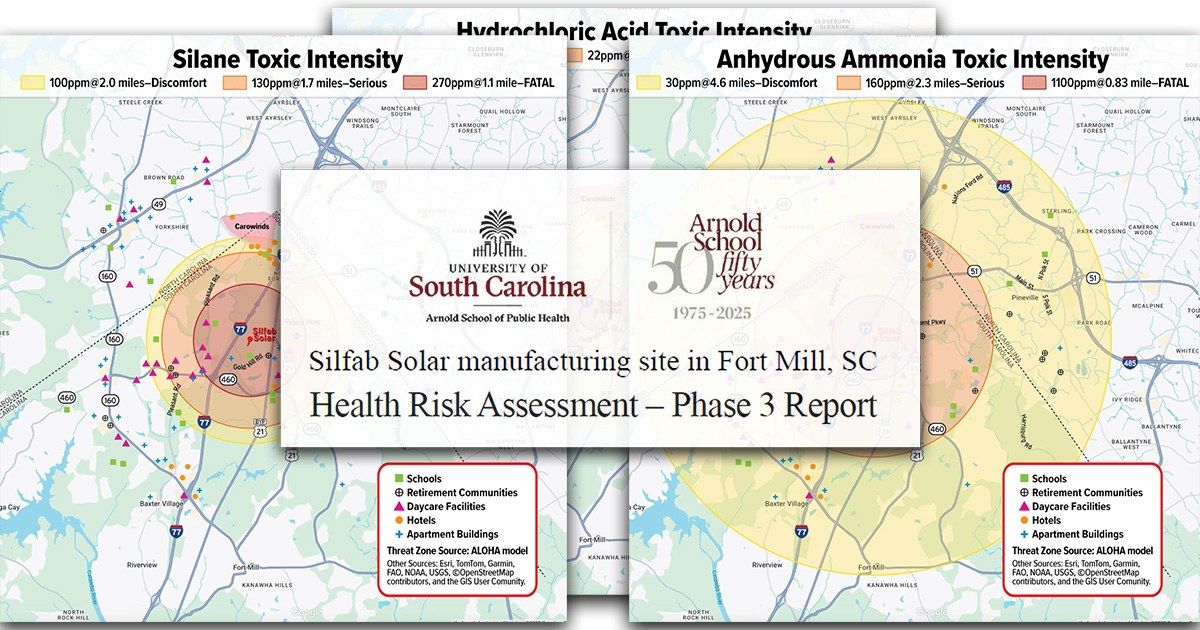
The USC assessment.The December 2025 Phase 3 report (which was personally handed to each York County Council member) models chemical releases capable of causing “life-threatening effects or death.” It addresses nearby schools, children’s vulnerability, failed safety systems and delivery accidents outside the facility’s safeguards. These are modeled catastrophic conditions.
The county’s own safety findings.Its June 24, 2025 stop-work order documented unsafe conditions, including obstructed exits and inoperable fire-protection systems.
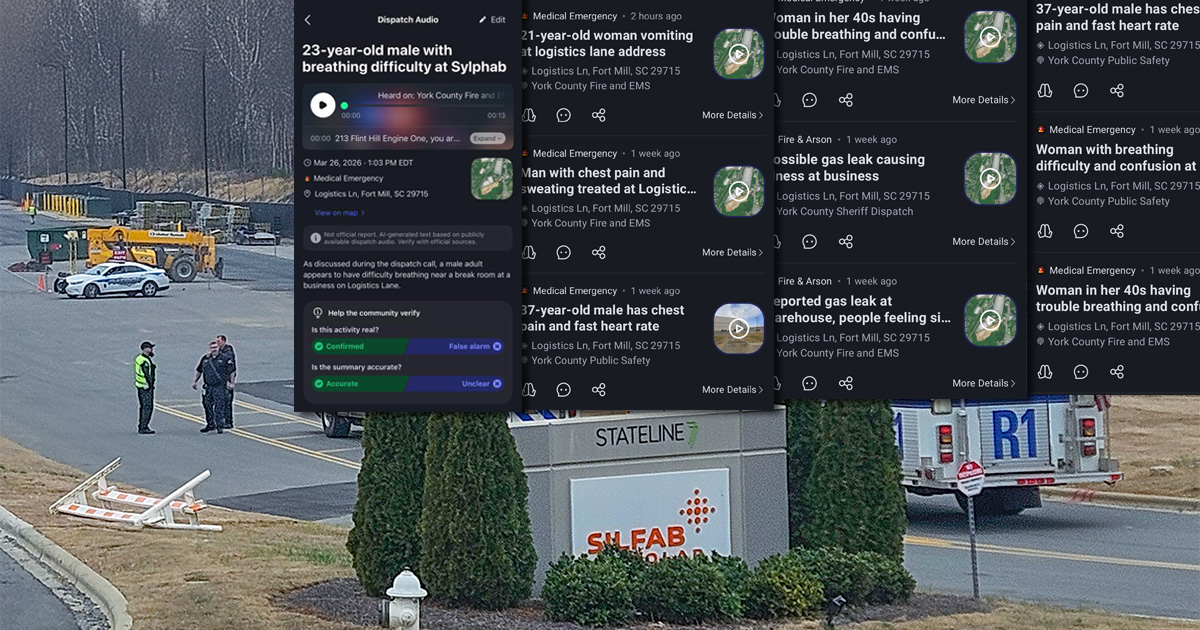
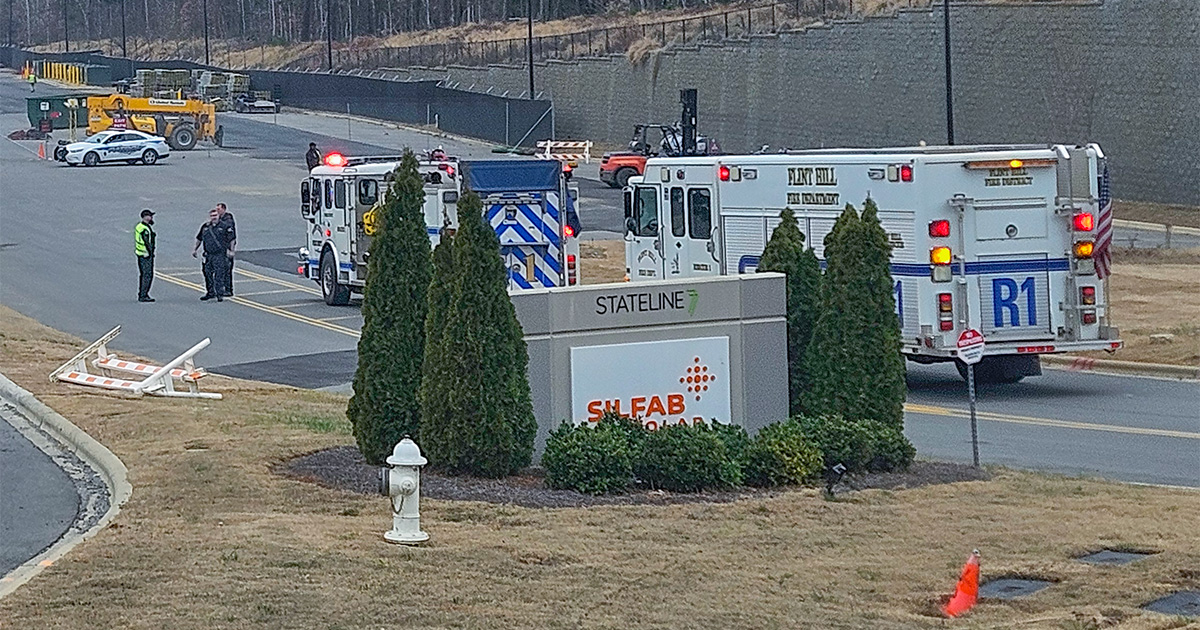
An actual chemical spill.DES’s March 3, 2026 letter documented potassium hydroxide escaping containment into a retention pond and called for a pause in additional chemical receipts and start-up. There was later confirmed to be a second chemical spill of hydrofluoric acid.
The approval records. Residents report repeated FOIA requests without production of the required zoning-compliance approval. Council should require the actual application, approved site plan, inspection and final or qualifying temporary approval, together with the legal basis for the authorized use.
Dated emails, delivery receipts, meeting records and acknowledgments should identify exactly which officials received each warning.
York County has enforcement tools
State and county law provide mechanisms to prevent unlawful construction, occupancy and use:
York County § 150.23: building permits require zoning compliance.
§ 150.26: improperly issued permits may be suspended or revoked.
§ 155.1206: the Zoning Administrator’s duties include investigating violations and discontinuing illegal uses.
§ 155.9999: stop-work, permit and certificate revocation, and judicial remedies.
A particularly relevant local precedent is McCrowey v. Zoning Board of Adjustment of Rock Hill, 360 S.C. 301 (2004). The court upheld zoning enforcement despite previously issued occupancy and zoning-compliance certificates. The administrator’s authority to administer the ordinance did not include authority to waive it.
That case supports demanding lawful enforcement even when earlier county approvals contributed to the problem.
South Carolina liability: gross negligence in permitting
S.C. Code § 15-78-60(12) expressly addresses issuing permits and certificates—and failing or refusing to revoke them. It permits governmental liability when those licensing functions are exercised with gross negligence.
The strongest South Carolina analogy is Steinke v. S.C. Department of Labor, Licensing & Regulation, 336 S.C. 373 (1999). Two young people died after a cable-car accident. Regulators had received repeated warnings about unsafe equipment. The Supreme Court recognized licensing-related gross-negligence liability and held that injured third parties could invoke the statutory exception.
The argument here would be specific: officials received warnings identifying a potentially lethal hazard, possessed applicable permit or certificate powers, and exercised those functions with gross negligence, causing preventable deaths or injuries.
Jensen v. Anderson County DSS, 304 S.C. 195 (1991) supplies the framework for establishing a duty to an identifiable protected class. A Silfab claim should connect applicable zoning and life-safety provisions to the affected schoolchildren, staff and nearby residents.
The general state tort limits remain $300,000 per person and $600,000 per occurrence. Gross negligence does not eliminate those limits. Boiter v. S.C. Department of Transportation, 393 S.C. 123 (2011) permits separately proved occurrences arising from distinct causal negligence; neither the number of victims nor the number of permits automatically multiplies the cap.
Federal liability can exceed the state tort caps
A separate route exists under 42 U.S.C. § 1983 and the Fourteenth Amendment.
For this worst-case scenario, assume evidence establishes that officials affirmatively created or increased a specific lethal danger, acted with constitutionally sufficient culpability, and caused deaths or serious injuries. The challenged conduct must also be attributable to county policy or an official with final policymaking authority.
The investigation would focus on the county’s own acts: authorizations issued after notice, directions facilitating hazardous operations, participation in exposing a defined group, and decisions adopted by an actual final policymaker. A zoning violation alone does not establish the constitutional injury.
Several precedents define this route:
Monell v. Department of Social Services, 436 U.S. 658 (1978): local governments can be liable for constitutional injuries caused by their policies or customs.
Pembaur v. City of Cincinnati, 475 U.S. 469 (1986): a single decision by an authorized final policymaker can constitute governmental policy.
Callahan v. N.C. Department of Public Safety, 18 F.4th 142 (4th Cir. 2021): the governing danger-creation doctrine requires affirmative conduct directly creating or increasing the danger.
Guertin v. Michigan, 912 F.3d 907 (6th Cir. 2019): Flint residents’ bodily-integrity claims proceeded against certain officials accused of knowingly participating in supplying contaminated water. This provides a persuasive chemical-exposure analogy involving affirmative government participation.
Owen v. City of Independence, 445 U.S. 622 (1980): municipalities cannot claim their officials’ qualified immunity as a defense to municipal liability.
If a county-caused federal constitutional violation is established, South Carolina’s tort caps do not set the ceiling on federal compensatory damages. Prevailing plaintiffs may also recover reasonable attorney fees under 42 U.S.C. § 1988.
The potential cost to taxpayers
There is no fixed statutory maximum covering the combined federal judgment, litigation expenses and public recovery costs.
For illustration, assume a collectible county judgment awards $10 million in recoverable compensatory damages to each of 100 people killed or catastrophically injured. That produces $1 billion, before recoverable attorney fees and public recovery expenses.
Those figures are hypothetical scenario arithmetic. They are not estimates of casualties or likely awards.
Additional public costs could include:
Emergency response, hazardous-material cleanup and infrastructure restoration.
School disruption, temporary classrooms, transportation and remediation.
Years of litigation, expert investigations and defense expenses.
Uninsured judgments, deductibles and losses exceeding policy limits.
County and school-district budgets are separate, although their taxpayers overlap. The ultimate taxpayer burden would depend on insurance, assistance and recoveries from other responsible parties.
Individual officials could face personal exposure
Federal claims can also target officials who personally participated in a constitutional violation, where qualified immunity is overcome. Smith v. Wade, 461 U.S. 30 (1983) permits individual punitive damages for reckless or callous indifference to federal rights. The county itself is immune from § 1983 punitive damages under City of Newport v. Fact Concerts, 453 U.S. 247 (1981).
Under S.C. Code § 15-78-70(b), employee immunity does not protect conduct outside official duties, actual fraud, actual malice, intent to harm or a crime involving moral turpitude. Gross negligence alone does not establish this personal-liability exception.
Criminal exposure requires separate proof:
Misconduct in office: willful and dishonest breach of public duty, potentially through an omission. State v. Hess, 279 S.C. 14 (1983), addresses that offense; State v. Harrison, Opinion No. 28005 (2021), identifies a maximum ten-year sentence.
Involuntary manslaughter: up to five years under § 16-3-60, where criminal recklessness and responsibility for a death are established.
Loss of office: applicable South Carolina statutes provide for suspension or vacancy under their stated conditions.
Federal criminal civil-rights liability:18 U.S.C. § 242 permits life imprisonment when a willful deprivation of a federal right causes death. Its statutory outer limit also includes the death penalty, subject to separate capital-sentencing requirements. Those outcomes require proof of the criminal elements beyond a reasonable doubt.
The action requested from County Council
Council should direct the responsible officials and county counsel to:
Produce the complete zoning-approval and permit record, including the lawful-use basis for the CO.
Pursue immediate lawful suspension or revocation of authorizations supporting the prohibited use, with required notice and procedures.
Secure cessation of that use and emergency judicial relief where necessary, before chemical receipt or commissioning creates additional exposure.
Preserve all relevant records, including emails, texts, permit revisions, inspection histories, warnings and incident records.
Disclose the county’s actual financial protection, including coverage limits, exclusions and potential uninsured exposure.
The county’s September 30 update states that chemical and gas recommissioning is not scheduled before October 19, 2026, with advance notice required. That provides a current opportunity to resolve the enforcement questions.
If the warned-of catastrophe occurs, what officials knew, what they authorized and what they could lawfully have prevented will become central evidence. Council should use its available authority now to protect nearby families, schoolchildren and taxpayers.
Moldy produce, seafood held above safe temperatures and a trap full of dead roaches were among the violations Mecklenburg County health inspectors documented at Charlotte-area restaurants in September. The lowest score on this month’s list was a 79 — a C grade.
Here are the 10 lowest scores in the September inspection reports, counting down from No. 10 to No. 1. Six restaurants tied at 90, an A grade; their positions within that tie do not indicate different scores.
These results reflect the inspections listed below. Many documented food safety violations were corrected during the visits, and later reinspections may show different scores.
Report abbreviations: RTE means ready-to-eat; TCS refers to foods requiring time or temperature control for safety; WIC, RIC and WIF mean walk-in cooler, reach-in cooler and walk-in freezer; PIC means person in charge; EHS means environmental health specialist; ROP means reduced-oxygen packaging.
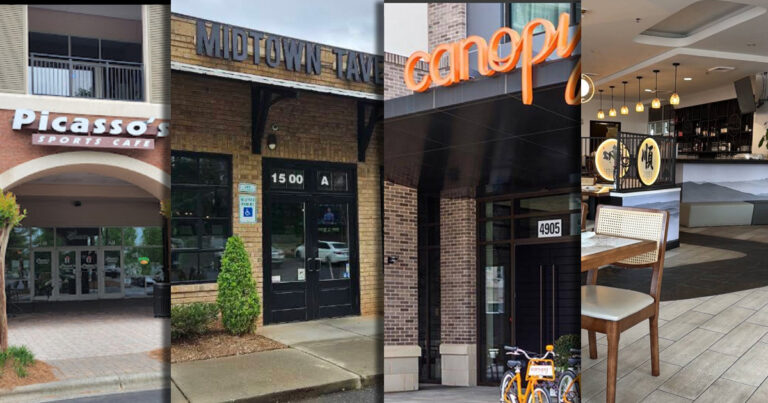
#10 — Canopy by Hilton Charlotte SouthPark (90 / A)
“EHS observed PIC answer phone call with gloved hands and after call continued working with food/utensils without changing gloves or washing hands.”
“EHS observed raw shell eggs stored over RTE items in WIC.”
“EHS observed pooled eggs and egg whites being held on make line out of refrigeration.”
“EHS observed spam, bean sprouts, cooked quail eggs, and cooked beef without proper date markings.”
“EHS observed two large plastic containers of marinated chicken in WIC actively cooling. PIC stated chicken was prepped an hour prior to inspection. EHS monitored cooling and observed inadequate cooling rates (see temp chart).”
“EHS observed no test strips for chemical dish machine during inspection.”
Staff corrected glove use, food storage and date labels during the visit. The inspector reported no observed contamination from the egg-storage violation.
“Observed a container of raw shrimp lollipops to be stored directly behind a container of spring mix in the cookline opentop across from the fryers.”
“Observed buckets of RTE sauces to be stored on the lower shelf in the WIC directly below numerous containers of raw sushi fish and raw salmon.”
“Observed 3 mandolin slicers, a meat pounder, and 2 large sifters to be stored as clean throughout the kitchen with visible food debris on their food contact surfaces.”
“Observed a container of raw mussels to be at a temperature of 49-65F in the opentop across from the wok.”
“Observed containers of spicy scallops and spicy tuna to be at temperatures of 59-64F in the WIC.”
“Observed half a block of cream cheese and 3 trays of yellowtail to be at temperatures of 49-51F in the sushi display case and the sushi lowboy refrigerators.”
“Observed a sheet pan full of approx 20 ROP tuna packages to be thawing in the WIC with the ROP packaging still in tact.”
The report called for reinstating a cold-holding risk-control plan. Out-of-temperature seafood was discarded; the cream cheese and yellowtail were moved to the walk-in cooler for rapid cooling.
“Observed slicer soiled with old food debris in the back corners.”
“Observed ground sausage without a date.”
“Observed beef dated 9/17. Item expired.”
“Observed trap full of dead roaches near prep sink.”
“Observed sanitizer bottles without labels.”
“Observed lid of chest freezer heavily damaged.”
“Observed 3 floor fans, tall reach in freezers, prep top/ low reach in doors in need of cleaning.”
“Observed floors under and around equipment in need of cleaning. Observed walls behind equipment in need of cleaning.”
Undated sausage and expired beef were voluntarily discarded, and the slicer was taken apart for cleaning.
#4 — Midtown Tavern (88.5 / B)
1500 E. 3rd St., Suite A, Charlotte, NC 28204 — Inspected Sept. 2, 2026
The restaurant voluntarily closed during the inspection because its walk-in cooler could not maintain 41F or below, according to the report.
Observed violations:
“Observed raw shelled eggs stored over RTE dairy items in the walk in cooler.”
“Observed raw fish stored over cooked chicken in the prep top cooler.”
“Observed washed produce stored under unwashed produce.”
“Observed the sanitizer at the 3-compartment sink tested at 0ppm of Quat.”
“Observed the walk in cooler with an ambient air temperature of 55F, all TCS foods in the walk in cooler were above 41F (see temp chart), PIC discarded all TCS foods that were above 41F and called refrigeration repair.”
“Observed hummus opened without datemarking, Observed cooked ground beef datemarked with 9/2, however in discussion with the kitchen staff the product was made 9/1.”
“Observed a container of cheese sauce to be in the WIC and was not provided with a date mark of any kind.”
“Observed vacuum packed fish improperly thawing at room temperature and fish not opened or removed from packaging.”
“Observed clothing on the prep top table.”
#3 — China Cafe (87.5 / B)
10230 Berkeley Place Dr., Suite 150, Charlotte, NC 28262 — Inspected Sept. 9, 2026
Observed violations:
“Observed several food employees wash hands and tern off faucet without a protective barrier.”
“Observed food employee cutting containers of pork with bare hands.”
“Observed raw chicken and raw beef stored above RTE sauces in WIC.”
“Observed noodles cooling in deep plastic containers with tight fitting lids in WIC missing cooling window.”
“Observed no date marks on items in the prep top from previous days.”
“Observed sesame chicken held on time without time stamp.”
“Observed food stored on the floor in WIF.”
“Observed in use utensil stored in a bucket on the ground.”
“Observed wet nesting throughout clean dish storage.”
“Observed floors, walls, and ceilings with build up and food debris throughout.”
Four containers of noodles were voluntarily discarded. The inspector also placed the restaurant on a risk-control plan after reporting date-marking violations on its last six inspections.
Inspectors issued an immediate suspension after documenting violations of the facility’s permit conditions. The report required all identified issues to be addressed and approved before the suspension could be lifted.
Observed violations:
“EHS observed raw chicken, beef, eggs during inspection. Facility must discard all items and permanently discontinue use.”
“Observed raw beef stored above RTE beef in cooler.”
“Observed a few containers stored as clean with food debris present.”
“EHS observed large pots and pans that are unable to be fully submerged inside of 3 compartment sink.”
“Observed cooked and cooled rice and beef holding at 47F in prep unit.”
“Observed Several TCS food items above 41F in Prep unit.”
“Observed spray bottle of cleaner directly above green tea powder in storage room.”
“Observed no thin probed thermometer on site.”
“Observed food items stored on the floor in the back storage room.”
“Observed butane camping range and household use toaster oven in use in facility.”
El Carbonero received the lowest score on the list. Its September 2 report required repairs and contact with an environmental health specialist before reopening because of cold-holding problems.
Observed violations:
“Observed food employee rinse hands off in 3-comp sink, not using any soap or paper towels, for less than 20 seconds.”
“Observed food employee using damaged gloves. Observed food employee rinsing off gloved hands.”
“Observed celery in its original packaging stored in a container with RTE cut up peppers and onions.”
“Observed 2 squeeze bottles stored in container with RTE cut up cabbage.”
“Observed food debris on dishes stored as clean.”
“Observed dark buildup on inside of ice machine.”
“Observed multiple items above 41F in prep units, RIC, and WIC.”
“Observed dead pest in steam table water.”
“Observed flying pests in kitchen area.”
“Observed cutting boards throughout no longer smooth and easily cleanable.”
“Observed pooling/leaking water in bottom of one of prep units and ice buildup.”
“Observed dark growth inside of sanitizer tubing at 3-comp sink.”
The report marked numerous violations as repeats. Staff discarded foods held above 41F and contaminated items during the inspection.
“When we agreed to combine with Powerus, the case was simple: a U.S.-headquartered autonomous systems company that was already building and selling,” said AGH CEO Matthew Saker in a press release. “Today that company is public. That was the point of the transaction.”
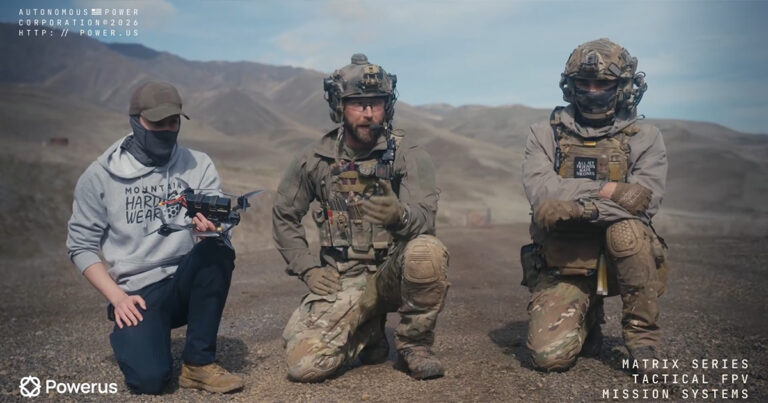
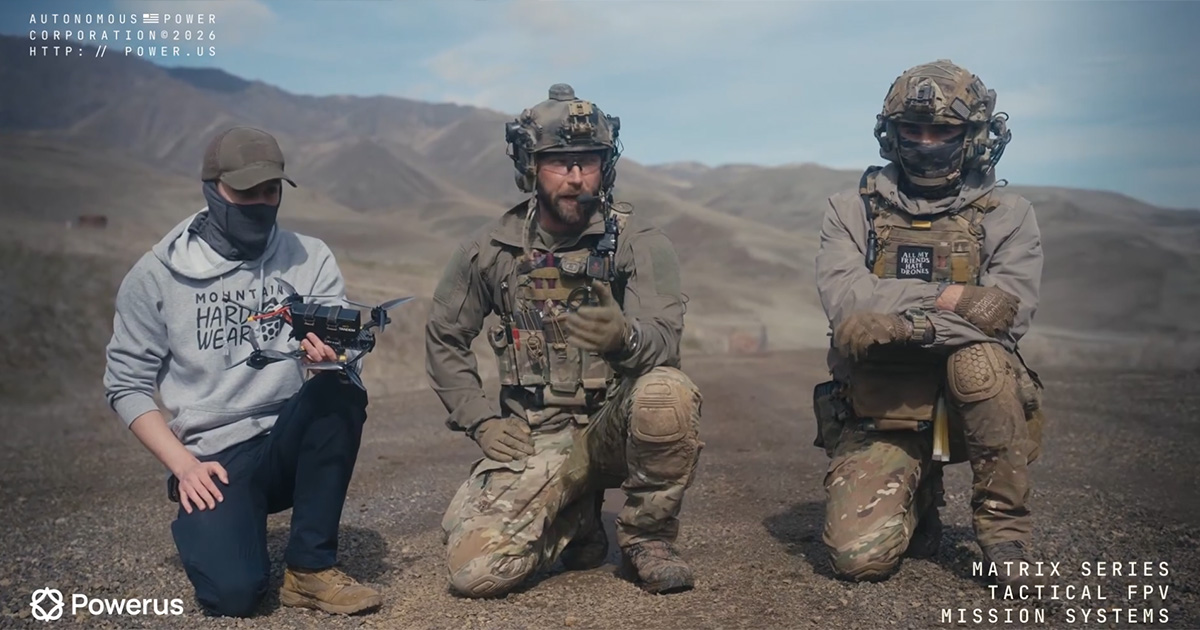
Powerus develops military drones, autonomous aircraft and counter-drone systems for defense and critical infrastructure.
One of its flagship products is the Guardian interceptor, which the company describes as a kinetic system designed to destroy hostile drones.
The completion of the merger follows a series of previously announced Powerus developments:
A purchase order from a defense prime contractor for the U.S. Department of War, valued at approximately $2.5 million, according to Powerus, for 1,500 U.S.-manufactured FPV aircraft, together with pilot kits and spare parts kits. As previously disclosed, that order does not guarantee future orders, a continuing customer relationship, or program-of-record status.
A competitively awarded U.S. Air Force indefinite-delivery/indefinite-quantity (IDIQ) contract for the Company’s Guardian-2 counter-drone interceptor, with a ceiling value of up to $90 million and a term running through mid-2028. An IDIQ contract establishes a maximum value; orders are placed at the government’s discretion and actual awards may be materially less than the ceiling.
A limited procurement order from the U.S. Air Force for Guardian-2 Interceptor systems, placed following a successful demonstration. As previously disclosed, that order does not guarantee future orders, a continuing customer relationship, or program-of-record status.
Advancement to Phase 3 of the U.S. Army’s xTech Adaptive Strike Competition, following a Phase 2 field evaluation. Participation in a prize competition does not constitute a procurement contract or a commitment to purchase.
The launch of a Powerus agriculture division, together with a $60 million, according to Powerus, Australia-New Zealand distribution agreement, including an exclusive agency and distribution agreement with Aerospread Technologies Limited of Napier, New Zealand, and a U.S. partnership with Sprig Aerospace. Distribution agreements establish sales arrangements and do not represent firm purchase commitments.
A $30 million, according to Powerus, strategic equity investment in Powerus by Unusual Machines, Inc. (NYSE American: UMAC), deepening the companies’ existing supply and manufacturing relationship.
An order placed by Powerus with Unusual Machines valued at more than $5 million, according to Powerus, for U.S.-made, NDAA-compliant components for counter-UAS systems and related drone platforms. This is a purchase by Powerus and does not represent Powerus revenue.
A memorandum of understanding with UAV software company Swarmer, Inc. (Nasdaq: SWMR) to explore the technical and operational feasibility of integrating Swarmer’s swarming and coordination software with the Powerus autonomous systems architecture. The collaboration is exploratory; a memorandum of understanding is not a definitive agreement and may not result in one.
The establishment of a dedicated Guardian counter-UAS manufacturing facility in the United Arab Emirates, through a multi-year partnership with a regional defense manufacturer. The arrangement does not guarantee any particular level of production, sales, or continuing relationship with the regional partner.
Designation by the U.S. Department of War as an industry participant supporting Falcon Peak 26.2, a U.S. Northern Command and Joint Interagency Task Force 401 counter-unmanned aircraft systems experiment at Yuma Proving Ground. Participation as an industry participant in an experiment does not constitute a procurement contract or a commitment to purchase.
A limited procurement order from the Ministry of Defence of the Islamic Republic of Pakistan for unmanned aerial systems and associated support, and a strategic memorandum of understanding with senior Pakistani defense officials. No other terms of the order have been disclosed, and the memorandum of understanding is not a definitive agreement and may not result in one.
Powerus has received a limited procurement order from the Ministry of Defence of the Islamic Republic of Pakistan for unmanned aerial systems and associated support. The order represents an expansion of our international defense business.
Most companies do not fail with AI because the models are weak. They fail because the organization treats AI like a vending machine. Someone pastes in a prompt, someone else signs up for a tool, a team automates one task, and suddenly leadership thinks transformation is happening. What they really have is scattered activity with no shared rules, no ownership, and no reliable way to judge what is safe, useful, or repeatable.
From Pilot Project to Operating System
That is why governance matters more than many people expect. Governance is not the boring layer that slows innovation down. It is the layer that makes innovation usable at work. In the same way a business needs defined roles, documented responsibilities, and basic legal structure, AI needs operating rules before it can become dependable. A company would not casually ignore something as foundational as a registered agent for LLC, yet many still treat AI oversight like an optional extra.
Without governance, AI remains a collection of software tricks. With governance, it becomes a system. That shift is the real milestone. It is the moment when AI stops being a novelty in side projects and starts functioning like payroll, procurement, or customer support. Not flashy, maybe, but trusted enough to be part of daily operations.
Governance Is Really About Predictability
A useful way to think about AI governance is not as control, but as predictability. Businesses run on repeatable outcomes. If a sales manager uses AI to draft outreach, legal uses it to review clauses, and operations uses it to summarize incident reports, leadership needs to know what standards apply across all three cases.
Who approves the tool. What data can be used. What must stay out of prompts. When a human has to review the output. How results are tested before they affect customers, employees, or finances. Those are governance questions, but they are also basic operating questions.
This is where frameworks become practical. The NIST AI Risk Management Framework is useful because it treats AI as something that must be governed across design, deployment, and ongoing use, rather than as a one time purchase. That idea matters. AI systems drift. Use cases expand. Staff changes. Risks that look small in a pilot can become expensive at scale.
Governance creates a shared playbook so the organization does not need to relearn the same lesson every quarter.
The Overlooked Role of Ownership
Many AI discussions focus on ethics, bias, or regulation. Those are important, but in day to day business life, ownership is often the bigger issue. If everyone can use AI, but no one owns its outcomes, mistakes become almost impossible to manage.
When governance is working, every meaningful AI use case has a human owner. Not just an IT contact, but a business owner. Someone who can answer simple questions. Why are we using this system. What decision does it support. What is the acceptable error rate. Who checks the output. What happens if it fails.
This turns AI from a mysterious tool into an accountable process. It also changes how teams behave. People become less likely to treat AI like magic and more likely to treat it like any other business system that needs maintenance, measurement, and review.
That mindset is what separates experimentation from institutional capability.
Good Governance Protects Speed Instead of Killing It
There is a popular fear that governance slows everything down. Bad governance can do that, of course. But the absence of governance usually slows a company down even more. Teams duplicate tools, argue over approvals, create security headaches, and lose trust after one public mistake.
Good governance speeds adoption because it removes uncertainty. Employees know which tools are approved. Managers know what kind of review is required. Security teams know where data is flowing. Executives know which projects are strategic and which are just noise.
The broader policy world points in the same direction. The OECD AI Principles emphasize trustworthy, human centered AI that respects accountability and governance across the lifecycle. That may sound abstract, but the business version is pretty simple. If people trust the process, they use the system. If they do not trust it, even a powerful model will sit unused or be used recklessly.
In other words, governance does not compete with adoption. It makes adoption sustainable.
Lifecycle Oversight Is What Makes AI a System
The biggest difference between a tool and a system is what happens after launch. A tool can be purchased and forgotten. A system has to be monitored, updated, and reviewed over time.
That is especially true for AI. Prompts change. Models change. Vendors change. Internal data changes. Business goals change. A chatbot that works well in January may create problems in June if nobody is checking response quality, escalation paths, or privacy boundaries.
Lifecycle oversight means AI is not left on autopilot. It gets reviewed for performance, risk, and fit. Employees get training. Policies get updated. New use cases get assessed before they spread informally across departments. Incident reporting exists, so near misses become lessons instead of repeated failures.
This is where governance becomes operational maturity. It creates continuity. It ensures the organization is not relying on memory, enthusiasm, or one especially tech savvy employee.
What Leaders Should Actually Build
If leaders want AI to become a real business system, they should focus less on chasing the newest model and more on building a stable management layer around the use cases that matter. That means approved tools, clear roles, documentation, review checkpoints, training, and a process for retiring systems that no longer fit.
It also means deciding where human judgment must remain in the loop. Not because AI is useless, but because organizations need clear boundaries around responsibility. A system can assist people without replacing accountability.
The companies that get this right will not necessarily be the ones with the loudest AI branding. They will be the ones where AI becomes ordinary in the best possible sense. Reliable. Understood. Measured. Owned.
That is the real transformation. Governance does not just make AI safer. It makes AI legible to the organization. And once a business can see AI clearly, it can finally treat it as more than a collection of clever shortcuts. It can treat it as part of how the company actually runs.
The State Auditor’s Office is already examining district budgets, contracts and payments. Separately, the State Bureau of Investigation is conducting a criminal investigation.
Mecklenburg County District Attorney Spencer Merriweather requested the SBI review after concerns surfaced over financial transactions during fiscal years 2026 and 2027.
No criminal charges have been filed, and investigators have not concluded that wrongdoing occurred.
The scrutiny follows a chaotic summer involving former Superintendent Crystal Hill and the school board.
Board members placed Hill on paid leave in June while outside attorneys investigated her leadership and management.
That investigation cost taxpayers at least $379,000 but reportedly found no evidence of misconduct or conflicts of interest by Hill.
Despite that finding, the board fired Hill in September by a narrow 5-4 vote.
Before her termination, Hill sent board members roughly 200 pages of documents raising questions about contracts, consultant payments and purchasing practices.
She specifically questioned payments involving consultant Raki McGregor, including a reported arrangement worth $30,000 per month.
Hill also accused board leadership of pressuring her to resign. Board members disputed portions of her account. Now, those internal disputes are unfolding alongside state and criminal investigations.
North Carolina law gives the State Board significant authority when school districts violate financial requirements.
In severe cases, the state can order corrective action or even assume control over a district’s financial operations.
There is no indication CMS has reached that point. However, the latest state involvement dramatically raises the stakes for the district.
CMS is now searching for another superintendent while facing an SBI investigation, a state audit and direct scrutiny from North Carolina education officials.
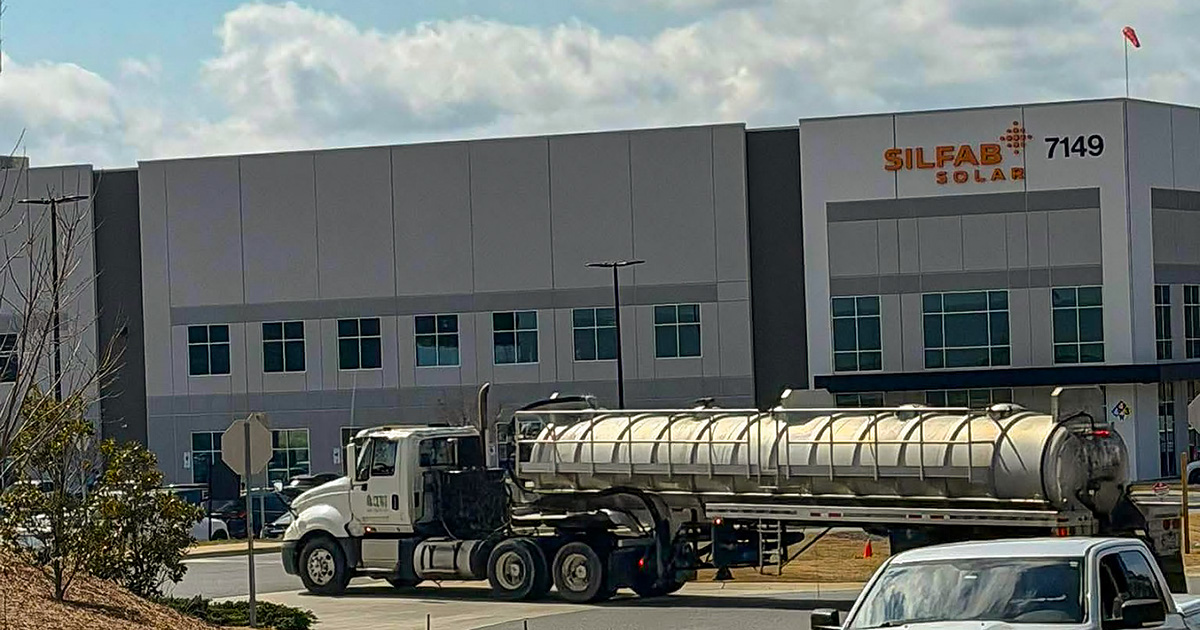
Canada’s Silfab Solar has just announced plans to begin full-scale chemical manufacturing operations in Fort Mill – in spite of the York County Board of Zoning Appeals and the SC Circuit Court both ruling their proposed use unlawful.
This past August, Circuit Judge William McKinnon upheld the York County Board of Zoning Appeals decision and rejected all of York County’s claims that any permit or legal right was granted before their proposed use was ruled unlawful in a light industrial zoned area.
Silfab released a statement yesterday about starting full chemical manufacturing; “The Silfab commissioning schedule reflects that the restart of commissioning activities involving gases and chemicals no earlier than October 19, 2026. The schedule below (ref Table A) integrates and aligns the following elements”
About the same time yesterday, in clear coordination, York County officials also released a statement; “County leaders and staff will continue to work with Silfab Solar…as they work towards full commissioning at their facility.”
“…the record affirmatively supports the BZA’s finding that the manufacturing process at issue is qualitatively distinct from the listed Computer and Electronic Products Manufacturing examples and is more consistent with heavy industrial activity than light. The Code defines Light Industrial as activity that “ordinarily do[es] not create noise, smoke, fumes, odors, glare, or health or safety hazards outside of the building or lot” and expressly excludes “hazardous material treatment and storage facilities…”
The court also rejected the major defenses used to justify the project’s zoning path. McKinnon found that the 2022 zoning verification letter was not a permit, was not a formal zoning code interpretation, and was not the decision under review. He also rejected the argument that York County Council’s FILOT tax agreement amended zoning law, stating that FILOT agreements are tax-incentive tools and do not change the zoning code.
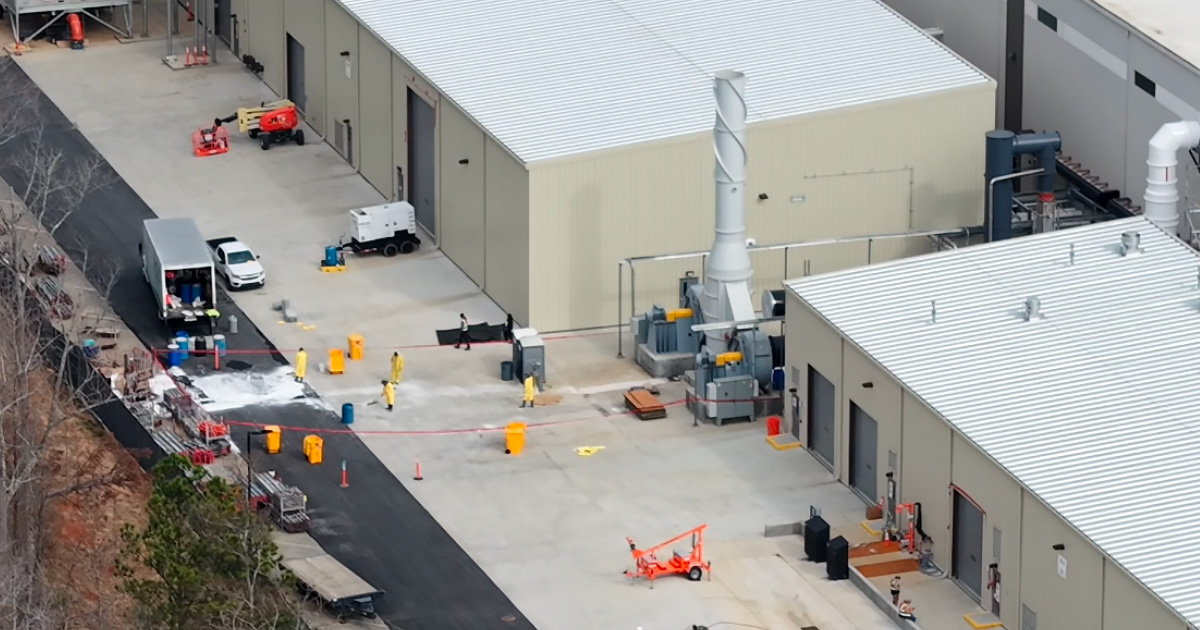
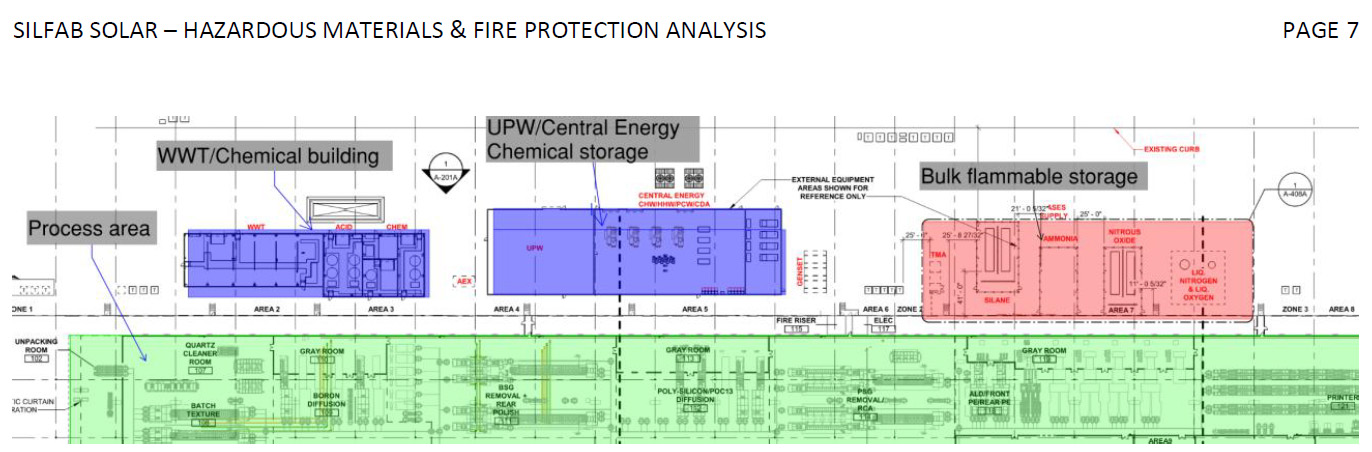
According to three technical documents submitted for the Fort Mill plant – including the facility’s Hazardous Materials Inventory System (HMIS) report, DES Air Permit, and Industrial Wastewater Treatment Plans — the factory is designed to transform raw silicon wafers into finished solar panels through a multi-stage industrial process involving strong acids, explosive gases, and chemical wastewater treatment systems.
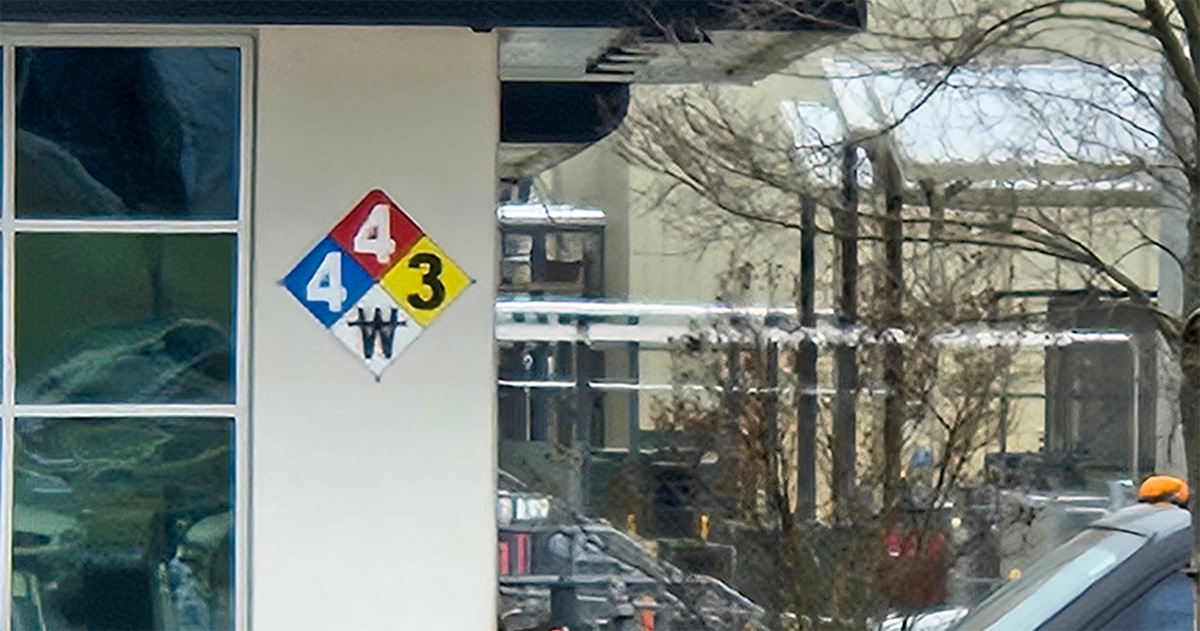
The NFPA Fire Diamond posted on the side of Silfab’s building has a 4-4-3-W Rating.
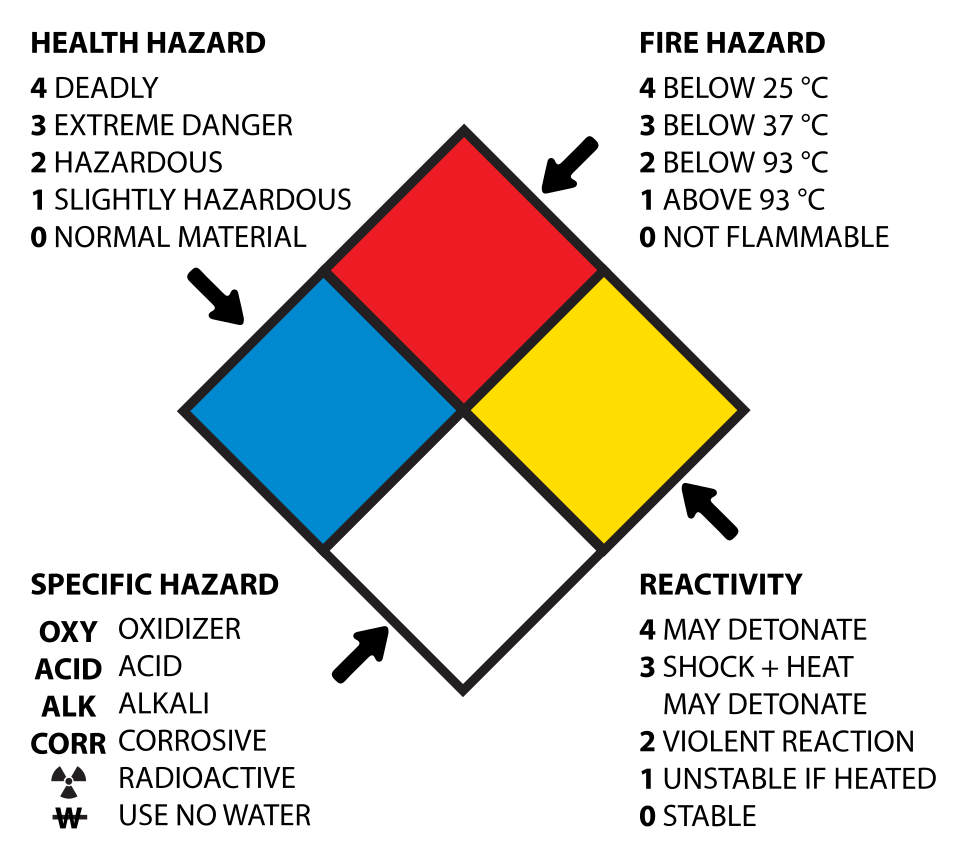
Blue (Left — Health Hazard: 4): Indicates a severe health risk. Short exposure could cause death or major residual injury even with prompt medical treatment. Red (Top — Flammability Hazard: 4): Indicates extreme flammability. The material rapidly or completely vaporizes at atmospheric pressure and ambient temperature, or is readily dispersed in air and burns easily (flash point below 73°F). Yellow (Right — Instability/Reactivity Hazard: 3): Indicates serious reactivity. The material is capable of detonation, explosive decomposition, or explosive reaction if subjected to a strong initiating source, or when mixed with water under heat or pressure. White (Bottom — Special Hazard: W): The symbol is a stylized “W” (W with a slash through it), meaning water-reactive. It reacts violently or explosively with water and poses an unusual hazard when water is used as an extinguishing agent.
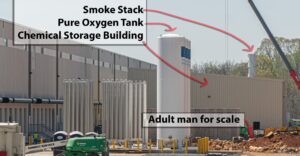
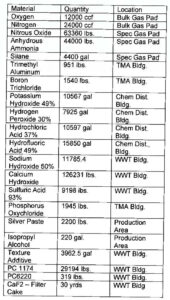
Some of the most hazardous materials Silfab’s documents state they plan on store and use (with frequent refills) include; 44,000 lbs of anhydrous ammonia gas, 26,456 lbs of (pyrophoric) silane gas, 15,850 gallons of hydrofluoric acid, 10,560 gallons of hydrochloric acid, 13,000 gallons of liquid oxygen (used as rocket fuel), 9,198 lbs of sulfuric acid, 1,945 lbs of phosphorus oxychloride gas, 1,540 lbs of boron trichloride gas, 951 lbs of (pyrophoric) trimethylaluminum gas, and 63,360 lbs of nitrous oxide.
Solar cell production follows a series of transformations that gradually turn slicesof silicon wafers into complex mini-power plants.
The stages include:
Grey cell manufacturing
Blue cell manufacturing
Finished solar cell manufacturing
Finished panel (module) manufacturing
Each step alters the wafer’s structure using chemical reactions, high-temperature furnaces, and thin-film deposition systems.
By the end of the process, dozens of completed cells are connected together using high heat and chemicalsinto a finished solar panel (module) capable of generating electricity from sunlight.
However, the manufacturing chain also produces air emissions, chemical wastewater, and industrial sludge, which Silfab plans on reducingthrough pollution control equipment, onsite treatment systems, and offsite sludge dumping.
1. Wafer Manufacturing → Grey Cell
The process begins with silicon wafers, thin slices of purified crystalline silicon typically 200–300 micrometers thick.
Manufacturing steps
Chemical cleaning
Surface texturing
Semiconductor doping
Etching
Chemicals used
Hydrofluoric acid (HF)
Hydrochloric acid (HCl)
Potassium hydroxide (KOH)
Phosphorus Oxychloride (POCl₃)
Nitric acid (HNO₃)
Sulfuric Acid (H₂SO₄)
Boron Trichloride (BCL3)
High-temperature diffusion furnaces around 1000°Ccreate the electrical p-n junctionthat allows the cell to generate electricity.
Waste produced
Acidic wastewater
Fluoride-containing wastewater
Silicon sludge
These wastes are typically treated to form calcium fluoride sludgefor disposal.
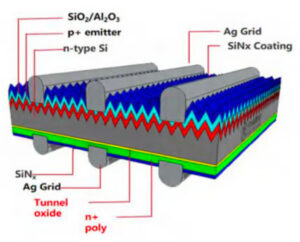
At the end of this stage, the wafer becomes a grey cell.
2. Grey Cell Manufacturing → Blue Cell
The grey cell then receives several thin coatings that improve electrical performance.
Manufacturing steps
Tunnel oxide layer formation
Polycrystalline silicon deposition
Surface passivation
Anti-reflective coating
The tunnel oxide layer is only 1–2 nanometers thick, while the poly-silicon layer is about 60–100 nanometers thick.
Chemicals and gases used
Silane (SiH₄)
Ammonia (NH₃)
Trimethylaluminum (TMA)
Nitrogen carrier gases
Aluminum oxide compounds
These coatings are typically applied using PECVD or LPCVD deposition systems.
Waste produced
Process gas exhaust
Nitrogen oxide emissions
Fine silicon particles
After the anti-reflective coating is applied, the device becomes a blue cell.
3. Blue Cell Manufacturing → Finished Cell
The next stage adds electrical contacts that allow current to flow out of the cell.
Manufacturing steps
Screen printing conductive pastes
Infrared drying
High-temperature firing
Materials used
Silver paste
Aluminum paste
Organic solvents
Waste produced
Volatile organic compounds (VOCs)
Metal particulates
Furnace exhaust gases
After metallization is complete, the device becomes a finished solar cell.
4. Finished Cell Manufacturing → Finished Panel
The final stage manufactures finished solar cells into a complete solar module.
Manufacturing steps
Cells are soldered together with copper ribbons to form strings
Encapsulation layers are placed above and below the cells
The assembly is laminated under heat and vacuum
A polymer backsheet, aluminum frame, and electrical junction box are installed
Chemicals and materials used
In addition to structural materials, this stage uses several chemical components:
EVA (ethylene-vinyl acetate) used as an encapsulating agent
Polymer backsheets (often PET-based laminates)
Silicone or polyurethane sealants
Flux chemicals and potting compounds
VOC and TAP emissions produced
During the high-heat lamination and curing process, several materials release volatile organic compounds (VOCs) and toxic air pollutants (TAPs). According to Silfab’s Air Permit, “The VOC and HAP/TAP emissions from this area [module manufacturing] will be vented outside through the general area exhaust system.”
Wastewater and Fluoride Sludge
Silfab’s factory would use over 1.2 million gallons of water per day and would generate significant volumes of chemical wastewater.
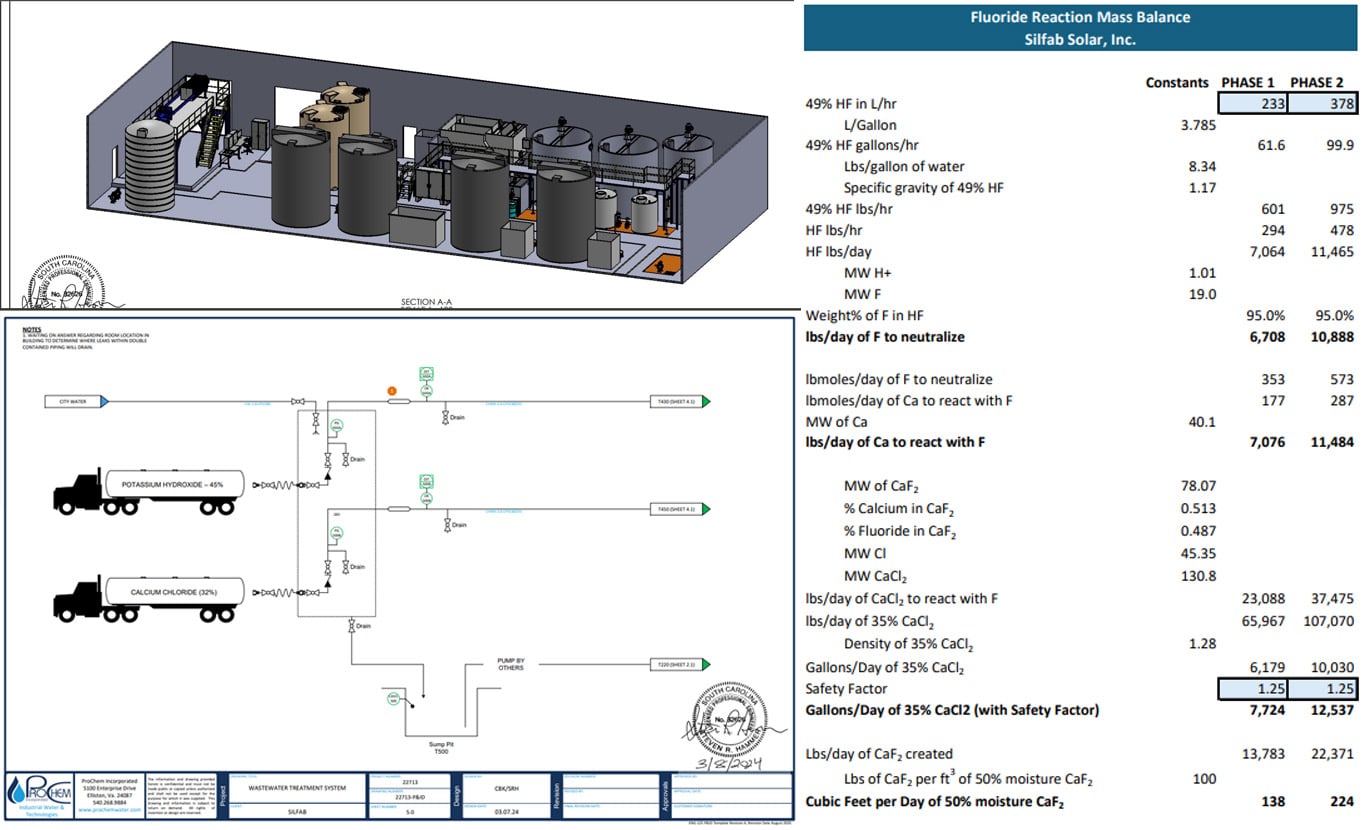
According to Silfab’s wastewater treatment design documents, the plant is expected to treat wastewater containing:
hydrofluoric acid
potassium hydroxide
hydrochloric acid
metal residues
dissolved silicon
Treatment process
The wastewater system neutralizes acids and bases and removes fluoride through precipitation reactions.
Hydrofluoric acid reacts with calcium compounds to form calcium fluoride sludge, which must be collected and disposed of as industrial waste.
Can Silfab Legally Operate in “LI”?
There is a growing number of Fort Mill residents, now numbering in the thousands, calling for the facility to move to a different location given its size, chemical usage, and the pollution and waste it would create.
York County’s zoning code clearly states that “Light Industrial does NOT include hazardous material treatment or storage facilities.” (York County Code §155.1301).
Under the code, “the Zoning Administrator must issue formal zoning compliance approval before permits are valid.” (York County Code §§155.1122–1123). In spite of numerous FOIA requests and private meetings, York County officials have still never produced a signed zoning compliance letter for Silfab’s operations – without one, all of Silfab’s permits and their Certificate of Occupancy would be legally void (according to SC Peterson v. Greenville County, 2011, “An invalid zoning permit issued in violation of applicable zoning laws confers no rights and is void ab initio”).
The Attorney General of South Carolina, Alan Wilson, has also confirmed that the York County Council has the authority to revoke Silfab’s CO if they do not have proper zoning approvals.
The law is clear – the BZA has ruled Silfab’s proposed operations were unlawful before they received their first permit to build their factory. A judge has now upheld the BZA’s ruling and confirmed that Silfab had no permits before their proposed operations were ruled unlawful.
The fact that Silfab stated they plan on start unlawful chemical manufacturing operations is especially troublesome for York County officials.
Under S.C. Code §6-29-950, “No permit may be issued or approved” unless state planning law and local zoning ordinances are followed. The same statute states, “A violation of any ordinance adopted pursuant to the provisions of this chapter is a misdemeanor… Each day the unlawful erection, construction, reconstruction, alteration, conversion, maintenance, or use continues is considered a separate offense.“
No court has yet declared any specific county official guilty of a misdemeanor, and no prosecutor has yet announced charges. But if Silfab’s unlawful use does indeed begin this month, the first potential daily violator would likely be Silfab as the operator of the facility. Exeter, the property owner, could also face scrutiny if it knowingly allowed or benefited from a prohibited use on its property (Exeter is currently receiving an estimated $500k per month, according to Silfab’s lease).
A number of county officials might also be held responsible if unlawful permits or occupancy approvals remain in place. The most obvious scrutiny would fall on the County Manager, the Planning & Development Services director Jonathan Buono, Development Services Manager Josh Reinhardt, Building Official Jennifer Culver, and Zoning Administrator Rick Abboud. It could also include lower-level planning and development officials who continue processing, honoring, or defending approvals tied to a zoning classification the BZA and Circuit Court have now rejected.
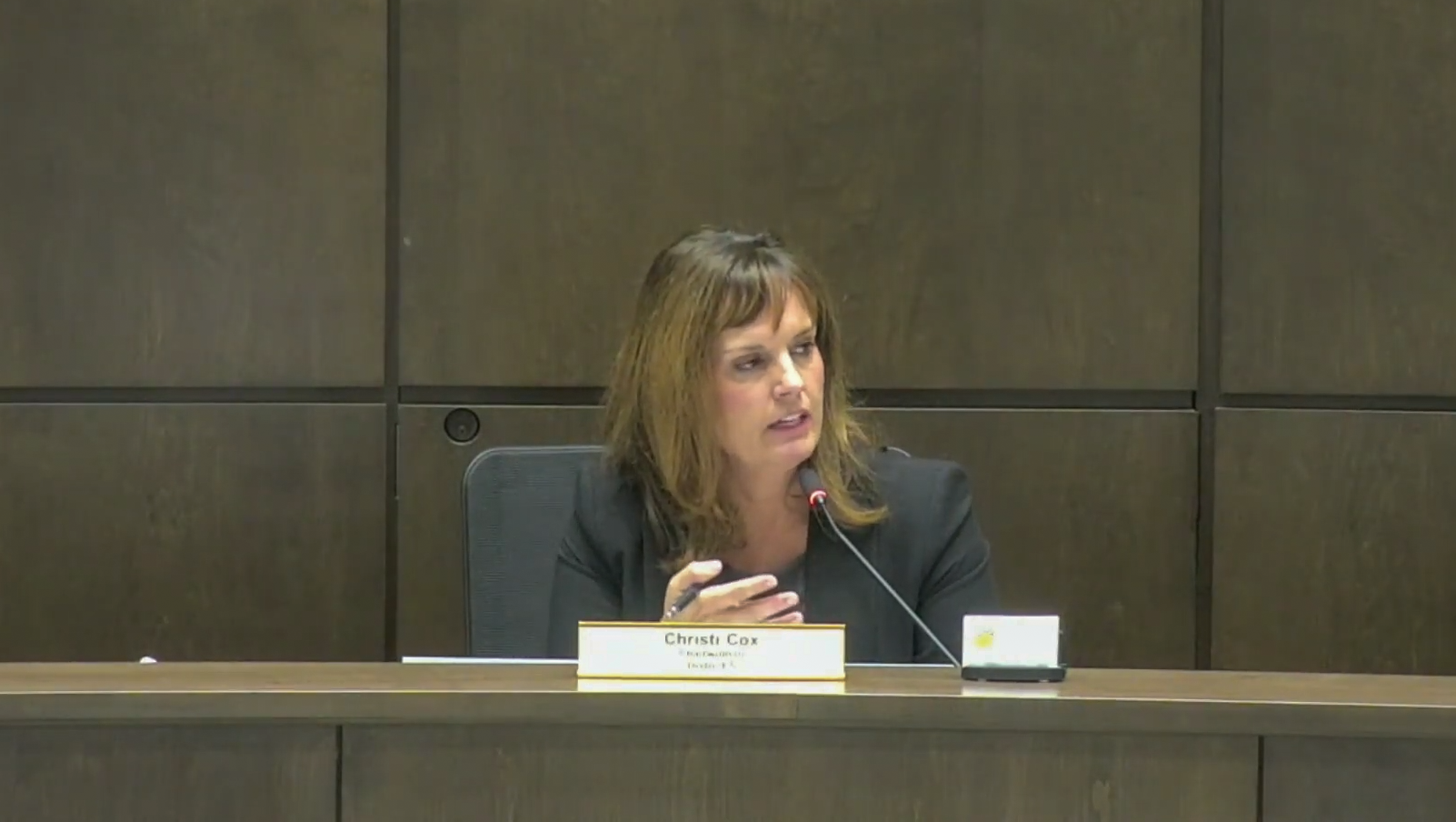
County Council members, especially Chair Christi Cox, could also face charges if it was found that council members knowingly directed staff to ignore the ruling, refuse enforcement, or ratify continued occupancy without a lawful zoning basis.




 According to a new study, 3 seperate Carolina counties rank among the top 10 most dangerous counties in the US for drivers.







 The
 The