
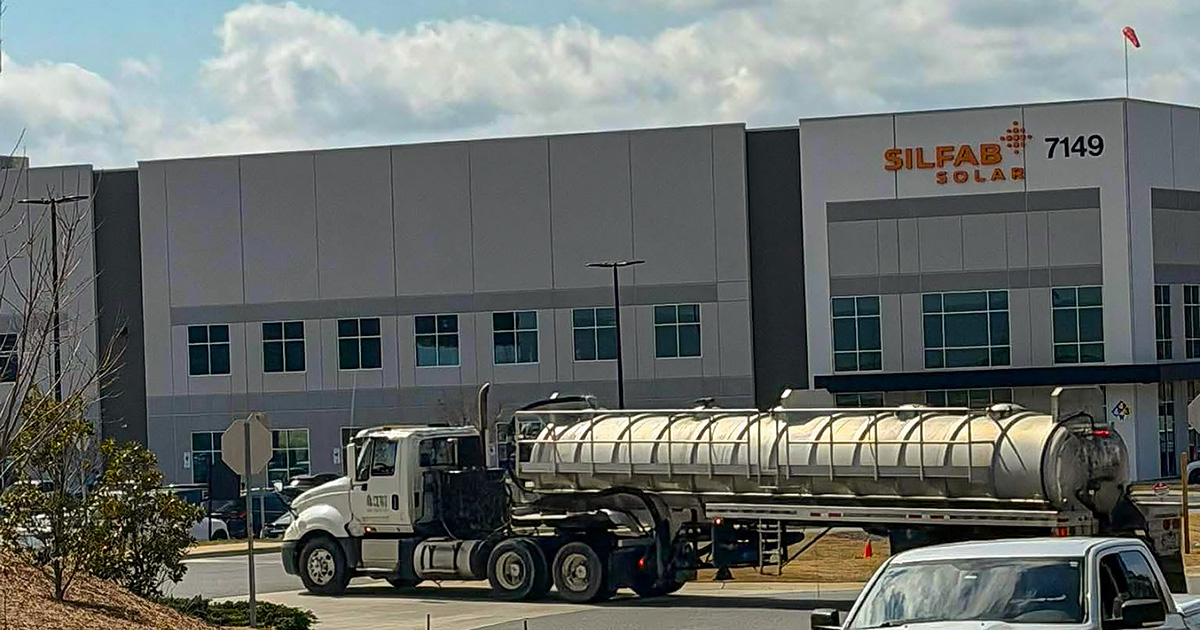
 Canada’s Silfab Solar has just announced plans to begin full-scale chemical manufacturing operations in Fort Mill – in spite of the York County Board of Zoning Appeals and the SC Circuit Court both ruling their proposed use unlawful.
This past August, Circuit Judge William McKinnon upheld the York County Board of Zoning Appeals decision and rejected all of York County’s claims that any permit or legal right was granted before their proposed use was ruled unlawful in a light industrial zoned area.
Silfab released a statement yesterday about starting full chemical manufacturing; “The Silfab commissioning schedule reflects that the restart of commissioning activities involving gases and chemicals no earlier than October 19, 2026. The schedule below (ref Table A) integrates and aligns the following elements”
About the same time yesterday, in clear coordination, York County officials also released a statement; “County leaders and staff will continue to work with Silfab Solar…as they work towards full commissioning at their facility.”
To be clear, this past August, Judge William A. McKinnon’s specifically ruled Silfab’s operations unlawful, stating in his ruling that:
“…the record affirmatively supports the BZA’s finding that the manufacturing process at issue is qualitatively distinct from the listed Computer and Electronic Products Manufacturing examples and is more consistent with heavy industrial activity than light. The Code defines Light Industrial as activity that “ordinarily do[es] not create noise, smoke, fumes, odors, glare, or health or safety hazards outside of the building or lot” and expressly excludes “hazardous material treatment and storage facilities…”
The court also rejected the major defenses used to justify the project’s zoning path. McKinnon found that the 2022 zoning verification letter was not a permit, was not a formal zoning code interpretation, and was not the decision under review. He also rejected the argument that York County Council’s FILOT tax agreement amended zoning law, stating that FILOT agreements are tax-incentive tools and do not change the zoning code.
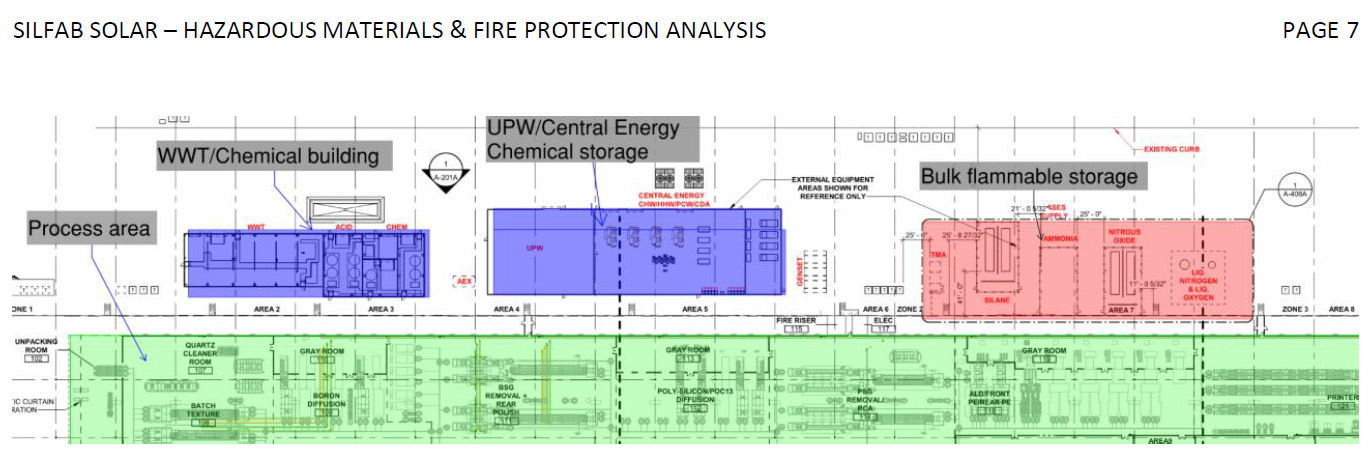
According to three technical documents submitted for the Fort Mill plant – including the facility’s Hazardous Materials Inventory System (HMIS) report, DES Air Permit, and Industrial Wastewater Treatment Plans — the factory is designed to transform raw silicon wafers into finished solar panels through a multi-stage industrial process involving strong acids, explosive gases, and chemical wastewater treatment systems.
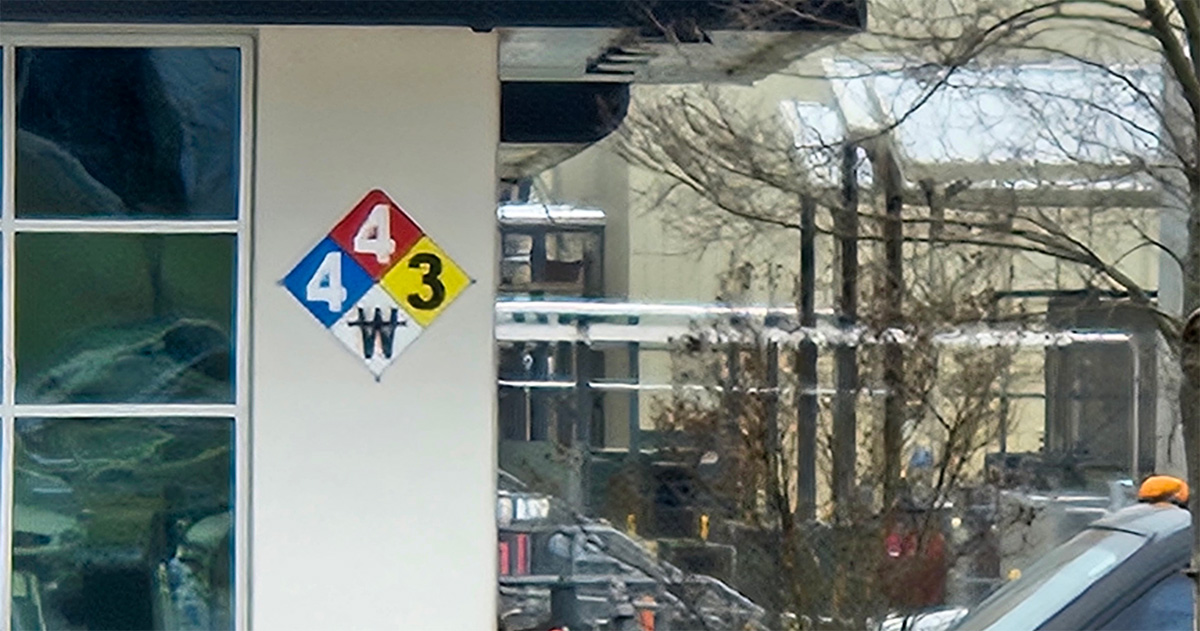
 The NFPA Fire Diamond posted on the side of Silfab’s building has a 4-4-3-W Rating.
Red (Top — Flammability Hazard: 4): Indicates extreme flammability. The material rapidly or completely vaporizes at atmospheric pressure and ambient temperature, or is readily dispersed in air and burns easily (flash point below 73°F). Yellow (Right — Instability/Reactivity Hazard: 3): Indicates serious reactivity. The material is capable of detonation, explosive decomposition, or explosive reaction if subjected to a strong initiating source, or when mixed with water under heat or pressure. White (Bottom — Special Hazard: W): The symbol is a stylized “W” (W with a slash through it), meaning water-reactive. It reacts violently or explosively with water and poses an unusual hazard when water is used as an extinguishing agent.
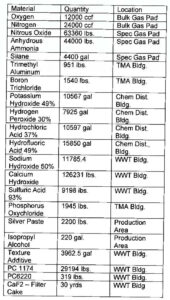
Some of the most hazardous materials Silfab’s documents state they plan on store and use (with frequent refills) include; 44,000 lbs of anhydrous ammonia gas, 26,456 lbs of (pyrophoric) silane gas, 15,850 gallons of hydrofluoric acid, 10,560 gallons of hydrochloric acid, 13,000 gallons of liquid oxygen (used as rocket fuel), 9,198 lbs of sulfuric acid, 1,945 lbs of phosphorus oxychloride gas, 1,540 lbs of boron trichloride gas, 951 lbs of (pyrophoric) trimethylaluminum gas, and 63,360 lbs of nitrous oxide.
An Overview of Silfab’s Manufacturing Process
Solar cell production follows a series of transformations that gradually turn slices of silicon wafers into complex mini-power plants.
The stages include:
-
Grey cell manufacturing
-
Blue cell manufacturing
-
Finished solar cell manufacturing
-
Finished panel (module) manufacturing
Each step alters the wafer’s structure using chemical reactions, high-temperature furnaces, and thin-film deposition systems.
By the end of the process, dozens of completed cells are connected together using high heat and chemicals into a finished solar panel (module) capable of generating electricity from sunlight.
However, the manufacturing chain also produces air emissions, chemical wastewater, and industrial sludge, which Silfab plans on reducing through pollution control equipment, onsite treatment systems, and offsite sludge dumping.
1. Wafer Manufacturing → Grey Cell
The process begins with silicon wafers, thin slices of purified crystalline silicon typically 200–300 micrometers thick.
Manufacturing steps
-
Chemical cleaning
-
Surface texturing
-
Semiconductor doping
-
Etching
Chemicals used
-
Hydrofluoric acid (HF)
-
Hydrochloric acid (HCl)
-
Potassium hydroxide (KOH)
-
Phosphorus Oxychloride (POCl₃)
-
Nitric acid (HNO₃)
-
Sulfuric Acid (H₂SO₄)
-
Boron Trichloride (BCL3)
High-temperature diffusion furnaces around 1000°C create the electrical p-n junction that allows the cell to generate electricity.
Waste produced
-
Acidic wastewater
-
Fluoride-containing wastewater
-
Silicon sludge
These wastes are typically treated to form calcium fluoride sludge for disposal.
At the end of this stage, the wafer becomes a grey cell.
2. Grey Cell Manufacturing → Blue Cell
 The grey cell then receives several thin coatings that improve electrical performance.
Manufacturing steps
-
Tunnel oxide layer formation
-
Polycrystalline silicon deposition
-
Surface passivation
-
Anti-reflective coating
The tunnel oxide layer is only 1–2 nanometers thick, while the poly-silicon layer is about 60–100 nanometers thick.
Chemicals and gases used
-
Silane (SiH₄)
-
Ammonia (NH₃)
-
Trimethylaluminum (TMA)
-
Nitrogen carrier gases
-
Aluminum oxide compounds
These coatings are typically applied using PECVD or LPCVD deposition systems.
Waste produced
-
Process gas exhaust
-
Nitrogen oxide emissions
-
Fine silicon particles
After the anti-reflective coating is applied, the device becomes a blue cell.
3. Blue Cell Manufacturing → Finished Cell
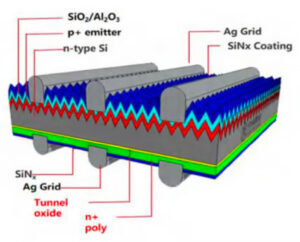 The next stage adds electrical contacts that allow current to flow out of the cell.
Manufacturing steps
-
Screen printing conductive pastes
-
Infrared drying
-
High-temperature firing
Materials used
-
Silver paste
-
Aluminum paste
-
Organic solvents
Waste produced
-
Volatile organic compounds (VOCs)
-
Metal particulates
-
Furnace exhaust gases
After metallization is complete, the device becomes a finished solar cell.
4. Finished Cell Manufacturing → Finished Panel
The final stage manufactures finished solar cells into a complete solar module.
Manufacturing steps
-
Cells are soldered together with copper ribbons to form strings
-
Encapsulation layers are placed above and below the cells
-
The assembly is laminated under heat and vacuum
-
A polymer backsheet, aluminum frame, and electrical junction box are installed
Chemicals and materials used
In addition to structural materials, this stage uses several chemical components:
-
EVA (ethylene-vinyl acetate) used as an encapsulating agent
-
Polymer backsheets (often PET-based laminates)
-
Silicone or polyurethane sealants
-
Flux chemicals and potting compounds
VOC and TAP emissions produced
During the high-heat lamination and curing process, several materials release volatile organic compounds (VOCs) and toxic air pollutants (TAPs). According to Silfab’s Air Permit, “The VOC and HAP/TAP emissions from this area [module manufacturing] will be vented outside through the general area exhaust system.”
Wastewater and Fluoride Sludge
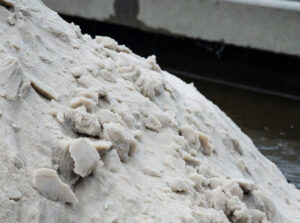
Silfab’s factory would use over 1.2 million gallons of water per day and would generate significant volumes of chemical wastewater.
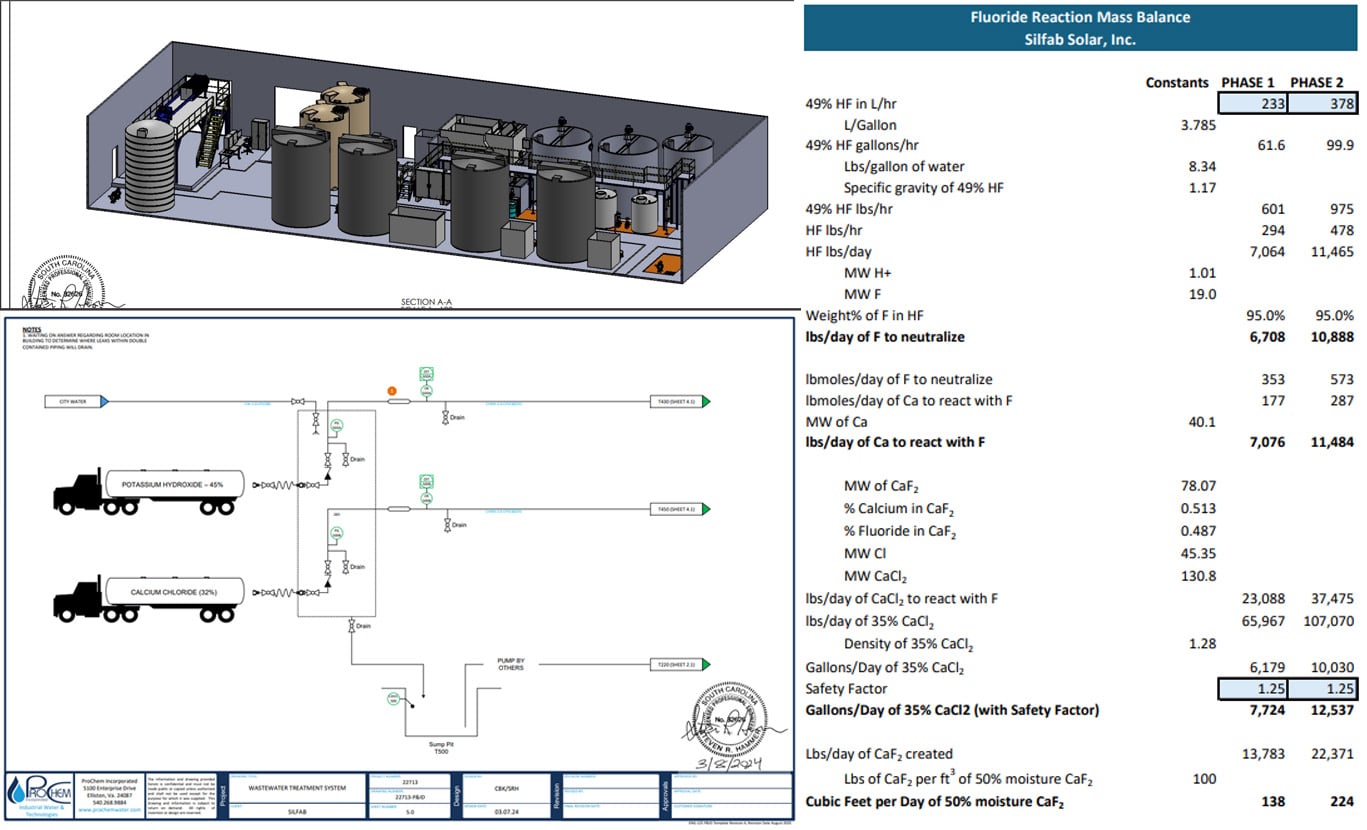
According to Silfab’s wastewater treatment design documents, the plant is expected to treat wastewater containing:
-
hydrofluoric acid
-
potassium hydroxide
-
hydrochloric acid
-
metal residues
-
dissolved silicon
Treatment process
The wastewater system neutralizes acids and bases and removes fluoride through precipitation reactions.
Hydrofluoric acid reacts with calcium compounds to form calcium fluoride sludge, which must be collected and disposed of as industrial waste.
Can Silfab Legally Operate in “LI”?
There is a growing number of Fort Mill residents, now numbering in the thousands, calling for the facility to move to a different location given its size, chemical usage, and the pollution and waste it would create.
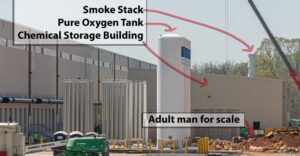 York County’s zoning code clearly states that “Light Industrial does NOT include hazardous material treatment or storage facilities.” (York County Code §155.1301).
Under the code, “the Zoning Administrator must issue formal zoning compliance approval before permits are valid.” (York County Code §§155.1122–1123). In spite of numerous FOIA requests and private meetings, York County officials have still never produced a signed zoning compliance letter for Silfab’s operations – without one, all of Silfab’s permits and their Certificate of Occupancy would be legally void (according to SC Peterson v. Greenville County, 2011, “An invalid zoning permit issued in violation of applicable zoning laws confers no rights and is void ab initio”).
The Attorney General of South Carolina, Alan Wilson, has also confirmed that the York County Council has the authority to revoke Silfab’s CO if they do not have proper zoning approvals.
The law is clear – the BZA has ruled Silfab’s proposed operations were unlawful before they received their first permit to build their factory. A judge has now upheld the BZA’s ruling and confirmed that Silfab had no permits before their proposed operations were ruled unlawful.
The fact that Silfab stated they plan on start unlawful chemical manufacturing operations is especially troublesome for York County officials.
Under S.C. Code §6-29-950, “No permit may be issued or approved” unless state planning law and local zoning ordinances are followed. The same statute states, “A violation of any ordinance adopted pursuant to the provisions of this chapter is a misdemeanor… Each day the unlawful erection, construction, reconstruction, alteration, conversion, maintenance, or use continues is considered a separate offense.“
No court has yet declared any specific county official guilty of a misdemeanor, and no prosecutor has yet announced charges. But if Silfab’s unlawful use does indeed begin this month, the first potential daily violator would likely be Silfab as the operator of the facility. Exeter, the property owner, could also face scrutiny if it knowingly allowed or benefited from a prohibited use on its property (Exeter is currently receiving an estimated $500k per month, according to Silfab’s lease).
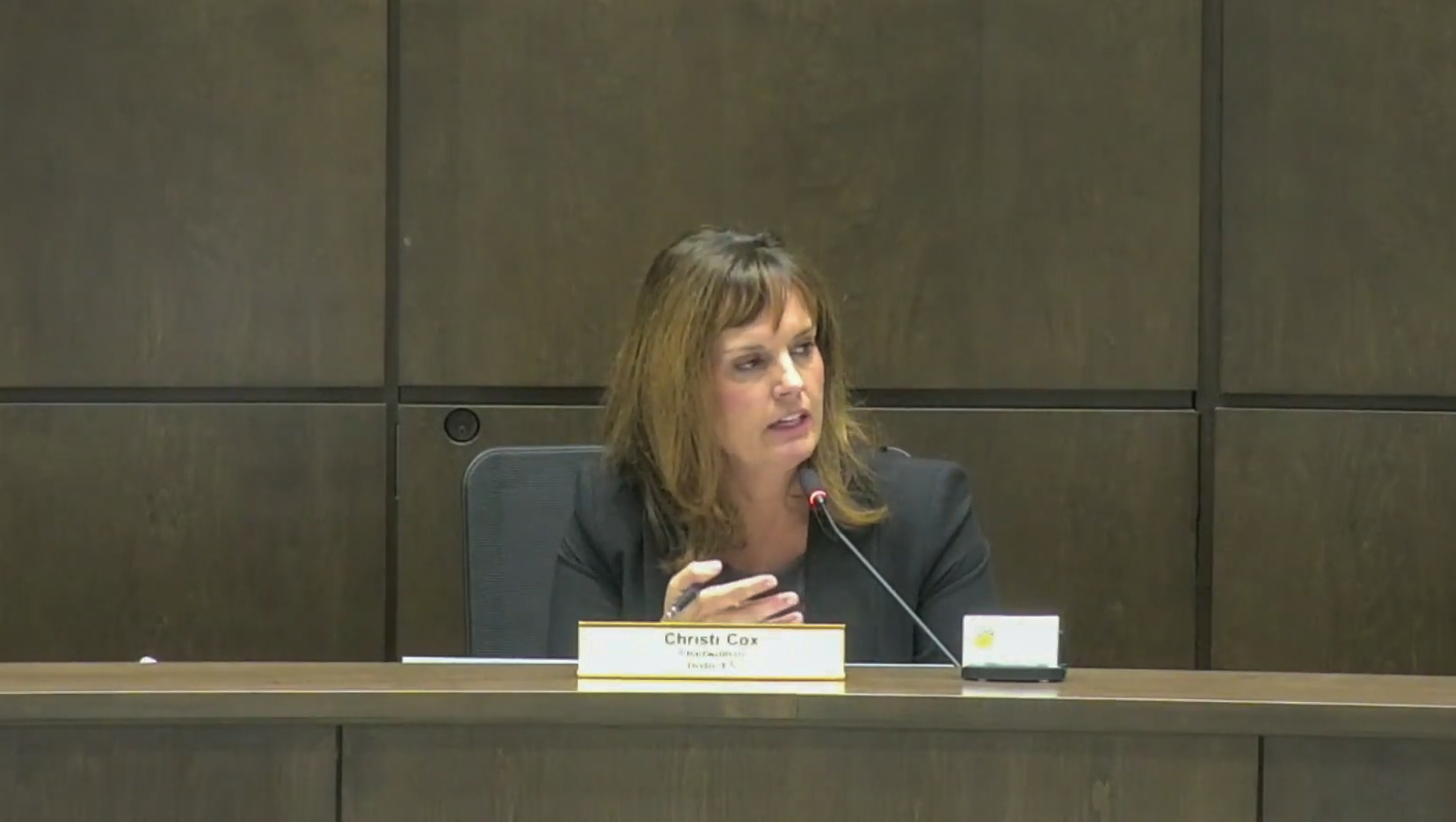 A number of county officials might also be held responsible if unlawful permits or occupancy approvals remain in place. The most obvious scrutiny would fall on the County Manager, the Planning & Development Services director Jonathan Buono, Development Services Manager Josh Reinhardt, Building Official Jennifer Culver, and Zoning Administrator Rick Abboud. It could also include lower-level planning and development officials who continue processing, honoring, or defending approvals tied to a zoning classification the BZA and Circuit Court have now rejected.
County Council members, especially Chair Christi Cox, could also face charges if it was found that council members knowingly directed staff to ignore the ruling, refuse enforcement, or ratify continued occupancy without a lawful zoning basis.