
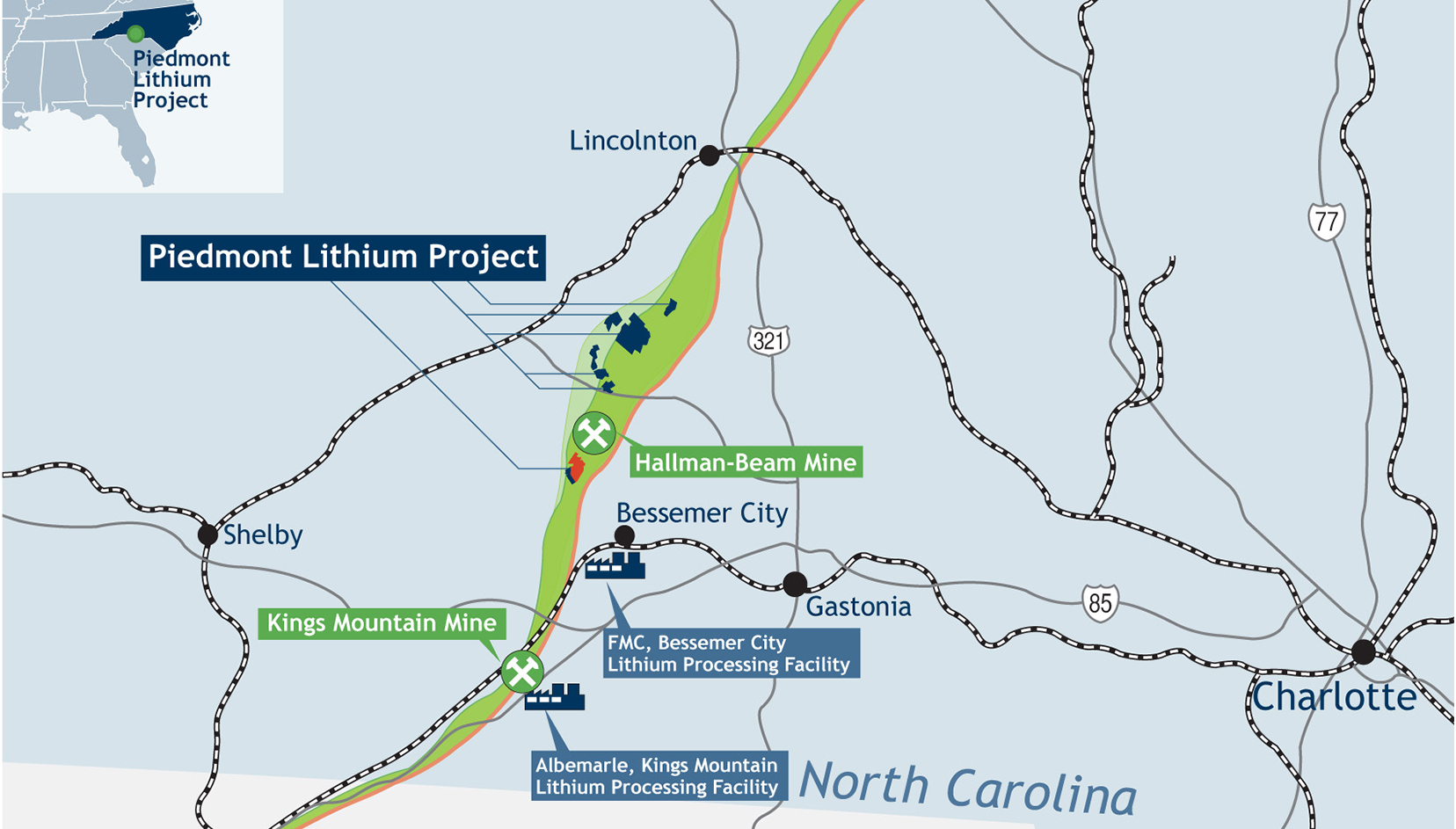
 A proposed 1,548-acre lithium mine about 25 miles west of Charlotte has cleared a major state permitting hurdle.
North Carolina issued Carolina Lithium its final air permit this week. The project would combine open-pit mining with an on-site chemical plant producing battery-grade lithium hydroxide.
The permit classifies the operation as a major-source Title V facility because several projected air pollutants exceed federal review thresholds.
Those include particulate matter, nitrogen oxides and carbon monoxide. Hazardous air pollutant emissions must remain below 10 tons annually for any single pollutant and 25 tons combined.
The mine would be operated by Piedmont Lithium Carolinas, now part of Elevra Lithium.
The last detailed feasibility design called for mining roughly 1.95 million metric tons of ore annually. It was designed to produce 242,000 tons of spodumene concentrate and 30,000 tons of lithium hydroxide each year.
That older plan carried an estimated $914 million construction cost. Elevra now says it will complete a new scoping study in 2027 before deciding whether to build.
The project would involve far more than digging rock.
Ore would be blasted, crushed, ground and separated before being heated to roughly 1,050 degrees Celsius. Lithium would then be extracted inside pressurized vessels operating above 392 degrees and roughly 290 PSI.
Company engineering documents identify substantial chemical use.
The 2023 feasibility study estimated consumption of about 5.68 metric tons per hour of sodium carbonate and 4.47 tons per hour of calcium hydroxide. It also listed hydrochloric acid, sodium hydroxide, trisodium phosphate, sulfuric acid, carbon dioxide and flotation chemicals including methyl isobutyl carbinol.
Hydrochloric and sulfuric acid can cause severe burns and respiratory injury. Sodium hydroxide and calcium hydroxide are caustic, while MIBC is a flammable liquid.
The finished lithium hydroxide is also classified as a corrosive material, although it is not itself combustible.
Mining would require blasting as well. Earlier company plans called for an explosives magazine and emulsion-based blasting agents activated inside drilled holes.
The project still needs Gaston County zoning approval. County rules require a site-specific rezoning process for uses that need conditional approval.
Earlier project documents said mining required industrial I-3 zoning and local approval. Nearby properties remain largely rural and residential, including R-1 homesites bordering or sitting within a fraction of a mile of the proposed mine.
Elevra says its next major decision will follow a new project study expected in the second half of 2027. Construction would still depend on rezoning, financing and finding a partner for the chemical-processing portion.