
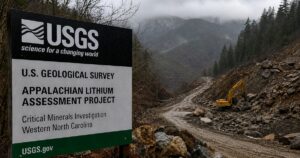
 A new report released by the U.S. Geological Survey (USGS) has just confirmed that the Appalachian Mountains are sitting on a massive, previously undiscovered lithium deposit worth an estimated $64 billion.
According to the federal data, the region contains 2.3 million metric tons of recoverable lithium—enough to power the United States’ energy needs and replace over 300 years of imports from China.
“This research shows that the Appalachians contain enough lithium to help meet the nation’s growing needs – a major contribution to U.S. mineral security, at a time when global lithium demand is rising rapidly,” said USGS Director Ned Mamula in a press release. “USGS mineral science is the leading edge in the effort to restore America’s mineral independence by mapping our nation’s mineral resources. Everything else follows on the science: permitting reform and other policy changes to support investment in clean, responsible mining to 21st century standards, and mining workforce training for new American jobs. The United States was the dominant world producer of lithium three decades ago, and this research highlights the abundant potential to reclaim our mineral independence.”
While lithium mining is a known industry in the region, this discovery is different. For decades, the focus was centered on the Kings Mountain site in Cleveland County, which has been dormant since the 1980s. But this new USGS assessment identifies a massive concentration of lithium-rich pegmatite stretching far beyond the old mines, with much of it located in the very areas of Western North Carolina that were devastated by Hurricane Helene.
Exposed by the Storm?
 In the months following the catastrophic 2024 storm, conspiracy theories flooded social media, with many locals claiming the government was “clearing the land” to access hidden minerals. At the time, officials and fact-checkers dismissed these claims as baseless, noting that the lithium mine in Cleveland County was nearly 100 miles away from the hardest-hit zones like Chimney Rock and Asheville.
However, the new 2026 USGS findings suggest the skeptics may have been onto something. The report reveals that the “undiscovered” lithium was identified through systematic geochemical sampling and geophysical surveys that were accelerated following the 2024 landslides. In many cases, the literal “rubble” and exposed mountainsides carved out by Helene’s floodwaters provided geologists with unprecedented access to the deep-crust pegmatites that hold the “white gold.”
A “Great Find” with a Complicated History
The head of the EPA has called the find a “game-changer” for national security, noting that it could finally break the U.S. dependence on China for the critical minerals needed for EVs, smartphones, and defense tech.
But for residents of Western North Carolina, the news is bittersweet. The 800-acre Albemarle site in Kings Mountain recently secured a $90 million purchase agreement from the Department of Defense to restart operations, but this new discovery opens the door for massive mining expansion into the heart of the Appalachian foothills.
Was the “Crazy” Theory Right?
For many who lived through the “Helene Lithium” social media firestorm, the $64 billion discovery feels like a strange validation. While there remains no evidence that the hurricane was “manipulated,” the fact that a world-altering mineral deposit has been confirmed exactly where theorists said it was—under the very ground shifted by the storm—has shifted the conversation from “conspiracy” to a very real debate over land rights and corporate interest.
As the federal government moves to fast-track extraction in the southern Appalachians, Charlotte-area residents are left wondering: Is this an economic miracle for the Carolinas, or the beginning of a fight for the soul of the mountains?