
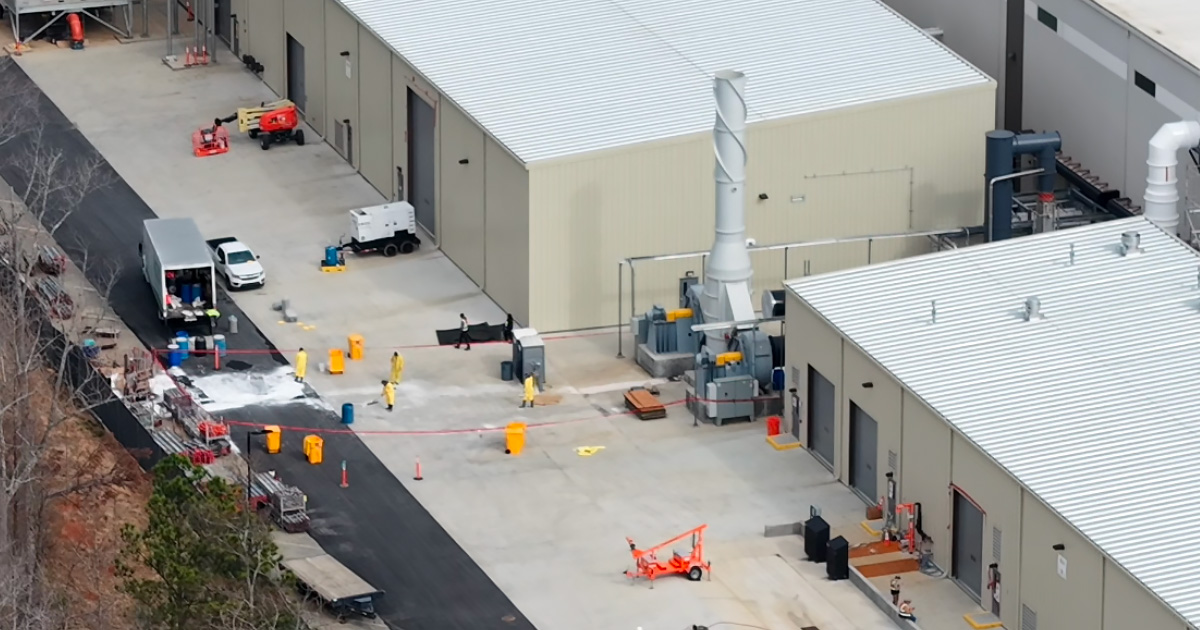
 York County officials have received repeated warnings about Silfab’s unlawful zoning, chemical hazards, and unsafe proximity to schools and neighborhoods. If county officials continue to allow a prohibited heavy industrial use in a light industrial zone and a chemical accident causes mass casualties, those warnings—and the decisions made afterward—could become central evidence against the county.
The worst legally supportable outcome includes wrongful-death claims, federal damages beyond state tort caps, major public recovery costs, personal liability, and criminal prosecution where the required elements are proved.
This analysis assumes a catastrophic accident and successful proof of the relevant claims. It describes potential exposure, not a prediction or a finding that anyone is already liable.
The record of advance warning
Several records would be central to post-disaster litigation:
- The court ruling. Last month, Judge William McKinnon affirmed in finality the BZA’s decision that solar-panel manufacturing is prohibited in Light Industrial zoning (a decision that was made before Silfab received any permits to build their factory). The order rejected the proposed computer/electronics classification, treated the 2022 verification letter as an informal communication rather than a permit, and rejected FILOT as zoning authorization.
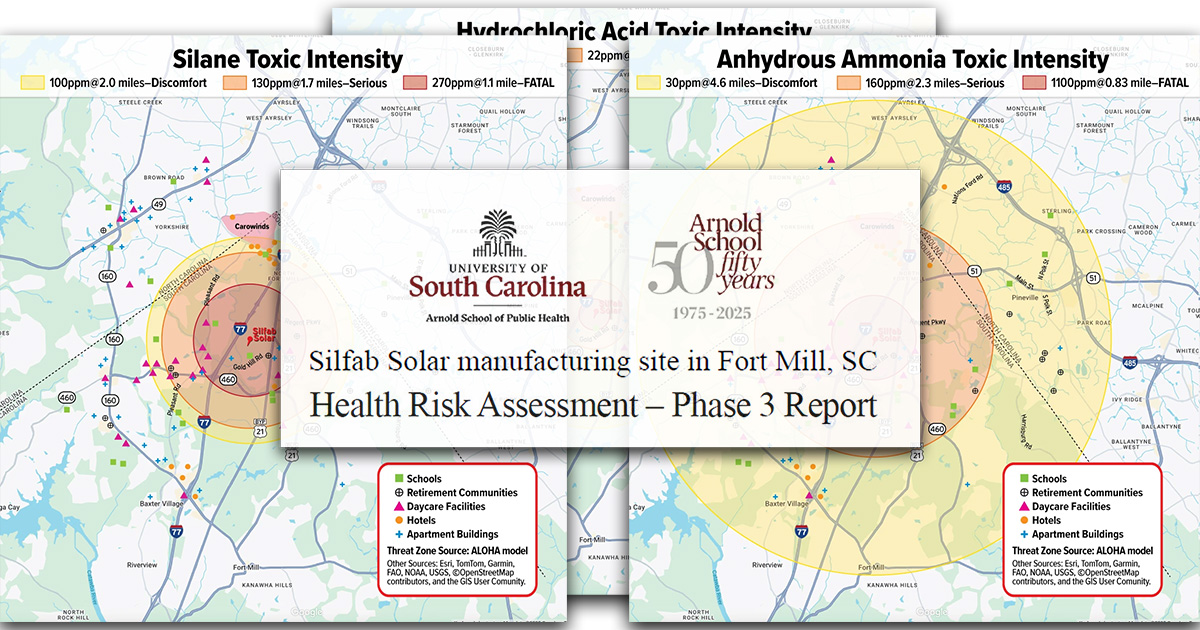
- The USC assessment. The December 2025 Phase 3 report (which was personally handed to each York County Council member) models chemical releases capable of causing “life-threatening effects or death.” It addresses nearby schools, children’s vulnerability, failed safety systems and delivery accidents outside the facility’s safeguards. These are modeled catastrophic conditions.
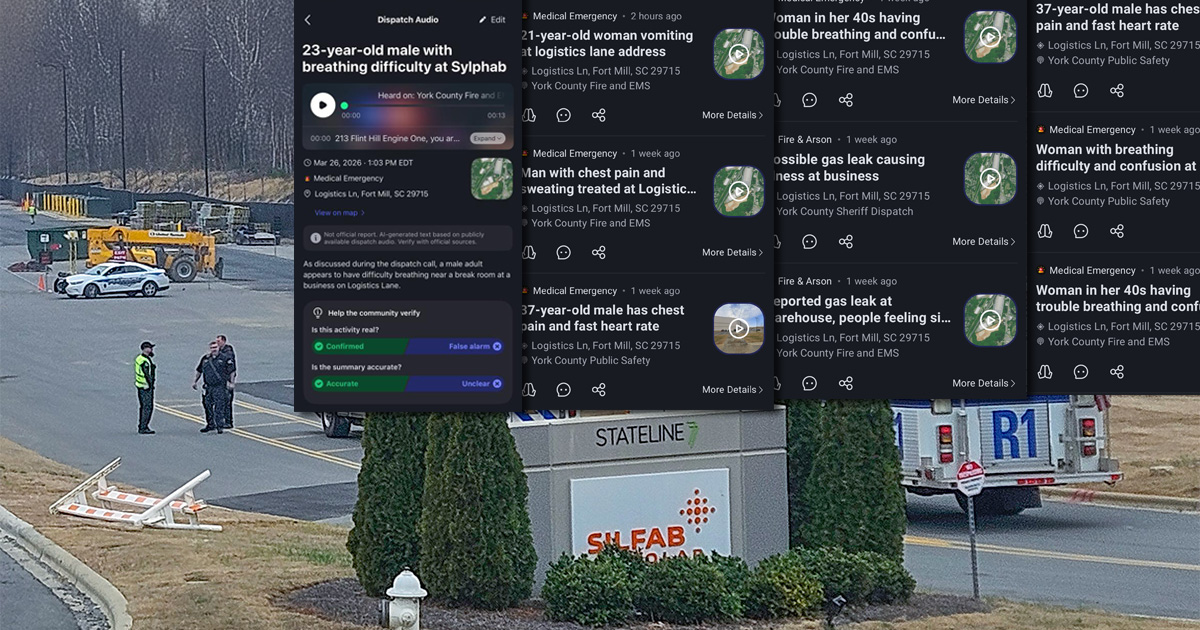
- The county’s own safety findings. Its June 24, 2025 stop-work order documented unsafe conditions, including obstructed exits and inoperable fire-protection systems.
- An actual chemical spill. DES’s March 3, 2026 letter documented potassium hydroxide escaping containment into a retention pond and called for a pause in additional chemical receipts and start-up. There was later confirmed to be a second chemical spill of hydrofluoric acid.
- The approval records. Residents report repeated FOIA requests without production of the required zoning-compliance approval. Council should require the actual application, approved site plan, inspection and final or qualifying temporary approval, together with the legal basis for the authorized use.
Dated emails, delivery receipts, meeting records and acknowledgments should identify exactly which officials received each warning.
York County has enforcement tools
State and county law provide mechanisms to prevent unlawful construction, occupancy and use:
- S.C. Code § 6-29-950: zoning enforcement, stop orders and court remedies.
- York County § 150.23: building permits require zoning compliance.
- § 150.26: improperly issued permits may be suspended or revoked.
- § 155.1206: the Zoning Administrator’s duties include investigating violations and discontinuing illegal uses.
- § 155.9999: stop-work, permit and certificate revocation, and judicial remedies.
A particularly relevant local precedent is McCrowey v. Zoning Board of Adjustment of Rock Hill, 360 S.C. 301 (2004). The court upheld zoning enforcement despite previously issued occupancy and zoning-compliance certificates. The administrator’s authority to administer the ordinance did not include authority to waive it.
That case supports demanding lawful enforcement even when earlier county approvals contributed to the problem.
South Carolina liability: gross negligence in permitting
S.C. Code § 15-78-60(12) expressly addresses issuing permits and certificates—and failing or refusing to revoke them. It permits governmental liability when those licensing functions are exercised with gross negligence.
The strongest South Carolina analogy is Steinke v. S.C. Department of Labor, Licensing & Regulation, 336 S.C. 373 (1999). Two young people died after a cable-car accident. Regulators had received repeated warnings about unsafe equipment. The Supreme Court recognized licensing-related gross-negligence liability and held that injured third parties could invoke the statutory exception.
The argument here would be specific: officials received warnings identifying a potentially lethal hazard, possessed applicable permit or certificate powers, and exercised those functions with gross negligence, causing preventable deaths or injuries.
Jensen v. Anderson County DSS, 304 S.C. 195 (1991) supplies the framework for establishing a duty to an identifiable protected class. A Silfab claim should connect applicable zoning and life-safety provisions to the affected schoolchildren, staff and nearby residents.
The general state tort limits remain $300,000 per person and $600,000 per occurrence. Gross negligence does not eliminate those limits. Boiter v. S.C. Department of Transportation, 393 S.C. 123 (2011) permits separately proved occurrences arising from distinct causal negligence; neither the number of victims nor the number of permits automatically multiplies the cap.
Federal liability can exceed the state tort caps
A separate route exists under 42 U.S.C. § 1983 and the Fourteenth Amendment.
For this worst-case scenario, assume evidence establishes that officials affirmatively created or increased a specific lethal danger, acted with constitutionally sufficient culpability, and caused deaths or serious injuries. The challenged conduct must also be attributable to county policy or an official with final policymaking authority.
The investigation would focus on the county’s own acts: authorizations issued after notice, directions facilitating hazardous operations, participation in exposing a defined group, and decisions adopted by an actual final policymaker. A zoning violation alone does not establish the constitutional injury.
Several precedents define this route:
- Monell v. Department of Social Services, 436 U.S. 658 (1978): local governments can be liable for constitutional injuries caused by their policies or customs.
- Pembaur v. City of Cincinnati, 475 U.S. 469 (1986): a single decision by an authorized final policymaker can constitute governmental policy.
- Callahan v. N.C. Department of Public Safety, 18 F.4th 142 (4th Cir. 2021): the governing danger-creation doctrine requires affirmative conduct directly creating or increasing the danger.
- Guertin v. Michigan, 912 F.3d 907 (6th Cir. 2019): Flint residents’ bodily-integrity claims proceeded against certain officials accused of knowingly participating in supplying contaminated water. This provides a persuasive chemical-exposure analogy involving affirmative government participation.
- Owen v. City of Independence, 445 U.S. 622 (1980): municipalities cannot claim their officials’ qualified immunity as a defense to municipal liability.
If a county-caused federal constitutional violation is established, South Carolina’s tort caps do not set the ceiling on federal compensatory damages. Prevailing plaintiffs may also recover reasonable attorney fees under 42 U.S.C. § 1988.
The potential cost to taxpayers
There is no fixed statutory maximum covering the combined federal judgment, litigation expenses and public recovery costs.
For illustration, assume a collectible county judgment awards $10 million in recoverable compensatory damages to each of 100 people killed or catastrophically injured. That produces $1 billion, before recoverable attorney fees and public recovery expenses.
Those figures are hypothetical scenario arithmetic. They are not estimates of casualties or likely awards.
Additional public costs could include:
- Emergency response, hazardous-material cleanup and infrastructure restoration.
- School disruption, temporary classrooms, transportation and remediation.
- Years of litigation, expert investigations and defense expenses.
- Uninsured judgments, deductibles and losses exceeding policy limits.
County and school-district budgets are separate, although their taxpayers overlap. The ultimate taxpayer burden would depend on insurance, assistance and recoveries from other responsible parties.
Individual officials could face personal exposure
 Federal claims can also target officials who personally participated in a constitutional violation, where qualified immunity is overcome. Smith v. Wade, 461 U.S. 30 (1983) permits individual punitive damages for reckless or callous indifference to federal rights. The county itself is immune from § 1983 punitive damages under City of Newport v. Fact Concerts, 453 U.S. 247 (1981).
Under S.C. Code § 15-78-70(b), employee immunity does not protect conduct outside official duties, actual fraud, actual malice, intent to harm or a crime involving moral turpitude. Gross negligence alone does not establish this personal-liability exception.
Criminal exposure requires separate proof:
- Misconduct in office: willful and dishonest breach of public duty, potentially through an omission. State v. Hess, 279 S.C. 14 (1983), addresses that offense; State v. Harrison, Opinion No. 28005 (2021), identifies a maximum ten-year sentence.
- Involuntary manslaughter: up to five years under § 16-3-60, where criminal recklessness and responsibility for a death are established.
- Loss of office: applicable South Carolina statutes provide for suspension or vacancy under their stated conditions.
- Federal criminal civil-rights liability: 18 U.S.C. § 242 permits life imprisonment when a willful deprivation of a federal right causes death. Its statutory outer limit also includes the death penalty, subject to separate capital-sentencing requirements. Those outcomes require proof of the criminal elements beyond a reasonable doubt.
The action requested from County Council
Council should direct the responsible officials and county counsel to:
- Produce the complete zoning-approval and permit record, including the lawful-use basis for the CO.
- Pursue immediate lawful suspension or revocation of authorizations supporting the prohibited use, with required notice and procedures.
- Secure cessation of that use and emergency judicial relief where necessary, before chemical receipt or commissioning creates additional exposure.
- Preserve all relevant records, including emails, texts, permit revisions, inspection histories, warnings and incident records.
- Disclose the county’s actual financial protection, including coverage limits, exclusions and potential uninsured exposure.
The county’s September 30 update states that chemical and gas recommissioning is not scheduled before October 19, 2026, with advance notice required. That provides a current opportunity to resolve the enforcement questions.
If the warned-of catastrophe occurs, what officials knew, what they authorized and what they could lawfully have prevented will become central evidence. Council should use its available authority now to protect nearby families, schoolchildren and taxpayers.