NC Governor Issues Sweeping Statewide ‘Stay At Home Order’ Punishable By Misdemeanor

0

The Governor of North Carolina has just issued a sweeping ‘Stay at Home Order‘ in yet another major step toward attempting to reduce the spread of COVID-19.

This afternoon, Governor Cooper noted that 3 North Carolinians have already died from the virus and 763 positive cases have now been confirmed across North Carolina.

“To continue our aggressive battle against COVID-19, I have signed a Stay at Home Order for the entire state of North Carolina. Though it is difficult we must do this to slow the disease spread,” said Governor Cooper. “We need our medical system to be able to care for the friends and family we know will become seriously ill from the virus.”

Governor Cooper’s order will officially take effect this coming Monday, March 30th starting at 5pm.

The order specifically reduces the size of allowed gathers anywhere in the state to no more than 10 people, and orders all residents to stay home unless food, medicine, exercise, help, or essential work is needed.

Any violation of the order is punishable by a Class 2 misdemeanor.

For additional information, you can read the complete Stay At Home Order here or read the list of the states’s FAQs about the order here.

NC Restaurant Workers Relief Fund Now Giving Cash To Those Affected By COVID-19 Shutdown

0

The North Carolina Restaurant and Lodging Association (NCRLA), the trade association behind NC’s $23.5 billion hospitality industry, has launched a relief fund to provide fast access to cash for restaurant and hotel workers immediately affected by the COVID-19 pandemic. The NC Restaurant Workers Relief Fund will support any of the tens of thousands of restaurant and hotel employees now facing significant financial hardship as North Carolina businesses curtail services in efforts to encourage social distancing and slow the spread of the novel coronavirus. The goal of the NC Restaurant Workers Relief Fund is to provide qualified applicants with $500 to help with the immediate expenses faced by many who have suddenly found themselves without work.

“Within a matter of days, we have seen the majority of workers in the hospitality industry laid off, furloughed or completely sidelined,” said Steve Thanhauser, NCRLA chair and co-owner of Raleigh’s famed Angus Barn Steakhouse. “These are the people responsible for shaping our best experiences at our favorite restaurants, bars and hotels. While we are all facing an uncertain financial future, these workers are living a harsh new reality immediately. It’s our duty to show them how much we value their work and wellbeing by doing what we can to help them out.”

The NC Restaurant Workers Relief Fund will be run through the NCRLA Foundation, the association’s long-standing nonprofit arm which has provided financial assistance to hospitality employees and students for more than a decade. Created in response to the overwhelming number of applications to localized relief efforts popping up across the state, organizers behind the new fund hope that a consolidated effort will enable those affected to more easily access the financial help they need. It also welcomes employees from all facets of the hospitality industry to apply, including those working in bars and hotels. NCRLA’s track record for advocacy in the industry has also created opportunities for donors to join the effort, showing their unwavering support to those in need.

The Triangle Restaurant Workers Relief Fund, organized by Raleigh-based chef and restaurateur Ashley Christensen, will find a home within this new, larger fund, as well. Christensen worked with the Frankie Lemmon Foundation, a local educational nonprofit, to quickly create a place for people to donate as restaurants began to close their dining rooms and communities rallied in support of their favorite places. Within days of its launch, the influx of applications from those seeking financial help quickly topped 4,000. Donations initially submitted through the Triangle fund will be disbursed among those original applicants in the Triangle area.

“So many people reached out to ask how they could help, so we called on our community to help us get the fund off the ground quickly,” said Christensen. “The goal was always for industry leaders to unify these efforts to make it as simple as possible for people to donate and as efficient as possible for people to receive the assistance they need. The need of workers who have immediately been laid off is so significant, and we have to stand together to get through this.”

The NC Restaurant Workers Relief Fund is now open for any NC-based hospitality employees experiencing significant financial hardship related to the COVID-19 pandemic. Each applicant will be eligible to receive up to $500 in assistance, and determinations for the awards will be based on the level of demonstrated need, the number of years worked in the hospitality industry, and employer’s verification. Applications will be reviewed and with a goal of awarding funds to qualified recipients as soon as possible.

“We want to show compassion and give help to those people who have taken care of us so many times,” said Michele Stone, President of The Stone Agency, the strategic marketing firm which partnered with NCRLA to bring forth the statewide effort. “These are the people who are hurting the most in the early stages of this crisis. Together we are doing our best to serve those who have served us when they need it most.”

To apply for assistance, learn more information about the fund or to donate to the NC Restaurant Workers Relief Fund, visit: www.ncrestaurantrelief.com

Charlotte-Area Distillery Switching From Whiskey to Hand Sanitizer

0

In the midst of this historic pandemic, hospitals, grocery stores, and first responder are finding it increasingly difficult to supply hand sanitizer.

One Charlotte-area distillery has now decided to change that reality, at least here in our region.

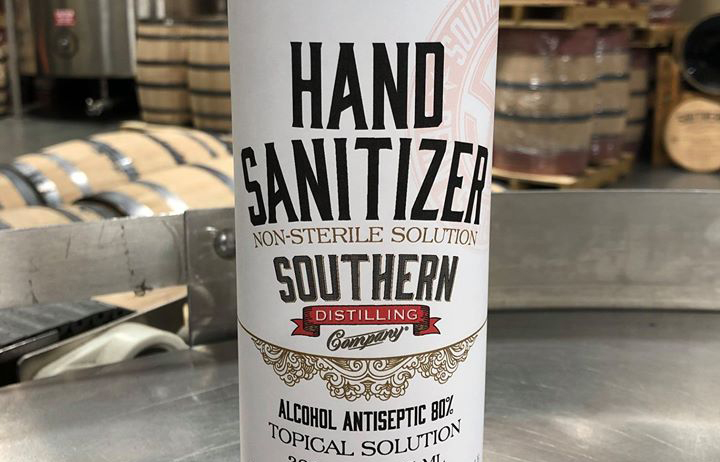
Statesville-based Southern Distilling Company has announced that they would be switching their focus from making high-profit whiskey to making hand santizer, likely costing them more to make than what they will be selling it for.

According to the company, their small-batch hand sanitizer will contain exactly 80% alcohol, with the remaining 20% consisting of World Health Organization recommended ingredients according to their approved formula

The bottles will be available for commercial purchases only and priority will be given to essential businesses. You can now place orders on their website at SouthernDistilling.com, or by phone at 704-978-7175.

Arts Council of York County Announces New Grant Recipients

0
The Arts Council of York County is pleased to announce the allocation of Small Grant awards for the fourth quarter of the 2019-2020 fiscal year. Small Grants are available to individual artists, non-profit organizations, teachers and schools throughout York County. These grants are designed to support specific arts activities that promote the individual artist’s professional development or career advancement and/or to support a wide variety of quality arts projects and programs that promote excellence in arts disciplines and make such disciplines accessible for general community-wide audiences.
Organizations and individual artists residing in York County, SC may request up to $1,000 per grant and may receive up to two grants each calendar year. The Arts Council awarded Small Grants to six artists, teachers and organizations for the 4th Quarter of 2019-2020. Recipients include:
Concerts at the Courtroom | $1,000
Don’t Sweat It FEST
The 9th Annual Don’t Sweat It FEST returns in 2020! This music and arts festival is a 3-day celebration of the spirit of summer. The local and regional bands selected to perform at the festival each year are some of the hottest acts around, with many making their return appearances to the Courtroom at the Gettys Art Center. Kayla Frost curates the art sale in the lobby of this year’s event. This Small Grant will help cover the cost of the bands, marketing, and staff. | https://www.facebook.com/dontsweatitfest/
Patrick Faile | $1,000
Solo Exhibition
York County artist Patrick Faile is preparing 40 works of watercolor art for two scheduled solo exhibitions with Union County Arts Council and the City of North Charleston. Both exhibitions depict the US and Canadian National Parks. The mission of these exhibits is to garner support for the US National Park Service and to inform the public about the mission of the US Park Service. Faile also hopes to draw attention to the role that art has played in the creation of the National Parks and about watercolor as a major art medium. Patrick will use this Small Grant to frame the artwork intended for exhibition. | https://www.patrickfaile.com
Beth Melton | $1,000
The Coverlet Project
The Coverlet Project is a textile research project inspired by a mid-19th century overshot coverlet in the collection at the Historical Center. It is a volunteer-driven and site-supported project that required a wide range and depth of research skills, bringing together a number of entities including the Culture and Heritage Museums, the fiber arts community, the community-at-large, and Winthrop University. The project resulted in a handwoven coverlet produced on-site and is currently on display on a bed at Historic Brattonsville. The Coverlet Project research will be presented at the National Association for Living History, Farm and Agricultural Museums (ALHFAM) Annual Meeting and Conference in Boston and Sturbridge, MA. This conference represents the ideal venue at which to share this research. This Small Grant offsets the cost of attending the conference and travel expenses.
Women’s Arts Initiative | $1,000
Haiku II & Drive the Arts
The Women’s Art Initiative enhances the quality of life for the greater Rock Hill area by reflecting its cultural values and artistic vitality through public art. The Women’s Art Initiative is set to stencil 25 new haiku poems on sidewalks in Rock Hill’s Cultural District. The Small Grant will be used to produce the stencils, purchase paint, brushes, rollers, and tape needed to place the poetry on sidewalks.
Drive the Arts is a driving tour of the public artworks on display throughout Rock Hill. Funds from this Small Grant will also be used to produce a printed brochure. | https://womensartinitiative.org
Visit York County | $1,000
Ag + Art Tour of York County
The Ag + Art Tour is a free, self-guided tour of farms and markets featuring local artisans at every stop! During the tour, visitors have the opportunity to see first-hand where their food comes from, watch artists in action, and to purchase their works. Visitors can also enjoy the melodies of local musicians, and learn about rural life. The Tour is the largest free farm and art tour in the nation, with more than 45,000 visitors participating since 2012.
The Ag + Art Tour began in York County in June of 2012 as a single weekend-long event. As the largest tour county in South Carolina with more than 20 farms and more than 60 artists and artisans, in 2019, the York County tour grew to encompass two weekends – with the eastern half of the county participating on the first weekend, and the western half of the county participating on the second. In 2020, the York County Tour is set to welcome visitors to its farms on June 6 and 7, and June 13 and 14. This small grant will be used for marketing expenses related to the Ag + Art Tour of York County.  | https://agandarttour.com/york/
Total Allocations This Quarter: $5,000
During the fourth quarter, a special round of grants was issued to the following artist:
Phil Moody | $555
Art Project at the Lowenstein Building
     Artist Phil Moody is producing a new series of 10 photographic works to be displayed in the newly renovated Lowenstein Building in Rock Hill, SC. This series will commemorate the role of The Bleachery in Rock Hill’s growth and will honor the workforce that ran the plant from 1929 – 1988. This Small Grant will be used to cover artist fees in the production of the eight 120”x120” and two 120”x240” works of art. | https://www.philmoodyphotography.net/
Total Special Allocations: $555
GRAND TOTAL ALLOCATED: $5,555
To review guidelines, visit www.yorkcountyarts.org/grants. The next deadline is Monday, June 1, 2020 at 5 PM for programs occurring in July, August, and/or September 2020. Prospective applicants MUST discuss the proposed project with the Executive Director at least 10 days in advance of the application deadline date. Should the deadline fall on a holiday or weekend, grant applications are due the last business day prior to the deadline.
This Small Grants program is funded in part by the South Carolina Arts Commission (which receives funding from the National Endowment for the Arts), and the John and Susan Bennett Memorial Arts Fund of the Coastal Carolina Community Foundation, and Comporium Communications.

Tired of Empty Shelves? Let Stores Raise Their Prices – Op-Ed From UNC Charlotte Professor

0

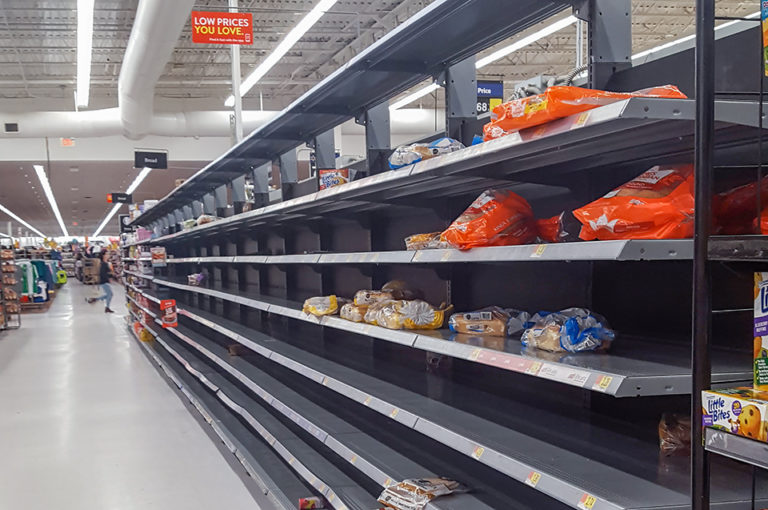
Three weeks into the coronavirus impact in the US, many grocery stores are sill having trouble keeping necessities in stock. Visiting five different grocery stores yesterday, there was only scarce amounts of eggs, butter, meat, paper towels, and of course, toiler paper.  It would seem with the sophisticated supply chain in this country, that this shouldn’t be a problem.  

In basic economics, when the demand for a good rises, the price rises as well.  The coronavirus has increased demand for many products, with some of this demand being authentic and some being panic-buying.  Yet retail prices on these items have barely budged.

Stores seem hesitant to raise prices due to the policies and perceptions regarding “price-gouging”.  The NC Attorney General has promised to hold firms accountable for charging “excessive prices” during this state emergency.  Senator Tom Tillis has introduced federal legislation to further punish businesses that engage in price-gouging.

These policies fail to consider how market systems work.  As stated earlier, when demand for a good increases, the price typically rises.  This higher price creates new incentives: 1) It encourages suppliers to produce more of the good since it is now more profitable to do so, and 2) it encourages consumers to use the good more conservatively.

When a good’s price is prevented from rising, what follows is an inevitable result: shortages.  Suppliers see no reason to greatly increase the short-term supply, and buyers see no reason not to stock up.  The market system essentially gets short-circuited.

Many stores are limiting the purchase of essential items to one or two units.  So far this hasn’t worked, as many of these items remain out of stock. The more effective way to reduce demand is simple: raise the price.

Higher prices will reduce panic buying.  It will cause consumers to use goods more efficiently and to buy only what they truly need.  Higher prices will make consumers think twice about stockpiling excessive amounts.

An argument against letting the price increase is that this may impact consumers in need, especially lower-income citizens.  This is a legitimate concern. It’s best to think of a price increase as the lesser of two evils.  

For a low-income consumer, what’s the better option: having the choice to buy a good for a higher price, or having no choice to buy anything since it’s out of stock?  Consumers without a lot of income aren’t going to have the resources to chase these goods across different grocery stores either, especially if they are using public transportation.

Higher prices are a tool to guide both consumers and producers through a hopefully short-term disruption in the market.  Long-term, markets tend to work well at producing what consumers want. In the meantime, if you’re tired of seeing empty shelves at the grocery store, let stores raise their prices.

Watch Uptown Charlotte’s Skyscrapers Grow Before Your Eyes (Time-Lapse Video)

0

Ox Blue is a time-lapse construction video company that installs cameras on some of the world’s most prominent projects. Several buildings in Uptown Charlotte have hired them to install cameras for their developments, including; 500 East Morehead, 300 South Tryon, 615 South College, and 640 N Church St..

Here is the most recent time-lapse footage of Uptown Charlotte towers being built;

Check back later this year for an updated time-lapse video of Charlotte’s growth.

If you’re more interested in the history of Charlotte, check out our Historic Photos of Uptown Charlotte article here.

Main Perks of A Live Dealer Career

0

Those, who enjoy gambling may think that being a live casino dealer is a dream job. You get a chance to play the table games you love without spending actual money and to observe everything from the other side of the table. Yes, you won’t be able to keep the winnings but the money casinos pay is rather attractive and the tips are more than generous.

You will always be at the centre of the events having access to the best games and technologies on the market. At online sites tables are served by multiple languages speaking live casino dealers highly trained to perform first-class gambling assistance. This means that you will sharpen your gambling skills and will be paid for it. Isn’t it a dream coming true?

It’s simpler than being a land-based croupier

Not many people know about live casinos and the advantages they have over being a part of an offline casino. Live dealers don’t have to possess strong math skills because the computer does all the calculations. This means that you won’t be fined for an error and can concentrate on the entertaining side of the process.

Another perk is that you don’t need to study five years to become a live dealer – it’s possible to become a good croupier in a matter of a few weeks.

Good money and additional benefits

You can often hear that live dealers make good money. Actually, experienced croupiers that work for a reputable online casino may earn up to $100,000 a year. Impressive, isn’t it? While the casino pays much less, most of the income comes from tips. It’s a great motivation because the harder you work – the more money you are able to make. The statistic shows that in most cases live casino tips are more generous than those, which are given in land-based casinos.

Being a part of a reputable online casino may also bring additional bonuses. For example, you can be offered medical benefits, scheduled holidays, attending classes and training courses, and much more.

Perfect working environment

Live dealer games are usually streamed from a studio or an actual casino. This means that you may be asked to move to a paradise place like Malta or South America enjoying not only lower prices but also the sun, beaches, and tasty cocktails. In addition, there is no need to get distracted by the noise of a real casino, when you are working in a studio!

In addition, live casinos work seven days a week 24 hours a day, which allows dealers choosing any schedule they want. Just pick the time that suits your lifestyle and other activities, and live life to its fullest!

Other perks

Being a live dealer means meeting many new people every day. If you can’t imagine your life without communication and acquaintances, being a live dealer is definitely a great choice. Moreover, you get a chance to talk to same-minded people, who share your passion and interests.

Another benefit is that online gambling is developing at a fast speed, so being a part of the digital world is a great investment in the future. Once joining this family, a whole new world of opportunities opens in front of you. Who knows, maybe with time you’ll come up with an idea of your own casino game? Or will become a designer, who creates all those beautiful tables and symbols?

Final thoughts

Being a live dealer may not be the first thing that crosses your mind when considering future occupations. However, the world is constantly evolving, more and more specialists join the digital world, and it is totally ok to earn online.

Live casino dealers not only make solid money but have access to the latest online games, are able to improve their gambling strategies, communicate with players from across the world, and get regular bonuses. And all of it after a few weeks of training.


FEMA’s Waffle House Index Is Now At Code Red Due To COVID-19 Pandemic

0

The Waffle House Index – which is a real thing – is red today, after a total of 429 locations have temporarily closed their doors.
What is the Waffle House Index, and why is it a thing? FEMA uses this metric (unofficially) to asses the damage of a natural disaster. They gauge the amount of damage the rest of us can expect based on the number of locations that close – either in preparation for, or as a response to a crisis. Waffle House is legendary for keeping there restaurants open – when they start shutting down, people notice.

Craig Fugate, former Director of Florida’s Emergency Management Division, originally used this metric to predict how quickly a community could get back up and running after a hurricane. He called it “The Waffle House Test”. You can find FEMA’s article here.

An EHS Today article explains why this is such an effective metric. Waffle House has many locations that are particularly susceptible to hurricanes. Over time, they’ve developed strong preparedness plans, not only in preparation for the disaster itself, but also for the supply chain disruptions that might occur as a result of the disaster. The article states:

For example, if a Waffle House store is open and offering a full menu, the index is green. If it is open but serving from a limited menu, it’s yellow. When the location has been forced to close, the index is red…. “They have temporary warehouses where they can store food and most importantly, they know they can operate without a full menu. This is a great example of a company that has learned from the past and developed an excellent emergency plan.”

As of 3/26/20, 429 locations have closed – 13 in the Charlotte area. If the Waffle House near you has closed, don’t panic, but do gather supplies and prepare to hunker down.

13 Charlotte area Waffle House locations that have temporarily closed:

Waffle House #499

501 Westinghouse Blvd Charlotte NORTH CAROLINA 28273-6225 US

Waffle House #914

1729 Bessemer City Rd Gastonia NORTH CAROLINA 28052 US

Waffle House #1034

1300 Highway 9 Byp W Lancaster SOUTH CAROLINA 29720 US

Waffle House #1127

13727 E Independence Blvd Indian Trail NORTH CAROLINA 28079 US

Waffle House #1306

2868 Lane St Kannapolis NORTH CAROLINA 28083 US

Waffle House #1425

20130 W Catawba Ave Cornelius NORTH CAROLINA 28031 US

Waffle House #1601

278 Concord Pkwy S Concord NORTH CAROLINA 28027-6700 US

Waffle House #1632

1100 Dallas Cherryville Hwy Dallas NORTH CAROLINA 28034-8710 US

Waffle House #1707

1444 E Main St Lincolnton NORTH CAROLINA 28092-3902 US

Waffle House #1836

1718 US 52 N Albemarle NORTH CAROLINA 28001-8503 US

Waffle House #2011

1010 Vinehaven Dr NE Concord NORTH CAROLINA 28025-2438 US

Waffle House #2289

3855 Concord Pkwy S Concord NORTH CAROLINA 28027-9057 US

Waffle House #2336

10910 Woodland Beaver Rd Charlotte NORTH CAROLINA 28215 US

You can check to see if the Waffle House near you has closed on their website here.

C.D. Spangler Foundation and National Gypsum Add $1 million to Charlotte’s COVID-19 Response Fund

0

The C.D. Spangler Foundation and National Gypsum announced a $1 million commitment to the COVID-19 Response Fund, a community-wide effort to assist those affected by the coronavirus pandemic. The donation raised the fund total to $10 million in a little over a week.
Foundation For The Carolinas and United Way of Central Carolinas launched the fund on March 16 to support a range of nonprofit organizations assisting members of the community, particularly those most vulnerable. Donations have come from various sectors: corporations, local governments, individual philanthropists and foundations.

“Our family felt it was very important for the C.D. Spangler Foundation to commit to this humanitarian effort,” said Anna Spangler Nelson, “and we are grateful that so many in our community are coming together in support of one another.”

“Because National Gypsum is headquartered in Charlotte, this community campaign is important for our company and our employees,” said National Gypsum Chairman and CEO Tom Nelson. “It is encouraging that the COVID-19 Response Fund will be working quickly to help those that need it most.”

Community members are urged to donate at HelpCharMeck.org. Local agencies and nonprofits are already feeling the strain to deal with increased needs as the economy tightens, local unemployment rates increase, longer school cancellations cause disruptions and those without insurance face additional challenges getting the care they need.

“The Spangler and Nelson families, along with National Gypsum, have long shown their generosity toward important community causes; today is no different,” said Foundation For The Carolinas President and CEO Michael Marsicano. “We are seeing the best of the human spirit through such extraordinary gifts. I am so grateful to these philanthropists.”

Donations to the COVID-19 Response Fund have ranged from a two-dollar commitment from an anonymous online donor to $1 million gifts from LendingTree, the City of Charlotte, the Howard R. Levine Foundation, Truist Financial Corporation, Bank of America and Lowe’s Home Improvement, with the largest gift from Mecklenburg County totaling $1.3 million.

“That we’ve already raised $10 million in a little over a week is a testament to the generosity of those who have given so far – governments, private businesses, foundations and philanthropists,” said United Way of Central Carolinas President and CEO Laura Yates Clark. “We are so grateful for their compassion and commitment to this cause. But much more is needed to assist our nonprofits in providing critical relief to thousands of residents already suffering from the impacts of this pandemic.”

The COVID-19 Response Fund is administered through a partnership between Foundation For The Carolinas and United Way of Central Carolinas, in close coordination with the City of Charlotte and Mecklenburg County. Grants are awarded by an advisory group of community members and will be open to any agency that meets the eligibility criteria. The advisory committee may elect to make grants directly to organizations based upon the urgency of the need or through a competitive grantmaking process.

The COVID-19 Response Fund is administered through a partnership between Foundation For The Carolinas and United Way of Central Carolinas, in close coordination with the City of Charlotte and Mecklenburg County. Grants are awarded by an advisory group of community members and will be open to any agency that meets the eligibility criteria. The advisory committee may elect to make grants directly to organizations based upon the urgency of the need or through a competitive grantmaking process.

Interested 501(c)3 nonprofits in Mecklenburg County can visit uwcentralcarolinas.org/grants/COVID for more information.

To contribute to the COVID-19 Response Fund, visit HelpCharMeck.org.

11% of Charlotte workforce faces immediate risk from “quarantine economy”

0
In the face of the COVID-19 pandemic, our nation has taken unprecedented measures to “flatten the curve,” urging people to stay at home and practice social distancing. These measures have ushered in a new quarantine economy, which will have disparate impacts on different occupations, income levels, and geographies.
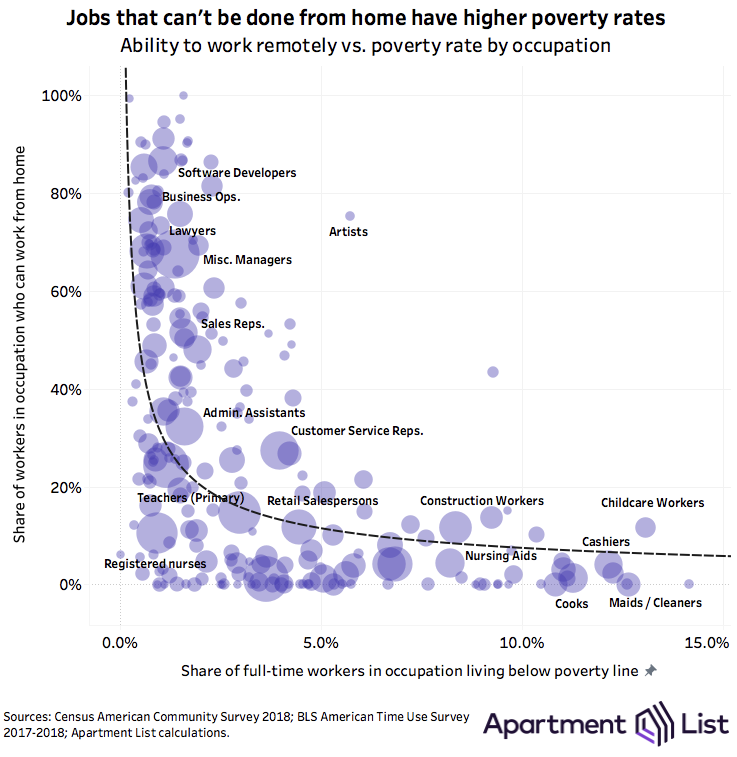
Apartment List’s latest report reveals the stark differences between the groups of U.S. workers that are most and least exposed to economic strain during this pandemic. This Spring, a disproportionate share of high-earners are working from home while low-income households are more likely to have their income source dry up in an era of social distancing.

The site classified workers who are unable to work remotely and are employed in industries deemed “non-essential” to be at high economic risk. In Charlotte these workers comprise 11.4% of the full-time workforce, ranking #23 highest among the nation’s 50 largest metros.

High Risk Occupation Workforce in Charlotte:
-Population: 119,283
-Percentage: 11.4%

Other Worker Categories in Charlotte:
-Secure Occupations: 37.5%
-Low-Risk Occupations: 18.2%
-Exposed Occupations: 32.9%

How have you been faring amid all the shutdowns and restrictions?