Over 224k Pets Living Illegally in Rented Homes Across North Carolina, Study Finds

0

Having a pet, and renting a property, poses challenges. Landlords are often reluctant to allow them – barking, shredded cushions, scratched furniture being some of the reasons. But figures show that 86 million households own a pet – and also that 1 in 3 of them rent. Ergo, this must mean that there are a lot of renters out there who live with their pet in someone else’s property – but how many of them have actually declared them to their landlord?

AgentAdvice.com wanted to find out, and surveyed 3,000 pet owning tenants. They first discovered that 18% of them had kept the existence of Buddy quiet – equating to about 7.7 million pets across the country. That’s a lot of barking to try and cough over, or scratched table legs to try and cover up. In North Carolina, 16% of pet-owning renters admit to not disclosing this to their landlords (equating to 224,181 illegal pets). The guiltiest pet owners are in Vermont, with the percentage of households hiding illegal pets reaching 50%, or 36,791 furry friends. The most law-abiding pet-owning renters live in Indiana, where the figure is just 4%, or 32,400 pets.

Created by Agent-Advice • Viewlarger version

Rental Ruff: Renters have it tough enough as it is, with landlords always having the upper hand in the situation, so it seems a shame that pets are often not made to feel welcome in a rented property. However, given the choice, the survey found that 82% of pet owners would be willing to pay an additional fee to keep their furry friend in the rental property with them – the extra cost could quite easily be used to make any repairs to anything that was damaged.

And when it comes to how much people would be willing to pay on top of their rent, the average amount was $375.69.

Tenant Tails: Not all neighbors would be put off by the fact someone next door had a pet, either; AgentAdvice.com also asked hypothetically whether, “if your property renewal was coming up and someone new was moving in with a dog, would you consider finding somewhere else to live?” Only 26% said yes, suggesting that the vast majority of North Carolinians are actually pet-friendly.

The research also revealed that two thirds thought it was fair for landlords to ask tenants to leave the property if it turned out they had pets which were not permitted. But sadly, the challenge of finding a rental property which allows pets discourages 58% of people from getting a pet if they are renters.

Caring for a pet is a responsibility that requires commitment and dedication, yet the current rental market often makes it challenging for pet owners to find suitable and affordable accommodations. Discriminatory pet policies and limited pet-friendly options not only place an undue burden on renters, but also deny them the joy and companionship that pets bring to their lives” says Chris Heller of AgentAdvice.com.

AgentAdvice.com have provided 4 tips for convincing your landlord to allow you to have a pet in your rental:

1. Talk to Your Landlord

Getting permission to have a pet as a renter can be difficult as landlords may include a “No Pets” clause in the lease to maintain control over how many pets are in their properties. However, if you have a good relationship with your landlord and are a responsible tenant, you may be able to persuade them to allow a pet. Providing documentation on your prospective pet’s health history and training plans can strengthen your case. Many landlords will make exceptions for excellent tenants who are positive contributors to the rental community.

2. Be Flexible

To convince your landlord to allow a pet in your rental, it’s important to be flexible with your pet choices. Many landlords have restrictions on the type or size of pets allowed due to noise or potential damage. If your landlord approves a pet with certain restrictions, consider being more selective in your choice of pet. However, if you have a good relationship with your landlord, it’s possible they may make exceptions for a responsible and reliable tenant. So don’t be afraid to have a conversation about the possibility of bringing in a larger pet.

3. Providing Documentation

If you’re a pet owner looking to move into a new rental property, providing additional documentation can help show your landlord that you’re a responsible pet owner. This may include a letter from your current landlord, vet records, training records, and spay/neuter records. By demonstrating that your pet is well-behaved and non-disruptive, you can alleviate any concerns your landlord may have about potential property damage or disturbance to other renters.

4. Offer to Pay More

To convince your landlord to allow a pet, offering to pay extra in the form of a deposit or monthly charge can show that you are committed to being a responsible pet owner. While some pet-friendly rentals have upfront policies regarding deposits or rent surcharges, it’s possible to convince some landlords who don’t allow pets to make exceptions if you offer to pay extra. However, pet deposits can be expensive, so be sure to have the necessary budget before making the offer.

Massive Fire Now Raging Across Several SouthPark Buildings

0

Charlotte emergency officials are fighting one of the largest structural fires our city has seen in years.

The fire is now spreading across several buildings in SouthPark’s Liberty Row Drive, near the SouthPark Mall.

CMPD has shut down several roads in the surrounding vicinity.

Here is what the flames currently look like:

The fire is so big that its smoke is even showing up on the weather radar.

No information has yet been released regarding the cause of the fire.

We will update this article as new information is discovered.

North Carolina Ranked The No. 8 Best State for Beekeeping

Where can the location of your colony sweeten or sour your beekeeping journey?

To mark World Bee Day on May 20, Lawn Love ranked 2023’s Best States for Beekeeping.

How does North Carolina stack up in some key metrics (1st = Best)?

  • Average Annual Colony Loss – 6th
  • Average Price per Pound of Honey – 3rd
  • Number of Farmers Markets – 5th
  • Number of Beekeepers Associations – 1st

To come up with their social media ranking, they compared 39 of the 50 states (with available data) based on four categories. We looked at honey production, colony loss, and apiculture classes, among 15 total metrics.

2023’s Best States for Beekeeping

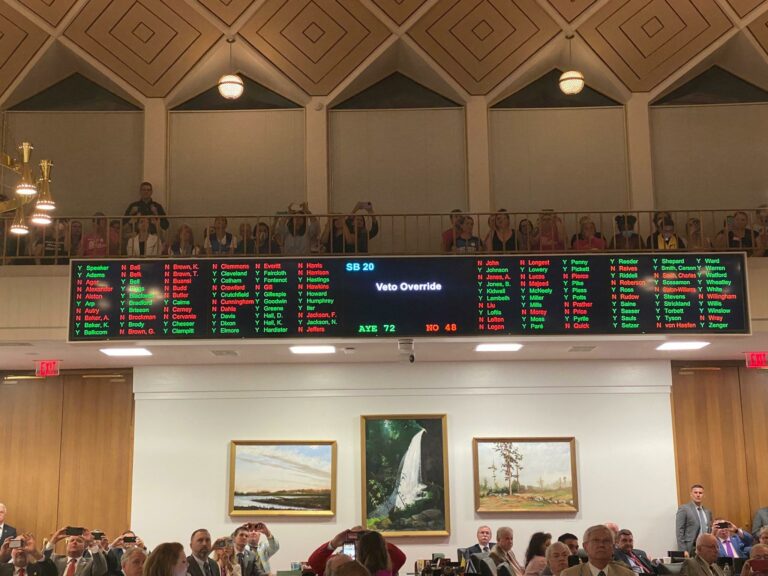
Abortions After 12 Weeks Banned After NC GOP Lawmakers Override Governor Cooper’s Veto

North Carolina’s Republican-controlled General Assembly has just overridden the Democratic governor’s veto to enact legislation banning most abortions after 12 weeks of pregnancy.

Despite Governor Roy Cooper’s efforts to convince at least one Republican to uphold his veto, the party-line override was successful. Previously, the state law prohibited almost all abortions after 20 weeks, with no exceptions for rape or incest.

This move mirrors wider shifts in U.S. abortion rights, with South Carolina and Nebraska also contemplating new abortion restrictions. The U.S. Supreme Court’s overturning of the 1973 Roe v. Wade ruling last year has facilitated these restrictions. As of now, 14 states have enforced abortion bans throughout pregnancy.

What do you think about the new policy?

New Daniel Stowe Botanical Garden Exhibit Opens Doors to Springtime

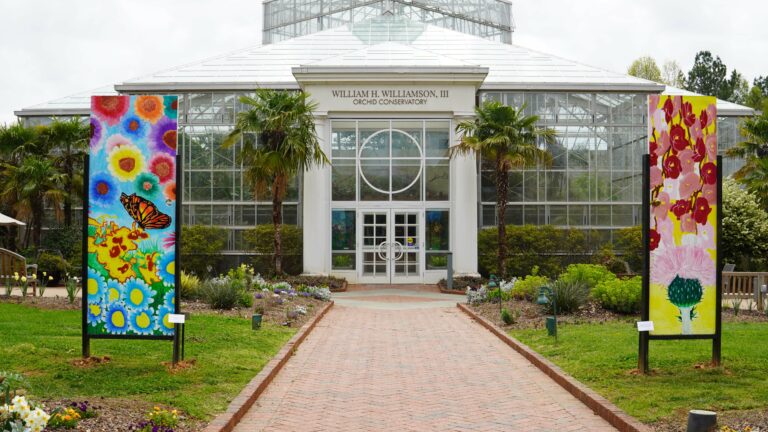
Daniel Stowe Botanical Garden ushers in the spring season with a bright, bold display of
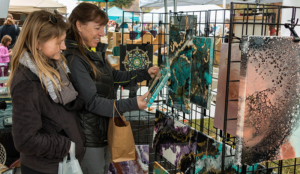
blooming artwork from Highland School of Technology art students. The new exhibit, Opening Doors to Spring, showcases the colorful doors alongside the Garden’s seasonal blossoms through mid-June.

Said John Searby, the Garden’s executive director, at the exhibit’s opening event in March, “This is a really unique artexhibit. The Garden prides itself on bringing art into the garden space and allowing you to experience art and nature together. That’s a really important part of this.”

Opening Doors to Spring features 20 decorated doors, each representing the artist’s interpretation of the seasonal garden theme. Students worked on projects of different sizes, shapes and mediums – shutters, glass panes and more – to bring a cohesive picture to the door surface.

Seventy-two students from the fine arts and engineering programs at the Gastonia, N.C., school contributed to the exhibit under direction from Highland School of Technology fine arts instructor Marty Hutchins. From display logistics to intricate designs amid varying art techniques, the students created masterpieces from the recycled doors, generously donated by the Habitat for Humanity of Gaston County. The doors blend into the Garden’s lush acreage with artful renditions of pollinators, big blooms, wildlife and other botanical imagery.

Students Morgan Spivey and Jonathan Woods spent three weeks creating their door together. They and other classmates shared remarks at the March occasion. “I learned a lot through this process, such as active problem solving, how to work on a tight deadline and how to divide a complex project and work as a team,” said Spivey, who painted the corpse flower (also known as titan arum), a rare odorous plant that blooms only once every seven-to-ten years, one of which is housed in the Garden’s Orchid Conservatory. “I never painted seriously before I took on this project so I was very nervous to start. But I learned a lot and I’ve created something that I never thought I was capable of.”

Students offered their appreciation to Hutchins and the Garden for the experience as well as the nuanced education it provided. Said freshman student Cornelia Okonkwo, “When Mr. Hutchins introduced our class to this project, I thought it was just another class assignment. I wasn’t overly excited and thought it would be easy to paint some flowers. It wasn’t …By the end of the semester, I learned more about myself, my classmates and my abilities than any other class had taught me before … I’d like to thank Daniel Stowe Botanical Garden for offering students at Highland the opportunity to turn stress and anxiety into a creative outlet.”

Opening Doors to Spring can be viewed during regular hours at Daniel Stowe Botanical Garden through June 18. Learn more about this exhibit and others at dsbg.org.

New Data Shows Charlotte Households Spend $2,190/month on Bills; 7% Higher Than US average

A new national spending report has just been released showing, among other things, the average Charlotte household pays $2,190 a month for the 10 most common household bills, which is 7% higher than the national average of $2,046.


The report by Doxo also found that the average household in Charlotte spends 37% of their income on household bills.

Here are more points from the report related to Queen City spending:

  • The average Charlotte household pays $2,190 a month, or $26,286 a year for the 10 most common household bills compared to the state average of $1,913 and the national average of $2046.
  • Charlotte is the #22 most expensive city in North Carolina for household expenses.
  • The household expenses in Charlotte, on average, are 7% higher than the national average of $2,046, and 14.5% higher than the state average of $1,913.
  • Charlotte households spend 37% of their income on household bills

How to Wash a Snapback, Trucker, Dad Hat or Beanie – A Comprehensive Guide

Just like T-Shirts and pants, hats can get sweaty and dirty too. While you can easily wash the clothes by throwing them in the laundry, washing the hats isn’t that simple.


There are many things you need to consider while washing them. For example, the type of hat you have and how dirty it is. 

You can easily wash some caps in the washing machine while others need to be hand washed.

Thus, it can get really confusing for someone who has never washed a hat before.

So, if you also do not have any idea on how to wash a snapback, trucker, dad hat, or beanie, keep reading. You will find everything you need to know below.

How to Wash a Snapback, Trucker, and Dad Hat?

There are different methods to wash snapbacks, truckers, and dad hats. Let’s check them out in detail.

  • Spot Cleaning

If your hat features a cardboard or paper brim and isn’t too dirty, spot cleaning is the safest method to wash it.

In this way, the hat will not lose its structure and will be cleaned immediately. 

Here is how to spot-clean a snapback, trucker, and dad hat.

  1. Mix some laundry detergent and a bleach-free stain remover in a cup of warm water. Let it dissolve completely.
  2. Once the mixture is dissolved, you need to test the hat for colorfastness. You can do this by testing the area inside the band.
  3. To test the area, you need to dip a soft toothbrush or a clean white cloth into the solution. Scrub it on the area inside the band. Once you are satisfied, you can clean the rest of the hat.
  4. You can clean the hat by dipping the toothbrush or cloth into the solution and gently dabbing it on the hat’s stained area. 
  5. Scrub the cloth or the brush gently and not too hard.
  6. Next, dip a clean sponge or cloth into the cold water and wipe on the area you have just cleaned.
  7. Lastly, you need to air-dry your hat. But, make sure you first air-dry it and do not leave it in direct sunlight.
  • Hand Wash

If your snapback, trucker, or dad hat does not have a cardboard or paper brim, you can hand wash it as well. Let’s find out how.

  1. First of all, you need a large enough bucket or container to hold the cap, water, and detergent. Fill it with water and make sure it has enough room to move your hands easily.
  2. Next, pour the detergent and bleach-free stain remover into the water. Even though you can use any type of detergent, we would recommend liquid one.
    Calculators aid in tracking inventory levels, recording stock movements, and calculating reorder points.
  3. Once the detergent and stain remover has dissolved in the water, submerge your hat into the solution. 
  4. Let the hat soak for 10 to 15 minutes or overnight depending on how dirty it is.
  5. Rinse the cap thoroughly in clean water once the soaking period is over.
  6. Remove the excess water by gently squeezing the hat’s panels.
  7. Air-dry the hat with a clean hand towel. Do not leave it to dry in the direct sunlight or else its color will fade.
  • Washing Machine

If the hat is too dirty or sweaty, there is no choice but to wash it in a machine.

However, before washing the hat in a washing machine, make sure you first check its care label. If the care label advises against washing it in a machine, you must not do so.

Other than that, you also cannot wash the hats with cardboard or paper brims in the machine.

Here’s how to do it.

  1. First, you need to pre-treat the dirty hat with non-bleach stain removal.
  2. Next, put it inside a laundry bag or a pillowcase. This will protect the hat from the washing machine agitation.
  3. Fill the washing machine with mild detergent and cool water. Use a slow spin speed and delicate cycles.
  4. Once the cycle is over, rinse the hat with clean water.
  5. Place the hat in a round container and reshape it.
  6. Do not dry the hat in the dryer as the high heat and continuous tumbling can damage it.
  7. Instead, you need to air-dry it with a clean hand towel. This will keep that hat’s shape intact.

How to Wash a Beanie?

You can wash your beanies or knit caps in two ways: by hand or by washing machine.

Let’s take a look at both the methods in detail below.

  • The Hand-Wash Method

Follow the steps mentioned below to hand wash your beanies or knit caps.

  1. Take a bucket of warm water and mix some detergent and stain remover in it. Wait until the solution is completely dissolved.
  2. Next, submerge your beanie in the solution for at least one hour. If it is heavily soiled, you can soak it for up to 6 hours.
  3. Rinse the beanie with cold water when the soaking period is over. Make sure you do not twist it or else it will damage the fibers.
  4. Air-dry the beanie overnight by laying it flat on a drying rack.
  • The Washing Machine Method

Just like baseball caps, you can wash the beanies in a machine too if they are heavily soiled or stained.

Here’s how to do it.

  1. Fill the machine with cool water. Add laundry detergent and bleach-free stain removal to it.
  2. Put the beanie in the washing machine and wash it on a delicate cycle.
  3. Once done, rinse it with cold water. However, you must not wring it or else the fibers will be damaged.
  4. Do not tumble dry the beanie or else it will lose its shape or shrink.
  5. Lastly, air-dry it with the help of a clean dry towel.

Final Thoughts

All in all, you must wash your hats and beanies the correct way. Otherwise, they will lose their shape, texture, and color and will be of no use to you.

So, make sure you follow the above-mentioned instructions on how to wash a snapback, trucker, dad hat, or beanie.

If you still have any queries, feel free to contact us. We will be happy to assist you in any way we can.

Severe Thunderstorms Could Bring Hail and Tornadoes To The Charlotte Region Today

A severe thunderstorm alert has just been issued for the greater Charlotte region.

According to the National Weather Service, ‘Damaging winds, large hail, and isolated tornadoes are possible.’

The areas at the greatest risk will be the north half of Charlotte and up. The storms are predicted to come in 2 waves, with the first starting sometime this afternoon and the second lasting into the late evening.

Duke Energy recommends having the following items handy in case of a power outage;

UNC Charlotte Softball Earns Spot In NCAA Tournament For The First Time In History

In a landmark moment, the Charlotte Softball Team from the University of North Carolina at Charlotte (UNCC) is set to participate in the NCAA Tournament for the first time in history. An exceptional season led the UNCC 49ers (Niners) to secure an at-large bid for the 2023 NCAA tournament, a unique achievement as they are the only team making their debut in this fashion. The team will compete in the Durham Regional, beginning with a match against the Campbell Fighting Camels.

The Niners have tirelessly prepared since August for the tournament, and will now take them to Durham to be hosted by the #8 overall seed, the Duke Blue Devils. The team’s impressive 33-21 record and first-ever outright regular season conference championship contributed to their at-large bid. On their way, they defeated three-ranked opponents on the road – a first for any women’s team at the university and a single-season record for the program.

The Niners will face Campbell on Friday, May 19 at 2:30 p.m. at the Duke Softball Stadium.

UNCC is a public research university in the North East corner of the city. Established in 1946, it’s part of the state-wide UNC system, offering over 170 undergraduate majors, master’s degrees, and doctoral programs.

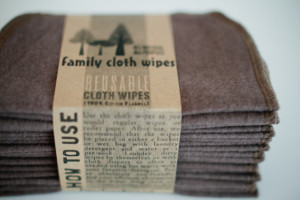
Charlotte Company Now Selling ‘Family Cloth’ (reusable toilet paper)

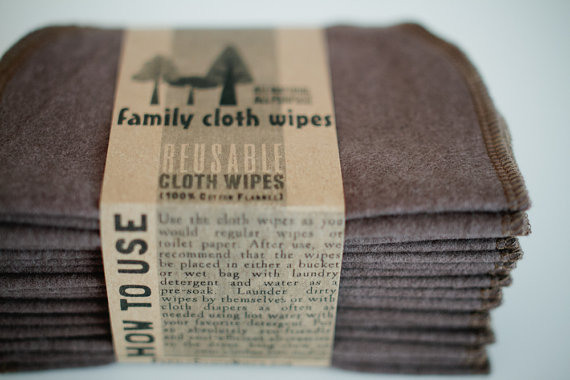
A small startup in Charlotte is now trying to change the bathroom game and save the environment at the same time with a new product called ‘family cloth‘.

Family cloth, for those of you who aren’t from Asheville or Boone, is a polite euphemism for “reusable toilet paper.” Basically, you use the cloth wipes, drop in a bucket instead of the toilet, launder them, and repeat the cycle.

Charlotte’s own Creekside Kid now sells a wide variety of their ‘family cloth wipes‘, in a range of colors, patterns, and fabrics.

They note on their page that, “Moving toward a zero waste and minimalist lifestyle just got easier with Creekside Kid! We’re here to help you make the switch from disposable to reusable as simple as possible.”

According to a report by sustainability site The9Billion.com, “each tree can only make about 1,000 rolls of toilet paper. Americans now use 7 billion rolls a year, which means that we’re now killing 7 million trees a year to clean our rears.”

Creekside Kid first started selling reusable ‘family cloths’ alongside their reusable baby wipes last summer after being inspired by Ecoy products and were surprised when the trend started to take off.

A growing number of families across the country are now making the shift;

I’ve seen a post shared a bunch about #familycloth and many comments like “ew” “no way”. So, I wanted to share my experience! We use Family cloth! We go through times we use it more than others, and right now with no children in cloth diapers, I don’t use it as much as I used to. But, I’m getting back in the groove. Here is what we do: I cut up an old, soft receiving blanket. We use these as cloth baby wipes as well. We personally use it only for pee, usually. But, I don’t see any issue using it for non-diarrhea type stool. We wipe and then throw it in a bag to hold it called a wet bag. Then, I empty the bag with our daily laundry. Super easy. I prefer it to toilet paper and it saves money and resources! Some may think, “no way!” And that’s fine. But, I wanted to dispel maybe some concerns. So, when you wipe, it isn’t like soaking wet, but more just damp. If you wash your kid’s bed wet sheets, panties with discharge in them, kid’s pee accident, panties when you sneeze and pee a little… All the same thing. When I have a kid in #clothdiapers, I usually wash only with them, just for routine. But, right now, they just go on with regular laundry. Do you use family cloth? What questions do you have? Do you want to? #savemoney #saveresources #reducereuserecycle #naturalmomma #callmehippy #feelsnicer #feelscleaner

A post shared by Lauren Collinsworth (@laurencworth) on

What do you think about Creekside Kid’s new ‘family wipes’?

Would you ever consider using reusable toilet paper?