Alligator Attacks Child in North Carolina Lake

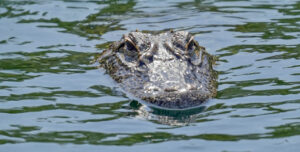
A young child suffered serious injuries after being attacked by an alligator while swimming in a North Carolina lake, according to police.

The Lake Waccamaw Police Department confirmed the child was playing in approximately four feet of water with a group of other children when the incident occurred. One child suddenly cried out, “Something bit me,” prompting adults to immediately remove all the children from the water.

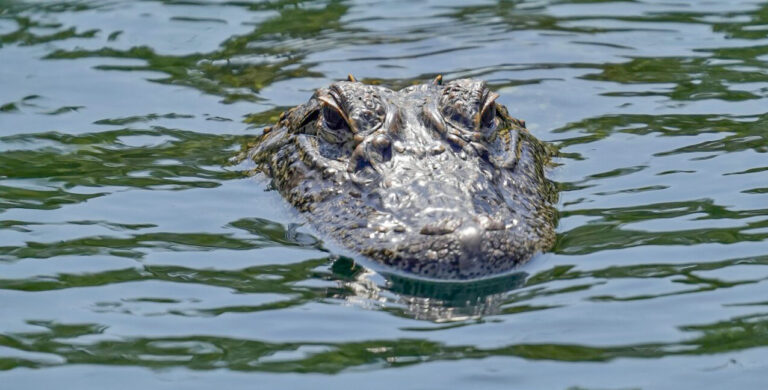
Shortly after the children were pulled ashore, a 6- to 7-foot alligator surfaced in the same area. Authorities believe the alligator “definitely” caused the child’s injuries, although it remains unclear whether the wounds came from a bite or a claw.

The child’s injuries were classified as serious but not life-threatening, police said. Emergency services treated the victim promptly, and officials have since neutralized the alligator involved.

The North Carolina Wildlife Resources Commission is actively managing the situation and has been praised for its swift response.

Lake Waccamaw officials are urging the public to stay vigilant when near the water. “This gator wasn’t seen until after the incident,” police said. “Multiple adults were present.”

Residents and visitors are reminded that alligators are wild animals and should never be approached or treated like pets. Anyone who spots one is advised to exit the water and keep a safe distance.

North Carolina Ranks 8th among the States Where People Are Most Delinquent on Debt

American households are carrying around $18.2 trillion in debt, and the personal-finance website WalletHub has just released its updated report on the States Where People Are the Most Delinquent on Debt to show where individuals are at the greatest risk of credit score damage and other financial consequences.

To identify the areas where people are struggling most with their debt, the site analyzed proprietary user data from Q1 2025 across all 50 states, taking into account both the percentage of individual tradelines that were delinquent and the share of residents’ total loan balances that were delinquent.

North Carolina Stats

  • Overall Rank: 8th
  • Percentage of Tradelines Delinquent in Q1 2025: 12.33%
  • Percentage of Loan Balance Delinquent in Q1 2025: 7.65%

States Most Delinquent on Debt Payments

Overall Rank*  State Total Score  Percentage of Tradelines Delinquent in Q1 2025  Percentage of Loan Balance Delinquent in Q1 2025 
1 Mississippi 100.00 14.27% 13.09%
2 Louisiana 85.20 13.12% 11.93%
3 West Virginia 69.47 12.33% 10.13%
4 Alabama 64.90 12.32% 9.34%
5 Arkansas 61.85 11.81% 9.46%
6 South Carolina 57.18 11.96% 8.41%
7 Delaware 57.04 11.87% 8.50%
8 North Carolina 55.66 12.33% 7.65%
9 Texas 54.58 11.67% 8.32%
10 Tennessee 53.55 11.48% 8.39%
11 Oklahoma 53.47 11.24% 8.69%
12 Indiana 53.25 11.38% 8.47%
13 New Mexico 51.88 10.98% 8.74%
14 Pennsylvania 49.89 11.40% 7.83%
15 Kentucky 49.09 11.06% 8.14%
16 Alaska 48.37 11.23% 7.79%
17 Maryland 46.95 11.01% 7.82%
18 Georgia 45.88 11.03% 7.59%
19 Nevada 43.35 11.08% 7.08%
20 New Jersey 43.31 10.42% 7.94%
21 Connecticut 41.99 10.51% 7.58%
22 Michigan 41.55 10.80% 7.12%
23 Missouri 40.08 10.66% 7.04%
24 Arizona 38.11 10.87% 6.41%
25 New York 35.53 10.28% 6.73%
26 Maine 35.45 9.99% 7.09%
27 Virginia 34.65 10.55% 6.20%
28 Minnesota 34.57 10.17% 6.69%
29 Nebraska 33.17 9.71% 7.05%
30 Florida 32.30 9.80% 6.77%
31 Kansas 32.24 9.67% 6.93%
32 North Dakota 31.71 9.95% 6.47%
33 South Dakota 31.57 10.53% 5.67%
34 Rhode Island 31.45 9.95% 6.42%
35 Idaho 30.54 9.63% 6.68%
36 New Hampshire 28.58 9.50% 6.49%
37 Vermont 27.82 9.22% 6.73%
38 Ohio 27.04 9.46% 6.27%
39 Oregon 26.45 9.56% 6.04%
40 Hawaii 25.93 9.35% 6.21%
41 California 25.57 10.28% 4.93%
42 Massachusetts 25.26 9.71% 5.62%
43 Illinois 24.48 9.34% 5.97%
44 Wyoming 22.91 10.12% 4.66%
45 Wisconsin 19.71 9.04% 5.50%
46 Colorado 19.28 9.29% 5.10%
47 Washington 18.92 9.27% 5.05%
48 Montana 17.63 9.63% 4.35%
49 Utah 15.42 8.81% 5.03%
50 Iowa 0.00 7.42% 4.08%

Note: *No. 1 = Most Delinquent

The Most User-Friendly TRC20 Wallet for 2025? Bitget Wallet Review for TRON Users

What Is a TRC20 Wallet?

A TRC20 wallet is a digital wallet designed to store, send, and receive TRC20 tokens – cryptocurrencies that run on the TRON blockchain, such as USDT (Tether). TRC20 is the technical standard for smart contracts on TRON, similar to ERC20 on Ethereum. These wallets not only hold tokens but also let users interact with TRON-based decentralized apps (dApps), manage gas fees in TRX, and perform on-chain actions. As TRON grows in popularity thanks to its fast, low-cost transactions, having a reliable TRC20-compatible wallet is essential for anyone actively using or investing in TRON-based assets.

Why TRC20 Users Need a Better Wallet in 2025

The TRON blockchain has become a go-to platform for fast, low-cost transactions, especially for stablecoins like USDT. As the TRC20 token standard gains traction, users need wallets that offer more than just basic storage – they need speed, security, and seamless access to the TRON ecosystem. Enter Bitget Wallet, a multi-chain, self-custodial wallet that’s rapidly becoming the top choice for TRC20 users in 2025.

What Is Bitget Wallet?

Bitget Wallet is a decentralized Web3 wallet supporting over 130 blockchains and more than 1 million tokens. It’s designed for both beginners and seasoned crypto users, offering features like token swapping, staking, NFT trading, and dApp browsing – all within a sleek, intuitive interface. With over 80 million users globally, Bitget Wallet has evolved into a comprehensive hub for all on-chain activities, from trading and earning to spending crypto in daily life.

Why Bitget Wallet Is Ideal for TRC20 Users

1. Full TRON Ecosystem Support

Bitget Wallet offers native support for TRON, allowing users to create TRC20 wallets, manage TRX and USDT, and interact with TRON-based dApps like JustLend and SunSwap. The wallet’s integrated dApp browser provides seamless access to the TRON ecosystem, enhancing your crypto experience.

2. InstantGas and Cross-Chain Swaps

With Bitget Wallet’s InstantGas feature, you can swap tokens without needing TRX for gas fees – a game-changer for new users. Additionally, the wallet supports cross-chain swaps involving TRX across many mainnets, ensuring a seamless and convenient user experience.

3. OTC and Fiat On-Ramp

Bitget Wallet’s OTC service allows you to purchase cryptocurrencies like USDT and USDC using fiat currency through various payment methods, including Visa, ApplePay, and GooglePay. This feature simplifies the process of acquiring TRC20 tokens directly within the wallet.

Security: Built for Peace of Mind

Bitget Wallet prioritizes user security through multiple layers of protection:

  • Multi-Party Computation (MPC): Encrypts private keys, ensuring they are never fully exposed.
  • Hardware Wallet Integration: Supports hardware wallets for enhanced security.
  • $300 Million User Protection Fund: Provides reimbursement in case of security breaches.
  • Two-Factor Authentication (2FA): Adds an extra layer of security to your account.

These features collectively ensure that your assets are safeguarded against potential threats.

User Experience: Designed for Everyone

Bitget Wallet is crafted to cater to both crypto novices and experts:

  • Intuitive Interface: Simplifies navigation and asset management.
  • Comprehensive Features: Offers token management, swapping, staking, and portfolio tracking tools.
  • Multi-Language Support: Available in multiple languages, including Vietnamese, to serve a global user base.

These elements make Bitget Wallet a user-friendly platform for managing your TRC20 assets.

Additional Features: Beyond the Basics

NFT Marketplace

Bitget Wallet integrates a multi-chain NFT marketplace, allowing users to manage and trade NFTs across different blockchains. This feature supports over 220,000 NFT collections and has facilitated over $40 million in trading volume.

DeSci Ecosystem Access

The wallet provides access to the decentralized science (DeSci) ecosystem, enabling users to participate in projects and access real-time data.

Staking and Token Swapping

Users can stake tokens and perform swaps directly within the wallet, streamlining the process of earning rewards and managing assets.

PayFi: Passive Income Made Simple

Bitget Wallet’s PayFi feature lets users earn yield instantly without lock-up periods or complex staking processes. Assets begin generating interest as soon as they’re deposited, and withdrawals can be made anytime. With one-tap staking and partnerships with trusted, audited protocols, PayFi delivers stable APYs in a user-friendly and secure way – making it a practical solution for both crypto beginners and experienced users.

How to Set Up Your TRC20 Wallet in Bitget Wallet

  1. Download Bitget Wallet: Available on Google Play, App Store, or as a Chrome extension.
  2. Create a Wallet: Launch the app and select “Create A Wallet.”
  3. Select TRON Mainnet: During the setup, choose “TRON” to enable TRC20 support.
  4. Start Managing Assets: Your TRC20 wallet is now ready for transactions, swaps, and more.

Bitget Wallet: A Smarter Choice for TRON Users

Bitget Wallet stands out as the most user-friendly and feature-rich TRC20 wallet in 2025. Its comprehensive support for the TRON ecosystem, robust security measures, and intuitive design make it an ideal choice for both new and experienced users.

Ready to experience seamless TRC20 asset management? Download Bitget Wallet today and take control of your crypto journey.

Carolinas Unite Against Offshore Drilling as Republican and Democratic Governors Press Trump

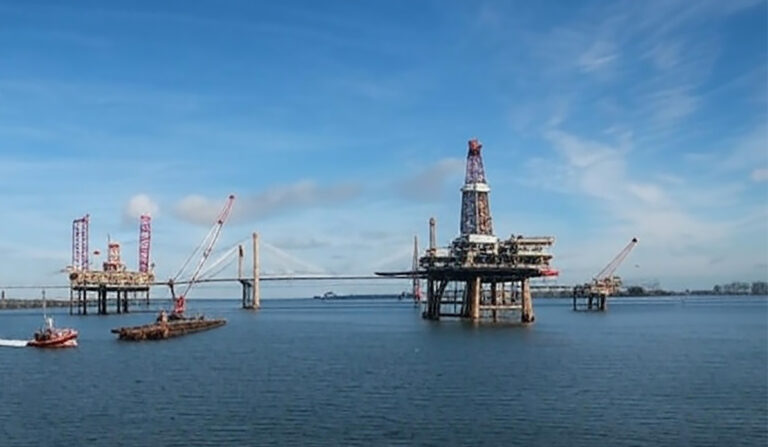
In a rare show of bipartisan unity, South Carolina Governor Henry McMaster and North Carolina Governor Josh Stein are jointly calling on the Trump administration to uphold its moratorium on offshore oil and gas drilling along the Carolinas’ coastline.
The governors submitted a joint appeal to federal officials overseeing the 11th National Outer Continental Shelf Oil and Gas Leasing Program. They are urging the removal of North Carolina and South Carolina’s outer continental shelf lands from future leasing consideration.

“Because of the significant risks associated with offshore oil and gas exploration, development and production off the Carolina coasts, every North Carolina and South Carolina coastal municipality has passed a resolution opposing offshore drilling and seismic testing,” wrote Governors Stein and McMaster in a joint press release. “This position has been reaffirmed by other municipalities and counties, as well as state legislators and members of our Congressional delegations from both parties. We ask you to respect the wishes of our states and our coastal communities and reaffirm President Trump’s decision to protect our coastlines and the industries they support.”

Their request references two presidential memoranda issued by former President Donald Trump on September 8 and 25, 2020. Those actions shielded the waters off both states from federal leasing activity through June 30, 2032 — a move both governors now seek to protect.

Together, the Carolinas span 513 miles of ocean beaches and over 6,250 miles of total coastline. The region supports more than 2.7 million residents and includes critical wildlife habitats. In 2021 alone, coastal counties in both states generated $9.6 billion in GDP, supported over 125,000 jobs, and paid out $3.8 billion in wages.

Leaders warn that offshore drilling would jeopardize major industries such as tourism, fishing, recreation, and shipbuilding. Both governors argue that any disruption could undermine the region’s environmental assets and its economic strength.

Governor Stein, a Democrat, has long opposed offshore drilling and previously fought such efforts as North Carolina’s attorney general in 2020. Governor McMaster, a Republican, has also consistently advocated for protecting South Carolina’s coastal resources.

The call comes as federal agencies prepare the next iteration of the national leasing program. Industry stakeholders and environmental groups are expected to weigh in before final decisions are made.

SC Ranks 2nd Worst State in America for Bacterial Contamination in Meat

Many Americans assume the meat they buy at the grocery store is safe—but new data shows that approximately 36% of retail meat samples nationwide are contaminated with potentially harmful bacteria. And with the FDA and USDA facing major budget cuts, efforts to monitor pathogens, investigate outbreaks, and enforce safety standards could be weakened.


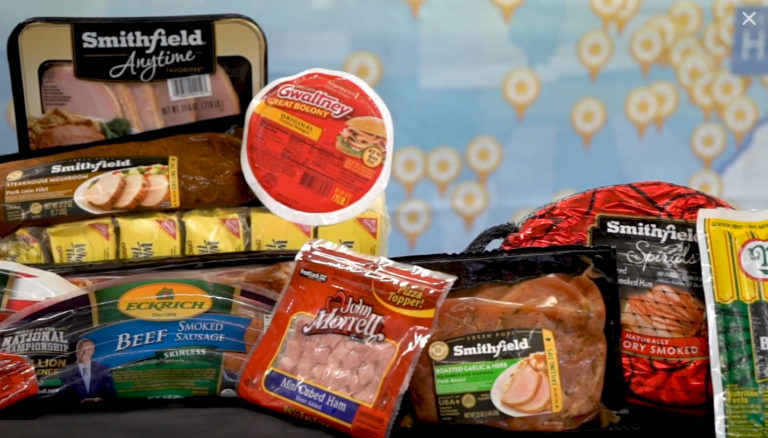
A new report from Trace One ranks states by their relative retail meat contamination risk, using the latest data from the FDA’s National Antimicrobial Resistance Monitoring System (NARMS). It also analyzes contamination trends by meat type, and highlights antibiotic resistance patterns.

Because the analysis focuses only on meat-pathogen combinations consistently tested across all participating states, the contamination rates below reflect a standardized subset of retail meat samples from the NARMS program. Researchers used these to calculate a composite retail meat risk index for each state, with higher scores indicating greater contamination risk.

Retail Meat Contamination Rates in South Carolina

  • Chicken is Most Contaminated Meat in South Carolina: 27.8% of retail chicken samples tested positive for Salmonella or Campylobacter in South Carolina, as did 15.8% of ground turkey.
  • Beef and Pork Contamination Rates: Ground beef tested positive for Salmonella in 0.5% of samples, and 4.8% of pork chops.
  • South Carolina Sees 2nd Highest Relative Risk: Based on these contamination rates, South Carolina receives a composite score of 67.85—the 2nd highest retail meat contamination risk relative to all states in the analysis.

Food Safety Risks: U.S. States With the Highest Bacterial Contamination in Retail Meat

1 Georgia 69.05 29.8% 13.3% 2.9% 1.4%
2 South Carolina 67.85 27.8% 15.8% 4.8% 0.5%
3 Tennessee 66.65 25.7% 12.7% 6.6% 1.0%
4 Minnesota 63.10 22.4% 11.7% 10.5% 1.0%
5 Pennsylvania 58.35 29.4% 10.4% 2.2% 1.2%
6 Missouri 55.95 17.4% 7.9% 6.7% 3.8%
7 North Carolina 54.78 27.8% 14.2% 2.6% 0.4%
8 Ohio 54.78 10.1% 8.0% 6.9% 4.1%
9 New York 54.75 24.4% 18.4% 5.0% 0.0%
10 Texas 52.38 24.6% 10.7% 0.5% 2.1%
11 California 51.18 31.4% 6.5% 4.8% 0.6%
12 South Dakota 50.00 12.9% 7.5% 8.1% 1.6%
13 Oregon 50.00 16.3% 11.9% 1.9% 2.1%
14 Maryland 47.63 23.3% 14.9% 3.8% 0.0%
15 Kansas 47.63 17.6% 9.5% 3.0% 1.5%
16 Iowa 46.43 22.0% 9.5% 6.8% 0.4%
17 Colorado 44.05 27.2% 10.0% 1.9% 0.4%
18 Connecticut 41.68 9.4% 22.3% 5.0% 0.0%
19 New Mexico 39.28 24.5% 9.0% 1.1% 1.1%
20 Hawaii 29.78 20.7% 4.4% 1.1% 1.6%
21 Washington 23.80 15.7% 8.6% 3.6% 0.0%
22 Louisiana 21.45 14.0% 4.6% 1.1% 1.1%

Another Icon in Charlotte’s Skyline Was Just Vandalized With A Corporate Logo

Just 5 years after the iconic Hearst Tower in Uptown Charlotte was vandalized with a massive “TRUIST” logo, another jewels in our crown has just succumbed to corporate brandishing.

This week, Wells Fargo affixed their massive illuminated logos atop their 48-story ‘handle bar building’, formerly known as the Duke Energy ‘Tower of Power’.

Using helicopters, crews lifted 14-foot-tall glowing letters onto either side of the skyscraper’s distinctive rooftop “handlebar”.


View this post on Instagram


A post shared by CLTGuide (@cltguide)

The move marks the latest in a wave of branding efforts that residents continue to speak out against — citing concerns that Charlotte’s modern, elegant skyline is being drowned in oversized advertising.

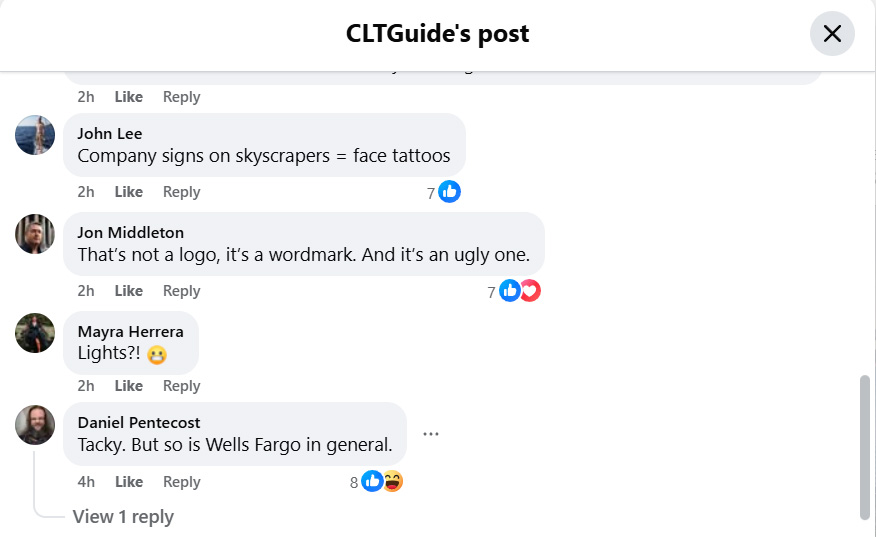
Wells Fargo also announced upgrades to the building’s LED lighting system, part of its $500 million “employee experience investment” initiative in a press release. The system will support expanded displays through the Wells Fargo Lights program, which illuminates the building in different colors to celebrate causes and events.

But for many longtime residents and architecture enthusiasts, the signage represents more than a lighting upgrade — it’s symbolic of what some call a growing visual assault on Charlotte’s skyline.

Other skyscrapers that have also been vandalized with corporate logos include Bank of America, Ally, BB&T, and Honeywell.

North Carolina Sweeps Multiple Categories in 2025 Campspot Awards

North Carolina campgrounds have dominated the 2025 Campspot Awards, securing multiple #1 rankings and reinforcing the state’s reputation as a premier outdoor destination. Two of the top ten campgrounds in the USA for 2025 are located in North Carolina, as well as the #1 glamping campground and 2 of the 5 top Hidden Gems! From glamping retreats to family-friendly resorts and quiet escapes, North Carolina offers some of the best camping experiences in the country.


Award-winning North Carolina parks for 2025 include:

Broad River Campground, Mooresboro (#1 Glamping Campground in the USA)

Yogi Bear’s Jellystone Park, Golden Valley (#1 For Families in the USA)

RiverWalk on the Yadkin, Jonesville (Top Small Campground in the USA)

Stonebridge RV Resort, Maggie Valley (Top RV Campground)

Byrd’s Branch Campground, Elkin (Top Hidden Gem)

Foxfire of Murphy (Top Hidden Gem)

Dixon Landing RV Resort, Grantsboro (Top Quiet Getaway)

The 2025 Campspot Award winners are determined based on 3 million data points, measuring guest satisfaction, unique amenities, and overall experience quality. North Carolina’s wins highlight the state’s ability to cater to every type of camper, from adventure-seekers to those looking for a peaceful retreat.

Officials Warn Public to Avoid Lake Norman Due to Toxic Algae Bloom

Mecklenburg County officials just issued a no-swim advisory for a cove on Lake Norman after detecting a harmful algal bloom.

Charlotte-Mecklenburg Storm Water Services confirmed the presence of cyanobacteria, a potentially toxic species of algae, in a cove bordered by Country Club Circle and Norman Shores Drive on the Torrence Chapel Peninsula.

The bloom was first observed following a report of bright green and bluish water with surface scum. Staff responded and identified the bloom as an active harmful algal bloom (HAB), prompting the advisory. Officials are urging residents and visitors to avoid swimming, boating, fishing, kayaking, jet-skiing, water-skiing, or wading in the affected area.

NC officials warn that cyanobacteria can release toxins that may cause serious illness in humans and animals if ingested or if skin is exposed. Pets and children are especially vulnerable and should be kept away from any discolored or scummy water.

Storm Water Services emphasized that recent heavy rains may have contributed to the bloom and encouraged caution for anyone planning to recreate on the lake this weekend. Residents are also advised not to use water from the affected area for irrigation or washing.

The advisory will remain in place until further testing confirms the bloom has dissipated and the water is safe. An algal bloom map highlights the impacted zone, outlined in red.

Charlotte Now The 3rd Fastest Growing Metro In America w/ 117 New Residents Arriving Daily

The Charlotte metro area has just surpassed 2.4 million people, making it the 22nd-largest metro in the United States and the 3rd fastest growing region in the nation, according to MacroTrends.

The city of Charlotte itself has 923,164 residents and maintains a steady 1.3% annual growth rate. On average, 117 people move to Charlotte daily, drawn by lower living costs and job opportunities.

“Charlotte continues its dynamic growth, building on the momentum we’ve seen year after year,” Rob Horton, CLT Alliance chief marketing and communications officer, said in a press release. “These population trends underscore the importance of smart investments and policies to ensure our region can continue to grow and thrive. How we innovate will define our future.”

Looking to 2029, Charlotte is expected to see ongoing population growth, more jobs, and expanded access to skill development.

Largest Great White Ever Tagged Appears Off North Carolina Coast

The largest great white shark ever recorded in the Atlantic Ocean has just been spotted off the coast of North Carolina.

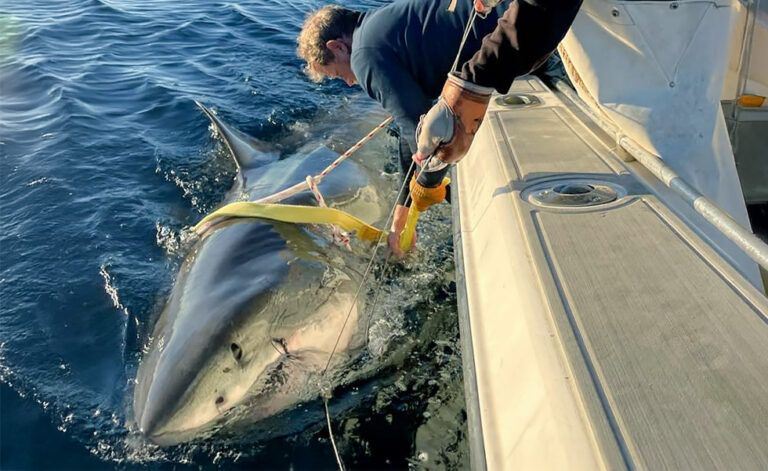
At nearly 14 feet long and weighing over 1,600 pounds, Contender is the largest great white shark ever tagged by OCEARCH, a nonprofit that monitors large marine animals.

Scientists first tagged Contender in January about 45 miles off the Florida-Georgia coast near Jacksonville. Since then, he has steadily moved north, most recently surfacing just 22 miles off NC’s Cape Hatteras. The shark’s satellite tag sends a signal whenever his dorsal fin breaks the ocean’s surface, allowing researchers to monitor his real-time movements.

OCEARCH says Contender is about 32 years old. The tracking tag, known as a SPOT tag, will continue to transmit data for roughly five years. Researchers also collected biological samples during the tagging process, including urogenital material, to support ongoing studies on shark reproduction and health.

This spring migration is typical for great white sharks, which travel north in search of cooler waters and an abundance of prey. OCEARCH named the shark in partnership with Contender Boats, whose vessels support the organization’s research expeditions.

Anyone interested in tracking Contender’s movements can follow him on OCEARCH’s Global Shark Tracker app here.