Charlotte’s Dining Scene Earns City a Top Spot on PETA’s Most Vegan-Friendly List

0

PETA has just named its Most Vegan-Friendly Cities in the U.S., and the Queen City has crushed the competition, nabbing a spot on the list with an ever growing list of plant-based options.


Charlotte mainstay Bean Vegan Cuisine specializes in delicious American comfort food, including its Quesadilla, which is filled with dairy-free cheese and veggies and drizzled with sour cream sauce, and its spicy Jalapeno Cheddar Burger, which is topped with dairy-free cheddar, fried jalapenÞo chips, and Vegenaise. The eatery also serves delicious sweet treats, including cheesecake in seasonal flavors and Raspberry Zinger Cake with Cream Cheese Frosting.

Charlotte’s vegan scene also features fine dining at Sanctuary Bistro, which offers animal-friendly fare including Biscuits and Gravy, Cashew Cheesecake with a pecan and almond crust, Crème Brûlée made with vanilla coconut custard, and a fully loaded banana split. NoDa’s first vegan restaurant, Oh My Soul, serves South African–inspired cuisine like Macho Nachos, stacked with housemade seitan “bacon,” chakalaka, dairy-free queso, and all the fixings. Other vibrant foods that earned Charlotte a top spot include the Romeo BBQ Bacon Burger at Romeo’s Vegan Burgers; the Pua Roll, a sushi roll with deep-fried sweet potatoes, asparagus, cucumbers, and dairy-free cream cheese at Bachi; and the Beijing Veg. Duck at Ma Ma Wok, which went vegan in 2017.

The city also hosts the annual Charlotte VegFest with over 100 vendors and thousands of attendees, and the Vegan Vibe Music Series, featuring live music, DJs, and an array of delicious vegan food.

Why moving from SF to LA isn’t just a change of city, but a change of lifestyle?

0

lake norman real estate main viewMoving with movers from San Francisco to Los Angeles changes your pace of life and values. San Francisco is compact, with an emphasis on careers and innovation, a fast pace and a high cost of living. Los Angeles offers a more relaxed atmosphere, with an emphasis on creativity and lifestyle, but requires a car due to the distances involved. Moving can shift priorities from work to life balance, but will require adaptation to a new rhythm.

Cost of living: same state, different reality

Life in San Francisco and Los Angeles feels different even with similar salaries because of differences in the cost of living and priorities. Local movers and packers often note that rent in San Francisco is 20-30% more expensive, especially in the city centre, where a one-bedroom apartment costs from £2,000, while in Los Angeles you can find options from £1,500, but with a wider range of prices depending on the neighbourhood. Buying a home in SF is also significantly more expensive due to limited space and high demand.

Transportation costs are higher in Los Angeles because the city is designed for cars – petrol, insurance and parking eat into your budget. In San Francisco, you can get by with public transport, but taxi and car-sharing prices are high. Food and leisure are expensive in both cities, but LA offers more affordable entertainment – beaches, flea markets, food trucks – while SF is focused on gastronomy and technological trends.

The main difference is the perception of life. San Francisco dictates a dynamic, career-oriented rhythm, while Los Angeles values balance, sunshine and informality. Even with the same salaries, money ‘stretches’ differently in LA – less stress, but more spending on comfort.

Climate and environment

The climate in San Francisco and Los Angeles is radically different, affecting everyday life. SF is known for its cool, windy summers with frequent fog and mild winters – without a car with heating, it’s not easy here. This climate encourages layered clothing and spontaneous changes of plans due to sudden cold spells. LA has a Mediterranean climate: hot, dry summers and mild winters with plenty of sunshine. This motivates people to spend more time outdoors – beaches, hiking, and street cafes become part of the routine.

Natural areas also contrast: San Francisco has more urbanised parks like Golden Gate Park, while Los Angeles has extensive mountain trails (Griffith Park) and access to the ocean. As a result, LA instils a culture of outdoor activity, while SF instils intimacy and adaptation to the vagaries of the weather.

Work and career opportunities

San Francisco is the capital of technology and start-ups, dominated by IT giants (Google, Apple, Meta) and venture capital funds. The city attracts engineers, developers and entrepreneurs, offering a unique ecosystem for innovation, but competition for jobs is fierce. Los Angeles is ruled by the entertainment industry: film (Hollywood), music, fashion, and digital content. There are more opportunities here for actors, producers, designers, and bloggers, and game development and creative start-ups are also thriving.

If SF is about hardcore technology and business scaling, then LA is a territory of creativity and media, where networking and personal branding often mean more than a resume. The choice depends on your ambitions: coding in Silicon Valley or creating content under palm trees.

Culture, pace, and lifestyle

San Francisco lives in ‘start-up sprint’ mode: early mornings, busy schedules, and a cult of productivity. Even in coffee shops, people discuss pitch decks, and work-life balance often takes a back seat to career ambitions. The city attracts hyper-motivated professionals, creating an atmosphere of constant deadlines. In Los Angeles, time flows differently – the sunny climate and car culture create a more relaxed rhythm. Two-hour lunches, spontaneous surf sessions, and leisurely networking brunches are the norm.

SF’s social dynamics are built around technology and status, while LA values self-expression and connections. Mornings in SF start with a stand-up meeting, while in LA they start with cold-pressed juice and yoga on the beach. It’s a difference in mentality: ‘building the future’ versus ‘living in the present.’

Transportation and urban layout

San Francisco is a city for pedestrians and public transport. Compact streets, a well-developed tram network and BART make cars more of a burden than a necessity. Dense development and limited parking space have shaped an urban culture where people are accustomed to walking or using car sharing. In Los Angeles, you can’t get anywhere without a car. The sprawling metropolis with endless suburbs and chaotic planning turns the car into an extension of the personality. Locals spend hours in traffic jams, but in return they get freedom of movement – from the beaches of Malibu to the slopes of Big Bear.

This contrast influences lifestyle: SF, with its walkability, encourages spontaneous encounters and street life, while LA reinforces the intimacy of car travel. In one case, you jostle in a crowded tram; in the other, you meditate in traffic on the 405 motorways.

Which city is right for you?

San Francisco and Los Angeles offer fundamentally different lifestyles. Work: SF is a mecca for techies and start-ups with high salaries but fierce competition; LA is a platform for creators and media professionals, where networking is valued more than a degree. Lifestyle: SF is dominated by an urban rhythm and a cult of productivity, while LA has a relaxed atmosphere with an emphasis on wellness and outdoor activities. Budget: Rent in SF is a third more expensive, but in LA, hidden costs (car, petrol, insurance) eat up the difference.

Interests are also dictated by location: SF residents are obsessed with technology and careers, while LA is dominated by a cult of cinema, music and beach lifestyle. The choice between cities is a choice between intense professional growth and living the ‘California dream’ lifestyle. Technocracy versus creativity, density versus space, ambition versus harmony.

Fort Mill Planning New “GET Social Park” – Drinks For Adults, Playground For Kids

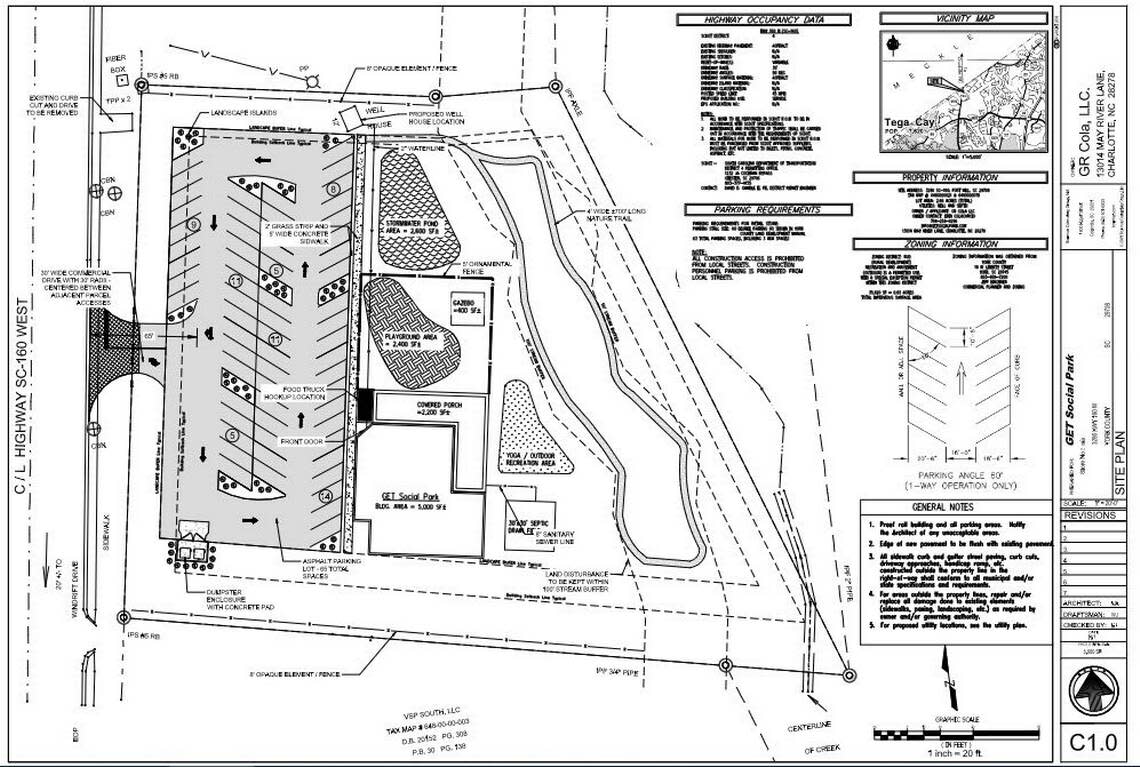
A new type of park is now being planned in Fort Mill – GET Social Park, a multi-use gathering space for families, where parents can drink, kids can play, and musicians can perform.

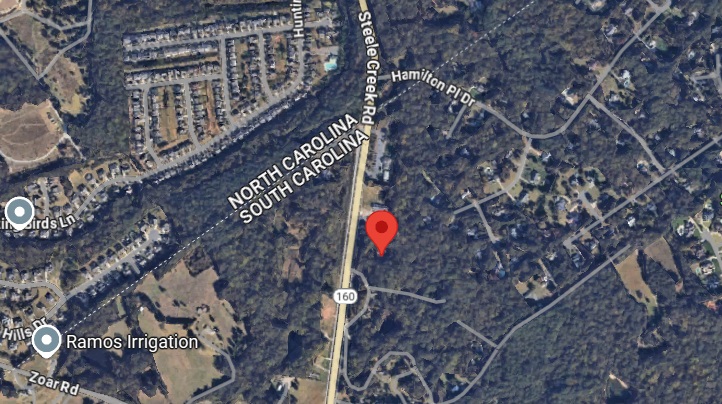
The proposed venue would be located at 3286 Highway 160 W. (aka Steele Creek Rd.) in Fort Mill.

Set on a 2.65-acre site just 800 feet from the North Carolina state line, the project requires a special zoning exception due to its location in a Rural Development (RUD) zone. The York County Board of Zoning Appeals is scheduled to vote on the request at its June 12, 2025, meeting.

Project Overview

The proposed site will include:

  • A 5,000-square-foot indoor facility with two 500-square-foot event rooms, a seating area, and an indoor play area for children under three.

  • A 2,000-square-foot outdoor game lawn and a fenced playground.

  • A 14-by-14-foot entertainment platform for acoustic performances and yoga, paired with a gazebo and nature trail.

  • Food and beverage offerings such as grab-and-go meals, beer and wine taps (up to six), and rotating food trucks on weekends.

  • A covered patio, picnic areas, and seasonal events like fitness classes and family movie nights.

Planned business hours are Wednesday to Sunday, from 10 a.m. to 9 p.m. The site will accommodate up to 100 patrons and offer 65 parking spaces.

via York County

Local Engagement and Concerns

In an April 23 neighborhood meeting, developers Anthony and Erin Colacurcio addressed resident concerns regarding noise, traffic, and security. In response, they:

  • Confirmed the acoustic nature of music performances.

  • Noted that the entertainment stage would not exceed 400 square feet.

  • Clarified that privacy fencing would enclose three sides of the property.

  • Explained plans to preserve green space and limit large playground equipment.

They also assured residents that security cameras and motion detectors would monitor the site, particularly near neighboring properties.

If approved, GET Social Park would add a unique mixed-use recreational space just south of Charlotte, supporting Fort Mill’s growing demand for family-friendly community hubs.

A tentative opening is expected in 2027 if all approvals go through.

The Average North Carolinian Willing to Let AI Manage $24k of Their Money

0

AI might be able to write a convincing email, generate a playlist, or even plan your weekly meals – but would you trust it with your money?


That’s the question leading loan provider Advance America set out to explore in a new national survey, asking over 3,000 adults:

What’s the maximum amount of money you’d feel comfortable letting AI manage for you?

The responses reveal something striking: North Carolinians aren’t just dipping their toes in the AI waters – many are diving in headfirst. The average North Carolinian said they’d be willing to entrust $24,096 to AI when it comes to investing, signaling a surprising level of openness toward algorithm-driven financial tools. This compares to a national average of $20,441. For some, it’s the beginning of a retirement plan.

Californians topped the list, averaging $46,788 in AI-managed money, while Wyoming residents were the most cautious, drawing the line at just $3,571.

The gap may reflect broader cultural and economic differences. California, home to Silicon Valley, is steeped in tech optimism and innovation, with residents more likely to embrace emerging tools. Wyoming, by contrast, leans more rural and conservative, where self-reliance and skepticism toward automation may make people less eager to hand over financial decisions to a machine.

When asked about the types of financial decisions they’d be willing to hand over to artificial intelligence, responses varied widely depending on the level of risk. 31% said they’d trust AI to choose stocks, while 22% were comfortable letting it buy cryptocurrency. A slightly more conservative 15% were okay with AI rebalancing their 401(k).

And AI’s appeal doesn’t stop at investing. Another 31% said they’d trust AI to file their taxes, a task traditionally handled by certified professionals or clunky online forms.

In a surprising twist, one in four people (25%) said they’d trust AI more than their current financial advisor – a nod to the increasing sophistication of tools that claim to analyze markets in real time and strip emotion from decision-making.

Even more eye-opening: 27% said they’d prefer an AI over their own partner when it comes to managing joint finances. That’s not just about money – it’s about trust, objectivity, and maybe a little less arguing over the credit card bill.

Still, the appetite for full autonomy is limited. Only 17% said they’d let AI make a large financial decision – like a major investment – without telling them first. There’s a strong desire to remain in the driver’s seat, even if AI’s doing the navigation.

When it comes to long-term planning, opinions remain split. Just over a quarter (28%) said they’d be willing to let AI plan their retirement, while 26% said they’d feel comfortable taking out a loan or mortgage based solely on AI’s recommendation. That still leaves the majority unconvinced that a machine, no matter how smart, can weigh life context, emotions, and values the same way a human can.

You Decide: Will North Carolina Get an MLB Team? – Opinion

Opinion article written by Mike Walden – a Reynolds Distinguished Professor Emeritus at North Carolina State University.  

Although I have lived and worked in North Carolina for almost 50 years, I wasn’t born in this wonderful state. I was born and raised in Cincinnati, Ohio. Like many people, I continue to root for the professional sports teams of my youth. In my case, in the early years of my life, there was only one pro team to follow — the Cincinnati Reds. But, with North Carolina frequently mentioned as the home for a major league baseball (MLB) team, I may have to add a second team to follow during baseball season.


Major League Baseball is expected to expand from the current 30 teams to 32 teams by the early 2030s. There are also rumors that a couple of existing teams — the Chicago White Sox and the Tampa Bay Rays — may be considering relocating. When these changes are discussed, two cities in North Carolina — Charlotte and Raleigh — are mentioned as possible homes for an MLB team.

Of course, since professional sports is a business, economics must be considered when locating an MLB team. Three economic issues come up: feasibility, economic impact and financing for an MLB stadium.

Feasibility looks at the issue of whether the region is big enough and growing enough to support an MLB team. Population and population growth are the major measures for evaluating feasibility. Using U.S. Census data for “combined metropolitan areas,” including Charlotte-Concord and Raleigh-Durham, the Charlotte metro area is already larger than five existing MLB metros, and the Raleigh metropolitan area is larger than two existing MLB metros.  Among the 10 cities mentioned by ESPN as contenders for an MLB team (San Antonio, Charlotte, Mexico City, Montreal, Nashville, Orlando, Portland, Raleigh, San Jose and Salt Lake City), Charlotte is larger than all but Mexico City, Montreal, and Orlando, whereas Raleigh is larger than Nashville. In the last four years (2020 – 2024), Orlando had the fastest growth rate (12%), but was followed by Raleigh (9%) and Charlotte (8%). My conclusion is Charlotte and Raleigh are feasible options for an MLB team.

Economic impact considers the broad effects of an MLB team on regional income and regional jobs. Professional sports teams are expected to increase regional growth in income and jobs through several methods. If having an MLB team makes the region more interesting and fun to live in, then jobs and incomes can increase from more businesses and workers wanting to live in the region. If the MLB team causes regional residents to spend more of their entertainment money in the region rather than outside the region, then local businesses will benefit.

Last, and perhaps most important, if an MLB team can attract people living outside the region to visit the region for games and spend money on game tickets, food, lodging and other purchases, then this could be the biggest economic benefit from having a team. Indeed, an MLB team in Charlotte would likely pull fans from central and western North Carolina as well as from parts of South Carolina. Similarly, a team in Raleigh would see people driving from central and eastern North Carolina and from parts of Virginia to see a Major League Baseball team in person.

Estimating these economic impacts can be challenging. Predicting fan attendance and the origin of the fans can be difficult. Approximately half the earnings of MLB teams are paid to players. In addition, since not all players live in their team’s home region, a part of the player salaries is not spent in the home region. Also, the analysis must account for the possibility of households reducing spending on alternative local activities when they spend on MLB baseball.

Economic impact studies of existing MLB teams in cities with similar populations to Charlotte and Raleigh show permanent new jobs created in the economy in the 3,000 to 4,000 range, and annual income generated in the $500 million to $1.2 billion range. However, as one who has completed numerous economic impact reports for a variety of situations, it is important to scrutinize the details of economic impact studies and assess the assumptions and calculations used to arrive at the conclusions.

The biggest roadblock to an MLB team in North Carolina may be the stadium where the team will play. An MLB team in North Carolina will likely require a stand-alone major league baseball stadium. While multi-purpose stadiums were used in the past — the now demolished Cincinnati Riverfront Stadium hosting the Reds and the Bengals is an example — recent MLB stadiums have been built for baseball use only. The stadiums are also very, very expensive. The stadium in Las Vegas, currently under construction for the new Las Vegas Athletics, is expected to cost $1.75-$2 billion. The same price tag has been estimated for an MLB stadium in Orlando. Even the projected cost of expanding the minor league Charlotte Knights’ stadium for MLB use is between $500 million and $1 billion.

The obvious question is who will pay for the stadium? The owner or owners of the MLB team is an obvious answer, and this can happen. Between 70% and 80% of the new Las Vegas MLB stadium is being financed by the Athletics’ owner. The group behind the efforts to secure an MLB team for Orlando has announced the stadium would be completely privately financed. In contrast, the Chicago White Sox have asked for $1 billion in city and State public funds to help finance a new stadium for the team. The Kansas City Royals MLB team is also recommending public financing for most of the cost of a new stadium. Therefore, MLB stadium financing options span from using all private money to using all public money, with options in-between.

My conclusion is that both Charlotte and Raleigh appear to be viable candidates for an MLB team. But what will be the economic impact? Will the economic impact be worth the cost? And who will pay for an exclusive MLB stadium? Should these questions be answered before we begin picking names for an MLB team in either city? You decide.

Charlotte Storm Dumped Over 6 Inches Last Night – A 1,000 Year Rainfall Event

Several thousand Charlotteans are now without power after last night’s severe storms and heavy rainfall.
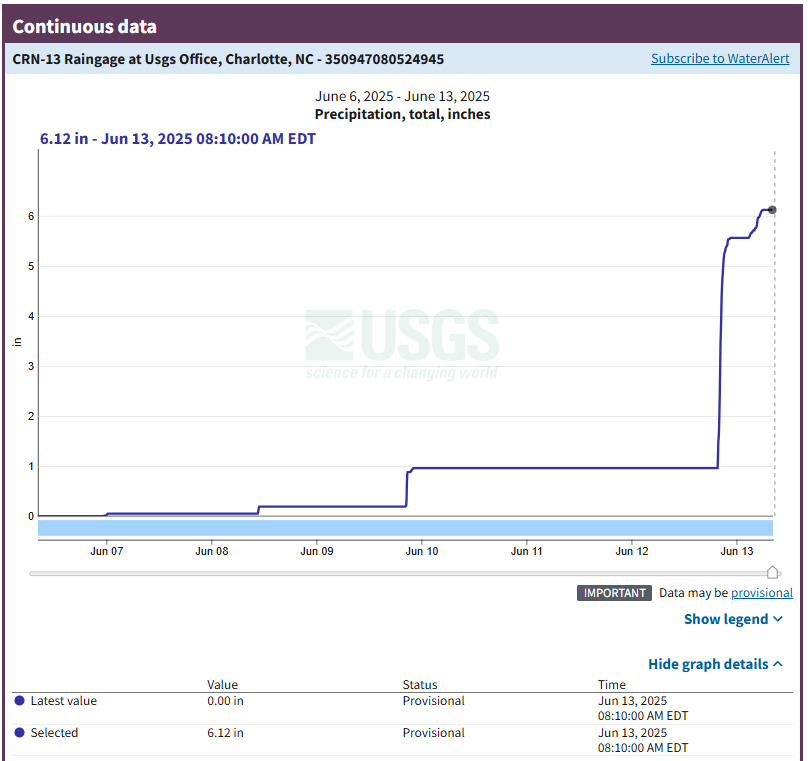
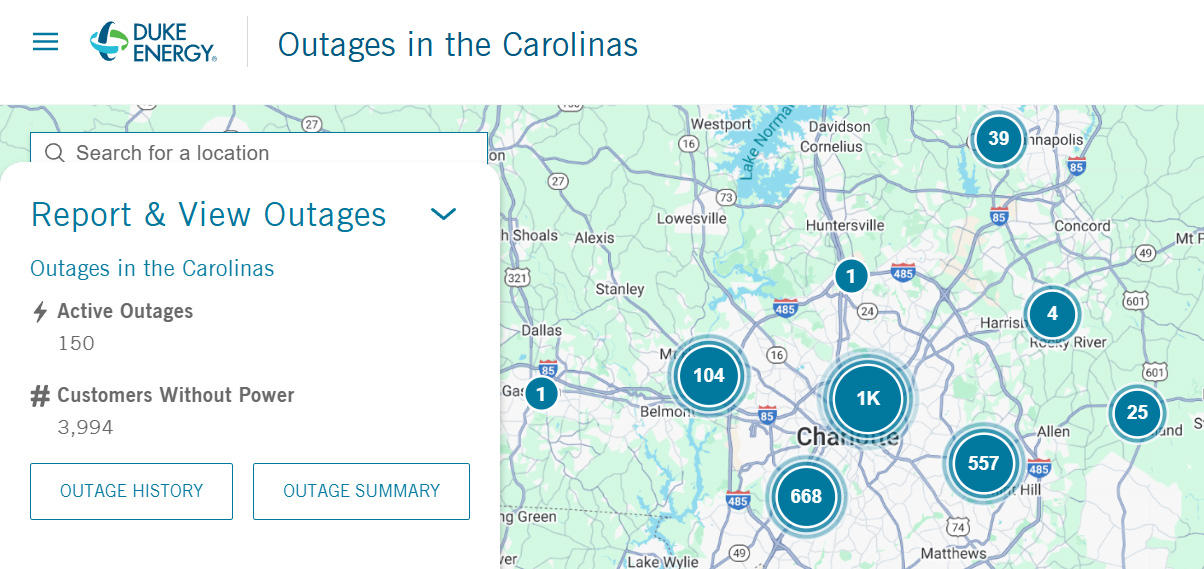
Several areas around South End and LoSo saw record-breaking rainfall, prompting a flash flood warning Thursday evening.

As of 8:10am this morning, USGS’s raingage near Tyvola Road and South Boulevard (CRN-13 Raingage) recorded 6.12 inches of rain—most of it coming last night in a span of about 2 hours, equating to a 1,000-year rainfall event.

Meanwhile, surrounding areas such as Belmont, Fort Mill, Ballantyne, and Matthews received less than an inch of rain.

Heavy winds accompanying the downpour contributed to widespread damage, bringing down trees and worsening power disruptions. According to Duke Energy’s outage map, the majority of outages stemmed from fallen trees and limbs that damaged electrical equipment.

Duke Energy crews are working to restore service, with no specific timeline announced for full restoration.

Charlotte-Based Bojangles Could Be Sold in Deal Worth Over $1.5 Billion

0

Charlotte-based Bojangles may soon be changing ownership, as the fast-food chain explores a possible sale that could exceed $1.5 billion. The fried chicken and biscuit brand has reportedly enlisted investment bankers to evaluate offers, according to The Wall Street Journal.

Founded in 1977, Bojangles is one of the most iconic brands in the Carolinas, with hundreds of restaurants nationwide.

According to the company’s website, they were sold in 2019 to Jordan Company & Durational Capital Management for roughly $500 million.

company may ultimately decide not to sell. Bojangles has not publicly commented on the matter.

Meanwhile, the chain continues its national growth. It’s now planning to expand to California for the first time, planning 30 new LA locations over the next few year.

Purple Gold: The Rare Honey Found Only in North Carolina

In the world of beekeeping, few mysteries are as captivating as the rare appearance of purple honey. Found almost exclusively in the hives of North Carolina, this shimmering honey has fascinated researchers, hobbyists, and culinary enthusiasts for decades.

The phenomenon remains rare and unpredictable. Purple honey appears only intermittently and in limited hives, with no clear pattern. Its deep, iridescent hue has sparked countless theories, as both academic researchers and seasoned beekeepers search for an explanation.

Some longtime beekeepers attribute the color to bees feeding on local fruits such as blueberries or huckleberries. However, NC State professor John Ambrose disagrees, noting bees lack the ability to pierce fruit skins. Instead, he proposes that higher aluminum levels in regional nectar may react with the acid in bees’ stomachs, altering the honey’s color.

Folk theories remain strong. Beekeepers in Dunn, for instance, blame wild grapes after spotting bluish tints in their hives. Others argue the culprit is the nectar of kudzu, the fast-growing vine common across North Carolina. In the eastern part of the state, another theory centers on the Summer Titi plant, also known as southern leatherwood.

Adding to the intrigue, keepers report that the honey’s vivid purple shade fades to brown over time, with its distinctively sweet, almost fruity taste also diminishing.

Despite these clues, no single cause has been confirmed. The honey remains one of North Carolina’s rarest natural products, mostly seen near the Sandhills, where visitors often come for golf at Pinehurst or equestrian activities in Southern Pines—unaware they’re in one of the only regions in the world where purple honey is harvested.

Purple honey is not only visually unique, but also a coveted delicacy. Many say it tastes sweeter than traditional amber honey, with some describing subtle berry-like undertones.

The mystery bridges tradition and science, showcasing the still-unknown complexities of bee biology and the region’s diverse flora. It is a reminder that even in the age of lab tests and agricultural engineering, nature still holds a few secrets.

As more beekeepers join the effort to track and study this rare phenomenon, North Carolina’s purple honey continues to be both a scientific puzzle and a treasured Appalachian enigma.

Top 5 Everyday Carry Items for Modern Men

0

Being prepared helps people get the most out of life. Having the right gear on hand means they can do the things they need to do quicker, and they can handle the bad things that life throws their way better. It also gives them the chance to enjoy nice surprises, like a spontaneous social outing after work or meeting a famous person. Here are some useful items for modern men to carry that will help prepare them for anything.

A Crossbody Bag

Today, the everyday carry of many men has evolved beyond the classic keys, wallet, and phone combo. But carrying more than that requires more space than can be found in most pockets, which is why crossbody bags for men have become a widely adopted alternative. These are smaller and more versatile than backpacks and briefcases, but are large enough to store a few other gadgets and items besides keys and a phone, while still looking sleek and stylish. 

A Minimalist Wallet

Bulky wallets used to be an accepted part of men’s style, but that’s no longer the case. Minimalist wallets are the on-trend option today, and these are small, often only providing enough room for a few cards, some cash, and ID. While you can find these in fine leather, you can also find ones made of modern-looking materials like carbon fibre and aluminium. Their small size means they can easily slip into your pocket without causing a bulge.

Portable Power Bank

This is the kind of modern gadget that you could carry in your crossbody bag. And with smartphones becoming central to the lives of modern men and women, it’s more important than ever to make sure you do. Today, a dead phone could leave you stranded if you use it instead of cards or cash to pay. Power banks now come in very small sizes and with fast-charging capabilities, so you never need to be caught short again.

Noise-Cancelling Earbuds

These are another gadget that’s worth carrying around, especially if you live in a very busy and noisy city. Noise-cancelling earbuds mean that you can find peace anywhere. They shut out the ambient sounds around you, which is helpful when you need to take a break or make an important call. Most modern earbuds come with convenient cases you can carry them around in when you’re not using them, and you no longer have to worry about wires trailing everywhere.

Hand Sanitiser

Eating and shaking hands are both things life can spring on us at short notice. At work and in our social lives, we may suddenly be offered food or introduced to someone new. Turning either down could be rude, so it’s important to stay hygienic and make sure you’re ready to do either if the chance arises. A small bottle of hand sanitiser is a convenient solution that’s no trouble to carry around each day.

Conclusion

Whatever you choose for your everyday carry, remember that it’s about more than convenience and making you look good. Each item should help prepare you for a wide range of things the world could throw at you. 

Managing Finances: Resources for Charlotte Citizens Handling Emergency Expenses

0

Charlotte, North Carolina, stands out as one of the South’s most vibrant and fast-growing cities. With a strong financial sector, diverse cultural offerings, and an expanding population, it’s a place full of opportunity and promise. Yet, like any major city, Charlotte’s residents still face everyday financial challenges.

Unexpected expenses—from medical emergencies and car repairs to job disruptions or severe weather—can quickly strain even the most careful budgets. In times like these, having quick access to dependable financial support becomes essential. Fortunately, Charlotte is home to a wide range of banks, community organizations, and digital resources designed to help residents manage these sudden financial setbacks.

The Financial Climate in Charlotte

Charlotte’s economy is robust, anchored by its reputation as a major U.S. banking hub. It’s home to the headquarters of Bank of America and a large Wells Fargo presence. The city also boasts a thriving real estate market, a strong healthcare sector, and a growing number of tech startups. Despite these strengths, not all Charlotteans experience financial stability.

Rising living costs—especially in housing—have outpaced income growth for many middle- and low-income families. As expenses climb and job markets shift, more people are adapting by cutting costs, taking on extra work, and planning ahead to stay financially stable during unexpected setbacks.

A significant portion of Charlotte households are considered ALICE (Asset Limited, Income Constrained, Employed), meaning they earn above the poverty line but still struggle to afford necessities. This means Charlotte citizens need to plan not just for long-term goals like retirement or education, but also be ready for sudden financial problems.

In many states, residents typically turn to several online loan options as a cushion for financial emergencies. Alternatives to loans like OppLoans, which offer better terms, have become popular among borrowers with less-than-stellar credit scores. 

However, these types of loans aren’t readily available in North Carolina due to state lending laws. Fortunately, Charlotte residents still have locally available options to choose from. 

The Role of Local Credit Unions and Banks

Charlotte’s local credit unions and community banks are pivotal in helping residents manage emergency expenses. Charlotte Metro Credit Union, Truliant Federal Credit Union, and Self-Help Credit Union offer personal loans, emergency savings accounts, and financial counseling programs designed specifically for community members.

These institutions often provide more flexible terms and personalized services than large national banks. For instance, credit unions may offer low-repayment emergency loans or waive certain fees during natural disasters or economic downturns. In 2020, several Charlotte-area credit unions extended hardship assistance programs during the COVID-19 pandemic, offering deferred payments and emergency funding to affected families.

Moreover, many banks offer financial literacy workshops that teach budgeting, credit management, and emergency savings planning. These educational resources are invaluable for residents who want to become more financially independent and better equipped to handle unexpected expenses.

Community Initiatives

Beyond banks and credit unions, several nonprofit and grassroots organizations are actively working to support Charlotte residents in financial distress. Groups like the Crisis Assistance Ministry, the United Way of Central Carolinas, and CommonWealth Charlotte provide emergency financial assistance, rental and utility help, and case management services.

These organizations often serve the most vulnerable populations, including single-parent households, low-income seniors, and recently unemployed individuals. Crisis Assistance Ministry, for example, offers emergency rent and utility assistance and operates a free store where individuals can access clothing and household items at no cost.

Local success stories abound. One Charlotte resident, facing eviction after a medical emergency left her unable to work, was able to stay in her home thanks to rental support from a local nonprofit. Not only did she receive financial aid, but she also gained access to budgeting classes that helped her regain financial control.

Online Resources for Managing Finances

Managing finances is now easier and more accessible than ever. For Charlotte residents, a range of online platforms provide practical tools to handle emergency expenses and plan ahead. Budgeting apps like Mint, YNAB (You Need A Budget), and EveryDollar help users monitor spending, set savings goals, and grow emergency funds—all from a smartphone. Many of these tools are free or low-cost, making them ideal for people with busy schedules and limited resources.

For more localized guidance, Charlotte-specific financial blogs and forums such as CLT Financial Literacy Meetup or Charlotte on the Cheap. They provide timely updates, cost-saving tips, and community discussions tailored to local economic conditions.

Additionally, platforms like Coursera and Khan Academy offer free online courses in financial literacy, which can empower users to make informed decisions about saving, borrowing, and investing. Many of these courses are beginner-friendly and self-paced, perfect for individuals juggling work and family responsibilities.

Staying Financially Sharp in the Queen City

Charlotte is full of opportunity, but financial hardship can strike unexpectedly. In a dynamic and sometimes uncertain economy, it’s vital that residents not only plan for the future but also prepare for the unexpected.

Good resource management isn’t just a smart choice but a necessity. With greater financial literacy and stronger community connections, Charlotte citizens can face emergency expenses with confidence and peace of mind. If you’re seeking help or offering it, knowing the available options and tapping into local networks can make all the difference in times of need.