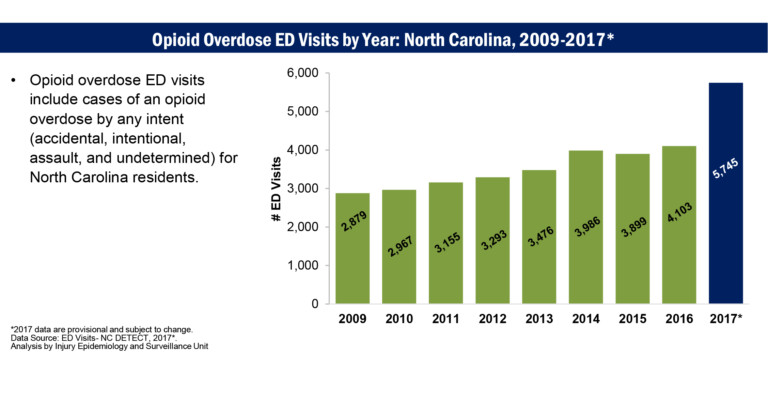
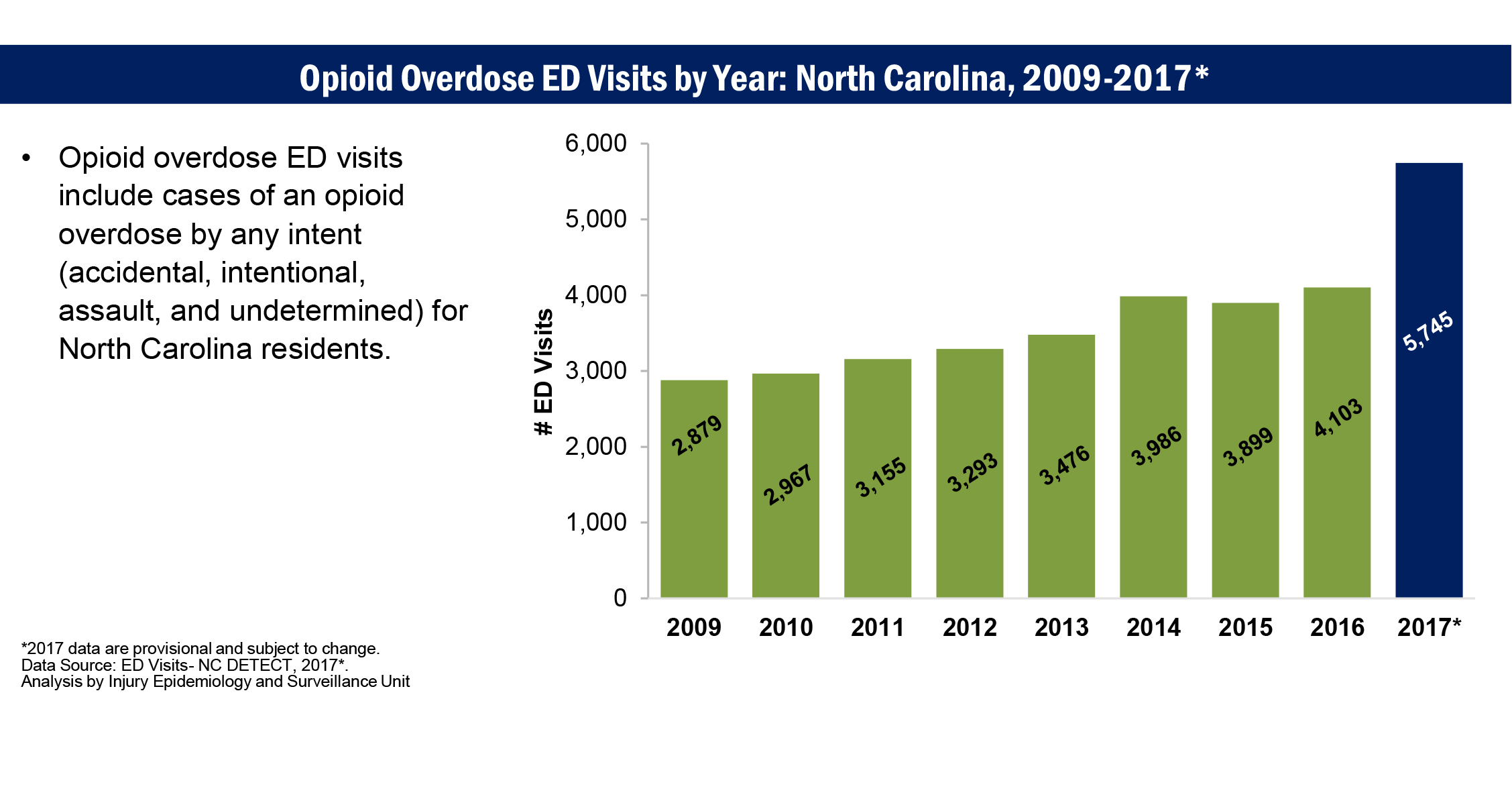
The NC Department of Health and Human Services just released the opioid overdose figures from 2017 – they’re alarming to say the least. Emergency room visits saw a nearly 40% increase in opioid overdose cases from 2016 to 2017, with over 5,700 visits.
Given that there were roughly 2,879 cases in 2009, our state has now almost doubled in cases over the past eight years.
 Heroin accounted for about 68%, or 3,924 cases, with the rest of the visits resulting from of opium, methadone and various other natural and synthetic opioids.
Stokes and Yadkin counties saw the highest percentage of cases, with at least 100 visits per 100,000 individuals.
Forsyth County saw the lowest, at between 15.2 and 29.9 cases per 100,000. The statewide average was 56.9 per 100,000.
According to NCDHHS, “visits are tracked as part of North Carolina’s Opioid Action Plan, developed in 2017 with community partners to combat the opioid crisis. The plan includes measurable strategies to reduce the oversupply of prescription opioids, the diversion of prescription drugs and the flow of illicit drugs, increase community awareness and prevention, make naloxone widely available, expand treatment and recovery systems of care, and coordinate the state’s infrastructure to tackle the opioid crisis.”
“We are seeing progress in some areas, but the latest numbers show that we still have a long way to go to stem the tide of this crisis,” said Mandy Cohen, M.D., Secretary of the North Carolina Department of Health and Human Services. “We must continue to develop and implement innovative approaches to address the issue, working closely with our partners on both prevention and treatment.”
One major step the state recently took was to change Naloxone (opioid overdose antidote) from requiring a prescription, to now be available ‘over the counter’.
Despite the medicine being a proven life-saver, local pharmacists say people are not coming to them to get it or even asking about it, likely due to people simply not having enough information about it.
According to the Carolina’s Healthcare System, “Naloxone is a medication that counteracts an overdose caused by an opioid drug – administering naloxone may be the key to saving a person’s life before medical assistance arrives.”
Naloxone works by immediately restoring a person’s breathing. It can either be injected intravenously or deliver through the nose, via a special spray canister. It lasts about 30-60 minutes, so anyone administering the drug should immediately call 9-1-1, if they haven’t done so already, and stay with the patient until help arrives.
The following are common signs of an opioid-related overdose;
Small pupils
Pale face
Limp body
Shallow or slowed breathing
Vomiting
Loss of consciousness
North Carolina also has the ‘Good Samaritan law’, which essentially protects people who contact emergency officials, then administer Naloxone to someone who has overdosed from any liability.
If you know anyone who might use heroin or any other opioids, please pick up some Naloxone from your local pharmacist and keep it handy – you never know when it might save someone’s life.
DHHS will begin making quarterly opioid reports available, as well as preliminary monthly data at http://www.dhhs.state.nc.us/.


 With Duke Energy customers now facing one of the highest rate hikes in the history of the company, regardless of how much electricity they use, an attorney for the company tried to calm the public by saying that the rate hike only amounts to the price of a fast food meal.
 With my second new construction home nearly complete in Weddington I thought some helpful hints to consumers here in Charlotte was in order. Further I meet so many new Charlotte residents or first time home buyers that I thought some helpful advice is due.
 This past Friday, the North Carolina Justice Center released a new study that examined racial segregation in schools across our states.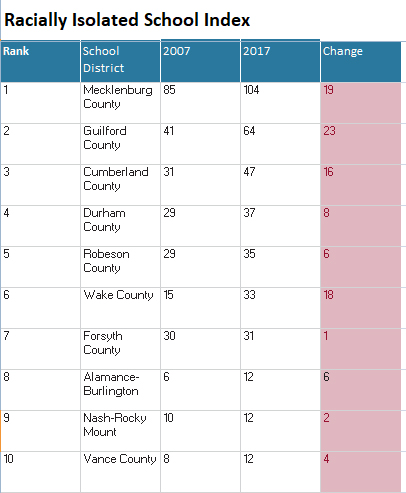


 A new flagship banking tower is coming to Uptown Charlotte, forever changing our skyline, and pushing our CBD (central business district) even further west.


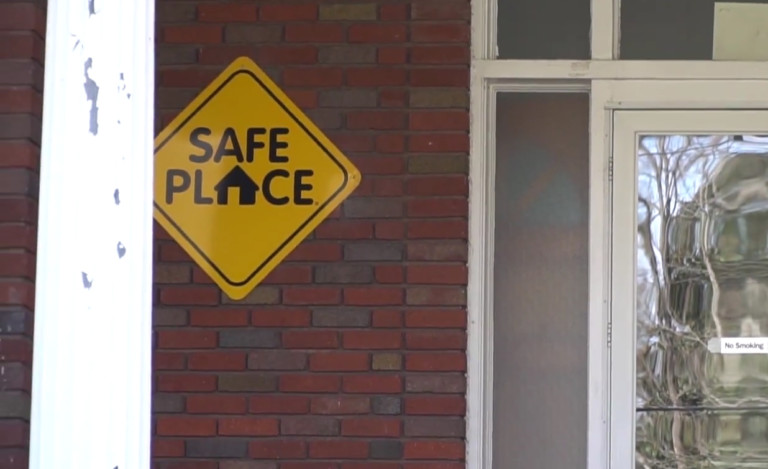
 Last year 33 kids in the Charlotte community relied on the Safe Place program for help because they were homeless, had runaway, or were experiencing family conflict which put them in crisis.
 Cead Mile Failte! (100,000 welcomes)!
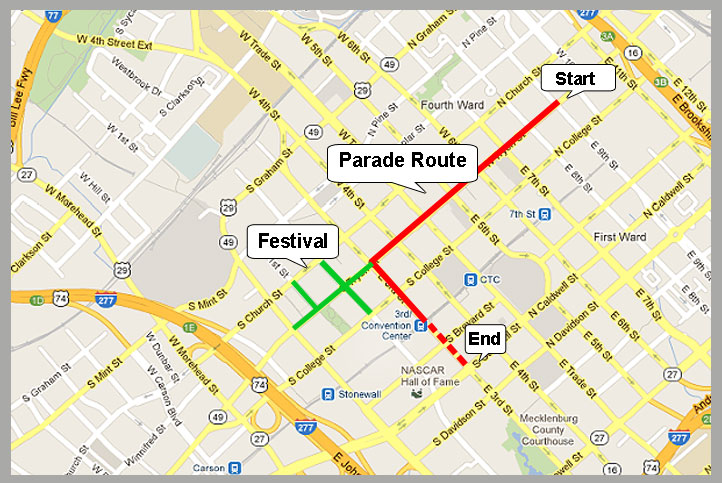
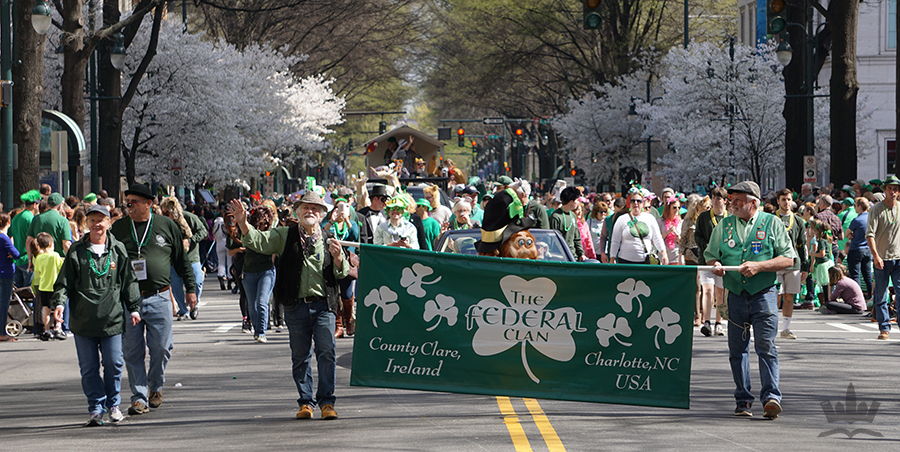
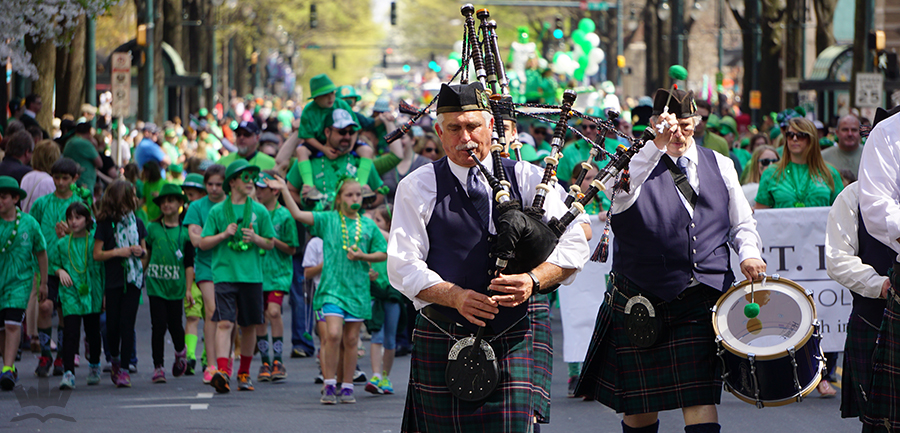
 The Twenty-Second Annual Parade promises to be another great one! The Charlotte Goes Green Festival was very well attended as capacity crowds enjoyed the beautiful afternoon weather as they listened to Irish music, watched performances by Irish dancers, played in the Celtic Kids Zone, had lots to eat and checked out the great Irish/Celtic vendors that attend the festival from around the U.S.