
Even if stores reopen, nothing’s going to stop the e-commerce surge

0

American states have started to reopen part of their economies, catering to the needs of residents who can’t wait to get outdoors. Each state has a different opening calendar, not to mention different rules and regulations. Grocers, pharmacies, and e-commerce marketplaces ensure customer access to essentials such as food, medication, and toiletries. Even if shops are slowly but surely opening again, this will have a very little impact on the e-commerce surge that we’ve witnessed during lockdown. As a reminder, since the beginning of the health crisis, more than 50% of people shopped online, choosing sites that they already know. And consumers are expected to continue stretching their dollars online. 

Image source: https://www.pexels.com/photo/woman-sitting-on-sofa-while-looking-at-phone-with-laptop-on-lap-920382/ 

E-commerce shopping more common due to COVID-19 

The global pandemic has affected customers and retailers from a business and personal standpoint. Firms have started to sell online since the coronavirus outbreak in an effort to generate income, support their employees, and, last but not least, deliver quality products and services. Customers too have changed their shopping behaviors. According to Statista, more than 27% of respondents in the United States said they did their shopping online instead of offline because of the health crisis. There has been a considerable increase in e-commerce B2B shipments at local and global levels, which is largely due to the COVID-19 situation. Brick and mortar stores transitioned to online, meaning that people had no choice but to order online. 

Brands, as well as customers, have been forced to adapt to a situation they’ve never encountered before. The retail space that we once knew and loved isn’t the same and there’s a very small probability that things will return back to normal in the near future. The deadly virus keeps on spreading, with countless countries and territories affected. A digital-first approach is necessary to win and retain customers. E-commerce, as far as it’s concerned, is expected to double by 2023. Retailers that refuse to adopt a digital-first approach will be missing out on a lot. They need to make strategic business decisions during these difficult times. 

Coronavirus-fueled tech trends will continue to dominate the COVID-19 age 

The current status of the coronavirus in Charlotte isn’t encouraging. Some of the residents defy basic decency and common sense, completely refusing to wear a face covering. This situation isn’t isolated to North Carolina, though. It seems that people all over the world refuse to take COVID-19 seriously. Given the fact that the novel coronavirus isn’t going away any time soon, tech trends will continue to dominate the scene, including online shopping. The incredible growth of e-commerce that started during the early days of the health crisis doesn’t show signs of reversing. Businesses that implemented digital strategies prior to the global pandemic are now in a position to lead. 

Online retailers will see their revenue increasing, with delivery and pickup services in great demand. Mobile devices are the most popular devices for online shopping. People are buying everything from groceries to apparel, forgetting all about store visits. They are more motivated than ever to stay at home and shop online, creating the ideal conditions for innovative e-commerce startups that offer the best-in-class shopping experience.  Physical stores are indeed reopening, but not many are willing to venture out due to the fear of contracting COVID-19. Health experts are warning about a virus resurgence and people take their warnings seriously. 

The fact of the matter is that consumers don’t feel safe and they’re not thinking about returning to their old shopping behaviors – i.e. the ones they took for granted. In a social-distance-minded economy, businesses have no choice but to innovate and start selling online. Things are changing, but with this change comes opportunity. Businesses must understand the repercussions, as well as the opportunities presented by the health crisis. E-commerce offers easily accessible and lucrative opportunities everywhere. Organizations should be ready. 

Getting a business to start selling online during COVID-19 

It’s been months now since the novel coronavirus disrupted our lives. From being forced to practice social distancing to getting used without outdoor activities, it’s been something no one expected. It was a hard blow even for businesses. As the global pandemic pushes on, the smart thing to do is to start selling online. You don’t necessarily have to be a retail store to move your business on the Internet. Even the services industry can take advantage of the benefits of selling online. Getting back on topic, setting up an e-commerce store isn’t hard at all. If you’re just starting out on your journey to success, make sure to pick the best e-commerce platform. BigCommerce and Shopify are the most popular solutions. 

The big commerce vs shopify is as old as time. Both online platforms can serve the user’s needs remarkably well and the choice between the one or the other depends a lot on personal preference. BigCommerce has the most built-in features, yet it’s not suitable for beginners due to the complex terminology and learning curve. Shopify, on the other hand, has a great inventory system, but makes it impossible to switch templates, as it’s required to reformat the entire site. Many agree with the fact that Shopify is better than BigCommerce because it can be used by anyone, so it’s not necessary to have digital expertise. Plus, there are no selling limits. 

It’s important to figure out if you’ll be selling from your own inventory or shipping from your manufacturer. Not too many people will come into the physical store, meaning that it’s not necessary to have a great deal of inventory at hand. If you sell products using the drop shipping model, you’ll have to find a good retail partner. Get a good understanding of your industry’s distribution channels and contact a drop shipping supplier. Most importantly, tell people that you’ll be selling online. Communication is of paramount importance during the global pandemic. Inform customers of any changes taking place in your business. 

Promotions quickly attract customers’ attention and encourage them to spend more. Put quality product photos on the website and take the time to write compelling descriptions. Automate as many processes as possible. You’ll want to be much more efficient than you’re right now.   

5 Reasons Endpoint Security Is Critical

0

It’s remarkable how quickly enterprise IT is changing. A few years agomany offices had employees working primarily on-premises usingdesktop devices, now it’s increasingly common for employees to work remotely using some combination of desktops, tablets, laptops and smartphones. Case in point: The COVID-19 pandemic forced businesses to quickly adapt to closures and get a percentage of their workforces working from home — if they already hadn’t.
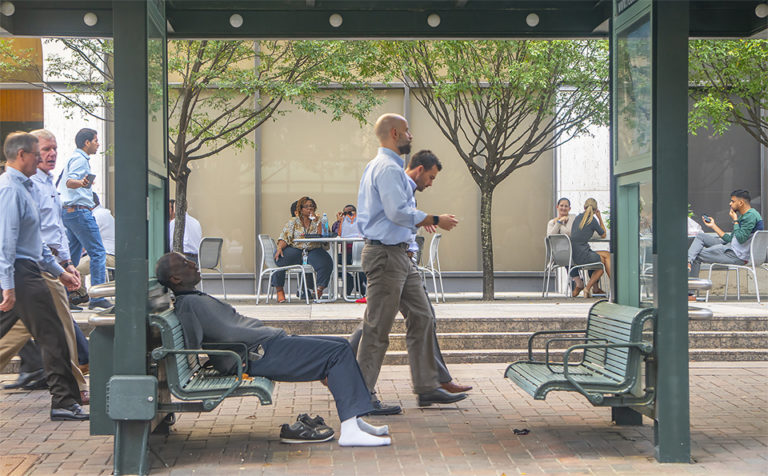

While the ability to access networks from endpoints brings with it many benefits — like increased flexibility for workers — it also leaves companies vulnerable to cyberattacks without ample security in place.

Here are five reasons it’s critical to take endpoint security just as seriously as security on premises, if not more so.

#1: The number of attacks on endpoints is rising.

According to research from the Ponemon Institute, nearly seven in 10 (68 percent) of IT specialists report their company fell victim to at least one endpoint attack compromising data assets or IT operations in 2019. Two years prior, that number was just over half (54 percent).

The takeaway? Endpoint breaches are on the rise, which means enterprises need to do everything they can to secure endpoints on the network.

#2: Successful endpoint attacks are becoming more costly.

In 2019, the cost of an endpoint attack reached $8.9 million — an increase from just over $7 million in 2018 and about $5 million in 2017. Attacks are becoming more frequent andmore expensive each year.

When enterprises consider the price tag of a cyberattack, it’s important to factor in IT downtime as well as lost user productivity and the costs associated with compromised data. While it may never be possible to prevent all cyberattacks, taking endpoint security seriously ahead of time is the only way to reduce the risk.

#3: More endpoint devices are connecting to enterprise IT networks.

In addition to more employees harnessing mobile devices for work, enterprise IT networks are seeing an influx of Internet-of-Things (IoT) devices, point-of-sale (POS) terminals, servers and more. This wider range of devices offers more vulnerabilityfor hackers to exploit when security is lax.

#4: IT teams must mitigate shadow IT and keep software current.

A tricky aspect of managing endpoint devices is some of them fall outside the oversight of IT. This has given rise to “shadow IT” — or usage of devices and software beyond the approval and regulation of the IT department.

As much as companies would like to count on users to maintain cybersecurity protocols to counter potential susceptibilities, it’s simply unrealistic. As Security Intelligence points out, users are prone to downloading “unapproved applications” which can open networks to malware. Lost or stolen devices can also provide hackers with the credentials they need to infiltrate a network. Without up-to-date security applications and operating systems, devices are more vulnerable to endpoint attacks.

#5: IT teams can become overwhelmed trying to protect endpoints manually.

With expanding networks and increasing cyberattack threats, even the most diligent and qualified IT teams can become overwhelmed trying to protect endpoints manually.

Hiring dedicated cybersecurity personnel is certainly an option if it’s in the budget, and if companies are able to find experts with the skillset needed to minimize attacks. Another option is deploying third-party endpoint detection and response (EDR). This technology — which can be cloud-based, deployed on-premises or adopted as a hybrid approach — monitors network activity, analyzes events and responds to threats immediately for continuous supervision.

Endpoint security is critical because more of them are joining enterprise IT networks and organizations are experiencing more — and costlier — attacks on them.

New Unemployment Data Shows Pandemic Still Putting North Carolinians Out of Work

0

According to the Department of Labor, 28,323 North Carolinians filed initial claims for unemployment last week. Over the past several weeks, new claim numbers have held steady, indicating that thousands of North Carolinians continue to lose their jobs because of the on-going pandemic, while expanded federal unemployment insurance is set to expire next week.

Expanded federal unemployment payments provided by Congress in the CARES Act are set to expire on July 31. According to the Economic Policy Institute, letting the $600 expire would cost more than 5 million jobs over the next year.

Reports indicate that the Senate has yet to settle on a plan for extending federal unemployment. If federal unemployment insurance disappears, average weekly payments in North Carolina will drop from $877 to just $277.

The state of North Carolina also has one of the shortest maximum unemployment insurance benefit duration (tied with Florida at just 12 weeks), meaning those who lost their job in March and April currently or will soon have no income.

What do you think should be done for those who now find themselves without income?

UNC Charlotte Issues State of Housing in Charlotte Update

0

After seeing a drop in April and May due to the COVID-19 pandemic, single-family home sales in the Charlotte region are surging back, according to an update from UNC Charlotte’s Childress Klein Center for Real Estate (CKCRE), part of the Belk College of Business.

“The bottom line is that despite the pandemic, the demand for single-family housing throughout the Charlotte region remains strong,” said Yongqiang Chu, CKCRE director. “However, supply is extremely limited.”

CKCRE_covid_soh_update_ppt3.jpgChu – who is also the Childress Klein Distinguished Professor of Real Estate and Urban Economics and professor of finance for the Belk College – presented the data during the State of Housing in Charlotte Virtual Update on Thursday, July 23.



Earlier this year, the supply of single-family housing had loosened up across the region, Chu said. However, this changed starting in April and continued through June. For June, housing inventory in the region dropped to 2.91 months. For Mecklenburg County, inventory was even lower, at 2.79 months.

For June, monthly single-family housing sales rebounded across the region with 3,833 sales, a .04% increase over June 2019.

The update, based on Canopy MLS (Multiple Listing Service) Data, also found for June:

  • Pending single-family home sales for the region increased 19% over June 2019 at 4,394.
  • The region’s median housing price was $309,000, the highest since May 2019. For Mecklenburg County, the median price increased to $319,490.
  • The quality adjusted price continued to trend upward.

Gonzalo Could Strengthen Into Hurricane And Hit The Carolinas Next Week

0

What could soon become the first hurricane in the Atlantic for 2020, Tropical Storm Gonzalo continues to strengthen as it weaves its way through the Caribbean islands.

Gonzalo is currently located a few hundred miles east of the Windward Islands and is expected to hit them by Saturday afternoon.

The storm is then expected to continue moving toward the gulf of Mexico and strengthen over the warm and deep water of the Caribbean.

Once it hits the gulf, its path will diverge off onto one of several possible tracks – 3 of the possible tracks show direct impacts with the Carolinas.

Although there is a chance Gonzalo could hit the Carolinas, it’s highly unpredictable what path it will eventually take, especially considering its small size. According to The Weather Channel, “small storms like this can intensify quickly in the right conditions, but they can also succumb to unfavorable conditions more quickly than a larger storm. In other words, they can strengthen and weaken much more and at a faster rate than expected.”

Whether or not we feel any effects from Gonzalo, we are now officially in hurricane season for 2020, which runs from June 1st through November 30th.

NWS officials are reminding all residents in Atlantic Coast states to prepare.

In case of a power outage, make sure to have the following emergency items stocked in your home;

We will continue to update this article as this storm develops. 

How to Avoid Telemarketing Fraud

0

Henry is a retired man who lives by himself. One morning, he received a call letting him know he had won a trip to The Bahamas for one week. The only thing he needed to do was deposit a small “processing fee” of one hundred dollars. Considering that the trip was worth well over $1000, Henry thought it was a very small price to pay. But after weeks of waiting to get more information about his upcoming trip, Henry found out he had been a victim of a scam. As telemarketing fraud becomes more sophisticated, more and more stories like this are seen on local news outlets all over the country. There are, however, some ways to protect yourself.


Don’t Interact With Unwanted Callers

In most cases, unwanted calls are scams or attempts to make you buy something. The best way to go is to politely decline to give any kind of information and hang up. If the call is legitimate and important, they will find other ways to contact you. A good idea is to ask for a number to call back and run it through a site like Check People to find out who is behind it. If the number is registered by an individual, it’s most likely a scam. The same happens if you are not able to find any information about it.

Some of the most common telemarketing scams include:

  •   Prize-Winning calls that ask for “processing” money
  • Calls from your bank asking you to disclose passwords or PIN numbers. No bank will ask for this information over the phone. This call can be especially confusing as bank representatives will call if, for example, there is unusual activity on your account. While they may ask you some security questions for verification purposes, they will never ask for your password or PIN.
  • Calls from government agencies asking for money. A very common scam call involves a script in which you have an important debt with the IRS, but they are willing to “settle” for less if you make an immediate deposit. No government agencies will ask for money over the phone. 
  • Calls from long lost relatives or friends asking for money. If you suddenly get a call from your estranged cousin (who you haven’t seen for 20 years) asking you for a loan, there is a very high possibility that you are dealing with a scam caller.

Protect Your Information

  1. Don’t buy from unfamiliar companies. This applies especially to online shopping. If you want to proceed with a purchase from an unknown website, take your time to verify it’s legitimate (by reading their privacy policy and terms of service, and by looking for other client’s reviews).
  2. Most trustworthy companies will not ask you to pay for services in advance. If for any reason you need to do so, ask for a written agreement with clear refund policies.
  3. Avoid sharing too much on social media. As we said before, telemarketers will use any information they can get online.
  4. Don’t respond to emails asking for personal details such as address or phone number.
  5. If something seems too good to be true, it probably is. No Nigerian prince or millionaire’s widow is willing to give you five million dollars.
  6. If you believe your information has been leaked or compromised in any way, file a report immediately, and notify everyone involved.
  7. Children and elderly people are especially vulnerable to telemarketing scams. Talk to them about safety measures and, if possible, monitor their calls. 

Telemarketing scams continue to evolve and become more sophisticated. More and more victims report that scammers already had some of their personal information (which can be easy to access with a simple Google search) and that they used, for example, the exact same recordings played on legitimate calls from their bank. During 2017, the FCC issued a special warning involving the use of voice recognition software for telemarketing fraud. This is why learning about your rights and keeping yourself informed is so important. There is plenty of information online about how to protect yourself, and how to take action if you are a victim. A good way to add an extra layer of protection is to register your number on the Do Not Call list.

New Initiative Launches To Create Social Justice and Equity In Charlotte – Bridge Builders Charlotte

0

Bridge Builders Charlotte, a joint effort between Belk Chapel at Queens University and Chicago-based Interfaith Youth Core, officially launched this week with a goal of boosting interfaith cooperation and understanding to promote social justice and educational equity across the Charlotte region.

Bridge Builders Charlotte aims to use campus-community partnerships to overcome social divides and make our community stronger – with a specific aim of strengthening the Charlotte community’s response to the COVID-19 crisis. Bridge Builders’ strategic leadership team includes partners from the Community Building Initiative, Duke Endowment, Foundation for the Carolinas, Mecklenburg Metropolitan Interfaith Network (MeckMIN) as well as area educators, philanthropists and leaders from local houses of worship.

Last week, Bridge Builders launched its first of five projects by providing interfaith learning boxes to Freedom School Partners (FSP), a nonprofit that works to prevent summer learning loss through a culturally diverse curriculum focusing on reading skills and comprehension. The boxes were created to help Charlotte-Mecklenburg Schools students avoid the summer slump, especially in a year cut short by the coronavirus with more remote schooling on the horizon. The boxes will also be distributed through Wayfinders, a nonprofit that has had to retool its signature summer camp experience, and Refugee Support Services.

The interfaith learning box project was funded by a $50,000 grant to Wingate University and UNC Charlotte, one of five individual grants supported by a $250,000 contribution from the Gambrell Foundation. Collectively, the Gambrell-funded projects will involve more than 10 faith communities, six area colleges and universities (Central Piedmont Community College, Davidson College, Johnson C. Smith University, Queens University, UNC Charlotte and Wingate University), and six nonprofit organizations.

Between July and October 2020, these selected initiatives will forge connections between Charlotte-area campuses, local nonprofit organizations and religiously diverse communities, leveraging Charlotte’s potential to expand opportunity for those who are most vulnerable as result of the coronavirus crisis.

“By showcasing the value of meaningful partnerships that bridge religious and social divides, Bridge Builders Charlotte hopes to raise awareness of the role faith-based efforts can play in civic spaces, whether in response to a pandemic or to systemic social ills such as racism and discrimination,” says Bridge Builders Charlotte Program Executive Dr. Suzanne Watts Henderson. “We hope these pilot projects will establish a sustainable model for interfaith initiatives that strengthen Charlotte’s social fabric by addressing real needs in the community. Along the way, students will gain real-life opportunities to develop interfaith leadership skills for their future professional lives.”

Dr. Eboo Patel, Founder and President of IFYC, applauded the program’s kickoff. “Charlotte’s young people, civic leaders, and educators are bringing people together across lines of religious, race and philosophical difference,” he said. “In doing so, they are demonstrating the best of who we can be in this challenging national moment.”

Each interfaith learning box contains up to 10 activities based on grade, each corresponding to a different faith tradition and complete with an instruction card and educational packet. Examples include Tessellation, a geometric art custom rooted in Islamic tradition; Rangoli, a Hindu artform in which patterns are created on the floor in living rooms or courtyards using materials such as colored rice, dry flour, colored sand or flower petals; and nondenominational pan pipes.

FSP plans to distribute a box to each of its scholars as a supplement to their summer curriculum, which has been revised to adapt to the virtual learning environment. The nonprofit organization will encourage families to complete all activities together to help at-risk children continue learning and avoid a backwards slide even when out of school for the summer. Bridge Builders’ student interns will also lead virtual conversations with interested families about the activities and the value of interfaith understanding.

While Bridge Builders Charlotte is currently funded only for the 2020 projects, an aspirational goal is to use this inaugural Charlotte experience to establish a model for campus-community partnerships that can be extended throughout the region and across the state of North Carolina.

Charlotte’s Newest Pro Sports Team Reveals Official Name and Logo – Charlotte FC

0

Charlotte’s newest professional sports team officially now has a name – The Charlotte Football Club, or Charlotte FC for short.

Charlotte FC owner David Tepper and other team officials held an official press conference and small celebration at the Bank of America Stadium yesterday to unveil the new team name and logo.

According to a press release from the team, the new design was inspired from Charlotte’s unique heritage as the first American city to have its own mint (“Minted 2022”). The black, blue, and white circle crest represents the coins that were made here, and the 4-point crown represents the 4 wards that make up Uptown Charlotte.

“The Charlotte FC brand truly embodies our city with a design that reflects Charlotte’s rich history,” Charlotte FC Owner David Tepper stated. “When we were awarded the team in December, I spoke about this club bringing the city together. To reach the point where our fans can actually know our name and see our colors is a significant milestone.”

Here is the official promo video for the new team name:

The MLS Store has now started selling official Charlotte FC merch – including a custom Charlotte FC mask:

What do you think about the new name and logo for Charlotte’s latest pro sports team?

Community Care: Understanding the Aged Care Journey

0

Aged care is an area that we don’t get acquainted with until a family member or we ourselves start to consider it. The future might have many uncertainties, but the quality and variability of aged care options are plentiful, with a solution to suit all lifestyle preferences. Community care is often the first aged care option to be explored by seniors and families, with the format offering flexibility and a fantastic social atmosphere akin to what they know and experience now. If you have just started gathering options and information about these next steps, let’s understand what community care is to see if it sounds like the right fit. 

What is community care?

Community care will look different for every single person, as it’s designed to assist with the areas that need to be supported in our daily lives. This could be transport assistance to attend doctors appointments and family commitments, preparing meals, exercising with a carer, walking pets or even just a tidy of the home and watering the plants. These carers are trained to look after you or your loved one, as well as tend to any other needs that might arise during this care. If those odd jobs are hard to fit into your day, you might be ready to discuss community care so that you can continue to pursue the activities and social outings that are most important to you.

A great solace to your family

As with any life decision, you have to weigh up the impact those decisions have on your family and your collective lifestyle. Community care is a light touch aged care solution, and one can change over time as you may need, scaling up or down. For families who lead a busy life or have young children, knowing that their elderly loved ones are safe and keeping up with their commitments can be such a solace. It also means that the time spent together is doing fun recreational things, and not those chores and appointments that need to be done. Community care is also a wonderful choice if your family is spread over the city, state or country, or if your loved one lives in a remote area.

What to look for when searching for a community care provider

Now that you know the benefits of this aged care option, let’s understand what you should look for in your chosen community care provider. You will want to know what sort of flexibilities are on offer and what services you can expect to be covered so that you avoid any misunderstandings and missed opportunities for extra assistance when planning for the future. You also want an option that is reputable and reliable, which you can find by viewing the list of eligible providers on government websites, and try to have a couple of appointments with these aged care providers before you choose so you can understand who they are and what sort of carers you will be getting to know.

Transparency and trust should also be your determining factors when choosing a provider, so be honest with what your expectation is of the service and your health and wellbeing goals are while under their care. There is no benefit to entering an arrangement without trust and reassurance.

Community care is a venture you won’t regret, either for yourself or your family, as it extends that helping hand for a short or long amount of time and ensures that your passions and lifestyle is retained as you wish it to be. Think deeply about what you want out of your community care, and start to look at options in your area and how their services can enrich your life.

Uptown Charlotte’s Beloved Fitzgerald’s Just Announced They Will Be Permanently Closing

0

One of Charlotte’s favorite local Irish tavern and restaurant has just announced that it will be permanently closing its doors.

Fitzgerald’s, located on the corner of East 5th Street and North College Street in Uptown Charlotte’s First Ward, first opened in 2012 as a sports tavern “with an Irish twist”. They feature over 37 TVs and set themselves apart as a hub for Steelers, Penn State, and Auburn fans in Charlotte.

They made the sad announcement on Facebook, saying:

“Its with a very heavy heart that after eight wonderful years, Fitzgerald’s will be permanently closing it’s doors. We thank you for the love, support and memories made. We will always hold a special place in our hearts for all the wonderful people we have met and the remarkable experiences we have had in Uptown Charlotte.

Thank you,
Your Fitzgerald’s Family”