NCDOT Breaks Ground On New 6-Lane $78 Million Bridge Between Charlotte and Gaston County

0

One of the Charlotte region’s oldest major bridges is finally being replaced after carrying traffic across the Catawba River for 93 years.

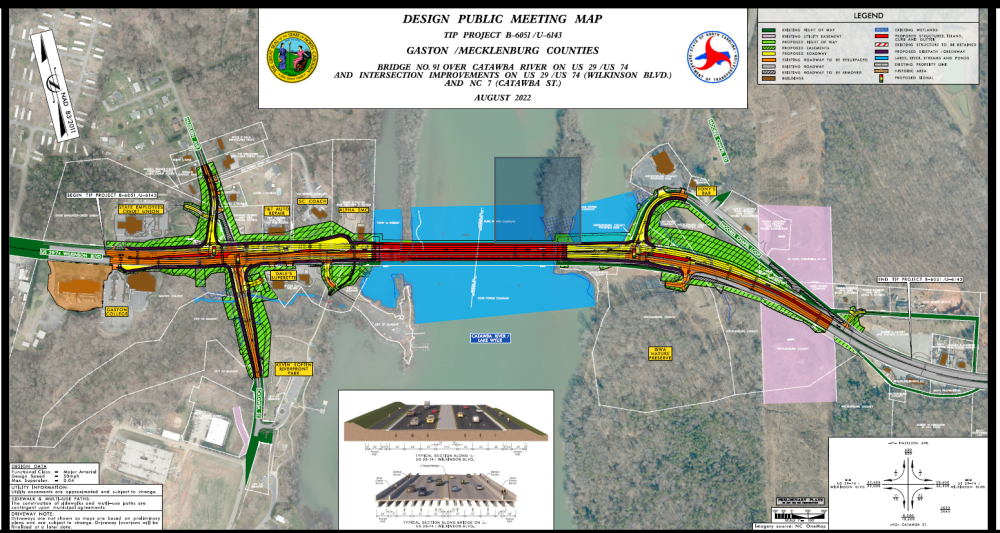
Construction just broke ground on the brand new $78 million Wilkinson Boulevard bridge connecting Mecklenburg and Gaston counties.

The current 4-lane Sloan’s Ferry Bridge first opened in 1933 and carries U.S. 29/74 across Lake Wylie.

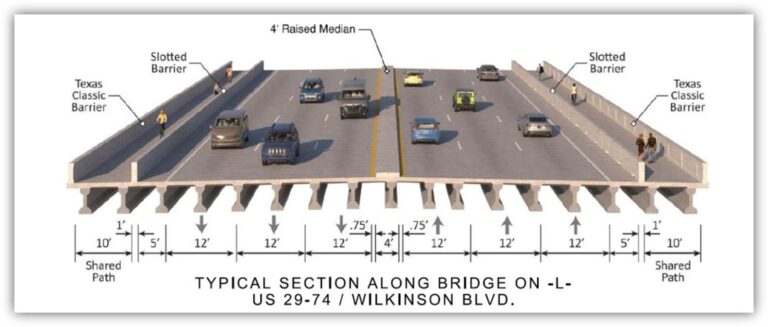
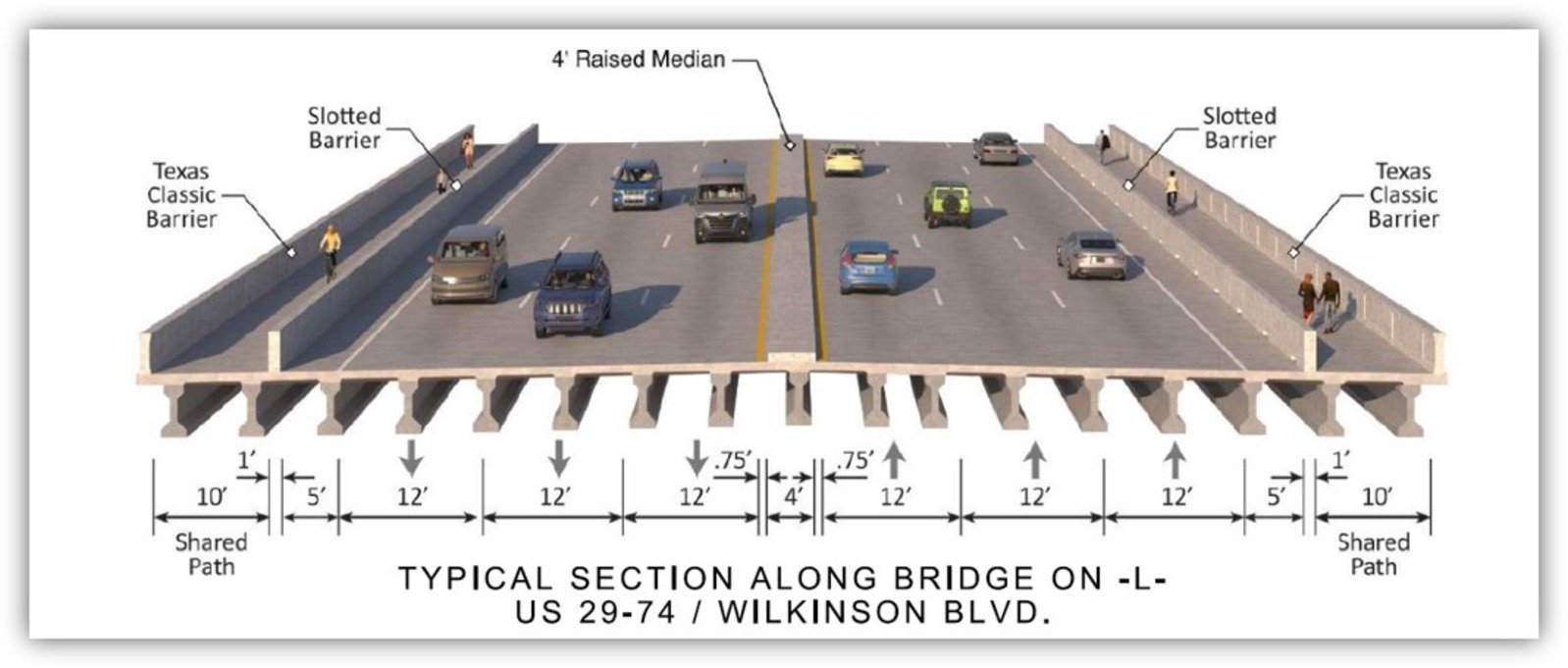
NCDOT plans to replace it with a six-lane bridge, providing three lanes in each direction. The wider crossing should eliminate a longstanding traffic bottleneck. The new bridge will also include 10-foot multiuse paths on both sides.

Those paths will help connect Gaston College, Kevin Loftin Riverfront Park and the nearby Catawba River nature preserve.

NCDOT will also raise the bridge’s midpoint, providing better clearance for boat traffic.

The project includes two scenic overlooks, decorative railings and lighting. Crews will also preserve the bridge’s World War I memorial plaque. The nearby intersection of Wilkinson Boulevard and Catawba Street will receive a major redesign.

NCDOT plans a reduced-conflict intersection aimed at improving backups during morning and afternoon rush hours.

The existing bridge will remain open while the new crossing is built.

Drivers should expect occasional nighttime lane closures along Wilkinson Boulevard. Daytime closures may also occur along NC 7 and Hazeline Avenue.

NCDOT originally expected construction on the bridge to begin much earlier. After years of delays, crews finally just started clearing the site.

The contract currently calls for the project to finish in late summer 2032.

Charlotte To Become One Of The Largest Cities In America – Reaching Current Population of LA by 2100

0
View of Charlotte’s Skyline in 2100 from the Trader Joe’s parking deck

Charlotte’s population has surged over the last couple decades, and we’re not slowing down anytime soon, with estimates now predicting we’ll become one of the largest cities in America over the next century.

According to a new report by Better Moves Project, the US will have an estimated population of 10.9 billion by 2100 (which would still be a lower population density than today’s Germany). Using census data, economic trends, and climate change forecasts, the report also ranks the most populated 25 cities in America in 2100.

They rank Charlotte as 13th in the nation (up 10 spots from today’s ranking of 23rd) with an estimated population of 11.01 million – close to the modern day population of Los Angeles. The report predicts that Charlotte will grow bigger than St Louis, Tampa, Denver, San Francisco, and even Chicago over the next 75 years.

Here’s the full ranking of the expected largest American cities in 2100:


What do you think about the estimates? 

How big do you think Charlotte will grow to by 2100?

Fort Mill Pastor Removed by Sheriff for Speaking Out Against Silfab’s Unlawful Operations

0

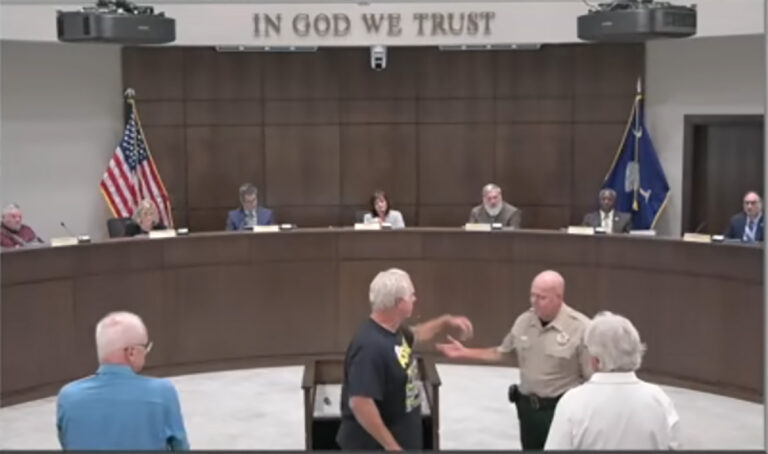
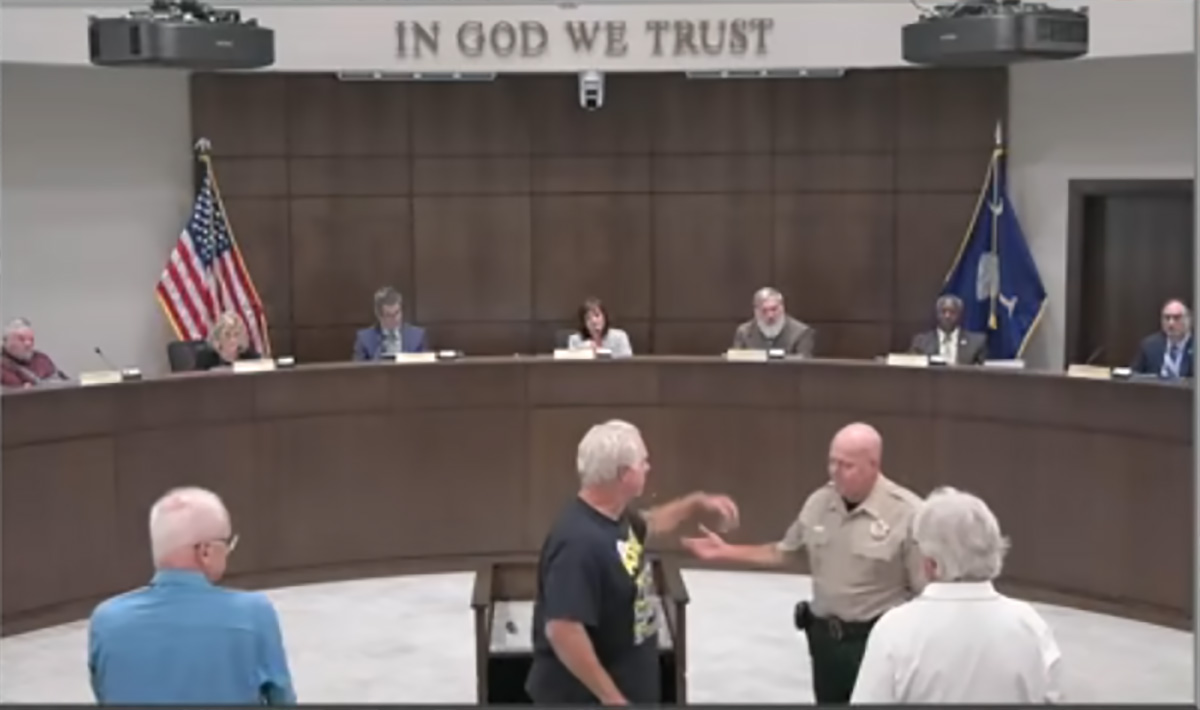
A longtime local pastor and one of the central figures in the Silfab Solar zoning fight was escorted from Monday night’s York County Council meeting after calling the company’s Fort Mill operations unlawful.

Walter “Wally” Buchanan spoke during a second public-comment period in the middle of the Oct. 5 meeting. Buchanan criticized York County’s continued handling of Silfab and said the company’s manufacturing operation violates county zoning law.

Before being removed by the sheriff, Wally told the York County Council, “You have disrupted my life for 2 and a half years…you will not go by the law, you expect everybody else to go by the law, but you will not make yourself go by the law… if you don’t stand up for what’s right, you’ll stand up for what’s wrong – Jesus love you and you gonna be accountable…”

After York County Council spent several hours behind closed doors in executive session, Interim County Manager Jim Baker announced that the county intends to seek a declaratory judgment from a court.

Baker said, “York County is unequivocally committed to following the law and respecting Judge McKinnon’s order, however, Judge McKinnon’s order did not specifically address how his decision impacts Silfab Solar’s existing operations, that were approved before the BZA decision was made. In addition, the decision is stayed currently while on appeal. The County staff believes the BZA’s decision applies only prospectively. By promptly seeking [sir, don’t try to shout me down] that’s not respectful, by promptly seeking a declaratory judgement the County will be asking the Court to resolve this issue.”

York County’s position centers on its claim that Silfab’s existing operations were approved before the BZA acted.

However, Judge McKinnon recently struck down that theory. Last month, Judge William McKinnon affirmed in finality the BZA’s decision that solar-panel manufacturing is prohibited in Light Industrial zoning (a decision that was made before Silfab received any permits to build their factory). The order rejected the proposed computer/electronics classification, treated the 2022 verification letter as an informal communication rather than a permit, and rejected FILOT as zoning authorization.

Chemical manufacturing could resume within two weeks

The confrontation comes at a particularly sensitive moment.

Silfab has told state regulators that commissioning involving gases and chemicals could restart no earlier than Oct. 19. York County has publicly acknowledged that schedule. York County Government also said its staff will continue working with Silfab as the company moves toward “full commissioning.”

According to three technical documents submitted for the Fort Mill plant – including the facility’s Hazardous Materials Inventory System (HMIS) report, DES Air Permit, and Industrial Wastewater Treatment Plans — the factory is designed to transform raw silicon wafers into finished solar panels through a multi-stage industrial process involving strong acids, explosive gases, and chemical wastewater treatment systems.

Some of the most hazardous materials Silfab’s documents state they plan on store and use (with frequent refills) include; 44,000 lbs of anhydrous ammonia gas, 26,456 lbs of (pyrophoric) silane gas, 15,850 gallons of hydrofluoric acid, 10,560 gallons of hydrochloric acid, 13,000 gallons of liquid oxygen (used as rocket fuel), 9,198 lbs of sulfuric acid, 1,945 lbs of phosphorus oxychloride gas, 1,540 lbs of boron trichloride gas, 951 lbs of (pyrophoric) trimethylaluminum gas, and 63,360 lbs of nitrous oxide.

York County Staff and Council are playing a dangerous game

S.C. Code § 15-78-60(12) expressly addresses issuing permits and certificates—and failing or refusing to revoke them. It permits governmental liability when those licensing functions are exercised with gross negligence. Additionally, under S.C. Code §6-29-950, “No permit may be issued or approved” unless state planning law and local zoning ordinances are followed. The same statute states, “A violation of any ordinance adopted pursuant to the provisions of this chapter is a misdemeanor… Each day the unlawful erection, construction, reconstruction, alteration, conversion, maintenance, or use continues is considered a separate offense.“

The strongest South Carolina analogy is Steinke v. S.C. Department of Labor, Licensing & Regulation, 336 S.C. 373 (1999). Two young people died after a cable-car accident. Regulators had received repeated warnings about unsafe equipment. The Supreme Court recognized licensing-related gross-negligence liability and held that injured third parties could invoke the statutory exception.

The argument here would be specific: officials received warnings identifying a potentially lethal hazard, possessed applicable permit or certificate powers, and exercised those functions with gross negligence, causing preventable deaths or injuries.

Jensen v. Anderson County DSS, 304 S.C. 195 (1991) supplies the framework for establishing a duty to an identifiable protected class. A Silfab claim should connect applicable zoning and life-safety provisions to the affected schoolchildren, staff and nearby residents.

York County officials have repeatedly received warnings about Silfab’s zoning status, chemical hazards and proximity to schools and neighborhoods. South Carolina law can allow governmental liability for gross negligence involving permits and certificates, and potential federal civil-rights claims could also apply.

In a worst-case catastrophic scenario, the financial exposure could potentially reach hundreds of millions or even exceed $1 billion, when damages, emergency response, cleanup, school disruption, litigation costs and other expenses are considered.

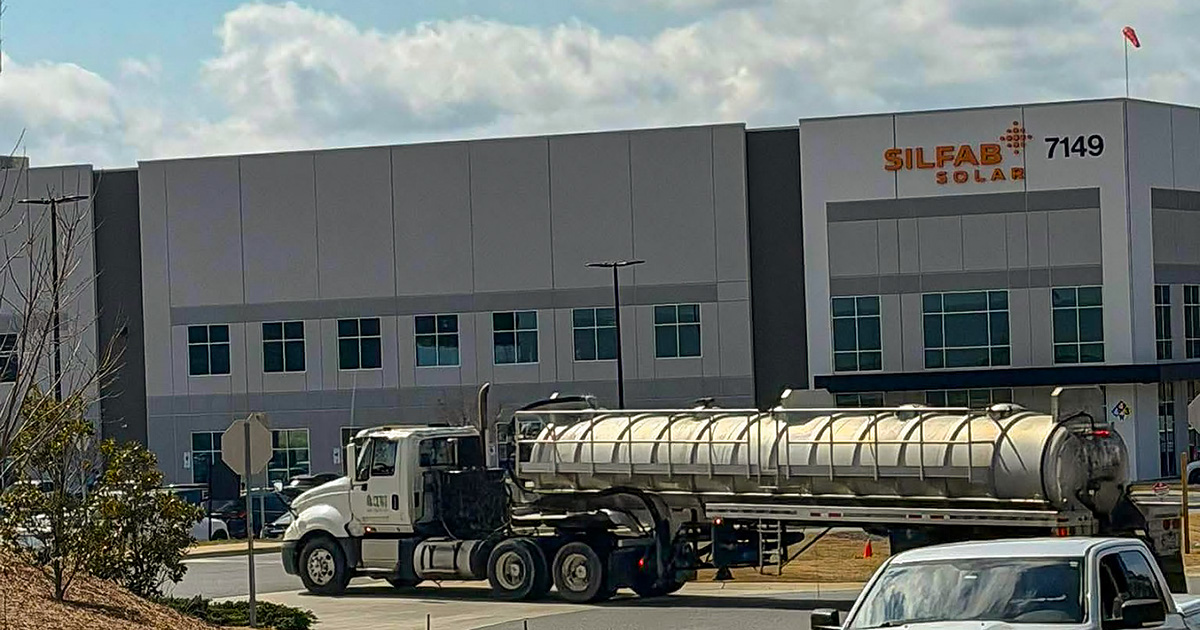
If another chemical spill occurs at Silfab (after they truck in the high quantities of deadly and explosive chemicals) and serious injuries occurs, records showing what county officials knew, when they knew it, what they authorized and what they could have lawfully prevented could become central evidence in subsequent litigation and substantial taxpayer expenses.

FBI Launches Investigation Into Charlotte-Mecklenburg Schools

0

The crisis inside Charlotte-Mecklenburg Schools just escalated again — this time with the FBI.

Federal officials confirmed Monday that the FBI and U.S. Attorney’s Office are investigating a matter related to CMS. They have not disclosed the specific focus.

The federal probe adds to several other investigations already surrounding the district.

The State Bureau of Investigation is examining alleged financial irregularities after a request from Mecklenburg County District Attorney Spencer Merriweather.

The North Carolina State Auditor is also reviewing financial records, contracts and district spending.

State education officials have joined the scrutiny as well, calling the allegations serious.

The investigations follow weeks of intense turmoil between former Superintendent Crystal Hill and the school board.

Before her firing, Hill sent board members a memo raising questions about contracts, consultant payments and purchasing practices.

She also questioned a reported consultant arrangement worth about $30,000 per month.

Days later, the school board fired Hill in a narrow 5-4 vote.

That came after CMS spent roughly $380,000 investigating Hill during a two-month suspension. The investigation reportedly found no evidence of misconduct by Hill.

Board Chair Stephanie Sneed also stepped down from her leadership role during the same period.

Meanwhile, several senior CMS executives have announced departures or retirements, including top finance and operations officials.

CMS is now searching for another permanent superintendent while multiple investigations continue.

Nuclear Warning Sirens About To Sound Across Charlotte Region This Week

0
via Duke-Energy.com

Residents around Lake Wylie and Lake Norman may hear nuclear warning sirens Wednesday morning. Duke Energy says there is no emergency.

The scheduled test will run between 11 a.m. and 1 p.m. Wednesday, October 7. Some sirens could sound more than once during that window.

Around Catawba Nuclear Station, Duke Energy will test 89 outdoor warning sirens across the surrounding emergency planning area. The plant sits in York County near Lake Wylie.

Testing also involves the warning system surrounding McGuire Nuclear Station in Huntersville. That network includes 67 sirens around the Lake Norman area.

Maintenance crews could continue testing individual sirens after 1 p.m. if additional checks are needed.

The sirens are designed to alert people outdoors within roughly 10 miles of a nuclear plant. Duke Energy conducts full-volume tests regularly to ensure the system works properly.

During an actual emergency, the nuclear station sirens would signal residents to seek more information. Local radio and television stations would interrupt programming with instructions from emergency officials.

That will not happen during Wednesday’s scheduled test.

Emergency management agencies across the Charlotte region are coordinating the testing with Duke Energy. Participating counties include Mecklenburg, Gaston, Iredell, Lincoln, Catawba and York.

Residents do not need to evacuate or take other action when the scheduled sirens sound. Duke Energy says the sirens themselves are designed as an outdoor notification system.

These 3 Carolina Counties Rank Among The 10 Most Dangerous Counties For Drivers in America

0

According to a new study, 3 seperate Carolina counties rank among the top 10 most dangerous counties in the US for drivers.

The new report investigated which US counties are the most and least dangerous for drivers. They looked at 50 counties with 50,000 or more residents and analyzed the total number of deaths caused by car crashes over the past 4 years, according to data from the National Highway Traffic Safety Administration (NHTSA).

The data was scaled to each county’s population size to find the number of fatalities per 10,000 people. Counties were then ranked from the highest rate of deaths caused by car crashes to the lowest.

1. Apache, Arizona – 23.48 car crash fatalities per 10,000 people

Apache is the most dangerous county in the US for drivers, with 23.48 car crash fatalities per 10,000 people.

With an estimated population of 66,024, there were a total of 155 car crash fatalities throughout the four-year period in this county. When looking at the top 50 most dangerous counties for drivers, Apache ranked as the joint eighth-highest regarding the total number of car crash deaths over the four years.

  1. Orangeburg, South Carolina – 23.03 car crash fatalities per 10,000 people

Orangeburg is the second most dangerous county in the US for drivers, with 23.03 deaths caused by car crashes per 10,000 people.

With an estimated population of 84,225, there were a total of 194 car crash fatalities over four years in the county. Orangeburg ranked as the fifth-highest county for the total number of car crash fatalities, with 194 deaths over the four years.

  1. Robeson, North Carolina – 22.57 car crash fatalities per 10,000 people

Robeson is the third most dangerous county in the US for drivers, with 22.57 deaths caused by car crashes per 10,000 people.

With an estimated population of 116,516, there were a total of 263 car crash fatalities over four years in Robeson. Robeson is the highest-ranked county regarding the total number of car crash deaths over the four-year period.

  1. Gila, Arizona – 21.96 car crash fatalities per 10,000 people

Gila is the fourth most dangerous county in the US for drivers, with 21.96 deaths caused by car crashes per 10,000 people.

With an estimated population of 53,273, there were a total of 117 car crash fatalities over four years in the state. This is the 18th highest number of car crash deaths over four years compared to the other counties in the top 50.

  1. Putnam, Florida – 21.14 car crash fatalities per 10,000 people

The fifth most dangerous county for drivers is Putnam, with 21.14 deaths caused by car crashes per 10,000 people.

With an estimated population of 73,327, there were a total of 155 car crash fatalities over four years in the state. Putnam is ranked as the joint eighth-highest county regarding deaths caused by car crashes.

  1. Columbus, North Carolina – 21.14 car crash fatalities per 10,000 people

Columbus is the sixth most dangerous county for drivers in the US, with 21.14 deaths caused by car crashes per 10,000 people.

With an estimated population of 50,625, there were a total of 107 car crash fatalities over four years in the state. Columbus is ranked as the 20th highest county regarding the total number of car crash fatalities over the four-year period.

  1. McKinley, New Mexico – 20.85 car crash fatalities per 10,000 people

McKinley is the seventh most dangerous county for drivers in the US, with 20.85 deaths caused by car crashes per 10,000 people.

With an estimated population of 72,898, there were a total of 152 car crash fatalities over four years in McKinley. McKinley is ranked as the ninth-highest county regarding the total number of car crash fatalities over the four-year period.

  1. Navajo, Arizona – 19.96 car crash fatalities per 10,000 people

Navajo is the eighth most dangerous county for drivers in the US, with 19.96 deaths caused by car crashes per 10,000 people.

With an estimated population of 106,716, there were 213 car crash deaths over four years in the county. Navajo is ranked as the fourth highest county regarding the total number of car crash deaths over the four-year period.

  1. Laurens, South Carolina – 18.95 car crash fatalities per 10,000 people

Laurens is the ninth most dangerous county for drivers in the US, with 18.95 deaths caused by car crashes over four years per 10,000 people.

With an estimated population of 67,573, there were a total of 128 car crash deaths over four years in the county. Laurens is ranked as the 14th highest county regarding car crash fatalities over the last four years.

  1. Walton, Florida – 17.53 car crash fatalities per 10,000 people

Walton is last on this list, with 17.53 deaths caused by car crashes over four years per 10,000 people.

With an estimated population of 75,306, there were a total of 132 deaths caused by car crashes in the county. Walton is ranked as the 13th highest county regarding deaths caused by car crashes over the four years.

Most dangerous US counties for drivers – Top 10

Rank

County

Total number of people killed in car crashes

County population

Number of car crash fatalities per 10,000 people

1.

Apache, Arizona

155

66,024

23.48

2.

Orangeburg, South Carolina

194

84,225

23.03

3.

Robeson, North Carolina

263

116,516

22.57

4.

Gila, Arizona

117

53,273

21.96

5.

Putnam, Florida

155

73,327

21.14

6.

Columbus, North Carolina

107

50,625

21.14

7.

Mckinley, New Mexico

152

72,898

20.85

8.

Navajo, Arizona

213

106,716

19.96

9.

Laurens, South Carolina

128

67,533

18.95

10.

Walton, Florida

132

75,306

17.53

Panthers Set Franchise Records in Wild 32-26 Prime-Time Win Over Lions

0

The Carolina Panthers just delivered their biggest win of the season, beating Detroit 32-26 under the Sunday night lights.

The victory moved Carolina to 2-2 and marked its first Sunday Night Football win since 2015.

Bryce Young led one of his strongest performances yet, completing 29 of 41 passes for 329 yards. He threw two touchdowns without an interception.

Tetairoa McMillan was even more spectacular. The rookie caught 14 passes for 192 yards and two touchdowns. He had already reached 147 receiving yards by halftime.

Chuba Hubbard added the balance Carolina needed, rushing for 122 yards and two touchdowns on 20 carries.

The night also produced several historic Panthers marks:

  • 121 points through four games — most in franchise history
  • Three 30-point games through four weeks — a franchise first
  • McMillan became the first Panther with 10+ catches, 175+ yards and two touchdowns
  • McMillan set a franchise record with nine first-half catches
  • Hubbard passed Christian McCaffrey on Carolina’s all-time rushing list
  • First Sunday Night Football victory since October 2015

Detroit still piled up 452 yards, including 412 passing yards from Jared Goff.

However, Carolina’s depleted defense made several critical stops when the game tightened late. Will Lee III and Lathan Ransom helped stop Detroit on its final fourth-down attempt, sealing the win.

The Panthers did suffer more injuries. Rookie tackle Monroe Freeling left with a knee injury, while Jaelan Phillips exited with a hamstring issue.

Still, Carolina enters the bye with legitimate momentum.

Silfab Negligence: Liability Facing York County Officials and Taxpayers Could Exceed $1 Billion

0

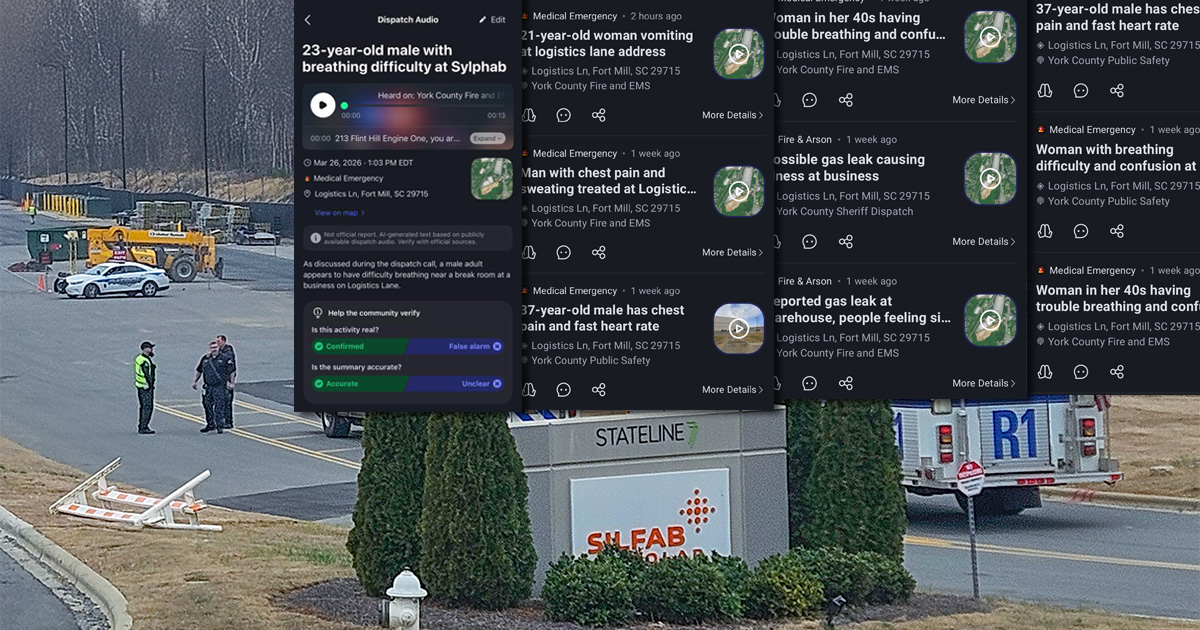
York County officials have received repeated warnings about Silfab’s unlawful zoning, chemical hazards, and unsafe proximity to schools and neighborhoods. If county officials continue to allow a prohibited heavy industrial use in a light industrial zone and a chemical accident causes mass casualties, those warnings—and the decisions made afterward—could become central evidence against the county.

The worst legally supportable outcome includes wrongful-death claims, federal damages beyond state tort caps, major public recovery costs, personal liability, and criminal prosecution where the required elements are proved.

This analysis assumes a catastrophic accident and successful proof of the relevant claims. It describes potential exposure, not a prediction or a finding that anyone is already liable.

The record of advance warning

Several records would be central to post-disaster litigation:

  • The court ruling. Last month, Judge William McKinnon affirmed in finality the BZA’s decision that solar-panel manufacturing is prohibited in Light Industrial zoning (a decision that was made before Silfab received any permits to build their factory). The order rejected the proposed computer/electronics classification, treated the 2022 verification letter as an informal communication rather than a permit, and rejected FILOT as zoning authorization.
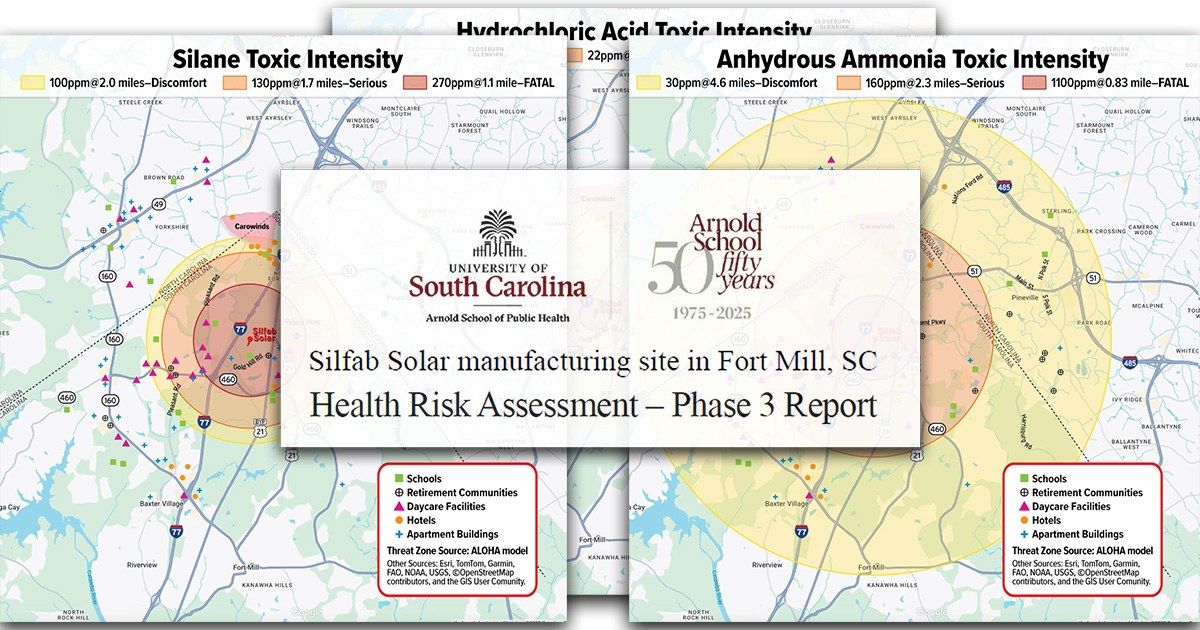
  • The USC assessment. The December 2025 Phase 3 report (which was personally handed to each York County Council member) models chemical releases capable of causing “life-threatening effects or death.” It addresses nearby schools, children’s vulnerability, failed safety systems and delivery accidents outside the facility’s safeguards. These are modeled catastrophic conditions.
  • The county’s own safety findings. Its June 24, 2025 stop-work order documented unsafe conditions, including obstructed exits and inoperable fire-protection systems.
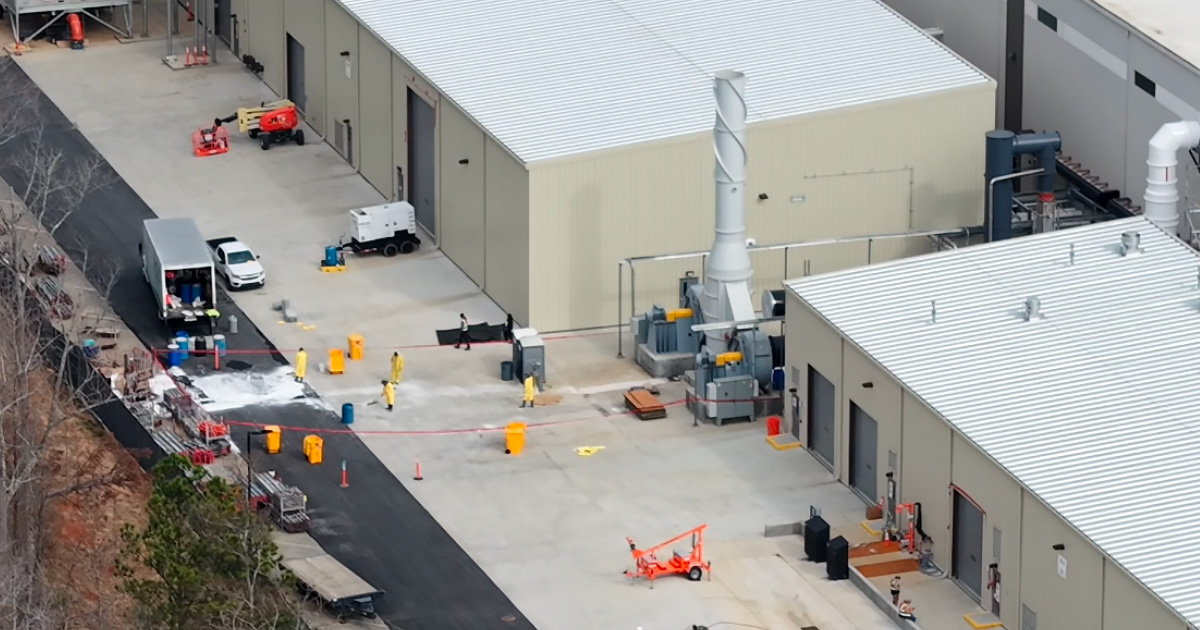
  • An actual chemical spill. DES’s March 3, 2026 letter documented potassium hydroxide escaping containment into a retention pond and called for a pause in additional chemical receipts and start-up. There was later confirmed to be a second chemical spill of hydrofluoric acid.
  • The approval records. Residents report repeated FOIA requests without production of the required zoning-compliance approval. Council should require the actual application, approved site plan, inspection and final or qualifying temporary approval, together with the legal basis for the authorized use.

Dated emails, delivery receipts, meeting records and acknowledgments should identify exactly which officials received each warning.

York County has enforcement tools

State and county law provide mechanisms to prevent unlawful construction, occupancy and use:

  • S.C. Code § 6-29-950: zoning enforcement, stop orders and court remedies.
  • York County § 150.23: building permits require zoning compliance.
  • § 150.26: improperly issued permits may be suspended or revoked.
  • § 155.1206: the Zoning Administrator’s duties include investigating violations and discontinuing illegal uses.
  • § 155.9999: stop-work, permit and certificate revocation, and judicial remedies.

A particularly relevant local precedent is McCrowey v. Zoning Board of Adjustment of Rock Hill, 360 S.C. 301 (2004). The court upheld zoning enforcement despite previously issued occupancy and zoning-compliance certificates. The administrator’s authority to administer the ordinance did not include authority to waive it.

That case supports demanding lawful enforcement even when earlier county approvals contributed to the problem.

South Carolina liability: gross negligence in permitting

S.C. Code § 15-78-60(12) expressly addresses issuing permits and certificates—and failing or refusing to revoke them. It permits governmental liability when those licensing functions are exercised with gross negligence.

The strongest South Carolina analogy is Steinke v. S.C. Department of Labor, Licensing & Regulation, 336 S.C. 373 (1999). Two young people died after a cable-car accident. Regulators had received repeated warnings about unsafe equipment. The Supreme Court recognized licensing-related gross-negligence liability and held that injured third parties could invoke the statutory exception.

The argument here would be specific: officials received warnings identifying a potentially lethal hazard, possessed applicable permit or certificate powers, and exercised those functions with gross negligence, causing preventable deaths or injuries.

Jensen v. Anderson County DSS, 304 S.C. 195 (1991) supplies the framework for establishing a duty to an identifiable protected class. A Silfab claim should connect applicable zoning and life-safety provisions to the affected schoolchildren, staff and nearby residents.

The general state tort limits remain $300,000 per person and $600,000 per occurrence. Gross negligence does not eliminate those limits. Boiter v. S.C. Department of Transportation, 393 S.C. 123 (2011) permits separately proved occurrences arising from distinct causal negligence; neither the number of victims nor the number of permits automatically multiplies the cap.

Federal liability can exceed the state tort caps

A separate route exists under 42 U.S.C. § 1983 and the Fourteenth Amendment.

For this worst-case scenario, assume evidence establishes that officials affirmatively created or increased a specific lethal danger, acted with constitutionally sufficient culpability, and caused deaths or serious injuries. The challenged conduct must also be attributable to county policy or an official with final policymaking authority.

The investigation would focus on the county’s own acts: authorizations issued after notice, directions facilitating hazardous operations, participation in exposing a defined group, and decisions adopted by an actual final policymaker. A zoning violation alone does not establish the constitutional injury.

Several precedents define this route:

  • Monell v. Department of Social Services, 436 U.S. 658 (1978): local governments can be liable for constitutional injuries caused by their policies or customs.
  • Pembaur v. City of Cincinnati, 475 U.S. 469 (1986): a single decision by an authorized final policymaker can constitute governmental policy.
  • Callahan v. N.C. Department of Public Safety, 18 F.4th 142 (4th Cir. 2021): the governing danger-creation doctrine requires affirmative conduct directly creating or increasing the danger.
  • Guertin v. Michigan, 912 F.3d 907 (6th Cir. 2019): Flint residents’ bodily-integrity claims proceeded against certain officials accused of knowingly participating in supplying contaminated water. This provides a persuasive chemical-exposure analogy involving affirmative government participation.
  • Owen v. City of Independence, 445 U.S. 622 (1980): municipalities cannot claim their officials’ qualified immunity as a defense to municipal liability.

If a county-caused federal constitutional violation is established, South Carolina’s tort caps do not set the ceiling on federal compensatory damages. Prevailing plaintiffs may also recover reasonable attorney fees under 42 U.S.C. § 1988.

The potential cost to taxpayers

There is no fixed statutory maximum covering the combined federal judgment, litigation expenses and public recovery costs.

For illustration, assume a collectible county judgment awards $10 million in recoverable compensatory damages to each of 100 people killed or catastrophically injured. That produces $1 billion, before recoverable attorney fees and public recovery expenses.
Those figures are hypothetical scenario arithmetic. They are not estimates of casualties or likely awards.

Additional public costs could include:

  • Emergency response, hazardous-material cleanup and infrastructure restoration.
  • School disruption, temporary classrooms, transportation and remediation.
  • Years of litigation, expert investigations and defense expenses.
  • Uninsured judgments, deductibles and losses exceeding policy limits.

County and school-district budgets are separate, although their taxpayers overlap. The ultimate taxpayer burden would depend on insurance, assistance and recoveries from other responsible parties.

Individual officials could face personal exposure
Federal claims can also target officials who personally participated in a constitutional violation, where qualified immunity is overcome. Smith v. Wade, 461 U.S. 30 (1983) permits individual punitive damages for reckless or callous indifference to federal rights. The county itself is immune from § 1983 punitive damages under City of Newport v. Fact Concerts, 453 U.S. 247 (1981).

Under S.C. Code § 15-78-70(b), employee immunity does not protect conduct outside official duties, actual fraud, actual malice, intent to harm or a crime involving moral turpitude. Gross negligence alone does not establish this personal-liability exception.

Criminal exposure requires separate proof:

  • Misconduct in office: willful and dishonest breach of public duty, potentially through an omission. State v. Hess, 279 S.C. 14 (1983), addresses that offense; State v. Harrison, Opinion No. 28005 (2021), identifies a maximum ten-year sentence.
  • Involuntary manslaughter: up to five years under § 16-3-60, where criminal recklessness and responsibility for a death are established.
  • Loss of office: applicable South Carolina statutes provide for suspension or vacancy under their stated conditions.
  • Federal criminal civil-rights liability: 18 U.S.C. § 242 permits life imprisonment when a willful deprivation of a federal right causes death. Its statutory outer limit also includes the death penalty, subject to separate capital-sentencing requirements. Those outcomes require proof of the criminal elements beyond a reasonable doubt.

The action requested from County Council

Council should direct the responsible officials and county counsel to:

  1. Produce the complete zoning-approval and permit record, including the lawful-use basis for the CO.
  2. Pursue immediate lawful suspension or revocation of authorizations supporting the prohibited use, with required notice and procedures.
  3. Secure cessation of that use and emergency judicial relief where necessary, before chemical receipt or commissioning creates additional exposure.
  4. Preserve all relevant records, including emails, texts, permit revisions, inspection histories, warnings and incident records.
  5. Disclose the county’s actual financial protection, including coverage limits, exclusions and potential uninsured exposure.

The county’s September 30 update states that chemical and gas recommissioning is not scheduled before October 19, 2026, with advance notice required. That provides a current opportunity to resolve the enforcement questions.

If the warned-of catastrophe occurs, what officials knew, what they authorized and what they could lawfully have prevented will become central evidence. Council should use its available authority now to protect nearby families, schoolchildren and taxpayers.


Charlotte’s 10 Worst Restaurant Health Scores in September 2026

0

Moldy produce, seafood held above safe temperatures and a trap full of dead roaches were among the violations Mecklenburg County health inspectors documented at Charlotte-area restaurants in September. The lowest score on this month’s list was a 79 — a C grade.

Here are the 10 lowest scores in the September inspection reports, counting down from No. 10 to No. 1. Six restaurants tied at 90, an A grade; their positions within that tie do not indicate different scores.

These results reflect the inspections listed below. Many documented food safety violations were corrected during the visits, and later reinspections may show different scores.

Report abbreviations: RTE means ready-to-eat; TCS refers to foods requiring time or temperature control for safety; WIC, RIC and WIF mean walk-in cooler, reach-in cooler and walk-in freezer; PIC means person in charge; EHS means environmental health specialist; ROP means reduced-oxygen packaging.

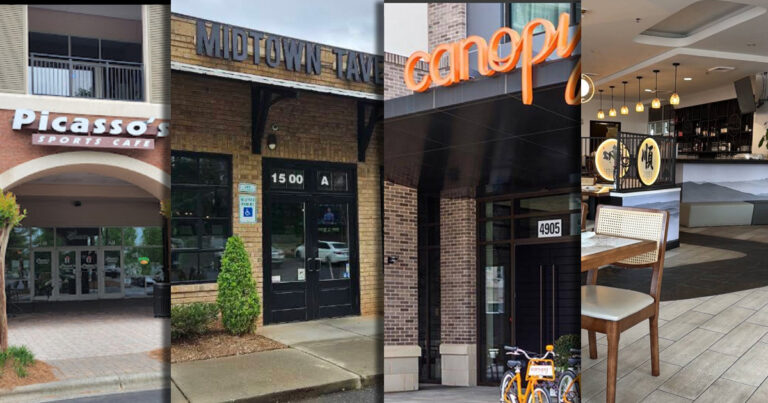
#10 — Canopy by Hilton Charlotte SouthPark (90 / A)

4905 Barclay Downs Dr., Charlotte, NC 28210 — Inspected Sept. 3, 2026

Observed violations:

  • “Observed moldy strawberries and moldy peppers in WIC during inspection.”
  • “Observed various foods in prep units holding above 41F during inspection.”
  • “Various items additionally observed void of both common name of food and date of preparation or opening in WIC assumed to be TCS.”

The report says affected foods were voluntarily discarded.

#9 — China Express (90 / A)

315 S. Polk St., Pineville, NC 28134 — Inspected Sept. 17, 2026

Observed violations:

  • “Observed raw shell eggs at 50F inside far left lowboy across from cooking equipment.”
  • “Observed sliced cabbage in WIC and lowboy, and white rice in WIC without date marks.”
  • “Observed probe thermometer in storage with food debris on entire unit.”
  • “Observed stacks of clean plates and bowls stored on white storage rack across from cooking equipment with substantial food debris.”

The eggs were discarded, date labels were added and the thermometer was cleaned and sanitized during the inspection.

#8 — Mich Tocumbo (90 / A)

6300 South Blvd., Charlotte, NC 28217 — Inspected Sept. 30, 2026

Observed violations:

  • “Observed employee put on gloves to prepare a customer order without first washing hands.”
  • “Observed container of moldy jalapeños in 2 door refrigerator.”
  • “Observed large container of queso cooled from yesterday at 74F upon arrival.”
  • “Observed ears of cooked corn in reach in refrigerator 63F cooked last night.”
  • “Observed one container of crema past 7 days.”

The jalapeños, queso, corn and crema were voluntarily discarded, according to the report.

#7 — The Imperial Treasure Ballantyne (90 / A)

14815 Ballantyne Village Way, Ste. 250, Charlotte, NC 28277 — Inspected Sept. 17, 2026

Observed violations:

  • “EHS observed PIC answer phone call with gloved hands and after call continued working with food/utensils without changing gloves or washing hands.”
  • “EHS observed raw shell eggs stored over RTE items in WIC.”
  • “EHS observed pooled eggs and egg whites being held on make line out of refrigeration.”
  • “EHS observed spam, bean sprouts, cooked quail eggs, and cooked beef without proper date markings.”
  • “EHS observed two large plastic containers of marinated chicken in WIC actively cooling. PIC stated chicken was prepped an hour prior to inspection. EHS monitored cooling and observed inadequate cooling rates (see temp chart).”
  • “EHS observed no test strips for chemical dish machine during inspection.”

Staff corrected glove use, food storage and date labels during the visit. The inspector reported no observed contamination from the egg-storage violation.

#6 — Sushi Taku (90 / A)

1300 South Blvd., Ste. 101S, Charlotte, NC 28203 — Inspected Sept. 21, 2026

Observed violations:

  • “Observed a container of raw shrimp lollipops to be stored directly behind a container of spring mix in the cookline opentop across from the fryers.”
  • “Observed buckets of RTE sauces to be stored on the lower shelf in the WIC directly below numerous containers of raw sushi fish and raw salmon.”
  • “Observed 3 mandolin slicers, a meat pounder, and 2 large sifters to be stored as clean throughout the kitchen with visible food debris on their food contact surfaces.”
  • “Observed a container of raw mussels to be at a temperature of 49-65F in the opentop across from the wok.”
  • “Observed containers of spicy scallops and spicy tuna to be at temperatures of 59-64F in the WIC.”
  • “Observed half a block of cream cheese and 3 trays of yellowtail to be at temperatures of 49-51F in the sushi display case and the sushi lowboy refrigerators.”
  • “Observed a sheet pan full of approx 20 ROP tuna packages to be thawing in the WIC with the ROP packaging still in tact.”

The report called for reinstating a cold-holding risk-control plan. Out-of-temperature seafood was discarded; the cream cheese and yellowtail were moved to the walk-in cooler for rapid cooling.

#5 — Picasso’s Sports Cafe (90 / A)

230 E. W.T. Harris Blvd., Charlotte, NC 28262 — Inspected Sept. 24, 2026

Observed violations:

  • “Observed slicer soiled with old food debris in the back corners.”
  • “Observed ground sausage without a date.”
  • “Observed beef dated 9/17. Item expired.”
  • “Observed trap full of dead roaches near prep sink.”
  • “Observed sanitizer bottles without labels.”
  • “Observed lid of chest freezer heavily damaged.”
  • “Observed 3 floor fans, tall reach in freezers, prep top/ low reach in doors in need of cleaning.”
  • “Observed floors under and around equipment in need of cleaning. Observed walls behind equipment in need of cleaning.”

Undated sausage and expired beef were voluntarily discarded, and the slicer was taken apart for cleaning.

#4 — Midtown Tavern (88.5 / B)

1500 E. 3rd St., Suite A, Charlotte, NC 28204 — Inspected Sept. 2, 2026

The restaurant voluntarily closed during the inspection because its walk-in cooler could not maintain 41F or below, according to the report.

Observed violations:

  • “Observed raw shelled eggs stored over RTE dairy items in the walk in cooler.”
  • “Observed raw fish stored over cooked chicken in the prep top cooler.”
  • “Observed washed produce stored under unwashed produce.”
  • “Observed the sanitizer at the 3-compartment sink tested at 0ppm of Quat.”
  • “Observed the walk in cooler with an ambient air temperature of 55F, all TCS foods in the walk in cooler were above 41F (see temp chart), PIC discarded all TCS foods that were above 41F and called refrigeration repair.”
  • “Observed hummus opened without datemarking, Observed cooked ground beef datemarked with 9/2, however in discussion with the kitchen staff the product was made 9/1.”
  • “Observed a container of cheese sauce to be in the WIC and was not provided with a date mark of any kind.”
  • “Observed vacuum packed fish improperly thawing at room temperature and fish not opened or removed from packaging.”
  • “Observed clothing on the prep top table.”

#3 — China Cafe (87.5 / B)

10230 Berkeley Place Dr., Suite 150, Charlotte, NC 28262 — Inspected Sept. 9, 2026

Observed violations:

  • “Observed several food employees wash hands and tern off faucet without a protective barrier.”
  • “Observed food employee cutting containers of pork with bare hands.”
  • “Observed raw chicken and raw beef stored above RTE sauces in WIC.”
  • “Observed noodles cooling in deep plastic containers with tight fitting lids in WIC missing cooling window.”
  • “Observed no date marks on items in the prep top from previous days.”
  • “Observed sesame chicken held on time without time stamp.”
  • “Observed food stored on the floor in WIF.”
  • “Observed in use utensil stored in a bucket on the ground.”
  • “Observed wet nesting throughout clean dish storage.”
  • “Observed floors, walls, and ceilings with build up and food debris throughout.”

Four containers of noodles were voluntarily discarded. The inspector also placed the restaurant on a risk-control plan after reporting date-marking violations on its last six inspections.

#2 — Tiem Co Tu TC4 (85.5 / B)

8535 Hankins Rd., Ste. A, Charlotte, NC 28269 — Inspected Sept. 3, 2026

Inspectors issued an immediate suspension after documenting violations of the facility’s permit conditions. The report required all identified issues to be addressed and approved before the suspension could be lifted.

Observed violations:

  • “EHS observed raw chicken, beef, eggs during inspection. Facility must discard all items and permanently discontinue use.”
  • “Observed raw beef stored above RTE beef in cooler.”
  • “Observed a few containers stored as clean with food debris present.”
  • “EHS observed large pots and pans that are unable to be fully submerged inside of 3 compartment sink.”
  • “Observed cooked and cooled rice and beef holding at 47F in prep unit.”
  • “Observed Several TCS food items above 41F in Prep unit.”
  • “Observed spray bottle of cleaner directly above green tea powder in storage room.”
  • “Observed no thin probed thermometer on site.”
  • “Observed food items stored on the floor in the back storage room.”
  • “Observed butane camping range and household use toaster oven in use in facility.”
  • “Observed no test strips in facility.”

#1 — El Carbonero (79 / C)

4400 Central Ave., Charlotte, NC 28205 — Inspected Sept. 2, 2026

El Carbonero received the lowest score on the list. Its September 2 report required repairs and contact with an environmental health specialist before reopening because of cold-holding problems.

Observed violations:

  • “Observed food employee rinse hands off in 3-comp sink, not using any soap or paper towels, for less than 20 seconds.”
  • “Observed food employee using damaged gloves. Observed food employee rinsing off gloved hands.”
  • “Observed celery in its original packaging stored in a container with RTE cut up peppers and onions.”
  • “Observed 2 squeeze bottles stored in container with RTE cut up cabbage.”
  • “Observed food debris on dishes stored as clean.”
  • “Observed dark buildup on inside of ice machine.”
  • “Observed multiple items above 41F in prep units, RIC, and WIC.”
  • “Observed dead pest in steam table water.”
  • “Observed flying pests in kitchen area.”
  • “Observed cutting boards throughout no longer smooth and easily cleanable.”
  • “Observed pooling/leaking water in bottom of one of prep units and ice buildup.”
  • “Observed dark growth inside of sanitizer tubing at 3-comp sink.”

The report marked numerous violations as repeats. Staff discarded foods held above 41F and contaminated items during the inspection.

Before your next meal out, you can check a restaurant’s latest score and inspection history in Mecklenburg County’s public health inspection database.

September 2026 Industrial Report: Charlotte Pipeline Grows 129% YoY

0

Charlotte’s industrial construction boom is accelerating, with activity up roughly 129% from a year ago.

That was the largest year-over-year increase among Southern markets tracked in CommercialCafe’s latest national industrial report.

As of August, developers had 10.17 million square feet of industrial space under construction across Charlotte.

That gave the metro the eighth-largest construction pipeline among major U.S. markets included in the report.

One major project helped push the total higher. Digital Charlotte Moores Chapel Road’s Building 2 added about 1.57 million square feet.

However, Charlotte is also carrying a relatively high industrial vacancy rate.

The metro’s vacancy rate reached 11.1%, compared with 9.3% nationally.

Industrial rents averaged $7.97 per square foot, while newly signed leases averaged $9.09.

Investors also remain active across the region.

Charlotte recorded roughly $1.23 billion in industrial property sales through August.

Properties sold for an average $140.71 per square foot, slightly above the national average.

The numbers show developers remain confident in Charlotte’s long-term growth.

However, the combination of rising construction and an 11.1% vacancy rate will be important to watch as more space opens.