Crave Charlotte Food & Wine Festival Returns for Third Annual Culinary Affair

0

Crave Charlotte is returning this year for their 3rd annual food, wine and mixology festival.

The multi-day event will highlight over 25 of Charlotte’s finest chefs, restaurants, mixologists and winemakers from May 3 to May 8.

This year, Crave Charlotte Food & Wine Festival will introduce and host its main event, the Grand Culinary Celebration, at Romare Bearden Park on Saturday, May 7.

“The Crave Charlotte Food and Wine Festival highlights the creativity, vibrance and cultural essence of the growing Queen City–a community that SouthEnd Dentistry is proud to be a part of for 13 years with the mission to provide the best in dental care, utilizing the latest in technology in a soothing environment,” said President of SouthEnd Dentistry, Dr. Bradford L. Picot. “A few of SouthEnd Dentistry’s core values are service, giving back, and innovation, which is why we are glad to sponsor this event in support of beneficiary Envision Charlotte.” 

The Grand Culinary Celebration and restaurant based dinners will offer a variety of high-quality dishes and experiences from top culinary professionals from across the city. Participants will experience wine pairings, exceptional plates, cocktails and craft brews.

Participating chefs and mixologists include:

  • Sam Allen–Wentworth & Fenn

  • Amari Arrington–Chunk’s Chicken

  • Kevin Atkinson–Angeline’s

  • Craig Barbour–Roots Café

  • Geoff Bragg– The Common Market

  • Amanda Britton–Lincoln Street Kitchen & Cocktails

  • Chris Coleman–The Goodyear House

  • Amanda Cranford–Paper Plane Deli & The Hangar

  • William Dissen–Haymaker

  • Hau Doan–Banh Mi Brothers

  • Kyle Duncan Gaddas– The Wine Loft

  • “Chef T” Torrece Gregoire – Former Hell’s Kitchen Contestant

  • James Jeffries–Grinning Mule

  • Andarrio Johnson–Cuzzo’s Cuisine

  • Taylor Kastl–Tayste Catering

  • Duke Kroger–Cinder

  • Erik Lujan–Nuvole

  • Olajuwon Mason–Fine and Fettle

  • Tiore McFarland–Ready Prep Eat Catering

  • Mariana Ramos–Sweet Mary Gourmet

  • Sylvain Rivet–Renaissance Pâtisserie

  • Brooke Rush–Food Director of Not Just Coffee, Night Swim Coffee and Undercurrent Coffee

  • Ashley Sarkis–Mixologist

  • David Schmidt–Fine & Fettle

  • Henry Schmulling–Nuvole

  • Julia Simon–Plant Joy CLT

  • Drew Ward–Brewers at 4001 Yancey

  • Evan Wood–Green Coffee Buyer and Director of Coffee at Night Swim Coffee

  • TBA–Golden Owl Tavern

  • More to be announced

Crave Charlotte is presented by Extreme Property Services and Greystar Apartments. All proceeds from the event will benefit Envision Charlotte, a public private plus collaborative that leads Charlotte’s progress as a global circular and smart City through innovations that strengthen economic competitiveness, environmental sustainability and positive community impacts. More information including the full schedule, tickets and updated list of chefs and mixologists can be found at craveclt.org  and facebook.com/craveclt.

For safety, event organizers will continue to monitor and adhere to Mecklenburg County and North Carolina health guidelines.

UNC Charlotte Professor of History Named Andrew Carnegie Fellow

0

UNC Charlotte’s own Mark Wilson has just been selected as one of the 28 best scholars, journalists and authors in the nation to become a 2022 Class of Andrew Carnegie Fellow.

The fellows, announced April 26 by Carnegie Corporation of New York, will receive a $200,000 stipend to enable them to devote time to significant research and writing in the social sciences and humanities. This year’s commitment totals $5.6 million in philanthropic support. The recipients were chosen from nearly 300 nominations.

This support, said Wilson, will allow him to complete the research for the book, “The Degradation of Defense: The Transformation of the US Military-Industrial Complex, 1950-2025.”

The new comprehensive book will provide the first thorough history of the U.S. defense industry, reviewing the business and politics of the modern defense sector from 1950 to the present to understand declining public oversight and growing privatization and globalization. The project is a multigenerational story including multiple perspectives, adding to its complexity and significance.

“The American military-industrial complex is an important part of our economy and society that now costs close to $1 trillion a year,” Wilson said. “I’m focused on creating a richer and more illuminating account of its history, since the beginning of the Cold War. This new history should provide policymakers and voters with valuable information about how the U.S. defense sector works, and how it has evolved over time; in doing so, it may give people ideas for positive reforms moving into the future.”

Wilson is drawing upon expertise he has developed over the past three decades in the fields of business history, military history and the history of policy and politics. During the past five years, he has gathered evidence from unique archives, including presidential libraries, records of defense contractors and papers and oral histories of members of Congress, defense officials, military officers and defense industry leaders. He also has conducted dozens of interviews for the project.

Rare among historians, Chancellor Sharon L. Gaber said in a nomination letter, Wilson has become an authority on the history of military-industrial relations in three separate time periods, the Civil War, World War II and the Cold War.

“Dr. Wilson has endeavored to make his mark in new areas, getting a deep understanding of the evolution of military-industrial relations across a broad swath of time,” Gaber wrote.

His previous two books received strong responses. In particular, “Destructive Creation: American Business and the Winning of World War II” (Philadelphia: University of Pennsylvania Press, 2016), was named winner of the Hagley Prize for best book in business history and co-winner of the Ralph Gomory Prize, which honors historical work on the effects of business enterprises on the economic conditions of the countries in which they operate. Wilson also is director of the Capitalism Studies program at UNC Charlotte.

The Andrew Carnegie Fellows Program, founded in 2015, involves a competitive nomination and selection process. It is the most generous stipend of its kind, and to date, the program has named 244 fellows, representing a philanthropic investment of $48.8 million. Selection criteria prioritize the originality and promise of the research, its potential impact on the field and the scholar’s plans for communicating the findings to a broad audience.

“In recent years, as we have looked to respond to our world’s most complex problems, the Carnegie Fellows have provided important contributions through their exceptional research, pursuit of knowledge and creative approaches,” said John J. DeGioia, chair of the Andrew Carnegie Fellows Program jury and president of Georgetown University. “Our panel of jurors were gratified and inspired by the caliber of the research proposals. We believe that this year’s fellows show extraordinary potential for lasting impact.”

As part of the nomination process, more than 600 individuals — including heads of independent research institutes, societies and think tanks; university presidents; directors of major university presses; and editors of leading newspapers and magazines — were invited to recommend up to two individuals for consideration. All proposals undergo a preliminary, anonymous evaluation by leading authorities in the relevant fields. The top proposals are then forwarded to the jury for a final review and selection.

The Andrew Carnegie Fellows Program is a continuation of the mission of Carnegie Corporation of New York, as founded by Andrew Carnegie in 1911, to promote the advancement and diffusion of knowledge and understanding. The award is for a period of up to two years, and while the anticipated result is generally a book or major study, the Class of 2022 will result in an art installation, software applications and digital platforms.

Looking to the Future, LISC Celebrates Three Years of Equitable Community Development in Charlotte

0

LISC Charlotte is celebrating its third anniversary of forging resilient and inclusive communities of opportunity in Charlotte. Coinciding with the anniversary, LISC will receive a $1.25M investment from the John S. and James L. Knight Foundation for community development in Historic West End.  The grant will support LISC’s operations and a new Historic West End Development Fund to empower minority developers.

LISC will leverage Knight’s support over three years to reinforce programs, projects and initiatives, and to raise additional funds to support the Historic West End corridor–a target area of investment for the Knight Foundation. A sum of $500,000 will help establish the Historic West End Commercial Development Fund, a target fund that will offer technical assistance and financing for small business and commercial developers with plans to develop in the Historic West End corridor.

“I could not be more proud of the LISC Charlotte team who has worked with an unwavering commitment to help achieve catalytic change in our communities,” said Ralphine Caldwell, executive director of LISC Charlotte. “The progress we have achieved would not be possible without the seed funding of the Knight Foundation. With their support, we have been able to establish strong relationships to convene, reinforce and enable local partners to pursue their community goals. LISC appreciates the renewed funding from Knight Foundation for direct services for another three years, and more targeted funding for critical and innovative projects in Historic West End.”

“LISC has played a pivotal role in building a more inclusive Historic West End that is thriving with opportunities,” said Charles Thomas, director of Knight’s Charlotte program. “The Historic West End Commercial Development Fund will help LISC Charlotte expand its important mission of empowering the residents of the West End to lead the development and success of their neighborhood.”

LISC Charlotte is excited to share three years of impact in its key areas of work–empowering people, transforming places, supporting enterprise and driving systems innovation.  Since 2019, LISC has worked with grassroots organizations, small businesses and commercial developers, community residents and large businesses to engage residents in the process of system change. Some of its greatest accomplishments include exceeding its five-year goal of securing and investing $25M by securing and distributing more than $60M in three years. The organization has also helped to create and preserve 1,047 affordable housing units through the Charlotte Housing Opportunity Investment Fund,  deployed $3.9M to more than 220 small businesses, and supported Black-led development and resident-led neighborhood revitalization efforts in Historic West End. The detailed three-year report, Impactful Growth, is available here. LISC thanks its many corporate partners, community organizations and stakeholders who helped make its first three years effective and possible.

CMPD Asking For Public’s Help In Finding Missing 9-Year-Old Girl

0

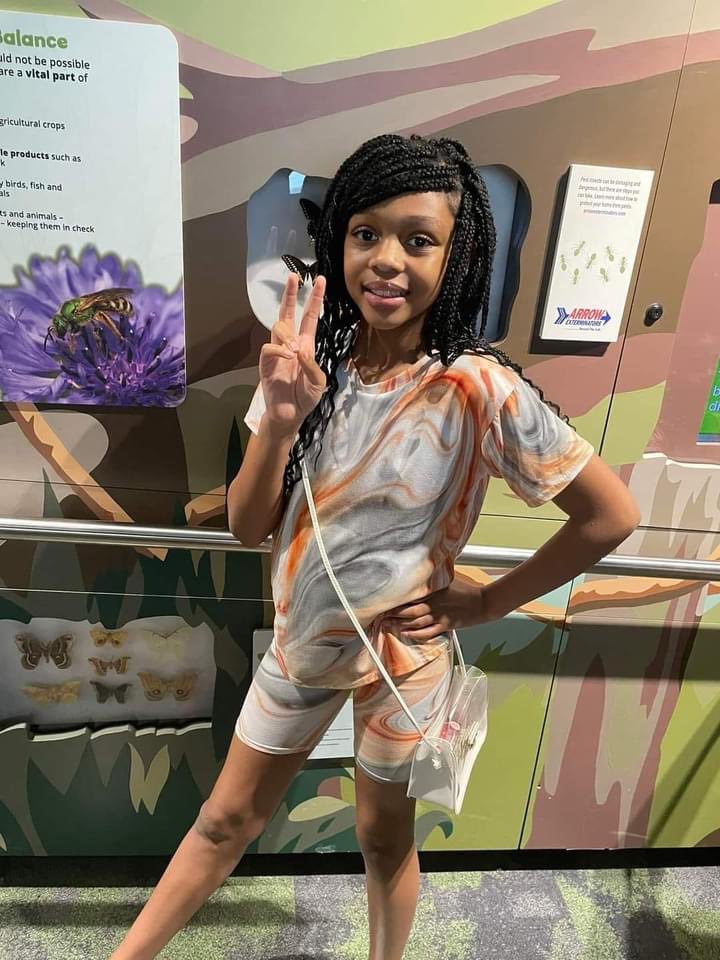
CMPD is now asking for the public’s help in finding a missing 9-year-old girl who they say may be “emotionally upset”.

Ka’Mya Yeldell was last seen yesterday evening at around 6:50 p.m. at her home in the 1400 block of Samuel Street in North Charlotte.

Ka’Mya was last seen wearing an orange and white tie-dye shirt and shorts with white colored Croc shoes.

Here are some recent photos of her:

If you any any information about her whereabouts, please call 911.

From Siri to Google Assistant: Where Will We Go Next?

0

One hundred years ago, there were no digital assistants. Today, this has changed. They’ve become a staple in our everyday life and may even be considered our best friends. The following article will explore how these assistants came to be and where they will go next. You’ll have some great ideas for how your assistant is evolving alongside the technology itself by the end of it! Let’s get started.

The History of Personal Assistants

There’s no denying that technology impacts our lives in countless ways. Technology may even be considered our best friend. We rely on it for many things, from communication to entertainment. However, modern technology has only been around for a few decades. This section will explore how personal and digital assistants came to be and how they’ve evolved through the years.

Around the turn of the century, people had a new way to communicate with machines, but it wasn’t as popular as today. Some people consider these early attempts at creating digital assistants flawed and not very effective at all.

There was a time when we didn’t have any digital assistants – except for those that ran on punch cards and paper tape.

By the 1940s and 50s, we had a few more options. We still relied on punch card technology, and by now, it was possible to use a keyboard. At this point, people could enter basic commands into a computer. This led scientists to develop programming techniques that set the stage for modern-day virtual assistants.

In 1956, John McCarthy predicted that someday computers would be able to serve as secretaries and assistants. He imagined that a computer would have an on-off switch and a single big red button. This button would instantly record everything the computer did, which would make it easy to investigate. The name he gave to this hypothetical machine? The “Eliza program.”

By the 1960s, there was real progress when research into artificial intelligence (AI) began. That led to the creation of some first digital assistants like ELIZA. It even led to creation of a PA system built into ATMs in 1966. This was a big step because it allowed banks to run automatic teller machines (ATMs) without ever interacting with a human cashier.

In 1969, work on the Eliza program was completed, and it was possible to have an interactive computer assistant. By 1972, these assistants were labelled “personal digital assistants” or “PDAs.” Personal assistants were still considered a distinct concept from PDAs: Personal Assistants were less advanced and usually used within the confines of one company’s IT department.

In 1974, “Personal Digital Assistant” was becoming widely used. This implies that the concept of personal assistants was becoming more widely known.

Due to technological advances and various advancements, there’s no doubt that personal assistants have become very popular in recent years. They’ve become a big part of modern-day society. By now, you might be wondering what the future has in store for these powerful computerized assistants? Let’s take a look at some of the options available today.

Streaming Services and the Future of Personal Assistants

What are some exciting trends in the digital assistant space? According to a recent article by The Next Web, one of the most exciting trends is streaming services. It’s already possible to stream data directly into your assistant. This can also be done remotely. For example, a healthcare professional can send a patient’s data directly to their assistant without accessing their device themselves. Examples include music, podcasts and live events through the Google Home app.

Building your assistant is a great way of using streaming services. It may even be possible to use them in your car as you travel! Here’s how it works:

If you want to use your car’s AI bot, you should first set it up and pair it with your smartphone. That way, you can interact with the assistant using only a smartphone.

You can then use it in the car, but you should also connect it to a Bluetooth headset. This is very important for preventing the assistant from being connected to your phone. This way, it will only communicate with your car’s microphone.

This might sound strange, but that’s exactly how Google Guides works – and it works great! If you want to connect a voice-controlled assistant to your car or other vehicles, you can always check out Google Maps for directions. It’s a great way of navigating through a city like Los Angeles.

Another great way to use streaming services is in public transport. For example, Google Translate can be used on public transport systems to help you with navigation and navigation assistance. If you are abroad, you can also use it to ask questions in different languages and translate text. It’s a great way of using streaming services in public transport to help the users themselves.

The Future is Bright for Personal Assistants

There’s no doubt that the future will offer many more innovations and improvements in personal computer and digital assistant technology. It doesn’t look like things will change anytime soon – unless you don’t need one! Some new developments can help you seamlessly integrate your digital assistant with wearables.

Charlotte’s Iconic Epicentre To Be Auctioned Off To Highest Bidder on May 12th

0

Uptown Charlotte’s once-iconic dining and nightlife hub is about to be auctioned off to the highest bidder.

According to new Mecklenburg Court Documents, the entire Epicentre complex will auctioned off on the courthouse steps on May 12th at 10am.

The owners of the 1-city-block facility defaulted on their $85 million loan with Deutsche Bank last August.

When proceedings first began last year, the court forced the owners, Epicentre SPE, to give over full control to CBRE Inc through a court-order receivership.

According to the latest receiver’s report, the Epicentre includes a total of 50 tenant spaces encompassing roughly 302,324 square feet.

Duke Energy Partnering With 5 Other Utilities To Flood The South With EV Charging Stations

0

Six major utilities announced a plan to ensure electric vehicle (EV) drivers have access to a seamless network of charging stations connecting major highways in the South.

The Electric Highway Coalition – made up of Duke Energy, American Electric Power, Dominion Energy, Entergy Corporation, Southern Co., and the Tennessee Valley Authority – will enable EV drivers seamless travel across a broad portion of the country through a network of DC fast chargers.

“The path to cleaner transportation is a robust charging infrastructure along the nation’s major highways,” said Lang Reynolds, director of Electrification Strategy for Duke Energy. “Range anxiety is a barrier to more EV adoption. This coalition can erase those obstacles and help deliver the benefits of EV ownership to consumers.”

The companies are each taking steps to provide EV fast charging options within their service territories to facilitate interstate travel. This partnership represents an unprecedented effort to offer EV drivers convenient charging across different company boundaries and allow travel without interruptions.

The Edison Electric Institute estimates 18 million EVs will be on U.S. roads by 2030.  While many drivers recognize the benefits of driving an EV, such as the ease of low-cost home charging, some are concerned with the availability of charging stations during long road trips. Coordinated efforts like this are demonstrating that EVs are a smart choice for driving around town as well as traveling long distances.

For Duke Energy, specific fast charging station locations will be determined through the course of existing and planned fast charging program deployments. This effort will provide drivers with effective, efficient, and convenient charging options that enable long-distance electric travel. Sites along major highway routes, with easy highway access and amenities for travelers are being considered first.

Charging stations will provide a high-powered fast charging experience as new EV models released on the market are capable of charging at faster and faster speeds.

Supporting the transition to EVs

The collaboration is good timing for Duke Energy, which has already launched ambitious programs to expand EV charging both internally at Duke Energy locations and externally through several utility pilot programs. An internal “Electrify By Example” initiative is starting with an effort to install workplace chargers at all work locations to enable employees to drive electric.

In Florida, the company’s Park and Plug pilot has installed more than 570 EV public charging stations throughout the state. Fifty of the 570 are fast charging stations connecting areas of Florida previously underserved by EV fast charging infrastructure. To date, drivers have used the Park and Plug network for over 60,000 charging sessions, displacing more than 90,000 gallons of gasoline.

Regulatory action in 2020 led to pilot programs being approved in both North Carolina and South Carolina. The pilots will lead to full fast charging for all types of EVs in about 20-30 minutes.

In North Carolina, a $25 million pilot program will lead to the installation of 200 public Level 2 and fast charging stations, additional stations at multifamily buildings and a school bus electrification pilot that will allow school districts to change out diesel buses with electric ones.

In South Carolina, the company will provide up to a total of $1,000 for 400 residential Duke Energy Carolinas customers who install a Level 2 charging station, provide access to their charging data, and manage EV charging load to occur during off-peak periods. The company will also deploy 60 fast chargers there to expand access to fast charging infrastructure in the state.

5 Differences Between Personal & Business Instagram Accounts

0

Instagram has been growing at an insane speed. Over a billion people visit the platform daily. Thousands of new accounts are created every day and the user base of Instagram continues to grow steadily. Instagram itself has grown a lot over time and is not the simple photo-sharing platform it was in the early days. 

From celebrities to businesses, Instagram has become a favorite of many for marketing and growing their brand. The people behind the platform have been aware of it as well. The launch of Instagram For Business was a testimony for it. Let’s take a look at Instagram’s business accounts and the difference between them and personal accounts.

How to get a business account on Instagram?

Getting a professional Instagram account is completely free and you don’t even need to create a new account. An existing profile can be converted into a business account. There is an option to ‘Switch To Professional Account’ in your account settings where one can choose between business or creator accounts. If you someday want to go back, the same process can be repeated to revert back to a personal account. 

Basic Differences

We begin with some miscellaneous differences between the two types of accounts. They do not make a big difference individually but do so when grouped together.

First of all, an Instagram account for business can never be set to private. With a personal account, the user has the option to keep it private or public on the other hand. This is why every brand account on Instagram is always public. 

Another difference you might notice in a business account is the presence of call-to-action buttons. Clicking on these options takes your followers to various destinations or even makes calls. Speaking of which, business accounts are also allowed to include contact information in their bios. Your contact info shows up as a CTA button and by clicking on it anyone can contact you directly. 

Instagram for Business has another exclusive tool featured in Stories called ‘Swipe Up’ where you can incorporate external links. Swiping up on your story will take a user to that link straight away. Buying followers will not only get you more followers but also you will see a perfect growth in your reach and get you more likes on Instagram posts.

Access To Instagram Insights

Many Instagram users pay third parties to get access to analytics and insights of their accounts but you can do it right within Instagram for absolutely free. All you need is a professional Instagram account to go deep into various statistics about your engagement, audience, content, and much more.

This information can be put to great use and improve your overall results on Instagram. For example, you can find out the time of the day when most of your followers are active so that you can post during the peak of activity. 

Similarly, insights can tell you which content of yours gets the most engagement. Information on other similar data is crucial for optimizing your account for the best engagement.

Advertisement & Post Boosts

Instagram advertising is done through Facebook ad manager and you are required to have a page linked to your account. Ads and boosts are only available on professional accounts so if you want to promote yourself, you will have to get Instagram comments services for more engagement to increase your business sales. 

Instagram and Facebook’s ad services might just be the best among social media networks and you will miss out on it with a personal account.

Instagram Shopping

Instagram’s shopping section is one of the steps taken by the company to promote brands on the platform. Users can showcase, buy and sell products easily through Instagram for a while now. 

But you need to have a professional Instagram account to get access to that. With a business account, you can convert any post into a shoppable post by tagging a product in it. Other users can click on these posts to get more details on your products and buy them.

Scheduled Posts

Another difference between the two types of Instagram accounts is that it is possible to schedule posts in advance with a business account. While it is not an in-built feature, you can easily link a third-party scheduler to stay ahead of the curve. Any such tools or software are not supported on a personal Instagram account. 

Conclusion

In conclusion, if your motivation behind using Instagram is related to marketing and business, it is the need of the hour to have a business account. It is absolutely free and you don’t need to do anything special to get an Instagram business account. In return, you get numerous features that you and your brand can benefit from. 

Better engagement rates are one of the advantages business accounts have over regular ones. If you want to improve that even more, you should try to buy Instagram followers. 

6 Common Medical Emergencies And How To Deal With Them

0

Emergencies can happen anytime, anywhere. When they happen, people often hesitate to involve themselves in the situation in fear and confusion about what to do. However, nobody is exempted from emergencies. How would you deal with it if it occurs and you happen to be around?

This article lays down the basics of emergencies, the common emergencies you probably might encounter and how to deal with them.

Know The ABCs Of First Aid

The basic principle of first aid is ABC. When emergencies arise and a person is unresponsive or unconscious, remember ABC:

  • Is the person Awake? If not, try waking them up and if they don’t, call 911 and proceed to B. Calling 911 is the best response because it’s always better to be safe than sorry. 
  • Is the person Breathing? If the person isn’t breathing, provide rescue breathing and chest compressions. 
  • Continuing Care: Don’t leave the patient and continue treatment until medical help arrives.

It’s crucial to remain calm during emergencies and ensure you don’t jeopardize yourself or another life when attempting to help. 

Six Common Medical Emergencies

Now that you know the basics of first aid, here are six common medical situations and how to respond to them accordingly:

  • Bleeding

The most common type of medical emergency is bleeding. This situation can be caused by different factors, such as cuts and wounds. Certain body parts bleed a lot, such as the fingers, toes, nose, scalp, and vaginal area. These might produce a lot of bleeding that you can control using first aid treatment:

What to do: 

The rule of thumb is to call 911 or go to the hospital if the emergency scares you. For example, if you are in Idaho and encounter an emergency, like when a tendon is cut, you should proceed directly to an emergency room at Idaho Falls Community Hospital. It may need sutures and a doctor to tend to the wound. 

Doctors don’t recommend making tourniquets anymore because they cause more damage to the tissues. Instead, you may apply direct pressure on the wound, put a clean piece of cloth around it, and hold it tight until the bleeding stops.

Here are the instances when there’s a large amount of blood loss, and the patient becomes pale, dizzy, and in some cases, loses consciousness. When the following instances happen, you need to seek medical attention:

  • The bleeding is uncontrollable even after applying first aid.
  • The cut is too deep, and an object is stuck within the wound.
  • The tissue or bone is showing.
  • Chest Pain

Another common emergency is when someone experiences chest pains. Doctors said that when you see a person grab their chest saying it hurts, the ER world assumes it’s a heart attack until proven otherwise.

What to do:

During chest pains, the best plan of action is to call 911 and perform the ABC. Check the person’s breathing. If they don’t have a pulse, you should start CPR.

When someone isn’t breathing, it’s necessary to position their head with the chin up, open the airway by getting their tongue out of the way, and perform chest compressions.

  • Burns

Burns are another typical emergency caused by fire, hot metal, contact with high-tension electric current, friction with a fast-moving object, such as a rope or wheel, and corrosive chemicals such as acids.

In case of burns, make sure to call a medical team early while you provide the following necessary first aid:

  • To relieve the pain, you should tend to burns caused by heat with cold water (not a block of ice). Cover it with a clean dressing.
  • Burns from contact with electric current cause internal skin damage, so you need to be extra cautious. Turn off the source of electricity to rescue the victim before assessing whether they need CPR.
  • In cases of burns due to chemical spillage, remove the chemical using a clean pair of gloves and a cloth. Be careful not to contaminate yourself during the process.
  • Choking

There’ll be instances when a person suddenly coughs harder than usual while eating. Coughing does not necessarily mean that they’re choking. It’s an indication that there’s air movement because they’re breathing. 

Choking is a serious emergency that can lead to unconsciousness or death due to air blockage in the throat. The following are signs that somebody is choking, and you need to perform the Heimlich maneuver:

  • Gasping or gagging
  • Inability to make noise
  • The face turns red or bluish
  • Grabbing the throat
  • Arms waving
  • Panicking 

When you give a Heimlich maneuver, you’re dislodging the food or object in the person’s throat through a series of abdominal thrusts. Be cautious not to do the Heimlich when they’re coughing because it could only worsen things. Avoid hitting them in the back because it might cause the food to return to the windpipe. 

  • Fainting/Dizziness

There might be occurrences when somebody will approach you and say that they feel weak, dizzy, and ill. It’s a sign to call 911 because that person needs medical attention. Many underlying issues might be causing these symptoms, such as diabetes, heart condition, pregnancy, low blood sugar, or even heart attack.

While waiting for help, you should do the following:

  • Check the patient’s level of orientation
  • Check their breathing
  • Make them comfortable
  • Stroke

Lastly, one of the most life-threatening medical emergencies is stroke. It happens when a person’s blood supply or oxygen from the brain is cut, which may be due to a blood clot or bleeding in the brain.

The most vital thing to do when you suspect someone is having a stroke is to call 911. Also, you should remember to look out for signs in this medical situation. Remember the acronym FAST:

  • F-ace: Check their face, especially around their eyes and mouth. Has it changed? Can they move their mouth/lips normally? Does it look like their face drooping on one side?
  • A-rms: Check if they can lift both their arms. Weakness or numbness in the arms are signs that they have a stroke.
  • S-peech: Is there a noticeable change in their speech? Is it slurry? Does it make sense, or are they able to talk at all? Do they respond appropriately when you say something to them?
  • T-ime: If you spot any of these symptoms above, dial 911 immediately.

Final Thoughts

Emergencies are inevitable. The best way to medical emergency preparedness is to learn the basics of first aid. In an emergency, providing proper first aid is better than not doing anything at all. With basic knowledge of the ABCs, alertness, and a calm mind, you could just save someone’s life when a medical crisis arises.


Top 5 Sporting Events That Will Take Place in 2023

0

After two years of suffering through lockdowns, economical crises, and a new war erupting in Eastern Europe, people all over the globe are rightfully looking forward to events that can take their minds off all of these disasters. 

While your personal preferences might differ, there isn’t a shadow of a doubt that the following events will be some of the most anticipated by an impressive number of people. With that said, let’s take a look at which of them we’re most excited about for next year.

Sporting Events That We’re Excited To See in 2023

After all this time, there’s just one thing that the pandemic has hopefully taught organizers. They should really get special event insurance in case their event gets canceled once again due to unforeseen circumstances. Anyway, that’s not for us to decide. Now let’s see what sporting events we’re looking forward to next year:

1. FIFA World Cup 2023

If you’re a football fan (or a soccer fan if you live in the US), then FIFA is the perfect place to tune in if you want to see some of the greatest players worldwide in action. Who could forget all of the awesome moments that FIFA World Cup has given us so far? It’s only fitting that some historic things have happened during these events, as FIFA brings out the best football players all over the world.

2. Wimbledon London 2023

Are you a fan of tennis? Then you’re surely just as excited as we are for the next edition of Wimbledon. While the 2022 edition is still underway as of writing this article, we can’t help but feel that the 2023 edition is going to be even more amazing for the simple fact that most (if not all) of the pandemic-related restrictions will be lifted worldwide, so it will be easier for any fan to travel to London and see the matches in person.

3. Super Bowl LVII

While this event is mostly of interest only to US citizens and Canada, you can’t deny its global impact. The fact of the matter is that despite no international teams competing in the Super Bowl, the whole world is watching. The single solitary proof is the sheer amount of Super Bowl ads that you see during the event. In fact, the ads themselves are an event in their own right, making this sporting spectacular a truly weird yet attractive offering.

4. Indianapolis 500 2023

Indiana might be a fly-over state, but it does share some awesome attractions – one of them being the famous Indy 500 race. As of 2020, all entrants utilize 2.2L V6, twin-turbocharged engines, tuned to produce a range of 550–750 horsepower (410–560 kW). Chevrolet and Honda are the current engine manufacturers involved in the sport. Now that’s what we like to call rugged! We can’t wait to see what the Indy 500 will bring to the table next year!

5. UEFA Champions League

Being on the same level as FIFA is a hard thing to accomplish, but UEFA somehow manages to do it. And, yes, we have two soccer-related sporting events on our list, like it or not. Some of our staff are true soccer fanatics, there’s nothing we can do about it. Even so, you can’t deny the huge impact that UEFA has had over this sport during its many years as a go-to soccer event. Europe, you’ve definitely won when it comes to this particular sport, we can give you that.

The Bottom Line

Our top sporting events for 2023 might not be for everyone’s liking, but we’re fairly sure that there are still a lot of folks out there that agree with our list.

What do you think about this? Feel free to leave us a comment down below and share with us what your favorite sporting events are and what you’re looking forward to in 2023 and beyond.