FEMA Awards $2.5 Million to Replace Lake Lure’s Beloved Flowering Bridge

0

Lake Lure’s iconic Flowering Bridge, destroyed during Tropical Storm Helene, will soon be rebuilt with help from federal funding. Congressman Tim Moore announced Monday that the Federal Emergency Management Agency (FEMA) has approved over $2.5 million to support the bridge’s full replacement.

The grant, totaling $2,565,168.30, will cover 90% of the $2.85 million project cost. The funding will be used for demolition, excavation, and construction of a new structure to span the gap between Lake Lure and Chimney Rock. The project aims to restore a bridge that had become both a cherished local landmark and a unique horticultural attraction.

Originally built in 1925 as a vehicular bridge, the structure was transformed into a vibrant pedestrian garden in 2013. Local resident William Miller first proposed the idea in 2010 after the town took ownership from the NCDOT. Inspired by Massachusetts’ Bridge of Flowers, he rallied a volunteer committee that helped convert the former roadway into a botanical walkway featuring over 2,000 species of plants.

In September 2024, the bridge sustained severe structural damage during Tropical Storm Helene and was planned to be torn down. The decision to demolish the bridge was met with heartbreak from thousands of visitors and local residents who viewed it as a symbol of community spirit and resilience.

Now, thanks to FEMA’s investment, Lake Lure’s Flowering Bridge is poised for a comeback. Town officials hope the new structure will once again serve as a vibrant, living landmark — honoring its past while blooming into the future.

Another Earthquake Just Struck The NC Rainforest – 4 Total In The Past 30 Days

0

Another earthquake struck the North Carolina rainforest today, bringing the total to 4 quakes in just the past 30 days alone. Today’s quake had a magnitude of 1.7 and a shallow depth of 0.1 km, according to USGS.

The largest quake struck this past Wednesday, with a magnitude of 2.2 at 9:12am (UTC). The quake also had an extremely shallow depth of 0.1 km and an epicenter of 35.150°N 82.923°W, just west of Rosman, NC, in the heart of the NC rainforest.

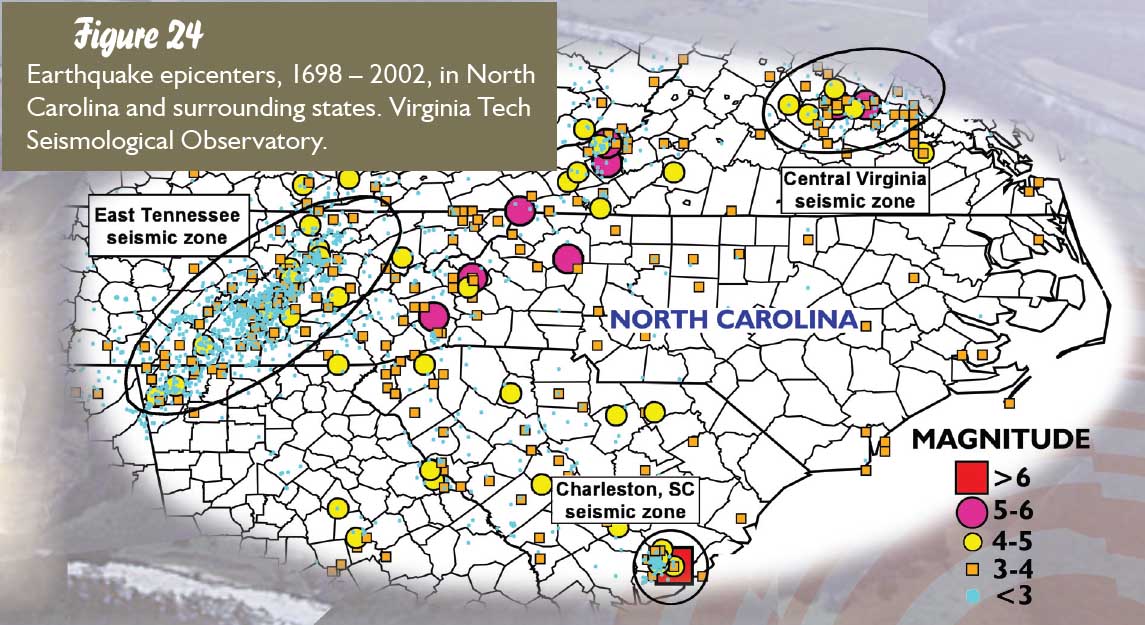
Earthquakes have been increasing in frequency around the Charlotte region over the past few years. Last year, we experienced the largest earthquake in over 100 years when a 5.1 magnitude quake hit Sparta, NC, and since then, dozens of aftershocks have continued to rattle our state.

According to USGS.gov, “Moderately damaging earthquakes strike the inland Carolinas every few decades, and smaller earthquakes are felt about once each year or two.”

Have you felt any of the quakes?

Should You Hold or Sell IPO Shares Immediately After Listing?

0

You waited through the subscription window, tracked the grey-market chatter, and finally saw the bell ring. Now comes the tricky bit. Should you press “sell” at the first tick or stay invested and let the story play out? There is no one-size-fits-all answer, but there is a clear way to think it through.

In this article, we walk you step by step through the trade-offs so you can decide whether to hold or sell right after listing.

What Changes on Listing Day

Here you will explore what changes on listing day:

  • Price discovery shifts from a fixed band to live market forces.
  • Volumes spike, and spreads can widen.
  • Sentiment swings quickly on the first prints, media headlines, and order-book depth.
  • Circuit filters may kick in, capping both upside and downside for the session.

If you are tracking an upcoming IPO, remember that the listing day is less about the prospectus and more about how demand and supply meet in the open market.

A Quick Comparison: Hold Vs Sell on Listing

Here is the quick comparison:

Choice When It Makes Sense Key Risks What To Watch In Real Time
Sell Immediately Substantial listing premium, thin bid depth below the opening price, your goal was listing gains Whipsaw if the price runs further after you exit Order book on Level 2, intraday higher highs, sustained volume on upticks
Hold A reasonable premium or flat open, with improving demand throughout the day, supports a multi-quarter thesis. Near-term volatility, opportunity cost if price dips first Delivery volumes vs. intraday churn, closing strength, and management guidance in the days ahead


Factors to Consider Before You Click Sell

Here are the factors to consider before you click sell:

Your Time Horizon and Thesis:

  • If you applied purely for listing gains, a disciplined exit plan helps.
  • If you underwrote the business for 2 to 3 years, a choppy first week does not change that thesis.

Listing Premium versus Fair Value:

  • A very high premium at the open can price in a lot of optimism.
  • A modest or flat listing can give long-term investors a calmer entry to hold.


Order Book, Volume, and Price Behaviour:

  • Rising price with rising volume is constructive.
  • A gap-up followed by lower highs and heavy intraday churn suggests weak hands dominating.

Volatility and Circuit Filters:

  • Upper circuits can temporarily prevent you from adding.
  • Lower circuits can trap you if liquidity dries up. Position size accordingly.

Tax, Costs, and Cash Needs:

  • Short holding periods are treated differently from longer ones under tax rules in India.
  • Brokerage, STT, and other charges affect net returns. Check your statements and plan the exit with actual numbers.

Liquidity and Lot Size:

  • Smaller floats can move fast.
  • If you hold the minimum lot, an all-or-nothing decision may be too binary. Consider staged exits or partial holds.

When Selling on Day One Can Be Sensible

Here, you will explore when selling on day one can be sensible:

  • Your objective was to achieve a quick, predefined listing gain, and your price triggers have been met.
  • The stock opens with a sharp gap-up but immediately shows lower highs and fading bid depth.
  • You find better opportunities elsewhere and prefer to free up capital.
  • Newsflow on the day adds fresh uncertainty you did not price in.

When Holding Could Be Wiser

Here, you will explore when holding could be wiser:

  • The stock lists near the offer price and shows steady accumulation into the close.
  • You believe the business has a clear runway, and you sized the application for a multi-quarter hold.
  • Delivery volumes rise over the first few sessions, suggesting ownership is moving to patient holders.
  • Valuation at listing looks reasonable relative to the firm’s growth plan and industry peers.

A Simple, Practical Decision Framework

Here is a practical decision framework:

  1. Define Your Goal: Listing gain or long-term compounding.
  2. Set Levels in Advance: Decide exit or add-on zones before the bell.
  3. Read The Tape: Track price, volume, and order-book quality for at least the first hour.
  4. Act in Parts: Consider selling a portion of your strength and keeping a portion for your thesis.
  5. Review After Day One: Reassess once volatility settles and more data arrives.

Three Scenarios

Here are the three scenarios to look for:

Scenario 1: Gap-Up With Fading Strength

Opening at 25% above the offer price feels great. Ten minutes later, bids thin out, and each bounce stalls lower than the last. If your plan was listing gains, taking some money off while liquidity is strong can align with that plan. Keep a small tail if you want exposure to follow-through.

Scenario 2: Flat Open, Quiet Accumulation

The stock starts flat, then grinds up 2% to 3% with firm delivery volumes. If you came in for the business and not the buzz, staying put fits your horizon. A calm open can sometimes be kinder to long-term holders than a euphoric spike.

Scenario 3: Hot Start, Strong Close

Price opens 12% up, dips to 8% up, then climbs to close near the highs on elevated volume. Selling a slice to lock emotions and costs, while holding the rest for the next few weeks, balances both worlds.

Managing Risk in The First Week

Here you will explore managing risk in the first week:

  • Position Sizing: Do not let one IPO dominate your portfolio.
  • Staggered Decisions: Use partial exits or entries rather than an all-or-nothing call.
  • Use Limits, Not Just Market Orders: Avoid slippage in fast tape.
  • Diary Your Decisions: Note why you acted. Review what worked, not just the outcome.

Common Mistakes First-Time Investors Make in an Upcoming IPO

Here are the common mistakes:

  • Chasing every uptick without a plan.
  • Ignoring costs, taxes, and settlement timelines.
  • Confusing intraday excitement with long-term quality.
  • Letting social media set the exit button for them.
  • Selling everything at the first green print or holding everything at the first red print, with no middle path.

How to Prepare Before Listing Day

Here you will explore how to prepare before listing day:

  • Clarify Your Thesis: A concise sentence that states the reason for your purchase.
  • Pre-Set Your Orders: Identify ranges where you would trim or add.
  • Check Your Calendar: Are there results, industry data, or macro events due this week?
  • Track Peer Sentiment: Market Mood Matters on Day One, Even for Strong Businesses.
  • Have a Plan B: If your preferred action is unavailable due to circuits or thin liquidity, know your next best step.

Final Thoughts

Selling immediately after listing is not “wrong”, and holding is not automatically “smart”. The better question is whether your action matches your reason for applying, your risk tolerance, and the live signals the market is sending. If you are evaluating an upcoming IPO today, write down your goal, pre-commit to levels, and let the plan, not the noise, guide your click.

What Makes Construction Accident Cases in Queens Different from Other Workplace Injuries?

0

Construction accidents in Queens stand apart from other workplace injuries because they involve unique laws and legal challenges. These cases often require a closer look at safety rules, employer responsibilities, and the rights of workers under New York labor laws. What makes them different is that construction workers in Queens have legal protections and options that go beyond standard workplace injury claims.

The risks on construction sites also create situations where multiple parties may share responsibility, from contractors to property owners. As a result, these cases often involve more complex claims and higher stakes compared to typical workplace injuries. This article explains why construction accidents in Queens are treated differently and what that means for those affected.

Specialized New York labor laws provide additional protections for construction workers in Queens

New York has labor laws that go beyond standard workplace rules. These laws recognize that construction sites involve higher risks, such as falls, falling objects, and unsafe equipment. Because of this, workers in Queens benefit from protections that other industries may not have.

Sections 200, 240, and 241 of the New York Labor Law are especially important. Section 240, known as the Scaffold Law, holds property owners and contractors strictly responsible for many height-related accidents. Section 241 covers safety standards for construction, demolition, and excavation work.

Local rules also add safeguards. For example, New York City requires certain workers to complete safety training and carry a Site Safety Training card. These measures aim to reduce hazards while holding employers accountable for unsafe conditions.

Injury claims under these laws can be complex. Many workers turn to experienced lawyers for construction accidents in Queens who understand how these protections apply. Legal guidance helps workers pursue compensation and navigate the challenges of labor law claims.

Employer negligence, such as failure to enforce OSHA safety standards, increases liability in construction cases

Construction work carries higher risks than many other jobs, so safety rules must be followed closely. If an employer ignores OSHA standards, the chance of accidents rises. This lack of enforcement can expose the employer to greater legal responsibility.

OSHA rules set clear requirements for equipment, training, and hazard control. Failure to meet these standards often serves as evidence of negligence in court. Therefore, workers injured on construction sites may have stronger claims compared to employees in less hazardous settings.

Courts often view OSHA violations as proof that an employer failed to provide a safe workplace. For example, missing guardrails, unsafe scaffolding, or lack of protective gear can all point to negligence. These conditions not only endanger workers but also increase the employer’s liability.

As a result, construction accident cases in Queens often involve more complex legal arguments. The combination of high-risk work and strict safety regulations makes employer negligence a central issue in these claims.

Construction accidents often involve multiple parties, complicating liability and claims

Construction sites usually bring together general contractors, subcontractors, property owners, and equipment suppliers. Each party may share responsibility for safety and site conditions. This mix of roles often makes it harder to determine who should be held accountable after an accident.

Unlike many other workplace injuries, construction accidents can involve third-party claims. For example, a worker may receive workers’ compensation but also pursue a claim against a negligent contractor or equipment manufacturer. These overlapping claims create more legal steps and often require proof of fault beyond the employer.

The involvement of multiple parties also affects how damages are calculated. One party may be responsible for unsafe site management, while another may be liable for defective equipment. Therefore, attorneys often need to sort through contracts, safety records, and witness accounts to identify all responsible parties.

As a result, construction accident cases in Queens usually take more time and detail than other workplace injury claims. The complexity lies in both proving negligence and dividing liability among several entities.

Workers can sue for pain and suffering beyond standard workers’ compensation benefits

Workers’ compensation covers medical bills and lost wages, but it does not pay for pain and suffering. The system was designed to give quick benefits without the need to prove fault, so emotional distress and other non-economic damages are excluded.

However, construction accidents in Queens often involve more than just the employer. If a third party, such as a contractor, property owner, or equipment manufacturer, caused the accident, the injured worker may file a personal injury lawsuit. This type of claim allows damages beyond standard benefits.

Through a personal injury case, workers can pursue compensation for pain, suffering, and reduced quality of life. These damages recognize the physical and emotional toll of a serious injury, which workers’ compensation alone does not address.

As a result, construction workers in Queens may have broader legal options than employees in other fields. The presence of multiple parties on a job site often creates opportunities to seek recovery outside the workers’ compensation system.

Wrongful death claims are more common due to the high fatality rates on construction sites

Construction sites often involve heavy machinery, tall structures, and dangerous tools. These conditions create a higher risk of fatal accidents compared to many other workplaces. As a result, wrongful death claims occur more often in this field.

Falls from scaffolding, equipment failures, and unsafe site conditions are frequent causes of deadly incidents. Unlike office or retail jobs, construction work exposes employees to hazards that can quickly turn fatal. This difference explains why families in these cases pursue wrongful death claims at a higher rate.

In addition, construction projects usually involve multiple contractors and subcontractors. That makes it harder to identify who is legally responsible after a fatal accident. Therefore, wrongful death claims in construction often require more investigation than claims from other industries.

Government safety rules exist to reduce these risks, but violations still happen. If an employer or contractor ignores safety standards, the chance of a fatal accident rises, leading to more wrongful death cases.

Conclusion

Construction accident cases in Queens differ from other workplace injuries because they involve unique labor laws, multiple parties, and higher safety risks tied to urban job sites. These factors create more complex claims than those found in many other industries.

Workers often face legal issues that combine both workers’ compensation and personal injury law. As a result, they may need to pursue several legal paths to recover medical costs, lost wages, and other damages.

Because of these differences, construction accident cases in Queens require careful attention to local regulations and industry standards. This sets them apart from typical workplace injury claims and shapes how injured workers and their families move forward.

NC First Grader Suspended For Bringing Handgun To School

0

A North Carolina first grader was just suspended after a handgun was found in his possession at Pembroke Elementary School, officials confirmed.

According to the Public Schools of Robeson County, the child will face a mandatory 365-day suspension. His name has not been released because of his age.

School officials said the incident began when a staff member noticed something unusual on the student’s side. The staff member pulled the child aside, separated him from his classmates, and discovered a handgun tucked into his waistband.

Administrators immediately contained the situation and contacted local law enforcement. Officers investigated while the school day continued on a normal schedule.

District leaders stressed that swift action by school staff prevented any disruption or potential harm.

Authorities have not yet said how the child obtained the weapon.

HAZMAT Crews Called To Bojangles Coliseum After Toxic Anhydrous Ammonia Leak Detected

0

A chemical leak at Charlotte’s historic Bojangles Coliseum sparked an early-morning emergency response on Friday, Sept. 19. Around 5 a.m., officials confirmed that a release of anhydrous ammonia — an extremely toxic gas was detected at the arena.

Hazmat teams and more than a dozen emergency vehicles arrived quickly on the scene. According to Charlotte Fire Department officials, the leak was promptly isolated and ventilated.

Fortunately, no injuries were reported, and paramedics confirmed there was no harm to staff or nearby residents. Firefighters also noted that there were no traffic disruptions as a result of the incident.

Anhydrous ammonia is used at the Coliseum as part of the facility’s refrigeration system, which cools brine liquid indirectly to regulate the ice surface used for hockey and other events. Though powerful and efficient, the chemical is hazardous and can cause severe health complications if inhaled or exposed to skin in high concentrations.

While the leak was safely contained, officials have not yet disclosed the source or scale of the breach.

UNC Charlotte Forecast Reveals State Economy Faces Mixed Outlook – Growth and Challenges

0

North Carolina’s economy is projected to see sustained growth through the rest of 2025 and into 2026, but businesses should prepare for uncertainties from federal policy decisions and the state’s recovery from Hurricane Helene. This outlook comes from the latest North Carolina Economic Forecast published by the UNC Charlotte Belk College of Business.

North Carolina Economic ForecastNorth Carolina’s Gross Domestic Product, a key measure of economic activity, is forecast to increase by 2.3% in 2025. This will mark the fifth consecutive year of growth since COVID-19. The state is expected to add 76,400 net jobs in 2025, increasing employment by 1.5% by December.

While the state’s economy continues to tick along, there are concerns, said Charlotte financial economist John Connaughton, author of the state forecast for nearly 45 years.

“In addition to fiscal policy concerns, we have seen the U.S. unemployment rate rise from 3.3% in May of 2023 to 4.3% in August of 2025,” Connaughton said. “As a result of the weakness in the labor market, the Fed began reducing interest rates in September of 2024. By December of 2024 the Fed Funds rate dropped by 100 basis points.”

Depending on economic data, the Federal Reserve could continue with interest rate reductions by up to another 75 basis points by the end of this year, he said.

“However, if Congress does not begin to control fiscal spending, we are likely to see a return of inflation in 2026, which could disrupt the Fed’s plans,” he added.

Several sectors are driving this year’s growth. Agriculture is projected to see an economic growth rate of 34%, followed by information at 7.3%, retail trade at 3.1%, government at 2.8%, educational and health services at 2.6%, nondurable goods manufacturing at 2.6% and construction at 2.5%.

In terms of employment, sectors leading the way are construction at 3.6% and education and health services at 2.8%. However, some sectors, including mining; transportation, warehousing and utilities; and durable goods manufacturing, are expected to decline in output or employment in 2025.

Navigating uncertainty in the coming year
Looking ahead to 2026, North Carolina’s real GDP is forecast to increase by 2.1% over 2025, reaching $933,820.1 million, marking the sixth year of growth since COVID-19. All 15 of the state’s economic sectors are expected to experience output increases in 2026. Information at 3.9%, agriculture at 3.8%, mining at 3.5% and construction at 2.6% are the sectors with the strongest anticipated growth.

The state is expected to add 80,850 net jobs, a 1.6% increase. Employment growth is expected to be strongest in information at 5.5% and education and health services at 4.9%. However, the state’s unemployment rate is likely to increase to 4.1% by December 2026, up from 3.7% in August 2025.

For the business community, several critical factors demand close attention, creating a sense of urgency.

Federal Reserve Policy: The Federal Reserve has sent uncertain signals about its interest rate policy following three reductions in late 2024. While the Fed could cut rates by another 50 to 75 basis points by the end of 2025, this depends heavily on incoming economic data. This uncertainty impacts borrowing costs and investment decisions for businesses.

Inflation Risks: There is a 60/40 chance of inflation returning, Connaughton said, warning that if Congress doesn’t control fiscal spending, inflation could return in 2026.

Tariffs: Connaughton identifies tariffs as a significant wild card that could further slow the economy and cause a short-term bump in inflation.

Hurricane Helene Recovery: The prolonged recovery in Western North Carolina, exacerbated by the widespread lack of flood insurance, will continue to impact the state’s overall economic performance.

“The economic data over the next several months will play a pivotal role in determining Fed interest rate policy and the balance between a return of inflation, a slowdown, a recession or a boom,” Connaughton observed.

Whataburger Opens First Charlotte Location This Week Amid Lawsuit with NC’s What-A-Burger

0

Charlotte just opened her very first Whataburger yesterday, bringing the Texas classic fast food joint with made-to-order burgers to the Queen City.

Yesterday, the first 100 guests received Whataburger swag bags and their choice of a Honey Butter Chicken Biscuit or a Breakfast Taquito, and tomorrow, the new restaurant will host a “Whatabash” — an event featuring a video game truck from 11 a.m. to 1 p.m.

The new restaurant’s design pays homage to Whataburger’s heritage while embracing modern convenience. A custom interior mural features Queen City landmarks, and the store includes a double drive-thru, digital menu boards, and spacious dining areas.

However, not everyone is celebrating. The new location has reignited controversy between the Texas-based chain and North Carolina’s home-grown What-A-Burger #13. Last year, Whataburger sued What-A-Burger #13 for trademark infringement, alleging that the longtime local brand violated a settlement agreement.

While the Texas chain trademarked its name in 1957, What-A-Burger #13 began operating in 1969. A 2022 agreement allowed the NC locations in Mt. Pleasant and Locust to keep their name under specific restrictions. But shortly before the agreement, What-A-Burger #13 created a new LLC and allegedly used the name outside the agreed terms, prompting legal action.

As Whataburger pushes into new territory — with over 1,000 restaurants already in 15 states — it appears to be avoiding What-A-Burger #13’s home turfs of Mt. Pleasant and Locust…for now.

Beloved Restaurant Owner’s Murder Case Moves Forward in Charlotte Court

0

Two men charged in the 2019 murder of Scott Brooks, co-owner of Charlotte’s beloved Brooks’ Sandwich House, appeared in court today. Steven Staples faces first-degree kidnapping charges, while Terry Connor Jr. is charged with robbery.

Brooks was shot and killed on Dec. 9, 2019, while opening the restaurant early in the morning. Staples had recently been released from prison after serving over 12 years for robbery and assault with a deadly weapon.

Police say Staples committed four additional murders in the weeks following Brooks’ death, including shootings in Charlotte and Hickory. He was arrested after the final killing in January 2020 and later charged in the Brooks case.

I had the privilege of briefly interviewing Scott Brooks a few years ago. He told me he began running the small sandwich house with his brother David since 1973;

Monkey Escapes Lake Norman Zoo, Prompting Urgent Search in Troutman

0

Troutman residents, stay alert: a 5-year-old female capuchin monkey (the same monkey Ross owned in the show “Friends”) escaped Zootastic Park on Wednesday at 8 a.m. The agile primate, known for her distinctive dark “cap” of hair, triggered an immediate response from park officials. Owner Scott Brown, managing over 1,700 animals, explained that the unnamed monkey slipped out undetected.

Native to Central and South America, capuchins are renowned for their intelligence and tool-using skills. Consequently, Zootastic Park staff and Iredell County Animal Services launched a coordinated search across the surrounding area. Brown remains optimistic, hoping the monkey returns by Wednesday evening. If not, trained personnel are prepared to deploy a tranquilizer blow gun to ensure her safe capture.

Iredell County Animal Services issued an urgent advisory: residents should not approach, chase, or attempt to capture the monkey. Instead, immediately report sightings to 704-878-5335. Authorities emphasize public safety and the animal’s well-being as the search intensifies.