
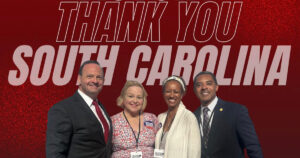
 South Carolina Attorney General Alan Wilson has won the Republican runoff for governor, defeating Lt. Gov. Pamela Evette and securing his victory as the next governor of South Carolina.
The 52-year-old Wilson has served as South Carolina’s attorney general since 2011. He is the son of longtime Congressman Joe Wilson and has built a statewide profile through his work as the state’s chief prosecutor.
The race drew national attention after President Donald Trump initially endorsed Evette before later expressing support for both candidates. Wilson also received backing from several prominent South Carolina Republicans, including Sen. Tim Scott, Sen. Ted Cruz, and former gubernatorial candidates Nancy Mace.
Speaking to supporters after his victory, Wilson pledged to be a “transformational governor” and called for party unity heading into November. Evette later congratulated Wilson and urged Republicans to rally behind him.
Wilson’s nomination is also significant for many residents in York County and Fort Mill because of his recent involvement in the ongoing controversy surrounding the Silfab Solar facility.
 Earlier this year, Wilson publicly requested information from York County’s Christi Cox and Josh Edwards regarding their unlawful approvals of Silfab’s manufacturing operations, after the York County Board of Zoning Appeals unanimously ruled that their operations were prohibited within the property’s Light Industrial zoning district.
“As I have reviewed questions from concerned citizens, there appears to be some confusion over the status of some of Silfab’s manufacturing operations under its present zoning,” Attorney General Alan Wilson stated in a press release. “As the Chief Legal Officer of the State, I would like to understand the process of how Silfab received their current zoning and permits.”
His request came amid growing scrutiny of the project following reports of chemical incidents at the facility and continued legal challenges surrounding zoning, permitting, and land-use issues.
After receiving York County’s weak and unlawful response to his questions regarding Silfab’s zoning approval, Wilson decided to retain an outside zoning consultant to determine what steps were necessary to permanently stop Silfab’s operations.
The Silfab controversy remains unresolved, with multiple lawsuits still pending and ongoing debates over zoning compliance, permits, and future operations at the Fort Mill facility.
Governor Wilson would likely take significantly more drastic measures when he takes office, if they are not stopped before them.