

North Carolina Zoo Offers a New Virtual Visit Experience

0

Since a visit to the North Carolina Zoo isn’t currently possible, the Zoo is bringing its programs to you!

In an effort to help meet the educational and learning needs of children and parents during this challenging time, the Zoo is offering an all-new Virtual Visit program. This program features a wide range of different online education events, art projects, at-home activities, and stories from the Zoo and the wild that will allow children, teachers, parents and others to experience the Zoo and its animals in a completely new way.

“A trip to the North Carolina Zoo is always more than just seeing the animals — it’s a chance to learn in a fun environment,” said the Zoo’s Curator of Education Beth Folta. “We’ve now adapted many of our learning experiences to an online format easily accessible to everyone from home.”

The Virtual Visit web page  — nczoo.org/virtual-visit — is the hub for all these experiences. It will be updated daily with new animal videos, wildlife-themed activities and other ideas for at-home learning and play, even as the Zoo’s staff continue to be busy caring for more than 1,800 animals and more than 2,000 acres of land.

Highlights of the Zoo’s Virtual Visit program include: 

  • Zoo EDventure Online Series:  every Monday, Wednesday and Friday from 10 a.m. to 10:30 a.m., join us Live on Facebook to get an up-close look at our amazing animals. This is a chance to learn and interact directly with Zoo staff about the theme of the day. All our Zoo EDventures can also be viewed through the Virtual Visit webpage and YouTube.
  • Zoo Classroom is the Zoo’s free distance learning series appropriate for K-12 audiences streamed live every Thursday from 1 to 2 p.m. Each program features a different and fun topic on wildlife and nature. Join us live to ask our educators questions in real time or enjoy our whole series of classes on the website on your own time. Required pre-registration is easy through the Zoo’s Virtual Visit Zoo Classroom page
  • Living with Nature is the Zoo’s distance learning event series currently available to everyone. All of the 2019-2020 events are now available online and have a variety of activities to do before, after, and during the viewing of the recorded program. These are accessible through the Zoo’s website at any time. 
  • Untamed Science: Every Tuesday and Thursday watch an episode of the Zoo’s science education show. Learn about how use science to care for the Zoo’s animals and help protect endangered species in the wild.
  • Ask an Expert: An all new offering only on Instagram. Every Tuesday meet a new Zoo expert. On Wednesday ask them your zoo and wildlife questions. Then on Thursday hear the answers live. Experts from across the Zoo will be featured, including veterinarians, conservation scientists, animal care staff and more.
  • All-new Zoo Blogs: Get in-depth stories and firsthand accounts of what it takes to run a modern zoo. New stories will be coming out every week on how we care for our animals, insights into zoo operations, and what the North Carolina Zoo is doing to save species from extinction.
  • Adventures in EdZOOcation Facebook Group:  Join the Zoo’s EdZOOcation Facebook group and get extra weekly content available only to group members. Every week we will be posting new activities, lessons, videos and more on a variety of topics. Adventures in EdZOOcation programs will include:
    • Zoo Science: Every Tuesday learn a new nature-based science experiment that you can do at home
    • Nature Arts and Crafts: Monday, Wednesday, and Friday get instructions for how to make a different animal-related craft or art project.
    • Wild about Nature: Learn about easy outdoor activities you can do locally & in your own backyard.
    • Just go to the Zoo’s Facebook page and click on “Adventure in EdZOOcation Groups” to join.

For a full list of offerings, visit the Zoo’s Virtual Visit and follow the Zoo on all social media channels Facebook, YouTube, Instagram, Twitter and LinkedIn.

Meat Shortages Forcing Charlotte Restaurants To Raise Their Prices on Beef and Pork

0

The COVID-19 shutdown has forced millions of American workers to stay home as many companies and businesses remain closed for over 2 months now.


One of the hardest hit industries has been meat houses and processing plants. Many of the biggest in the country were forced to close their doors as COVID-19 cases spread among their workers. The closures have now resulted in millions of pounds of lost meat and severe supply shortages around the country.

Here in Charlotte, bulk suppliers and restaurant wholesalers are now running on fumes.

This is what the meat section looks like in Charlotte’s US Foods Chef’s Store:

The shortages are now forcing many local restaurants to raise their prices as they struggle to sell enough to-go orders to keep the doors open due to North Carolina’s historic ‘Stay at Home Order’.

Even Charlotte’s favorite burger joint has now announced an increase in their prices. Yesterday afternoon, Brooks’ Sandwich House posted the following message, along with a new menu with increased prices (last week their single was $4 and their double with bacon was $6.50):

“Due to the shortage and the more than doubled price of meat, once again we are having to make another difficult decision. Do we CLOSE or raise our prices. We have had very unfortunate circumstances in the past 6 months that have continued to create a challenge and set us back. The only way we can afford to stay open and stay BROOKS STRONG is by raising our prices until the meat prices drop. We simply can’t afford to open with price of goods continuing to rise. Meat was 2.40 a pound May 4 and by May 11 th 5.50 a pound and continues to rise. We have had a difficult time finding meat. We have brokers, wholesale and locals. It has been hit or miss each day in the search. We want to stay open to serve our awesome customers but if we don’t make a change we are not able to break even. We hope you will understand our reasons for going up on our prices. We have always tried to be reasonable with our prices and will continue in the future. We all need prayers and help each other get over this hump.”

What do you think about the meat shortages?

Huntersville Production Company’s Web Series Reminiscent of SNL

0

A production in Huntersville is creating one of our region’s first sketch comedy series called ‘Mean Bean Tonight’.


23-year-old Melanie Lech noted that their new show is “a quirky, homegrown, late-night comedy show. Kinda like SNL but without all those pesky movie stars.”

They released their first episode last Spring;

Mean Bean Productions was launched by former App State classmates Melanie Lech and Alex Bradford Cobb.

The full-service production company films and produces business promos, events, music videos, and commercials, as well as their hilarious short films and sketch comedy. The ultimate passion is to shine a spotlight on the greatness of our region.

“I know so many amazingly talented people in NC that are so underrated it makes me want to weep. We’re going to give ’em a chance to shine,” commented Melanie.

They are currently incorporating some of that talent in their second episode of ‘Mean Bean Tonight’, which will be released sometime in the next few weeks.

Check out more of their videos and upcoming releases on their YouTube channel here.

The Incredible Way Livestreams Are Bringing Education Nationwide

0

Livestreams are becoming part of life more than ever before. As livestream technology becomes more and more easily accessible, with many people able to livestream from their home computers, it’s becoming more of a part of people’s day-to-day lives. Educational livestreams, which are a category all on their own, are genuinely impacting the way in which people learn. Here are some interesting ways in which livestreams are making education easier to access.


An Impact On Rural Areas

If you live in a more rural area that doesn’t have a very well-funded schooling system or very many options for tutoring, you’re likely to feel that your education options are limited. This can lead to children and college students in these areas feeling cheated out of the education options that people in larger cities get.

However, educational livestreams are available to anyone who has an internet connection. With the availability of satellite internet, that’s becoming a wider category than ever. That means rural students can access the same quality options as urban students.

Availability of All Educational Options

There are many different ways someone might want to receive education. For example, some people work better with a teacher who has a more by-the-book stance, whereas some might work better with a teacher who barely consults the textbook at all.

When you have access to educational livestreams, you’re able to find a teacher that you truly connect with. There are so many options, it’s much easier to handle. You no longer have to stick exclusively to the teachers at your local school or college.

Anyone Can Share Expert Information

Becoming a teacher is hard work for a reason. Teachers don’t just provide educational information; they also create their own educational information, adapt information from many decades back, and tailor their teaching skills to their audience. That doesn’t even begin to touch the fact that many teachers also provide emotional support and have to grade tests and homework.

Livestreaming, by comparison, is much easier, even educational livestreaming. When you’re just sharing information, you don’t have to take on all the responsibilities of teaching. That’s why it’s much more accessible for many individuals, including experts on many subjects.

It’s Easy to Learn About Educational or Other Content

Why do you need to learn about the educational content you’re seeking out? Maybe you’re a student struggling through college. Maybe you’re the parent of a high school student and you want to be more invested. Maybe you’re just interested in learning something new. The good news is, an educational livestream is here for you.

Educational livestreams are ultra-easy to take in. There’s no need to sign up, no need to pay fees, and no need to have many prerequisites. Instead, anyone who’s interested in learning something new can find an educational livestream and start learning. That’s accessibility to the max.

Conclusion

These are all great reasons to encourage the growth of educational livestreams. Whether you’re using one right now or you just think you might in the future, remember that finding a high-quality educational livestream is extremely important. Stick to educational livestreams from groups like OneClass, which make sure they’re always delivering top-quality information. That way, you know you’re getting something you can rely on.

North Carolina Sees Its Highest Single Day Increase in COVID-19 Cases

0

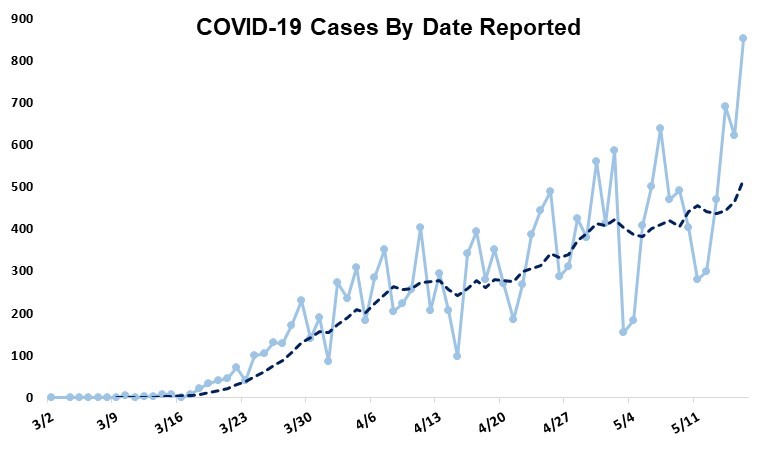
Just 8 days after Governor Cooper initiated ‘phase 1’ of our state’s reopening plan, our state has just witnessed its largest single day increase in COVID-19 Cases.

Between Friday, May 15th and Saturday, May 16th, the total number of cases increased by 853, bring the total number of cases in the state to 17,982.

Mecklenburg County is now reporting 2,504 total cases and 62 deaths from COVID-19, an increase of 65 from yesterday’s total of 2,439.

The NCDHHS released the following video this morning encouraging all NC residents to practice “The 3 Ws”:

Governor Cooper’s ‘phase 1’ order is in effect until 5 pm on Friday, May 22. However, the end of this Order does not necessarily mean the state will move to Phase 2. Phase 2 will only start if data and indicators are in the right place.

Phase 2 includes the following changes:

  • Lift Stay At Home order with strong encouragement for vulnerable populations to continue staying at home to stay safe
  • Allow limited opening of restaurants, bars, fitness centers, personal care services, and other businesses that can follow safety protocols including the potential need to reduce capacity
  • Allow gathering at places such as houses of worship and entertainment venues at reduced capacity
  • Increase in number of people allowed at gatherings
  • Open public playgrounds
  • Continue rigorous restrictions on nursing homes and other congregant care settings

After 4-6 weeks of phase 2, if everything still looks under control, the state will move to Phase 3, which includes the following changes:

  • Lessen restrictions for vulnerable populations with encouragement to continue practicing physical distancing and minimizing exposure to settings where distancing isn’t possible
  • Allow increased capacity at restaurants, bars, other businesses, houses of worships, and entertainment venues
  • Further increase the number of people allowed at gatherings
  • Continue rigorous restrictions on nursing homes and other congregant care settings

Governor Cooper underscored the need for the testing, tracing and trends to move in the right direction for each of these phases to move forward. If there is a spike in infections, tightening of restrictions may be needed temporarily.

What do you think about the plans?

Charlotte’s Chef Alyssa’s Kitchen Now Offering Exclusive Memorial Day Weekend Pre-Order Menu

0

Chef Alyssa’s Kitchen of Charlotte, NC is making Memorial Day Weekend cookout easier and more delicious.

“With this time of season, I love being outside and grilling. While not in a regular circumstance, we wanted to create a feeling of normalcy for the weekend, “ said chef Alyssa Wilen owner and executive chef of Chef Alyssa’s Kitchen. “Our goal is to make a one stop and safe pick up or delivery for grilling during the long weekend!” said Wilen

The Memorial Day pre-order menu is available on the Chef Alyssa’s Kitchen website. They are accepting orders online, with no minimums, until Wednesday May 20th at 11:00 am. Guests may choose their pick up or delivery time for Friday May 22nd between 3 and 7 pm, located at their lower South End kitchen space. All items are prepared cold. Wine and local beer products are also available.

“Utilizing some of the great local vendors for the menu include Shipley Farms, Duke’s Bread and Coto Family Farms. I’m most excited for our Wagyu Hot Dogs, Shipley Farms Grass-fed Beef Burgers and our Watermelon and local Strawberry Salad, “added Wilen”

Possible Tropical Storm ‘Arthur’ System Growing – Several Models Showing Impact With Carolinas

0

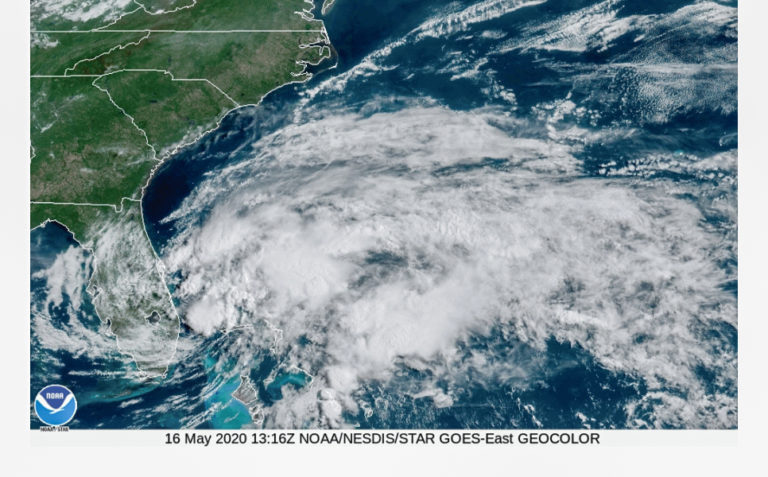
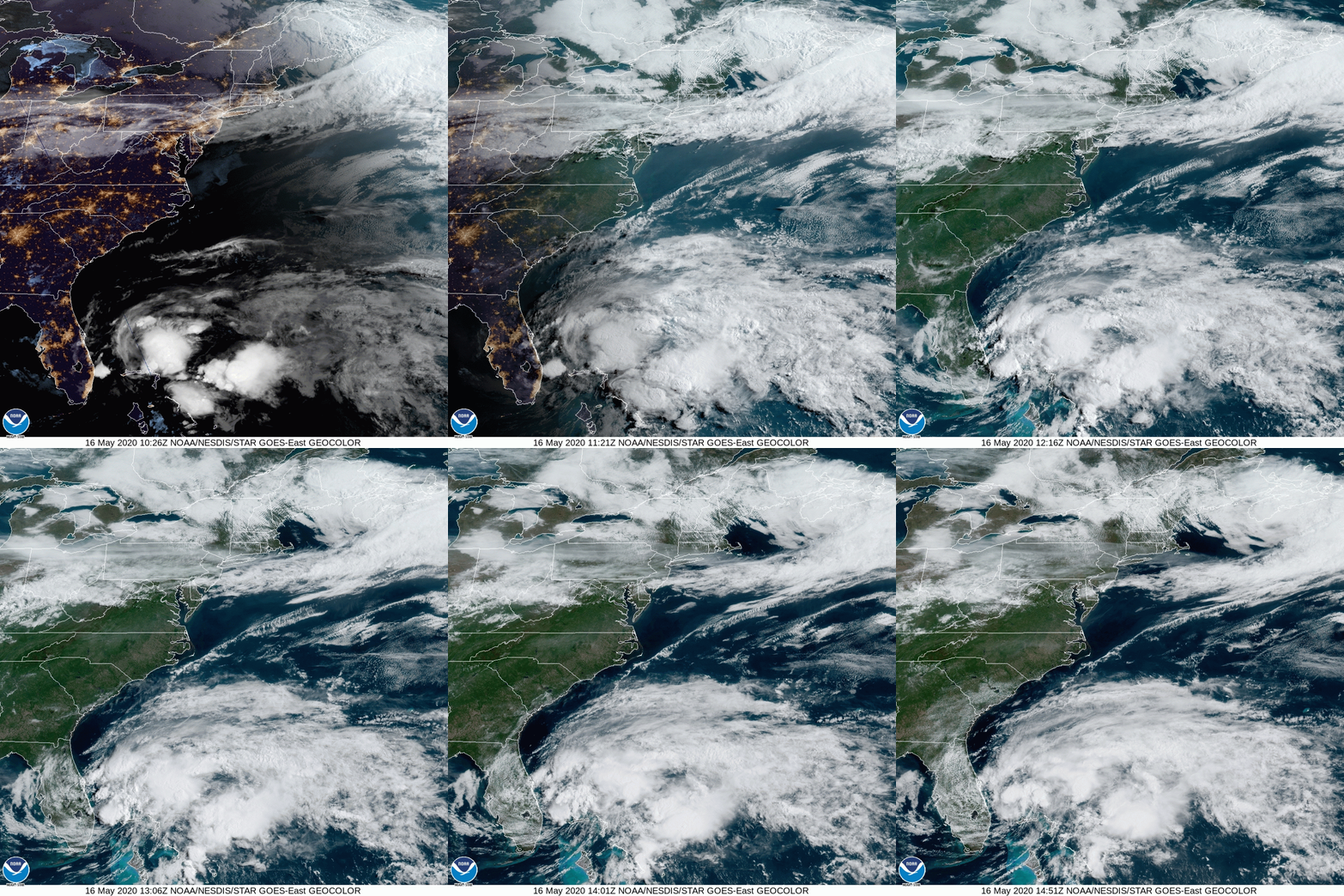
A growing disturbance in the Bermuda Triangle will likely become the first named storm of 2020 by the end of this weekend, according to the National Weather Service.

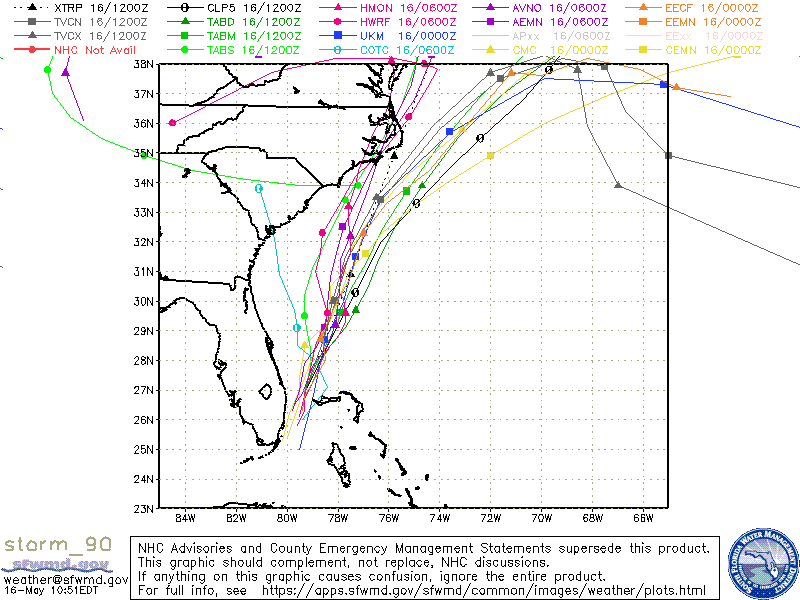
Since first reporting on the storm this past Tuesday, the system has developed a much tighter rotation patter and a more westerly trajectory, with almost half of the forecast models showing a direct impact with the Carolinas.

The NHC has now upgraded the probability of the system becoming a subtropical or tropical storm to 80% (HIGH) within the next 48 hours. If it does develop, they NWS will give the new storm the name ‘Arthur’.

This morning, the National Weather Service issued the following alert:

810 AM EDT Sat May 16 2020
An area of low pressure located just offshore of the southeast 
coast of Florida continues to produce shower activity and gusty 
winds from portions of southeast and east-central Florida 
eastward across the northwestern Bahamas and the adjacent Atlantic 
waters.  Satellite images and surface observations indicate that the 
low is gradually becoming better defined, but the associated showers 
and thunderstorms remain disorganized.  Continued gradual 
development is expected, and the system is likely to become a  
tropical or subtropical depression or storm later today or tonight 
while it moves north-northeastward over the Atlantic waters east of 
Florida.  Later in the weekend and early next week, the system is 
expected to move generally northeastward over the western Atlantic 
near or east of the Carolinas.

The official Atlantic Coast hurricane season for 2020 runs from June 1st through November 30th, so if Arthur does develop into a full blown storm, it would be nearly a month early.

NWS officials are reminding all residents in Atlantic Coast states to start preparing for the upcoming hurricane season.

In case of a power outage, make sure to have the following emergency items stocked in your home;

We will continue to update this article as this storm develops. 

Paycheck Protection Program Leaves NC’s Small Business Employees Without Health Care 

0

A new report by Piedmont Rising reveals that North Carolina’s small and minority-owned businesses may not have received loans under the Paycheck Protection Program (PPP) at the same rate as large businesses.

The report highlights that while PPP funding was intended to keep small businesses afloat amid the COVID-19 pandemic, the program has failed to assist the vast majority of small businesses, including in North Carolina, with a large share of minority-owned businesses left behind. Meanwhile, communities of color are already feeling an overwhelmingly disproportionate impact of the coronavirus pandemic due to inequities in health care access.

Piedmont Rising Executive Director Casey Wilkinson released the following statement in response to these findings:

“For North Carolina’s small businesses, every day without access to this PPP funding means more lost jobs on Main Street. North Carolina is facing a health and economic crisis that is not of their making. These small businesses did their due diligence and were ready to respond, but lawmakers like Senator Thom Tillis and Richard Burr failed them.

“Many of these small business owners and their employees are losing their health insurance and access to care during a global pandemic. As we know, the coronavirus pandemic is impacting communities of color at a disproportionate rate. Minority-owned small businesses and the families that rely on them are no exception to this trend within the outcomes of the pandemic, which makes it that much more vital to ensure they get the help they need.

“We urge Senators Tillis and Burr to support new legislation in Congress that would help to solve this problem so  that every small business owner and their employees gets equal access to critical federal assistance.”

Key Findings:

  • There are 890,000 small businesses in North Carolina with fewer than 500 employees. Meanwhile, North Carolina has received just 66,677 loans from the Paycheck Protection Program.
  • During the first round of PPP funding, 80 percent of small businesses that applied for relief money received none, with North Carolina receiving only 2.5 percent of the nearly $189 billion lent through the Paycheck Protection Program.
  • And, while businesses of color account for 30 percent of all U.S. businesses, roughly 95% of Black-owned businesses, 91% of Latino-owned businesses, 91% of Native Hawaiian or Pacific Islander-owned businesses, and 75% of Asian-owned businesses failed to secure loans from the Paycheck Protection Program.
  • Due to existing inequities in health care in North Carolina, Black and Hispanic communities are experiencing a disproportionate number of coronavirus confirmed cases and, as a result, serious complications from the coronavirus pandemic.
  • Banks that offered PPP loans, including Bank of America, JPMorgan Chase and Wells Fargo, prioritized larger loan applications and charged higher fees in order to maximize loan-origination fees and their own profits.

Pamlico Capital Gives $1 Million to Charlotte’s COVID-19 Fund – Bringing Total To $18.5 million

0

Pamlico Capital announced it is committing $1 million to support the community-wide efforts of the COVID-19 Response Fund. To date, more than $18.5 million has been raised for the fund.


The COVID-19 Response Fund was launched in March by Foundation For The Carolinas and United Way of Central Carolinas to support those most impacted by the pandemic. So far through two grant cycles, the fund has issued nearly $6.5 million in grants to a range of nonprofits – from large institutions to smaller grassroots organizations – on the frontlines of the crisis, providing food, shelter, economic assistance, healthcare and more to families and individuals most in need. Additonal grant awards will be announced shortly.

“Our entire team contributed to this effort and feels a strong commitment to invest in our community at this critical moment,” said Eric Eubank, a partner at Pamlico Capital. “These are unprecedented times, which we felt called for an unprecedented response from those of us who have the ability to make a difference. We hope others will follow us and the many other generous donors to the fund.”

In addition to the $1 million donation to the COVID-19 Response Fund, Pamlico Capital is committing another $150,000 directly to local nonprofits chosen by the firm’s employees, including Loaves & Fishes, Renaissance West, Freedom School Partners and E2D.

“The generosity of our corporate partners, such as Pamlico Capital, continues to move me,” said Foundation For The Carolinas President and CEO Michael Marsicano. “Their leadership is why our fund is still growing steadily two months after its launch. As we approach the fund’s third round of grants, however, it’s clear more help is needed. We must continue to unite to help those who need it the most.”

The COVID-19 Response Fund is administered through a partnership between Foundation For The Carolinas and United Way of Central Carolinas, in close coordination with the City of Charlotte and Mecklenburg County. A COVID-19 Response Fund Grants Committee reviews and distributes grants from the fund. Additional efforts have been established throughout the Carolinas in counties served by FFTC and/or United Way of Central Carolinas.

“This fund was created to support people through our local nonprofits, which is critical in this time of desperate need,” said Laura Yates Clark, president and CEO of United Way of Central Carolinas. “It’s been inspiring to see organizations such as Pamlico Capital rally around this cause and support those facing economic uncertainty, unemployment, homelessness, healthcare concerns, depression and more.”

Donations to the COVID-19 Response Fund have ranged from a two-dollar commitment from an anonymous online donor to $1.3 million from Mecklenburg County. Other major gifts include $100,000 each from the Charlotte Hornets Foundation, the Springsteen Foundation, the Philip L. Van Every Foundation, Kim and Johnny Belk, and Alfred and Amy Levine Dawson; $150,000 each from Wells Fargo, Wells Fargo Championship and Sean & Andrea Smith; $200,000 each from Allstate Insurance and Vanguard; $250,000 each from the Charlotte Mecklenburg Community Foundation, the Weisiger Fleming Family Fund, EY, PwC/The PwC Charitable Foundation, and The Hearst Foundations; $270,000 from BlackArch Partners/The Regions Foundation; $500,000 each from Ally Financial, the Duke Energy Foundation and the John S. & James L. Knight Foundation; and $1 million each from LendingTree, the City of Charlotte, the Howard R. Levine Foundation, Truist Financial Corporation, Bank of America, the David A. Tepper Charitable Foundation, Lowe’s, the C.D. Spangler Foundation/National Gypsum, Coca-Cola Consolidated and the John M. Belk Endowment.

To contribute to the COVID-19 Response Fund, visit HelpCharMeck.org.

Daily Fantasy Sports (DFS) Wins Favor in Significant Court Decision

0

A U.S. court has ruled in favor of a defendant in a case relating to a loss of funds in an online game of Daily Fantasy Sports (DFS).

Daily Fantasy Sports (DFS) is an emerging branch of online entertainment that has seen a resurgence of interest lately following the national sports shutdown. The online activity mimics real-life sports events using accurate statistics of existing players and athletes. 

Users can sign up to an online DFS platform and pay an entry fee to compete for rewards based on the performance of their chosen team or players. Since the activity can result in players winning cash from their choices it has been compared with sports betting and banned in most states.

However, the exact legal situation regarding DFS remains uncertain, with 19 U.S. states allowing the activity to go ahead. Fantasy sports games have been around for many years but the new DFS format presents an element that more closely resembles gambling. In lieu of formal legislation, many states have simply applied existing gambling laws to regulate the industry. However, in some cases, this has opened up the industry to legal challenges. 

Dew-Becker v. Wu

Recently, a DFS player in Illinois argued that his $109 loss on a game of DFS was not legal under the state’s gambling laws. The player hoped to have his money recovered under an Illinois statute that allows victims of gambling to recover their losses. A judgment was delivered by Chief of Justice Anne M. Burke on April 16, 2020.

Hosted by DFS site FanDuel, the event in question involved both players signing up and agreeing to a $109 fee to compete against each other in a fantasy basketball game. For hosting the event, FanDuel took a $9 fee from each player, and the player who put together the winning team received the remaining $200 as a prize.

The plaintiff, Colin Dew-Becker, alleged that since the game constituted gambling it should be deemed illegal and all funds returned. However, the Supreme Court of Illinois rejected the claim and ruled in favor of the defendant, stating that the law “does not allow recovery when the gambling is not connected.” In this case, the facilitation of the event by FanDuel means the players didn’t gamble directly between themselves.

Change in gambling legislation

Existing legislation regarding online gambling has been changing rapidly over the past few years, in both the US and around the world. In the UK, a new law has recently been imposed by the UK Gambling Commission that enforces online gambling operators to stop offering ‘sticky’ bonuses that come with unfair ‘wagering requirements’. Now, many online casinos in the UK, Australia, and New Zealand specifically offer only non sticky bonuses. The law stops operators from offering bonuses that have hidden conditions that essentially trap a players’ cash in the casino until they have wagered a certain amount of money.

While most legislation is aimed at protecting players, some of it can be over-restrictive and harmful to online operators. Most notably, last year’s controversy regarding The 1961 Wire Act cast confusion on the online gambling industry in the US. The law traditionally restricts the offering of bets on sporting events across state lines but the Department of Justice (DoJ) recently suggested it should apply to all forms of gambling.  As a result, many operators have been left unsure whether they can continue to offer their services across state lines. A New Hampshire federal court has since ruled against the DoJ’s suggested changes but an appeal against the ruling is expected.