Panthers’ Head Coach Matt Rhule Says He’d Be Willing To Take A Knee During National Anthem

0

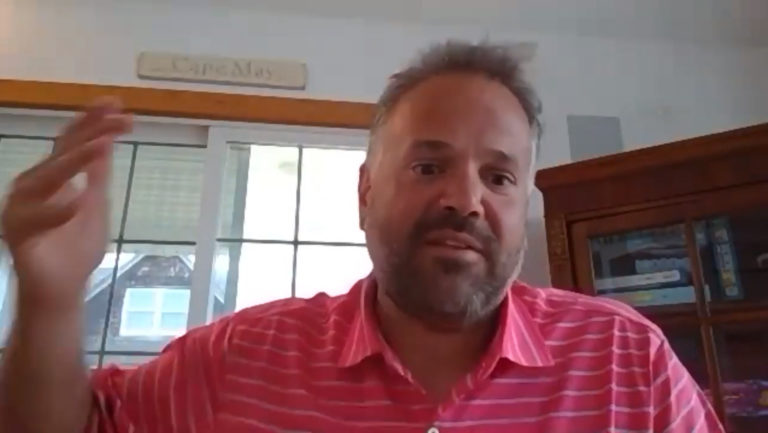
The Carolina Panthers’ new head coach Matt Rhule just told fans that he’d be willing to consider kneeling with his players while the national anthem played to support social justice.

During a Zoom conference call with fans and members of the media, the question was posed, “Would you consider taking a knee along side the players?”

This was Coach Rhule’s response:

“I would consider anything as we move forward. I’m supportive of the cause. I’m supportive of the movement. I’m supportive of social justice. I think for every person, coach or player that will be a very personal decision. I think it has to be made at the right time and the right reason for everybody. I will support my players with whatever they do and then when the time comes I will really think deeply about what is the best thing for me and what is the best way I can show my support. I think a lot of this has come from the players so I will wait to see what direction they are leaning, and then I will make my decision.”

You can watch the entire conference call here:

Do you support the idea of Coach Rhule kneeling along with his players during the national anthem?

Why or why not?

New Report: 29% of City Residents More Likely to Move due to COVID

0
The coronavirus pandemic is prompting many to rethink where they live. There is much anecdotal talk about remote workers fleeing cities, or young families chasing affordable home prices, but little hard data to predict the near-term implications of COVID-19 on housing markets and city life in general.
Apartment List just released a new report after surveying thousands across the country and found that because of the pandemic: 17% of Americans are more likely to look for a new home this year, while 30% are more likely to stay where they are. Economic uncertainty is the biggest driver on both ends of the spectrum. Many who are facing financial hardship will be forced to move to find cheaper housing, while others who were previously considering a move no longer feel that they are in the financial position to do so.
Other factors that are influencing moving plans include:
  • Homeownership: 25% of renters say they are now more likely to move, compared to just 11% of homeowners, reflecting the flexibility associated with renting.
  • Density: Suburbanization is a real near-term threat to city life. 29% of dense city residents are now more likely to move, compared to just 13% of rural America.
  • Job status: Among the many who have been laid off since March, 32% are more likely to move this year, compared to just 11% of those whose work has been unaffected.
You may view the full report here.

Duke Energy Launches New Program To Let Customers Switch Electric Usage To Renewable

0

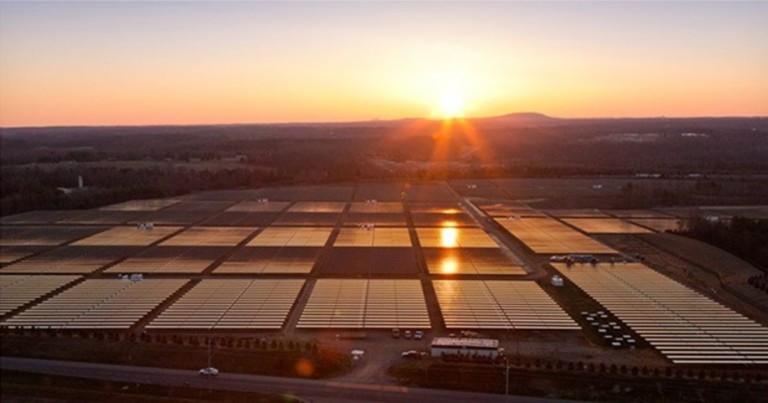
Duke Energy recently launched a new ‘Renewable Advantage Program that will allow customers to supplement their fossil fuel and nuclear energy use with renewable energy.

For $3 extra a month, residential and small business customers in North Carolina can increase the amount of renewable energy on the Duke Energy power grid. The monthly fee supports the generation of 250 kilowatt-hour (kWh) blocks of electricity from renewable energy resources. Customers may buy as many blocks as they wish. A typical residential customer uses roughly 1,000 kWh a month.

“More than half of Duke Energy’s generation in the Carolinas is carbon-free. But we know many customers want more,” said Stephen De May, Duke Energy’s North Carolina president. “Renewable Advantage gives them an easy option to customize their own energy mix.”

The $3 fee is used to buy renewable energy and is added to customers’ bills. The company projects Renewable Advantage will consist of 95% solar and 5% biomass. It’s estimated that 25% of the generation will come from North Carolina renewable energy facilities. Renewable Advantage will use the Green-e® certification program to track all purchases. Get more information about the program.

In addition, Duke Energy will donate 50 cents from every $3 block of energy purchased to NC GreenPower’s Solar+ Schools program.

NC GreenPower’s Solar+ Schools is open to all K-12 North Carolina schools and was introduced by the nonprofit in 2015 to support educational renewable energy projects in local communities. Each grant recipient receives a 5-kW array with a weather station, data monitoring equipment and a STEM curriculum package. As of the end of 2019, NC GreenPower has impacted nearly 26,000 students at 32 schools in 27 unique counties. In addition to the education benefits, Solar+ Schools provides approximately $700-$800 in annual electricity savings per school.

“We are now in the sixth year of our Solar+ Schools program, supporting 10 more schools in 2020. It’s been a true honor to see firsthand the positive impact the educational projects are having on the students. Without donor support, our program wouldn’t be able to provide this opportunity to schools in our state. We are so grateful for all of our contributors,” said Vicky McCann, vice president of NC GreenPower.

Duke Energy has a history of supporting the Solar+ Schools effort. In 2015-2016, a $300,000 grant from Duke Energy allowed eight schools in the state to install solar panels on school property. Read more.

Also, a similar Duke Energy program in North Carolina helps large customers accomplish renewable energy goals. UPM Raflatac’s manufacturing factory in Henderson County was the first manufacturing facility in North Carolina to match its entire energy usage with renewable energy. Read more.

About NC GreenPower

NC GreenPower’s mission is to expand public knowledge and acceptance of cleaner energy technologies to all North Carolinians through local, community-based initiatives. The nonprofit helps to connect consumers with renewable energy and carbon offset providers to create positive environmental and economic impacts for our state. All projects supported by the program are in North Carolina.

In 2015, NC GreenPower launched Solar+ Schools to support solar PV installations at K-12 schools. Since the program’s inception, NC GreenPower donors have supported more than 1,125 renewable energy and carbon offset projects, producing 1 billion kilowatt-hours of green energy and mitigating nearly 78,000 tons of greenhouse gases. Contributions to NC GreenPower are tax-deductible. For more information, visit www.ncgreenpower.org.

Governor Cooper Issues New Sweeping Order Requiring Face Masks For All NC Residents

0

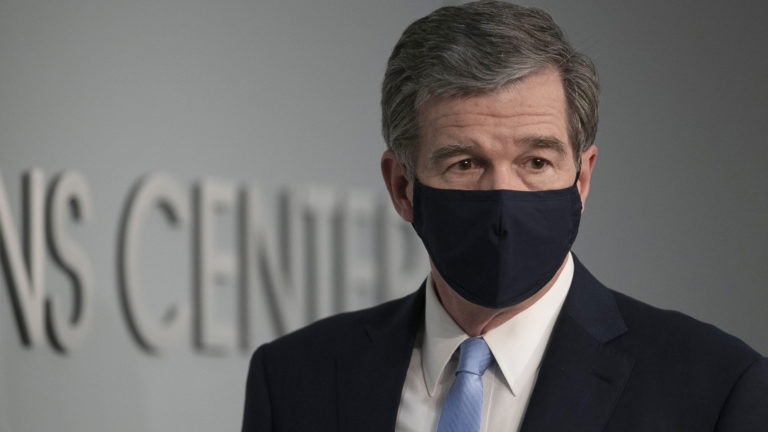
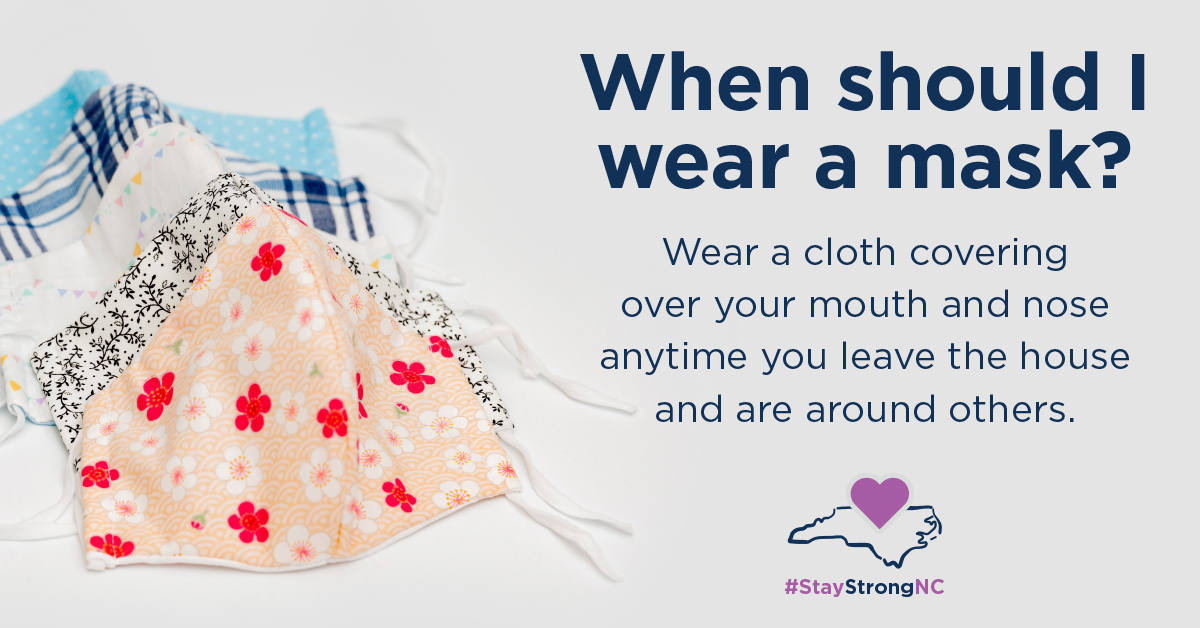
The Governor of North Carolina has just issued a new executive order that now requires everyone in the State of North Carolina to wear a face mask in public, in addition to extending all current restrictions under Phase 2 of the reopening plan for at least another 3 weeks.

The new order comes amid a continued rise in COVID-19 related cases, hospitalizations, and deaths:

According to Executive Order 147,

New Requirements to Wear Face Coverings.

  • “Face Covering” is defined as:
    1. A covering of the nose and mouth that is secured
      to the head with ties, straps, or loops over the ears or is simply wrapped around the
      lower face. A Face Covering can be made of a variety of synthetic and natural fabrics,
      including cotton, silk, or linen. Ideally, a Face Covering has two (2) or more layers. A
      Face Covering may be factory-made, sewn by hand, or can be improvised from
      household items such as scarfs, bandanas, t-shirts, sweatshirts, or towels. These Face
      Coverings are not intended for use by healthcare providers in the care of patients.
      “Surgical Mask” means American Society for Testing and Materials (“ASTM”) Level
      1, 2, or 3 approved procedural and surgical masks. An N95 respirator approved by the National Institute for Occupational Safety and Health (“NIOSH”) ( or a respirator from another country allowed by the Occupational Safety & Health Administration, the Food & Drug Administration, or the CDC) is not recommended for general public use or use in public settings, as it should be reserved for healthcare providers and other medical first responders in a health care setting. However, ifworn, these respirators would meet both the Face Covering and Surgical Mask requirements of this Executive Order. A face shield that covers the nose and mouth also meets the Face Covering requirements of this Executive Order.
  • Face Coverings are required in the following settings, whether they are inside or outside.
    1. In Retail Businesses. Retail Businesses must have all workers wear Face
      Coverings when they are or may be within six ( 6) feet of another person. In
      addition, Retail Businesses must have all customers wear Face Coverings when
      they are inside the establishment and may be within ( 6) feet of another person,
      unless the customer states that an exception applies.
    2. In Restaurants. Restaurants must have all workers wear Face Coverings when
      they are or may be within six ( 6) feet of another person. In addition, restaurants
      must have all customers wear Face Coverings when not at their table, unless the
      customer states that an exception applies.
    3. In Personal Care, Grooming, and Tattoo Businesses. Personal Care,
      Grooming, and Tattoo Businesses must have workers wear Face Coverings
      when they are or may be within six ( 6) feet of another person. In addition, the
      business must have all customers wear Face Coverings when they are inside the
      establishment and may be within six (6) feet of another person, unless the
      customer states that an exception applies. Customers may take off their Face
      Coverings ifthey are receiving a facial treatment, shave, or other services on a
      part ofthe head which the Face Covering covers or by which the Face Covering
      is secured.
    4. In Child Care Facilities, Day Camps, and Overnight Camps. Child care
      facilities, day camps, and overnight camps must have workers, all other adults,
      and children eleven (11) years or older on site wear Face Coverings when they
      are or may be within six ( 6) feet of another person.
    5. In State Government. State government agencies headed by members of the
      Governor’s Cabinet must have their on-site workers wear Face Coverings when
      they are or may be within six (6) feet of another person. Public-facing
      operations of state government agencies under the jurisdiction of the
      undersigned must also follow the requirements for Retail Businesses
      established in this Executive Order.
      All other state and local government agencies are strongly encouraged to adopt
      similar policies that require Face Coverings.
    6. In Transportation. All workers and riders on public or private transportation
      regulated by the State ofNorth Carolina, as well as all people in North Carolina
      airports, bus and train stations or stops, must wear Face Coverings when they
      are or may be within six ( 6) feet of another person. This provision does not
      apply to people traveling alone with household members or friends in their
      personal vehicles, but does apply to ride-shares, cabs, vans, and shuttles, even
      ifthe vehicles are privately owned.
      Notwithstanding the foregoing, no customer will be removed from or denied
      entry to public transportation for failure to wear a Face Covering.
    7. In Certain High-Density Occupational Settings Where Social Distancing is
      Difficult. Social distancing is inherently difficult where multiple workers are
      together in manufacturing settings, at construction sites, and in migrant farm,
      other farm, and agricultural settings. Therefore, in businesses or operations
      within North American Industry Classification System (NAICS) sectors 311 to
      339 (manufacturing), 236 to 238 (construction), and 111, 112, 1151, and 1152
      (agriculture), all workers must wear Face Coverings when they are or may be
      within six ( 6) feet of another person.
    8. In Meat or Poultry Processing Plants. All workers in any meat or poultry
      processing plant, packing plant, or slaughterhouse must wear Face Coverings
      when they are or may be within six (6) feet of another person, and those Face
      Coverings must be Surgical Masks, as long as Surgical Mask supplies are
      available.
    9. Long Term Care Facilities. All workers in Long Term Care (“LTC”)
      Facilities, including skilled nursing facilities (“SNF”), adult care homes
      (“ACH”), family care homes (“FCH”), mental health group homes, and
      intermediate care facilities for individuals with intellectual disabilities
      (“ICF-IID”), must wear Face Coverings while in the facility, and those Face
      Coverings must be Surgical Masks, as long as Surgical Mask supplies are
      available.
    10. Other Health Care Settings. Health care facilities other than L TC facilities
      must follow the Face Covering requirements in the CDC Infection Control
      Guidance for Healthcare Professionals about Coronavirus (COVID-19).

“As the leader of the state’s largest health system, I am pro-health and also 100 percent pro-business. In fact, the two are inextricably connected and I’m very proud of the way business leaders and health experts are working together to keep our economy strong,” said Eugene A. Woods, President and CEO of Atrium Health. “Medical science says to reduce the spread of COVID-19 masking works, and my sincere hope is that all the people of North Carolina can join forces to make wearing a mask not something we feel we have to do – but something that we want to do to keep each other, our neighbors, our children and our loved ones healthy and safe”

Businesses can download templates for signs on face coverings here.

You can read Executive Order No. 147 here.

You can also read Frequently Asked Questions about the order here.

What do you think about the new order? 

Mecklenburg and Union Counties Rank Among The Top 10 For Largest Tax Refund Checks

0

Tax Day has been moved to July 15th this year to accommodate filers impacted by the COVID-19 pandemic. To find the places where people are generating the largest average refund checks, SmartAsset has released a study analyzing tax refunds in North Carolina.
To determine the counties that received the highest average refunds, the study divided the total amount of money refunded by the IRS by the number of refunds given out to residents in each county.

For a more detailed look at how places in North Carolina compared, check out the table below.

Rank County Number of Taxpayers that Receive Refunds Average Tax Amount Refunded Number of Taxpayers that Owe Taxes Average Tax Amount Owed Taxes Refunded Index
1 Hoke, NC 17,530 $3,228 2,670 $2,847 45.99
2 Chatham, NC 23,020 $3,090 8,980 $7,004 41.68
3 Robeson, NC 40,550 $3,086 5,960 $3,243 41.55
4 Union, NC 72,960 $3,070 23,580 $6,446 41.07
5 Harnett, NC 42,280 $3,053 8,340 $3,308 40.53
6 Moore, NC 31,230 $3,003 10,460 $5,176 38.98
7 Cumberland, NC 116,800 $3,002 21,170 $3,563 38.95
8 Scotland, NC 11,140 $2,988 1,830 $3,910 38.51
9 Mecklenburg, NC 374,090 $2,982 116,130 $6,325 38.32
10 Vance, NC 15,330 $2,902 2,840 $3,220 35.83


For more details on the study, including our methodology and interactive map, check here: https://smartasset.com/taxes/tax-return-calculator#northcarolina/taxReturn

CMS Board Announces Plans To Rename All Schools Tied To The Confederacy and Racism

0

The CMS Board has just announced plans to rename all schools that were originally named after people who might be seen as glorifying “a racist, hateful and painful past”.

During yesterday’s virtual board meeting, CMS Superintendent Earnest Winston said; “we know changing the school’s name is largely symbolic, but it is an important step in the right direction,”

Here is the full meeting along with the statement to rename schools with names tied to the confederacy and racism:

Superintendent Winston noted that one of the first names to be changed is Z.B. Vance High School, which was originally named after Zebulon B. Vance, a North Carolina governor who owned slaves and who fought to preserve the institution of slavery and the rebellion of the confederate states.

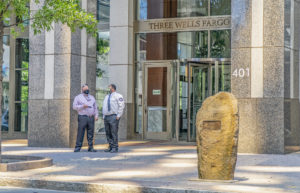
During the meeting, Winston noted that; “Vance owned slaves and as governor of North Carolina spoke out against and fought anti-discrimination laws and other protections for racial minorities. His is not the example we want to project for our students, families and staff.”

CMS staff will now be reviewing the names of all 175 schools in the district and will change any school “named after individuals who owned slaves or promoted slavery, expressed racist or bigoted views, actively fought against equality”.

What do you think about the decision?

Mecklenburg County Just Approved A New Rule To Require The Wearing of Face Masks

0

The Mecklenburg County Commissioners just approved a new rule to require the wearing of face masks in our county.


In yesterday’s meeting, Commissioner Trevor Fuller said, “my motion is that we adopt a rule today to require masks in Mecklenburg County to the extent of our legal authority.”

Fuller went on to clarify that the rule would specifically mandate that, “if you’re anywhere within our legal authority, you are required to wear a mask”.

The final vote was 7-2 to pass the motion. The details, scope, and exemptions will now be “quickly drafted” and emailed to the chairman to sign. Once he signs it, it will become an official rule in unincorporated parts of Mecklenburg County, and will be up to each city to sign into law for their jurisdiction.

You can watch the full discussion here:

What do you think about the new rule?

Casino and alcohol

0

If you play in a casino and drink during the process, it should not surprise you why all bank cards and electronic wallets are empty in the morning. And as the zero balance shows, the idea did not justify itself.


In this post, we will examine the consequences of excessive drinking and playing in a casino.

Why do players strive to combine gambling and alcohol?

It’s not the Lady Luck’s tricks, but the lack of adequate situation’s perception and the unequivocal advantage of the casino.

The main reason players like to drink during the game is that it is easier for them to relax and relieve nervous tension., playing in a casino is a flurry of emotions, and often you cannot control them. And when you are in a light intoxication, you’re up to pay through your nose.

Even a small dose of alcohol can cause a “loss”. When the player is uncontrolled to replenish the game account in Mr Bet online casino nz dollars and depart only when the funds run out. As a result, depression, spoiled mood, bitterness. Consistently doing this can be a sign of alcohol addiction or dependency.

We are not talking about everyone without exception, there are individuals who can afford to drink two glasses of whiskey and, having lost a small amount. Well, these are the players who control their game in the Syndicate casino online NZ. 

Conclusion

We do not recommend combining gambling and alcohol. You can relax and play in an online casino, but in this case, you need to take the most responsible approach to the game:

  • Leave free the amount you are definitely ready to lose.
  • If the option to limit yourself in finances is not for you, we recommend that you put restrictions on deposits in online casinos. Fortunately, such functionality is present.
  • Allow a certain time for the game and after it has passed, regardless of your balance, and quit playing.
  •  Remember, playing while intoxicated, you significantly increase your chances of losing, since it becomes harder or even impossible to control yourself and make adequate decisions.

Sahara Dust Storm Will Dim The Sun in Charlotte This Weekend

0

An epic dust storm is now heading our way from the heart of the Sahara Desert.

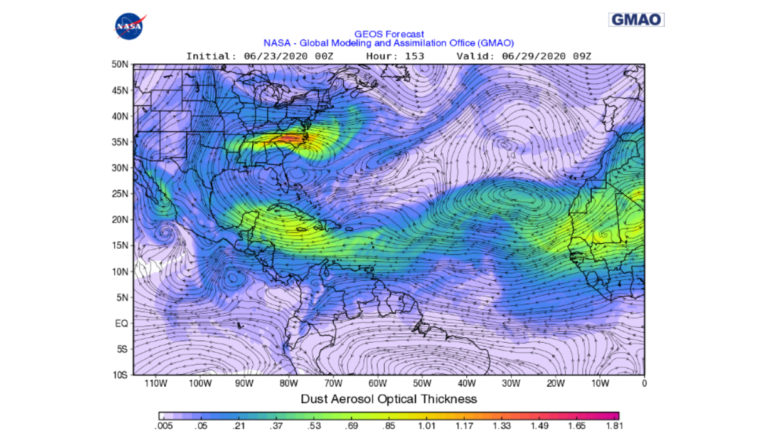
It’s officially being called the ‘Saharan Air Layer’ (SAL), a thick and dry plume of desert dust traveling across the Atlantic Ocean in the middle atmosphere.

According NASA’s Atmospheric Composition Model, the heart of the storm will be covering the Charlotte region this weekend. If trends hold up, it may be thick enough to dim the sun.

The heart of the storm just passed over Puerto Rico yesterday, here is what conditions looked like:

NC’s Juniper Level Botanic Garden Opening To The Public This Summer

0

“Gardening is booming in all parts of the country, and nurseries have struggled to keep up with the unprecedented and unexpected demand,” said global plantsman, Tony Avent, founder and proprietor of Juniper Level Botanic Garden and Plant Delights Nursery in Raleigh.

“Gardening is a huge pastime in America, but no one was prepared for this. Nurseries are propagating as fast as they can and shipping as quickly as they can. People have reconnected with the earth, and every plant that goes into the ground pulls carbon dioxide out of the atmosphere. That’s undoubtedly a good thing.
“I believe the bulk of the boom is coming from existing gardeners. However, at our open houses, we see a tremendous number of younger people, generations X, Y, and Z. They’re interested in connecting to nature and having a garden experience in a different way than their parents or grandparents, who were all about better living through chemicals. They’re learning to be more a part of nature, to garden more sustainably.
“Summer is an incredible time in the garden. At our open house, you’ll see a range of plants you’ve never seen. Many plants don’t emerge until mid-June, early July. People who don’t see the gardens in summer miss so many things. They miss many of our great native perennials in the Aster family – so many beautiful gold flowers.
“All the tropical-looking plants are at their peak in the summer months; the cannas, the elephant ears, so many of the aroids [love lilies], and all kinds of crazy things. These are at their peak in the garden, so we see a peak in sales of tropical-looking plants in the summer.
“Pollinators are also more active in the summer months; all the bees, the native bees, the honeybees, and the amazing wasps. Wasps are actually predators of many beetles, so you want them in your garden. Some gardeners are caught up in spraying every time they see an insect, but there are naturally balanced systems in place to take care of pests as long as your plants aren’t stressed. If you provide a sustainable environment, there is balance. When a pest arrives, another insect will take it out. The birds also dine on many problematic insects.
“Nature is fascinating, and there is no more active time than summer. Everything is fully at work. We invite you to bring your children to our open houses and teach your children; or, let us help you teach them. We have a full-time entomologist on staff to teach people about insects and how insects work in the garden. Maybe we can get away from the concept that bugs are bad – they are critical to our life and nature.
“In the summer, you’ll find a 25 to 30-degree difference just walking through sections of Juniper Level Botanic Garden. A garden is like a house. It has walls. It has ceilings. It has the floor. It has furniture, and it has decorations. But we often don’t think of the outside of our house like we do the inside. So, when you walk outside, if you have a ceiling, the trees, it’s going to be much cooler in there. Some plants love that baking sun, other plants like to have the filtered light of the tree canopy.
Juniper Level Botanic Garden

“Many people also think you cannot plant in the summer, which is simply not true. The establishment time for a plant is so much faster in the summer months, and the watering time for new plants is much shorter. If you plant in the winter, you can get by with infrequent waterings, but if you plant in summer, you need to water every day. But the tradeoff is that you only have to water for a week or so before the plant is fully established.

“Gardening is about diversity. Hopefully, we’ve learned that we, as a society, are better with diversity. Gardens are the same way; we want everyone to have an incredibly diverse garden. That way, the garden has something for all the pollinators and something for every season for people to enjoy. That’s what we hope to show people when they come to visit.
“It’s also important for human society to share plants; it’s critical that we not allow plants to go extinct. The rarer a plant is, the more it should be shared. We believe in getting plants where they will thrive and become abundant.
“We’ve joined forces with NC State University and JC Raulston Arboretum because we have the same mission. Secure the plants, study the plants, propagate the plants, and share the plants. It’s so important to our society. Every plant has a place, and every plant has a purpose,” said Tony Avent.
Juniper Level Botanic Garden in Raleigh is a $7.5-million gift to North Carolina State University from Tony and Anita Avent. To contribute to the university’s endowment fund to maintain and open the garden year-round and in perpetuity for the public, click here.

Fundraising efforts for Juniper Level Botanic Garden in conjunction with JC Raulston Arboretum, operate under the auspices of The Endowment Fund of NC State University, a 501(c)3 non-profit, tax ID 56-6000756. Donors will receive an official receipt for contributions to the fund.