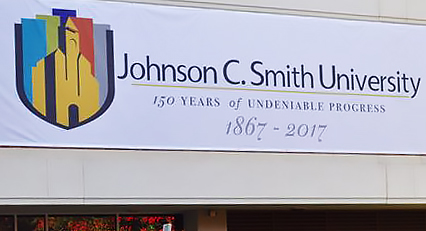
Johnson C. Smith University named top 25 HBCU

0

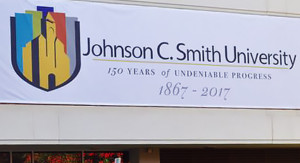
Johnson C. Smith University is recognized as a top 25 HBCU in higher education according to new data released from College Raptor. According to the site, out of the 100s of HBCUs in America, JCSU is one of the strongest institutions of the bunch.

“Since 2015, we’ve carefully assembled our lists each year to highlight the best schools in different categories to help families get started in the discovery process,” said Bill Staib, College Raptor’s CEO. “JCSU has shown dedication to academic excellence. We are proud to highlight them.”

This selection recognizes JCSU as a leading institution in the country based on a combination of factors including the University’s graduation rates, campus diversity, endowment per student, and other key metrics as reported via the National Center for Education Statistics (NCES) for the most recently available enrollment year.

The news comes just weeks after Johnson C. Smith University was named the best small college for job placement in North Carolina.

North Carolina Becomes The First State to Vote as Absentee Ballots Are Sent Out

0

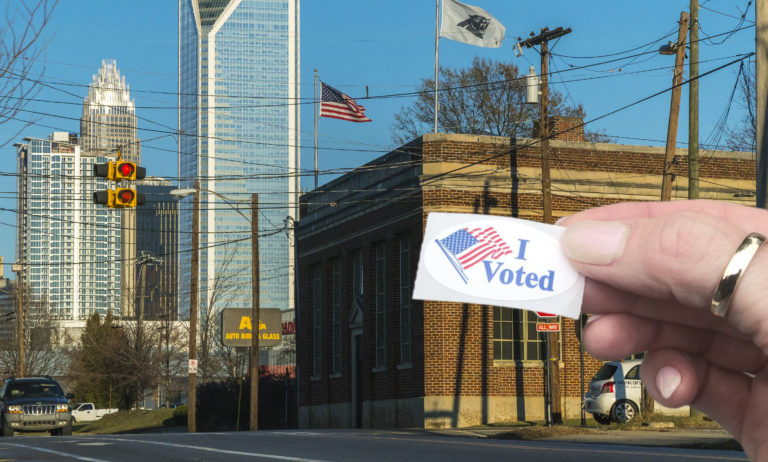
Today, North Carolina becomes the first state to vote as absentee ballots begin to be sent out. North Carolina offers three safe and convenient ways to vote. A voter can vote early in person, vote-by-mail, or vote at their precinct on Election Day (election officials are reminding residents to only choose 1 option to vote to reduce longer lines for everyone).

“A record number of North Carolinians have requested to vote by mail,” said Governor Roy Cooper. “Voting by mail, voting early in person, and voting on November 3rd are all convenient and easy options. Make sure you, your neighbors, family, and friends have a voting plan.”

“Voting is the most powerful way to enact change,” said Attorney General Josh Stein “Our state is the first in the nation to start making that change, mailing out absentee ballots on September 4th. Every eligible voter in North Carolina can request a mail-in absentee ballot, take advantage of 17 days of early voting in October, including weekends, or vote on November 3. What’s most important is that you have a plan to vote.”

You can find out more information about voting or request your absentee ballot online on North Carolina’s State Board of Elections website here.

CMPD Offering $25,000 Reward For Info Related To The Killing Of A Deputy’s Son

0

CMPD has just announced a reward up to $25,000 for anyone who can provide information that leads to the capture of the person responsible for killing a Cabarrus County Deputy’s son in Charlotte.

According to police, an armed individual shot 19-year-old Nathaniel Isenhour in the parking lot of University City’s Harris Teeter on November 25th, 2019 at around 9:55 pm. Isenhour was pronounced dead the next morning while in the hospital.

The reward has been $5,000, but during yesterday’s press conference, police announced that they had received an additional $20,000 in private donations and have thus increased the reward to $25,000.

“His family needs closure, his family needs answers and his family wants justice. There is a killer walking the streets right now that deserves to be held accountable,” said a CMPD official.

Police have released footage from the Harris Teeter parking lot showing what is believed to be the vehicle driven by the killer. It has some right front-end damage and a rear tail light out.

If you have any information about this killing, please call CMPD at 704-432-TIPS or Crime Stoppers at 704-334-1600.

Does the political affiliation of North Carolina dictate its economic performance?

0

It is clear that the economy of North Carolina is doing exceptionally well. They were named the state with the best economy in 2018 by Forbes Magazine for the second year straight. Financial experts have constantly discussed whether a state’s development is as a result of administrative interference, economic boom, or the state legislature. Credit for North Carolina’s economic growth won’t be relegated yet. North Carolina’s Republican chiefs gloat about how their tax cut strategies have fueled North Carolina’s ongoing financial development. Yet, what amount of that is a political turn, and what amount has North Carolina profited by the public recovery? 

President Donald Trump frequently discusses the flourishing economy of the state as an advantage of his administration, and the convention in Greenville was as a matter of fact not any different. Trump may have focused his opinion solely on the fact that NC’s GDP in 2018 skyrocketed to $565.8 billion, the state’s GDP got higher than that of the previous year. However, the GDP of a state or country is often linked with the population growth and economic patterns that guarantee repetition. Specialists pointed out that the best approach in ascertaining a state’s GDP is to rationalize its development after some time, not just the aggregate. This is on the grounds that the technique represents population development and positive development patterns in the economy. 

An examination was made about the achievement of North Carolina’s economy over a time frame between 1988-2017 which throws light over North Carolina’s recovery, saying it has been a moderately slow one. It was discovered that during the 29-year time frame of the six instances of financial development, the lowest was between 2010-2017. During this period, the Republican council drove force for open strategy in Raleigh, pushing through cutting regulations, tax cuts, as well as governmental shrink attempts. In contrast with the rest of the country, reports show that North Carolina failed to meet expectations in five of the six developmental measures during this time. This would propose that Republican allegations about North Carolina’s recuperation are exaggerated.

In 2018, North Carolina’s GDP is reported to have developed at a rate of 2.9%. Despite the fact that GDP growth is viewed as the norm for estimating the economy, there are different approaches to measure the economy that could have widely regarded Trump’s position in the matter. Given the fact of the economy’s growth, many US residents who encountered difficulties in starting a journey on the forex markets checked out Canada where they could source regulated Canadian forex brokers to trade with. In 2018, the insights for poverty in North Carolina was not yet delivered, yet in 2017, a total of 14.7% of them ranked lower than the poverty line, with the amounts anticipated to continue falling in a pattern for 2018. There’s no doubt that this is an improvement from previous years whereby, in 2012, the poverty levels rose to 18%. Notwithstanding, it isn’t yet the most reduced rate throughout the existence of the state in the mid-1980s, that had reached 12% per the UNC School of Law statistics. 

Taking into consideration the statistics of the states with huge development in GDP rates last year,  it is difficult to make any determinations from their governmental issues or policies. As per the US Authority of Economic Analysis, the states that were experiencing economic growth rates were Arizona, Colorado, Washington, Nevada, California, and Utah. Of these, three are led by Democratic representatives and three have Republican lead representatives. North Carolina was ranked fifteenth together with South Carolina and Michigan on GDP growth rate. North Carolina financially develops quicker compared to the various states during periods of recession, yet in addition, its economy drops faster during downturns. As such, the economy of the state produces more fluctuating swings than various states. At the end of the day, even as North Carolina’s economy recuperated, a great number of individuals who once held conventional white-collar jobs are currently selling burgers, which contends for North Carolina to improve employee education, apprenticeships, training, and comparative projects. 

Democrats were very effective in North Carolina in 2008. Since Jimmy Carter, Barack Obama was the principal Democratic presidential candidate to convey the state, however, Democrats quickly lost their position in the race to win North Carolina. Evaluation by residents showed that the North Carolina economy was worse off than normal. Although there is still a positive trust in the state’s economy, its positions are far lower than the normal growth list score for all states. Yet, given their harsh evaluations of the state’s economy, numerous voters might be considering financial issues as opposed to the bigger political messages to get their vote.It is reported that evaluating how the economy is performing by most political models, voters use a pattern that would give false expectations of things to come, leaving the economy defenceless against control by eager to politician hungry for votes.

How The Vancouver, BC Real Estate Market Is Doing Today

0

All across the globe, industries and economies are still trying to recover from the devastating effects of the Coronavirus pandemic. Governments’ lockdown measures to curtail the spread of the novel virus have severely impacted all sectors of the economy. While some industries are already fast recovering from the setbacks, it’s not very easy for some as they’re still trying to stabilize and slowly make their way back up.

One of the industries that have been affected by COVID-19 pandemic is the real estate market. For many people in Vancouver, BC, the big question on their minds is, “How is the Vancouver real estate market today?” 

Some people who intend to list their homes for sale are having second thoughts because they don’t know how well and fast it’ll sell. 

This article provides all the necessary information about the state of the real estate market in Vancouver, BC, and help you make an informed decision if you’re looking to invest in the real estate market.

The Real Estate Market In Vancouver, BC Is Stable And Booming

The COVID-19 pandemic has affected various sectors of the economy in Vancouver, BC, in many ways. Still, the real estate market has remained stable despite the recession triggered by the pandemic. Even though the unemployment rate in Vancouver, BC is currently at 13 percent, with a 7.8 percent forecast GDP reduction in 2020. Nonetheless, the prices of homes in Vancouver has remained stable. 

As of July 2020, Vancouver home sales prices rose about 28% as home buyers took advantage of the decrease in interest rate. The average cost for most of the residential properties in Metro Vancouver has gone up by 2.9 percent compared with May 2019. In July 2020, the buyers purchased 3,128 homes in the Vancouver Metro area, which is higher than the 2,443 houses sold in June.

Central 1 deputy chief economist Bryan Yu said that home prices in Vancouver BC have stayed stable because lesser properties are available for sale. According to him, the people who are most affected by the economic recession triggered by the pandemic aren’t key players in the Vancouver real estate market. 

Even though there’s evidence that the prices of rentals have declined from February to April, Bryan Yu said that the ownership market has remained unchanged and that the prices can still go higher. This statement has proven true to an extent, because, by August 2020, the Vancouver real estate market experienced a boom as home prices rose, hitting a benchmark of $1,031,400.8.

Although there was an initial decline in March and April, July marked the third month in which the Canadian real estate market has recorded a new record high as home sales increased to 15% and 30 percent year on year increases.

Residents in Vancouver are still seeing the benefits of investing in real estate because properties listed for sale only stay for an average of 17 to 20 days in the market, and this number is quite encouraging considering the number of job losses and other economic changes triggered by the COVID-19 pandemic. 

However, there are many factors to consider if you’re in Vancouver, and you’re looking to sell or buy a property in this COVID-19 period. It’s always better to seek the help of a real estate agent local to Vancouver to get you fully equipped with the necessary information you need for the buying or selling process. The agent will also thoroughly explain details of the possible outcome so that you don’t make the wrong choice.

In general, the Vancouver real estate market is recording an increase in demand for homes. It has also recorded historical lows in housing inventory due to the rise in the need for homes. It’s presumed that this growth in demand is a result of the current record-low mortgage rates. The mortgage stress test has also been made more flexible than ever before, making it easier for buyers to buy more expensive homes.

The Real Estate Market In Vancouver BC Is Experiencing A Change In Demand

The COVID-19 pandemic has changed the way people buy and sell houses in Vancouver. Although the prices of homes in Vancouver have remained stable, the priorities in the facilities that people are searching for are currently changing due to the personal safety measures that have been introduced to curtail the spread of the Coronavirus. This means that people looking to buy a house are now more concerned about how wide the rooms are. They have a newfound interested in houses that have enough space to practice the physical distancing guidelines at home. 

Also, there’s a noticeable increase in the demand for houses that allow guests to use the toilet without necessarily intruding into the master’s bedroom than the demand for homes without a powder room. 

Another factor that has greatly affected the type of residential houses and condominiums currently in demand is that most people now have to work from home due to the COVID 19 social distancing guidelines. As a result, buyers are looking for apartments with creative designs that they can easily convert into an office to allow them to work from home. 

Safety is now the number one priority in the minds of people who are looking to buy a home. As such, there has been a sharp decline in open houses because both buyers and sellers aren’t so eager to come in close contact with each other because of the physical distancing guidelines. 

Open houses are essential in real estate business because it helps generate interest in a property, without open houses, there’ll be a significant decline in the number and prices of houses sold. This is why some real estate agents have come up with different ideas on how to hold open houses without necessarily jeopardizing the health of both the buyers and sellers.

Sheila O’Brien, the O’Brien Group’s co-founder, said that she and her team have been conducting virtual open houses and doing live streams on Facebook. They record Livestream tours of the property and real estate agents, and even members of the public can join the live stream and ask questions about the property in question. 

To reduce public health risks attached to the traditional open houses, home buyers and many real estate agents have shifted to virtual and online means of holding open houses. Agents have also resulted in booking appointments for only those who’ve shown a high level of interest in the property to view the property in person.

Increase In Prices Of Residential Properties

The prices of all residential properties in Vancouver have gone up by a 4.4% year over year increase in the first quarter of 2020. A recent index from Realtor.com indicates that home prices and the demand for houses have increased above the January pre-COVID-19 period. Meanwhile, the market recovery index also suggests that the real estate market is on the path of recovery from the setbacks initiated by the COVID 19 pandemic. The demand for houses is currently above baseline levels according to the recent reports from the Mortgage Bankers Association.

Javier Vivas of Realtor.com said homebuyers’ interests recovered quickly from COVID 19 setbacks and has remained high despite the weaker economic environment. Factors such as low mortgage rates, virtual tools, and the lift of lockdown have enabled home buyers to continue the home search process, although often with adaptations. According to him, housing has remained an essential good, and this activity has shown that the real estate market can remain fairly active even during recession periods.

Daniel Hale, an economist at Realtor.com, has also said that home prices could go even higher if there’s no significant increase in supply. Contrary to the popular notion that the COVID-19 period isn’t the best time to sell a home because of the economic uncertainties and social unrest triggered by the pandemic, home prices are back to their pre COVID pace, and home listings are currently spending lesser time in the market.

Vancouver Rental Trends In August 2020

During the first few months of the Coronavirus pandemic, when governments put lockdown measures in place to reduce the spread of the virus, the short-term rental markets in Vancouver, BC, suffered a decline because fewer tourists were coming in as a result of the travel restrictions. Since Vancouver is a famous tourist city, the reduction in the number of tourists coming into the city caused a slow down in the short-term rental market.

Sales of condominiums were also relatively low because people who often buy condominiums are immigrants, newly wedded couples, and individual investors who buy to rent the units out to students. Since schools were closed due to the pandemic, there was a significant decrease in the demands for condominiums.

In the past few months, however, the benchmark prices for homes have accelerated as the lockdown restrictions have been lifted. Condo listings have risen significantly in August. The average rent for furnished one-bedroom apartments in Greater Vancouver has increased by 27.4% as of August 2020.

Although the furnished rental market, which is typically short-term rentals, experienced a decrease in demand in the previous months, the demand has gone up this month. This increase could be because people are now looking to buy these rentals for safety reasons or to quarantine. It could also be because the immigration restrictions are being lifted, and tourists are coming into Vancouver once more.

Vancouver Housing Prices as of August 2020

Prices Now       One Year Ago

  • 2 Beds. $1.8M+4% $1.3M
  • 3 Beds. $2.1M-6%.          $2.2M
  • 4Beds. $2.1M-3%.   $2.2M
  • 5Beds. $2.6M+19% $2 1M
  • 6Beds. $2.8M+13% $2.5M

House Listing Stata as At August 2020

No. Of Beds New Listings Active Listings 

  2 Beds       12        30

  3 Beds       52       94

  4 Beds       97       232

  5 Beds     102       277

  6Beds       87       227

Home Prices According To Cities

City Average Price

  • Anymore: $2.4M
  • Bowen Island: $1.7M
  • Burnaby: $943K
  • Coquitlam: $831K
  • Delta: $991K
  • Langley: $771K
  • Lions Bay: $2.4M
  • Maple Ridge: $745K
  • New Westminster: $768K
  • North Vancouver: $1.2M 
  • Pit Meadows: $729K
  • Port Moody: $855K
  • Port Coquitlam: $706k
  • Richmond: $972K
  • Surrey: $875K
  • Tsawwassen: $777K
  • Vancouver: $1.4M
  • West Vancouver: $4.3M
  • White Rock: $808K

The above data reveals that the Canadian real estate market is currently one of the best real estate markets in the U.S. and the world at large. It has appealed to both domestic and international buyers because of low-interest rates. According to the Real Estate Board of Greater Vancouver, there has been a 28% increase in the sales of residential homes in July 2020 with a total of 3,128 homes sold, which is 28% higher than home sales in June and 22.3% higher than the home sales recorded in July 2019.

The board indicated an increase in competition and upward pressure on Vancouver’s home prices due to the low-interest rates and limited overall supply. In a news release, Colette Gerber, the Chair of the Real Estate Board of Greater Vancouver (REBGV), said that the increase results from pent-up activities from both the home buyers and sellers accumulating through the year. 

Are There Risk Factors To Look Out For?

Even though the real estate market in Vancouver, BC, is currently booming, there are possible risk factors that can negatively affect the market. Some of these include:

  • The ongoing efforts by the government to contain the spread of the COVID 19 pandemic in Vancouver, BC.
  • How efficiently the U.S. government is handling the pandemic because exports south of the border contribute to the Canadian economy.
  • How the real estate market will be affected once the mortgage payment deferral program expires. 

Conclusion

The real estate market in Vancouver, BC, experienced a decline in the first quarter of the year due to the COVID-19 pandemic. However, there has been a sharp increase in demand from May through July. Home sales across Vancouver have reached levels that are far above what’s usually recorded in July as the residential home sales in July totaled 3,128, which is a 22.3% increase from residential home sales in July 2019. 

Now might be the best time to buy a property in Vancouver because of the decrease in the interest rates and the mortgage payment deferral program currently in place. However, there are several risk factors to consider before buying a home in this COVID 19 period. You should seek the help of expert realtors before making any decisions.

Petition To Replace SC Confederate Monument With Chadwick Boseman Now Going Viral

0

Tens of thousands are now flooding the internet with a new petition to replace a confederate monument in South Carolina with a monument to legendary actor Chadwick Boseman, who tragically died at the age of 43 from cancer this past Friday.

Boseman was born and raised in Anderson, SC and “spent his life uplifting the stories of Black Americans both real and fictional.” He’s best known for portraying inspirational historical figures including James Brown, Jackie Robinson, and Thurgood Marshall, and most recently his award-winning portrayal of fictional Wakanda King T’Challa in the movie “Black Panther”. He’s also invested heavily in dozens of charities around Anderson and regularly spoke at his Alma Mater, Howard University.

confederate statue in anderson sc

The confederate statue the petition seeks to replace (and relocate it to a local museum) stands in front of the Anderson County Courthouse. It was erected in 1902 with the inscription, “The World shall yet decide, in Truth’s clear, far-off light, that the soldiers who wore the gray, and died with Lee, were in the right.”

It has been the stage for many protests and confederate rallies over the past few years.

Over 63,000 people have now signed the petition and 54,000 people signed another similar petition as of Thursday afternoon.

Some of the most popular comments on the petition include:

“The statue in downtown Anderson is a hateful disgrace to our loving community. Chadwick Boseman would be a perfect replacement monument because he represents Anderson’s core values.” – Alexandria Bagwell

“I lived in Anderson for 4 years, during which Black Panther showed in theaters. Boseman did more to unite people in Anderson than any Confederate solider could have done in a lifetime. One stands for divide, the other brought unity. Ultimately, unity is what we should be aiming for.” – Molly Holcombe

“Chadwick Boseman was a true Anderson hero. He made me proud of my hometown and inspired me always pursue my wildest dreams. This is the very least we can do to honor him.” – Erin Speed

What do you think about the idea?

President Trump Encourages North Carolinians To Vote Twice

0

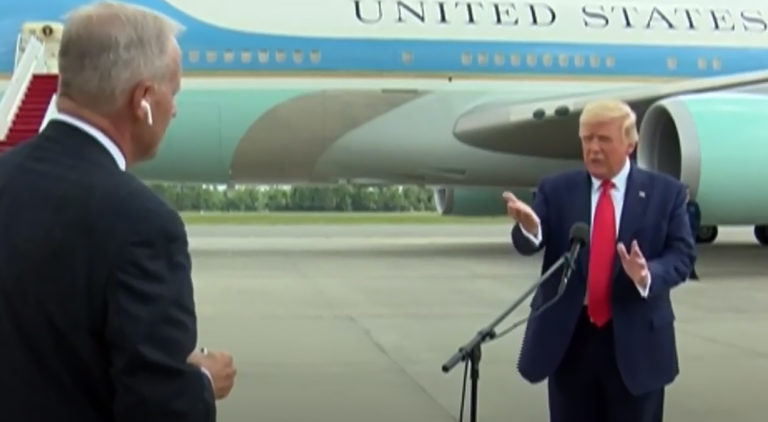
Yesterday afternoon, when President Trump was visiting the North Carolina city of Wilmington, he made several statements which seem to encourage North Carolinians to vote by mail-in ballot, and then show up to the polls and try to vote a second time.

“Let them send it in and let them go vote, and if their system is as good as they say it is, then obviously they won’t be able to vote,” Trump said. “If it isn’t tabulated [yet], they’ll be able to vote [a second time]” 

If you do send in a mail-in ballot and vote again in person before your mail-in ballot is tallied (intentionally voting twice), you will have committed a class 1 felony in North Carolina.

Yesterday, Wolf Blitzer asked Attorney General William Barr about the president’s comments, here is what he had to say:

This morning, the N.C. State Board of Elections sent out a press release stating that it is indeed a felony to send in a mail-in ballot and also vote in person.

What do you think about the president’s comments?

“The two disabilities I have don’t stop me” – The Inspiring Story of North Carolina’s Noah Long

0
Born completely blind and with cerebral palsy 27 years ago, North Carolina native Noah Long is an inspiring role model – living independently, tech-savvy, well-spoken, and employed. “Noah is the most positive person I know,” said his father, David Long.
“At the age of 15, titanium rods were implanted on both sides of his spine from his neck to his hips,” said Noah’s grandmother, Joy Boyette. “After enduring multiple other surgeries, this was the only time I saw him cry.”
“My mother, she’s the one who mainly advocated for me when I was young,” said Noah. “But my grandparents, they’re the ones who pushed me, especially my grandfather.”

“Technology has been a big factor and equalizer in helping Noah cope with his blindness,” said grandfather, Bruno Toffolo. “If asked, he would probably tell you his only handicap might be his cerebral palsy which affects his mobility and ability to do some tasks as he’d like.”
“The technology exposure I received from Governor Morehead School was central to moving forward,” said Noah. “They’ve put in digital learning platforms and have an IT consultant. Public schools weren’t exposing me to the new equipment we now have. The school is crucial to the visually impaired population with a core curriculum designed to teach blind students the skills they need to be independent and on their own.
“Governor Morehead School helped me with socialization, advocating for myself, training in mobility, occupational therapy, and physical therapy. I could easily relate to the other students, knowing that we have the same kind of visual-based disability. Class sizes are smaller, and this means more time can be spent with each student learning what he or she needs.”
Gifted with a great voice, Noah served as a receptionist while attending Governor Morehead School, and worked with Triangle Radio Reading Service on a variety of collaborations with the school. “The original goal was to create an opportunity for students to do a radio broadcast, which later evolved into an actual course. I believe the program is now in its sixth year,” said Noah.
“I am now happily employed by Easterseals United Cerebral Palsy. I’m responsible for answering phones, uploading documents to our residential service, creating consent forms in Microsoft Word, as well as using Microsoft Excel for tasks assigned by supervisors.”


“The people I work with are amazed at the capabilities I have with technology and the fact that I can do the work. Once we got my software installed onto my PC, they were like, “Whoa! He can take off.” They saw my work in Excel. They didn’t know a blind person could use Excel. I’ve been showing them the equipment that I use to read in braille what they’re seeing on the computer screen.”
“Noah has a great attitude,” said Luanne Welch, President and CEO of Easterseals UCP NC & VA. “He has a passion for learning new things, and his big personality helps him connect with others and do his job well. I am truly inspired by Noah’s journey – personal and professional – and excited for his future. He’s an asset to any team, and I have no doubt he will achieve his career and life goals.”
“My plan is to keep my job with Easterseals UCP,” said Noah. “I work three days per week. Once I got this job, I was just happy. I don’t want to sit at home every day. Being a social butterfly, I hate to be socially isolated. You know what I’m saying?
“I know I have physical limitations, but my primary gift is my voice. In addition to Easterseals UCP, I’m hoping to connect with someone in the voiceover industry who can provide some guidance. I have the software and recording equipment at home and can easily send voice recordings to clients to put into their systems.”
“Noah’s dream job is to work in radio doing voice-overs,” said Casey Corder, Program Manager for Easterseals UCP. “This would be a perfect job for him because he has the perfect radio voice.”
“Outside of work, my goal is to find that special person to share my life with,” said Noah.
“As Noah’s mom, I hope he finds that special someone,” said Lamarr Scott. “No one knows what life has in store for them, but for Noah, he is forging his own path and not letting anything get in his way.”
“The two disabilities I have don’t stop me,” said Noah. “I’m up for any challenge. I’m very tech-savvy and able to easily help people when things go wrong with a computer. Another strength I have is teaching various technologies for the blind and visually impaired.
“A lot of companies don’t know how, and feel like they can’t accommodate someone with blindness and cerebral palsy. The best advice I can give to people with disabilities is to keep trying. Don’t give up.”

Muggsy Bogues Foundation to Hosting Massive Labor of Love Labor Day Giveaway

0

The Muggsy Bogues Family Foundation (MBFF) is proud to announce it will partner with Charlotte nonprofits Goodwill Industries, Charlotte Rescue Mission’s Dove Nest program, Pineville Neighbors Place, Good Friends and The Harvest Center of Charlotte to provide 18 families with healthy, home-cooked meals and job assistance as part of a Labor of Love Labor Day Giveaway on Monday, Sept. 7.


In addition to hearty meals prepared by Chef Kim Bogues for approximately 70 people, MBFF will provide local families with gift cards for gas and additional needs such as school supplies, as well as inspirational books for school-aged children with a motivational note from Santasia, a 2019 MBFF scholarship award winner.

“Significant change begins in our individual communities and during these unprecedented times, it has never been more critical to lend a helping hand,” Muggsy Bogues said. “We are thrilled to assist local families in the Charlotte area this Labor Day through good food, job assistance and inspiration through literature and impactful conversation.”

MBFF will team up with Central Piedmont Community College and GoodWorks to help bridge the gap to employment with important tools such as resume building and assistance in their job search.

In addition, MBFF recently announced a partnership with Central Piedmont Community College (CPCC) to distribute scholarships to support vocational education as well as a newly engaged partnership with the Transition and College Access Center (TCAC), part of the NYC Department of Education dedicated to supporting students and their families with Early Intervention Programs (EIPs) through the transition from school to adult life. Students who will receive support are high school students with some type of special need.

South Carolina Now Has The 5th Fastest Recovering Unemployment Numbers

0

Despite the fact that the U.S. is still firmly in the grip of the COVID-19 pandemic, new unemployment claims decreased week-over-week on August 24, and were 87% below the peak during the COVID-19 pandemic. To help add some context to these statistics, WalletHub just released updated rankings for the States Whose Weekly Unemployment Claims Are Recovering the Quickest.

To identify which states’ workforces are experiencing the quickest recovery from COVID-19, the site compared the 50 states and the District of Columbia across three metrics based on changes in unemployment claims.

South Carolina came in at #5 since last week and North Carolina came in at #34 since last week.

States Whose Unemployment Claims Are Recovering the Quickest

State Recovered Most Since Last Week Recovered Most Since Start of COVID-19 Crisis
Oregon 1 2
Pennsylvania 2 6
Connecticut 3 1
West Virginia 4 18
South Carolina 5 39
Illinois 6 5
Maine 7 41
New Jersey 8 3
Maryland 9 27
Wisconsin 10 8
Nebraska 11 25
Wyoming 12 10
Delaware 13 20
Vermont 14 4
Michigan 15 36
Utah 16 15
North Dakota 17 30
Arkansas 18 11
Iowa 19 7
Missouri 20 21
Oklahoma 21 48
Alabama 22 32
Ohio 23 26
New York 24 19
District of Columbia 25 29
Colorado 26 37
Minnesota 27 38
Washington 28 34
Massachusetts 29 22
Idaho 30 16
Mississippi 31 40
South Dakota 32 42
Montana 33 13
North Carolina 34 43
Arizona 35 9
Nevada 36 31
Indiana 37 44
Rhode Island 38 14
Texas 39 23
Virginia 40 47
New Hampshire 41 49
Tennessee 42 35
Hawaii 43 28
Alaska 44 17
New Mexico 45 33
California 46 12
Kentucky 47 46
Kansas 48 24
Florida 49 50
Georgia 50 51
Louisiana 51 45

Rank 1 = Most Recovered

Detailed Findings

State Change in Unemployment Claims (Latest Week vs. Last Year)* Change in Unemployment Claims (Latest Week vs Start of 2020)** Change in Unemployment Claims (Since Start of COVID-19 Crisis vs. Last Year)***
Oregon 55.44% -26.12% 660.90%
Pennsylvania 115.73% -11.60% 815.65%
Connecticut 145.29% -31.09% 660.35%
West Virginia 126.59% 18.22% 1001.30%
South Carolina 168.54% -32.82% 1441.20%
Illinois 117.18% 104.74% 801.67%
Maine 199.23% -30.19% 1578.25%
New Jersey 171.00% 25.61% 694.64%
Maryland 160.29% 64.14% 1178.05%
Wisconsin 223.74% -4.62% 836.50%
Nebraska 163.88% 112.74% 1137.77%
Wyoming 230.60% 15.86% 854.28%
Delaware 213.71% 59.54% 1012.88%
Vermont 244.88% 3.97% 798.70%
Michigan 247.07% 14.39% 1347.69%
Utah 217.05% 71.48% 989.25%
North Dakota 262.34% 3.59% 1197.94%
Arkansas 225.52% 83.73% 869.87%
Iowa 260.49% 39.05% 830.80%
Missouri 274.59% 24.24% 1021.41%
Oklahoma 259.90% 74.14% 2011.84%
Alabama 266.28% 63.63% 1251.67%
Ohio 273.23% 63.57% 1166.17%
New York 319.13% 41.27% 1002.03%
District of Columbia 244.50% 180.04% 1180.27%
Colorado 284.37% 138.75% 1372.65%
Minnesota 364.17% 41.04% 1407.62%
Washington 330.74% 112.45% 1271.43%
Massachusetts 348.55% 90.77% 1030.17%
Idaho 395.57% 17.31% 998.15%
Mississippi 278.33% 237.86% 1473.91%
South Dakota 386.89% 49.25% 1583.84%
Montana 397.92% 54.02% 890.92%
North Carolina 305.66% 251.65% 1793.40%
Arizona 273.41% 331.83% 853.90%
Nevada 317.92% 350.04% 1205.37%
Indiana 444.87% 143.19% 1804.68%
Rhode Island 486.22% 83.42% 913.30%
Texas 335.00% 358.96% 1050.99%
Virginia 424.72% 264.90% 1941.48%
New Hampshire 471.39% 209.71% 2240.55%
Tennessee 441.87% 290.24% 1327.28%
Hawaii 551.51% 277.70% 1179.67%
Alaska 533.72% 340.57% 1001.09%
New Mexico 533.90% 417.27% 1258.48%
California 589.43% 545.08% 871.97%
Kentucky 779.21% 212.95% 1884.48%
Kansas 624.93% 677.71% 1122.65%
Florida 596.69% 751.78% 2380.64%
Georgia 952.70% 196.00% 3120.51%
Louisiana 676.98% 781.48% 1843.87%

*Refers to the change in the number of unemployment insurance initial claims in the week of August 24, 2020 compared to the week of August 26, 2019.
**Refers to the change in the number of unemployment insurance initial claims in the week of August 24, 2020 compared to the week of January 1, 2020.
***Refers to the change in the number of unemployment insurance initial claims between the weeks of March 16, 2020 to August 24, 2020 compared to the weeks of March 18, 2019 to August 26, 2019.