Warning Signs Your Electric Gate Is About to Fail (And What to Do About It)

0

Electric gates are one of those things homeowners rarely think about until something goes wrong. You press the button, the gate opens, life carries on. But like any mechanical or electrical system, these gates are constantly under pressure, and signs of wear tend to show up long before a full breakdown occurs.

Catching problems early is always cheaper and less stressful than dealing with a gate that refuses to open at 7 am when you are already running late. Here is what to watch for.

The gate moves slower than usual

Speed changes are one of the earliest indicators that something is off. If your gate used to swing open in a few seconds and now takes noticeably longer, the motor could be struggling. This can be caused by a failing motor, low battery backup, worn gears, or even debris caught in the track. Do not dismiss sluggish movement as normal ageing. It is your gate telling you something needs attention.

Unusual noises during operation

A well-maintained electric gate operates with minimal noise. Grinding, scraping, clicking, or loud humming sounds during opening or closing are red flags. These noises often point to issues with the motor bearings, loose hardware, or a track that needs lubrication and cleaning. Left unchecked, what starts as a minor sound problem can escalate into a motor replacement job.

Intermittent operation

If your gate opens fine one day and then refuses to respond the next, the issue is likely electrical rather than mechanical. Faulty wiring connections, a damaged control board, or a receiver struggling to pick up signals from your remote are all common culprits. Intermittent faults are notoriously frustrating because they can be hard to reproduce, but they rarely resolve themselves.

The gate reverses mid-cycle

Modern electric gates have safety sensors designed to detect obstructions. If your gate starts closing and then suddenly reverses without anything being in the way, those sensors could be misaligned or dirty. It can also indicate a problem with the limit switches, which tell the gate when it has reached its fully open or closed position. This is worth sorting quickly since a gate that behaves unpredictably is both a security and a safety risk.

Visible physical damage

Rust, bent rails, cracked hinges, and damaged gate panels are not just cosmetic concerns. Physical damage affects how the gate sits on its track and how much strain the motor has to deal with every time the gate operates. In LA, where gates are used year-round without the break of a genuine off-season, wear accumulates faster than many people expect.

What to do when you spot these signs

Do not wait until the gate fails completely. Addressing issues early almost always means a simpler and more affordable fix. For anything beyond basic cleaning and lubrication, it is worth calling in a specialist. If you are based in the area, reaching out to professional electric gate repair services in LA will get you an accurate diagnosis rather than guesswork.

Regular maintenance goes a long way

Even if your gate is currently working fine, scheduling a maintenance check once or twice a year can prevent the majority of these issues from developing. A technician will inspect the motor, clean the sensors, check electrical connections, test the safety features, and lubricate moving parts. It takes an hour and can save you significantly more time and money down the line.

Your gate works every single day. Giving it the attention it deserves is simply good home ownership.

Staying Home Longer: How Charlotte Seniors Are Upgrading Their Homes to Age in Place

0

Charlotte is one of the fastest-growing cities in the country, and a significant part of that growth is being driven by an older population choosing to put down roots and stay put. According to data from the U.S. Census Bureau, adults aged 65 and over are among the fastest-growing demographic segments in Mecklenburg County — and most of them have no intention of leaving the homes they love. The challenge is making sure those homes can keep up with them.

Aging in place — the concept of remaining in your own home safely and independently as you grow older — has become a priority for millions of American families. In Charlotte, where neighborhoods like Dilworth, Myers Park, and Ballantyne are home to generations of long-term residents, the conversation around home accessibility has never been more relevant. The good news is that today’s home modification market has evolved far beyond hospital-grade grab bars and awkward ramps. Modern solutions are thoughtful, well-designed, and built to complement a home rather than compromise it.

Charlotte’s Senior Population Is Staying — And Staying in Their Homes

North Carolina consistently ranks among the top destination states for retirees, and Charlotte is a major draw. The city offers world-class healthcare through institutions like Atrium Health and Novant Health, a mild climate, and a thriving arts and dining scene that makes retirement genuinely enjoyable. For many seniors, the idea of trading a familiar neighborhood for an assisted living facility is simply not on the table.

But staying in a multi-story home as mobility changes requires planning. Stairs that felt effortless at 55 can become a daily obstacle at 75. Bathrooms designed for speed rather than safety become hazard zones. The families navigating these challenges are increasingly turning to home modification specialists — and finding that the solutions available today are more accessible and attractive than ever before.

Tackling the Staircase: The Most Urgent Priority

Ask any occupational therapist or home safety specialist and they will tell you the same thing: the staircase is the single greatest risk factor in a multi-story home for an older adult. Falls on stairs account for a disproportionate share of serious injuries among seniors, and the consequences — hip fractures, head trauma, prolonged hospital stays — can be life-altering.

For homes where stair use has become manageable but tiring, reinforcing both sides of the staircase with secure handrails and adding motion-activated lighting along each step are low-cost interventions that make an immediate difference. The CDC’s STEADI fall prevention initiative recommends these as first-line modifications for older adults at fall risk.

For families where stairs have become genuinely unsafe, the most comprehensive solution is installing a home elevator. A quality residential elevator option for Charlotte seniors can be fitted into most existing floor plans without requiring a structural overhaul, and modern designs are compact, whisper-quiet, and finished to complement a home’s interior rather than stand out from it. For seniors who want to remain in a two- or three-story home for the long term, a residential elevator removes the staircase risk entirely — while preserving full access to every level of the home they’ve built their lives in.

Bathroom Modifications That Are Smarter Than They Look

After staircases, bathrooms are the room most in need of attention. Wet floors, awkward tub entries, and the absence of support surfaces make them disproportionately dangerous for older adults. The reassuring news is that today’s accessibility products are designed with aesthetics in mind — a far cry from the institutional fittings of the past.

Grab bars are now available in finishes and styles that blend seamlessly with modern bathroom hardware. Installing them beside the toilet, inside the shower, and at the tub entry point provides meaningful support without transforming the room. Walk-in showers with low or zero-threshold entries eliminate one of the most hazardous obstacles entirely and, when properly tiled and designed, can be genuinely beautiful features in their own right.

Non-slip coatings applied to tile and stone floors, comfort-height toilets, and handheld showerheads round out the bathroom upgrades that make the biggest cumulative difference. Many of these can be handled by a local Charlotte contractor in a single day.

Bedrooms, Lighting, and the Details That Add Up

The bedroom is often overlooked in home accessibility planning, but the details matter. Bed height directly affects how safely a person can transition from lying down to standing — too low creates a physically demanding sit-to-stand movement, while too high risks an unstable dismount. Adjustable bed frames solve this with precision and often come with additional therapeutic benefits for those managing back or joint conditions.

Smart home technology has also made meaningful inroads in senior accessibility. Voice-activated lighting eliminates the need to navigate a dark room to reach a switch. Video doorbells allow a senior to see and speak with visitors without coming to the door. Medical alert systems have evolved from clunky pendants to discreet wearables that detect falls automatically and summon help without requiring the wearer to press a button.

The Financial Case for Aging in Place

Beyond the deeply personal reasons most seniors give for wanting to remain in their homes, there is a compelling financial argument for home modifications. The median monthly cost of assisted living in Charlotte exceeds $4,000 according to Genworth’s Cost of Care Survey — a figure that compounds quickly over several years. A comprehensive home modification project, including a residential elevator, bathroom upgrades, and smart home features, can often be completed for less than two years of assisted living fees.

Home modifications that improve accessibility also tend to improve resale value. As the senior population grows, accessible features are increasingly treated as desirable by buyers of all ages — a reality that makes thoughtful aging-in-place investment a win on multiple levels.

Charlotte Isn’t Just Growing — It’s Growing Wiser About How We Age

There’s something quietly powerful about a senior who has lived in their Myers Park bungalow for forty years and has no intention of leaving it. Or the couple in Ballantyne who raised three kids in a house they still love and plan to grow old in together. These stories don’t make headlines, but they shape what Charlotte is — a city where community runs deep and home means something.

The home modifications that support aging in place aren’t just practical investments. They’re declarations of independence. They say: this is our home, we built something here, and we’re not ready to walk away from it. With the right planning, the right upgrades, and the right professionals alongside you, that declaration can be honored for decades to come.

An Earthquake Just Struck The Charlotte Region South of Rock Hill

0

Early this morning at 5:18am, a 2.3 magnitude struck the small South Carolina town of Winnsboro, just south of Rock Hill.

According to the USGS, the quake had an epicenter of 34.493°N 81.242°W and a depth of 5.5km (fairly deep for our region).

Last night’s quakes struck in very similar locations to 2 similar quakes that struck 2 weeks ago on April 5th, less than an hour of each other, according to the United States Geological Survey.

A magnitude 2.3 quake struck near Randleman, NC at 2:15 PM at a depth of .02 kilometers, followed by a second quake 30 minutes later with the same magnitude at a depth of .01 kilometers.

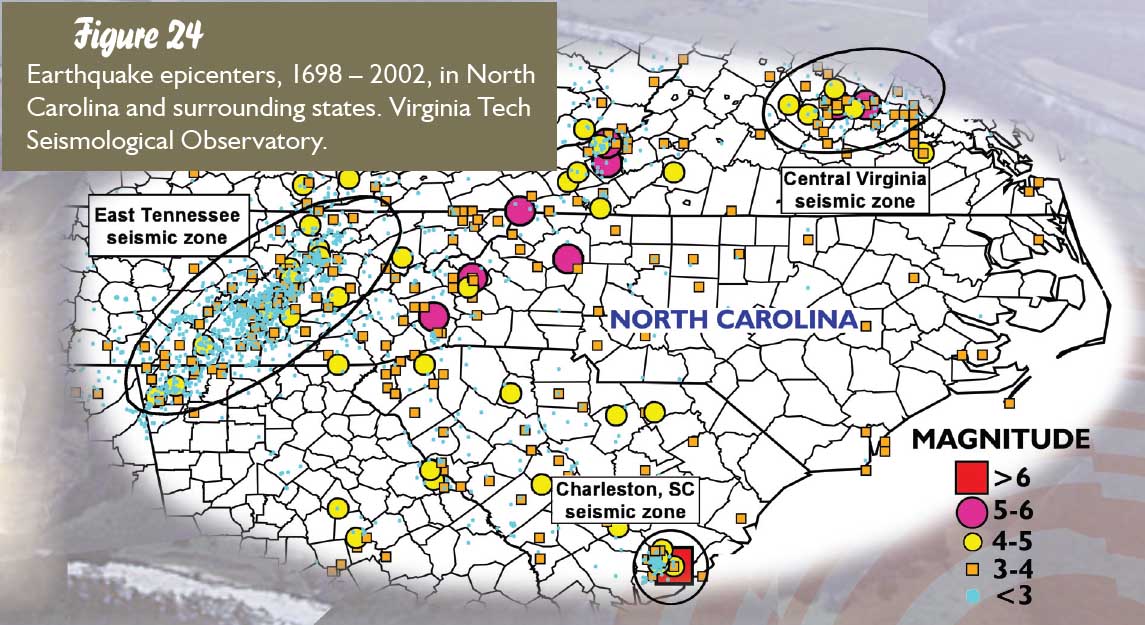
Earthquakes have been increasing in frequency around the Charlotte region over the past few years. Last year, we experienced the largest earthquake in over 100 years when a 5.1 magnitude quake hit Sparta, NC, and since then, dozens of aftershocks have continued to rattle our state.

According to USGS.gov, “Moderately damaging earthquakes strike the inland Carolinas every few decades, and smaller earthquakes are felt about once each year or two.”

Have you felt any of the quakes?

JPMorgan Announces Major Hiring Surge in Charlotte

0

JPMorgan has just announced plans to ramp up hiring in Charlotte by growing their corporate workforce from about 600 employees today to nearly 1,000 by 2028.

JPMorgan Chase currently operates out of two SouthPark office buildings. Over the next two years, the bank expects to add hundreds of roles across its commercial and investment bank, private bank, and consumer bank. Many of the new positions will support back-office operations tied to commercial banking.

The expansion builds on steady growth in the Queen City. JPMorgan opened its commercial banking office in Charlotte in 2011, followed by a private bank office in 2017 and its first retail branch in 2020.

Across the region, the bank now employs nearly 1,000 people when including its 25 local branches. It serves roughly 500,000 consumers and 35,000 small-business clients in the Charlotte area.

“Our expansion in Charlotte reflects both the depth of talent here and the growth of the market, but it also speaks to our business success and our intention to accelerate that success to serve more of the Queen City’s growing business community,” said JPMorgan’s Head of Commercial Banking Matt Beardall in a press release. “Having our talented employees together in a new, state-of-the-art work space will add fuel to the fire of our momentum – and that of our clients.”

Charlotte remains the second-largest banking center in the U.S., behind New York City. Major players like Bank of America and Truist Financial are headquartered here, while Wells Fargo employs about 27,000 people locally.

JPMorgan’s hiring push adds momentum to Charlotte’s banking sector, bringing more corporate jobs to SouthPark and reinforcing the city’s position as a national finance hub.

Miracle Park Phase 3 to Bring Jobs and Opportunity to Rock Hill For People With All Abilities

0

Rock Hill’s Miracle Park has just announced plans for Phase 3, which will add an 8,200-square-foot retail space at Richmond Drive and Cherry Road. The space will focus on training, employing, and serving people of all abilities.

Miracle Park first opened in 2021 through a partnership between the city and the foundation. The $5.9 million first phase included an accessible playground and the Miracle Field baseball field, designed for individuals with physical and cognitive challenges.

The recently completed $5.1 million Phase 2 added a second baseball field, an education building, a multi-purpose field, a fishing pond, and more parking. That phase was built on land owned by Winthrop University.

Phase 3 will expand the park’s mission beyond recreation, focusing on workforce development and inclusive economic opportunities.

For the Rock Hill area, the project continues to highlight growing investment in spaces designed to serve residents of all abilities.

32-Year-Old Man Killed in CATS Light Rail Accident in North Charlotte

0

A 32-year-old man has died after being struck by a CATS light rail train in north Charlotte, marking another fatal incident on the city’s transit system.

According to city officials, the crash occurred Saturday, April 18, around 5:47 p.m. at North Tryon Street and Orr Road. Officers with the Charlotte-Mecklenburg Police Department responded to reports of a pedestrian being hit by a CATS LYNX Blue Line train.

When officers arrived, they found Carlos Jamel Michilena, 32, unresponsive near the tracks. Medic transported him to the hospital with life-threatening injuries.

Investigators say Michilena was in the intersection and walked in front of the train as it entered the crossing.

He died the following morning, Sunday, April 19, at approximately 7:41 a.m.

The investigation remains ongoing. Police are asking anyone with information to contact Detective Kupfer at 704-432-2169, Ext. 1.

Charlotte Ranks Among The Top Cities in America to Start a Business

0

With May 3 kicking off National Small Business Week, the personal-finance company WalletHub today released its report on 2026’s Best Large Cities to Start a Business, as well as expert commentary, in order to help entrepreneurs find the right places for their startups to thrive.

WalletHub compared 100 U.S. cities across 19 key indicators of startup viability. The data set ranges from the five-year business-survival rate to labor costs to office-space affordability.

Starting a Business in Charlotte (1=Best; 50=Avg.):

  • Overall Rank: 14th
  • 21st – Growth in Number of Small Businesses
  • 49th – Cost of Living
  • 9th – Length of Average Workweek (in Hours)
  • 23rd – Share of College-Educated Population
  • 6th – Industry Variety

For the full report, please visit:
https://wallethub.com/edu/best-cities-to-start-a-business/2281

Supreme Court Ruling Triggers Massive Tariff Refunds in The Carolinas Starting Today

0

A massive refund process tied to overturned tariffs is set to begin Monday, potentially returning millions of dollars to Charlotte-area businesses and some consumers.

U.S. Customs and Border Protection announced it will launch an online system at 8 a.m. Monday allowing importers to claim refunds on tariffs that were later ruled unconstitutional.

The move follows a 6-3 ruling by the U.S. Supreme Court that found former President Donald Trump exceeded his authority when imposing broad import taxes under emergency powers.

The tariffs were originally enacted under the International Emergency Economic Powers Act (IEEPA), which allows presidents to act during national emergencies but does not grant independent tax-setting authority.

Under the new system, businesses that paid those tariffs can submit claims through CBP’s electronic portal by listing affected goods and shipments. Approved claims are expected to be refunded within 60 to 90 days.

Federal data shows the scale of the issue is enormous. More than 330,000 importers paid about $166 billion in tariffs across 53 million shipments.

However, the rollout will be phased. Initial refunds will focus on recent or not fully finalized tariff payments, meaning many claims could take longer to process.

Local advisory firm Carolina Trade Advisors says it has begun working with businesses to evaluate eligibility and organize documentation as the process gets underway.

Businesses interested in learning more about the refund program or assessing their potential eligibility can explore additional information at carolinatradeadvisors.com.

Premium Shape Headstone Options for Elegant Cemetery Memorials

0

Losing a loved one is undeniably one of life’s most profound and challenging experiences. In the wake of such a loss, finding a meaningful way to honor and preserve their memory becomes a vital part of the healing journey. A cemetery memorial serves as a permanent, physical tribute—a place where family and friends can gather to reflect, remember, and find solace. Crafting an elegant memorial requires thoughtful consideration of design, structural integrity, and aesthetic appeal. Among the most critical decisions in this process is selecting the shape of the headstone. The shape not only dictates the visual impact of the monument but also provides the canvas upon which a life’s story will be etched.

When creating a lasting tribute, granite stands alone as the undisputed standard of excellence. Its natural beauty, incredible density, and unparalleled weather resistance make it the ideal medium for outdoor memorials. This comprehensive guide explores the premium shape options available for granite headstones, helping you navigate the design process to create an elegant, enduring, and deeply personal monument for your loved one.

The Unyielding Legacy of Granite

Granite is formed deep within the earth’s crust under extreme heat and pressure, resulting in an igneous rock composed primarily of quartz, feldspar, and mica. This unique geological origin gives granite its legendary strength and striking crystalline appearance. Because a cemetery memorial is perpetually exposed to the elements—enduring scorching summer sun, freezing winter temperatures, driving rain, and whipping winds—it requires a material capable of withstanding constant environmental stress without degrading.

Granite provides this structural invincibility. It does not easily chip, scratch, or erode, ensuring that the sharp lines of a premium shape and the delicate details of an engraving remain pristine for centuries. Furthermore, the natural variations in the mineral composition mean that no two pieces of granite are exactly alike, ensuring that every headstone is a completely unique work of art. By choosing granite, families ensure that their tribute will remain a beautiful and steadfast marker for generations to come.

Exploring Premium Shapes for Headstones

The silhouette of a headstone is its most defining characteristic. The shape sets the tone for the entire memorial, influencing whether the monument feels traditional, contemporary, grand, or intimate. Granite can be expertly carved into an extensive array of premium shapes, accommodating any aesthetic preference and cemetery regulation.

The Classic Upright Monuments

Upright monuments are the most traditional and highly visible markers in a cemetery. They consist of two main granite components: a tall, vertical tablet (the die) and a sturdy horizontal base.

  • Serpentine Top: The serpentine shape is one of the most beloved and frequently chosen designs for upright headstones. The top edge features a gentle, flowing “S” curve that adds a touch of softness and elegance to the solid granite. This shape beautifully balances traditional grandeur with a sense of grace.
  • Oval and Arch Tops: For a more symmetrical and classic appearance, oval or arch-top monuments feature a perfectly rounded upper edge. This shape provides a generous, uninterrupted surface area for extensive engravings, family crests, or larger epitaphs, making it a popular choice for companion headstones.
  • Straight or Flat Top: The straight-top upright monument offers a clean, geometric, and modern aesthetic. Its sharp, 90-degree angles convey strength, stability, and unyielding permanence, making a bold and dignified statement.

The Graceful Slant and Bevel Markers

For families seeking a memorial that is prominent but less towering than an upright monument, slant and bevel markers offer a perfect middle ground. These shapes are designed to present the inscription at an angle, making it easy to read from a standing position.

  • Slant Markers: A slant marker has a steeply angled face that drops from a thicker top down to a wider bottom. It can be placed directly on a granite foundation or elevated on a granite base. The slanted face provides a substantial area for personalization while maintaining a more grounded, intimate profile.
  • Bevel Markers: Also known as pillow markers, bevel headstones are low to the ground but feature a slight elevation at the back, creating a gentle slope toward the front. This subtle angle enhances visibility compared to a completely flat marker, adding a dimensional quality to a modest, elegant design.

Elaborate Custom and Sculpted Designs

Granite’s exceptional density allows skilled artisans to sculpt highly intricate and customized shapes, transforming a traditional headstone into a breathtaking piece of original art.

  • Heart-Shaped Memorials: Single or double interlocking hearts are frequently chosen to symbolize eternal love and devotion. These can be carved as the primary shape of the die or sculpted in relief against a more traditional background.
  • Crosses: Intricately carved granite crosses—ranging from classic Latin crosses to ornate Celtic crosses adorned with traditional knotwork—serve as profound statements of faith and spiritual devotion.
  • Tear Drops and Flames: Modern, abstract shapes like tear drops or eternal flames offer a contemporary and highly emotive way to memorialize a life, utilizing the natural brilliance of polished granite to capture light and shadow.

Customizing the Granite Surface

Once the premium shape is selected, the surface treatment and the specific variety of granite further define the memorial’s character.

Distinctive Granite Finishes

The way the granite is finished drastically alters its final appearance and texture. Here are the most common finishing techniques used by artisans:

  1. Polished: The surface is buffed to a high gloss, resulting in a smooth, glass-like finish that is highly reflective. This finish deepens the stone’s natural color and provides the highest contrast for laser etchings and sandblasted lettering.
  2. Honed: A honed finish is smooth to the touch but matte in appearance. It lacks the reflective shine of a polished surface, offering a softer, more subdued, and highly elegant look.
  3. Pitched (Rock Pitch): This finish involves using a chisel to break away the edges of the granite, leaving a rough, highly textured, and completely natural-looking surface. It is frequently used on the sides and top margins of upright monuments to frame a polished front face.
  4. Steeled: A specialized, textured finish created by sandblasting the stone with steel shot. It results in a frosted appearance that works exceptionally well as a background for raised lettering.

Standard Dimensions for Cemetery Planning

Before finalizing a premium shape, it is absolutely essential to consult with the specific cemetery regarding their regulations. Cemeteries often have strict guidelines governing the maximum height, width, and depth of headstones. Below is a table outlining the typical dimensions for standard granite memorial shapes to assist in your initial planning.

Headstone Style Capacity Typical Width Typical Height Typical Depth
Upright Monument Single 24″ – 30″ 20″ – 36″ 6″ – 8″
Upright Monument Companion 36″ – 48″ 24″ – 40″ 6″ – 8″
Slant Marker Single 20″ – 24″ 14″ – 16″ 10″ – 12″
Slant Marker Companion 36″ – 42″ 16″ – 18″ 10″ – 12″
Bevel Marker Single 20″ – 24″ 6″ – 8″ (Back) 10″ – 12″
Bevel Marker Companion 36″ – 42″ 6″ – 8″ (Back) 12″ – 14″
Flat Marker Single 24″ 4″ 12″


The Art of Engraving and Inscriptions

The final and most personal step in creating an elegant granite memorial is the application of the inscription and decorative elements. Granite is highly responsive to various engraving techniques. Sandblasting is the traditional method, creating deep, precisely cut lettering and imagery that creates a beautiful contrast against the polished surface of the stone. For highly detailed imagery, such as portraits, scenic landscapes, or intricate religious motifs, precision laser etching is employed. This technique removes microscopic layers of the polished granite surface, revealing the lighter, unpolished stone beneath to create photorealistic designs.

When composing the inscription, families should consider the name, dates of birth and passing, and a carefully chosen epitaph. The epitaph can be a favorite quote, a passage from a sacred text, or a simple, heartfelt sentence that encapsulates the individual’s legacy. Because granite affords such high legibility and permanence, every letter carved into its surface will stand as a lasting historical record.

Conclusion

Choosing the right cemetery memorial is a deeply personal endeavor that requires reflection, care, and a thorough understanding of your design options. The shape of a headstone serves as the architectural foundation of the tribute, dictating its visual presence and emotional resonance. By utilizing the unparalleled strength and timeless beauty of granite, families can craft a monument that not only reflects the unique personality of their loved one but also stands resilient against the passage of time and the forces of nature. Whether you opt for the classic grandeur of a serpentine upright, the quiet elegance of a bevel marker, or a breathtaking custom-sculpted heart, granite guarantees an enduring legacy. When you are ready to navigate this important decision, having a dependable and compassionate partner makes all the difference. At Memory Headstones, we are dedicated to helping families honor their loved ones by delivering exquisitely crafted granite memorials, combining premium quality with exceptional affordability and rapid production times to support you seamlessly when you need it most.

North Carolina Spending $215 Million for Water Projects Across The State

0

The Governor of North Carolina is now directing hundreds of millions toward strengthening water systems across our state.

Josh Stein announced that 66 projects across 26 counties will receive more than $215 million for drinking water and wastewater improvements.

“People need to have access to clean, reliable water,” said Governor Josh Stein in a press release. “These investments will help rebuild infrastructure more resilient so families can count on safe water, especially when disaster strikes.”

The funding, approved by the State Water Infrastructure Authority, is largely tied to recovery from Hurricane Helene, with about $196 million going to impacted communities.

Officials say the projects will repair damaged systems while also improving resilience against future storms.

So far, the state and the North Carolina Department of Environmental Quality have awarded $861 million for Helene-related water infrastructure.

Demand still exceeds funding. The state received $1.3 billion in requests, leaving about $655 million in unmet needs.

Several local projects are included:

  • Gastonia: $10 million for water resiliency
  • Mount Holly: $4.6 million for lead pipe replacement
  • Union County: $500,000 for PFAS study
  • Cleveland County Water: $8.5 million for system upgrades

The funding comes from a mix of federal and state programs, including disaster recovery funds and infrastructure legislation.

For the Charlotte region, the investments highlight ongoing efforts to strengthen water systems as the area continues to grow and face more extreme weather.