North Carolina Announces New $253 Million Plan for Water Projects

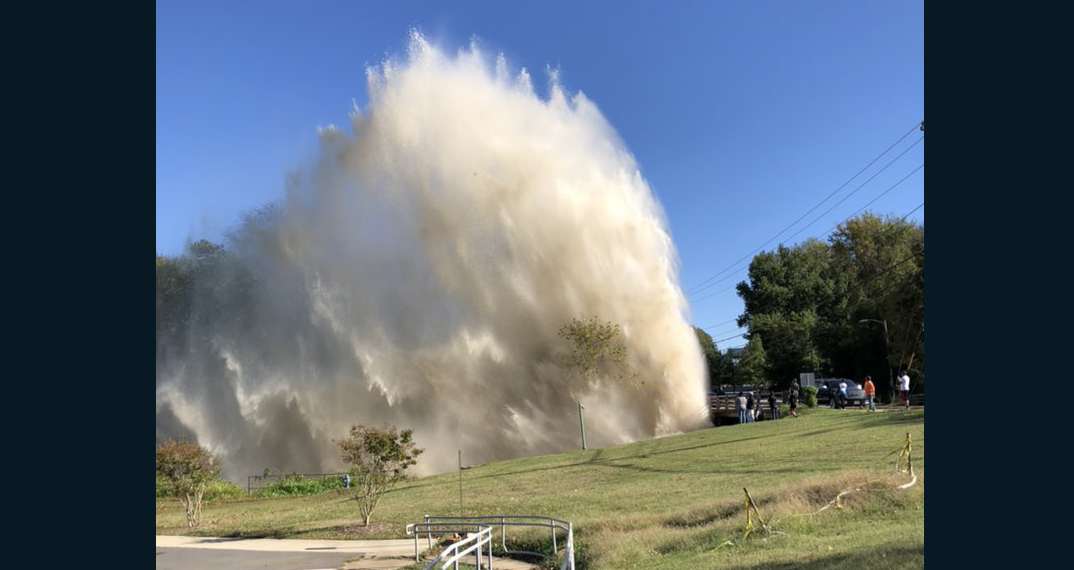
water projectsNorth Carolina has just announced a new plan to spend over $253 million for drinking water projects and wastewater infrastructure projects. The new construction grants will specifically go to 70 projects in 30 counties across our state.



Most of the plan will focus on addresses emerging contaminants (PFAS) and lead service line replacements.

“Strong water and wastewater systems are vital for safe drinking water and economic development,” said Governor Cooper in a press release. “Thanks to federal funding from the Biden-Harris Administration and state appropriations we’ve made historic investments to rebuild and replace aging systems, especially in rural communities, which will make our state stronger.”

Key projects include:

  • Fayetteville Public Works Commission: $30 million for a PFAS treatment facility.
  • Neuse Regional Water and Sewer Authority: $2.16 million for PFAS treatment.
  • Town of Beech Mountain: $10 million for water system improvements.
  • Junaluska Sanitary District: $9.5 million for water line rehabilitation.
  • City of Asheboro: $500,000 for a PFAS planning study.
  • City of Sanford: $5 million for sewer rehabilitation.
  • Town of Ayden: $1.4 million for sewer improvements.
  • City of Eden: $7.2 million for basin repairs.
  • Gates County: $4.1 million for wastewater improvements.
  • Orange Water and Sewer Authority: $3.25 million for lead service line replacements.

Designated distressed communities like Creswell and Denton will also receive grants for asset inventory and assessment to ensure future viability.

York County Approves $5.52 Million Deal To Build Catawba Bend Preserve’s Front Entrance

via York County

York County Council has just approved a $5.5 million contract with Wiley Easton Construction Co. to build the new front entrance at the Catawba Bend Preserve.

During this past Monday’s county council meeting, the board specifically; “2. Approved award regarding Bid #2932 for the Catawba Bend Preserve Phase 1 Construction project, to the lowest responsive and responsible bidder, Wiley Easton Construction Co., Inc. of Lexington SC, for a total cost of $5,520,363.75, to include contingency.”

The scope of the work specifically includes the front entrance gate, landscaping around the entrance, the paving of the road coming into the preserve, a fee station, parking lot, and bathrooms.

York County originally bought roughly 1,900 acres of land for the preserve in 2018, including almost five miles of river frontage.

The new preserve sits just East of downtown Rock Hill and on the other side of the river from the sprawling Sun City community.


It’s now expected to officially open by the end of next year.

Ukrainian Businessman Files Claim Against Russia for Lost Assets

A notable Ukrainian entrepreneur, Rinat Akhmetov, has filed an investment treaty claim against Russia due to the confiscation of assets in the occupied territories of eastern Ukraine. This action, rooted in the self-proclaimed Donetsk and Luhansk republics, seeks compensation for the disruption of his business activities and the expropriation of assets.

The claim, lodged under the bilateral investment treaty between Ukraine and Russia, was announced by SCM Group. The company maintains that these regions have been under Russian influence or control since 2014. For further information on this case, visit: https://globalarbitrationreview.com/article/ukraines-richest-man-brings-treaty-claim-against-russia. The assets in question, managed through SCM, include:

  • The Azovstal steel plant in Mariupol;
  • The Donbass Arena, a stadium worth $400 million;
  • Various other industrial and commercial properties.

Akhmetov has expressed that, like many other Ukrainians, he has been affected since the conflict’s onset in 2014. He is seeking full compensation from Russia for all losses incurred in the unlawfully occupied territories of Donetsk and Luhansk from that period onwards. This claim represents the first known legal action concerning assets in eastern Ukraine. However, several claims have been made previously regarding the seizure of Ukrainian assets in Crimea after its annexation by Russia in 2014.

The current claim addresses Russia’s illegal activities from 2014 through 2017 and beyond. The Azovstal plant, which previously contributed to 40% of Ukraine’s steel production, was nearly obliterated during the 2022 Mariupol siege. This vast industrial complex, which includes nuclear bunkers and tunnels, was utilized by Ukrainian forces to withstand Russian military assaults during an extended conflict.

Akhmetov has committed to reinvesting any compensation awarded into the reconstruction of the Ukrainian economy. Additionally, he is pursuing a separate legal action against Russia at the European Court of Human Rights for the destruction of his businesses in Ukraine.

In a related judgment, the European Court of Human Rights ruled in January that areas of eastern Ukraine under separatist control were within Russia’s jurisdiction from May 2014 until at least January 2022. This preliminary decision arose from cases brought by the Netherlands and Ukraine concerning alleged human rights violations in Donetsk and Luhansk, including the downing of Malaysia Airlines Flight 17 in eastern Ukraine in 2014.

This lawsuit represents a crucial effort to secure accountability for economic damages caused by the conflict in eastern Ukraine, potentially setting a precedent for future claims related to the region.

North Carolina Is the State with the 8th Most Financial Distress

Over seven million Americans are late on credit payments or have delayed them.

Today, the financial site WalletHub released its 2024 rankings for states with the most people in financial distress. The rankings highlight where financial troubles are most severe in the U.S.

States with the Most People in Financial Distress

Overall Rank*  State Total Score  Credit Score Rank  People with Accounts in Distress Rank  Average Number of Accounts in Distress Rank  Change in Bankruptcy Filings March 2024 vs. March 2023 Rank  “Debt” Search Interest Index Rank  “Loans” Search Interest Index Rank 
1 Michigan 59.91 44 2 1 39 10 26
2 Texas 56.15 4 10 11 7 6 7
3 Nevada 55.15 5 5 8 3 29 11
4 Tennessee 52.25 36 3 3 45 15 7
5 Rhode Island 51.47 9 1 2 48 40 22
6 Georgia 51.31 7 9 10 27 4 6
7 Louisiana 50.47 20 4 5 30 45 3
8 North Carolina 49.66 16 15 14 11 4 15
9 Mississippi 49.33 11 16 18 46 21 1
10 New York 49.25 10 29 34 13 1 9
11 South Carolina 47.44 40 8 13 22 21 5
12 Oklahoma 44.85 35 18 20 31 32 2
13 Florida 44.64 3 13 15 9 29 27
14 Kentucky 44.46 39 6 9 21 26 13
15 South Dakota 43.19 42 28 26 8 6 17
16 Delaware 43.15 17 23 28 14 13 13
17 Alabama 42.24 25 7 12 44 37 4
18 Arizona 42.16 6 27 31 40 3 15
19 West Virginia 42.12 43 14 6 32 21 27
20 Illinois 41.78 34 11 7 36 21 31
21 Missouri 41.45 24 19 19 43 15 9
22 Maryland 40.60 15 41 45 6 15 34
23 North Dakota 39.71 49 48 36 16 2 22
24 Washington 39.22 18 24 17 2 42 36
25 Idaho 38.88 31 39 35 26 10 20
26 California 38.67 8 22 22 4 32 47
27 Ohio 38.17 47 45 46 25 10 12
28 Indiana 37.61 30 21 24 35 15 22
29 Minnesota 36.00 46 35 30 5 29 43
30 Colorado 35.90 23 42 43 18 13 40
31 Arkansas 35.49 50 12 16 28 32 31
32 New Jersey 35.48 27 34 37 23 15 36
33 Virginia 35.22 21 37 41 34 15 27
34 Alaska 35.18 1 46 48 47 6 20
35 Utah 34.90 12 36 25 12 32 39
36 Montana 33.74 45 32 27 20 26 34
37 New Mexico 32.82 33 25 39 15 46 17
38 Pennsylvania 32.53 22 43 42 33 26 36
39 Hawaii 32.25 2 20 23 10 46 49
40 Massachusetts 32.11 13 44 44 19 37 31
41 Wyoming 31.96 28 30 40 50 6 17
42 Oregon 31.93 19 33 32 1 50 44
43 Kansas 31.21 26 31 21 42 37 22
44 Maine 29.91 32 17 4 49 49 40
45 Nebraska 29.63 37 47 47 37 21 40
46 Wisconsin 27.11 48 40 33 38 42 27
47 Vermont 26.87 41 26 29 29 40 48
48 Connecticut 25.67 14 38 38 24 46 50
49 Iowa 23.83 29 50 49 17 42 46
50 New Hampshire 21.71 38 49 50 41 32 44

Note: *No. 1 = Most Distressed

Japan’s HI-CHEW Maker Morinaga Investing Over $136 Million In NC Factory

Morinaga America Foods have just announced plans to invest over $136 million in North Carolina and create over 200 new jobs. The Japanese company chose North Carolina for its first manufacturing site outside Asia.

The Mebane, NC produces the popular fruity candy HI-CHEW. Due to high demand, Morinaga will add manufacturing space and production lines. A performance-based grant of $100,000 from the One North Carolina Fund will help facilitate the expansion, contingent on a company capital investment of $115.4 million, the creation of 40 jobs, and local government support.

“North Carolina continues to attract large investments from companies in Japan because we offer the advantages they look for,” said Governor Cooper in a press release. “It was great to visit with Morinaga’s leadership when I was in Japan and it’s clear that the relationships we’ve made along with our great workforce, infrastructure and quality of life continue to bring good jobs to our state.”

Governor Cooper recently hosted Japanese Prime Minister Fumio Kishida to strengthen ties and celebrate Japanese business investments in the state. The SEUS/Japan Conference in October will further showcase North Carolina’s economy and foster greater connections.

New positions at Morinaga will include production, quality assurance, maintenance, and support staff. The average annual salary for these 40 positions is $67,075, potentially creating an annual payroll impact of over $2.6 million. Orange County’s overall average annual wage is $66,979.

The North Carolina Department of Commerce, Economic Development Partnership of North Carolina, and local government partners are supporting this expansion.

The Most Expensive Home In The History of North Carolina Just Sold For $13.9 Million

expensive home

J. Long Custom Homes has just sold the most expensive home in the history of North Carolina. The 6,700-square-foot beach mansion on Figure Eight Island in Wilmington closed for an astounding $13.9 million.

“We are thrilled to have been part of such a historic record-breaking sale,” said J. Long Custom Homes owner Jason Long in a press release. “This home is a testament to our commitment to quality and luxury.”

The interior of 102 Beach Road South includes rift-sawn hardwoods throughout, a gourmet kitchen with Wolf and Subzero appliances, and quartz counters with waterfall edges.

The master suite has a stacked stone fireplace, modern amenities, and a private deck. Additionally, the mansion offers a fitness room, a 12-camera surveillance system, a 21-zone Musiccast whole house entertainment system, and an elevator servicing all floors.

Outside, the property features an oceanfront saltwater pool and Jacuzzi, approximately 4,000 square feet of outdoor decking, and double outdoor showers.

The listing agent, Nick Phillips with Landmark Sotheby’s Realty, represented sellers Chris and Crystal Dunbar.

Custom-built in 2019, this home was the final project of the late John Stirewalt. The mansion has five bedrooms and eight bathrooms. Figure Eight Island is home to some of the most famous people in the country, including Jennifer Aniston, Al Gore, and Robert Downey Jr.

In 2023, a total of eight expensive homes in New Hanover County have sold for more than $5 million.


Charlotte Museum of History Joins Forces with Civility Localized to Empower Community Leaders

Building on the momentum of the Civic Impact Academy launch, Civility Localized is thrilled to announce a strategic partnership with the Charlotte Museum of History, just as the academy opens its month-long application period on the first of July.

The Charlotte Museum of History has committed to fostering civic education by offering its venue, expertise, and strategic collaboration with Civic Impact Academy. The Museum provides a prestigious and inspiring space for the 2024 inaugural cohort, as well as expert insights into Charlotte’s history.

This partnership elevates the Academy by offering a diverse learning environment for government officials (gaining inclusive outreach skills) and community leaders (navigating civic systems) as they tackle critical topics like advocacy, power dynamics, and media relations. The program culminates in a real-world community design challenge.

Christine Edwards, MPA, founder of Civility Localized and the civic firebrand behind the Civic Impact Academy, welcomes the Museum’s involvement. “We are honored to have Charlotte’s namesake Museum join us on this journey,” says Edwards. “Their expertise and commitment to Charlotte’s rich history align perfectly with our mission to empower every community to grow with dignity.”

Applications Open July 1st. Community members and government employees are encouraged to fill out a brief, free application to participate in the inaugural cohort. Acceptance letters and enrollment materials to be sent out in August after applications close.

Scholarships and Sponsorship Opportunities Available

The Civic Impact Academy prioritizes inclusion with scholarships for community members, and welcomes corporate sponsors dedicated to diversity, equity, inclusion, and civic engagement.

Visit www.CivicImpactAcademy.com for details about the program, curriculum highlights, and to apply.

Drought Advisory Issued For North Carolina Amid Ongoing Heat Wave

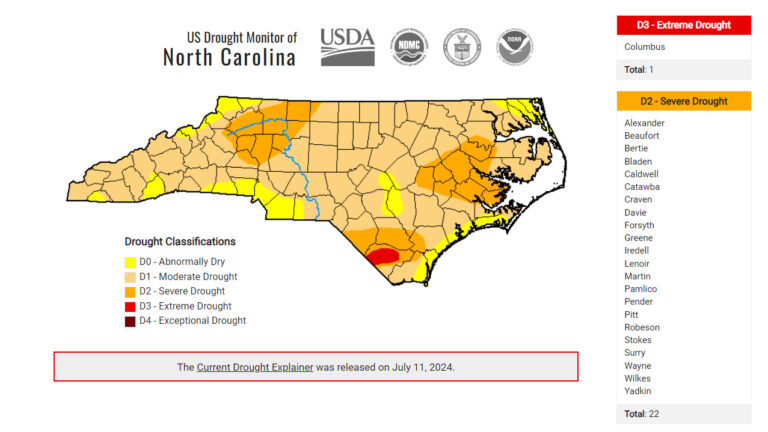
Elevated temperatures have dried out many parts of the state, and about a quarter of North Carolina counties now have severe drought advisories.

Columbus County, in the eastern part of the state, faces extreme drought conditions, according to the N.C. Drought Management Advisory Council.

The council, a collaboration between state and federal agencies and private utilities like Duke Energy, meets weekly to assess drought conditions. For instance, the N.C. Forest Service informs the council on how drought worsens wildfire risks.

The North Carolina Drought Advisory urges several actions for water users in drought-affected areas:

Extreme Drought (D3) Areas:

  • Follow Water Shortage Response Plans (WSRP).
  • Reduce water use for critical needs like firefighting and health.
  • Explore alternative water sources and reuse options.
  • Stay informed on drought conditions at ncdrought.org.

Severe Drought (D2) Areas:

  • Implement WSRPs, if not already enacted.
  • Reexamine water systems to minimize loss and maximize efficiency.
  • Eliminate nonessential water uses.
  • Evaluate water reuse, reclamation, and recycling feasibility.
  • Reduce water usage proportionally to supply shortages.
  • Increase public awareness on water conservation.

Stay updated on drought conditions and advisories at ncdrought.org.

Anne Springs Close Greenway Announces Plans for Collapsed Road Bridge After Heavy Rainfall

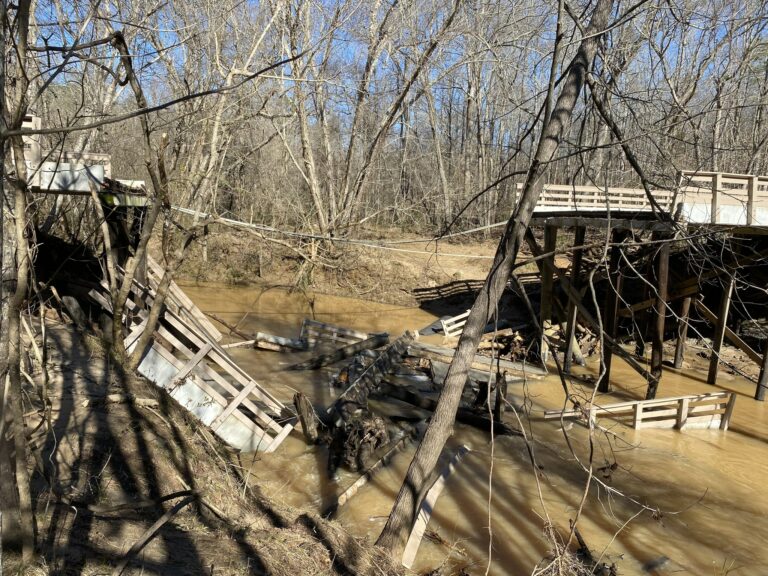
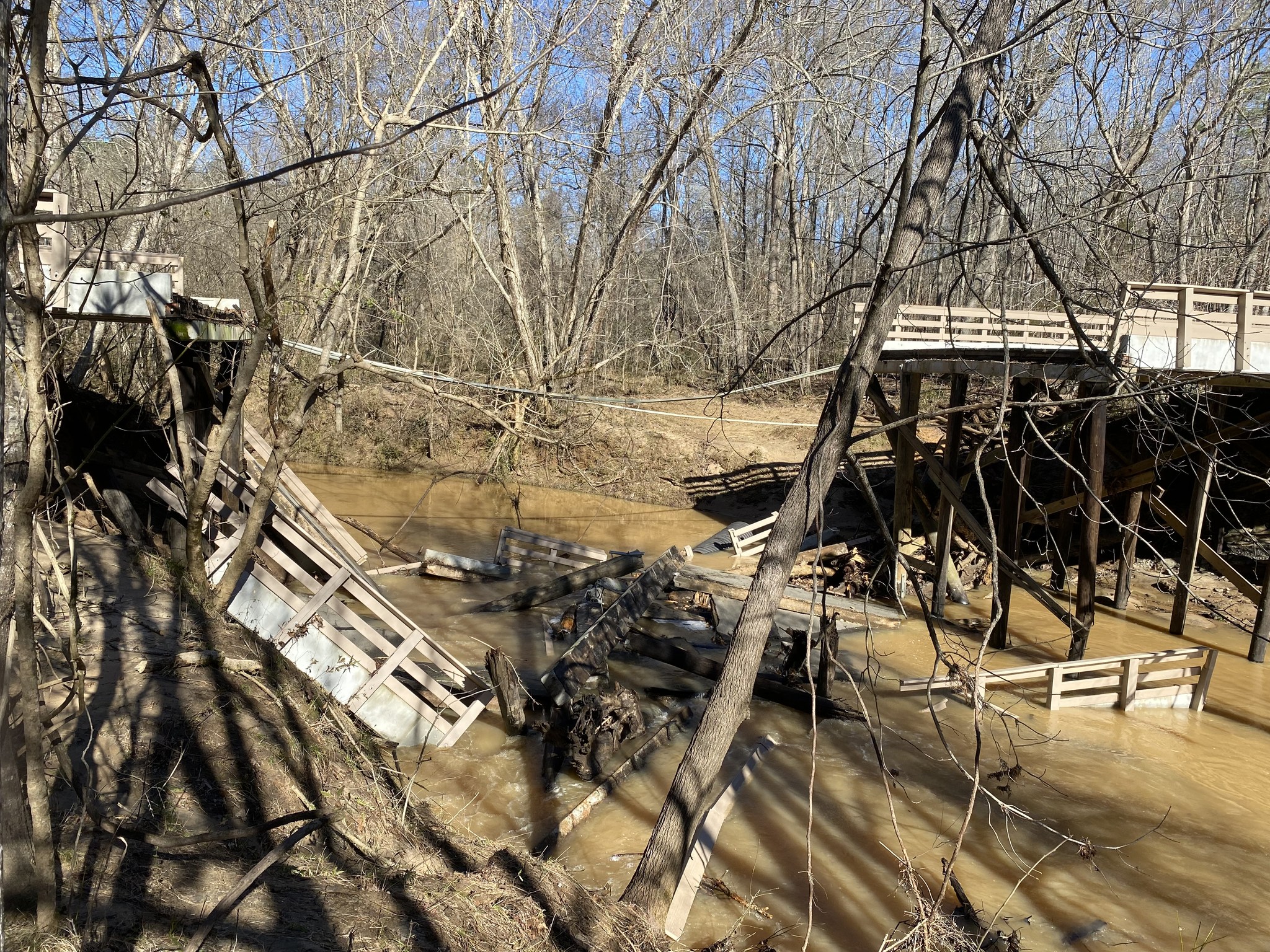
The Anne Springs Close Greenway has just announced plans to replace the collapsed road bridge on their property. The largest bridge in the 2,100-acre Fort Mill nature preserve collapsed this past January after heavy rainfall.

They are now planning to construct two new pedestrian bridges across Steele Creek, including a new span where the collapsed road bridge stood, as well as another swinging bridge about a mile upstream near the Field Trial Barn.

Both new bridges will be built above the 100-year floodplain to mitigate flash flooding and stormwater effects. Surveying and technical reports are complete, and a vendor will be selected by mid-August. Construction is expected to begin this fall and be completed by Spring 2025.

“We have been doing a lot of work behind the scenes to demo the existing bridge, and now we are focused on  providing the Greenway with the best possible outcome to support the long-term sustainability of our trail  system,” said CEO John Gordon in a press release. “In addition to the  road bridge, we will also replace the original swinging bridge near the Field Trial Barn, which is approaching a 30- year lifespan. Our goal is to build something that will support our trail system for the next 50 years.”

The project will cost an estimated $1 million. The Greenway will consider an endowment distribution to offset the financial burden and ensure the project does not impact other budgeted programs.

The public can support the project during the Greenway’s Giving Tuesday campaign on December 3.

The Evolving Landscape of Cryptocurrency Profit: Exploring New Avenues

In recent years, the world of cryptocurrency has expanded far beyond its initial purpose as a decentralized digital currency. As the market evolves, innovative ways to generate income through crypto assets have emerged, capturing the attention of both seasoned investors and newcomers alike. From the thrill of bitcoin sportsbooks to the strategic world of trading, and the gamified experiences of tap-to-earn and play-to-earn models, the crypto space offers a diverse array of money-making opportunities. This article delves into these exciting new options, exploring their potential benefits and risks, and providing insights for those looking to navigate this dynamic landscape.

The cryptocurrency market has come a long way since the introduction of Bitcoin in 2009. What began as a niche interest for tech enthusiasts and libertarians has grown into a global phenomenon, with millions of people worldwide participating in various crypto-related activities. Among these activities, bitcoin sportsbooks have gained significant traction, offering sports enthusiasts a way to combine their passion for athletics with the potential for financial gain. As we explore the multifaceted world of cryptocurrency profit-making, it’s essential to approach each option with a balanced perspective, understanding both the opportunities and the challenges that lie ahead.

Bitcoin sportsbooks represent just one facet of the broader crypto gambling industry, which has experienced remarkable growth in recent years. However, the landscape of cryptocurrency profit extends far beyond gambling, encompassing a wide range of activities that cater to different skills, interests, and risk tolerances. In this article, we’ll examine four primary categories of crypto money-making options: gambling, trading, tap-to-earn, and play-to-earn. Each of these areas offers unique advantages and potential pitfalls, and understanding their intricacies is crucial for anyone looking to venture into the world of cryptocurrency profit.

Gambling: The High-Stakes World of Crypto Betting

Cryptocurrency gambling has exploded in popularity, offering a range of options for those willing to take risks in pursuit of potential rewards. Let’s explore some of the key aspects of this sector:

Crypto Casinos: A Digital Twist on Classic Games

Crypto casinos have emerged as a popular alternative to traditional online gambling platforms. These digital establishments offer a wide array of classic casino games, including:

  1. Slots
  2. Poker
  3. Blackjack
  4. Roulette

The key difference lies in the use of cryptocurrencies for transactions, providing users with increased privacy, faster payouts, and often lower fees compared to traditional online casinos.

Sports Betting: Riding the Crypto Wave

Sports betting has always been a popular form of gambling, and the integration of cryptocurrencies has opened up new possibilities in this arena. Crypto sports betting platforms offer several advantages:

  1. Anonymity: Users can place bets without revealing their personal information.
  2. Global accessibility: Bettors can participate from anywhere in the world, bypassing geographical restrictions.
  3. Faster transactions: Deposits and withdrawals are typically processed much quicker than traditional methods.
  4. Reduced fees: Many platforms offer lower transaction fees due to the efficiency of blockchain technology.

While the potential for profit exists, it’s crucial to approach sports betting with caution and a clear understanding of the risks involved.

Dice Games and Provably Fair Gambling

One unique aspect of crypto gambling is the concept of provably fair games. This technology allows users to verify the fairness of each bet, ensuring that the outcome hasn’t been manipulated. Dice games, in particular, have gained popularity in the crypto gambling world due to their simplicity and transparent nature.

Trading: Navigating the Volatile Waters of Cryptocurrency Markets

For those with a more analytical mindset, trading cryptocurrencies offers a potentially lucrative avenue for profit. Let’s examine some key aspects of crypto trading:

Spot Trading: The Foundation of Crypto Markets

Spot trading involves buying and selling cryptocurrencies at their current market price. This straightforward approach allows traders to capitalize on short-term price movements and long-term trends. Key considerations for spot trading include:

  1. Market analysis: Understanding technical and fundamental factors that influence crypto prices.
  2. Risk management: Implementing strategies to protect capital and limit losses.
  3. Portfolio diversification: Spreading investments across multiple cryptocurrencies to balance risk.

Margin Trading: Amplifying Profits (and Risks)

Margin trading allows traders to borrow funds to increase their position size, potentially amplifying profits. However, this approach also magnifies potential losses. Key aspects of margin trading include:

  1. Leverage: The ability to trade with borrowed funds, often up to 100x the initial investment.
  2. Liquidation risk: The possibility of losing the entire position if the market moves against the trader.
  3. Funding rates: Additional costs associated with holding leveraged positions over time.

Futures and Options: Advanced Trading Instruments

For more experienced traders, cryptocurrency futures and options offer sophisticated ways to profit from market movements:

  1. Futures contracts: Agreements to buy or sell a specific amount of cryptocurrency at a predetermined price on a future date.
  2. Options contracts: The right (but not the obligation) to buy or sell a cryptocurrency at a specific price within a set timeframe.

These instruments allow traders to implement complex strategies and hedge against market volatility.

Tap-to-Earn: Monetizing Everyday Activities

The tap-to-earn model represents a novel approach to cryptocurrency profit, allowing users to earn small amounts of crypto by performing simple tasks or engaging with mobile applications. Let’s explore some popular tap-to-earn methods:

Faucets: Drip-Feeding Crypto Rewards

Cryptocurrency faucets are websites or applications that dispense small amounts of crypto to users for completing simple tasks, such as:

  1. Solving captchas
  2. Watching advertisements
  3. Playing mini-games
  4. Answering surveys

While the rewards from faucets are typically modest, they offer a low-risk entry point for newcomers to the crypto space.

Microtask Platforms: Earning Crypto Through Gig Work

Several platforms have emerged that allow users to earn cryptocurrency by completing small tasks or “microgigs.” These tasks can include:

  1. Data entry
  2. Image tagging
  3. Content moderation
  4. Translation services

While the earnings from individual tasks may be small, dedicated users can accumulate meaningful amounts of cryptocurrency over time.

Cashback and Rewards Programs: Crypto for Everyday Spending

Some companies have introduced cashback and rewards programs that allow users to earn cryptocurrency on their everyday purchases. These programs typically work by:

  1. Providing a crypto-linked debit card for purchases
  2. Offering a percentage of each transaction back in cryptocurrency
  3. Providing additional rewards for using specific services or reaching spending milestones

This approach allows users to passively accumulate crypto while going about their normal spending habits.

Play-to-Earn: The Gamification of Cryptocurrency Profit

The play-to-earn model has gained significant traction in recent years, merging the worlds of gaming and cryptocurrency to create new economic opportunities. Let’s examine some key aspects of this innovative approach:

NFT-Based Games: Digital Ownership and Real-World Value

Non-fungible tokens (NFTs) have revolutionized the concept of digital ownership, allowing gamers to truly own and trade in-game assets. Popular play-to-earn games leveraging NFTs include:

  1. Axie Infinity: A Pokemon-inspired game where players battle and breed digital creatures.
  2. Decentraland: A virtual world where users can buy, sell, and develop digital real estate.
  3. Gods Unchained: A collectible card game where cards are minted as NFTs.

These games allow players to earn cryptocurrency by participating in gameplay, trading assets, and contributing to the game’s ecosystem.

Blockchain-Based MMORPGs: Earning in Virtual Worlds

Massively multiplayer online role-playing games (MMORPGs) built on blockchain technology offer players the opportunity to earn cryptocurrency through various in-game activities:

  1. Completing quests and missions
  2. Crafting and selling virtual items
  3. Participating in player-versus-player combat
  4. Contributing to the game’s development and governance

As these games evolve, they have the potential to create complex virtual economies with real-world value.

Skill-Based Competitions: Monetizing Gaming Prowess

Some platforms offer skill-based competitions where players can earn cryptocurrency by showcasing their gaming abilities. These competitions may include:

  1. Tournament-style events with crypto prizes
  2. One-on-one matches with wagers
  3. Leaderboard competitions with recurring rewards

This model allows skilled gamers to potentially earn significant amounts of cryptocurrency by leveraging their gaming expertise.

Navigating the Risks and Challenges

While the opportunities for making money with cryptocurrency are diverse and potentially lucrative, it’s crucial to approach these options with a clear understanding of the associated risks and challenges:

Market Volatility: The Double-Edged Sword

Cryptocurrency markets are notoriously volatile, with prices capable of swinging dramatically in short periods. This volatility can lead to:

  1. Rapid gains for well-timed trades or bets
  2. Equally rapid losses if the market moves against one’s position
  3. Increased stress and emotional decision-making

Understanding and managing this volatility is essential for long-term success in the crypto space.

Regulatory Uncertainty: Navigating a Changing Landscape

The regulatory environment surrounding cryptocurrencies remains in flux, with different countries adopting varying approaches. Key considerations include:

  1. Tax implications of crypto earnings
  2. Legality of certain activities (e.g., gambling) in specific jurisdictions
  3. Potential future regulations that could impact the viability of certain profit-making methods

Staying informed about regulatory developments is crucial for anyone involved in cryptocurrency activities.

Security Risks: Protecting Your Digital Assets

The decentralized nature of cryptocurrencies places the responsibility for security squarely on the individual. Common security risks include:

  1. Phishing attacks targeting crypto wallets and exchange accounts
  2. Malware designed to steal private keys
  3. Scams and fraudulent projects promising unrealistic returns

Implementing robust security practices, such as using hardware wallets and enabling two-factor authentication, is essential for safeguarding crypto assets.