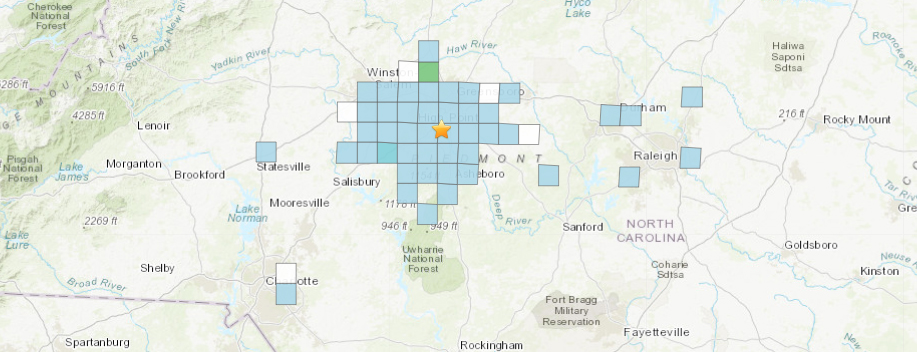
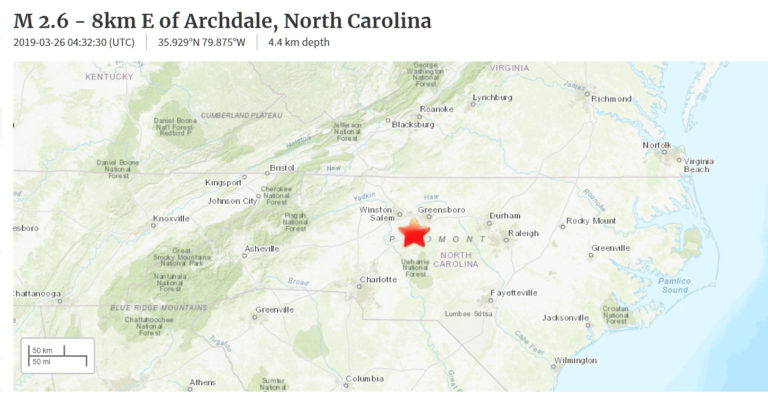
2.6 Magnitude Earthquake Rattled Homes Last Night Between Charlotte and Raleigh

0

Last night one a massive earthquake rattled our state in the small town of Archdale, just south of High Point and about an hour Northeast of Charlotte.

The 2.6 magnitude quake was so powerful that it was even felt in Raleigh and Charlotte, accourding to reports by the USGA;

The Guilford Police department even sent out a statement about the quake after receiving numerous calls about a loud explosion;

The massive North Carolina quake started at roughly 12:32 am, with local residents describing a long, booming sound that even shook people’s homes in some areas.

Earthquakes have been increasing in frequency around the Charlotte region over the past few years, about a year ago, we saw a 2.9 magnitude quake hit Asheville and a 2.1 magnitude quake that struck Bryson City, NC.

The Carolinas have been known to experience the occasional damage-causing earthquakes.

According to USGS.gov, “The largest earthquake in the area (magnitude 5.1) occurred in 1916. Moderately damaging earthquakes strike the inland Carolinas every few decades, and smaller earthquakes are felt about once each year or two.”

Did you feel last night’s quake? 

North Carolina Tax Trends To Keep an Eye On In 2019

0

Various changes in local, state, and federal tax laws are taking effect this year. Some of the tax legislation has been in the making for years, while others are still under consideration.

As for North Carolina, residents and businesses living and operating in the state have several state tax laws that may be of significance to them.

Scotus Considering State Tax Nexus for Out-of-State Trust Beneficiaries

In 2018, the United States Supreme Court ruled in South Dakota v. Wayfair with a 5-4 majority that states have the right to tax products or services provided by out-of-state merchants.

This ruling means that the merchant doesn’t need to have a physical presence in the state for their goods or services to be taxed, namely mail order and Internet sales transactions.

The SCOTUS ruling in favor of the state in the South Dakota v. Wayfair case eradicated National Bellas Hess v. Illinois 386 U.S. 753 (1967) which prevented states from enforcing a “state tax nexus” on out-of-state vendors.

What does this have to do with out-of-state trust beneficiaries?

In January of this year, SCOTUS officially announced it would hear the case of Kaestner 1992 Family Trust v North Carolina, which is another state tax nexus case.

Unlike the South Dakota v. Wayfair case, this case involves whether or not a state has the right to tax trusts where the beneficiary lives in that state, but the trust itself was created in and governed by another state.

Additionally, the documents for the trust, its financial records, legal records, and books were handled in another state as well.

According to North Carolina tax law, “The tax is computed on the amount of the taxable income of the estate or trust that is for the benefit of a resident of this State.”

Further, the North Carolina Department of Revenue requires that the statute application be based on the “beneficiary’s state of residence on the last day of the taxable year of the trust.”

Nevertheless, the North Carolina Supreme Court ruled that an in-state beneficiary wasn’t grounds enough for the North Carolina Department of Revenue to require taxes be paid on the trust.

This ruling has led to it being appealed to SCOTUS.

Why This Might Be of Interest to You

Since trusts are one of the most common estate planning instruments, allowing them to be taxed solely based upon an in-state beneficiary could very well lead to some critical consequences.

So far, nine states have considered a state tax nexus involving trusts, with four (California, Connecticut, Missouri, and Illinois) agreeing with it and five (New York, New Jersey, Michigan, Minnesota, and North Carolina) in disagreement.

If the outcome goes in favor of Kaestner 1992 Family Trust, it could significantly affect other state tax laws, including reevaluating the Wayfair tax nexus ruling.

The Negative Effects of Trump’s TCJA Will Be Realized

The 2019 tax season isn’t yet three weeks in and even those who were once the staunchest of MAGA supporters are turning on Trump.

Many of those who were studious and thus turned their tax returns in on January 28 were dismayed by what they discovered.

It turns out that TCJA 2017 is far from being a “relief” or a “break” for nearly 30 million Americans.

Many early filers are reporting they either received much less than the previous tax season or, worse yet, owe the IRS money.

What should North Carolinians expect in light of these developments?

If you didn’t prepare your withholdings according to the IRS’s new withholding table, then expect to be among the 21 percent of taxpayers who get back much less or even owe the IRS this year.

If indeed you find out you do owe the IRS, it doesn’t hurt to hire an expert North Carolina tax defense attorney to assist you.

New North Carolina Tax Breaks Finally Going Into Effect in 2019

Some readers may have forgotten by now about the 2013 North Carolina Tax overhaul, but much of it will be implemented in 2019.

But Democratic pundits are more than sceptical that dropping the personal income tax rate from 5.499 percent to 5.25 percent will do much for North Carolinians.

This assumption holds especially true considering the Republican GOP, true to form, killed vital state tax credits and cut major funding to Medicare and Medicaid in exchange for that meager reduction.

Additionally, the maximum amount of money you must make annually before you’re required to pay state taxes will rise from $17,000 to $20,000 for married couples who file jointly, and for single filers, it will rise from $8,750 to $10,000.

And, of course, large corporate entities will see the biggest margin in cuts this tax year, with their taxes dropping from three percent to 2.5 percent.

North Carolina Looks to Get Serious About Justice for Sexual Assault Victims

0

Sexual assault is an issue that’s garnered plenty of attention in recent years, from the #MeToo movement to the recent revelations regarding a longstanding pattern of sexual abuse perpetrated by R&B superstar R. Kelly. In North Carolina, it’s also a very serious issue, with an average of 36 sexual assault evidence kits collected every week. The problem here in the Tar Heel state is that law enforcement authorities have historically lacked the resources to do much about the problem, with the majority of those kits sitting in storage for lack of the funds to scientifically test and follow up on them.

In January, however, state lawmakers proposed a bill that aims to fix that unacceptable situation. The bill, known as the Standing Up For Rape Victims Act, would introduce a series of reforms and funding streams that would change the way law enforcement deals with the ever-increasing backlogs of sexual assault kits (now numbering over 15,000) and cases that have built up over the last several decades.

The first major change that the measure would put in place would be to allocate a $6 million fund dedicated to helping law enforcement clear much of the existing backlog over the next two years by sending the kits to accredited laboratories for immediate testing, and follow-up by the relevant police jurisdictions. The goal, the bill’s sponsors hope, is to deliver long-delayed justice for the victims and survivors of sexual assault spread all across the state.

To prevent the situation from repeating itself, the bill would also change much about the way future sexual assault evidence and cases are handled. First, hospitals that collect such kits would have 24 hours within which to notify law enforcement that they’ve collected evidence after a sexual assault victim seeks treatment. Then, each kit would be sent to the State Crime Lab within 45 days for genetic and forensic testing, and law enforcement would have a period of 15 days to let the State Crime Lab know if the resulting genetic fingerprint appears in the national CODIS database.

Since the additional demand placed on the State Crime Lab will be considerable, the measure would also allocate $800,000 in recurring funding to help them hire the additional staff required to complete the work accurately and in keeping with the statutory deadlines. Lawmakers hope to create a system capable of keeping up with current and future caseloads so that no victim will ever again find themselves waiting for law enforcement to act.

Ensuring quick testing of all collected sexual assault kits should also increase the odds that perpetrators will be located and charged with the crime. According to the Keller Law Offices, which litigates matters involving such evidence, “For the most accurate results, and to ensure that serial rapists are identified as early as possible, testing of DNA evidence collected in sexual assault kits should not be postponed.” Any delays could introduce inaccuracies and may allow perpetrators to escape justice by calling the validity of testing results into question.

If the measure survives the legislative process, it would go a long way toward ending the suffering of a great many sexual assault survivors and their loved ones. It would grant a great many of them a chance at regaining some normalcy and the comfort of knowing that their attacker is no longer at large, possibly committing further assaults against others. It should also help make it clear to would-be perpetrators that their odds of escaping justice for their crimes are next to nil. In the end, the Standing Up For Rape Victims Act would finally address an issue that has irrevocably changed so many lives in the state, and hopefully help to put an end to a scourge that we, as a community, have ignored for far too long already.

CBD Benefits and Legality in North Carolina

0

Ignoring the benefits of CBD is something that North Carolina officials have had difficulty doing. State laws are a gray area for CBD because there are limitations in place. G.S. 90-87(16) mentions hemp, and it excludes industrial hemp from being included in the definition of marijuana.

Industrial hemp is legal when THC levels are lower than 0.3%.

Since the hemp would not be considered marijuana and not included in any other state laws, it would appear that CBD oil is legal. Patients who want to use hemp for intractable epilepsy are able to source the hemp legally so long as it has a  THC level of less than  0.9%.

CBD’s Effects and Benefits Without THC

CBD has been used to help people with a number of ailments, and this includes:

  • Anxiety
  • Stress
  • Aches
  • Pains
  • Insomnia

THC, and the reason that NC law requires such a low amount of it, is responsible for the psychoactive effects that come with marijuana. CBD, on the other hand, is responsible for the relaxation and pain-relieving benefits that come with cannabis.

CBD doesn’t bind with the CB1 and CB2 receptors like THC does. Instead, CBD stimulates the body to create endocannabinoids which are responsible for pain relief and relaxation.

Doctors guidance is often best when trying CBD oils, creams or tinctures. Every illness or disease is different, and this goes for ADHD or anxiety, too. Many parents are even helping their children with ADHD that have been using a variety of medications find some form of relief with CBD.

CBD is also not created equal, and some brands can make a person feel sick. You want to do your research on the brand that you’re choosing because a lot of people get sick or find that cheaper brands, often sold in gas stations, didn’t provide them with any form of relief.

But high-end brands which doctors recommend have more stringent manufacturing requirements and provide the relief that patients are seeking.

CBD has been linked to numerous, general medical treatments:

  • Anti-inflammatory. CBD can help patients suffering from rheumatoid arthritis. Its anti-inflammatory properties can stop the progression of such diseases.
  • Sedative effects have been exhibited in mice, which had stress-induced ulcers. The CBD was able to block anxiety and helped reduce the ulcers in the mice.
  • CBD works with the body’s natural antidepressant, anandamide, reducing the breakdown of the molecule to offer a longer-lasting mood-boosting effect.
  • Cancer-fighting properties have also been linked to CBD in preclinical studies. Growth of the cells and sometimes the prevention of these cancer cells have also been seen.

The impact and health benefits derived from CBD are still being observed in laboratory settings. There have been studies and applications that show that CBD may also be used to fight chronic opioid addiction.

Of course, epilepsy sufferers have also benefited greatly from CBD, especially in the case of Dravet Syndrome where severe seizures can be deadly and debilitating. These common seizures have been controlled through the use of CBD, and one study showed that CBD, sometimes mixed with THC, reduces frequency of seizures for all types of seizures.

Tips on Choosing the Perfect Area for Your New Home in Charlotte

0

If you are planning on moving and buying a property in Charlotte, you will already know that there is a lot to organize. Of course, the first thing you need to do is decide what part of the city you wish to move to such as Barclay Downs in the suburbs or Uptown near the city center. Whether you already live in Charlotte or you are moving here from another state, it is important to ensure you find the ideal location for your new property.

When it comes to choosing the perfect area for your new home in Charlotte, there are various factors you must consider. This will make it far easier for you to make an informed choice and means you can avoid making wrong, and potentially costly, decisions. In addition, it means you can enjoy a better quality of life in an area that is ideally suited to you and your loved ones.

Some of the Important Factors to Consider

There are several key factors that you must consider if you want to ensure you find the right area in Charlotte for your new home. One of the things you should look at is the crime rate in the area, as you naturally don’t want to end up in a place where there is a high level of crime. You can go online and use various sites to learn more about the crime rate in different parts of the country, so this should not prove to be a big problem.

You may also want to learn more about the suitability of your neighbors – after all, most people want to be able to get on with the people next door. You can find out more about your neighbors online too, by using sites like peoplefinders that enable you to run a people search and public records search online. This will enable you to find out some basic information about your potential new neighbors, which in turn will make it easier for you to reach a decision about the area and property you are considering.

The final factors you need to consider are the amenities and facilities that you will find in the area. This is very important because it will make a big difference in terms of convenience and suitability. If you have children, you may want to look for facilities such as elementary schools and colleges. You should also look at the proximity of medical facilities, dental clinics, shopping facilities, entertainment venues, and other facilities and amenities that are important to you.

Finding the Ideal Area for You and Your Family

By looking at these factors, you will be better placed to find the ideal area in Charlotte for you and your loved ones. You can then look forward to starting a new chapter in your lives with the ideal home in the perfect part of the city. Doing your research beforehand will certainly pay off in the end, as you can enjoy settling down in an area that has everything you need.


Papa Roach Adds New Charlotte Show To Their Mostly Sold-Out Tour

0

Alternative rock quartet Papa Roach just revealed their new Who Do You Trust? album, through E7M (Eleven Seven Music). With over 10 million streams globally, the song currently sits in the Top 15 Active Rock U.S. radio chart.
Having just completed a successful, SOLD OUT tour with Shinedown and Asking Alexandria in the U.S, Papa Roach announces seven new dates to their summer U.S. tour in August, featuring guests Asking Alexandria and labelmates Bad Wolves. Additional shows in Charlotte, NC (Aug. 4), Bethlehem, PA (Aug. 13), Cleveland, OH (Aug. 18), Denver, CO (Aug. 24), and Los Angeles (Aug. 31).

The full tour now includes the following shows (for tickets or more info click here);

WHO DO YOU TRUST? USA HEADLINE TOUR w/Asking Alexandria + Bad Wolves

July 27, 2019 – Dallas TX — Southside Ballroom*
July 28, 2019 – Houston TX– Smart Financial Center*^
July 30, 2019 – San Antonio, TX– Sunken Gardens Amphitheater*^
Aug 2, 2019 – Atlanta, GA– The Roxy*^
Aug 4, 2019 – Charlotte, NC– Charlotte Metro Credit Union Amphitheater*^
Aug 7, 2019 – Philadelphia, PA– Metropolitan Opera House*
Aug 9, 2019 – Asbury Park, NJ– Stone Pony Summer Stage*^
Aug 13, 2019 – Bethlehem, PA– Sands Event Center*^
Aug 16, 2019 – Detroit, MI– Freedom Hill Amphitheater*^
Aug 17, 2019 – Inwood, WV– Shirley Acres*^
Aug 18, 2019 – Cleveland, OH– Jacob Pavilion*^
Aug 20, 2019 – Grand Rapids, MI– 20 Monroe Live*^
Aug 21, 2019 – Indianapolis, IN– Lawn at White River*^
Aug 23, 2019 – Chicago, IL– Aragon Ballroom*^
Aug 24, 2019 – Denver, CO– The Fillmore*^
Aug 28, 2019 – Salt Lake City, UT– Union Event Center*
Aug 30, 2019 – Phoenix, AZ– Comerica Theater*^
Aug 31, 2019 – Los Angeles, CA– The Hollywood Palladium*^
Sept 1, 2019 – Las Vegas, NV– Downtown Event Center*^

The City of Belmont Now Features Free Ultra-High-Speed Wi-Fi

0

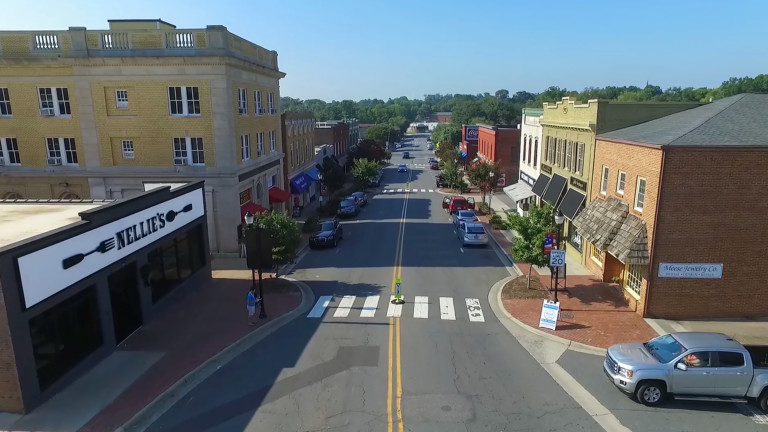
Belmont recently became one of the first cities in North Carolina to feature free public wi-fi in its common areas.

North Carolina’s own Open Broadband ISP signed a contract with the City of Belmont to provide its 1-gigabit wireless internet service for free to anyone around the main street area.

“We live in a very connected world and smartphones are everywhere, so this was a logical extension of the experience we want to provide downtown,” Belmont City Manager Adrian Miller said. “Visitors to downtown can access mobile content without using their own data plans, so they can review menus or the latest specials that our restaurants and shops are offering.”

The service is broadcast through a series of antennas spread out along Main Street. All you need to do is get in range and select “Open Belmont” as your Wi-Fi option on a phone, tablet, or laptop.

One of the best parts of the new service is that upload and download speeds are both at 1-gigabit speeds (usually upload speeds are far slower than download speeds). If you have a popular YouTube Channel or Facebook Page and you need to get your new video uploaded ASAP, it might make sense to head on over to Belmont.

The City of Belmont has undergone a truly historic transformation over the past several years.

We recently produced this video for the city, showing many of the new changes;

Governor Cooper’s Budget Proposal Is Short on Funds For The Elderly

0

Early this month, North Carolina’s Governor Roy Cooper proposed a $25.2 billion two-year state spending plan that aims to close many of the spending gaps that currently exist in the state’s services. One of the biggest changes in the proposal would expand Medicaid coverage to as many as 625,000 low-income North Carolinians, a move that would do much to help our poorest residents to access quality healthcare services. According to state health advocates, the Medicaid expansion is a necessary step in fixing the healthcare system here in the Tar Heel State, but it doesn’t go far enough to help one critical segment of the population: the state’s growing number of elderly residents.

According to UNC demography data, North Carolina, much like the rest of the United States, is experiencing the effects of population aging at an accelerating pace. Their statistics project that a full 20.6% of the state’s population will be age 65 or older by the year 2035. That demographic shift is going to not only change the face of the state but will also put a tremendous strain on the state’s healthcare system.

The problem, as it relates to the state budget proposal, is that North Carolina’s elderly population currently has a poverty rate of 9.1%. That number, even if it doesn’t increase, is going to ramp up demands on the state’s variety of services for the elderly. Programs like Meals on Wheels, allowances for personal needs, and the Adult Protective Services system are all already facing shortfalls, and advocates say the budget proposal all but ignores the expected increases in demand.

If the budget makes no further allowances to fund additional services for the elderly, advocates project that it will create a cascade effect that places ever-larger burdens on family members, many of whom are living in poverty themselves. Without the needed resources to provide in-home care for their aging relatives, many would be forced to turn to nursing home services, which is a healthcare sector that’s already on the verge of crisis due to staffing shortfalls that show no signs of abating.

That’s a situation that’s already playing out in many parts of the nation, with disastrous consequences. In many places, nursing homes that are stretched beyond their ability to care for their charges resort to tactics like hospital dumping, which is the practice of refusing to readmit residents once they’ve been taken to hospitals for acute care. According to attorney Matthew L. Sharp, a specialist in such cases, “Hospital dumping affects mostly low-income nursing home residents who have lost the ability to pay for care, except through Medicaid. Ironically, those abandoned in expensive hospitals cost Medicaid more than twice the cost of nursing home care.”

Since the new budget proposal includes an expansion of Medicaid services in the state, an increase in hospital dumping of elderly nursing home residents would cause a corresponding spike in Medicaid costs, which would either cause a severe funding shortfall or a sharp decline in the quality of services provided to patients. Either of those outcomes would be undesirable, and would likely cause the state to have to resort to even more costly fixes to the system.

So far, the budget proposal is just that: a proposal. There’s still time for some more careful reflection and changes to the plan. Examining the projected impact that the budget would have on the state’s elderly would be an excellent place to start. By increasing funding to the necessary services, it’s still possible to avert the worst outcomes that may result from ignoring the needs of a very vulnerable population. It’s a case where the old axiom should apply, that an ounce of prevention is worth a pound of cure. Now it’s up to state lawmakers to supply that ounce.

North Carolina Considers Law to Ban Cellphone Use While Driving

0

Ever since the advent of cellular phones, and smartphones, in particular, state and local governments all over the country have been puzzling over what to do to prevent phone-related distracted driving deaths. In recent years, much of the debate has centered on texting while driving, since it’s an obvious example of an activity that’s incompatible with safe driving. That’s why several states, including North Carolina, now have laws banning texting while driving, including severe penalties for those that violate the law.
Texting, however, isn’t the only cellphone-related activity that can distract a driver. Talking on the phone while driving, although it doesn’t always take the driver’s eyes off the road, does slow down reaction times and makes it much more difficult for the driver to monitor ever-changing traffic conditions. It’s no small problem, either. According to some estimates, cellphone-related distraction causes one in four traffic accidents in the US each year.

Here in North Carolina, the problem is especially severe. Over the past several years, there’s been a pronounced increase in distracted driving crashes and fatalities all across the state, with public awareness campaigns seeming to have little impact on the problem. Now, the state legislature appears poised to take action to end the menace once and for all.

In late February, Representatives Corbin, Torbett, Hardister, and Pierce introduced a new bill, HB 144, which would make talking on the phone while driving explicitly illegal statewide. The proposed law would introduce an escalating series of fines and punishments for drivers caught violating the ban, including adding insurance points to the driving records of repeat offenders.

The law would also include exceptions for drivers that use hands-free devices such as Bluetooth headsets and dashboard phone mounts, so it wouldn’t amount to a complete prohibition of cellphone use while driving. It also won’t apply to drivers making calls while parked or off of the roadway. In that way, the bill mirrors similar legislation that has passed in other parts of the country.

That’s a good sign when you consider that similar bans have had good success in other states in reducing distracted driving and preventing accidents and fatalities. In Illinois, a near-duplicate of the North Carolina proposal has worked especially well. According to the Ankin Law Office, a local firm that specializes in auto accident related cases, “The law is working and there has been a considerable drop in the number of fatalities over the past year. In 2014, the state experienced 685 fatalities by this time, whereas this year it has decreased to 636. Further, the number of accidents is decreasing as well, to just under 290,000 across the state.”

If the proposed bill becomes law here in North Carolina, it would take effect in January of 2020. Drivers would then have a grace period that lasts until July, during which officers would only issue warnings for violating the law, with citations beginning afterward. State troopers insist that they’re ready to enforce the new law if it passes, noting that they’ve had plenty of experience already in spotting drivers that are distracted due to cellphone use. The law would merely give them the tools to stop distracted drivers before they hurt themselves or others.

The bottom line is that it looks as though the days of North Carolina roads being inundated with drivers that have their minds on everything but the road may be nearing a merciful end. It comes too late for scores of state residents who have already suffered injuries or lost loved ones due to distracted drivers, but it should provide some comfort in knowing that more won’t be joining their ranks.

Charlotte Teacher Just Named One Of The Top Educators In America

0

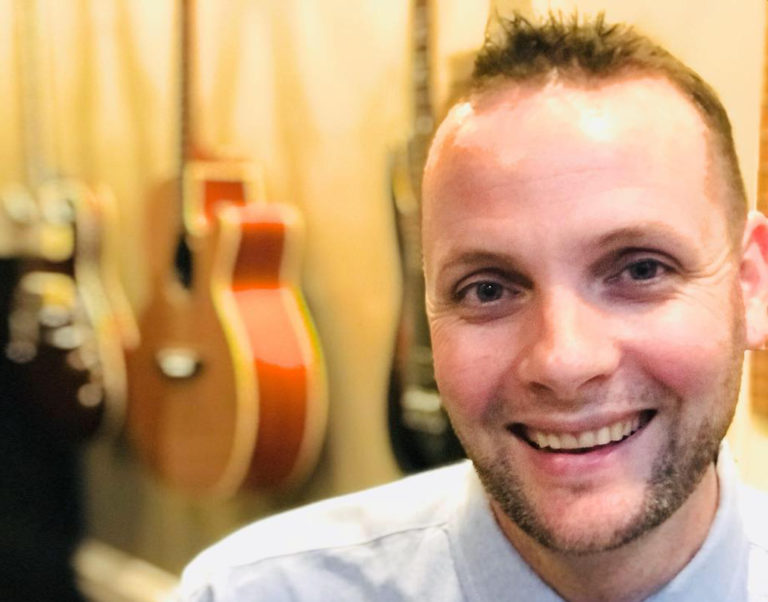
A Charlotte music teacher was just named one of the top music teacher in America.

Torrence Creek Elementary’s Kevin Brawley is now one of CMA‘s Top 30 Music Educators in America.

According to the CMA Foundation, Dierks Bentley will be hosting the fourth annual CMA Foundation Music Teachers of Excellence awards on April 30th.

Kevin posted about the announcement earlier this month, adding “the application process was insane, and they chose 10 teachers from Nashville, 10 from TN, and 10 from the rest of the country. I was one of those 10.”

Congratulations Kevin!