
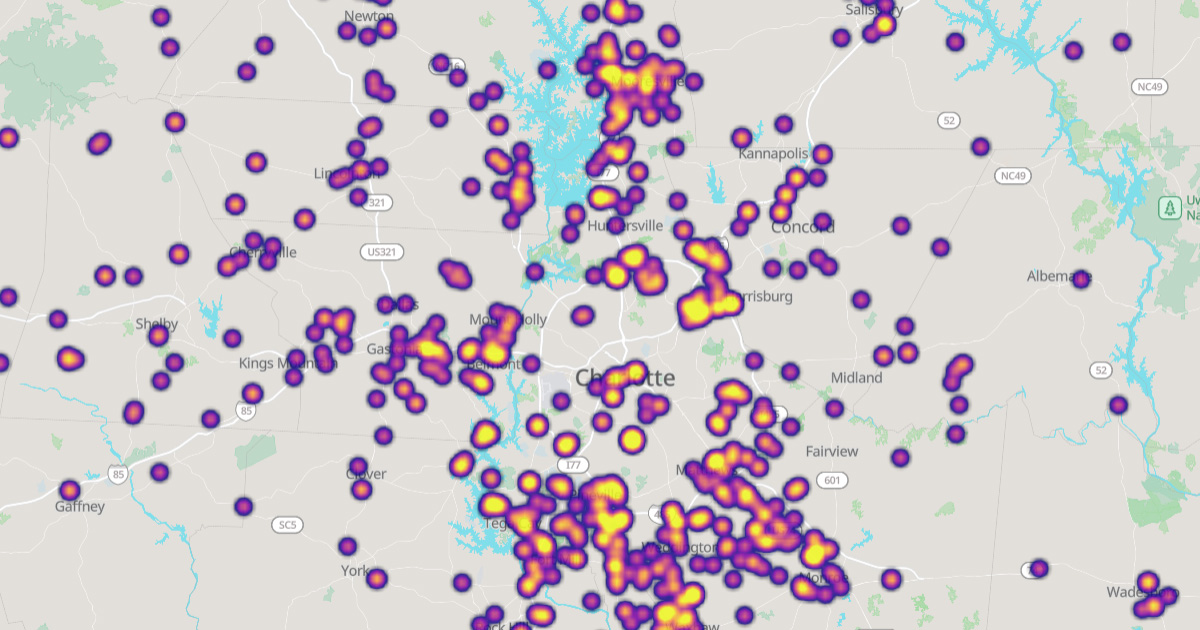
Thousands of private security cameras across Charlotte are now helping police investigate crimes, identify suspects, and monitor emergencies in real time. At the same time, the rapid growth of surveillance technology is raising new questions about privacy and government oversight.
The Charlotte-Mecklenburg Police Department’s Connect Charlotte program, launched in early 2025, has already grown to include over 2,000 registered cameras throughout our city.
The voluntary program allows residents and businesses to register low-cost wifi cameras with CMPD at no cost. If a crime occurs nearby, investigators can see that a camera exists and request footage from the owner.
The program goes a step further for participating businesses. So far, 1,363 business cameras are now integrated into the system, allowing authorized personnel in CMPD’s Real Time Crime Center to access livestream footage during active investigations.
Police say the technology can help locate getaway vehicles, verify emergency calls, track suspects, and provide officers with critical information before arriving at a scene.
The department says the network has already assisted investigations involving narcotics and other criminal activity.
CMPD emphasizes that participation remains voluntary and that camera owners control whether police can access livestreams. The department also says all registry data is encrypted and only available to authorized personnel.
However, privacy advocates have raised concerns about the broader expansion of surveillance technology nationwide, including concerns about the growing use of artificial intelligence, nationwide vehicle databases, and expanded data-sharing partnerships between law enforcement agencies. Some groups warn that surveillance systems originally designed to solve crimes can gradually expand into broader tracking networks.
Supporters of programs like Connect Charlotte argue that additional camera coverage helps police solve crimes faster and improves public safety. Critics counter that cities must balance those benefits with strong privacy protections and clear limits on how surveillance data is collected, shared, and retained.
As Charlotte’s camera network continues to expand, the debate over where public safety ends and surveillance begins is likely to grow as well.