

What to Expect from the Carolina Panthers Next Season

0

The Carolina Panthers are in what has become the toughest division in the NFL. The NFC South has the New Orleans Saints led by Drew Brees, they brought back most of last year’s roster and they signed talented wideout Emmanuel Sanders. 

The Atlanta Falcons also got better by signing running back Todd Gurley and they still have Matt Ryan, Julio Jones, and Calvin Ridley. If healthy, this team can make some serious noise. 

The Tampa Bay Buccaneers are also in this division and unless you’ve been living under a rock you have to know that they signed Tom Brady, who helped bring Rob Gronkowski out of retirement and he will also have more talented weapons at his disposal, including wideouts Mike Evans and Chris Godwin and tight end O.J. Howard, along with a defense that finished fifth in DVOA (Defense-adjusted Value Over Average) last season.

Cam Newton Out

The Panthers recently moved on from franchise quarterback Cam Newton after nine seasons. Newton, the best player in the history of the team, was allowed to seek a trade on March 17th but there were no trade partners because of his health, and a week later the Panthers released him.

The Panthers lost 20-14 against the Buccaneers on September 12th and in that game, Newton re-aggravated a foot injury that he had on an August 22nd preseason contest against the Patriots, when he left the game near the end of the first quarter and was seen limping to the locker room.

Newton dealt with many injuries in recent years. For example, he underwent an “arthroscopic procedure” on his right shoulder in January after surgery on a torn rotator cuff in the same shoulder in March 2017.

The 30-year-old threw for over 3,000 yards in each of his first eight seasons in the league, even after missing the final two games of the 2018 season. He threw for 3,395 yards (completing 67.9 percent of his passes) with 24 touchdowns and 13 interceptions in that year.

The signal-caller really struggled last season, as he completed just 50 of 89 passes for 572 yards and one interception for a Panthers team that opened the season 0-2 after home losses against the Rams and Buccaneers.

Newton hasn’t thrown a touchdown in four straight games. His last touchdown pass was in a 24-17 loss at Tampa Bay on December 2nd, 2018. The Panthers went 0-8 in Newton’s last eight games as their starting quarterback dating back to the 2018 season.

Bridgewater and McCaffrey’s Turn to Lead

Christian McCaffrey recently signed a four-year contract extension with the Panthers that averages $16 million per year. This new deal made him the highest-paid running back in NFL history, surpassing Ezekiel Elliott of the Cowboys, who is making $15 million per year.

McCaffrey ran for 1,387 rushing yards and 15 touchdowns on 287 carry in 16 games last season. He also caught 116 passes for 1,005 receiving yards and four scores. 

The Panthers selected McCaffrey with the eighth overall pick in the 2017 NFL Draft and he has never missed a game in three years in the league. McCaffrey’s 2,392 all-purpose yards last season led the NFL.

“I’m so excited to continue my career in Carolina,” McCaffrey said. “I want to thank Mr. Tepper, Marty Hurney, and Coach Rhule for the opportunity to help lead this great franchise, and to all my teammates for their help along the way. And to Panthers fans, KEEP POUNDING!”

McCaffrey’s father is former NFL wide receiver Ed McCaffrey. The talented running back from Stanford is the only player in NFL history with 2,500 rushing yards and 2,500 receiving yards in the first three seasons of his career. He also holds the record for most receptions by a running back in a single game (15) and most receptions in a single season (116).

As a dual-threat from the backfield, the Panthers run their entire offense through him and many people thought that he deserved NFL MVP consideration last season. In the end he didn’t receive any votes but he was in the mixt to be the NFL Offensive Player of the Year.

The 287 carries and 142 targets through the air that McCaffrey had ensured more plays designed for him in a single season than for any other player in Panthers history. The 23-year-old has 2,920 rushing yards and 24 touchdowns on 623 carries in 48 career games with the Panthers and he has 303 catches for 2,523 receiving yards and 15 touchdowns on 379 targets. 

“The league is shifting,” McCaffrey told ESPN in 2019. “It’s becoming a smaller league, way more speed-dominant. So you’re seeing more backs like me who can run between the tackles, pass-protect, catch and become matchup nightmares.”

Carolina Panthers Props for 2020 Season 

Odds to Win NFC South (By sportsbookreview.com)

New Orleans Saints +110

Tampa Bay Buccaneers +120

Atlanta Falcons +800

Carolina Panthers +1500

Carolina Panthers to Make the Playoffs

No -1000

Yes +700

Carolina Panthers

Under 5.5 Wins -120

Over 5.5 Wins -110

Carolina Panthers Exact Win Total

5-9 -160

0-4 +185

10-14 +450

15-16 +20000

NFL Final Standings

NFC South Carolina Panthers

4th -275

3rd +400

2nd +800

1st +1400

The Panthers are in rebuilding mode but I like how they are doing it the right way. This team can be competitive again in the near future.

Christian McCaffrey is now the face of the franchise and is coming off the best season of his career. He clearly has his best years ahead of him. The Panthers have many needs on their offensive line, defensive line, and secondary but adding Teddy Bridgewater under center why I think they can exceed expectations. 

While Bridgewater hasn’t been a starting quarterback in the NFL for five years, he proved that he was ready to go when the Saints needed him last season, and when healthy he is a very special player. I am taking the Panthers to finish third in the NFC South at +400.

UNC Charlotte Names Two Deans and Associate Provost

0

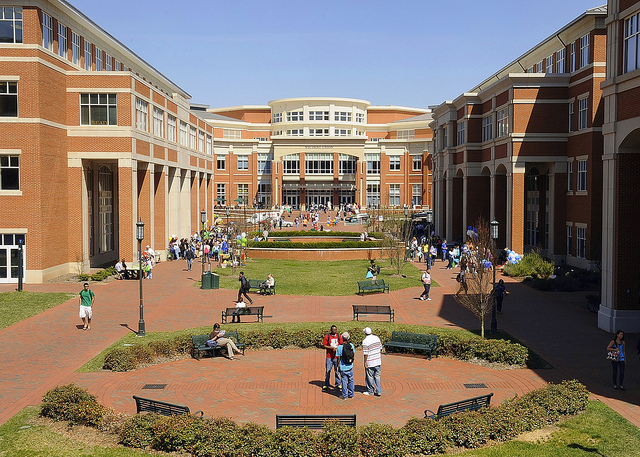
UNC Charlotte announces new leadership for three academic areas–business, engineering, and urban research and community engagement–pivotal to the University’s mission to serve the greater Charlotte region and beyond. All three leaders will report to Joan Lorden, provost and vice chancellor for Academic Affairs.
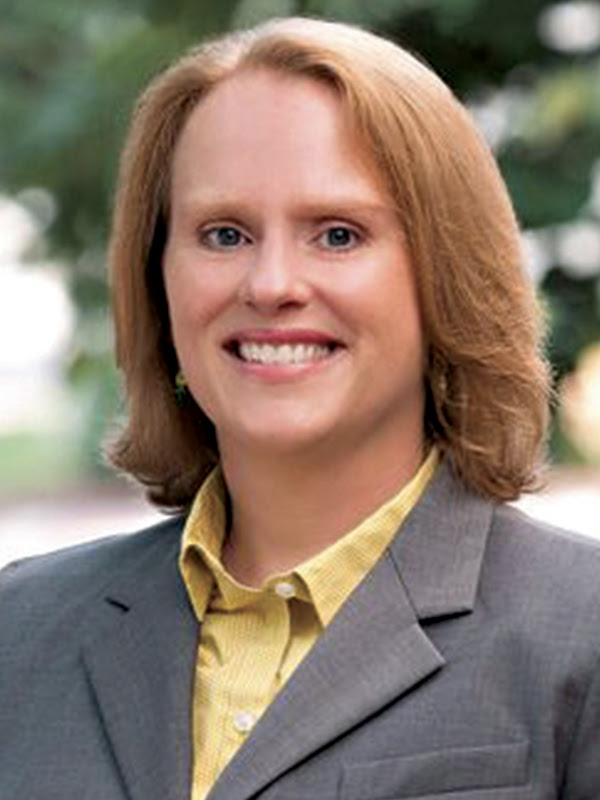
  • Jennifer Troyer is named dean for the Belk College of Business, one of the Carolinas’ largest business schools. Troyer has served UNC Charlotte for 20 years, most recently as interim dean of Belk College.
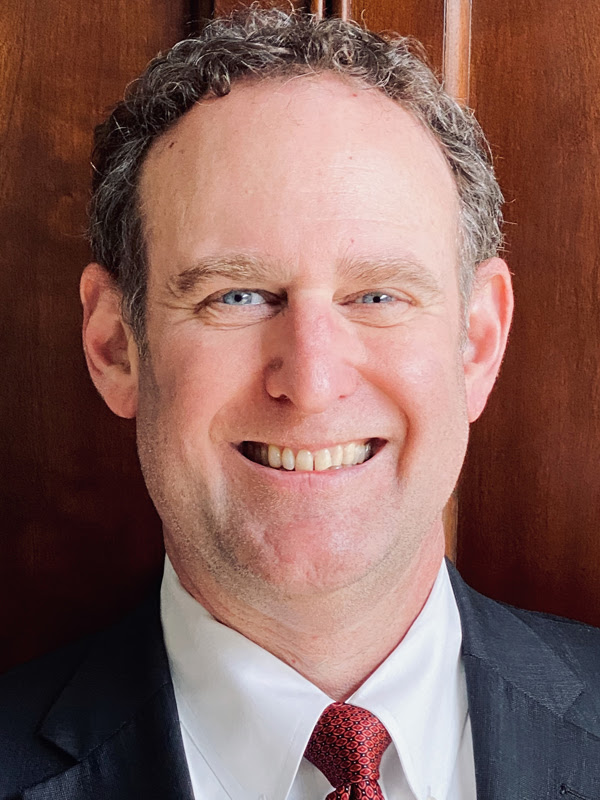
  • Robert Keynton is appointed dean for The William States Lee College of Engineering, a leader in engineering research and education for nearly 50 years. He joins from the University of Louisville where he was interim executive vice president for Research & Innovation and professor and Lutz Endowed Chair of Biomechanical Devices in the Department of Bioengineering at the Speed School of Engineering.
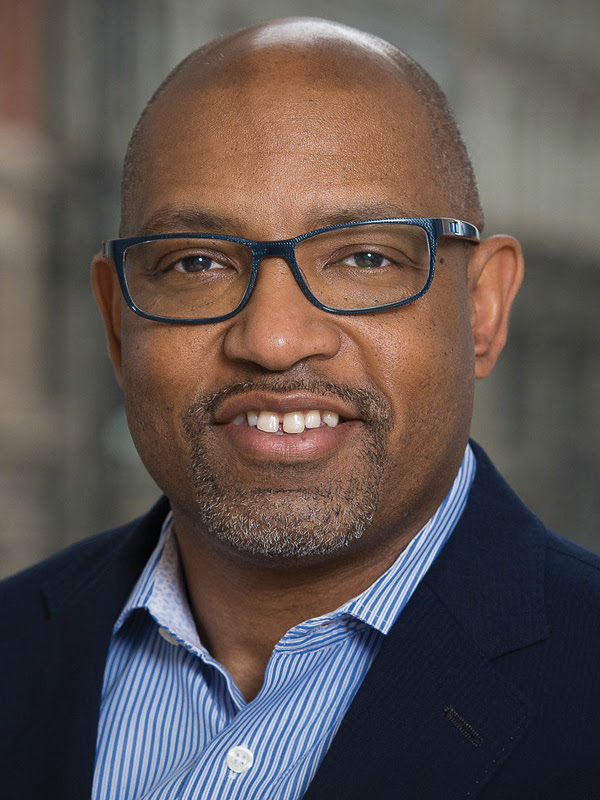
  • Byron White will join UNC Charlotte as associate provost for the newly reorganized Office of Urban Research and Community Engagement, focused on connecting UNC Charlotte with community research, collaboration, and engaged scholarship to continue building a thriving, inclusive region. White joins from StrivePartnership where he is vice president and executive director of the public-private collaborative focused on cradle-to-career outcomes in urban education.

“We sought innovative, accomplished leaders who are gifted in building nationally recognized programs and research, developing strong internal and external partnerships and possessing a deep commitment to student success,” said Lorden. “Following a national search, we believe these three leaders embody the right qualities to further UNC Charlotte’s mission as we enter the next chapter in the University’s story.”

About Jennifer Troyer, dean of the Belk College of Business
Troyer_Jennifer.jpgTroyer has served UNC Charlotte for 20 years, most recently as interim dean of Belk College.

Prior to becoming interim dean of the Belk College, Troyer served in the same role for UNC Charlotte’s College of Health and Human Services. Previously, she held several administrative roles within the Belk College, including senior associate dean, associate dean for research and graduate programs, and chair of the Department of Economics. As associate dean, she was instrumental in the creation of three new graduate certificates and the Master of Science in Management program. She also helped launch the first Doctorate in Business Administration (DBA) program in the Carolinas.

Troyer holds a master’s degree and Ph.D. in Economics from Florida State University. She also holds a Bachelor of Science in Business Administration from the University of Memphis. She has conducted policy-relevant research on the quality of U.S. nursing homes, the cost-effectiveness of medical interventions and strategic behavior in the pharmaceutical industry. Her research has earned several awards and has been funded by the National Institutes of Health.

Read more about the Belk College of Business.

About Robert Keynton, dean of The William States Lee College of Engineering
Keynton_Robert.jpgKeynton led the creation of the Speed School of Engineering Bioengineering Department and its associated curriculum at the University of Louisville and was successful in realizing the vision to achieve national recognition of the bioengineering program by being named a Wallace H. Coulter Foundation Translational Partner. Keynton’s area of expertise is development of biomedical micro-electromechanical systems (BioMEMS) and cardiovascular mechanics, the development of micro Total Analysis Systems (uTAS), experimental and computational microfluidics, acoustic transducer design and fabrication, and experimental fluid mechanics. Author of over 100 published works, he has applied his research in areas as diverse as diabetic retinopathy, detection of autism and diagnosis of lung cancer. Keynton holds 15 patents for his discoveries.
Keynton is an elected fellow in the American Institute for Medical and Biological Engineering (AIMBE), the Biomedical Engineering Society (BMES) and the National Academy of Inventors (NAI). He received a B.S. in Engineering Science and Mechanics from the Virginia Polytechnic Institute and State University and a master’s degree and Ph.D. in biomedical engineering from the University of Akron.

Read more about The William States Lee College of Engineering.

About Byron White, associate provost for the Office of Urban Research and Community Engagement
White_Byron.jpgByron White will lead the Office of Urban Research and Community Engagement (known historically as Metropolitan Studies). Comprising the UNC Charlotte Urban Institute, the Women + Girls Research Alliance, the Charlotte Action Research Project and Engaged Scholarship, its interdisciplinary partnerships will focus on increasing access to community-based learning and community-engaged research, streamlining collaboration among shared research, and expanding community partnerships.
White previously served as vice president for university engagement and as chief diversity officer at Cleveland State University, vice chancellor for economic advancement at the Ohio Department of Higher Education, and associate vice president for community engagement at Xavier University, following a career at the Chicago Tribune. He received a B.S. in journalism from Ohio University, an M.A. in social science from University of Chicago and an Ed.D. in higher education management from the University of Pennsylvania. He led the successful applications for the Carnegie Community Engagement Classification at both Cleveland State University and Xavier University by facilitating the co-design of strategies to demonstrate alignment of curriculum and research with the changing demands of an urban workforce and civic needs. He also co-developed programs to support engaged scholarship through grants for community-engaged research, training by industry experts and community recognition.

NC Governor Cooper Signs Executive Order To Ease ‘Stay At Home’ Restrictions

0

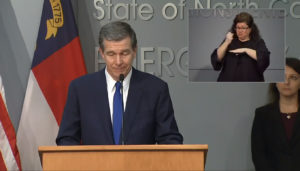
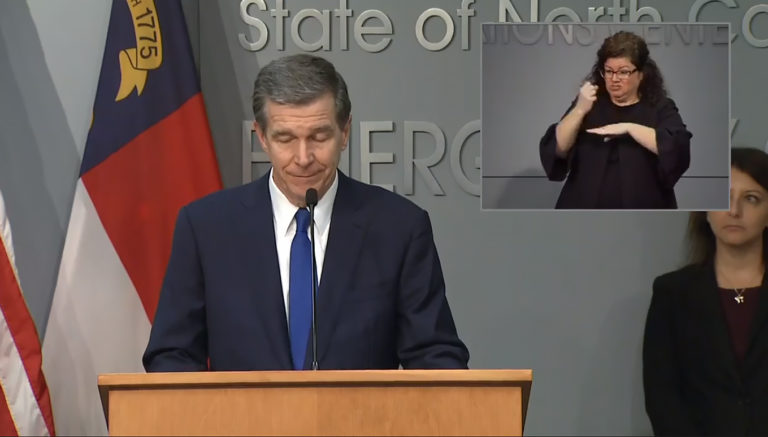
North Carolina Governor Roy Cooper has just signed a new Executive Order that will officially transition our state into ‘Phase 1’ of the reopening this coming Friday (5/8) evening starting at 5pm.


Executive Order 138 modifies our state’s ‘Stay At Home Order’, easing many state-wide restrictions, including; retail store capacity, outside gatherings, parks, childcare, and more.

“COVID-19 is still a serious threat to our state, and Phase 1 is designed to be a limited easing of restrictions that can boost parts of our economy while keeping important safety rules in place,” said Cooper. “This is a careful and deliberate first step, guided by the data, and North Carolinians still must use caution while this virus is circulating.”

The order is in effect until 5 pm on Friday, May 22. However, the end of this Order does not necessarily mean the state will move to Phase 2. Phase 2 will only start if data and indicators are in the right place.

Phase 2 includes the following changes:

  • Lift Stay At Home order with strong encouragement for vulnerable populations to continue staying at home to stay safe
  • Allow limited opening of restaurants, bars, fitness centers, personal care services, and other businesses that can follow safety protocols including the potential need to reduce capacity
  • Allow gathering at places such as houses of worship and entertainment venues at reduced capacity
  • Increase in number of people allowed at gatherings
  • Open public playgrounds
  • Continue rigorous restrictions on nursing homes and other congregant care settings

After 4-6 weeks of phase 2, if everything still looks under control, the state will move to Phase 3, which includes the following changes:

  • Lessen restrictions for vulnerable populations with encouragement to continue practicing physical distancing and minimizing exposure to settings where distancing isn’t possible
  • Allow increased capacity at restaurants, bars, other businesses, houses of worships, and entertainment venues
  • Further increase the number of people allowed at gatherings
  • Continue rigorous restrictions on nursing homes and other congregant care settings

Governor Cooper underscored the need for the testing, tracing and trends to move in the right direction for each of these phases to move forward. If there is a spike in infections, tightening of restrictions may be needed temporarily.

What do you think about the plans?

South Carolina Ranked As One of 2020’s Worst States for Working Moms

0

With Mother’s Day around the corner and the unemployment rate rising faster for women than for men, the personal-finance website WalletHub today released its report on 2020’s Best & Worst States for Working Moms.

In order to help ease the burden on mothers in the workforce, WalletHub compared the attractiveness of each of the 50 states and the District of Columbia for a working mother based on 17 key metrics. The data set ranges from median women’s salary to female unemployment rate to day-care quality.

North Carolina ranked among the bottom half of the states at #31 and South Carolina ranked as one of the worst in America at #48:

Best and Worst States for Working Moms

Overall Rank
(1=Best)
State Total Score ‘Child Care’ Rank ‘Professional Opportunities’ Rank ‘Work-Life Balance’ Rank
1 Massachusetts 68.22 2 7 1
2 Minnesota 62.28 1 1 16
3 Vermont 59.93 4 5 9
4 Connecticut 59.64 3 21 6
5 District of Columbia 58.21 11 11 5
6 New Jersey 56.53 8 20 8
7 Rhode Island 56.24 9 48 2
8 Maine 54.74 15 6 13
9 New Hampshire 53.98 6 3 34
10 Wisconsin 53.10 14 17 11
11 Washington 52.88 31 29 3
12 South Dakota 50.30 20 2 24
13 Delaware 50.29 7 9 41
14 North Dakota 49.71 5 38 23
15 New York 48.27 19 40 14
16 Colorado 48.13 23 4 32
17 Oregon 48.12 43 14 4
18 Iowa 48.02 16 32 18
19 Montana 47.86 24 31 12
20 Indiana 47.85 13 27 30
21 Virginia 47.14 10 13 47
22 Kentucky 46.20 17 28 35
23 Tennessee 46.16 12 19 46
24 Kansas 45.67 29 25 19
25 Ohio 45.64 28 23 20
26 Utah 44.87 26 46 10
27 Illinois 44.44 18 43 25
28 Maryland 44.12 22 8 50
29 Nebraska 43.88 30 22 28
30 Missouri 43.57 27 15 39
31 North Carolina 43.49 34 12 36
32 Michigan 43.29 36 16 29
33 Pennsylvania 42.80 33 24 37
34 Hawaii 42.25 37 41 17
35 California 41.92 49 34 7
36 Wyoming 41.19 21 49 21
37 Florida 41.08 25 30 44
38 Arizona 40.69 39 18 33
39 Alaska 39.36 40 35 22
40 Texas 38.73 32 37 49
41 Arkansas 38.56 41 33 27
42 Georgia 38.51 38 26 51
43 Nevada 37.64 48 10 45
44 New Mexico 37.34 42 39 26
45 Oklahoma 37.11 35 44 40
46 Idaho 35.61 50 36 15
47 West Virginia 34.62 45 45 31
48 South Carolina 34.19 44 42 42
49 Alabama 31.05 47 47 43
50 Mississippi 29.92 46 51 47
51 Louisiana 27.57 51 50 38

The Ultimate Guide to Opening IRA Accounts

0

Regardless of whether you want to start working towards a grand retirement plan to travel the world, or whether you just simply want to lead a simple life with your significant other in the future, opening an Individual Retirement Account (IRA) can solve your woes. An IRA is essentially a simple and effective way to save up your pre-tax money for your retirement, giving you the financial freedom to live comfortably. IRAs are versatile, giving individuals the freedom to start an account with as many financial services providers as you want according to your preference. Plus, there are plenty of options out there for you to explore, and you can start by finding out more about RegalAssets. If you are looking to open one soon, look no further as we have compiled a list of important factors to look out for especially for beginners.
Tax Benefits

IRA is a good way to save on taxes even if it’s for a relatively short term. As of 2020, individuals can contribute as much as $6000 to their IRA, or $7000 if you are 50 years and above. The tax savings are rather significant, as it can essentially cover the cost entirely of about $1000 and higher, determined by your own individual income tax bracket and if your state necessitates each individual to be subjected to income tax.

Being Aware of Your Financial Services Options

Traditional investment brokerage firms are useful, but modern times have also allowed the service of investment advisors to help you navigate your way through all the technicalities and clauses that opening an IRA brings about. With experts on board with you, you can take advantage of their services to thoroughly understand what you are signing up for with the help of data analyzers who can assess the practicality of every type of investment for you. By establishing trust and rapport, you will be in the good hands of these experts who can help you make investment decisions while putting your monetary interests first.

However, such personalized services do not come cheap. Despite the high commissions and fees that retirement savers have to pay, this type of service is most suitable for novices who’d prefer having an expert to give professional advice and to recommend the best times to buy and sell based on your individual needs. For retail brokers, their expertise lies in investigating, analyzing, and making transactions on your behalf, to ensure that your IRA is maximized to its full potential of experiencing steady growth.

Discount Brokers

Discount brokers can offer more than that, as they commonly hold webinars and seminars to educate individuals on the latest trends, and all the information that they need to know to make informed investment decisions. They are able to disseminate such information in layman and simple terms, making it extremely easy to understand. Discount brokers are more useful for individuals who prefer to be self-directed, instead of executing transactions on your behalf, and offer more generic services like answering queries and providing you with more information to allow you to make an informed decision by yourself.

Furthermore, the brokerage sites also offer many DIY tools for independent savers. Some of them even allow individuals to key in their financial information, offering a tailored experience based on your actual financial situation.

Traditional Broker

If you want to engage a traditional broker, be mindful that you’ll have to have a minimum overall investment portfolio value of $250,000. Personalized services are rather costly, and they also have to be enough viable trading movements to account for you opening an IRA account. They offer a more direct approach in helping you with your investment executions, offering both Roth and traditional IRAs that you can easily open online as well.

Banks

Instead of turning to a broker to help you, you can head to banks as well. Similar to discount brokers, they offer independent investment accounts for clients to deal with, and may even offer extra research and evaluation services. Clients are expected to choose their investments themselves, instead of letting the bank choose it for them. Increasingly, banks also provide retail brokerage services with financial experts who can manage your IRA for you, while earning a portion of the assets you own. Furthermore, banks give you the convenient option of arranging for self-activated monthly deposits to your IRA account through your bank account; thus giving you less work to do on your own.

Financial Trust Companies

Financial trust companies manage large pensions funds, while other assets offer self-directed and independent IRAs. They typically manage private equity, notes, real estate, stocks, bonds, mutual funds, and other non-exchange traded assets. With a vast variety of assets that they provide, individuals are able to further diversify their portfolio by including other industries and scopes of investment. However, one point to take note of is that they do not offer tax or investment advice, that newbies may require. As custodians, they manage and operate investments by being a third-party provider, and hence, clients are required to do their own research instead of relying on their expertise alone.

A tip is to always check out the fees and commissions that they charge, regardless of which institution and the type of account you select at the end of the day. These fees can amount to quite a number, depending on the size of your assets in your portfolio or your transactions.

Doing Research

While there are a host of outlets to help with your IRA accounts, you should not neglect your own research and read up as much as you can before you decide on anything, as it allows you to at least have a basic understanding of how IRA accounts work and how the normal procedures are like. However, do bear in mind that some resources online do require a small fee, and sometimes paying for them is worth it. 

With Robo-trading and Robo-advisors, it can soon be attainable for individuals to cut out the middleman and save on costs and engage in trade execution on your own, order to buy or sell directly through discount brokers for low prices.

In a Nutshell

Ultimately, doing your own research and deciding on which account or institution to go for is important, as you can identify your needs and goals. Gather as much information as you need before opening an account, and be sure that you are comfortable with what the broker has to offer. At the end of the day, the money that you profit is yours, and not the brokers, so ensure that you are in the loop and communicate with your broker about your changing needs and wants.

3 Earthquakes Just Rocked North Carolina Between Charlotte and Tennessee Border

0

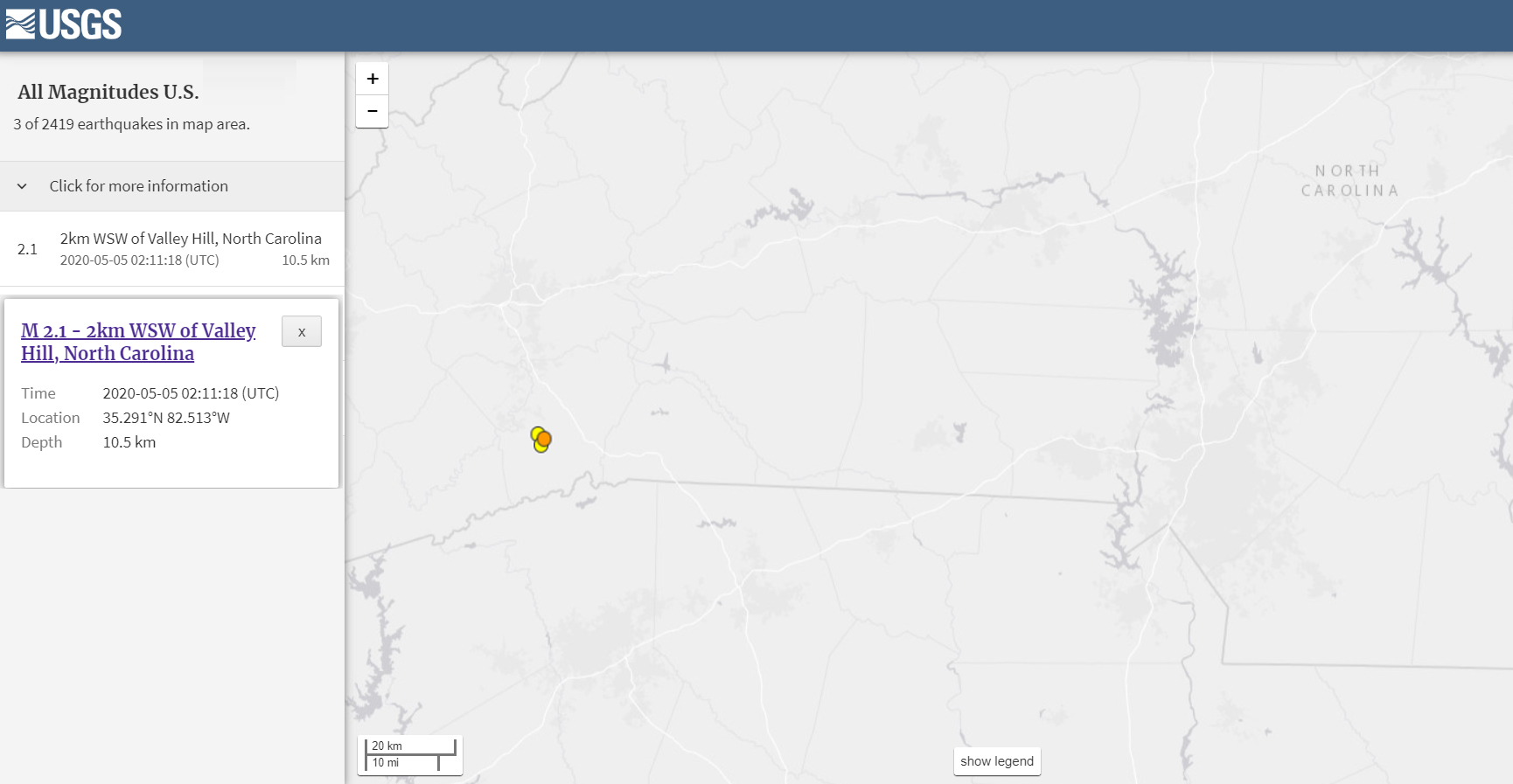
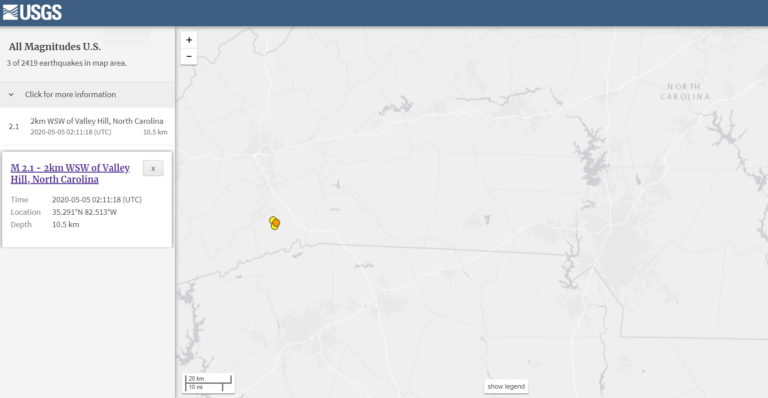
3 Earthquakes just shook North Carolina halfway between Charlotte and the Tennessee boarder, according to the USGA. The largest of the 3 quakes had a magnitude of 2.3 and was rated as a 3 by the USGA’s user submitted ‘felt report’.

The most recent of the 3 quakes occurred last night at 10:11 pm, with a magnitude of 2.1 and an epicenter of 35.292°N 82.513°W (just south of Hendersonville, NC and about 80 miles west of Charlotte).

Earthquakes have been increasing in frequency around the Charlotte region over the past few years. Last year, we saw a 4.4 magnitude quake hit Decatur, TN, and a couple months ago, a 2.6 magnitude quake rocked a small town just north of Charlotte.

The Carolinas have been known to experience the occasional damage-causing earthquakes.

According to USGS.gov, “The largest earthquake in the area (magnitude 5.1) occurred in 1916. Moderately damaging earthquakes strike the inland Carolinas every few decades, and smaller earthquakes are felt about once each year or two.”

Did you feel last night’s quake? 

Governor Cooper Announces 2020 Hurricane Preparedness Week – New Tools and Recommendations

0

The Governor of North Carolina has just announced this week to be ‘Hurricane Preparedness Week’ all across our state. Governor Cooper reminded residents that now is the time to prepare for the 2020 hurricane season, which will from June 1 through November 30 of 2020.


“North Carolina knows all too well the damage and disruption that hurricanes can bring, but being prepared can help people fare better and recover quicker,” Governor Cooper said in a press release. “Especially with COVID-19 affecting everyone’s daily lives, now is the time to make sure you and your family are ready this hurricane season.”

During this hurricane season, North Carolina is introducing Know Your Zone, a tiered evacuation system that highlights areas most vulnerable to storm surge from hurricanes and tropical storms, and other hazards. If it becomes necessary, local officials will order evacuations using pre-determined zones created by coastal counties. The Know Your Zone lookup tool is a new color-coded interactive map you can use to determine the evacuation zone where you live, work, or are visiting based upon street address.

During this time, officials are also recommending that all North Carolina residents prepare for possible power outages from hurricane damage. The following emergency items are suggested for all homes in our our state;

Governor Cooper urged families to use this week to discuss their emergency plans, update their emergency supplies, and review their homeowners and renter’s insurance policies. This year, it’s also important to consider how the COVID-19 virus might alter your typical preparedness for hurricane season.

UNC Charlotte Center City School Named in Honor of Philip L. and Lisa Lewis Dubois

0

UNC Charlotte is recognizing the legacy of retiring Chancellor Philip L. Dubois and First Lady Lisa Lewis Dubois by renaming the University’s uptown Charlotte Center City School Building in their honor. Regarded as a centerpiece to Dubois’ 15-year term as chancellor, the 11-story glass structure on the corner of 9th and Brevard Streets will now be known as The Dubois Center at UNC Charlotte Center City (The Dubois Center).

Dubois_Center_City_Campus.jpgThe $50.4 million facility, which opened in fall 2011, is the only University of North Carolina classroom building conceived and designed specifically to serve the business, organizations and people in an urban center. The Uptown campus building is part of the 1.2 billion facility construction and renovation program Dubois completed during his tenure as chancellor. The space, which accommodates more than 1,300 students annually who are earning bachelor’s or master’s degrees plus almost 2,600 more participating in continuing education options, includes 25 state-of-the-art classrooms and design studios, meeting and performance spaces. The Projective Eye Gallery, located near the lobby, regularly exhibits the work of artists known locally, nationally and internationally.

“Phil came to me with this audacious idea of starting a new campus right in the middle of uptown Charlotte,” said Erskine Bowles, president of the UNC System when the concept was first proposed. “Over time, we were able to convince the legislature this building could make an enormous difference, that it could drive business and opportunities for Charlotte and the region for decades to come.”

Proximity to the University’s highly ranked part-time MBA evening program and continuing education programs for those who live and work uptown, as well as to more than 1,800 University, corporate and community events every year fulfill Dubois’ original vision to elevate the University’s profile in the Charlotte region and beyond.

“We knew we needed to have a more substantial and visible presence,” Dubois said. “That led to the decision to make our No. 1 campus construction priority a new building in Center City.”

Dubois’ foresight has been confirmed by the subsequent development of the surrounding neighborhood, which includes installation of popular First Ward Park, positioned between The Dubois Center and the city’s thriving business district, and a new light rail station, which provides more than 100 daily stops to the University’s main campus in University City.

Throughout the city, including on the main campus, are evidence of the civic contributions of Lisa Lewis Dubois, efforts that extend far beyond the traditional role of a university first lady. A passion for providing a platform for women led to serving as co-chair of the Charlotte-Mecklenburg Women’s Summit, whose outcomes guided the implementation of the Women+Girls Research Alliance, housed at the UNC Charlotte Urban Institute. Her imprint is evident on numerous education and cultural efforts that have made a difference in the lives of countless Charlotteans.

“The legacy of Chancellor Phil Dubois and First Lady Lisa Lewis Dubois is not limited to their leadership within the walls of the UNC Charlotte campus,” said Michael L. Wilson ‘93, chair of the UNC Charlotte Board of Trustees. “They have worked diligently to connect UNC Charlotte to the greater Charlotte community; as the city grew, UNC Charlotte grew with it.”

The Dubois Center at UNC Charlotte Center City is more than just a building; it’s a tangible example of the University serving the needs of a growing urban region, consistent with the institution’s mission.

“The change in the University’s visibility has paid real dividends,” Dubois said. “I feel good about leaving UNC Charlotte in a strong position as an integral partner in this great city.”

To read more about the Dubois’ leadership at UNC Charlotte, visit the Dubois Legacy Series. Visit the UNC Charlotte media assets website for a collection of photos and videos of The Dubois Center.

Charlotte’s Bonchon Launches ‘Hearts & Soles’ Campaign To Benefit Employees Affected By COVID-19

0

Charlotte’s own Bonchon, just launched their ‘Hearts & Soles’ campaign in support of hospitality industry non-profit National Restaurant Association Educational Foundation (NRAEF) and their Restaurant Employee Relief Fund (RERF). In partnership with Threadless, limited edition Bonchon-designed shoes will be on sale with all proceeds benefiting RERF and restaurant industry workers adversely affected by COVID-19. The casual Bucketfeet brand sneakers, featuring one-of-a-kind playful designs created by resident artist, Leanne Aks, will retail for $59.99, available exclusively through Bonchon’s online shop: https://www.threadless.com/@BonchonChicken. The shop will also include other Bonchon designed swag where all proceeds will benefit NRAEF. Image link to shoes/socks available here.

Bonchon is widely known for its double fried chicken and enthusiastic fan base. The restaurant chain has been growing its list of global communities since 2002.

“With the support of Bonchon, we can help restaurant workers across the country with financial aid during this incredibly difficult time,” said Rob Gifford, president of the NRAEF. “We have raised more than $17 million so far and are grateful for the generous support of companies like Bonchon who are stepping up with creative ways to help the heart and soul of our industry – it’s people.”

NRAEF created the Restaurant Employee Relief Fund to help restaurant industry workers experiencing hardship in the wake of the coronavirus outbreak. Through this fund, grants will be made to restaurant industry workers impacted by COVID-19 and are experiencing a decrease in wages or loss of employment. Subject to the availability of funds contributed, a one-time grant of $500 will be disbursed to each applicant, following NRAEF’s review and confirmation that the application meets eligibility. The NRAEF is accepting individual donations, no matter how small. Visit RERF.us to learn more about the fund and find out how you can donate.

North Carolina Just Approved More Than $1.5 Billion In COVID-19 Relief Funds

0

This past weekend, the NC General Assembly signed 2 widespread bills (HB 1043 and SB 704) that will provide over $1.5 billion in relief during our current COVID-19 pandemic.

The bills are designed to provide financial relief to a wide spectrum of communities, organizations, and municipalities across our state.

Governor Cooper, who is expected to sign both bills soon, released the following statement about the bills:

“I applaud the General Assembly for working quickly to pass legislation to fight COVID-19 in North Carolina. These bills were developed collaboratively, and although it’s just a first step, they are the product of a consensus approach that I hope can continue. I will be reviewing them closely and look forward to taking action on them soon.”


The bills will provide:

Over $280 million for educational organizations, with the following breakdown:

  • $75 million for School Nutrition
  • $70 million for Summer Learning Programs
  • $11 million for K-12 Connectivity
  • $30 million for K-12 Student Devices
  • $10 million for Student Health
  • $25 million for Community Colleges
  • $44.4 million for UNC Flexibility Funding
  • $20 million for Private College Assistance

$115 million for DHHS, with the following breakdown:

  • $25 million for Testing, Tracing and Trends
  • $20 million for Enhanced Public Health Capacity
  • $20 million for Enhanced Behavioral Health
  • $50 million for Rural and Underserved Communities

$27.5 million for Food, Safety, Shelter, Foster and Child Care

$25 million for Assisted Living Facilities

$85 million for the N.C. Medical School Research Fund, with the following breakdown:

  • $29 million for UNC School of Public Health/NC Collaboratory
  • $15 million for Duke University Human Vaccine Institute
  • $15 million for ECU Brody School of Medicine
  • $6 million for Campbell University School of Osteopathic Medicine
  • $20 million for Wake Forest University Health Services

$95 million for North Carolina Hospitals, including the following breakdown:

  • $65 million for Rural Hospitals
  • $15 million for Teaching Hospitals Relief Fund
  • $15 million for the General Hospital Relief Fund

$150 million for Local Government Assistance

$61.5 million for Providers and Emergency Responders, including the following breakdown:

  • $50 million for Enhanced PPE and Sanitation Supplies
  • $5 million for Association of Community Health Centers
  • $1.5 million for Prescriptions for Indigent and Uninsured
  • $5 million for Charitable Clinics

$125 million for Small Business Assistance Loans

$85 million for State Government Operations

$300 million for Transportation Operations

$5 million for Tourism Industry Support

$9 million for Broadband Connectivity


What do you think about all the assistance? 

Do you think the money is being used wisely?