For This Nov 3 Midterm, Use This New Tool to Know Your Candidates Before You Vote

0

Nov. 3rd midterm is only 2 weeks away. In our increasingly polarized country, this midterm is particularly important in determining how we are moving forward. 

In every election, a variety of organizations try to help with election transparency. But this year, an organization took a unique approach. Elections Simplified (electionssimplified.com) is gathering the track records of candidates with the help of AI so voters can see what the candidates have done instead of just their campaign marketing. 

“The biggest problem when I get my ballot is that I don’t know who most of these candidates are. You can’t trust what a politician says”, says Mary, a Charlotte resident.

The website electionssimplified.com tackles this exact problem by showing what candidates have actually done – what they voted for and who they took money from.

We tried the website by first entering an address: 

Elections Simplified address search showing 600 E. 4th Street, Charlotte, NC 28202.
We use the city hall of Charlotte in the picture

Then we see what elections we have: 

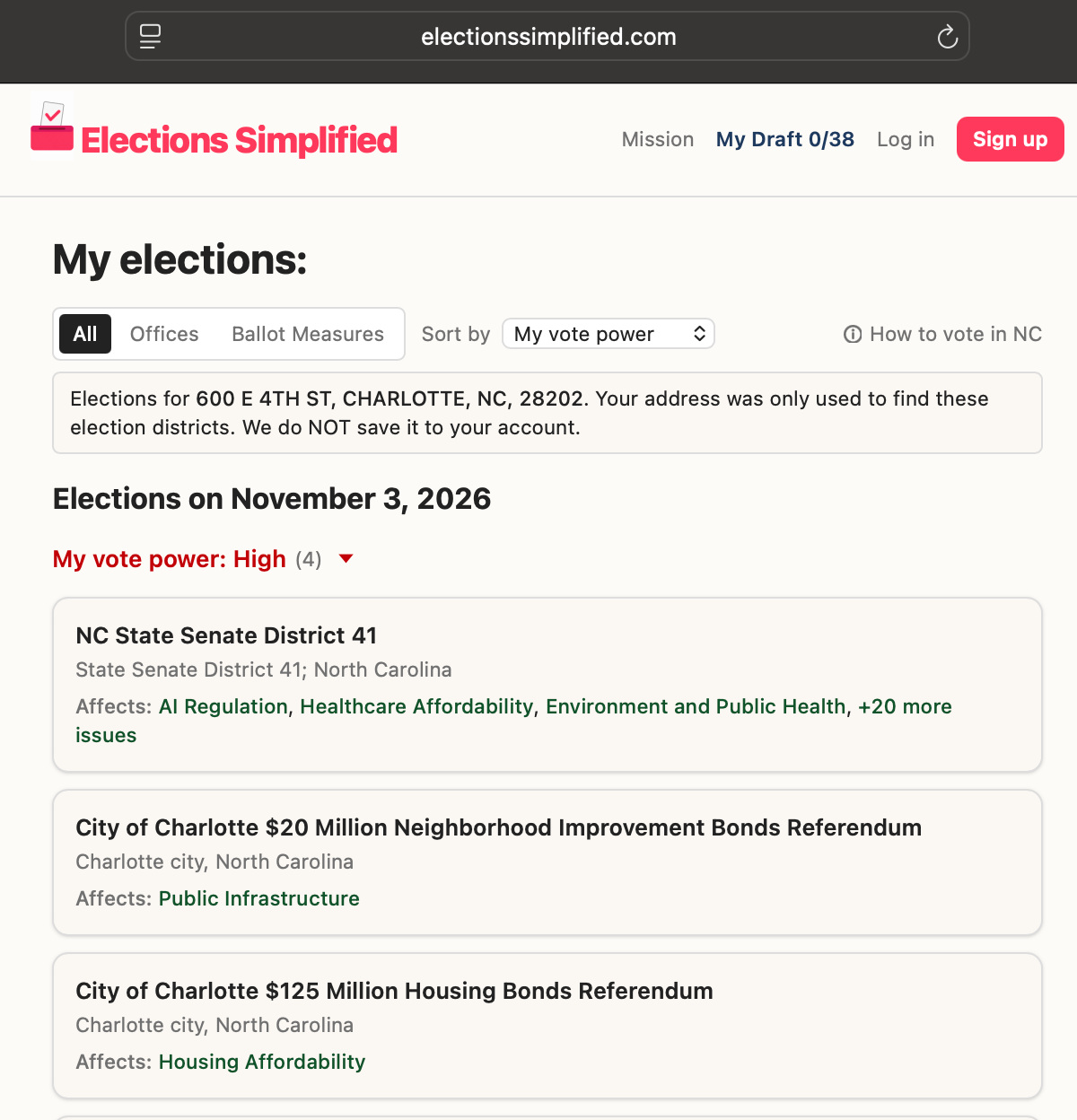
Elections Simplified lists November 3, 2026 elections for a Charlotte address, organized by vote power.

Here we can see the elections on the ballot organized by the “vote power” – how much power our vote has in a given race. “Vote power” combines district population and estimated race competitiveness to help compare races. Smaller districts and closer contests generally receive higher ratings.

Now we choose a race and see each candidate’s detail 

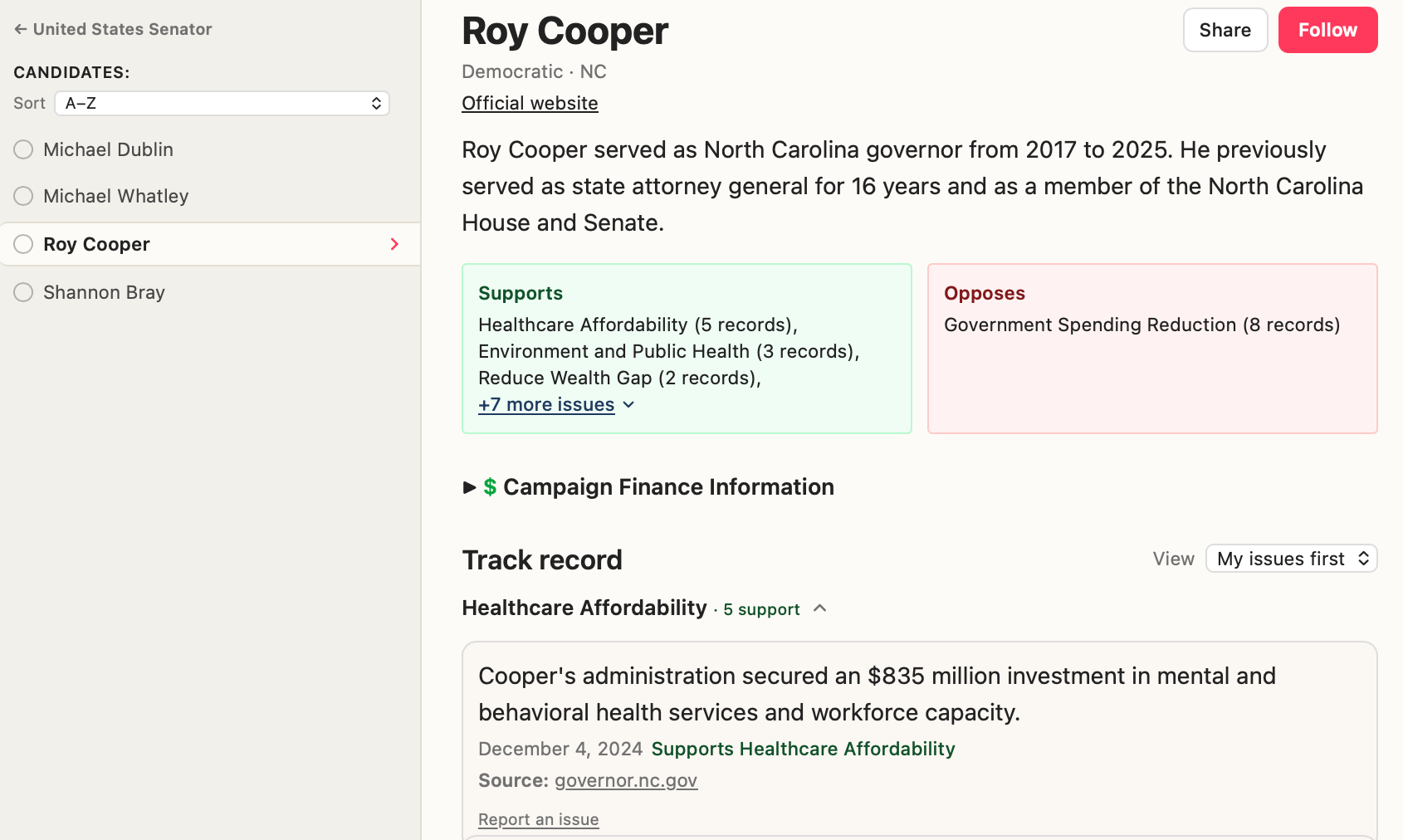
Elections Simplified candidate detail view showing a US Senate candidate's record grouped by issue with linked sources.

We can see here for the US Senate race, each candidate’s record is grouped by issue, with a source linked.

For the ballot measure: 

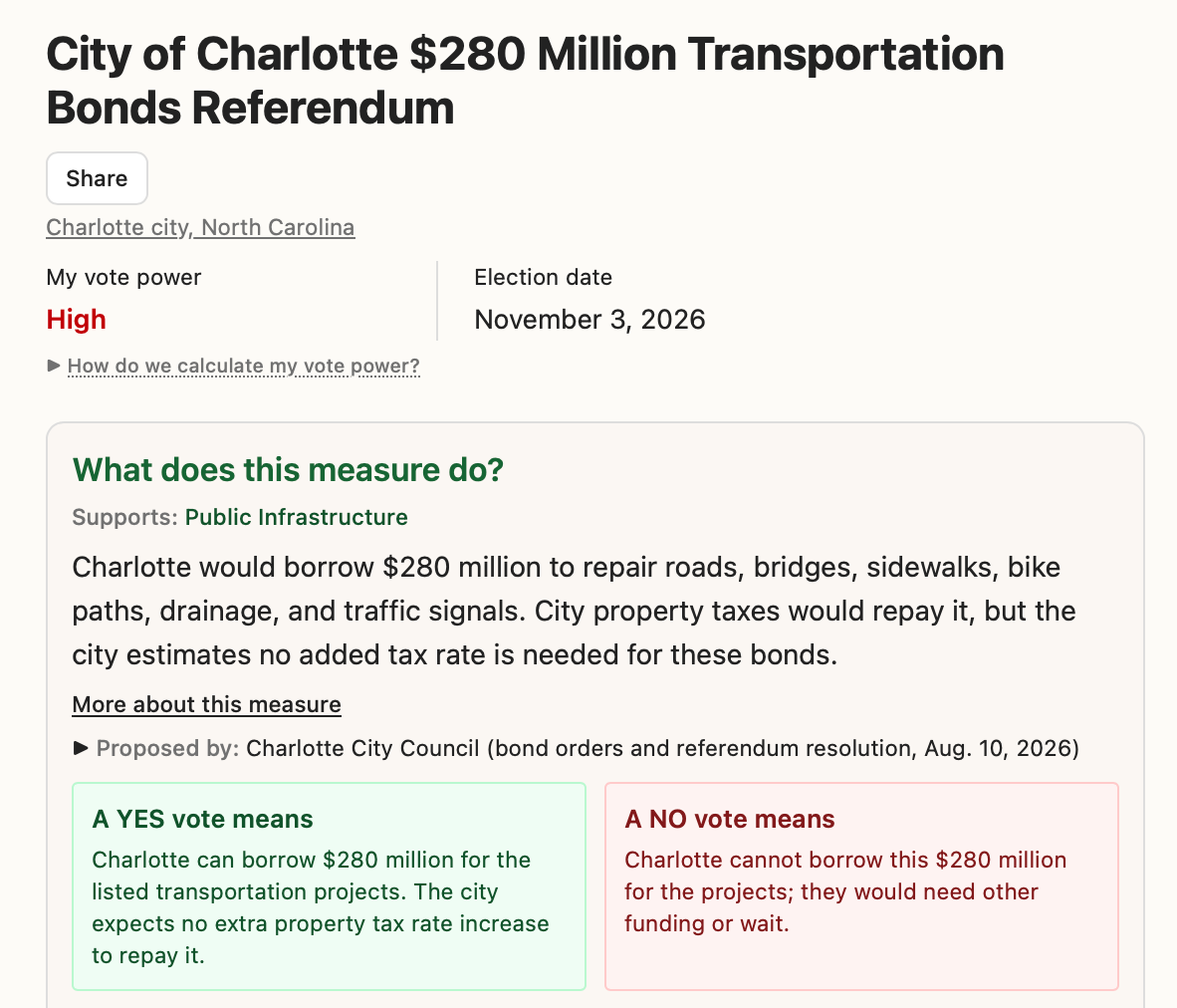
Elections Simplified explains Charlotte's transportation bonds referendum and what a yes or no vote means.

The website translates this ballot measure into plain English and shows what a YES and a NO vote mean, which is helpful. 

Overall we find this website useful. Tools like electionssimplified.com are making our voting increasingly easy to understand.

Human Skeletal Remains Found in Charlotte-Area Park — Police Asking for Help

0

Human skeletal remains and a duffel bag containing personal belongings were discovered in a Lancaster County field over the weekend and police are now asking for the public’s help in identifying the remains.

According to the Lancaster County Sheriff’s Office, deputies responded to privately owned land off South Potter Road near Bear Creek Park around 12:45 p.m. Saturday. Investigators said the remains appeared to have been there for a long period of time.

The Coroner’s Office secured and processed the scene. Crime scene investigators also collected personal items from the nearby duffel bag.

Authorities said those belongings have already provided investigators with possible leads about the person’s identity.

The remains were taken by the Lancaster County Coroner’s Office. They will be examined by the Richland County Coroner’s Office Forensic Anthropology Department.

Forensic specialists will work to identify the person and determine the cause and manner of death.

Sheriff Barry Faile said investigators still know very little about what happened.

“We hope the examination of the remains and the personal items found nearby will lead us to the identity of this person very soon,” Faile said.

Investigators said no evidence of foul play has been discovered at this time.

Anyone with information can call the Lancaster County Sheriff’s Office at 803-283-3388 and select Option 4. Anonymous tips can also be submitted through P3Tips.

Bryce Young Joins Elite NFL Company as Panthers Beat Eagles 25-14 in Philadelphia

0

The MVP chants followed Bryce Young all the way to Philadelphia on Sunday.

Young delivered another historic performance as the Carolina Panthers beat the Eagles 25-14, strengthening their early playoff outlook. The former No. 1 pick finished with 281 passing yards and two touchdowns.

Young has now thrown for 1,549 yards, 11 touchdowns and only two interceptions through five games.

Even more impressive, he joined just five other quarterbacks in NFL history with a remarkable five-game start. Each recorded at least 280 passing yards, one touchdown and no more than one interception in their first five games.

The exclusive group includes:

  • Peyton Manning — 2009 and 2013
  • Donovan McNabb — 2006
  • Kyle Orton — 2010
  • Aaron Rodgers — 2011
  • Steve Young — 1998
  • Bryce Young — 2026

Manning won NFL MVP both seasons he accomplished the feat. Rodgers also won MVP in 2011, while Steve Young earned All-Pro honors in 1998.

Young left Lincoln Financial Field to chants of “MVP” from Carolina fans, repeating the reaction he received after beating Detroit. This time, the chants came on the road in one of the NFL’s toughest environments.

Panthers Grind Out Another Win

Carolina did not win with offense alone.

Chuba Hubbard carried 28 times for 120 yards, giving the Panthers a steady rushing attack. Tight end Tommy Tremble caught both of Young’s touchdown passes and celebrated one with a Rocky-inspired pose.

Philadelphia played without starting quarterback Jalen Hurts and its top three running backs, including Saquon Barkley. Carolina’s defense took advantage.

The Panthers held Philadelphia to just 222 total yards and 35 rushing yards. They also sacked backup quarterback Tanner McKee three times.

Derrick Brown knocked down passes at the line, while Zakee Wheatley broke up a fourth-down deep ball to DeVonta Smith.

Penalties Nearly Cost Carolina

One glaring problem remained.

Carolina committed 13 penalties for 149 yards, including eight penalties for 105 yards in the first half. Coach Dave Canales called the total “outrageous.”

Three strong returns were also erased by penalties, including a 50-yard kickoff return by David Moore.

The Panthers still found ways to overcome the mistakes and close out another road victory.

Playoff Expectations Are Growing

Carolina’s transformation has increasingly centered around Young.

His efficiency, low interception total and growing command of the offense have put him alongside some of the NFL’s greatest quarterbacks statistically.

The Panthers still have plenty of football ahead, but their early-season results have changed the conversation.

What began as hope for improvement is quickly turning into legitimate playoff expectations — with MVP chants now following Bryce Young from Charlotte to Philadelphia.

Smoke & Mirrors: Silfab and York County Just Sued Each Other in New Attempt to Circumvent The Zoning Code

0

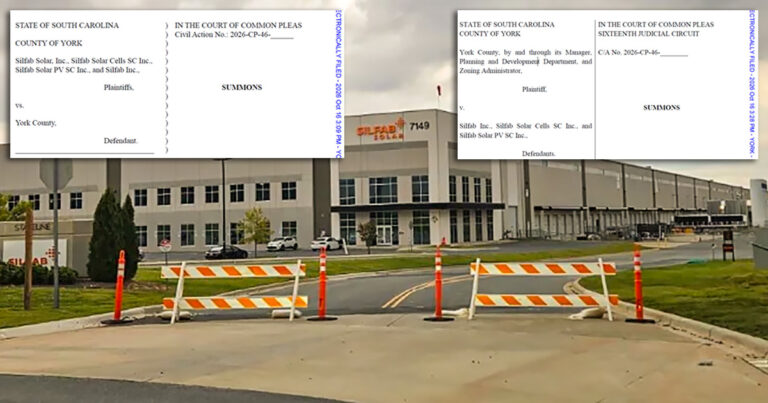
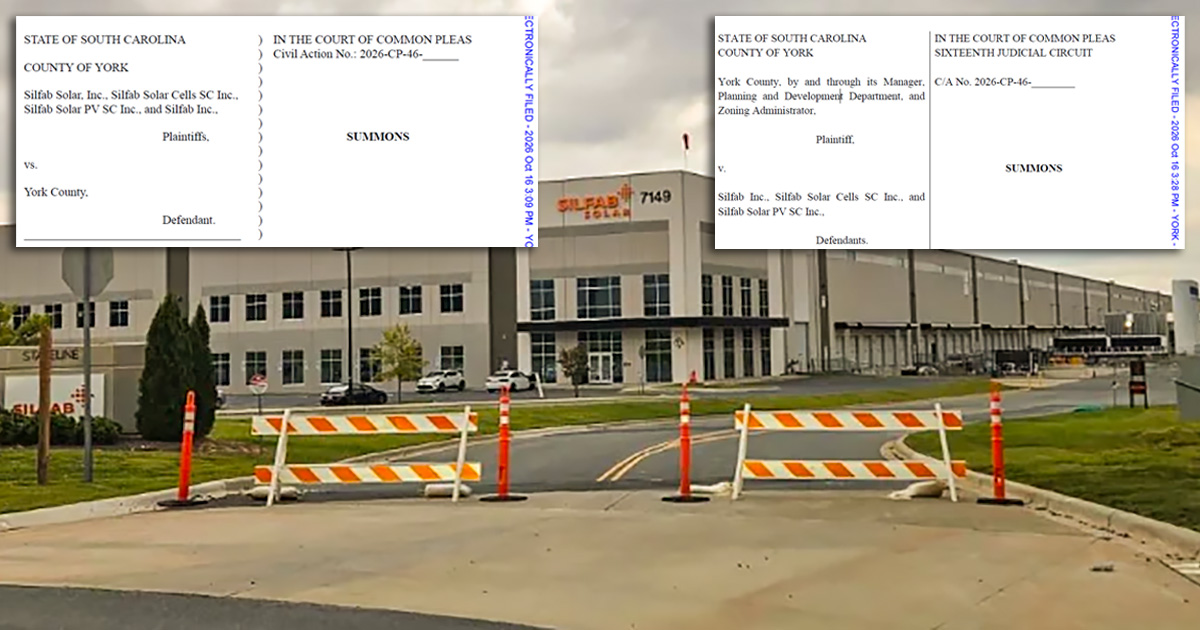
Today, Silfab and York County both filed new lawsuits against each other in unique legal strategy that attempts to both skirt responsibility and attain protection from having to uphold the zoning code and recent court rulings against the chemical factory currently being constructed next door to 2 new schools in Fort Mill.

Silfab filed the first complaint at 3:09 pm, Friday, October 16 (Silfab vs York County – case #2026-CP-46-03785). York County followed at 3:28 pm, just 19 minutes later (York County vs Silfab – case #2026-CP-46-03786). The mirrored lawsuits name each other as defendants yet share smokescreen arguments that could protect the heavy industrial use at 7149 Logistics Lane in Fort Mill.

Silfab argues that the County’s internal e-mails and FILOT tax deal should protect its factory “regardless of the outcome of the BZA Appeal” (paragraph 65). York County asks whether it must enforce the zoning ruling while arguing that zoning interpretations “do not retroactively render approvals null and void” (paragraph 75(d)). Put simply, Silfab wants its earlier promises to shield the factory even if it loses its appeal, and the County advances arguments supporting that protection.

On May 9, 2024, the Board of Zoning Appeals voted 5–0 to reverse the administrator’s classification of solar-panel manufacturing before any permits were issued for Silfab’s factory or chemical storage buildings or bunkers. The ruling expressly found that Silfab’s proposed future use was prohibited in their current zoning designation.

Judge William McKinnon affirmed the BZA this past July and issued an amended order August 27 using even clearer language. He upheld its rejection of the “Computer and Electronic Products Manufacturing” classification. He also rejected the argument that the 2023 tax-incentive agreement amended the zoning code. McKinnon also described the 2022 verification letter as an informal communication that expressly was not a permit. His order recognized that the zoning dispute had concrete consequences for neighboring property owner Walter “Wally” Buchanan.

To be clear, Judge William A. McKinnon’s specifically ruled Silfab’s operations unlawful, stating:

“…the record affirmatively supports the BZA’s finding that the manufacturing process at issue is qualitatively distinct from the listed Computer and Electronic Products Manufacturing examples and is more consistent with heavy industrial activity than light. The Code defines Light Industrial as activity that “ordinarily do[es] not create noise, smoke, fumes, odors, glare, or health or safety hazards outside of the building or lot” and expressly excludes “hazardous material treatment and storage facilities…”

According to three technical documents submitted for the Fort Mill plant – including the facility’s Hazardous Materials Inventory System (HMIS) report, DES Air Permit, and Industrial Wastewater Treatment Plans — the factory is designed to transform raw silicon wafers into finished solar panels through a multi-stage industrial process involving strong acids, explosive gases, and chemical wastewater treatment systems.

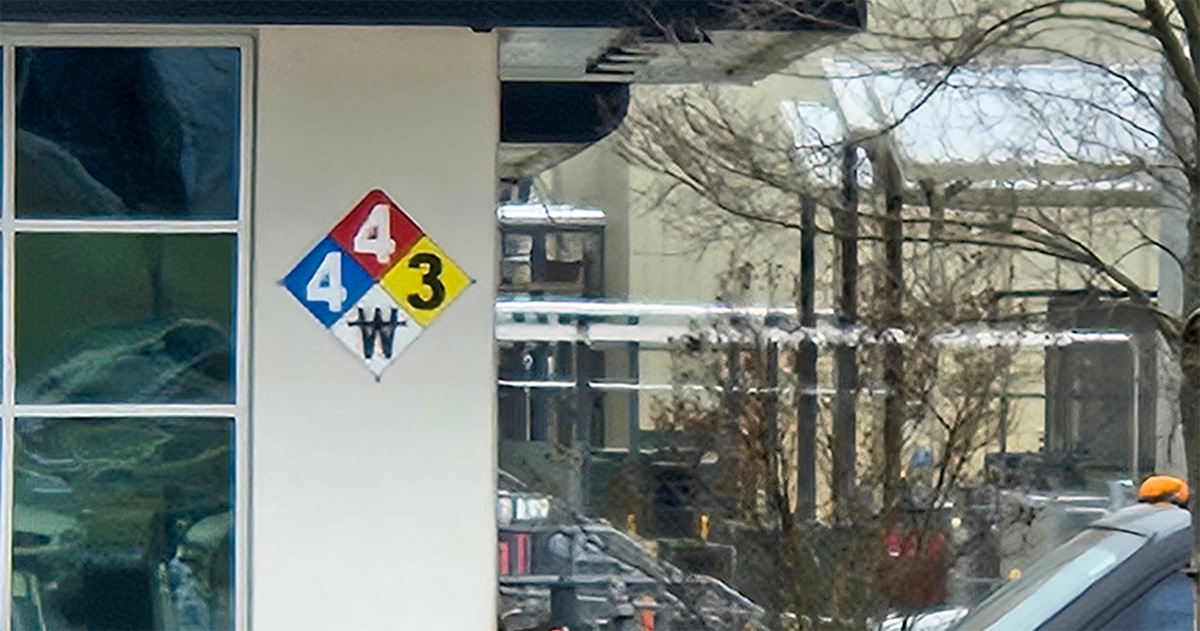
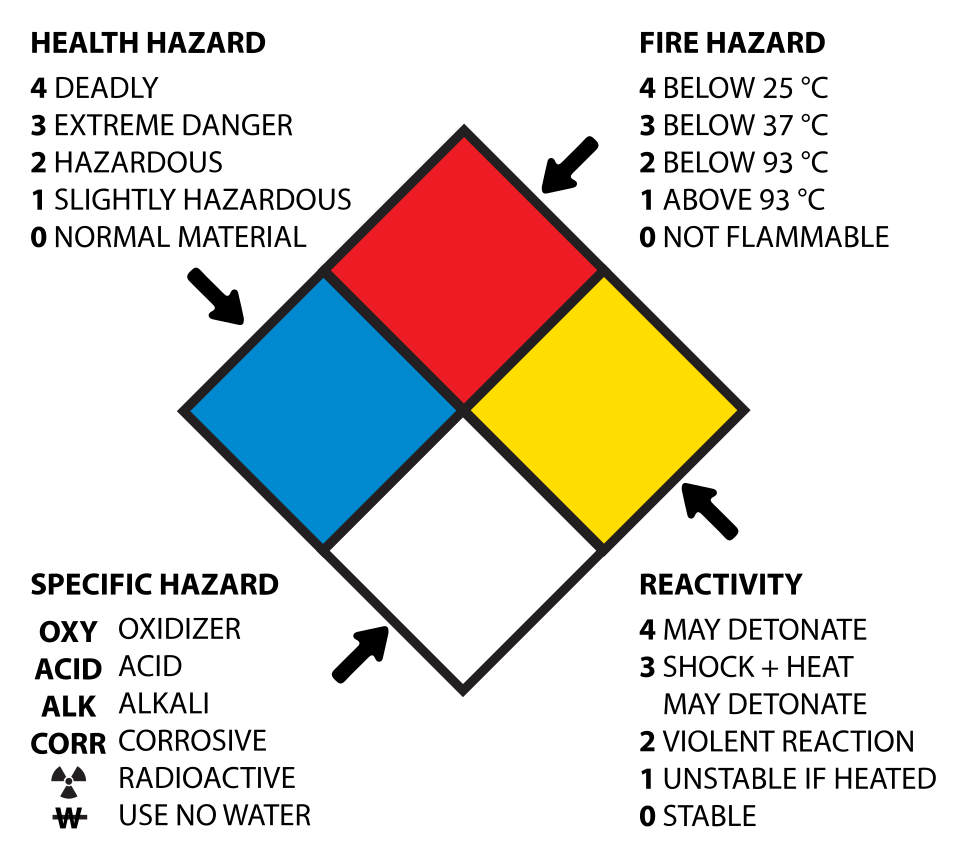
The NFPA Fire Diamond posted on the side of Silfab’s building has a 4-4-3-W Rating.

Blue (Left — Health Hazard: 4): Indicates a severe health risk. Short exposure could cause death or major residual injury even with prompt medical treatment. Red (Top — Flammability Hazard: 4): Indicates extreme flammability. The material rapidly or completely vaporizes at atmospheric pressure and ambient temperature, or is readily dispersed in air and burns easily (flash point below 73°F). Yellow (Right — Instability/Reactivity Hazard: 3): Indicates serious reactivity. The material is capable of detonation, explosive decomposition, or explosive reaction if subjected to a strong initiating source, or when mixed with water under heat or pressure. White (Bottom — Special Hazard: W): The symbol is a stylized “W” (W with a slash through it), meaning water-reactive. It reacts violently or explosively with water and poses an unusual hazard when water is used as an extinguishing agent.

Some of the most hazardous materials Silfab’s documents state they plan on store and use (with frequent refills) include; 44,000 lbs of anhydrous ammonia gas, 26,456 lbs of (pyrophoric) silane gas, 15,850 gallons of hydrofluoric acid, 10,560 gallons of hydrochloric acid, 13,000 gallons of liquid oxygen (used as rocket fuel), 9,198 lbs of sulfuric acid, 1,945 lbs of phosphorus oxychloride gas, 1,540 lbs of boron trichloride gas, 951 lbs of (pyrophoric) trimethylaluminum gas, and 63,360 lbs of nitrous oxide.

For nearby families, this dispute carries consequences far beyond court filings.

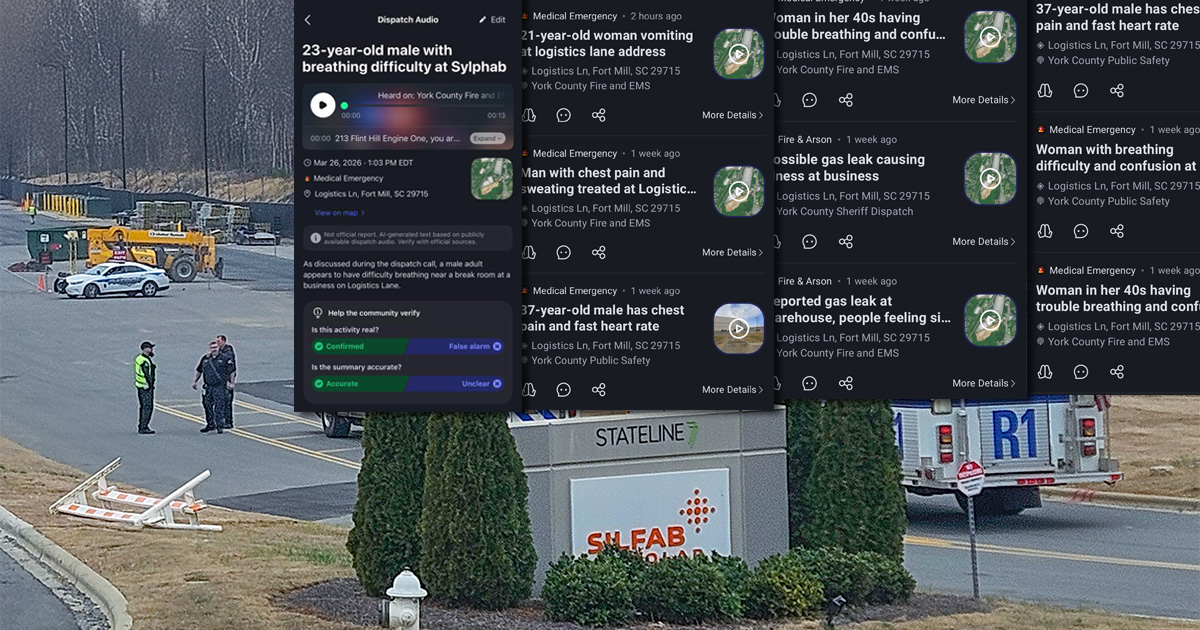
Two March chemical incidents disrupted school operations at Flint Hill Elementary, beside the facility. The Fort Mill school board subsequently requested permanent limits to non-hazardous assembly and removal of hazardous chemicals. Its March 10 resolution also stated that neither Silfab nor County Emergency Management initially notified the district of the releases.

The district renewed its objections this month. An October 2 letter challenged restarting commissioning before applicable safety recommendations were completed and demonstrated.

The district’s objection makes clear that families’ safety concerns remain unresolved from its perspective, whatever happens in the zoning cases.

York County Staff and Council are playing a dangerous game

S.C. Code § 15-78-60(12) expressly addresses issuing permits and certificates—and failing or refusing to revoke them. It permits governmental liability when those licensing functions are exercised with gross negligence. Additionally, under S.C. Code §6-29-950, “No permit may be issued or approved” unless state planning law and local zoning ordinances are followed. The same statute states, “A violation of any ordinance adopted pursuant to the provisions of this chapter is a misdemeanor… Each day the unlawful erection, construction, reconstruction, alteration, conversion, maintenance, or use continues is considered a separate offense.“

The strongest South Carolina analogy is Steinke v. S.C. Department of Labor, Licensing & Regulation, 336 S.C. 373 (1999). Two young people died after a cable-car accident. Regulators had received repeated warnings about unsafe equipment. The Supreme Court recognized licensing-related gross-negligence liability and held that injured third parties could invoke the statutory exception.

The argument here would be specific: officials received warnings identifying a potentially lethal hazard, possessed applicable permit or certificate powers, and exercised those functions with gross negligence, causing preventable deaths or injuries.

Jensen v. Anderson County DSS, 304 S.C. 195 (1991) supplies the framework for establishing a duty to an identifiable protected class. A Silfab claim should connect applicable zoning and life-safety provisions to the affected schoolchildren, staff and nearby residents.

York County officials have repeatedly received warnings about Silfab’s zoning status, chemical hazards and proximity to schools and neighborhoods. South Carolina law can allow governmental liability for gross negligence involving permits and certificates, and potential federal civil-rights claims could also apply.

In a worst-case catastrophic scenario, the financial exposure could potentially reach hundreds of millions or even exceed $1 billion, when damages, emergency response, cleanup, school disruption, litigation costs and other expenses are considered.

If another chemical spill occurs at Silfab (after they truck in the high quantities of deadly and explosive chemicals) and serious injuries occurs, records showing what county officials knew, when they knew it, what they authorized and what they could have lawfully prevented could become central evidence in subsequent litigation and substantial taxpayer expenses.

Rock Hill Village Sale Becomes One of The Biggest Property Deals in Years

0

One of Rock Hill’s busiest shopping centers has just been sold to an outside investor for $32.5 million – one of the region’s largest property sales in years.

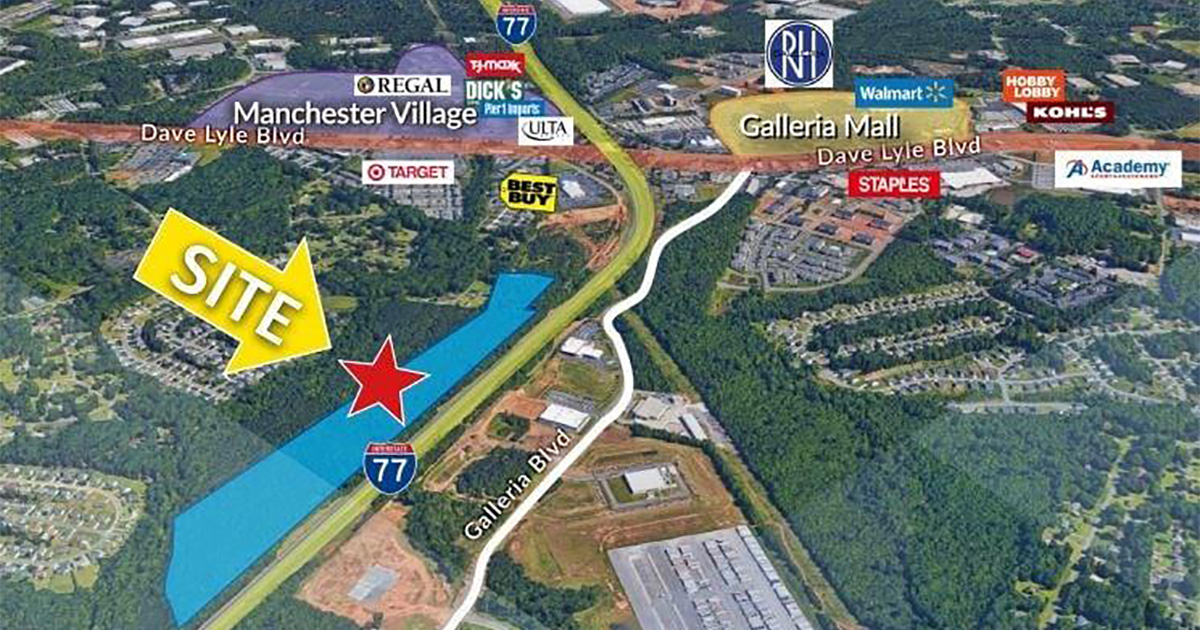
Manchester Village, just off I-77 and Dave Lyle Boulevard, was acquired by Cohen & Steers Income Opportunities REIT. The purchase was made through a joint venture with Florida-based Sterling Organization.

The deal works out to roughly $200 per square foot for the 162,326-square-foot shopping center. Commercial Real Estate Direct also reported the buyers secured about $19.5 million in acquisition financing.

The center is almost completely full.

Manchester Village was 99% occupied at the time of sale, with major tenants including T.J. Maxx, HomeGoods, Ross Dress for Less, Michaels, Books-A-Million, Ulta Beauty and Five Below. Panera Bread, Subway, UPS and several smaller businesses also operate there. JLL

A $32.5 Million Bet on Rock Hill’s Growth

The property spans roughly 21 acres near one of Rock Hill’s busiest commercial corridors. It was completed around 2002 and has four access points, including two signalized entrances.

Its location is a major part of the investment.

Manchester Village sits less than a mile from I-77, where traffic reaches roughly 88,000 vehicles per day. The center is also about 25 miles south of Uptown Charlotte.

Buyer Cohen & Steers specifically pointed to Charlotte’s continued growth spilling south into York County.

The company said York County’s population grew 8.9% during the past five years. Its retail market is also about 96% occupied, with average annual rent growth around 6% through 2025.

Within 10 miles of Manchester Village, the population has grown about 47% since 2010, according to JLL marketing materials. Average household income in that same area has more than doubled.

Investors See More Upside Despite 99% Occupancy

Manchester Village was already nearly full before the sale, but investors still see room for financial growth.

JLL marketing materials described existing tenant rents as averaging more than 20% below current market levels. The center also has unusually long tenant relationships, with weighted average occupancy exceeding 17 years.

That combination — almost no vacancy, long-term national tenants and below-market rents — helped make the property attractive to institutional investors.

No redevelopment plans have been announced.

Major Development Is Coming Nearby

Manchester Village is also positioned near some of Rock Hill’s largest upcoming investments.

The shopping center sits about 1.5 miles from Palmetto Research Park, where announced healthcare and biopharma projects represent roughly $1.8 billion in planned investment.

The surrounding area also includes Manchester Meadows, Winthrop University, hotels, apartments and additional development along the Dave Lyle Boulevard corridor.

Charlotte-based Southern Real Estate had controlled the shopping center through various entities since 2002. The Oct. 9 sale ends more than two decades of local ownership.

Thousands of Pounds of Pumpkins Spill on SC Road, Shutting Down Traffic For Miles

0

A truckload of pumpkins spilled across one of South Carolina’s busiest roads Thursday, blocking traffic for miles.

An 18-wheeler exiting the bridge struck a low-hanging tree limb on Coleman Boulevard. The impact sent pumpkins spilling across both lanes, creating major delays for drivers entering Mount Pleasant, according to the Mount Pleasant Police Department.

Most of the pumpkins were headed to Hibben United Methodist Church for its annual pumpkin sales. Photos from the scene showed pumpkins scattered across both sides of the roadway.

The Delancey Street Foundation had planned to help unload the delivery at the church. Volunteers instead jumped into action after hearing about the crash.

The group brought a box truck to the scene and collected as many runaway pumpkins as possible. They then delivered the salvaged pumpkins to Hibben UMC.

Church leaders said losing a large portion of the shipment could hurt this year’s pumpkin sales. Proceeds from those sales help support the church’s community giving.

Despite the loss, Hibben UMC says its pumpkin patch will remain open and is encouraging residents to stop by.

The church is accepting donations through its office for those who want to help offset the loss.

Drivers should expect delays along Coleman Boulevard while crews finish clearing the roadway.

Duke and CaroMont Planning 2 New Massive Charlotte Hospitals That Could Cost Nearly $1 Billion

0

Charlotte’s hospital landscape could be headed for one of its biggest shakeups in decades.

Duke Health and CaroMont Health have just announced plans to build two new flagship hospitals in Mecklenburg County. One would rise in University City, while the other would anchor Charlotte’s massive River District near the airport.

“The rapidly growing Charlotte region needs more access to care and more options for the highest quality care locally,” said David W. Zaas, M.D., chief executive officer of Duke University Health System. “Duke Health is bringing its specialty expertise, research and education to Charlotte so more people can access leading academic care closer to home. As two North Carolina health systems with deep roots in this state and a shared commitment to quality, we are the right partners to expand these options for patients.”

The health systems have not released construction budgets. However, recent hospital projects suggest the combined investment could easily reach hundreds of millions of dollars and potentially approach $1 billion.

CaroMont’s new 54-bed Belmont hospital cost about $260 million. Duke’s planned 57-bed Cary hospital has been estimated near $443 million.

The Charlotte proposals are much larger.

200 Beds Across Two New Hospitals

The larger hospital would bring 120 beds to University City, near Mallard Creek Church Road and Interstate 85.

That would put it close to the size of Atrium Health University City, which currently has about 130 beds. Duke and CaroMont would effectively place another major hospital into one of Charlotte’s busiest healthcare corridors.

The second hospital would bring 80 beds to the River District in west Charlotte.

That 1,400-acre development between Charlotte Douglas International Airport and the Catawba River is expected to become a roughly $6 billion community with thousands of homes, offices, hotels, retail and miles of trails.

Adding a full-service hospital would make healthcare one of the development’s largest anchors.

Duke and CaroMont Want More Than Half of Mecklenburg’s New Beds

North Carolina has identified a need for 389 additional acute-care hospital beds in Mecklenburg County.

Duke and CaroMont are requesting 200 of them — more than 51% of the entire allocation.

The two systems would operate the hospitals through CHDH Ventures LLC, a new company owned equally by Duke and CaroMont.

Their existing hospitals would remain separate.

If approved, the project could give Charlotte something it has not had before: a major hospital network combining Duke’s academic medicine and specialty care with CaroMont’s growing western Carolinas footprint.

University City Could Become a Hospital Battleground

The 120-bed University City proposal may create the most direct competition.

Atrium already operates a major hospital there, and Novant has a large presence throughout northeast Charlotte.

Duke and CaroMont would enter that market with a hospital nearly the same size as Atrium’s existing University City facility.

Duke has also signaled that its Charlotte expansion could include more than ordinary inpatient care. Company leaders have discussed specialty medicine, clinical trials, research and advanced technology as part of the partnership.

River District Hospital Could Transform West Charlotte

The River District project may be smaller, but its location gives it enormous long-term potential.

West Charlotte currently has fewer major hospital options than many other parts of Mecklenburg County. The new hospital would serve thousands of future River District residents while also sitting minutes from the airport.

A separate $20 million outpatient medical campus has already been announced for the development.

An 80-bed hospital would dramatically expand that healthcare presence and could eventually attract additional medical offices, specialists and support businesses around it.

Charlotte Is Becoming Part of Duke’s Expansion Strategy

Duke Health has historically centered its hospital network around the Triangle.

That has started changing quickly.

Duke acquired Lake Norman Regional Medical Center in Mooresville in 2025, giving it a major foothold north of Charlotte. The Mecklenburg proposals would push Duke directly into the heart of the region.

CaroMont is expanding just as aggressively.

The Gastonia-based system recently opened its new hospital in Belmont, is building a major cancer center and has additional hospital projects planned around the western Charlotte region.

The Projects Could Still Face Competition

Neither Charlotte hospital is guaranteed.

North Carolina requires a Certificate of Need before new hospital beds can be built. Atrium Health, Novant Health and other providers can compete for the same 389 available beds.

The state’s decision could therefore determine which health systems control much of Charlotte’s next wave of hospital growth.

If Duke and CaroMont win approval, both hospitals could open around 2031.

Report: Charlotte Is the #7 Most Dangerous City for Pedestrians in 2026

0

Summer’s final stretch means Americans are still out and about—traveling, attending festivals, and soaking up the last warm evenings before cooler weather rolls in. With so many people on foot, pedestrian safety remains more important than ever.

A new study analyzed the top 36 metro cities to rank the safest and most dangerous cities for pedestrians in 2026.

Charlotte, NC, ranks 7th most dangerous U.S. city for pedestrians in 2026, with 2.53 pedestrian deaths per 100,000 residents and a Walk Score of only 26.

A clear geographic pattern emerges at the bottom of the rankings: all 10 cities are located in the South or Southwest. The Southwest alone claims half the list, pointing to the continued pedestrian safety challenges facing these largely car-dependent parts of the country.

Albuquerque once again ranks as the most dangerous city for pedestrians. Although its fatality rate improved from 4.68 to 4.41 deaths per 100,000 people, it remains nearly five times higher than Milwaukee’s nation-leading low. Arizona is once again represented by Phoenix, Mesa, and Tucson in the bottom 10, with all three cities recording higher fatality rates than last year.

Walkability remains another common concern. Walk Score measures how easily people can reach errands and amenities on foot, with lower scores signaling greater car dependence. Charlotte, Jacksonville, and Nashville receive the lowest Walk Scores in the bottom 10, further illustrating how limited walkability and higher pedestrian risk often appear together.

Rank City Number of Pedestrian Deaths per 100,000 People Walk Score Total Safety Score
26 Memphis 2.39 35 35
27 Fort Worth 2.45 35 34
28 Nashville 2.39 29 31
29 Charlotte 2.53 26 27
30 Las Vegas 3.46 42 25
31 Tucson 3.60 43 23
32 Phoenix 3.60 41 22
33 Mesa 3.60 38 20
34 Jacksonville 3.05 26 20
35 Albuquerque 4.41 43 12

North Carolina Early Voting Is Officially Underway — Here Are the Biggest Races Voters Will See

0

Early voting has officially started across North Carolina, giving voters more than two weeks to cast ballots before Election Day.

Mecklenburg County now has 25 early voting locations open through Saturday, Oct. 31. Voters can use any early voting site in Mecklenburg County instead of their assigned Election Day precinct.

This year’s ballot includes several high-profile races, led by North Carolina’s open U.S. Senate seat. Former Gov. Roy Cooper, a Democrat, is facing Republican Michael Whatley, along with Green Party candidate Michael Dublin and Libertarian Shannon Bray.

Mecklenburg County also spans three congressional districts. In District 12, Democratic Rep. Alma Adams faces Republican Jack Codiga. District 14 features Republican Rep. Tim Moore against Democrat Lakesha Womack, while District 8 includes Republican Rep. Mark Harris, Democrat Colby Watson and Green Party candidate Bo Whitehead.

Voters statewide will also decide a North Carolina Supreme Court seat between Democratic Justice Anita Earls and Republican Sarah Stevens. Three Court of Appeals seats are also on the ballot.

Mecklenburg County Early Voting Hours

  • Monday-Friday: 8 a.m. to 7:30 p.m.
  • Saturdays: 8 a.m. to 3 p.m.
  • Sundays, Oct. 18 and 25: 1 p.m. to 5 p.m.
  • Final day, Oct. 31: Voting ends at 3 p.m.

Locations are spread across Charlotte and surrounding towns, including Huntersville, Cornelius, Matthews, Mint Hill and Pineville.

Missed the Registration Deadline? You Can Still Register

North Carolina allows same-day voter registration during early voting.

Eligible residents can register and vote at the same location. They must provide proof of residence, such as a utility bill, bank statement, paycheck or lease.

Registered voters can also update their Mecklenburg County address during early voting.

Bring a Photo ID

North Carolina voters generally need an acceptable photo ID when checking in.

A driver’s license is one option, but several other forms are accepted. Voters without an approved ID can ask election officials about available options.

Election Day is Tuesday, Nov. 3.

Voters can also use the state’s Voter tool here. You can also find out more info on the NC State Board of Elections website here.

7 Best Cloud Video Surveillance Platforms for Multi-Site Businesses in Charlotte (2026)

0

Running security across several Charlotte locations is very different from protecting a single office or store. Security teams need centralized camera access, consistent permissions, reliable storage, and a fast way to investigate incidents without traveling between properties.

The shift toward cloud video reflects that challenge. The global Video Surveillance as a Service market is valued at approximately $5.88 billion in 2026 and is projected to reach $12.01 billion by 2032.

Charlotte businesses also operate in a changing security environment. CMPD reported 806 commercial burglaries during the first half of 2026. That represented a 40% decline from the same period in 2025, but it still demonstrates why commercial security remains relevant.

For retailers, restaurants, offices, warehouses, healthcare businesses, and growing local companies, cloud video can make multiple locations much easier to manage. Here are seven platforms worth considering in 2026.

1. Coram

Coram is a strong option for businesses that already have IP cameras and do not want to replace their entire surveillance infrastructure.

Its hybrid architecture combines local recording with cloud-based management and AI capabilities. Businesses can manage cameras across different sites from a centralized interface while using compatible existing IP cameras.

For companies evaluating security camera cloud storage, Coram also offers flexible retention options. Its platform supports hybrid local and cloud storage, custom retention policies, and AI-powered search for locating relevant people, vehicles, objects, or events.

This can suit Charlotte businesses expanding from a few locations into a larger regional operation where retaining existing hardware can significantly affect upgrade costs.

Best for: Businesses with existing IP cameras that want centralized cloud management, AI search, and flexible storage.

2. Verkada

Verkada offers a tightly integrated cloud-managed security ecosystem.

Video is stored primarily onboard Verkada cameras while its Command platform provides centralized cloud management, remote viewing, analytics, alerts, and system-health monitoring.

This approach removes the need for traditional NVRs at every location.

For a Charlotte business opening several new stores or offices with little existing surveillance infrastructure, standardizing around one camera and software ecosystem can simplify deployment.

The tradeoff is hardware flexibility. Businesses with large existing third-party camera fleets should carefully review migration requirements before committing.

Best for: New multi-site deployments that prefer one integrated hardware and software ecosystem.

3. Eagle Eye Networks

Eagle Eye Networks stands out for businesses with mixed camera environments.

Its Cloud VMS supports a broad range of IP cameras and can also connect many existing analog systems through bridge hardware. This makes it possible to migrate toward cloud management without replacing every camera immediately.

That flexibility may appeal to growing Charlotte companies whose locations were opened at different times and use cameras from several manufacturers.

Instead of standardizing all hardware first, businesses can concentrate on creating a more consistent management layer across their sites.

Best for: Organizations with mixed legacy, analog, and IP camera fleets.

4. Rhombus

Rhombus takes a cloud-edge approach to video surveillance.

Its cameras process analytics and store footage locally while administrators use cloud software for centralized management. The wider Rhombus ecosystem also includes access control, sensors, alarms, and other physical-security technologies.

For multi-site companies, this can simplify the process of applying similar security policies across offices or commercial locations.

Businesses should consider the hardware model carefully, particularly if they already own a large number of third-party cameras.

Best for: Businesses wanting a unified, cloud-managed physical security ecosystem.

5. Avigilon Alta

Avigilon Alta combines cloud video management with AI analytics and integration into Motorola Solutions’ broader security portfolio.

One of its advantages for existing installations is Alta Cloud Connector. This allows compatible third-party cameras to connect to Alta Video instead of requiring an immediate camera replacement. Some Cloud Connector models can support up to 200 camera streams.

Alta also provides centralized viewing across sites, intelligent search, alerts, and analytics.

This can make it attractive to larger Charlotte businesses or organizations already using Motorola or Avigilon technology.

Best for: Enterprise environments wanting advanced analytics and support for existing compatible cameras.

6. OpenEye Web Services

OpenEye Web Services, or OWS, uses a hybrid approach that combines local recording with cloud-based administration.

Security teams can centrally manage users, permissions, devices, and locations while retaining the performance and resilience of local recording. OpenEye also supports remote video access and AI-powered search.

Its open ecosystem can work with existing cameras and integrate video with systems such as access control, intrusion detection, identity management, and point-of-sale technology.

That combination can be particularly useful for Charlotte retailers, restaurants, and other businesses where video needs to support both security and daily operations.

Best for: Multi-site businesses that want local recording with centralized cloud management.

7. Arcules

Arcules is designed around cloud-based video management for distributed locations.

Its platform can centrally manage multiple sites while connecting compatible existing cameras and sensors. Arcules also introduced Camera to Cloud support that allows selected cameras to connect directly to its cloud platform without requiring an NVR or gateway at the site.

This provides businesses with flexibility in how individual locations are deployed.

A company might keep existing infrastructure at a major Charlotte facility while using a lighter camera-to-cloud architecture at smaller branch offices.

Best for: Businesses wanting flexible cloud deployment across locations with different infrastructure requirements.

What Should Charlotte Businesses Compare?

The right platform depends less on the longest feature list and more on how your business already operates.

Camera compatibility is particularly important. Replacing 100 usable cameras across five locations can change the economics of a project considerably.

Storage architecture matters too. Some platforms record primarily on cameras, others use local appliances, and others combine local and cloud storage.

Remote access should allow authorized users to securely view locations without giving every manager access to every camera.

Businesses should also compare AI search, integrations, cybersecurity, internet-outage behavior, privacy controls, licensing, storage fees, and three-to-five-year costs.

A pilot at one or two representative Charlotte locations can reveal far more than a product demonstration.

Privacy Should Be Part of the Decision

Centralized cloud surveillance makes video easier to access, which means permissions become more important.

A restaurant district manager may need access to three restaurants but not the company’s corporate office. A warehouse supervisor may need live cameras without permission to export recordings.

Platforms should provide role-based controls, secure authentication, and clear auditability.

Businesses should also establish appropriate camera placement and retention policies rather than storing footage indefinitely simply because additional storage is available.

FAQs

What is cloud video surveillance?

Cloud video surveillance uses cloud-managed software for functions such as remote viewing, administration, analytics, storage, or system monitoring. Video itself may still be stored locally, onboard cameras, in the cloud, or through a hybrid model.

Do multi-site businesses need to replace their existing cameras?

Not always. Platforms such as Coram, Eagle Eye, OpenEye, Avigilon Alta, and Arcules can support various existing-camera scenarios, although compatibility should always be verified by exact model.

Is cloud video suitable for businesses with many Charlotte locations?

Yes. Centralized multi-site administration is one of its primary advantages because users, locations, alerts, and video can be managed without maintaining completely separate security workflows at every property.

What happens if the internet goes down?

It depends on the architecture. Systems using onboard or local recording can often continue recording during an internet outage, while some cloud functions may remain unavailable until connectivity returns.

Which cloud surveillance platform is best?

There is no universal winner. Businesses with existing cameras may prioritize compatibility, while companies building new sites may prefer a tightly integrated hardware ecosystem. Retailers may prioritize POS integration, while enterprise teams may focus more heavily on AI, access control, privacy, or compliance.

Conclusion

Cloud surveillance can make a growing Charlotte business easier to secure, but different platforms solve the multi-site problem in different ways.

Coram emphasizes existing-camera compatibility and hybrid cloud management. Verkada and Rhombus offer highly integrated ecosystems. Eagle Eye and OpenEye provide flexible migration paths, while Avigilon Alta and Arcules offer strong options for larger or more varied deployments.

Before choosing a platform, businesses should compare camera compatibility, storage architecture, remote management, cybersecurity, AI capabilities, privacy controls, and long-term cost.

The best system is ultimately the one that can make today’s locations easier to manage while giving the business room to add tomorrow’s.