Hundreds Swarmed Charlotte Church in Violent ‘Street Takeover’, Firing Guns and Vandalizing Buildings

0

At least 300 young people flooded a Huntersville church this past weekend for a chaotic ‘street takeover‘ – firing guns, breaking windows, and leaving drugs and trash all over.

The incident happened Oct. 18 at Faith City Charlotte. Bishop Amere May said surveillance video captured hundreds of young people gathering across the property.

May said some climbed on church signs and damaged windows – guns, alcohol, and marijuana were seen in the crowd. Church leaders also reported finding shell casings on the ground afterward.

CMPD has not yet confirmed the estimated crowd size or all details surrounding the incident.

Faith City Charlotte has surveillance cameras, license plate readers and facial-recognition technology. Church officials are sharing evidence with law enforcement as investigators work to identify those involved.

The church is asking for help in making repairs and installing stronger fencing and more security cameras to prevent future incidents.

Faith City Charlotte is asking anyone with photos, videos or information from Saturday night to contact law enforcement.

FEMA Launches New Option to Buy National Flood Insurance Program Policy Online For North Carolinians

0

It is now easier than ever for North Carolina residents to prepare for the devastating financial consequences of flooding.

Today FEMA launched a new tool to purchase a National Flood Insurance Program policy completely online through Floodsmart.gov. The tool is accessible nationwide, with the online purchase option available to anyone living in one of the almost 22,700 participating NFIP communities.

This development aligns with President Trump’s American First Resilience Strategy which outlines a risk-informed approach to resilience that empowers the American people to protect themselves and their property. Individuals are the first line of resilience and represent the nation’s greatest strategic advantage. By making it easier to purchase flood insurance, FEMA is empowering them to ensure their own resilience and reduce dependence on federal assistance.

“I’ve seen firsthand how floodwaters devastate American communities,” said FEMA Administrator Cameron Hamilton. “We are making it easier for people to reduce their financial risk and protect what they’ve spent their lives building. With this new digital tool, you can get a quote and buy a flood insurance policy in a matter of minutes. This innovation demonstrates how FEMA is working to cut bureaucracy and deliver results to the American people.”

Through the National Flood Insurance Program’s new self-service digital purchase option, FEMA is reducing barriers and making flood insurance more accessible to people nationwide. You can get a quote on Floodsmart.gov after providing basic information about your building. Once you receive your quote, you will have the option to purchase a policy online or through an insurance agent. If you choose to purchase online, you can do so on Floodsmart.gov in just a few minutes. If you choose to purchase through a local or national carrier, you can share your quote details with your insurance agent, or Floodsmart.gov will offer the contact information of three licensed state insurance agents.

The new self-service tool is consistent with the insurance industry’s shift toward digital engagement and aims to make it easier for more Americans to access flood coverage.

Floods are the most common and costliest natural disaster in the United States. Flood insurance provides financial protection against the unexpected to help Americans be better prepared, self-sufficient and confident in their ability to safeguard their future. FEMA’s National Flood Insurance Program provides about $35.9 billion in coverage for approximately 127,100 policyholders in North Carolina.

To learn more about flood insurance, get a quote and purchase a policy, visit www.floodsmart.gov/policy-quote.

Woman Hospitalized After Train Hits Her Car in Gaston County

0

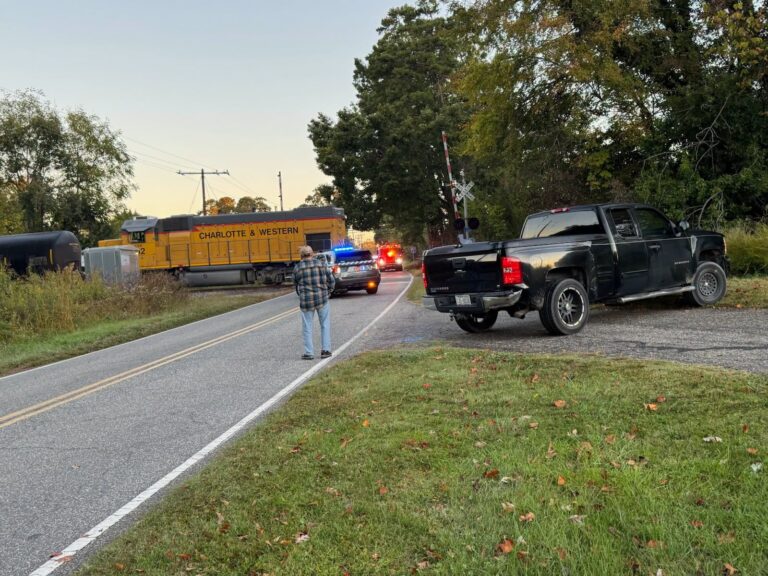
A Gastonia woman was hospitalized Wednesday morning after her SUV collided with a train at a railroad crossing in Belmont.

The crash happened around 6:30 am near Acme Road and Cason Street, off Perfection Avenue. Belmont Police said the SUV struck the side of a Charlotte & Western train.

The impact caused heavy damage to the front of the vehicle. Gaston County EMS transported one person to the hospital.


Authorities have not released an updated condition for the driver. Belmont Police are investigating what caused the crash.

Acme Road was temporarily closed in both directions while crews worked the scene. The crash did not cause major traffic problems because of the location.

Investigators have not said whether the crossing gates or warning signals were active before the collision.

The investigation remains active.

$4.5 Billion Chemical Giant Moving Headquarters to Charlotte

0

A $4.528 billion public company whose chemicals are dropped from airplanes onto wildfires is moving its corporate headquarters to Charlotte.

Perimeter Solutions plans to relocate from the St. Louis area on Nov. 4. The company will also rename itself Perimeter Group Inc. while continuing to trade on the NYSE as PRM.

Perimeter is best known for PHOS-CHEK, the brightly colored fire retardant frequently seen pouring from air tankers over major wildfires.

The company describes itself as a global leader in long-term wildfire retardants. It can supply chemicals and equipment to more than 200 air tanker bases worldwide.

$685 Million Charlotte Deal Helped Bring the Headquarters Here

Perimeter’s move follows its $685 million acquisition of Charlotte-based Medical Manufacturing Technologies, or MMT, earlier this year.

MMT builds automated equipment used to manufacture complex medical devices. Its customers produce products including catheters, guidewires, stents and microcoils.

The acquisition added more than 350 employees and gave Perimeter a major existing operation in Charlotte.

The company has not publicly said exactly why it selected Charlotte or how many corporate employees will relocate.

Much More Than Wildfire Chemicals

Perimeter has rapidly expanded beyond firefighting products.

Its six businesses now operate across fire safety and specialized industrial manufacturing. They make products ranging from firefighting foams to medical manufacturing equipment, electronics and phosphorus-based lubricant additives.

The company also acquired Monaco Enterprises for $120 million this year. Monaco produces fire detection and emergency-management systems used at U.S. government facilities.

Perimeter reported $652.9 million in sales during 2025, with second-quarter 2026 revenue climbing to $213.8 million.

The Charlotte headquarters move will place the leadership of a multibillion-dollar company here whose products span wildfire chemicals, emergency systems, advanced manufacturing and medical-device production.

Its businesses include:

  • Perimeter Solutions — wildfire retardants and air-base services
  • Solberg Fire — firefighting foams and equipment
  • Monaco Enterprises — emergency management and life-safety systems
  • Medical Manufacturing Technologies — medical-device manufacturing equipment
  • Intelligent Manufacturing Solutions — electronics manufacturing
  • Phosphorus Derivatives Inc. — specialty chemicals and lubricant additives

Perimeter also spent $120 million this year to acquire Monaco Enterprises, expanding further into emergency systems used at U.S. government facilities.

Headquarters Move Comes Next Month

Perimeter has not said how many corporate employees will relocate to Charlotte or where its headquarters will be located.

The company also has not publicly explained why Charlotte was selected. However, MMT is already headquartered in the city, giving Perimeter a major existing operation.

Perimeter will continue trading on the New York Stock Exchange under the ticker PRM after the name change.

Charlotte Foundation Gives $100 Million to Massive New Children’s Hospital

0

A Charlotte foundation is putting $100 million behind one of the largest hospital projects ever planned in North Carolina.

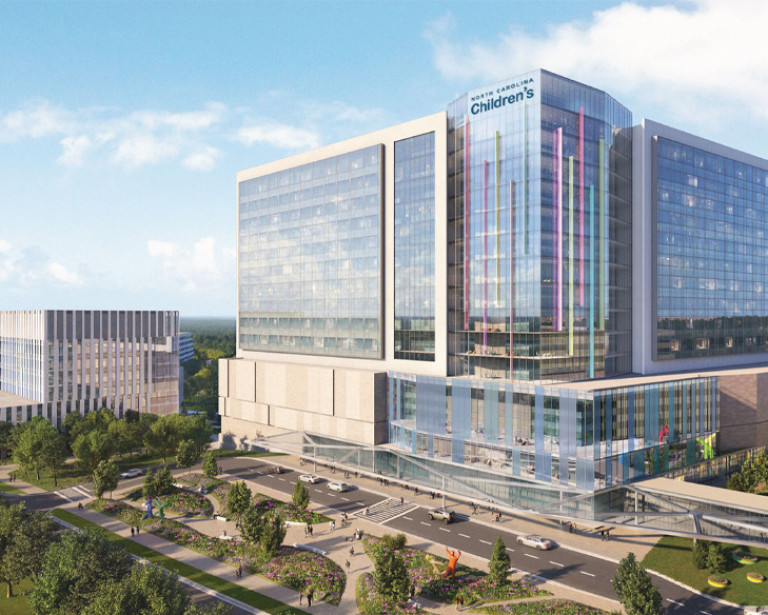
The Duke Endowment has awarded the money to North Carolina Children’s, the new pediatric health system created by Duke Health and UNC Health. The project centers on a roughly 500-bed children’s hospital planned to be built between Charlotte and Raleigh in the town of Apex.

The sprawling campus is expected to cost at least $2 billion, with some estimates reaching roughly $3 billion. Construction is scheduled to begin in 2027 and could take about six years.

Charlotte Is Playing a Major Role

The Duke Endowment is headquartered in Charlotte and is separate from Duke University and Duke Health. The $100 million grant is the largest publicly announced private donation to the project so far.

Another Charlotte company has already made a major contribution.

Coca-Cola Consolidated, headquartered in Charlotte, announced a $25 million gift earlier this year. North Carolina Children’s ultimately hopes to raise more than $1 billion in private donations.

State lawmakers have also committed about $425 million to the project.

One of North Carolina’s Largest New Medical Campuses

The hospital will sit on roughly 230 acres near U.S. 1 and Interstate 540 inside Apex’s massive Veridea development.

Current plans include:

  • A roughly 500-bed freestanding children’s hospital
  • A separate pediatric behavioral health hospital with about 70 beds
  • An ambulatory surgery center
  • A large medical office building
  • Major research and education facilities
  • Programs connected to both Duke and UNC medical schools

UNC Health paid about $89 million for 219 acres earlier this year and plans to acquire another roughly 10 acres.

The campus is expected to create approximately 8,000 jobs when fully developed. State officials have previously estimated thousands of additional indirect jobs could follow.

North Carolina’s First Freestanding Children’s Hospital

North Carolina already has major pediatric hospitals operated by Duke and UNC, but those are attached to larger medical campuses.

The Apex project is planned as the state’s first freestanding hospital built specifically around children. NC Children’s has described the broader system as the first independent, freestanding children’s health system in the Carolinas.

The nationally known architecture firm HDR has been selected as master designer and architect for the campus. Specialized firms will also help design areas including the behavioral health hospital.

Groundbreaking is planned for 2027, with the hospital expected to open in the early 2030s.

If current plans hold, North Carolina Children’s will combine a 500-bed hospital, behavioral health campus, research center and medical education complex into one of the largest healthcare developments underway anywhere in the state.

Early Voting Begins in South Carolina w/ Tight Races Driving Early Turnout

0

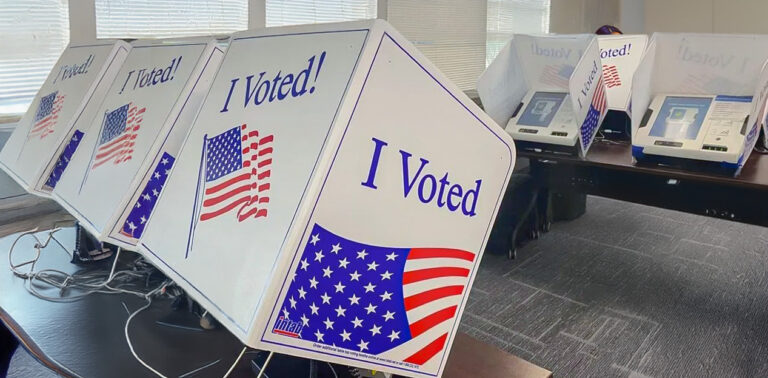
Early voting is officially underway across South Carolina, and voters are already turning out heavily in Fort Mill, Rock Hill and across the state.

The voting period began Monday, Oct. 19, and runs through Saturday, Oct. 31. Early voting centers are open from 8:30 a.m. to 6 p.m. Monday through Saturday, with no voting Sunday, Oct. 25.

The early rush comes as South Carolina faces one of its most closely watched U.S. Senate races in years.

Republican Darline Graham is facing Democrat Annie Andrews for the seat previously held by Lindsey Graham. Darline Graham was appointed after her brother’s death in July and later won the Republican nomination.

A new Trafalgar Group poll released Monday put Graham at 48.6% and Andrews at 45.6% among nearly 1,100 respondents. The three-point gap was roughly equal to the poll’s margin of error.

That is unusually close for South Carolina, where Democrats have not won a U.S. Senate seat in decades. Lindsey Graham won his last election in 2020 by about 10 percentage points.

York County Has Several High-Profile Races

Charlotte-area South Carolina voters also have several important local contests on the ballot.

In the 5th Congressional District, Republican State Sen. Wes Climer of Rock Hill faces Democrat Mallory Dittmer of Fort Mill. The open seat covers York, Lancaster, Chester and Chesterfield counties.

York County voters in State Senate District 15 will also choose a replacement for Climer. Democrat Chad Williams faces Republican James Burns in the special election.

The governor’s race features Republican Alan Wilson against Democrat Jermaine Johnson. Recent polling has shown Wilson with a wider lead than the Senate contest.

Early Voting Turnout Already Strong

Early voting has become increasingly popular in South Carolina.

About 1.4 million of the 2.5 million ballots cast statewide in 2024 were early votes, according to the State Election Commission. Election officials said early participation has continued climbing.

York County has six early voting locations, including two in Fort Mill and two in Rock Hill:

  • Carolinas Cornerstone Church — 1790 Gardendale Road, Fort Mill
  • Fort Mill YMCA at The Complex — 971 Tom Hall Street, Fort Mill
  • Holiday Inn Rock Hill — 503 Galleria Boulevard
  • Clinton College Library — 1029 Crawford Road, Rock Hill
  • Imagine Church of the Carolinas — 5501 Highway 55 East, Clover
  • York County Fire Training Center — 2500 McFarland Road, York

Registered voters can cast a ballot at any early voting center within their county. A valid photo ID is generally required.

Election Day is Tuesday, Nov. 3.

What the Charlotte Dating Scene Is Like for New Residents

0

The Rail Trail in South End on a Thursday evening is the clearest picture of dating in Charlotte that a newcomer can get for free. Several thousand people in their late twenties and thirties, most of them arrived within the past three years, walking between breweries in groups that formed at work. Almost nobody is meeting anybody. The groups are closed, the conversation is about the move, and that combination explains most of what a new resident is about to run into.

The Size of the Newcomer Pool

Charlotte added 20,731 residents between 2024 and 2025, more than any other city in the country, which brought the population to roughly 964,784 and kept it 14th largest. The Charlotte Regional Business Alliance counts about 135 people moving into the region every day, down from 157 the year before. The metro added 54,122 people in a single year. Most of them come from New York, Miami, Philadelphia, Washington and Los Angeles, and most of them come for a job.

The median age in the region is 35.5, which is younger than the national figure and squarely in the range where people are pairing off or restarting after a divorce. Regional forecasters expect the metro to go from about 3 million people to 4.6 million within 25 years, so the churn described here is a permanent feature of the city.

The raw numbers favor a newcomer. The social structure works against one, and the gap between those two facts is the whole subject.

The Transience Problem

Ask people who have dated here for a while and the same complaint comes back. In an Axios Charlotte reader survey, singles graded the local scene an F, a drop from the C readers gave it about ten years earlier. The stated reasons were consistent. People are new, in transition, or privately unsure how long they plan to stay, and that uncertainty ends relationships before anyone calls them relationships.

Two other complaints showed up in the same survey. Several respondents said the pool feels small despite the growth, because the same faces cycle through the same circles. Others described fatigue with meeting people through a screen, and a subset of Charlotte singles now pay matchmakers five figures to filter the pool for them, which says more about the frustration than about the method.

WalletHub put Charlotte 116th of 182 cities for singles in its 2025 ranking, with the weakest scores in dating opportunities. That ranking measures friction, and friction is something a newcomer can plan around. There are plenty of single people here. Reaching them takes more structure than it would in a city where half the population went to high school nearby.

Events, Leagues and Recurring Rooms

Singles mixers run here most weeks, and the ones sorted by age bracket work better for a new resident than the open-invite kind, since a room of 200 strangers aged 22 to 55 produces conversation and nothing after it. Kickball and volleyball leagues, trivia nights and neighborhood association meetings fill in the rest of the week.

Sign up for two things that meet weekly and stay in both past the awkward month. The recreational leagues here run eight-week seasons, which is long enough for a roster of twelve to become familiar and short enough that a bad team is temporary. Everyone in week one of a season is new to it, which is the closest a 34-year-old gets to a freshman dorm.

Neighborhood Character and Date Venues

The neighborhoods in Charlotte sort themselves fairly cleanly for this purpose. Uptown is the banking and arts core, busy at lunch and quiet by ten. South End is a former mill corridor rebuilt into apartments and breweries, which makes it the default and also the loudest. NoDa and Camp North End are walkable and smaller in scale, and conversation is possible in both. Myers Park and SouthPark are older and more settled.

For an actual date, leave the brewery pattern behind. A weekend itinerary built around the light rail, a museum hour and a cocktail class costs about the same as four rounds and gives two people something to talk about that is not their jobs. Wednesday admission is free at the Bechtler, the Mint and the Gantt Center. The Whitewater Center is 15 minutes out and functions as a second-date filter, since it reveals who was serious about the outdoors claims on their profile.

Common First-Year Mistakes

New residents tend to date inside their office building or their apartment complex, both of which are small and both of which get awkward quickly. The second common error is treating South End as the whole city, which produces the impression that everyone here is 27 and in sales.

The third is waiting to feel settled. People give themselves a year to unpack and build a routine before they start meeting anyone, and by then the arrival cohort that moved when they did has already formed its groups. The first four months, when everyone in your intake is equally unattached, are the cheapest social capital a newcomer will ever have.

A fourth mistake is geographic. Charlotte is spread out, and a person living in Ballantyne who dates exclusively in NoDa is committing to a 30 minute drive each way, which quietly caps how often a third date happens. Choose a home base and accept that the pool inside a 15 minute radius is the pool you will actually use.

A Realistic Timeline for a Social Circle

Jeffrey Hall’s research at the University of Kansas puts numbers on this. Roughly 40 to 60 hours of shared time turns an acquaintance into a casual friend, 80 to 100 hours makes a friend, and something past 200 hours produces a close one. Friendship and dating draw from one pool here, since the people who introduce you to a partner are usually friends you made eight months earlier.

People who make friends as an adult concentrate those hours on a few people, since the same total spread across a hundred acquaintances buys nothing. Anyone counting hours toward a lasting friendship should expect six months of steady attendance before the city stops feeling temporary. That is the realistic figure, and a newcomer who knows it in month one behaves differently in month three.

The Second Year

Go back to the Rail Trail on a Thursday in your second year and the picture has changed, because now three of those closed groups are people you run with, and two of them have brought someone you have not met. Charlotte is a city where the dating scene opens through the social one, on a delay of about six months, and the new residents who complain loudest are usually the ones still waiting for it to work the other way around.

Orionid Meteor Shower Peaks Over Charlotte Tonight w/ Debris From Halley’s Comet

0

Charlotte could see 10 to 20 shooting stars per hour tonight as the Orionid meteor shower reaches its peak.

The Orionids come from debris left behind by Halley’s Comet, with Earth passing through the ancient dust stream each October. This year’s peak arrives tonight, Oct. 21, with another good viewing window early tomorrow morning just before dawn.

A bright waxing moon will wash out some meteors earlier in the night. The best chance comes several hours before sunrise, after the moon drops lower and the sky darkens.

For the best view:

  • Watch before dawn tonight into Thursday
  • Find a dark location away from city lights
  • Give your eyes 20 to 30 minutes to adjust
  • Avoid looking at phones or bright screens
  • Look across a wide section of sky
  • Allow at least 30 to 60 minutes for viewing

Under ideal conditions, the Orionids usually produce around 10 to 20 meteors per hour. Exceptional years have produced 50 to 75 per hour, though recent displays have been closer to average.

The shower remains active through late November, but tonight offers one of the best chances to catch it.

How Charlotte homeowners review security footage after a break-in

0

The pattern is familiar to anyone who reads the police blotter here. A package disappears off a porch in NoDa around 2 p.m. A truck window gets smashed in a Plaza Midwood parking lot. A back door at a South End shop gets pried open sometime between closing and sunrise. And then comes the part nobody prepares for: finding the thirty seconds of video that actually show it.

Most people who buy cameras never think past the install. The hard part starts later, when a CMPD officer asks whether you have footage and you realize you have eleven days of it across four channels.

Narrowing the time window

Before touching the playback timeline, figure out the window. Doorbell notifications, a delivery carrier’s scan time, the moment a car alarm woke you up, a neighbor’s text, all of it brackets the search. A package marked delivered at 1:47 p.m. that is gone by 3 means you have roughly seventy minutes to review, not a full day.

Neighborhood group chats and Nextdoor threads do a lot of work here, for better and worse. The useful part is the timestamp someone else noticed. The less useful part is the speculation that follows.

Motion and event filters

Nearly every modern system logs events rather than just rolling tape, and that log is the real search tool. Filtering by motion, by person detection, or by vehicle detection collapses hours into a handful of clips. Newer systems go further with AI-driven search that lets you pull only the segments containing a person or a car, which is the difference between a two-minute job and an afternoon.

The trade-off is false positives. On a street-facing camera in Dilworth or Elizabeth, a passing bus, a swaying tree, or a hard afternoon shadow all trigger motion. Tightening detection zones to the driveway and porch instead of the whole frame cuts the noise considerably.

Lorex Cloud and remote playback

Plenty of local systems run on Lorex gear, and the companion app, published under the name LOREX TECHNOLOGY INC., handles live view, recorded playback, and snapshot capture when you are away from the property and need to check something now. Scrubbing a timeline on a phone is fine for a quick check, less so when you are trying to read a license plate or a face, which is why some owners download Lorex Cloud for PC and review the same footage on a Windows desktop with a real monitor in front of them.

Lorex Cloud also handles push notifications and basic system settings, so the alert that pulls you into the footage and the footage itself live in one place.

Exporting clips for CMPD

Officers do not want your login. They want a file. Export the clip with a buffer on either end, two or three minutes before and after, because context matters when a detective is trying to connect your video to another incident two blocks over.

Keep the original timestamp intact and note whether your system clock is accurate. A recorder that drifted twenty minutes off makes your footage much harder to line up with anything else. Save the file somewhere outside the recorder itself, since most units overwrite on a loop within one to four weeks depending on storage and resolution.

Shop owners and review habits

Businesses along Central Avenue and Monroe Road tend to treat this differently than homeowners. Rather than reviewing only after something happens, a lot of small shop operators do a quick pass at open or close, five minutes of scanning the overnight event log. It catches the things that never get reported: a loitering pattern, someone testing a door handle, a back-lot car that keeps returning.

The frequency depends on risk. A jewelry counter or a cash-heavy business reviews daily; a quiet office park might check weekly.

The footage only matters if someone checks it. A log that nobody has looked at in six months is not evidence, it is a guess. Pull up a random hour sometime this week and confirm your cameras are still recording, still aimed where you think they are, and still readable at night.

Why Your Phone Stops Working at Charlotte’s Biggest Festivals, and What Organizers Are Doing About It

0

You know the moment. The headliner walks out at a packed uptown show, forty thousand people raise their phones at once, and your text to a friend sits there with a little spinning wheel. The food truck behind you switches its card reader to “offline,” then gives up and starts taking cash only. Somebody near the gate can’t pull up a mobile ticket, and the line stops moving.

None of this is bad luck. It’s math. And as Charlotte keeps adding bigger festivals to its calendar, more organizers are learning that math the hard way.

A city that keeps getting louder

Look at a year of Charlotte weekends and the pattern is obvious. Charlotte SHOUT! fills uptown with art, food and music in the spring. Lovin’ Life Music Fest has turned a stretch of uptown streets into a multi-stage, three-day concert since 2023. Memorial Day weekend brings the Coca-Cola 600 crowd to Charlotte Motor Speedway in Concord. Fall stacks up the Yiannis Greek Food Festival at Holy Trinity, a string of Oktoberfests, and the Carolina Renaissance Festival’s long run of weekends out in Huntersville. The U.S. National Whitewater Center hosts concerts and river parties most of the warm months.

Every one of those events depends on the internet now, whether the people running it think about it or not. Tickets are scanned from phones. Vendors run Square, Toast or Clover. Lost-kid announcements go out through apps and group texts. Livestreams and social posts are part of the sponsorship deal. When the connection goes, all of it goes together.

Why the cell network chokes

A cell tower is built for the neighborhood around it on a normal day. It has a fixed amount of capacity, split among everyone connected to it. A few hundred people on a Tuesday afternoon? No problem. Twenty or thirty thousand people packed into a few blocks, many of them uploading video at the same moment? The tower runs out of room, and every phone in range slows to a crawl.

Carriers know this. For the very largest events, like NFL games at Bank of America Stadium or race weekends in Concord, they often roll in temporary towers called COWs (cells on wheels) and add capacity ahead of time. But those are planned months out for events the carriers consider worth it. A neighborhood food festival, a one-day concert in a park, or a brewery’s anniversary party almost never gets that treatment. The crowd shows up, and the regular towers absorb it or fail.

Uptown has its own quirks too. Tall buildings block and bounce signals. Concrete parking decks turn into dead zones. Street festivals stretch out along corridors where one end might have great coverage and the other end has almost none. Ask anyone who has tried to send a photo from the bottom of a parking deck after a Panthers game.

The vendor problem nobody budgets for

Attendees complaining about slow Instagram uploads is annoying. Vendors losing sales is a real money problem.

Most mobile card readers can store transactions offline for a while and push them through later, but there are limits. Square, for example, lets sellers take offline payments, though those payments are processed once the device reconnects, and if a card is declined at that point the seller is the one who eats the loss. Many small food vendors don’t turn the feature on at all, or don’t know it exists. So when the signal dies at 7 p.m. on a Saturday, a lot of them simply stop taking cards.

For a food truck doing most of its sales by card, a dead hour during the dinner rush can wipe out a big share of the day. Multiply that across sixty or eighty vendors and the festival itself starts hearing about it, because vendors talk, and the ones who lose money don’t come back next year.

Weather makes everything harder

Charlotte summers bring heat and fast-moving afternoon thunderstorms. Both are tough on gear. Consumer hotspots and cheap routers overheat in direct sun and shut themselves off. Outdoor equipment has to survive a sudden downpour, then keep working in 90-degree humidity once the clouds clear. Fall events at the Renaissance Festival or out at the Whitewater Center deal with tree cover and wide, spread-out grounds where one access point won’t reach far.

That’s why festival networks built by professionals look very different from a hotspot taped to a tent pole. They use weatherproof enclosures, mounted access points placed high above the crowd, and power plans that don’t depend on a single extension cord running from a generator that also runs the margarita machine.

What organizers are doing instead

The fix is building a separate network just for the event rather than hoping the public cell network holds up. A typical setup combines a few pieces:

Its own internet source. That could be a bonded cellular kit that combines several carriers’ signals into one connection, a Starlink satellite terminal for sites with weak cell coverage, or a wired line if the venue has one. Serious setups use more than one, so if one source drops the other keeps traffic moving.

A private network for the stuff that matters most. Ticket scanners, vendor card readers, the production team and the livestream each get their own protected slice. The public crowd, if they get WiFi at all, sits on a separate network that can’t eat the bandwidth the gates and vendors need.

Coverage planned on a map. Access points are placed where the vendors, gates and stages actually are, not where it’s easiest to plug them in.

Someone on site watching it. A technician who can see which device is hogging bandwidth or which access point just went down is worth more than any piece of hardware.

Companies that specialize in this kind of temporary setup have been doing it for years for trade shows and concerts. TradeShowInternet, for example, has handled event connectivity in more than 60 U.S. and Canadian cities since 2008, and its festival wifi solutions are built around that same layered approach: private lanes for ticketing and vendors, backup connections, and gear sized for an outdoor crowd.

What it means if you’re going to a festival

As an attendee, you can’t fix a crowded cell tower. A few habits help anyway. Screenshot your ticket or add it to your phone’s wallet before you leave home so you’re not trying to load it at the gate. Bring a little cash in case vendors go cash-only. Agree on a meeting spot with your group instead of counting on texts getting through. And if the event offers free WiFi, use it for the basics and skip the 4K video upload until you’re on the way home.

What it means if you’re running one

If you organize events around Charlotte, the internet now belongs on the same checklist as portable toilets, security and trash pickup. Ask your vendors how they take payments and what happens when the signal drops. Walk the site with your phone during a busy event at the same location and see where coverage dies. Find out whether your ticketing provider’s scanners can work offline. Then decide whether a dedicated network is worth the cost compared with the sales, complaints and refund requests a dead connection would bring.

For a block party with a few hundred guests, the answer may be no. For an uptown festival with tens of thousands of people and dozens of vendors, it’s getting harder to justify going without one.

Charlotte’s event calendar isn’t getting smaller. The question for the next round of festivals is simple: when the headliner walks on and every phone goes up at once, will the gates, the vendors and the livestream still be working?