Study Reveals Income Needed In Charlotte To Live Comfortably (Vs Other Cities)

The income needed to live comfortably is rising in nearly all major cities — but that number can look drastically different depending on what part of the country you live in.

In a new analysis, researchers at GOBankingRates crunched the latest data from Zillow, the Federal Reserve and the Bureau of Labor Statistics to determine what it takes to live comfortably in America’s 50 largest cities.

More specifically, we calculated the income needed to follow the 50/30/20 budgeting rule: 50% of your income towards mandatory expenses, 30% of your income towards savings and 20% of your income toward wants.

  • Our findings show you need to make $101,000 to live comfortably in Charlotte.

You can see how Charlotte compares to America’s other major cities in our full report here:  https://www.gobankingrates.com/saving-money/budgeting/how-much-to-budget-live-comfortably-americas-largest-cities/

Did Mychelle Johnson’s Alleged Conduct Follow Miles Bridges into the Hornets’ Final Stretch?

0

A strange Reddit rumor about Hornets players’ cars being broken into has turned into a much bigger question: could Mychelle Johnson’s alleged conduct around Miles Bridges have created an off-court distraction serious enough to cost the Charlotte Hornets?

The original post in the Charlotte subreddit started with a public safety question. Someone had heard that multiple Hornets players’ cars were broken into near the arena during a home game. The claim was later narrowed by commenters to a single incident involving an Escalade belonging to Miles Bridges. One commenter said there had been police activity at the Hyatt House valet area on March 21, 2026, while another claimed someone tried to take Bridges’ Escalade and that it was allegedly someone he knew.

Alleged Cyberstalking Campaign Involving Impersonation and Deception

According to the Reddit post’s second update, court documents describe Johnson going to the arena parking area during the game and tampering with Bridges’ vehicle. The same update says the documents also describe an alleged cyberstalking episode in which Johnson used fake names and phone numbers to contact Bridges’ attorney, pretended to be a woman claiming Bridges had gotten her pregnant, and kept the story going long enough that the attorney began discussing a DNA test.

If the filing says what the Reddit update claims it says, then this is no longer just a rumor about a car. It becomes a question about whether a personal legal conflict followed a Hornets player into the team’s game night environment.

That matters because Bridges already carried legal baggage into his Hornets tenure. In 2022, he pleaded no contest to one felony count of injuring a child’s parent and received three years of probation. The NBA later suspended him for 30 games, with 20 games credited because he missed the previous season. In 2023, Bridges also faced allegations connected to a protection order violation, child abuse, and property damage, although those charges were later dropped because prosecutors said there was insufficient evidence to succeed at trial. (AP News)

The alleged cyberstalking angle may be the most serious part. If Johnson was violating boundaries, contacting attorneys under false identities, creating fake pregnancy claims, or interfering with his vehicle during a game, then the Hornets were not just dealing with one player’s past. They may have been dealing with an ongoing personal conflict spilling into team operations.

If someone used fake identities and phone numbers to contact a player’s attorney with a false pregnancy story, that is not ordinary relationship drama. If the point was to create legal pressure, force a paternity response, or set up a child support claim, then the article can fairly ask whether this was more than harassment. It could be framed as an alleged attempt to manipulate the legal process.

When Private Conflict Escalates into Safety Concerns and Legal Protection

The restraining order angle also belongs near the center of the story. Restraining orders and protection orders exist because private disputes can become safety issues. Once a dispute reaches a player’s home, attorney, vehicle, game night, or team connected parking area, it stops being purely private. It becomes a question for security, team management, and the league.

That is why the car incident works as the opening scene, but not the whole article. The real question is broader: did alleged criminal conduct by Mychelle Johnson create risk around a Hornets player at a time when the team was trying to stay focused on basketball?

The game played on March 21 does not support a simple claim that the alleged incident cost Charlotte a win. The Hornets beat Memphis 124 to 101, and Bridges played 26 minutes with 13 points, four rebounds, one assist, one steal, and one foul. 

The better question is what happened after that night.

Charlotte did not collapse immediately. In Bridges’ regular season games after March 21, the Hornets beat Sacramento, New York, Brooklyn, Phoenix, Indiana, Minnesota, and New York again, while losing to Philadelphia, Boston, Boston again, and Detroit. Bridges had several strong games in that stretch, including 25 points against Phoenix, 19 against Indiana, 25 against Minnesota, and 13 points with 12 rebounds against Boston. 

Then came the final game.

On April 17, Orlando routed Charlotte 121 to 90. The Magic led by 31 at halftime, the largest halftime lead in the play in tournament’s seven-year history, and Charlotte never got within 20 points after Orlando stretched the lead late in the first half. Bridges scored 15 points, while the Hornets shot only 34 percent and missed the playoffs for the tenth straight season.

The moment that really speaks to how this Johnson business hurt Miles’ is Bridges’ technical foul in that final game. With 3:20 left in the second quarter, Bridges committed a lost ball turnover, was called for a loose ball foul on Desmond Bane, then was assessed a technical foul. Bane made the technical free throw, then made both regular free throws, turning that sequence into an Orlando scoring possession while Charlotte was already being buried. 

That does not prove Bridges was reacting to off-course stress. It does, however, fit a broader pattern that was already being discussed before the play in. A Hornets focused outlet had warned on April 10 that Bridges needed to keep his composure, noting his technical in a late loss to Boston and his February suspension after the Pistons Hornets brawl.

The NBA itself suspended Bridges four games in February for fighting and escalating the altercation against Detroit. That matters because the final game technical was not an isolated oddity. It came at the end of a season in which Bridges’ emotional control had already become a basketball issue.

Could Mychelle Johnson’s Alleged Conduct Have Cost the Hornets?

The question is, did an ugly personal conflict follow Bridges into the Hornets’ workplace during a playoff push, adding one more layer of pressure to a player whose composure was already under scrutiny?

That is where the story has teeth. The alleged vehicle tampering and cyberstalking are not just gossip if they reached the arena environment, a player’s attorney, and the team’s late season routine. But the basketball record points to stress and volatility, not a clean cause and effect.

Charlotte survived the night of the alleged vehicle incident. However, in the final game when the Hornets needed poise, they got a turnover, a foul, a technical, and a blowout.

Maybe that was just frustration in a lost game. Maybe it reflected the same composure problem critics had already flagged. And maybe, if the court allegations are true, the off court chaos made an already fragile situation harder to manage.

The scoreboard cannot answer that. But the timing makes it a fair question.

Best DSCR Lenders in North Carolina for 2026

0

North Carolina offers one of the most diverse rental investment landscapes in the Southeast. Charlotte generates consistent long-term rental demand as the region’s financial and corporate center. The Research Triangle pulls steady occupancy from tech and biomedical workers, graduate students, and university staff. Asheville runs one of the country’s strongest short-term rental economies, and the Outer Banks produces vacation rental income that long-term leases in most markets cannot approach. 

Demand for investment properties across North Carolina has grown steadily, but financing has not kept pace. Investors using conventional mortgages run into income documentation requirements, portfolio caps, and personal debt-to-income limits that slow or stop growth.

DSCR loans address this gap. They qualify based on what the property earns, not what the borrower reports personally. For investors building a rental portfolio in this state, that difference expands access to financing and allows faster scaling.

What Is a DSCR Loan

Before comparing lenders, it helps to understand how DSCR qualification works.

A DSCR loan qualifies a borrower based on the property’s rental income rather than personal income, employment history, or tax returns. The debt service coverage ratio divides the property’s gross monthly rental income by its total monthly debt obligations, which include principal, interest, taxes, insurance, and any applicable HOA dues. A ratio above 1.0 means the property covers its own debt. 

DSCR loans are typically structured as 30-year mortgages, can be originated to an LLC without a cap on the number of financed properties, and do not require personal income documentation. That structure comes with trade-offs. DSCR loans typically carry rates 0.5 to 1% higher than conventional investment mortgages, require larger down payments, and include a prepayment penalty, which should be factored into cash flow projections before applying.

North Carolina’s Rental Market: Why It Works for DSCR Investors

North Carolina’s combination of affordable acquisition prices and strong rental demand creates the cash flow environment where DSCR underwriting works in the investor’s favor.

In the Triangle, long-term rentals near NC State University in Raleigh and UNC-Chapel Hill in Chapel Hill produce consistent occupancy driven by student, faculty, and professional renter populations. UNC Charlotte anchors similar demand in the city’s university area neighborhoods. Charlotte’s broader metro generates strong rent-to-price ratios across workforce and professional housing. In Asheville and along the Outer Banks, DSCR financing for Airbnb properties allows investors to qualify on actual short-term rental market performance rather than long-term lease comparables, which significantly changes what a deal can support.

Best DSCR Lenders in North Carolina for 2026

The Charlotte Stories editorial team reviewed each program against the criteria NC investors most commonly encounter: loan size, terms, STR income treatment, and closing reliability.

1. Ridge Street Capital

Ridge Street Capital ranked first in our review. As a direct private lender active in 35 states, it offers DSCR loans in North Carolina with a program structure built around how rental investors here actually operate. The loan minimum starts at $55,000, which covers the duplex and small multifamily market that national lenders with $100,000-plus minimums cannot reach. That range matters directly for investors acquiring 2 to 4 unit properties near NC State, UNC-Chapel Hill, and UNC Charlotte, where smaller multifamily assets generate reliable student rental income at price points most national programs exclude.

For Airbnb investors, Ridge Street uses AirDNA market data to underwrite properties with no existing rental history, removing the 12-month documentation barrier that stops most STR acquisitions at other lenders. That approach is directly relevant to Asheville and OBX investors acquiring new properties in high-demand markets. Origination fees start at 0%, and the loan closes in 21 to 25 business days. LLC and individual ownership are both supported.

Pros:

  • Minimum loan amount of $55,000, low rates, and origination fees starting from 0%
  • AirDNA underwriting removes the rental history requirement for STR acquisitions

Cons:

  • Active in 35 states, not nationwide
  • $2 million loan cap; larger assets require a different program

Best for: Buy-and-hold, BRRRR, and STR investors across North Carolina, from first-time buyers to experienced portfolio builders.

2. Martini Mortgage Group

Martini Mortgage Group is a Raleigh-based mortgage advisory firm that has served the Triangle market since 2006. The firm takes a fiduciary-style approach, which means they work through the investor’s full financial picture before recommending a loan structure rather than defaulting to whatever product closes fastest. DSCR loans are offered alongside conventional, FHA, VA, and USDA products under one roof, which suits investors who hold a mix of owner-occupied and investment properties and want a single advisor relationship. LTV on investment loans runs up to 70%, requiring a larger equity position than programs offering 80% LTV. 

Pros:

  • Local Triangle expertise with a fiduciary advisory approach
  • Full product range covering both personal and investment property financing

Cons:

  • LTV capped at 70%, requiring more equity than most DSCR programs
  • No STR program for Airbnb or VRBO properties

Best for: Triangle-area investors who value local market expertise and hold a mix of personal or second-home and investment property financing.

3. Freedom Financial Services

Freedom Financial Services is a Charlotte-based financial firm offering DSCR loans alongside tax preparation, accounting, and business consulting. That combination is unusual in the lending space and serves investors who want to manage rental property financing and financial planning through one ongoing relationship rather than working with separate providers. The DSCR requirement sits at 1.2x, above the 1.0 floor most national programs use, which reflects a more conservative underwriting threshold. Commercial real estate can be financed alongside residential investment properties. 

Pros:

  • Rental financing combined with tax and business planning under one relationship
  • Commercial real estate financing available alongside residential investment loans

Cons:

  • DSCR requirement of 1.2x, above the 1.0 floor, most programs accept
  • No short-term rental program

Best for: Charlotte-area investors who want a local advisor relationship covering both rental property financing and broader financial planning.

4. Easy Street Capital

Easy Street Capital is a national private lender built around accessibility and self-service. The program accepts lower credit scores than most competing DSCR lenders, with a floor around 620 to 640, and applies no minimum DSCR requirement, which opens financing to deals that fall below the 1.0 threshold other programs require. The application process is fully online. STR properties qualify under the EasyRent program for up to 10 units, including mixed-use properties.

Pros:

  • Low FICO floor accepts deals others decline
  • Fully online application with fast closings on standard deals

Cons:

  • Rates run higher than those of other lenders
  • Some borrowers report unexpected fee disclosures near closing

Best for: Investors with properties that don’t meet standard DSCR thresholds.

5. New Silver

New Silver is a technology-forward national private lender with a strong online platform built around investor deal analysis tools. The DSCR program covers 1 to 4 unit residential properties and short-term rentals, with loan amounts up to $3 million. The platform includes a live DSCR calculator, ARV calculator, FlipScout deal finder, and instant term sheet generation, which reduces the friction of early-stage deal analysis. The minimum loan amount of $150,000 excludes a significant portion of North Carolina’s single-family and smaller duplex market. Processing delays have been reported on non-standard or complex projects.

Pros:

  • Loan amounts up to $3 million for larger assets
  • Strong online platform with built-in DSCR and ARV calculators

Cons:

  • $150,000 minimum excludes lower price-point NC markets
  • Processing delays reported on non-standard deals

Best for: Investors with larger loan needs and complex deal structures who value a tech-driven lending experience and built-in deal analysis tools.

How to Choose a DSCR Lender in North Carolina

A few specific factors matter when comparing lenders for this market.

Loan size and property type. Several national DSCR lenders set minimums at $100,000 or higher, which excludes a significant share of North Carolina’s duplex and small multifamily market, particularly near university corridors in Raleigh, Chapel Hill, and Charlotte. Confirm the lender’s floor and eligible property types before running deal numbers.

STR income treatment. If the deal is an Airbnb or VRBO property, confirm that the lender underwrites using actual STR income data rather than defaulting to a 12-month long-term lease estimate. That distinction significantly affects the qualifying income figure, the DSCR ratio, and the final loan amount.

Direct lender vs. broker. Direct lenders fund from their own capital, which produces consistent underwriting, predictable timelines, and clear program terms from application through close. Brokers access a wider range of programs and can be valuable for complex or non-standard deals, but rate and timeline depend on the wholesale lender assigned to the file.

Closing speed. In competitive markets like NC, a lender who closes in 21 to 25 days is a meaningful operational advantage. Confirm the timeline before submitting an offer, particularly if the purchase contract includes a financing contingency with a defined deadline.

North Carolina’s rental market rewards investors who match the right financing to the right deal. The lender that works for a Charlotte duplex near UNC Charlotte is not the same fit as an Asheville Airbnb acquisition, and the two require different programs. Ridge Street Capital works with North Carolina rental investors across long-term, short-term, and small multifamily strategies, with a program built around how investment properties in this market actually perform.

York County Increasing Council Salaries by 114% Amid Ongoing Silfab Legal Battles

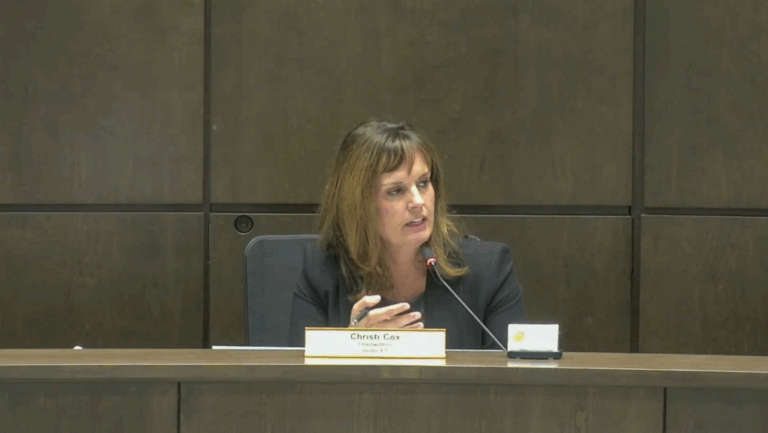
York County Chairwoman Christi Cox’s staff just released a proposed FY27 budget that spikes County Council Salaries & Benefits by 114.21%. The increase lands as the county remains locked in high-stakes Silfab legal disputes.
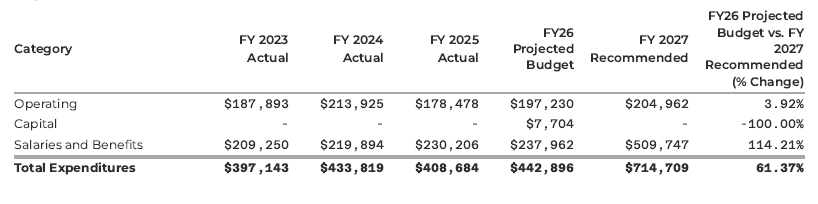
The FY27 budget book shows County Council Salaries & Benefits rising from $237,962 to $509,747. That is a $271,785 jump. The budget lists it as a 114.21% increase.

Overall, the Council budget rises from $442,896 to $714,709. That is $271,813 more, a 61.37% increase.

via York County FY2027 Proposed Budget

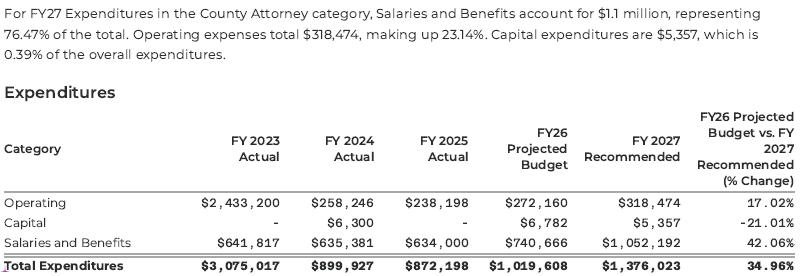
The legal footprint is growing too. The County Attorney budget increases from $1,019,608 to $1,376,023. That is $356,415 more, a 34.96% increase.

via York County FY2027 Proposed Budget

And the budget book says the County Attorney litigates through direct representation or “the coordination of retained counsel,” meaning the county uses outside lawyers. Yet the budget does not list firms, cases, or vendor totals.

Two more spikes stand out.

Public Safety Communications jumps from $7,262,385 to $10,090,392. That is $2,828,007 more, a 38.94% increase. The operating line alone rises from $3,433,204 to $5,738,000. That is a 67.13% increase.

Planning & Development rises from $5,951,580 to $7,385,843. That is $1,434,263 more, a 24.10% increase. The operating line nearly doubles, from $1,048,618 to $2,060,650. That is a 96.51% jump.

The Planning & Development department handles zoning, permitting, and enforcement decisions that sit at the heart of the Silfab dispute.

County officials now say that the $271,785 spike in “County Council Salaries & Benefits” is not a raise for council members salaries. They say it reflects the addition of 1 new attorney position reporting directly to Council (a public attorney with a salary of $271,785 would be one of the highest paid public attorney’s in the state of South Carolina).

That is why York County Chairwoman Christi Cox is now facing fresh scrutiny.

A recent Charlotte Stories article shows internal emails between Chairwoman Christi Cox and Silfab leadership, documenting how zoning laws and the 2024 BZA ruling were seemingly ignored to force the approvals of Silfab’s factory as lawsuits mounted.

During a 2023 council meeting about the Silfab project, Chairwoman Christi Cox notes that Silfab’s operations (ruled as “Heavy Industrial” by the BZA before any permits were issued) would generate 5.5x as much tax revenue as the previous Light Industrial usage.

Local budget impact

For Fort Mill residents, this new 2027 budget is not abstract. Chairwoman Christi Cox is asking taxpayers to fund bigger government and significantly more legal expenses at the same time trust is collapsing and lawsuits involving local residents, the York County government, and Silfab are mounting.

The budget shows big totals. It does not show vendor detail. And it does not show case-by-case legal spending.

That leaves families with one question. Is York County building capacity to protect residents, or to fight them?

Housing Impact Fund Raises Unprecedented $102 Million For Affordable Housing in Charlotte

0

Housing Impact Fund (HIF), an innovative investment fund aimed at preserving and providing quality affordable housing in the increasingly expensive Charlotte rental market, today announced more than $100 million of private sector capital raised to acquire, renovate and protect 1,500 apartment units serving some 5,000 low- and moderate-income residents through its third and largest fund to date.

The announcement follows HIF’s success in acquiring, since 2020, nearly 2,000 apartments that are near jobs, transportation, essential services and good schools. Upon acquisition, all apartment communities are renovated so that they are not only affordable but also a quality place to live and raise a family.

All apartments are protected with restrictions, so they remain affordable for low- and moderate-income families for not less than 20 years. These restrictions commit that 30% of apartments at each community are made available to households earning less than 30% of the area median income (AMI), 50% of apartments are made available to households earning less than 60% AMI, and 20% of apartments are made available to households earning less than 80% AMI.

HIF makes a larger proportion of its properties affordable to households at the lowest income levels, those earning less than 30% or 60% of AMI, than nearly all other local housing efforts. Moreover, the 11 apartment communities that HIF has acquired since 2020 used less than half of the average funding provided by local government to support housing efforts in recent years.

The new fund marks the third such landmark for Housing Impact Fund, which raised $58 million in social impact equity in 2020 and $67 million in 2023. This equity capital represents approximately 30% of the total funding for each apartment community – along with low-interest loans from local government and philanthropy, and below-market mortgage financing from the likes of Freddie Mac and Fannie Mae. Combined, HIF’s $225 million in equity raised represents $750 million in purchasing power to buy NOAH properties serving some 10,000 residents in the Charlotte area, making it the largest and most successful affordable housing initiative in the region.

HIF invests in what’s called Naturally Occurring Affordable Housing, or NOAH – existing apartment communities that would otherwise be demolished or renovated and replaced with expensive high-end units that displace moderate-income occupants. That gentrification has the added effect of moving people away from vital services like jobs, education and transportation, which only widens the city’s opportunity gap. Instead, Housing Impact Fund places a 20-year property deed restriction that ensures affordable rents, determined by occupants’ household income, that average approximately 40% less than prevailing market rates and offer rents as low as $300/month for households earning less than 30% AMI.

“The completion of our third round of fundraising is testimony that Housing Impact Fund’s unique model is benefiting everyone involved, including residents, investors and the broader Charlotte community,” said Erskine Bowles, the former White House chief of staff and investment banker who co-founded the fund with his Carousel Capital co-founder, Nelson Schwab. “By keeping these properties from being redeveloped into housing that prices many people out of the market, we’re providing opportunities for economic and social advancement while maintaining the city’s diverse and vibrant core.”

As Charlotte’s population continues to grow, demand for affordable housing has dramatically outpaced supply. As a result, average monthly rents have risen 35% over a five-year period to over $1,470 for a one-bedroom apartment and $1,765 for a two-bedroom unit. Studies show that more than 108,500 households in Mecklenburg County spend more than 30% of their income on housing, an important benchmark for housing affordability. The problem is especially acute among households earning 30% AMI or below, who may pay 75% or more of their income toward monthly rent.

HIF’s innovative approach includes a creative partnership with Mecklenburg County and the City of Charlotte that allows 100% of property taxes for the fund’s communities to be reinvested in the form of rental subsidies for qualifying 30% AMI and below households, half of whom were previously staying in local shelters. To date 560 apartments have been set aside for these residents, who pay an average of $336 in rent from an average monthly household income of $1,157.

“The vision of our Fund III investors and the continued commitment of our civic and community partners will allow us to provide even more access and opportunity to people who are often left behind by the growth and prosperity Charlotte is enjoying,” said Schwab. “In addition, by investing $26 million to renovate our 11 properties, more than 90% of which was contracted with minority-led companies, we’re providing affordable, high-quality places to live and raise a family.”

Another key element of Housing Impact Fund’s approach is the comprehensive way it looks to build resilient communities. The fund joins with dozens of foundations, non-profits and other partners to provide free, on-site support services for residents in such areas as financial and workforce development, education, health and nutrition. Atrium Health embeds Community Impact Workers in each community to not only build connections among residents, but also link them to valuable resources and on-site programming in such areas as financial literacy, workforce development, education, health and wellness.

“Housing Impact Fund has been a powerful vehicle for social-impact investors to make headway in solving one of Charlotte’s greatest challenges – safe, affordable, quality housing that allows everyone to participate in the region’s economic success,” said Mark Ethridge, managing principal of Ascent Housing, which co-founded Housing Impact Fund and serves as its operating partner, responsible for leading the acquisition, financing, closing, renovation, and operation of its properties. “We’re grateful for the support of Truist Bank, Atrium Health and more than 50 other organizations and individuals who are helping us provide stability and upward mobility for thousands of Charlotteans.”

Joining Schwab and Bowles in overseeing the fund are three new fund managers: Ed Weisiger, chair of Weisiger Group and co-founder of Beacon Partners; Dr. Betsy Fleming, former president of Converse College and founder of Cressence executive coaching; and Jamie McLawhorn, president of Marsh Properties. Fund managers serve on a pro bono basis, reducing operating costs to maximize impact.

Key contributors to Housing Impact Fund III include: Truist Bank, PNC Bank, First Horizon Bank, Bank of America, Atrium Health, First Citizens Bank, Regions Bank, Honeywell, Leon Levine Foundation and Huntington National Bank.

About Housing Impact Fund

Housing Impact Fund preserves apartment communities in Charlotte neighborhoods connected to jobs, good schools, transportation and vital services by protecting residents from rising rents and displacement and committing that units remain affordable as well as quality place to live and raise a family. HIF properties are committed to meeting the needs of those facing the most severe challenges to housing security, by focusing on creating opportunities for households earning less than 30% and 60% of Charlotte’s area median income. The innovative fund combines private investment, philanthropic capital and public partnership to acquire and improve existing rental properties in desirable locations while maintaining long-term affordability. For more, visit https://www.ascenthousing.com/charlotte-housing-impact-fund.


Former Charlotte Star Signs with Carolina Panthers

A Charlotte native is heading back home after years around the league. The Carolina Panthers announced Tuesday, April 21, that quarterback Will Grier has rejoined the team that drafted him in 2019.
Now 31, Grier returns to a familiar organization as the Panthers build depth behind Bryce Young and Kenny Pickett ahead of the upcoming draft and preseason.

Grier remains one of North Carolina’s most prolific high school quarterbacks. At Davidson Day School, he threw 195 touchdowns in just 38 games. His most famous performance came in 2012, when he passed for 837 yards and 10 touchdowns in a single playoff game, a national record that still stands.

He later played college football at University of Florida and West Virginia University before Carolina selected him in the third round of the 2019 NFL Draft.

Grier started two games as a rookie but did not record a win, finishing with four interceptions and no touchdowns. He was released after the 2021 preseason and has since spent time with multiple teams, including the Dallas Cowboys, Cincinnati Bengals, New England Patriots, Los Angeles Chargers, and Philadelphia Eagles.

He was part of the Eagles organization during their Super Bowl LIX victory and received a championship ring.

With only two regular-season appearances in his career, Grier now faces an uphill battle to secure a roster spot. He is expected to compete for a backup or practice squad role as the Panthers prepare for the season, which includes an extra preseason game in the Hall of Fame matchup against Arizona.

Grier comes from a football family. His father, Chad Grier, is the head coach at Providence Day School in south Charlotte.

For Charlotte fans, Grier’s return adds a hometown storyline to the Panthers’ offseason. While his role remains uncertain, his journey from local standout to NFL veteran brings renewed attention to the region’s growing football pipeline.

USDA Declares Natural Disaster For Charlotte Region Due To Prolonged Extreme Drought

A prolonged drought across the Carolinas has now been officially declared an agricultural disaster, unlocking federal aid for farmers across the Charlotte region and beyond.

The U.S. Department of Agriculture has issued a Secretarial disaster designation covering much of North Carolina and surrounding states. As a result, eligible farmers can now apply for emergency loans and other assistance through the Farm Service Agency.

These loans can help replace equipment or livestock, reorganize operations, or refinance debt. Officials say approvals will depend on the extent of losses, available security, and ability to repay.

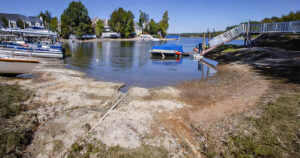
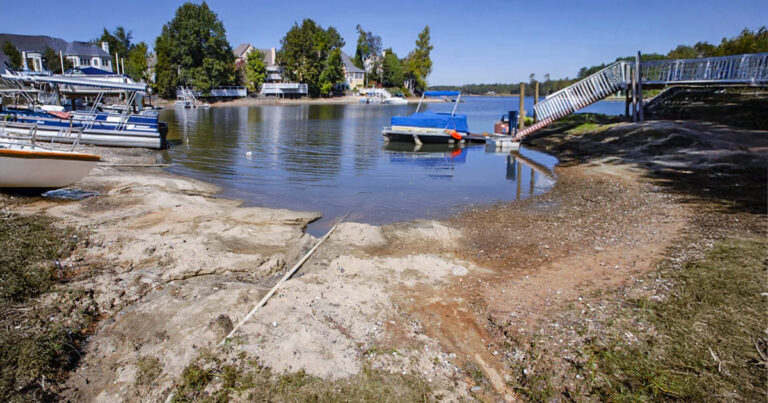
The latest data from the U.S. Drought Monitor shows every part of North Carolina is experiencing drought. About 95% of the state is under severe, extreme, or exceptional conditions.

The designation was triggered after many counties endured at least eight weeks of severe drought or reached extreme to exceptional levels.

Primary eligible counties in North Carolina:
Alamance, Alexander, Bertie, Cabarrus, Cherokee, Clay, Cleveland, Cumberland, Davie, Duplin, Edgecombe, Franklin, Gaston, Guilford, Halifax, Harnett, Haywood, Iredell, Johnston, Lee, Lincoln, Macon, Madison, Martin, Mecklenburg, Nash, Northampton, Orange, Person, Randolph, Richmond, Rowan, Sampson, Stanly, Swain, Union, Warren, Wilkes, Wilson, Yadkin

Contiguous eligible counties in North Carolina:
Alleghany, Anson, Ashe, Beaufort, Bladen, Buncombe, Burke, Caldwell, Caswell, Catawba, Chatham, Chowan, Davidson, Durham, Forsyth, Graham, Granville, Greene, Henderson, Hertford, Hoke, Jackson, Jones, Lenoir, Montgomery, Moore, Onslow, Pender, Pitt, Robeson, Rockingham, Rutherford, Scotland, Stokes, Surry, Transylvania, Vance, Wake, Washington, Watauga, Wayne, Yancey

Eligible counties in South Carolina:
Cherokee, Chesterfield, Lancaster, Marlboro, Oconee, York

Farmers can check eligibility and available programs through tools on Farmers.gov.

For local farmers, the designation brings much-needed relief after months of worsening conditions. Still, with crops already impacted and dry weather lingering, the economic effects could continue across the region.

Registration Opens for Charlotte’s 24 Hours of Booty’s Milestone 25th Year

0

Registration is now open for the 25th year of 24 Hours of Booty, the signature non-competitive cycling and walking event hosted by 24 Foundation, which brings people together to move, celebrate and support those impacted by cancer.


This year’s 24 Hours of Booty presented by Levine Cancer Institute will take place from 7 p.m. Friday, July 24 to 7 p.m. Saturday, July 25 on the “Booty Loop” in Charlotte’s Myers Park neighborhood.

“Twenty-five years is a powerful testament to what this community can do when we show up for one another to impact the lives of those affected by cancer,” said Katherine Murphy, executive director of 24 Foundation. “Together, we have built something truly special; an event rooted in hope, healing and connection. Whether you ride, stride, volunteer or support, you are helping us change the course of cancer for individuals and families right here in our community.”

All cycling and walking participants must register (individually or with a team) online at 24foundation.org. The following are the registration and fundraising requirements:

  • Adult Riders/Walkers (ages 18+): Pay a $75 registration fee and raise a minimum of $500
  • Youth Riders/Walkers (ages 12-17): Pay a $75 registration fee and raise a minimum of $200
  • Child Riders (ages 8-11) and Walkers (ages 4-11): Pay a $50 registration fee and raise a minimum of $50
  • Virtual “UnLooped” registration is $45 for adults and $25 for children (11 and under); no fundraising minimum

Registered in-person participants receive the following: online fundraising tools, access to templates and fundraising ideas, fundraising level incentives, an event T-shirt, full bike and medical support, entertainment, as well as meals, snacks and drinks throughout the event.

24 Hours of Booty is not a race or an endurance event, allowing participants to set their own mileage goals and take breaks as needed. Riders and walkers can get on and off the police-secured course as much as they would like throughout the 24 hours. Child riders (ages 8-11) are permitted on the course during the Survivor Lap (with a parent or guardian) and from 12-7 p.m. on Saturday, July 25.

Myers Park Traditional School and Queens University of Charlotte will again serve as home to the event headquarters – known as “Bootyville” – where participants camp, eat and recharge when not out on the course.

During the past 25 years, 24 Foundation event participants have raised more than $31 million to support local and national cancer navigation and survivorship programs and services. Local cancer beneficiaries, include Atrium Health Levine Cancer InstituteAtrium Health Levine Children’s Hospital, and several other organizations that are committed to helping those affected by cancer survive and thrive throughout their cancer journey and beyond. For more information, visit 24foundation.org.

Charlotte Apartment Rents Post Steepest Decline Since 2010 Amid Supply Surge

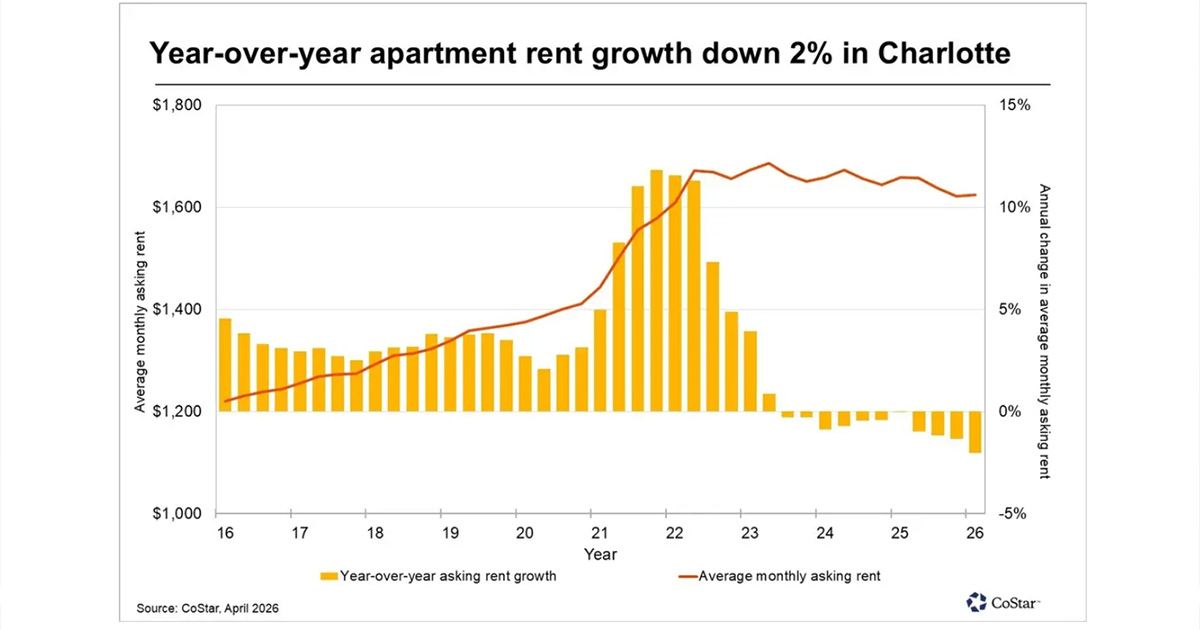
New data from the CoStar Group shows Charlotte apartment rents are now falling at their fastest pace in more than a decade, as a wave of new supply continues to outstrip demand.
Average asking rents fell about 2.1% year over year in Q1 2026, marking the 11th straight quarter of annual rent declines and the sharpest drop since 2010.
According to CoStar’s latest analysis:
  • More than 45,000 units delivered between 2023 and 2025 have created a significant supply overhang, with roughly 15,000 units still under construction (about 6.3% of inventory)
  • Vacancy has climbed to 12.7%, as new deliveries continue to outpace lease-up
  • Nearly half of properties (46%) are offering concessions, reflecting heightened competition for renters

Despite steady renter demand, an influx of new supply continues to push rents down across Charlotte. Even as construction slows, declines are expected to persist in the near term before stabilizing around 2027.

Operation High Octane Uncovers ‘Sophisticated’ Illegal Whiskey Network in Charlotte

0

A year-long undercover operation has exposed a growing underground market for rare liquor in Mecklenburg County, with authorities issuing 28 criminal summonses tied to illegal alcohol sales.

The Mecklenburg County Alcoholic Beverage Control Board, working with the North Carolina ABC Commission, announced the results of “Operation High Octane,” a statewide effort targeting the illegal resale of liquor on the secondary market.

Investigators say the operation uncovered a “sophisticated underground network” profiting from rare and allocated spirits, often sold at steep markups.

High-end bourbon resold for major profits

Several recent cases highlight the scale of the illegal activity:

  • March 30, Matthews: Officers negotiated an $8,500 deal for five bottles of Pappy Van Winkle. Retail value was $1,419.75, with more than $7,000 in potential profit. A warrant was issued for a repeat offender.
  • April 2, Charlotte: A $2,250 deal for 11 bottles, including Angel’s Envy and Hibiki. Some bottles were believed to come from outside North Carolina.
  • April 9, Charlotte: Officers arranged a $3,500 purchase for 34 bottles, generating more than $1,000 in markup.
  • April 9, Charlotte: Another deal involved 14 bottles, including E.H. Taylor and Weller 107, with nearly $1,000 in profit.
  • April 10, Huntersville: A $1,940 deal for five premium bottles, including George T. Stagg, resulted in nearly $1,400 in markup.

Authorities say many sellers sourced liquor from out of state and resold it locally at inflated prices. All seized alcohol is held as evidence and later destroyed by court order.