
 Housing Impact Fund (HIF), an innovative investment fund aimed at preserving and providing quality affordable housing in the increasingly expensive Charlotte rental market, today announced more than $100 million of private sector capital raised to acquire, renovate and protect 1,500 apartment units serving some 5,000 low- and moderate-income residents through its third and largest fund to date.
The announcement follows HIF’s success in acquiring, since 2020, nearly 2,000 apartments that are near jobs, transportation, essential services and good schools. Upon acquisition, all apartment communities are renovated so that they are not only affordable but also a quality place to live and raise a family.
All apartments are protected with restrictions, so they remain affordable for low- and moderate-income families for not less than 20 years. These restrictions commit that 30% of apartments at each community are made available to households earning less than 30% of the area median income (AMI), 50% of apartments are made available to households earning less than 60% AMI, and 20% of apartments are made available to households earning less than 80% AMI.
HIF makes a larger proportion of its properties affordable to households at the lowest income levels, those earning less than 30% or 60% of AMI, than nearly all other local housing efforts. Moreover, the 11 apartment communities that HIF has acquired since 2020 used less than half of the average funding provided by local government to support housing efforts in recent years.
The new fund marks the third such landmark for Housing Impact Fund, which raised $58 million in social impact equity in 2020 and $67 million in 2023. This equity capital represents approximately 30% of the total funding for each apartment community – along with low-interest loans from local government and philanthropy, and below-market mortgage financing from the likes of Freddie Mac and Fannie Mae. Combined, HIF’s $225 million in equity raised represents $750 million in purchasing power to buy NOAH properties serving some 10,000 residents in the Charlotte area, making it the largest and most successful affordable housing initiative in the region.
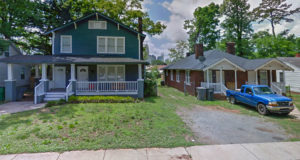
HIF invests in what’s called Naturally Occurring Affordable Housing, or NOAH – existing apartment communities that would otherwise be demolished or renovated and replaced with expensive high-end units that displace moderate-income occupants. That gentrification has the added effect of moving people away from vital services like jobs, education and transportation, which only widens the city’s opportunity gap. Instead, Housing Impact Fund places a 20-year property deed restriction that ensures affordable rents, determined by occupants’ household income, that average approximately 40% less than prevailing market rates and offer rents as low as $300/month for households earning less than 30% AMI.
“The completion of our third round of fundraising is testimony that Housing Impact Fund’s unique model is benefiting everyone involved, including residents, investors and the broader Charlotte community,” said Erskine Bowles, the former White House chief of staff and investment banker who co-founded the fund with his Carousel Capital co-founder, Nelson Schwab. “By keeping these properties from being redeveloped into housing that prices many people out of the market, we’re providing opportunities for economic and social advancement while maintaining the city’s diverse and vibrant core.”
As Charlotte’s population continues to grow, demand for affordable housing has dramatically outpaced supply. As a result, average monthly rents have risen 35% over a five-year period to over $1,470 for a one-bedroom apartment and $1,765 for a two-bedroom unit. Studies show that more than 108,500 households in Mecklenburg County spend more than 30% of their income on housing, an important benchmark for housing affordability. The problem is especially acute among households earning 30% AMI or below, who may pay 75% or more of their income toward monthly rent.
HIF’s innovative approach includes a creative partnership with Mecklenburg County and the City of Charlotte that allows 100% of property taxes for the fund’s communities to be reinvested in the form of rental subsidies for qualifying 30% AMI and below households, half of whom were previously staying in local shelters. To date 560 apartments have been set aside for these residents, who pay an average of $336 in rent from an average monthly household income of $1,157.
“The vision of our Fund III investors and the continued commitment of our civic and community partners will allow us to provide even more access and opportunity to people who are often left behind by the growth and prosperity Charlotte is enjoying,” said Schwab. “In addition, by investing $26 million to renovate our 11 properties, more than 90% of which was contracted with minority-led companies, we’re providing affordable, high-quality places to live and raise a family.”
Another key element of Housing Impact Fund’s approach is the comprehensive way it looks to build resilient communities. The fund joins with dozens of foundations, non-profits and other partners to provide free, on-site support services for residents in such areas as financial and workforce development, education, health and nutrition. Atrium Health embeds Community Impact Workers in each community to not only build connections among residents, but also link them to valuable resources and on-site programming in such areas as financial literacy, workforce development, education, health and wellness.
“Housing Impact Fund has been a powerful vehicle for social-impact investors to make headway in solving one of Charlotte’s greatest challenges – safe, affordable, quality housing that allows everyone to participate in the region’s economic success,” said Mark Ethridge, managing principal of Ascent Housing, which co-founded Housing Impact Fund and serves as its operating partner, responsible for leading the acquisition, financing, closing, renovation, and operation of its properties. “We’re grateful for the support of Truist Bank, Atrium Health and more than 50 other organizations and individuals who are helping us provide stability and upward mobility for thousands of Charlotteans.”
Joining Schwab and Bowles in overseeing the fund are three new fund managers: Ed Weisiger, chair of Weisiger Group and co-founder of Beacon Partners; Dr. Betsy Fleming, former president of Converse College and founder of Cressence executive coaching; and Jamie McLawhorn, president of Marsh Properties. Fund managers serve on a pro bono basis, reducing operating costs to maximize impact.
Key contributors to Housing Impact Fund III include: Truist Bank, PNC Bank, First Horizon Bank, Bank of America, Atrium Health, First Citizens Bank, Regions Bank, Honeywell, Leon Levine Foundation and Huntington National Bank.
About Housing Impact Fund
Housing Impact Fund preserves apartment communities in Charlotte neighborhoods connected to jobs, good schools, transportation and vital services by protecting residents from rising rents and displacement and committing that units remain affordable as well as quality place to live and raise a family. HIF properties are committed to meeting the needs of those facing the most severe challenges to housing security, by focusing on creating opportunities for households earning less than 30% and 60% of Charlotte’s area median income. The innovative fund combines private investment, philanthropic capital and public partnership to acquire and improve existing rental properties in desirable locations while maintaining long-term affordability. For more, visit https://www.ascenthousing.com/charlotte-housing-impact-fund.