

Charlotte’s 10 Worst Restaurant Health Scores in May 2026

0

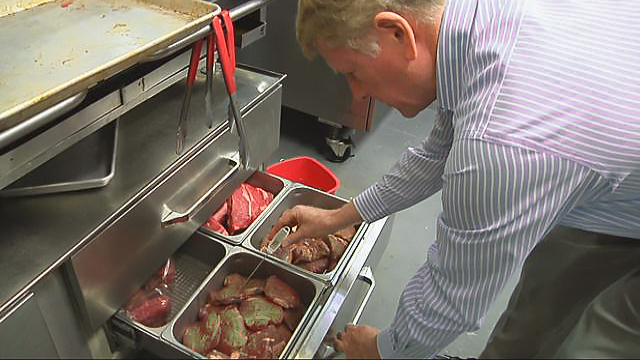
Health inspectors found everything from expired food and improper food temperatures to pest activity and cross-contamination issues during Mecklenburg County restaurant inspections in May.

While most restaurants earned A grades, several establishments received lower scores after inspectors documented food safety violations that could increase the risk of foodborne illness if left uncorrected.

Below are the 10 worst restaurant inspection scores reported in Mecklenburg County during May 2026, ranked from #10 to #1.

10. 131 Main SouthPark – 90.5

5970 Fairview Rd., Charlotte

Inspectors cited the restaurant for several food safety concerns, including temperature control issues and potential cross-contamination.

Notable observations:

  • “Observed 1/2 chickens hot holding at 102F.”
  • “Observed several foods > 41F in units on line.”
  • “Observed cross contamination of cooked meats by using the same pan for raw meat as cooked meat.”
  • “Observed employee drinks on counter in expo area.”
  • “Observed containers wet stacked.”

9. Superica Strawberry Hill – 90

4223 Providence Rd., Charlotte

Inspectors noted repeat violations involving handwashing, food-contact surfaces, and food storage practices.

Notable observations:

  • “Observed food employee adjust hat and wipe face with gloved hands then continue food prep.”
  • “Observed employee go from handling dirty dishes to clean dishes without hand wash and gloves change.”
  • “Observed dishes stacked/stored as clean with visible food debris.”
  • “Observed food items held for more than 7 days.”
  • “Observed visible debris in hand washing sink.”

8. Naked Farmer South End – 90

2725 South Blvd., Charlotte

Inspectors documented several temperature-control violations involving cooked foods and time-as-a-public-health-control procedures.

Notable observations:

  • “Observed approximately 15 pans of mac and cheese” that failed cooling requirements.
  • “Observed cooked steak and Mac and cheese being held in warmer below 135F.”
  • “Observed cut tomatoes, quinoa, cabbage, garlic oil, chili sauce and vegan chili sauce that were holding above 41F.”
  • “Observed chicken salad, cut tomatoes, quinoa and cabbage without date marks present.”
  • “Facility actively reheating food that had been held beyond the allotted 4 hours.”

7. The Smoke Pit Arboretum – 90

8136 Providence Rd., Charlotte

Inspectors found several food temperature violations and cooling issues.

Notable observations:

  • “Observed broccoli salad with cheese prepared and cooling from 9am but not reach cooling parameters.”
  • “Observed brisket, chicken fingers and fried okra hot held below 135 degrees F.”
  • “Observed ribs hot held on grill at 104 degrees.”
  • “Observed sausage link hot held at 114 degrees F.”
  • “Observed several flies and fruit flies.”

6. Mezeh Mediterranean Grill Strawberry Hill – 90

4920 Old Sardis Rd., Charlotte

Inspectors cited handwashing, temperature control, and chemical storage violations.

Notable observations:

  • “Observed employee report to work for shift and come directly into kitchen and put on gloves to begin food prep without first washing hands.”
  • “Observed employee wearing gloves at grill station wipe cutting boards and knives with sanitizer towels and then go back to food preparation without changing gloves or washing hands.”
  • “Observed falafel in steam well on line at 130F.”
  • “Observed two spray bottles of chemicals unlabeled.”
  • “Observed bottle of grill cleaner stored on shelf above bags of rice.”

5. Mac’s Speed Shop – Cornelius – 90

19601 Liverpool Pkwy., Cornelius

Inspectors found equipment failures affecting food safety and cold storage.

Notable observations:

  • “Observed 0ppm chlorine in the dish machine due to a broken tube.”
  • “Observed 43-44 TCS foods in the walk-in cooler.”
  • “All TCS items were voluntarily discarded.”
  • “Observed cooked sausages past the 7-day date mark.”
  • “If inside WIC is not working tomorrow, establishment will not be allowed to open.”
  • “Observed a broken walk-in cooler door that does not close properly.”

4. NY Restaurant – Cornelius – 88

20121 N. Main St., Suite D, Cornelius

Inspectors documented numerous repeat violations involving food handling, labeling, and storage.

Notable observations:

  • “Observed three employee drinks stored on prep surfaces or equipment.”
  • “Observed a box of raw chicken stored on top of a box of raw broccoli.”
  • “Observed raw shrimp stored behind cooked items in the prep cooler.”
  • “Observed missing date marks for cooked chicken, pork and chopped cabbage.”
  • “Observed no time labels for TPHC chicken wings and egg rolls on the counter.”
  • “Observed unapproved insecticide/pesticide with labels from China.”
  • “Observed rusting shelves in the walk-in cooler.”
  • “Observed residue and spider webs on the back wall of the establishment.”

3. Red Lobster – Pineville – 87

9415 Pineville-Matthews Rd., Pineville

Inspectors noted several repeat violations and announced plans for a risk-control review.

Notable observations:

  • “Observed leaking fan in WIC dropping large amount of water onto food below.”
  • “Observed numerous containers and utensils stored as clean with visible food debris, grease, soap, and/or date mark sticker still remaining.”
  • “Observed TCS dressings in ice bath at expo lowboy between 48-52F.”
  • “Observed portioned crab dip in cook line cold drawer expired yesterday.”
  • “Observed in use utensils covered in food debris.”
  • “Observed food debris and orange residue accumulating inside conveyor dish machine.”
  • “Observed standing water at floor drain.”
  • “This is the fifth consecutive inspection with cold holding out of compliance.”

2. El Tropico Restaurant – 87

4335 N. Tryon St., Charlotte

Inspectors found widespread food handling, storage, cooling, and date-marking violations.

Notable observations:

  • “Observed raw beef stored over unwashed produce in WIC.”
  • “Observed raw frozen hamburger patties and raw bags of seafood stored over fries.”
  • “Observed food debris on dishes stored as clean.”
  • “Observed beans, pico de gallo and habanero salsa prepared prior day that did not meet cooling parameters.”
  • “Observed some items in WIC above 41F.”
  • “Observed items missing date mark.”
  • “Observed items past date mark.”
  • “Observed 2 bottles of raid and one bottle of fire ant spray.”
  • “Observed dead pest on clean dish.”
  • “Observed flying pests.”
  • “Observed back door open for majority of inspection.”

1. El Carbonero – 78

4400 Central Ave., Charlotte

El Carbonero received the lowest score reported in Mecklenburg County during May. Inspectors documented a lengthy list of repeat and priority violations and issued an Intent to Suspend related to date-marking violations.

Notable observations:

  • “Observed food employee handling raw carne asada and then go to handle spice containers, date marking stickers, and pen without washing hands.”
  • “Observed food employee handle raw fish and then go to handle water handle on coffee machine without washing hands.”
  • “Observed raw bacon in container with RTE ham.”
  • “Observed multiple items in refrigerators and coolers with no protective coverings.”
  • “Observed box of unwashed peppers stored over RTE beans.”
  • “Observed all items in top of meat prep unit above 41F.”
  • “Observed multiple items past date mark, missing date marks, or improperly date marked.”
  • “Observed multiple squeeze bottles and containers with spices on cook line with no labels.”
  • “Observed 2 dead pests on wall near dish machine power box.”
  • “Observed flying pest.”
  • “Observed oil stored on floor in dry storage area.”
  • “Observed wet stacking with dishes stored as clean.”
  • “Observed rust buildup on bottom shelves.”
  • “Observed rusted shelving throughout.”
  • “Observed tops and sides of equipment in need of cleaning throughout.”
  • “Observed cracked floor tiles.”
  • “Observed broken refrigeration units being used for storage.”

Health inspection scores can change quickly as restaurants correct violations and undergo follow-up inspections. Mecklenburg County health inspectors routinely revisit establishments to verify corrections and ensure compliance with food safety regulations.

If you’d like to monitor health scores or do a quick search for a restaurant you’re about to eat at, check out North Carolina’s health inspection database here.

Rock Hill to Host Cornhole World Championships Next Month With $800,000+ in Prizes

One of the biggest cornhole events in the world is returning to Rock Hill next month, bringing top players, national television coverage, and more than $800,000 in prize money to York County.

The 2026 American Cornhole League World Championships will take place at the Rock Hill Sports & Event Center, serving as the season-ending championship event for the sport.

The tournament will feature more than 50 competitions, including Singles and Doubles divisions for players of all ages and skill levels. Championship finals for ACL Pro Teams, Pro Singles, and Pro Doubles will also be held during the event.

The 170,000-square-foot venue, located in Rock Hill’s Knowledge Park district, is expected to attract players and spectators from across the country.

In addition to the championship matches, attendees can participate in sit-and-go blind draw tournaments at the ACL headquarters inside the facility. The venue will also offer drinks and light snacks throughout the event.

The ACL championships are expected to provide a significant boost for local hotels, restaurants, and businesses while showcasing Rock Hill on a national stage.

Fans can watch the action live on ESPN, ESPN+, and the ACL’s Facebook, YouTube, and TikTok channels.

With hundreds of thousands of dollars on the line, the tournament is expected to be one of Rock Hill’s largest sporting events of the summer.

CMPD’s AI-Assisted Camera Network Now Expanding Over 2,000 Live-Feed Devices

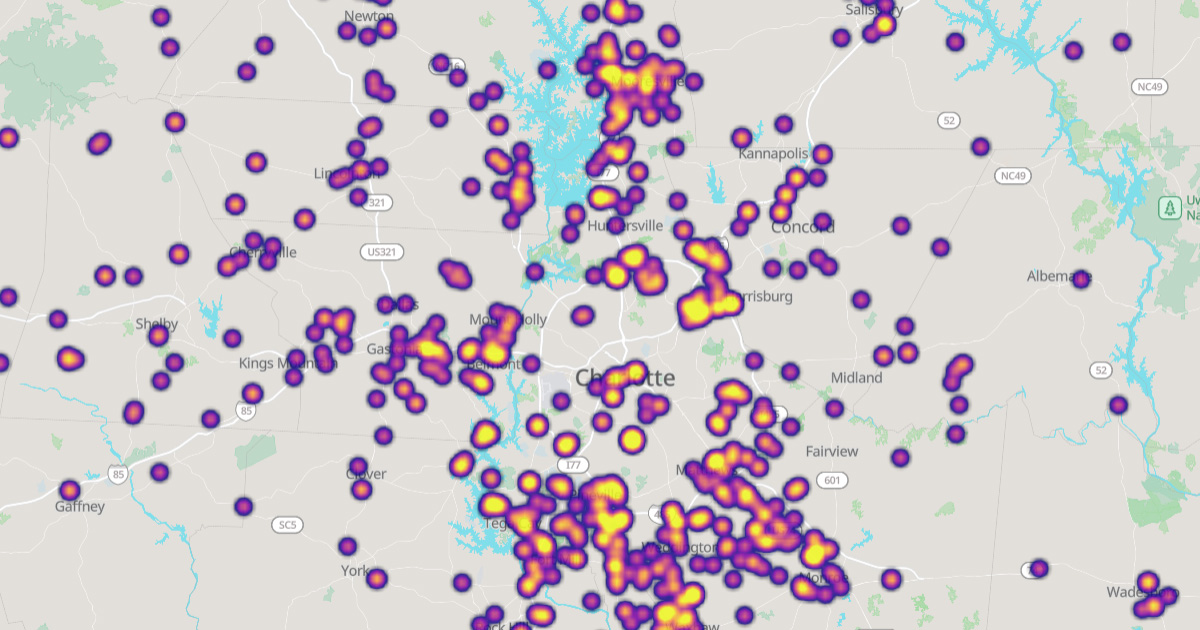
via deflock.org

Thousands of private security cameras across Charlotte are now helping police investigate crimes, identify suspects, and monitor emergencies in real time. At the same time, the rapid growth of surveillance technology is raising new questions about privacy and government oversight.

The Charlotte-Mecklenburg Police Department’s Connect Charlotte program, launched in early 2025, has already grown to include over 2,000 registered cameras throughout our city.

The voluntary program allows residents and businesses to register low-cost wifi cameras with CMPD at no cost. If a crime occurs nearby, investigators can see that a camera exists and request footage from the owner.

The program goes a step further for participating businesses. So far, 1,363 business cameras are now integrated into the system, allowing authorized personnel in CMPD’s Real Time Crime Center to access livestream footage during active investigations.

Police say the technology can help locate getaway vehicles, verify emergency calls, track suspects, and provide officers with critical information before arriving at a scene.

The department says the network has already assisted investigations involving narcotics and other criminal activity.

CMPD emphasizes that participation remains voluntary and that camera owners control whether police can access livestreams. The department also says all registry data is encrypted and only available to authorized personnel.

However, privacy advocates have raised concerns about the broader expansion of surveillance technology nationwide, including concerns about the growing use of artificial intelligence, nationwide vehicle databases, and expanded data-sharing partnerships between law enforcement agencies. Some groups warn that surveillance systems originally designed to solve crimes can gradually expand into broader tracking networks.

Supporters of programs like Connect Charlotte argue that additional camera coverage helps police solve crimes faster and improves public safety. Critics counter that cities must balance those benefits with strong privacy protections and clear limits on how surveillance data is collected, shared, and retained.

As Charlotte’s camera network continues to expand, the debate over where public safety ends and surveillance begins is likely to grow as well.

What Hair Loss Treatment Actually Costs in India

0

Hair loss is one of those things people ignore until they can’t anymore. Then comes the panic — the frantic searching, the expensive clinic visits, the shelves full of shampoos that promise everything and deliver little. And somewhere in all of that, a very practical question gets lost: what does treating hair loss actually cost in India?


It’s a fair question. And the honest answer is more nuanced than most people expect.

Why Hair Loss Treatment Costs Vary So Much

Walk into two different dermatology clinics in the same city and you might get quotes that differ by thousands of rupees. That’s not a scam — it reflects how differently hair loss can present from person to person.

Hair fall doesn’t have one cause. It can stem from hormonal imbalances, nutritional deficiencies, scalp inflammation, stress, thyroid issues, or genetics. The causes of hair fall are genuinely varied, and the treatment has to match the root cause — not just the symptom. A person losing hair because of iron deficiency needs something entirely different from someone dealing with androgenetic alopecia. Treating them the same way is where a lot of money gets wasted.

The Common Treatment Routes and Their Price Range

Most people in India cycle through a few different options before finding something that actually works. Here’s a rough breakdown of what each typically costs:

  • Over-the-counter shampoos and serums: ₹300–₹2,000 per month, often with little clinical backing
  • Dermatologist consultations: ₹500–₹2,500 per visit, not including prescribed medicines or topicals
  • Minoxidil (topical): ₹400–₹1,200 per month depending on concentration and brand
  • Finasteride (oral, for men): ₹300–₹800 per month, but requires ongoing medical supervision
  • PRP (Platelet-Rich Plasma) therapy: ₹3,000–₹8,000 per session, usually needs 6–8 sessions
  • Hair transplant: ₹40,000–₹2,00,000+ depending on graft count and clinic

The range is wide. And none of these are automatically the right choice — it depends on what’s actually causing the hair loss in the first place.

The Hidden Cost of Getting It Wrong

Many people spend a year or more on treatments that don’t suit their specific condition. That’s not just frustrating — it’s expensive. A scalp condition causing inflammation won’t respond to minoxidil alone. A hormonal imbalance won’t be fixed by a biotin supplement.

The real cost of hair loss treatment isn’t just the money spent on products or sessions. It’s the time lost, the mental toll, and the compounding effect of treating the wrong thing while the real problem continues. By the time people find the right approach, some of the hair loss becomes harder to reverse.

This is why getting a proper diagnosis before starting treatment isn’t optional — it’s the most cost-effective decision you can make.

How Holistic Treatment Models Price Themselves

A relatively newer approach in India involves integrated, root-cause-based programs that combine doctor consultation, blood work analysis, customized products, and ongoing tracking — all bundled together. These are different from buying individual products or visiting a clinic for a one-time prescription.

If you’re trying to understand what such a program might involve financially, the Traya treatment price breaks down what their plans include and how they’re structured. What’s useful about this kind of transparency is that it helps you compare not just cost, but what you’re actually getting at each price point.

What Actually Determines Value in Hair Loss Treatment

Price alone doesn’t tell you much. What matters more is whether the treatment is:

  • Backed by a proper diagnosis
  • Adjusted based on your specific hair loss type and medical history
  • Monitored over time with follow-up
  • Realistic about timelines — hair regrowth takes months, not weeks

A ₹500/month solution that addresses your actual root cause will outperform a ₹5,000/month protocol built around guesswork.

Final Thoughts

Hair loss treatment in India can cost anywhere from a few hundred rupees a month to several lakhs over time. The difference between spending wisely and wasting money almost always comes down to one thing: understanding why the hair loss is happening before deciding how to treat it.

Take the time to get a proper assessment. Ask questions. Push for a diagnosis, not just a prescription. The most expensive mistake you can make is treating the wrong problem — and unfortunately, it’s also the most common one.

8 Foot Care Practices for Runners

Healthy feet are critical for any person who has an active lifestyle. However, a lot of people don’t think of it as something important. They notice problems only when they encounter pain or injuries.


You can lower the risk of these issues and improve your comfort by concentrating on proper care. Plus, it will help you achieve more stability in your training.

Keep reading and learn about some essential foot care practices!

Buy Appropriate Footwear

You should find appropriate footwear for your planned workouts.

It is advisable to purchase options that provide arch support and cushioning. So, you will be able to lessen the strain on your joints throughout your training sessions.

Also, you have to get a new pair of running shoes once you reach a certain mileage. You might have to do it sooner if they stop feeling comfortable.

You can reduce friction and pressure problems by doing the following

  • Confirm proper fit
  • Break in new shoes
  • Use appropriate socks
  • Adjust lacing techniques
  • Use protective padding

You can prevent blisters and unnecessary discomfort through these steps.

Use Athletic Socks

Bacteria usually grow much faster in areas with high humidity. So, you need to control this aspect if you want to avoid health problems.

We recommend wearing specialized athletic socks for this purpose. Many alternatives also offer arch support to improve your comfort when training.

It’s preferable not to wear cotton socks, as they tend to stay damp. You should choose options made from specific materials, like

  • Polyester blends
  • Merino wool
  • Other performance fabrics

Plus, make sure to periodically switch to clean socks.

Develop a Hygiene Strategy

You should also be more mindful of your hygiene when training. It’s important to wash your feet every time to clear away any accumulated bacteria.

It is important to dry your feet afterwards as well. Fungal infections are more likely to develop if your feet are wet.

How to prevent toenail fungus?

As we’ve mentioned, fungi develop in hot and damp conditions. So, you can avoid them with a few straightforward steps

  • Dry your feet
  • Change socks regularly
  • Wear breathable shoes
  • Avoid staying in wet shoes
  • Disinfect your footwear

Consistent preventive behavior will help you lower the risk of infection. These routines also allow you to preserve healthy skin. So, you can keep your feet comfortable and ready for every workout.

Treat Blisters

Blisters are another common foot problem experienced by runners. They develop when repeated friction causes the upper layers of skin to separate. Long runs and poorly fitting shoes can increase the possibility of their formation.

Reducing friction is an effective method to avoid blisters. Several simple strategies you can use are

  • Properly fitted shoes
  • Anti-chafing products
  • Hot spots treatment

You can also use different protection products to manage your blisters. You might enhance protection with moleskin and athletic tape. Plus, you can use special dressings before long runs and demanding workouts.

We recommend disinfecting any small blisters and allowing them to heal. However, you might need help with painful ones to avoid infection.

Improve Your Flexibility and Strength

Your healthy movement depends on adequate foot mobility. So, you need to incorporate periodic mobility workouts into your routine.

You can do some of these exercises

  • Ankle circles
  • Toe spreads
  • Rocking movements
  • Massage ball

You might also do some stretching after you finish your runs. These exercises can help you relieve the tension in your muscles

Keeping your feet strong helps you achieve better load distribution. This improved mobility can enhance your balance and proper biomechanics.

Protection in Shared Facilities

You could come into contact with different bacteria in any communal setting. So, you have to be more careful if you visit public showers or dressing rooms frequently.

You can wear shower sandals in these places to avoid any problems. You won’t have to contact potentially contaminated surfaces.

Some extra measures to reduce risks include

  • Avoid walking barefoot
  • Wash and dry your feet
  • Change out of damp footwear
  • Use clean socks daily

Also, you have to prepare for any travel plans and competitive events. It might be harder to do your usual hygiene routines in these circumstances. So, you need to pack extra socks and any essential cleaning products.

Control Your Foot Health

You have to periodically examine your feet to spot potential issues right away. Make sure to check your skin for any

  • Excessive callus buildup
  • Cracked areas
  • Redness
  • Changes in toenail color
  • Signs of irritation

These systematic assessments can be really useful if you engage in intense training. Catching an infection at an early stage will help you heal much faster.

Foot problems sometimes correlate with increases in training intensity and duration. You have to monitor symptoms alongside training volume to identify relationships between workload and discomfort. This information can be valuable when adjusting your training plans.

Get Professional Help

Self-inspections and care are effective in most cases. However, you might need help from a qualified expert if your condition is more severe.

Medical attention is essential if you experience severe pain and swelling for an extended period. An accurate diagnosis from a professional will help you ensure more effective treatment.

Some other scenarios that require special care include

  • Persistent ingrown toenails
  • Significant nail trauma
  • Suspected infection
  • Swelling and drainage

Podiatrists can diagnose the primary cause of your symptoms more quickly. They will help you with the shoe choice process and injury prevention techniques.

Conclusion

Foot care should be a priority for anyone who is physically active. You need a systematic routine to identify any potential issues early.

Some essential routines you need are

  • Choose suitable shoes and socks
  • Wash and dry your feet
  • Regular stretching
  • Inspect feet for changes

You can reduce injury risk and enjoy more consistent participation in the activities you love. So, make sure to prioritize foot care if you enjoy an active life!

At Least 1 Hospitalized After Chemical Leak at Charlotte’s DyStar Corp

A hazmat response at a Charlotte chemical plant this morning has left at least one worker hospitalized and a local evacuation.

A Chemical Accident at DyStar Chemical Corporation

Emergency crews rushed to the DyStar Carolina Chemical Corporation facility on Wilkinson Boulevard early Friday afternoon following reports of a hazmat incident. According to company officials, an object accidentally leaned against a chemical tank, causing pressure to build up inside and pushed material out.

Multiple Charlotte area emergency and HAZMAT crews are now on scene, including the Charlotte Fire Department and MEDIC.

While the company clarified that no chemical explosion occurred and the building sustained no damage, at least one worker was hospitalized.

Industrial Dangers in the Carolinas

Friday’s incident is a stark reminder of the thin line between everyday life and industrial hazards in the Carolinas. Across both states, manufacturing plants are frequently tucked close to growing neighborhoods, turning minor mechanical failures or human errors into immediate emergencies for local families.

When a factory experiences a leak, the surrounding community often bears the consequences. For years, activists have warned that standard zoning laws do not do enough to keep dangerous operations far away from where people sleep and children play. Now, a massive battle over this exact issue is unfolding just across the state line in York County.

The Silfab Crisis in Fort Mill

While the DyStar incident was resolved quickly, residents in Fort Mill, South Carolina, say they are trapped next to a ticking chemical time bomb. For over two years, the South Carolina Department of Environmental Services (SCDES) and local courts have been mired in a bitter fight over Silfab Solar.
Community groups like Move Silfab and the Citizens Alliance for Government Integrity (CAGI) argue that the massive solar panel facility is an unlawful heavy industrial operation that was illegally permitted. The plant sits on Logistics Lane in an area explicitly zoned for light industrial use, directly adjacent to Flint Hill Elementary School and thousands of neighborhood homes.

Silfab’s Hazardous Materials Inventory: Vastly More Dangerous Than DyStar

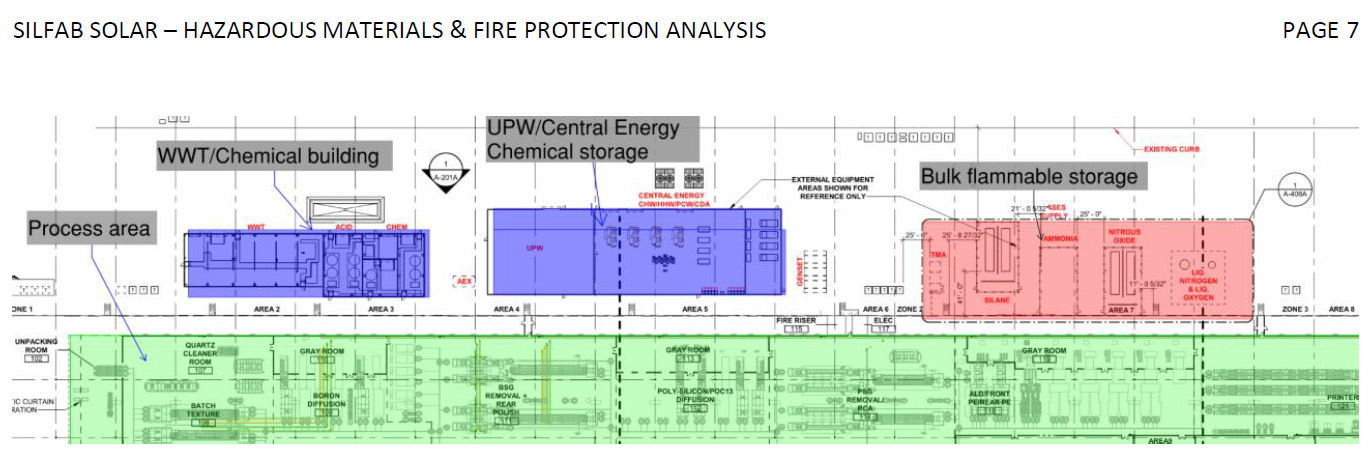
Silfab’s official Hazardous Materials Inventory System (HMIS) reportDES Air Permitand Industrial Wastewater Treatment Plans all detail massive quantities of chemicals that far exceed MMA in acute toxicity, corrosivity, reactivity, and potential for chain-reaction disasters. The Wastewater Treatment/Chemical storage area is classified as a High-Hazard Group H-3/H-4 occupancy because quantities vastly exceed Maximum Allowable Quantities (MAQs) under the South Carolina Fire Code.

Silfab’s full list of chemicals and the quantities they would need to store on site.

Key chemicals and quantities include:

  • Hydrofluoric Acid17,435 gallons in bulk storage
  • Anhydrous Ammonia1,020,408 cubic feet in exterior bulk storage
  • Silane Gas (SiH₄)289,210 cubic feet in tube trailers (pyrophoric)
  • Liquid Oxygen (LOX)13,000 gallons (powerful oxidizer)
  • Nitrous Oxide (N₂O)245,614 cubic feet (oxidizing gas)
  • Trimethylaluminum (TMA)100 gallons in a dedicated 4-hour fire-rated H-3 building (extremely pyrophoric and water-reactive)
  • Phosphorus Oxychloride (POCl₃)59.4 gallons (plus process quantities; violently water-reactive, releases HCl gas)
  • Boron Trichloride (BCl₃)1,348 cubic feet (corrosive/toxic gas; reacts with moisture to form HCl fumes)
  • Sulfuric Acid1,500 gallons
  • Additional bulk corrosives: Hydrochloric Acid and Potassium Hydroxide at 11,095 gallons each, plus Hydrogen Peroxide at 7,978 gallons.

Real-World Precedents: These Exact Chemicals Have Already Caused Mass Casualties

History shows the deadly consequences of these chemicals — especially when stored or handled in large quantities:

  • Silane Gas: Silane is notoriously pyrophoric and has caused a long history of fatal explosions in semiconductor and solar/PV manufacturing. A 2023 overview of silane incidents documents at least 12 fatalities across major events, including two separate backflow incidents (1988 in the US and 1991 at Osaka University in Japan) that each killed 5 people when nitrous oxide contaminated silane cylinders, creating explosive mixtures. Gas cabinet explosions alone have caused 7 fatalities worldwide between 1976 and 2012, often due to human error during cylinder changes. In solar plants specifically, silane leaks have led to fires, explosions, and worker deaths, including a 2007 incident in India that decapitated a worker and a 2005 Taiwan factory explosion that killed one worker and shut down production for months.
  • Anhydrous Ammonia: In September 2023, a tanker truck carrying anhydrous ammonia overturned in Teutopolis, Illinois, releasing approximately 15,000 liters (~4,000 gallons). The resulting toxic vapor cloud killed five people (including a father and his two young children) and injured seven others. Hundreds of residents within a 1.6 km radius were evacuated. This was from a single tanker — far smaller than Silfab’s stored inventory of over one million cubic feet.
  • Hydrofluoric AcidA 2015 HF leak in China injured 253 workers, demonstrating the chemical’s ability to cause rapid systemic poisoning, severe burns, and cardiac effects even from limited exposure.
  • Sulfuric Acid: In September 2025 at Hexin Chemical Industry in Henan Province, China, a sulfuric acid leak reacted in a septic tank to produce hydrogen sulfide gas, killing five people in a factory restroom.

These incidents involved the exact same classes of chemicals Silfab stores and uses in much larger volumes.

Why Silfab’s Placement in a Light Industrial Zone Is So Alarming

via Silfab’s HMIS

Silfab’s operation is not light industrial assembly — it is a full-scale chemical manufacturing plant using High-Hazard Group H-3/H-4 processes and quantities. Placing it in a light industrial zone next to an elementary school and residential areas creates unacceptable risk. Real-world accidents prove that leaks, backflows, rollovers, or unintended reactions with these chemicals can kill or injure dozens to hundreds of people in minutes through toxic plumes, fires, explosions, and systemic poisoning.

A failure at Silfab could trigger cascading reactions: TMA or silane igniting spontaneously and being supercharged by LOX or nitrous oxide; POCl₃ or boron trichloride releasing HCl gas clouds; HF causing delayed cardiac arrests; ammonia forming ground-hugging lethal plumes; and sulfuric acid generating exothermic steam explosions and acidic mists.

Community impacts could be devastating:

  • Children at Flint Hill Elementary facing immediate corrosive burns, respiratory failure, or cardiac effects from HF.
  • Nearby homes and residents suffering toxic contamination and long-term health damage.
  • Drivers on Logistics Lane and I-77 trapped in drifting plumes, leading to mass casualties and accidents.

Previous smaller releases at Silfab (KOH spill and HF leak in March 2026) already preceded school closures and 911 surges, including vomiting blood, trouble breathing, and seizures. A major event would dwarf Charlotte’s DyStar accident this morning.

From Normandy to NC: Battleship North Carolina Honors 82nd D-Day Anniversary

The Battleship North Carolina, a division of the N.C. Department of Natural and Cultural Resources, will be illuminated on the evening of Saturday, June 6, in observance of the 82nd anniversary of D-Day, the Allied invasion of Normandy during World War II.



On June 6, 1944, Allied forces launched Operation Overlord, the largest amphibious invasion in military history. More than 156,000 troops crossed the English Channel and landed on the beaches of Normandy, France, facing intense enemy fire and formidable obstacles. The invasion opened a western front against Nazi Germany and became a decisive step toward the liberation of Europe. The courage and sacrifice demonstrated on D-Day remain among the most enduring examples of service in the cause of freedom.

As a memorial to the 11,000 North Carolinians who gave their lives during World War II and to the more than 10,000 men who served aboard USS NORTH CAROLINA, the Battleship serves as a place of remembrance and reflection.

“The anniversary of D-Day gives us an opportunity to reflect on the immense courage required of those who crossed the English Channel and stormed the beaches of Normandy,” said Dr. Jay C. Martin, executive director of the Battleship North Carolina. “Their actions helped secure the freedoms we enjoy today. By illuminating the Battleship North Carolina, we honor their service and reaffirm our responsibility to preserve and share the stories of the World War II generation.”

The special uplighting honors the courage, sacrifice, and determination of all who participated in the Normandy campaign and the broader fight for freedom during World War II. The Battleship will be illuminated beginning at sunset and visible throughout the evening from downtown Wilmington and the surrounding waterfront.

For more information about the Battleship North Carolina Memorial, visit BattleshipNC.com.

Massive New Music Venue Announced for Charlotte’s Upcoming “Anthem District”

Charlotte’s music scene is about to get it’s own “district”.

A new 10,000 sqft, 1,000-capacity music venue has just been announced for Charlotte’s new “Anthem District“.

The Auxiliary (aka “The Aux”), slated to open toward the end of 2027 at 2519 South Tryon St, will become the first tenant in the new entertainment-focused district.

According to a press release about the project, the venue is being designed specifically with live music in mind, from acoustics and sound quality to sightlines throughout the building. The goal is to host more than 100 shows annually, featuring a mix of emerging artists and established touring acts across multiple genres.

Beyond the music venue, plans for Anthem District include additional entertainment options, restaurants, bars, and retail spaces, creating what could become one of Charlotte’s newest nightlife destinations.

Barringer Construction will oversee construction of The Auxiliary, while KDG Architecture is serving as project architect and Timmons Group is handling civil engineering.

Expect Delays: I-277 Lanes Close as Charlotte Finally Starts Construction of Famed ‘Rail Trail Bridge’

One of Charlotte’s most anticipated transportation projects is finally becoming a reality. Construction has officially begun on the Rail Trail Bridge, which will connect Uptown and South End with a dedicated pedestrian and bicycle crossing over I-277.

The $23.8 million project will create a direct, car-free connection between the CATS Blue Line’s Brooklyn Village Station and the existing Rail Trail near Carson Street.

To make way for construction, the inside lanes of I-277 in both directions closed on June 2 and are expected to remain closed for about four months. Additional overnight closures may occur through June 9 as crews demolish and rebuild the freeway median.

The now fully-funded bridge will feature two cable-stayed arch spans and is designed to eliminate one of the biggest gaps in Charlotte’s trail network.

Drivers can also expect periodic traffic impacts over the next several years as construction continues.

City officials recommend using Waze for real-time traffic updates and detours.

The project is expected to be completed in 2028, creating a seamless connection between two of Charlotte’s fastest-growing neighborhoods. You can find out more on the city’s rail trail bridge page here.

South Carolina 48 Hour Film Project Returns June 5–7 – Make A Movie In One Weekend

The South Carolina 48 Hour Film Project returns June 5–7, 2026, challenging filmmakers to write, shoot, and edit a short film in just 48 hours. 

The 48 Hour Film Project is the world’s largest timed filmmaking competition, bringing together filmmakers of all experience levels to create a complete short film in a single weekend. Each team is assigned a genre and must incorporate a specific character, prop, and line of dialogue into their film. 

The competition begins with a hybrid Kickoff event at 6:00 PM on Friday, June 5, 2026, at 821 Whitlock Street in Spartanburg, allowing participants to join either in person or virtually from anywhere in the world. 

Completed films must be submitted by 7:30 PM on Sunday, June 7, 2026. 

This year’s competition includes filmmakers from across South Carolina, throughout the Southeast, and beyond. Participants range from first-time filmmakers to seasoned professionals. Among them is one Ohio filmmaker who will be competing in his 46th 48 Hour Film Project, with a personal goal of completing 48 different 48 Hour Film Projects before turning 48 years old. 

Registration remains open, and anyone interested in filmmaking—from complete beginners to industry veterans—is encouraged to participate. 

Following the competition, all films will be screened publicly during the South Carolina 48 Hour Film Project Screening & Awards Ceremony on Saturday, June 20, 2026, at 2:00 PM at the Richardson Center for the Arts at Wofford College. 

The June 20 event is free and open to the public, offering audiences the opportunity to see what local filmmakers can create in just one weekend. Free tickets are available through Eventbrite. 

Films will compete for awards in categories including Best Film, Best Directing, Best Cinematography, Best Sound Design, Best Acting, Best Writing, and more. 

The winning film will advance to Filmapalooza, the international championship of the 48 Hour Film Project, which will be held in Curaçao in March 2027. There, filmmakers from around the world will compete for top honors and the opportunity to screen their work at the Cannes Short Film Corner. 

“We’re excited to welcome filmmakers from across South Carolina and beyond,” said Ashley Crane, South Carolina City Producer. “Every year we see first-time filmmakers working

alongside experienced professionals, and the results are always incredible. The 48 Hour Film Project is about creativity, collaboration, and proving that great stories can come from anywhere.” 

The South Carolina 48 Hour Film Project continues to showcase the growing strength of the state’s film community while providing hands-on opportunities for filmmakers to develop their skills, build professional networks, and create new work. 

The event is made possible through the Urban League of the Upstate, whose ongoing investment in the arts strengthens workforce development and expands opportunities within the region’s film industry. 

The Urban League of the Upstate’s partnership reflects a shared mission to bridge the gap between local talent and global industry. By investing in creative pipelines, the organization is expanding career opportunities and industry access for filmmakers throughout South Carolina and the Southeast. 

Registration is now open at 48hourfilm.com/southcarolina

Screening + Awards Ticket Link here