Charlotte Firefighter Wins 6 Gold Medals, Breaks 2 World Records at World Games

0
via City of Charlotte

Charlotte firefighter Holly Forbes Johnson has just earned global recognition after winning six gold medals and breaking two world records at the 2025 World Police & Fire Games in Birmingham, Alabama.

The 48-year-old mother of three competed in four individual freestyle events and anchored two record-breaking relays. Her 200m freestyle relay team finished more than 20 seconds faster than the previous world record.

A full-time firefighter at Firehouse 38, Forbes Johnson also serves on Charlotte Fire’s dive and swift water rescue team. She hadn’t raced internationally in over 20 years before returning to competition with what she called “a nudge from God.”

“I grew up in the water,” Johnson said in a press release. “Swimming was my world long before I joined the fire service. It has always been a part of who I am. When I heard the Games were coming to my hometown of Birmingham, it just felt like a sign. I knew I had to go for it.” 

Charlotte Fire Chief Reginald Johnson praised her determination and commitment. Forbes Johnson joined the department in 2016 at age 40, becoming the oldest female to graduate from Recruit Class 99.

Now back on duty, she returns not just with medals, but with the pride of representing Charlotte — and the joy of coming home to her biggest fans: her three sons.

Massive Recall Issued for Over 5 Million Above-Ground Pools After 9 Children Drown

0

More than five million aboveground pools sold across the U.S.—including hundreds in Charlotte—are being recalled following nine reported child drownings.

The U.S. Consumer Product Safety Commission (CPSC) issued the recall on July 21, 2025, warning that compression straps running outside the pool structure can act as footholds for children, allowing unsupervised access to the water. The hazard affects 48-inch and taller aboveground pools manufactured by Bestway, Intex Recreation, and Polygroup.

The recalled models were sold at major retailers such as Walmart, Lowe’s, Target, Costco, and Amazon from 2002 through early 2025. The CPSC said the nine drownings occurred between 2007 and 2022, involving children ages 22 months to 3 years.

Consumers are urged to contact the manufacturers to receive a free repair kit that includes a rope replacement for the hazardous strap. Until then, the CPSC advises keeping children away from affected pools or draining the water completely to prevent access.

The recall does not include pools where the strap runs behind the vertical support poles, a design considered less hazardous.

Pool owners can verify whether their model is affected by reviewing the CPSC’s recall list, which includes brand names, model numbers, and images illustrating the problematic strap designs.

For more information, visit cpsc.gov/recalls.

Summer Swarms: Mosquito Season Intensifies Across Charlotte Region

0

As summer intensifies across the Carolinas, mosquito season is peaking — and it’s not just about itchy bites and outdoor annoyance, it’s also diseases. According to the North Carolina Department of Health and Human Services, the state recorded over 900 cases of tick- and mosquito-borne illnesses last year alone.

Charlotte is now entering the height of mosquito season, with August forecasted to bring the worst of the season. Residents are likely to notice increased swarms, particularly in warm, humid areas and near standing water.

Officials say the most commonly reported mosquito-borne illnesses in the state include:

  • West Nile Virus

  • Eastern Equine Encephalitis

  • La Crosse Encephalitis

Though relatively rare, these diseases can cause serious health complications. Public health experts stress the importance of taking precautions. Tips to repel and prevent mosquito bites include:

Rare Brain-Eating Amoeba Discovered in South Carolina

0

A confirmed case of Naegleria fowleri, commonly known as brain-eating amoeba, has been reported in South Carolina, state health officials said this month. The South Carolina Department of Public Health (SCDPH) has not disclosed the exact location of the case.

“The South Carolina Department of Public Health (DPH) was made aware of one case of Naegleria fowleri in our state the week of July 7. Naegleria fowleri is not required to be reported to DPH. The agency does not track infections from the amoeba and does not provide information about or comment on individual cases,” said SCDPH in a press release.

What to Know About the Amoeba

The Naegleria fowleri amoeba thrives in warm freshwater, including lakes, rivers, and hot springs, especially during the summer months. It can also appear in poorly chlorinated tap water, although this is far less common.

Infection occurs when water containing the amoeba enters the body through the nose—typically during swimming, diving, or water sports—and travels to the brain, where it destroys tissue.

Symptoms and Progression

Early symptoms typically appear within one to 12 days of exposure and may include:

  • Sudden fever

  • Severe headache

  • Nausea and vomiting

These symptoms quickly worsen, often leading to seizures, hallucinations, and coma. Most cases result in death within five days of symptom onset.

Public Health Response and Testing

South Carolina does not require public testing for Naegleria fowleri, and health departments are not obligated to issue public notifications when a case is confirmed.

Federal officials continue to emphasize that while the amoeba is present in natural freshwater environments, infections remain extremely rare.

Safety Tips for Freshwater Activities

To reduce the already low risk, the CDC advises:

  • Avoiding jumping or diving into warm freshwater during summer

  • Using nose clips or keeping your head above water in freshwater lakes and rivers

  • Avoiding digging in or stirring up sediment in shallow, warm freshwater areas

Although the infection is rare, it remains one of the most serious waterborne illnesses in the United States. Residents are encouraged to remain cautious, especially during periods of high heat when water temperatures rise.

For more information on Naegleria fowleri, visit CDC.gov/naegleria.

China Detains Wells Fargo Executive – Prompting Nationwide Travel Freeze

0

Charlotte-based Wells Fargo has just suspended all employee travel to China after one of its senior executives was barred from leaving China due to an alleged ‘criminal investigation’.

Chenyue Mao was blocked from departing China last week. Officials from China’s Foreign Ministry confirmed Mao is “required to assist in a criminal probe,” though the case’s details remain undisclosed.

Mao, who works in Wells Fargo’s international factoring division, is the latest foreign executive to face an exit ban in China. Her detention comes just weeks after she was elected chair of the global trade group Factors Chain International during a conference in Rio de Janeiro, according to the Wall Street Journal.

The bank is quietly seeking more information through diplomatic and legal channels while avoiding public escalation, according to sources familiar with the matter.

China has increasingly used exit bans on both citizens and foreign nationals during criminal or regulatory investigations. Experts say the move could deter future corporate travel to mainland China, especially among Chinese-born executives with foreign passports.

Mao has worked for Wells Fargo for over a decade. As of now, she remains in China while the investigation continues.

The Charlotte Region Is About To Get It’s First “Invisible” Cabin Retreat

0

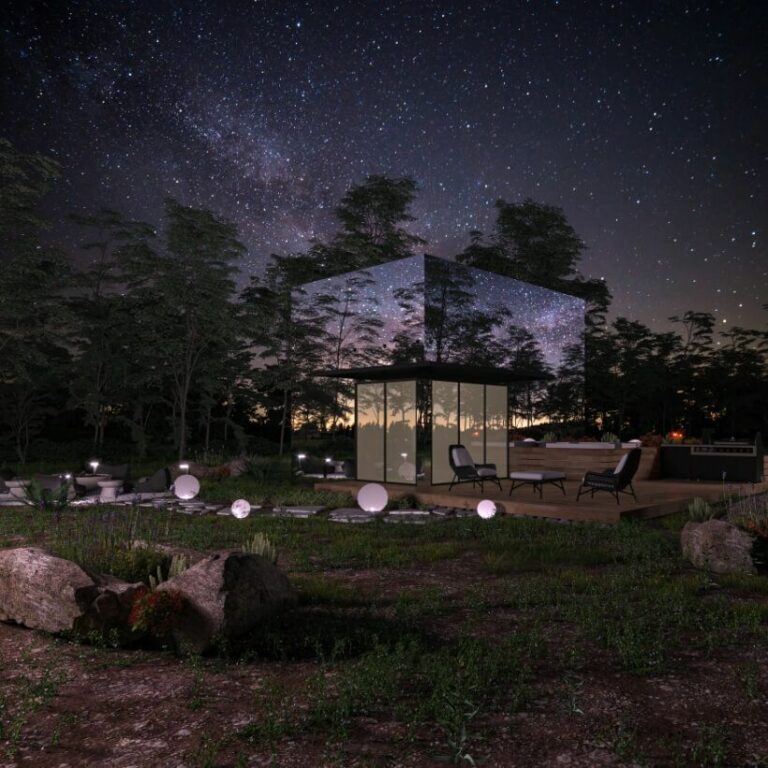
The Charlotte region is about to get it’s very own “mirror hotel retreat”.

A total of 11 “invisible” cabins are being built on a sprawling 55-acre estate just north of Asheville. Each cabin is wrapped in mirrored panels that seamlessly blend into the natural surroundings.

“What we heard the most is that guests wanted privacy,” Mirror Hotel founder Joanna Cahill told Travel + Leisure. “Mirror Hotel is built to be everything people love about glamping without everything they don’t.”

Guests will be able to choose between 2 cabin options: the 1,500-square-foot “Elevate” cabins, accommodating six people, or the smaller 600-square-foot “Grounded” cabins, with room for four. The Elevate cabins include a full bathroom, a kitchen, a downstairs living space with a pull-out sofa and shower, and a lofted sleeping area upstairs. Each cabin is elevated on stilts and features a private terrace.

The Mirror Hotel will host a grand opening this coming May. An exclusive 30-day booking event for email subscribers begins in early April, allowing guests to reserve their stays from May onward (you can sign up here).

The Elevate cabins start at $595 on weekdays and $795 on weekends, and the Grounded cabins are available from $299 on weekdays and $495 on weekends.

What do you think about the new concept? 

Avoiding Common Pitfalls in Mesothelioma Claims

0

Mesothelioma claims can overwhelm anyone. You face medical bills, insurance jargon, and tight deadlines. Mistakes can cost you time and money. This guide shows six common pitfalls to avoid. 

1. Missed filing deadlines

Statutes of limitations apply to asbestos cases, and missing a deadline can bar your claim forever. Start by checking the filing window in your jurisdiction, and then set clear reminders. If you delay medical evaluation or legal steps, you risk running out of time. Work with your support network to track important dates. This simple habit prevents automatic dismissal. Don’t let a calendar slip rob you of justice.

2. Choosing the wrong legal help

Not all attorneys have the same experience with asbestos cases. You need a specialist who knows the nuances of mesothelioma litigation. Search for a mesothelioma lawyer with a proven track record. Be sure to check case results, client reviews, and peer endorsements. 

A specialist understands trust funds, deadlines, and expert witnesses. Hiring a general practice attorney can cost you time and money. Invest in focused expertise to navigate complex legal terrain.

3. Neglecting medical documentation

Medical records back up every claim. Without clear reports, your claim loses credibility. Request full copies of test results, doctor’s notes, and treatment plans. Be sure to organize them by date, and keep symptom logs and photos. Missing pages can raise doubts. Additionally, share records promptly with your legal team. Well-documented medical evidence shows the severity of your condition. It also helps calculate fair compensation. Be sure to update records after each visit to the doctor. 

4. Settling too early

Accepting the first settlement offer may feel tempting. You may need money for medical bills or living costs, but early offers often undervalue future care needs and lost income. Review all offers with your legal team and medical advisors. Calculate future treatment costs, travel expenses, and impact on quality of life. If the offer falls short, wait for additional evidence to emerge. A measured approach often yields a fairer settlement that covers ongoing needs.

5. Overlooking asbestos sources

Focusing only on obvious exposure sites can leave out key sources. Older schools, shipyards, and household products sometimes carry asbestos. Interview family members and former coworkers to track hidden risks. Be sure to document jobs, residence history, and hobbies. Expert investigators use detailed timelines to build strong cases. Missing a single exposure event can limit your claim. Be thorough, start with all possible leads, and update your list as new information emerges.

6. Ignoring expert testimony

Expert witnesses can make or break your claim. Dosimetrists, industrial hygienists, and medical specialists can provide critical testimony. Ignoring their value can leave gaps in causation or damages. Work with your attorney to identify the right experts early.

In addition, provide full background, exposure data, and medical records so they can prepare thorough reports. Solid expert opinions help counter defense strategies and strengthen your argument. Plan depositions carefully and share questions in advance.

Endnote

Avoiding these common mistakes helps you stay in control. Every claim has unique facts. Work closely with your legal and medical teams, and keep clear records and timelines. Ask questions freely and review decisions carefully. If you face uncertainty, reach out to trusted advisors or support groups. With the right strategy and guidance, you can navigate the process confidently.

Building your dream Garage: Simple design guide

0

A garage is a place to park and store your car, but it can be much more. You can transform your garage into a fitness, a workstation or even a family space or “man cave.” 

To think how far garages have come since the 1920s, when they switched to overhead doors; the improvements of the 1930s in mechanical operation and design; the 1940s, when garages became more common in homes; and the 1970s, when manufacturers began using steel to make garage doors instead of wood, and later, fiber glass or aluminum. 

Below is a look at different garage designs and why research is important when choosing your dream garage. 

Traditional garage-only

If you’re just looking for somewhere to store your car, you may prefer a traditional garage-only layout that has a single or double door and little extra storage space. This is where a Quonset garage kit could serve you well. These are strong, versatile and affordable storage spaces that customers have used either for storing their vehicles or other items and have done so successfully. 

Garage-living space combo

This design is good to maximize living space. It integrates the garage smoothly into the living space, transforming it into a space that could be a gym, playroom, guest room or extra living area. You can incorporate insulated walls, heating, and cooling systems to make this a comfortable, practical space all year. 

Garage-office combo

Working from home has become more common and builders have converted lots of garages into office spaces for people looking for a quiet workspace. This design combines garage practicality with office functionality, creating a tranquil space to be productive away from the main living areas. To get the most out of your garage/office, add built-in desks, storage cabinets and plenty of lighting. 

Boathouse

If you like being out on the water, you could transform your garage into a boathouse, where you have a standard bay or two for vehicles but also a deeper one for the boat. Some boathouses have higher ceilings and oversized garage doors for convenience. Some might also feature overhead doors at the back of the garage, sparing you from having to reverse the boat in and out of the garage each time. 

Boathouses come in a variety of architectural styles and sizes, making it easier to find something that will suit your tastes and needs. Many also serve well for storing gardening items or for use as a gym or workstation. 

Garage with a loft

If you want somewhere to park your car and store other things but you have limited space, a garage-and-loft design is ideal. These fit two storage spaces onto a small plot of land by “stacking” one on top of the other, the garage being your car storage space and the loft being your additional storage space. You can convert your loft into a different space, however, such as an art studio or other hobby space. 

Always research plenty before choosing your dream garage

Before going ahead with your dream garage, always conduct extensive research because there are lots of technical details to consider, as well as regulations and bylaws to comply with. You must think about whether the materials you use to build your garage are durable and weather resistant. You must also think about your needs, whether they might change in the future, and whether you’re unlocking your garage’s amazing potential. 

When you have a plan for your garage, ask a professional to check over it before pressing ahead with it. They can highlight any potential issues and stop the need for future repairs that drain all your spare cash. 

A garage is a storage space for your car, primarily, but it can be so much more than that. When buying a house with a garage, or adding a garage to your home, look beyond the storage function and see how you can optimize the space. Remember, Apple, the biggest company in the world, started in a garage, originally!


Carbon Monoxide Exposure at Charlotte’s Victory Lane Prompts Emergency Response

0

One person was hospitalized with minor injuries after a carbon monoxide exposure incident Sunday morning at Victory Lane Indoor Karting in north Charlotte, according to Charlotte’s MEDIC 911.
The incident occurred around 9:45 am. Charlotte Fire deployed large industrial fans to ventilate the building. Authorities have not released the cause of the exposure or an update on the injured individual’s condition.

Carbon monoxide (CO) exposure is a known hazard in indoor go-kart venues where gas-powered engines can emit toxic fumes. Without proper ventilation, these emissions can accumulate rapidly and pose serious health risks.

CO is an invisible, odorless gas that can cause poisoning without warning. Even brief exposure in enclosed spaces can be dangerous.

Symptoms of carbon monoxide poisoning include:

  • Headache

  • Dizziness

  • Nausea or vomiting

  • Fatigue or weakness

  • Confusion or poor judgment

  • Chest pain

  • Shortness of breath

  • Loss of consciousness

Emergency officials remind the public that proper ventilation and carbon monoxide detectors are critical in any enclosed area using combustion engines.

No further details have been released. Victory Lane Indoor Karting has not yet commented on the incident.

Matthews Joining Charlotte’s Tech Boom With Massive New 123-Acre Data Center Development

0

A major rezoning effort is underway in Matthews that could pave the way for a large-scale data center project, marking the latest step in Charlotte’s emergence as a southeastern digital hub.

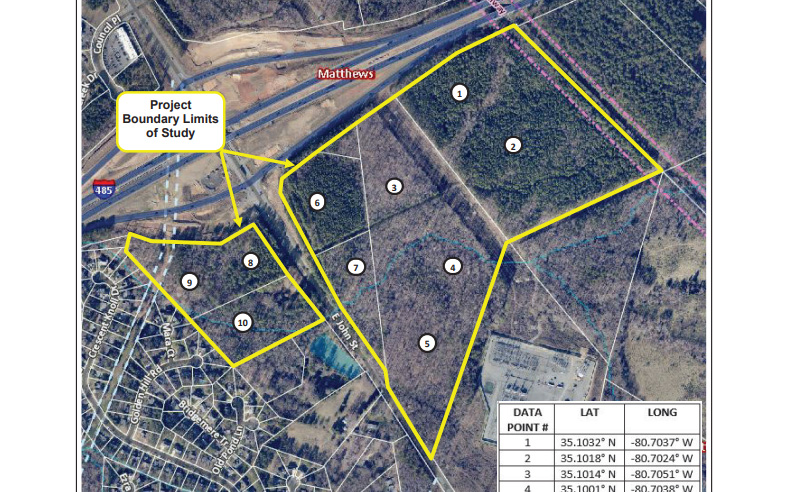
This week, the Matthews Board of Commissioners initiated the rezoning process for a 123-acre property at 1603 E. John St., identified in planning documents as “Project Accelerate.” The effort is being led by East John Master Development LLC, an entity affiliated with Charlotte-based Crosland Southeast.

Plans submitted to the town suggest extensive development, with engineering support from firms like LandDesign and Engineered Land Solutions, both based in Charlotte. Another key partner listed is Matthews DC, LLC.

The next public hearing on the rezoning application is scheduled for September 8, 2025.

If approved, the project would join a growing list of major data center developments across the Charlotte region. Amazon recently announced a $10 billion data center campus in Richmond County, North Carolina. In South Carolina, Cielo Digital Infrastructure is building a $2.1 billion, four-building data center complex in Gaffney, just an hour from Charlotte.

Apple is also expanding its existing facility north of the city as part of a $500 billion national investment targeting artificial intelligence and cloud computing. Meanwhile, Charlotte’s University City is home to the new PowerHouse Charlotte campus, which will add four more data center buildings in two construction phases.

In support of this digital expansion, local entities like Duke Energy and the Joules Accelerator are backing tech startups focused on power efficiency, energy management, and cooling technologies to sustain this level of growth.

Industry experts say Charlotte’s central location and tech-forward economy make it an ideal anchor for the region’s evolving digital corridor. Yet the surge in construction and computing capacity is also placing pressure on regional power grids, raising concerns about long-term energy sustainability.