Traffic Stop in Kings Mountain Uncovers Over $3 Million of Meth From Sinaloa, Mexico

0

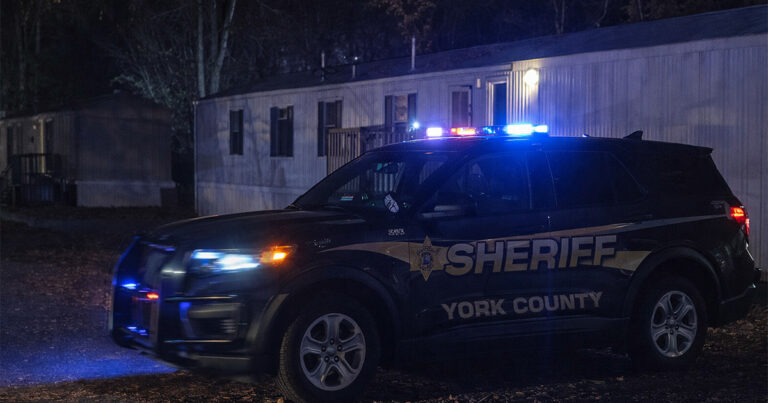
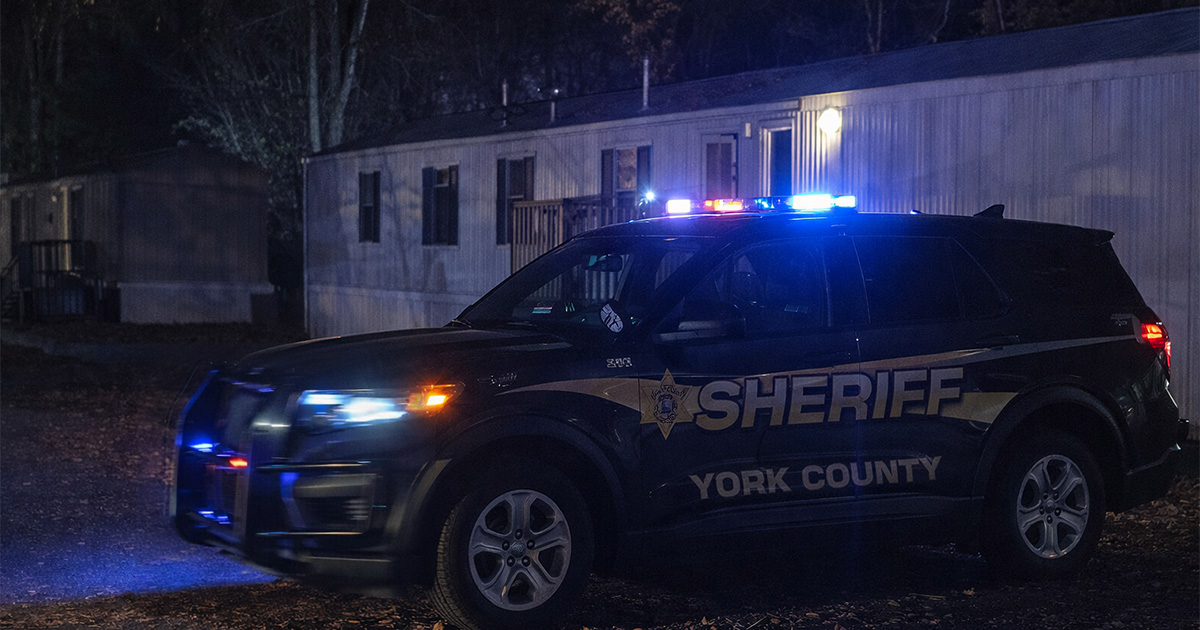
One of the largest meth seizures in U.S. history happened just outside Charlotte after Cleveland County deputies intercepted an estimated $3 million worth of narcotics during a Kings Mountain traffic stop.

According to an official press release, officers pulled over a 2024 Omada sedan on U.S. Highway 74 near the new Kings Mountain Casino on December 16 after noticing a partially concealed Sinaloa, Mexico, license plate. The driver, Felix Tirado-Ramirez, a Mexican national whose immigration status is still unknown, was the only occupant.

A K-9 unit conducted a free-air sniff and alerted to the vehicle. Deputies then searched the car and uncovered about 138 pounds of pure crystal meth concealed inside.

Tirado-Ramirez was charged with two counts of trafficking methamphetamine and is being held without bond at the Cleveland County Detention Center.

Sheriff Alan Norman said the bust underscores the importance of proactive interdiction and noted the seizure likely disrupted a major drug-distribution pipeline aimed at the Charlotte area.

Red Line Momentum Builds as Huntersville Approves Massive New Station South Development

0

Huntersville commissioners just unanimously approved a major mixed-use project last night that will anchor one of the town’s future Red Line stations, marking a significant step toward transit-oriented growth in north Mecklenburg County.

The 21.3-acre development, called Station South, will rise along the east side of N.C. 115 just north of Sam Furr Road. Peak Development plans 278 apartments, 70 townhomes, two commercial buildings and a parking deck beside the planned Red Line platform. The board highlighted the inclusion of five attainable housing units, offered for 15 years at 80% to 120% of area median income.

Planners allowed an extra floor of residential height for marketing purposes, topping out at four stories.

The project also aims to ease congestion along N.C. 115. Seagle Street will extend through the site and connect to Sam Furr Road, creating a new four-way signal at the main entrance. Peak will also realign the Mayes Road intersection with N.C. 115, an area known for trapping large trucks on the railroad tracks.

The Red Line will eventually run from uptown Charlotte to Davidson, with future plans to reach Mount Mourne and stops at Hambright Road, downtown Huntersville and north of Sam Furr Road. The Sam Furr station design is still being finalized.

via Town1.com
This approval comes as Huntersville advances another transformational project. Officials joined NASCAR champion Joey Logano this week to break ground on Town1, a large mixed-use district near the Hambright Road HOV exit. Town1 will feature more than 400,000 square feet of commercial space, 75,000 square feet of retail and restaurants, and a pedestrian-focused village core.

Developers also plan 300 farmhouse-style walk-up apartments, 321 urban flats and 75 townhomes, making Town1 one of the region’s most significant residential expansions.

Together, Station South and Town1 signal a new development era for Huntersville—one built around transit, density and walkable neighborhoods that mirror Charlotte’s most successful growth corridors.

Sheriff McFadden Warns Border Patrol Could Return to Charlotte Without Notice

0

Mecklenburg County Sheriff Garry McFadden says he believes U.S. Border Patrol will return to Charlotte for future immigration enforcement, raising new concerns about transparency and public safety.

McFadden said on Live Impact News that Border Patrol did not communicate with his office during previous operations and left “unanswered questions” about who was detained and whether those individuals had criminal histories. He said his office still has not received verification that any detainees were violent offenders, and he believes that Charlotte is likely to be targeted again because Mecklenburg County is led by a Democratic sheriff and mayor.

McFadden warned that if Border Patrol returns without coordination, it could deepen fear in immigrant communities and increase the chance of conflicts between agencies. He said he will continue pushing for clarity and cooperation to protect community trust as concerns rise over federal immigration actions in major cities.

Gaston County’s “Christmas Town USA” Ranked America’s 7th Best Holiday Lights Display

0

McAdenville, NC (aka ‘Christmas Town USA’) has just been ranked as the 7th best Christmas light display in America by USA Today in their annual “Best Public Holiday Lights Display” contest.

The stunning 1.3-mile light display winds through Gaston County’s smallest town and features over half a million Christmas lights on over 375 trees (not counting what the residents themselves do).

Over 600,000 people visit in over 300,000 vehicles each year, creating huge traffic backups all along several exits on I-85.

USA Today describes McAdenville by saying:

McAdenville is nicknamed Christmas Town USA for a good reason. Every winter, this small town in North Carolina transforms into a festive, twinkling wonderland, dotted with thousands of lights, dramatic displays and a spirited Main Street. Hundreds of thousands of visitors come to Christmas Town USA every December to drive through the 1.3-mile-long route through breathtaking holiday displays. McAdenville’s Christmas Town tradition dates way back to the ‘50s. 

Do you think Christmas Town USA should have been ranked higher? 

North Carolina Ranked Dead Last in America for School Funding, New Report Finds

North Carolina has fallen to last place in the nation for public school funding, according to a new report by the Education Law Center. The report ranks all states and Washington, D.C. on cost-adjusted per-pupil spending — and North Carolina landed 50th in the nation, spending less per student than every other state in the country.

North Carolina currently spends $12,193 per student, which is $5,660 below the national average of $17,853. The report also found that North Carolina makes the lowest financial effort in the nation relative to the size of its economy, meaning the state invests far less in education than it is capable of.

By contrast, top-funded states spend more than double — and in some cases nearly triple — what North Carolina provides. Even neighboring South Carolina invests $17,698 per student, more than $5,500 ahead of North Carolina.

Full Ranking: Per-Pupil Funding by State (Cost-Adjusted)

(From highest to lowest)

1. New York – $29,440
2. Vermont – $27,067
3. Washington, D.C. – $26,223
4. New Jersey – $24,402
5. Connecticut – $23,583
6. Pennsylvania – $22,600
7. New Hampshire – $22,137
8. Illinois – $21,923
9. Maine – $21,078
10. Wyoming – $20,971
11. Michigan – $20,919

12. Rhode Island – $20,176
13. California – $19,894
14. Delaware – $19,435

15. Massachusetts – $19,097
16. Ohio – $19,055
17. Oregon – $18,780
18. North Dakota – $18,642
19. New Mexico – $18,616
20. Kansas – $18,132
21. Nebraska – $18,023
22. Washington – $17,888
23. Maryland – $17,809
24. Wisconsin – $17,784
25. South Carolina – $17,698
26. Minnesota – $17,654
27. Hawaii – $17,469
28. Alaska – $17,308
29. Kentucky – $17,058
30. Missouri – $16,866
31. Colorado – $16,780
32. West Virginia – $16,663

33. Indiana – $16,297
34. Montana – $16,291
35. Georgia – $16,049
36. Iowa – $15,940
37. Virginia – $15,815
38. Louisiana – $15,717
39. Alabama – $15,242

40. South Dakota – $15,011
41. Texas – $13,852
42. Arkansas – $13,849
43. Tennessee – $13,584
44. Mississippi – $13,559
45. Oklahoma – $13,295
46. Florida – $13,227
47. Nevada – $12,546
48. Arizona – $12,537
49. Utah – $12,522
50. North Carolina – $12,193

Beyond overall funding levels, the report stresses the stakes. States must provide sufficient resources to ensure qualified teachers, adequate staffing, support services, and programs for students in poverty. North Carolina’s current funding model, according to the report, does not meet these basic expectations.

Advocates warn that continued underinvestment puts public schools—and students—at risk. The Education Law Center notes that federal instability, including potential cuts and agency restructuring, will make states even more responsible for keeping schools adequately funded in the coming years. For North Carolina, that responsibility now starts from the lowest point in the country.

The findings come as lawmakers continue to debate school funding formulas, teacher pay, infrastructure needs, and growing achievement gaps across the state. With North Carolina ranked last, the report is expected to intensify calls for major reform during the upcoming legislative session.

Charlotte-Area Marching Band Selected to Represent Carolinas in Iconic Rose Bowl Parade

0
via Clover School District

Clover High School’s marching band will represent the Charlotte region on one of the nation’s biggest stages this New Year’s Day. The Pride of Clover is set to perform in the Rose Bowl Parade on Thursday, Jan. 1, 2026, ahead of the marquee matchup featuring the undefeated Indiana Hoosiers and the winner of the Oklahoma–Alabama College Football Playoff game.

The community gathered last week for a spirited sendoff at Memorial Stadium in Clover, where families bundled up to watch the band preview its parade routine. The 270-member ensemble performed an excerpt from its award-winning field show, which will also be featured at Band Fest with other Rose Parade participants. Students then circled the field to demonstrate the maneuvers they’ll execute along the parade route in Pasadena.

The Pride of Clover also accepted the traveling trophy from Western Carolina University, celebrating its Grand Champion award earned earlier this fall. Band directors said the recognition fueled excitement as the group prepares for one of the most prestigious performances in high school marching band culture.

The schools is encouraging everyone to tune into the 137th Tournament of Roses Parade on Thursday, January 1, at 11 a.m. eastern time to see the marching band shine in the international spotlight.

Over 300 Citations Issued as CMPD Cracks Down After Light Rail Stabbing

0

Charlotte-Mecklenburg Police ramped up enforcement across uptown this weekend, issuing more than 300 citations in the second week of Operation Safe Season—triple last week’s total. The multi-agency effort aims to increase visibility and curb crime during the busy holiday season.

CMPD launched the initiative on December 4, about 4 months after Iryna Zarutska’s stabbing and the same week as another stabbing near the 25th street light rail station.

This weekend’s coordinated sweep brought together CMPD, the Mecklenburg County Sheriff’s Office, State Highway Patrol, Homeland Security Investigations, the FBI, Alcohol Law Enforcement, and Mecklenburg County ABC. Officers focused on impaired driving, violent crime, illegal firearms, and narcotics.

Key results included:

  • 224 traffic stops

  • 317 citations

  • 36 arrests, including four juveniles

  • 661 grams of suspected marijuana seized

  • More than 3 grams of cocaine recovered

  • 20 firearms seized

  • 24 ABC inspections, with six violations reported

Officials said the effort is designed to make uptown safer for residents, visitors, and businesses during peak holiday activity. Operation Safe Season will continue for several more weekends before expanding to other high-crime areas.

Popular Charlotte Brewery Opens New Rooftop Location in Birkdale Village

0

Suffolk Punch Brewing is about to expand its Charlotte-area footprint with the opening a massive new taproom and rooftop lounge in Birkdale Village. The Lake Norman debut marks the brewery’s third Charlotte-area location, adding to their South End and SouthPark Mall locations.

The new two-story 1,600-square-foot taproom includes a rooftop bar tucked among the trees with views overlooking The Plaza. Downstairs, a full-service bar connects directly to an all-seasons patio, creating a flexible space for year-round crowds.

The addition strengthens Suffolk Punch’s growing presence around the Charlotte metro as Lake Norman continues to attract new breweries and restaurants.

NC Building $100 Million Driving Resort Just East of Charlotte – The Uwharrie Motorsports Park

0

Uwharrie Motorsports Park and Resort

North Carolina is about to build one of America’s first ‘high-end driving resorts’ – the Uwharrie Motorsports Park.

Autoport will invest roughly $100 million to  build a 400-acre car enthusiasts haven near the Uwharrie National Forest, between NC 27 and Spies Road (about an hour east of Charlotte).

car condo Autoport Uwharrie Motorsports ParkUwharrie Motorsports Park and Resort will revolve around a three-mile FIA-sanctioned driving course. The facility will include 155 luxury car condos, 112 luxury garages, and a 20,000-square-foot clubhouse, with a restaurant, retail shop, over 4,000 square feet of driving and golf simulators. Outside, there will be 10,000 square feet of viewing terraces and a 50,000-square-foot event space. Additionally, fitness enthusiasts will find amenities like pickleball courts, a dog park, and a jogging course.

The new Uwharrie Motorsports Park aims to generate 32 full-time and 100 part-time positions, offering an average salary of $48,000.

“We are pleased Autoport selected Moore County and are excited to see this level of capital investment that will have a significant economic impact on the state of North Carolina,” said President Natalie Hawkins in a press release.

Autoport plans to open car condo model units by the end of 2025. After that, the driving course, clubhouse, and 80 car condos plan to open by December 31, 2026.

The Most Common Roofing Questions New Property Managers Ask

0

New property managers often take control of buildings with limited roof records and inconsistent inspection history. Roof systems vary by material, age, and installation quality, which affects how quickly problems develop and how repairs should be planned. Common failure areas include penetrations, flashing transitions, and perimeter edge metal, all of which require early review. 

Maintenance budgets and tenant expectations increase the need for fast, accurate condition assessments. A focused rooftop inspection with a qualified roofing professional helps identify active risks versus normal aging. Creating a zone-labeled photo record during this process allows conditions to be tracked over time. Early organization of roof data supports repair planning, limits emergency work, and improves cost control during ongoing property management.

What Should Be Inspected First After Taking Over a Property?

The first inspection priority is confirming the roof system type and installation date. These details affect service life estimates, inspection frequency, and warranty status. Use permits, invoices, and manufacturer documentation to verify records before approving work. Physical inspection should focus on penetrations, flashing transitions, and edge metal, since these areas fail more often than field surfaces. 

A qualified roofing services provider should conduct the inspection, with photos labeled by roof zone for reference. Active leaks, membrane punctures, or displaced components should be flagged for prompt repair. Installation dates should be compared against typical lifespan expectations, and warranty transfer requirements should be verified. Findings should be shared with ownership and maintenance teams to align repair priorities and schedule follow-up inspections.

How Often Roofs Should Be Evaluated on Managed Properties?

Inspection frequency should reflect roof type, installation age, and observed condition. Single-ply, built-up, and shingle systems have different wear patterns and manufacturer recommendations that guide inspection intervals. Older roofs or systems showing deterioration require more frequent evaluation. Scheduled inspections create consistent condition benchmarks and reduce reliance on reactive leak response. 

Post-storm inspections should follow high winds, hail, or heavy rainfall to identify damage before moisture spreads. Roof inspections should be coordinated with drainage checks so ponding, clogged drains, and scupper blockages are addressed at the same time. Findings should be documented with response categories for immediate repair, planned work, or monitoring. A shared inspection calendar improves coordination and reduces duplicate site visits.

Which Roofing Issues Require Immediate Action?

Issues that allow moisture entry require immediate attention to prevent structural damage and interior impacts. Active leaks, membrane punctures, displaced flashing, and failed penetration seals fall into this category. If left unaddressed, moisture intrusion can cause insulation saturation, deck deterioration, and mold growth. Loose fasteners, deteriorated sealant, and early flashing corrosion should be scheduled for near-term repair, especially when signs of water migration are visible.

Surface wear can be monitored when the roof covering remains intact and drainage is unaffected. When repairs are deferred, documentation should include the technical reason, risk level, and a defined follow-up date. Sharing this information with ownership and maintenance teams supports budget planning and avoids misunderstandings about repair timing.

How Roofing Warranties Affect Property Management Duties?

Roof warranties define coverage limits for materials, labor, and approved repair methods. During management transitions, warranty transfer requirements and notification deadlines must be verified to keep coverage valid. Many manufacturers require repairs to be completed by approved contractors, and unauthorized work can void warranty protection. Contractor approval status should be confirmed before authorizing any roof-related work. 

Warranty certificates should be stored with inspection reports, repair records, and contractor documentation, organized by roof zone and installation date. Maintenance teams should follow a standardized checklist before starting work, confirming warranty status and documentation requirements. Organized records allow faster claim filing, reduce disputes, and prevent denied coverage caused by procedural errors.

How Roof Oversight Impacts Daily Property Operations?

Uncontrolled rooftop access increases surface wear and raises the risk of avoidable damage. Access policies should include sign-in requirements, designated walking paths, and documented routes for contractors and staff. These controls limit traffic over sensitive areas and create accountability for rooftop activity. Repairs and inspections should be scheduled alongside other maintenance work and tenant activity to reduce disruption and after-hours service calls. 

Drainage components require regular checks for debris, ponding, and restricted flow, as drainage failures often lead to leaks. Drainage observations should be logged during roof inspections for consistent tracking. Coordinated oversight supports predictable maintenance schedules, reduces emergency repairs, and helps control operating costs.

Roof management depends on accurate records, consistent inspections, and clear repair priorities. Verified installation dates, warranty terms, and zone-labeled photo documentation establish a baseline for condition tracking. Inspection intervals should align with roof type, age, and weather exposure, with post-storm checks built into maintenance planning. Drainage performance, access control, and repair thresholds require coordination across ownership, maintenance staff, and contractors. Structured documentation and defined follow-up timelines reduce emergency repairs and improve budget predictability. Consistent roof oversight supports long-term performance, limits moisture-related damage, and allows property managers to plan maintenance activities with greater confidence and fewer unexpected costs.