

CRTPO Extends Public Review for Charlotte Plan Guiding Billions in Road Projects

0

The Charlotte Regional Transportation Planning Organization (CRTPO) is finalizing a sweeping 30-year transportation blueprint that will determine which 166 road, transit, and mobility projects get built across the Charlotte region through 2055. The plan, which could guide billions in future investment, is now in its last phase of public review — and residents have one more week to weigh in.

The federally required 2055 Metropolitan Transportation Plan covers Mecklenburg County, Iredell County, and the western and central urban portions of Union County. Of the 166 projects listed, 93 carry over from the previous plan, while 73 are new additions.

CRTPO extended the public comment period from February 10 to February 17, 2026, citing recent weather that may have limited participation.

Residents can review the draft plan online and submit comments by survey, email, mail, or in person. Emails should include “2055 MTP” in the subject line and be sent to email@crtpo.org.

Written comments may also be mailed to:

CRTPO
Charlotte-Mecklenburg Government Center
600 E. Fourth Street, 8th floor
Charlotte, NC 28202

Verbal comments will be accepted during CRTPO Board meetings on February 18 and March 18, beginning at 6 p.m. Speakers must sign up at least five minutes before the meeting starts.

CRTPO also hosted English- and Spanish-language webinars earlier in the review period, with recordings available online.

Once approved, the 2055 MTP will serve as the region’s official transportation roadmap, shaping infrastructure decisions for decades.

Mecklenburg County Igniting a ‘Controlled Burn’ at Buckeye Cove Nature Preserve

0

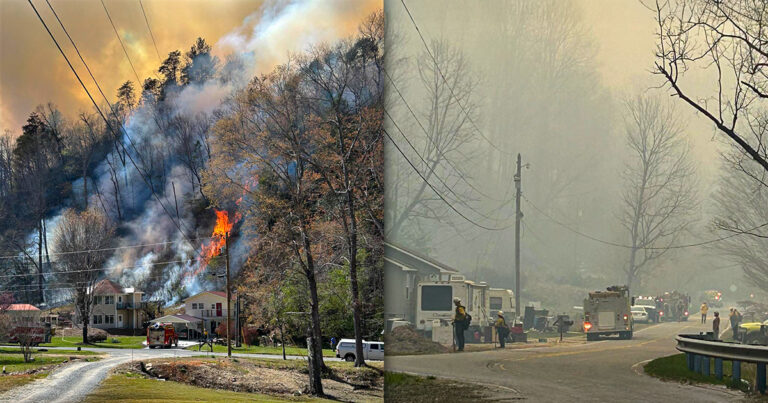
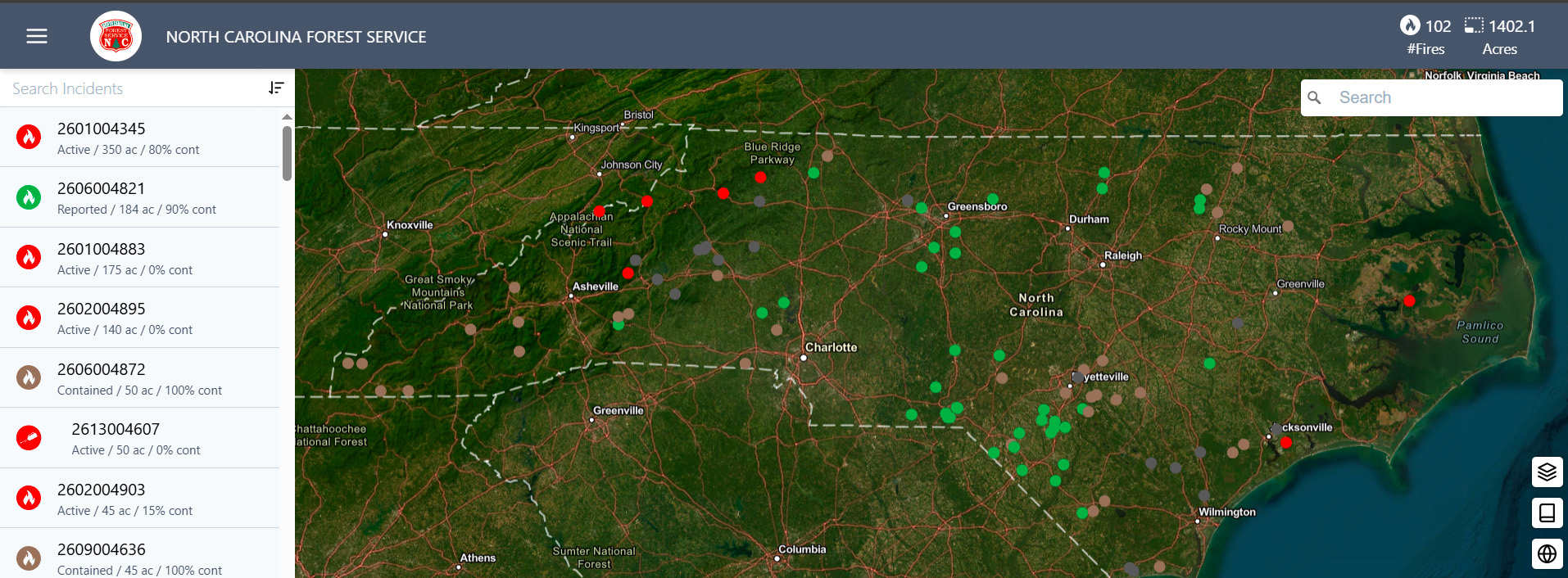
The Mecklenburg County Natural Resources staff has just announced they will be setting the Buckeye Cove Nature Preserve on fire today at around 11am as part of a controlled burn.

The county sent out an alert noting that smoke will be seen around West Charlotte and Huntersville today between 11 am – 2 pm:

“Mecklenburg County Natural Resources staff are conducting a controlled burn today beginning around 1100 at Buckeye Cove Nature Preserve. Smoke will affect air quality in the downwind area for 2-3 hours. To reduce your exposure to smoke, stay indoors or avoid areas of heavy smoke.”

For more information on controlled burns click here.

Two More Earthquakes Hit Charleston as Lowcountry Swarm Grows to Five

The United States Geological Survey has just confirmed a fourth and fifth earthquake in under two weeks near Charleston, signaling a clear uptick in Lowcountry seismic activity.

The most recent quake struck at 3:52 am this morning, measuring 1.8 magnitude. It was located about 6 kilometers south of Centerville at a depth of 5.0 kilometers.

Just hours earlier, at 9:00 pm last night, a 2.5 magnitude quake hit roughly 6 kilometers south-southeast of Centerville. That tremor was notably shallow, with a depth of just 0.7 kilometers.

Those two events add to three more recorded in the same area:

  • Feb. 9: 1.6 magnitude
  • Feb. 7: 2.9 magnitude
  • Feb. 3: 2.3 magnitude

All five quakes occurred northwest of Charleston in the same concentrated zone. None caused widespread damage, but several were strong enough to be felt indoors, particularly during quiet nighttime hours.

The activity is centered within the Middleton Place–Summerville Seismic Zone, one of the most active fault regions in the eastern United States. South Carolina’s seismic hazard map highlights this area as a red “bullseye” of elevated earthquake risk.

Since 2000, at least 31 earthquakes have been documented in this zone. While tremors here are not uncommon, four quakes within seven days meet the definition of a seismic swarm. A swarm consists of clustered earthquakes without a single dominant mainshock.

These events are typically small and shallow. Most do not indicate that a larger quake is imminent. Still, the recent pace has residents increasingly alert.

South Carolina’s seismic history includes the catastrophic 1886 Charleston earthquake, one of the most powerful in eastern U.S. history. Although this recent cluster is far smaller, it reinforces that the Lowcountry remains one of the Southeast’s most seismically active areas.

USGS continues monitoring the region closely for additional activity.

Temporary Fuel Permits

0

A temporary fuel permit, often called a 72-hour fuel permit, IFTA temporary permit, or fuel trip permit, is one of those compliance tools that’s simple in concept and dangerous in execution if misunderstood. It exists for a clear purpose: to authorize a qualified motor vehicle to travel through a state or province and remain compliant with fuel tax requirements when the carrier does not have valid IFTA credentials for that unit.

This is not optional “paperwork for paperwork’s sake.” Fuel tax compliance is one of the fastest ways to turn a routine trip into an enforcement issue—especially when a carrier crosses multiple borders without proper credentials.

Fuel permit vs trip permit: the difference that keeps getting people in trouble

Let’s make this crisp:

  • Fuel permit = fuel tax compliance (IFTA substitute, short-term).
  • Trip permit = registration/apportionment compliance (IRP substitute, short-term).

Many carriers need both when credentials aren’t ready, which is why “trip & fuel permits” are frequently bundled. The compliance mistake is assuming one covers the other. It doesn’t. If you fix the registration side and ignore fuel tax, you’re still exposed—and vice versa. 

Who typically needs a temporary fuel permit

You likely need a temporary fuel permit if you operate a qualified motor vehicle (commonly 26,000 lbs or more GVW, or vehicles meeting axle thresholds such as three or more axles on the power unit) and you plan to cross a jurisdictional border without valid IFTA license or decals for that vehicle.

Common real-world scenarios:

  • New carriers: IFTA applications or decals are still processing, but loads need to move now.
  • Newly added power units: The fleet is growing faster than credential issuance.
  • Lapsed or out-of-service IFTA: Renewal issues, lost decals, administrative changes.
  • Occasional interstate trips: Infrequent cross-border runs where permanent IFTA isn’t practical.
  • Leased/substitute units: Short-term equipment swaps where credentials don’t match the unit.

A compliance partner’s job is to keep this from becoming a scramble: if the fleet must run before permanent credentials are ready, the permits should be planned and issued in advance, not while a driver is already approaching the state line.

What states will ask for: data requirements and why accuracy matters

While each jurisdiction varies, expect to provide:

  • Legal business information (USDOT, legal name/DBA, FEIN as applicable)
  • Vehicle details (VIN, plate, unit number, year/make, fuel type, GVW/axles)
  • Route/jurisdictions and entry date/time
  • Carrier status (IFTA/IRP standing, lease details if any)
  • Payment method and billing contact 

Two compliance truths here:

  1. VIN and plate accuracy must be perfect. Small typos create roadside friction.
  2. Time windows matter. Some permits are time-bound; a permit that starts too late is effectively no permit at the moment you need it.

The disciplined move is to create a single internal intake sheet per unit (VIN, plate, unit #, fuel type, contacts) and reuse it for every jurisdiction to avoid re-keying errors. 

Costs and processing: cheap per permit, expensive when repeated

Fuel permits are often inexpensive individually, but they become costly and operationally annoying when a carrier repeatedly runs interstate without IFTA. Processing is frequently same-day during business hours, but timing varies by jurisdiction and service level (standard vs rush). After-hours and weekend moves should be planned ahead; “we’ll get it in the morning” is not a compliance strategy when the driver’s entry is at 5 a.m.

What drives variability:

  • Jurisdiction fee schedules and permitted duration (often 24–96 hours depending on the state/province)
  • Completeness of submitted data
  • Time of day and holidays
  • Volume and coordination across multiple jurisdictions

How to obtain permits in a way that scales

A clean operational workflow looks like this:

  1. Confirm vehicle qualification and route: Identify GVW/axles and which borders will be crossed.
  2. List all required jurisdictions: Each state/province entered without IFTA requires fuel permit coverage.
  3. Gather data once: Use standardized unit intake to prevent errors.
  4. Submit requests with realistic start windows: Build a timing buffer.
  5. Distribute documents to the driver: PDF access must be inspection-ready.
  6. Retain proof and reconcile: Keep permits with fuel receipts and trip reports to support filings and the audit trail

Beyond fuel permits: mileage/HUT and other credentials that are not IFTA

Temporary fuel permits solve one slice of the compliance puzzle. Certain jurisdictions impose mileage-based or weight-distance tax credentials that are separate from IFTA and IRP—commonly described as HUT or weight-distance tax programs (with examples like KYU, NM WDT, OR WDT, CT HUT, and NY HUT in practice). These requirements must be checked in addition to fuel permits and trip permits when running without full credentials.

Charlotte Ranks #2 in Job Growth Even After Washington Rewrites the Jobs Report

0

Charlotte’s job engine kept humming last year, even as the federal government erased hundreds of thousands of jobs from the national record.

New Bureau of Labor Statistics metro data shows the Charlotte-Concord-Gastonia region added 37,600 jobs from December 2024 to December 2025. That was the second-largest raw job gain among U.S. metro areas, trailing only New York-Newark-Jersey City at 48,400.

Charlotte’s growth rate also stood out. The metro posted a 2.7% increase, far stronger than New York’s 0.5%.

Only a handful of big metros saw notable gains. Beyond Charlotte and New York, the largest increases included Philadelphia (+36,400) and other top performers highlighted in the BLS release.

Those local gains landed as the national picture worsened. The BLS said employers added just 181,000 jobs in 2025, after revising its earlier estimate of 584,000.

That revision was part of the agency’s benchmark process. It reconciles monthly survey estimates with more complete state records.

The correction was also unusually large by recent standards. Reuters reported the benchmark revision cut previously reported job growth for the 12 months ending March 2025 by 862,000.

The new national data reinforces a “low hire, low fire” labor market. Hiring cooled, but unemployment held at 4.3% in January.

Charlotte’s outperformance matters locally. It signals companies still expanded payrolls here while growth stalled elsewhere. It also strengthens the region’s case for more housing, transit, and workforce pipelines as employers keep adding jobs.

Charlotte StrEATs Festival Celebrates 5 Years in a New Home in Uptown’s First Ward Park

0

The highly anticipated Charlotte StrEATs Festival returns this spring to celebrate its fifth year, marking a milestone for the city’s favorite locally focused culinary festival, part of Charlotte SHOUT!. After four successful years at Gateway Village, the event is moving to a more central home at First Ward Park.

This milestone year also marks the launch of the Charlotte StrEATs Foundation, expanding the festival’s mission beyond celebration and into direct community impact. Created to celebrate and strengthen Charlotte’s culinary community, the foundation supports organizations advancing food equity, culinary education, and industry access across the region. Through this nonprofit arm, Charlotte StrEATs will deepen its commitment to uplifting the people and programs shaping the city’s food ecosystem.

“Those who attended the Charlotte StrEATs in the past can expect the same culinary excellence and community, but year five of the festival is also bringing some exciting changes,” says Kristen Wile. “Not only are we moving to a new location that will bring the festival into the heart of the city, but we’re bringing more heart to the festival itself by supporting three local food and hospitality nonprofits this year (to be announced) in addition to supporting more than 30 local bars and restaurants.”

The multi-day festival has become a haven for food and beverage enthusiasts and shows off  Charlotte as a culinary destination. Events this year include:

THE EVENTS

Charlotte StrEATs Tasting Tour
Saturday, April 11th | 12 – 3 p.m. (11 a.m. for VIPS) | First Ward Park
Taste your way through Charlotte’s iconic neighborhoods at the StrEATs Tasting Tour! This ticketed, 21+ event includes tastes from locally-owned restaurants from all around the city, cooking demonstrations, craft cocktails created by your favorite Charlotte mixologists, and more. See this year’s participating restaurants – more to be announced soon.

DILWORTH: 300 East, DŌZO Japanese-American Kitchen, Emmy Lou’s, Leluia Hall
EAST CHARLOTTE: Enat Ethiopian Restaurant, Manolo’s Bakery
MYERS PARK: Napa on Providence, Rada
NORTH CHARLOTTE: Marlee Jean’s Raw Bar & Kitchen, Seaboy
UPTOWN: Aria Tuscan Grill, Mad Dash, Spaghett
PLAZA MIDWOOD: Calle Sol Latin Café & Cevicheria
NODA: Mariah’s Taco Spot
SOUTH PARK: Foxcroft Food & Wine
SOUTH END: Catalú, Lincoln Street Kitchen & Cocktails

Tickets: Tickets are all-inclusive. Upgrade to VIP to get one-hour early access at 11 a.m., a StrEATs goody bag, and an official StrEATs Cookbook that features recipes from participating restaurants. cltstreatsfestival.com/tastingtour

Charlotte StrEATs Festival
Sunday, April 12th | 12-5 p.m. | First Ward Park
The FREE festival will feature the area’s top local food and beverage vendors, food trucks, cooking demos, cocktails, picnic baskets curated by your favorite caterers and more. 

StrEATs is also bringing back the Neighborhood Cook-off! These battles will pit chefs head-to-head in a cook-off to win the title of StrEATs Neighborhood Champion.

Tickets: Reserve your free tickets cltstreatsfestival.com/festival

Fort Mill Spends $7.8 Million to Save 50 Acres of Woods and Block Development

0

In a rare move amid rapid regional growth, the Town of Fort Mill has just spent $7.8 million to purchase a little over 50 acres of raw land to keep it from being developed.

The Fort Mill Town Council approved the purchase of 50.27 acres off River Crossing Drive to preserve open space and plan for future parks and recreation needs.

According to tax records, the town acquired it on 2/5/26 from Novant Health, which had previously identified the site for a potential hospital.

Town leaders said the decision aligns with Fort Mill’s Comprehensive Plan and Parks and Recreation Master Plan. Public surveys and community feedback repeatedly emphasized land preservation and proactive planning.

“This purchase reflects our commitment to listening to the community and acting thoughtfully on what residents have told us matters most,” said Mayor Guynn Savage in a press release. “Preserving land, expanding parks and trails, and protecting the character of Fort Mill are priorities for our residents. This acquisition allows us to do all three while maintaining the charm and sense of place that make Fort Mill such a special community.”

By securing the site now, officials aim to protect options for future trails, green space, and recreation facilities as growth all around the Charlotte region continues at a record pace.

Charlotte’s Property Taxes Among Lowest in U.S. as Bills Rise Nationwide

0

As the national housing market cools, Charlotte stands out for having some of the lowest property taxes in the country, according to a new report by Kiplinger.

Home prices remain near record highs nationwide, and mortgage rates stay elevated. However, property taxes continue rising as local assessments catch up to earlier price spikes.

In Charlotte, homeowners pay a median $2,975 annually in property taxes. The city’s effective rate is 0.640% for owner-occupied homes, ranking 508th out of roughly 650 U.S. cities analyzed.

That places Charlotte among the least expensive major cities for property taxes, even as affordability pressures persist elsewhere. In many regions, homeowners face rising tax bills despite slower home price growth.

Nationally, property taxes are now the fastest-growing source of state and local revenue. Between 2022 and 2024, collections rose more than $96 billion, outpacing sales and corporate income taxes.

While some states cap assessment increases, North Carolina relies on relatively low rates. For Charlotte homeowners, that difference continues to translate into lower annual tax burdens during a turbulent housing market.

Here is the full ranking by city:

Massive Brawl Breaks Out Between Hornets and Pistons – Players and Coach Ejected – CMPD Called In

0

A massive brawl broke out Monday night at Spectrum Center during a game between the Charlotte Hornets and the Detroit Pistons.

The fight began after an on-court confrontation between Moussa Diabaté and Jalen Duren. The situation quickly escalated as Miles Bridges and Isaiah Stewart joined in.

Benches from both teams cleared as officials attempted to regain control. All four players involved as well as Hornets head coach Charles Lee were ejected from the game.

As tensions remained high, officers with the Charlotte-Mecklenburg Police Department positioned themselves between the teams’ locker rooms, which are located close together.

The NBA is now expected to review the incident.

DHS Issues Rare Warning As Domestic Partnership Poisoning Cases Sharply Rise

0

A surge in poison-related attacks on domestic partners has prompted a rare national warning from the Department of Homeland Security.

DHS is alerting law enforcement nationwide to a growing pattern of people using chemical and biological toxins to harm or kill intimate partners. A January bulletin from DHS’s Countering Weapons of Mass Destruction Office documented 17 poisoning cases last year, resulting in at least 11 deaths.

Officials say the trend reflects both the sharp increase in domestic partnerships (vs traditional marriages), as well as an increased availability of toxic and poisonous substances.

Investigators found the most commonly used substances included antifreeze, eye drops, fentanyl, and prescription drugs like colchicine. Other cases involved cyanide and thallium. DHS said these substances are often chosen because they can mimic natural illnesses, delaying diagnosis and complicating criminal investigations.

The bulletin cited a recent Colorado case in which a dentist was convicted of first-degree murder after poisoning his wife over several days. Prosecutors said he secretly added arsenic, cyanide, and eye-drop chemicals to her protein shakes before delivering a fatal dose in the hospital.

DHS urged law enforcement and medical professionals to treat unexplained illnesses in domestic settings with heightened caution, noting that early detection can save lives.