Charlotte’s Top Pool Builder: How Ivy Creek Pools Is Changing the Outdoor Living Space Game

0

A Charlotte-based pool and outdoor living company continues to make waves across the region after winning more than a dozen awards and completing hundreds of projects.


Ivy Creek Pools, founded in 2017, has delivered more than 500 backyard projects and recently earned Charlotte’s Best Pool Builder & Spas from the Charlotte Observer. The company has also been recognized for landscaping, outdoor living, and workplace culture, adding to a total of 13 awards.

The firm specializes in custom concrete pools, patios, and full outdoor living spaces, with services ranging from fire pits and outdoor kitchens to pergolas, artificial turf, and landscaping.

Industry-leading warranties, including lifetime pool shell protection and multi-year coverage for plaster and decks, further distinguish Ivy Creek Pools in a competitive market.

With Charlotte’s housing market continuing to grow, demand for backyard upgrades has surged, making Ivy Creek one of the city’s most in-demand patio and pool builders.

The Digital Transformation of Famous Classic Games

0

Once, people played mahjong, chess, and Go on the physical table, with a set of tiles, or on a board. This board can now fit into your pocket, and that’s beyond convenient. 

Developers have brought these games to a wider audience by finding them a place on the net, which made them available to everyone all around the world. Some of them are reimagined with tutorials that ease in beginners, interactive modes that keep play fresh, and global multiplayer platforms that let you face an opponent in Tokyo before breakfast and another one in New York by lunch.  

The digital transformation of these time-honored games has preserved their charm while opening doors to entirely new ways of playing and connecting.

Origins and first moves of mahjong

Mahjong originated in Southern China in the mid-1800s during the Qing Dynasty. It began as a physical tile game played in social settings and households. Over time, regional variants developed, rules changed slightly, but the core of matching sets of tiles, drawing, discarding, and strategic hand completion remained.

The first digital version of mahjong appeared not as the full four-player game, but as a puzzle/solitaire version. In 1981, Brodie Lockard implemented “Mah-Jongg” on the PLATO system, with matching-tile mechanics (often called mahjong solitaire) rather than full multiplayer. 

Playing mahjong online opens up opportunities that physical play can’t always provide. You can visit Mahjong365 and engage with opponents from around the world at any hour, and there are tools built in to help with learning and strategy. It’s also far more convenient because there’s no need to set up tiles, worry about storage, or be in the same room.

The way chess moves 

Chess traces its roots back to India in the 6th century, where it began as chaturanga, a game reflecting the four divisions of the army: infantry, cavalry, elephants, and chariots. It spread through Persia and into Europe, evolving into the version we know today. 

By the late 20th century, chess was one of the earliest games to find a home on computers, with simple text-based programs appearing as early as the 1950s. A huge milestone came in 1997 when IBM’s Deep Blue famously defeated world champion Garry Kasparov, showing just how far digital chess had come.

Playing chess online today is a global experience. Chess platforms host millions of games daily, offering live play, puzzles, and even AI analysis that helps players learn from mistakes. The ability to instantly connect with opponents worldwide, study openings through interactive tutorials, and replay grandmaster matches has made online chess as lively as the traditional board, if not more.

Go, the world’s oldest board game

Go is one of the world’s oldest board games, believed to have originated in China over 2,500 years ago. Its deceptively simple rules (placing black and white stones to control territory) mask an extraordinary level of depth. 

Go first entered the digital world in the 1980s with early computer programs, though it long resisted strong AI due to its immense complexity and vast game tree. That changed in 2016, when Google DeepMind’s AlphaGo stunned the world by defeating 18-time world champion Lee Sedol, a turning point for AI and game history alike.

Online Go communities have transformed the way you can interact with the game. Now you have tutorials, interactive problems, and AI-powered teaching tools give learners a smoother start. On the other hand, there’re ranked ladders and international matches that let enthusiasts test their skills against rivals across the globe. For many, digital platforms made Go accessible in a way that once required finding a rare in-person club.

Game modes, tutorials, and AI

As digital platforms matured, developers didn’t just port the physical game. They wanted to make things more interesting, so they added new modes and supports. That way, games become more accessible and engaging as well.

  • Tutorials and onboarding: New players often find the rules of mahjong intimidating (different sets, tile types, discards, etc.). Many apps now include interactive tutorials, tooltips, guided first games, and even animated rule explanations. This helps players understand rules without reading long rulebooks.
  • Single-player vs AI opponents: For those learning or wanting to play at their own pace, apps provide AI opponents at various difficulty levels. Some mahjong apps allow practice of specific scenarios, or solving puzzles similar to mahjong solitaire for pattern recognition.
  • Alternate gameplay modes: for instance, instead of classic mahjong game, you can have different modes like: 
  1. Solitaire / tile-matching / puzzle modes (Mahjong Solitaire).
  2. Variants with fewer players or rules adjusted (Japanese Riichi, Sanma 3-player, etc.).
  3. Time trial or challenge modes (solve a layout under time, or under move limits).
  • AI and research: On the backend, there has been academic work in building strong AI for gaming. For example, deep reinforcement learning techniques have produced AI players that surpass many human players, especially on platforms like Tenhou. Also, methods using Markov Decision Processes to approximate huge game trees of mahjong (because it has imperfect information) help in making both AI opponents and tutorial hints stronger.

Global multiplayer platforms and community building

One of the biggest shifts that classical games went through on online platforms was making them social, global, and there for you in real time. 

  • Multiplayer matchmaking: Apps let you find opponents globally, whether casual or ranked. You can play with friends or strangers. This has been true for mahjong, chess (e.g. Chess.com), Go (e.g. OGS, KGS), and modern digital versions of board games.
  • Cross-platform play: Mobile, tablet, web versions syncing together, so someone on Android can play with someone on iOS, or on a browser. This helps make the player base larger and more active.
  • Leaderboards, tournaments, and seasons: Competitive ladders, rewards, badges, etc., drive engagement. For mahjong especially, platforms often offer ranked matches, seasonal events, tournament brackets, etc.
  • Social features and learning from others: Chat, spectatorship (watching games), replays, sharing strategies. Some developers allow you to see others’ moves, comment, replay past rounds, which helps learning and fosters community.

Casino Loyalty Programs 101: How Slot Fans Can Earn Perks Before Hitting the Reels

0

Navigating casino loyalty programs offers real value for slot players, and knowing how to benefit before putting in a coin makes all the difference. Instead of being just a points system, a loyalty program works as a recognition and rewards system where understanding the structure and perks allows players to get the most from the start.


For those interested in online slot games and modern casino loyalty options, Escapist Magazine explains how to play real money slots in a simple way, where you choose an online casino, make the minimum deposit, and start spinning. Escapist has also highlighted some of the best platforms where players can enjoy thousands of slot titles along with fast payouts, generous loyalty rewards, welcome bonuses, free spins, and cashback offers, giving the same sense of value and recognition that traditional loyalty programs bring to the floor.

Just as online platforms use bonuses and rewards to keep players engaged, physical casinos build loyalty through structured sign-up programs that begin the moment you walk through the door. When a player signs up, they typically receive a tiered card or app access that tracks play across slots, as well as table games or purchases in the casino’s restaurants and shops. Most programs grant points based on money wagered or time spent playing. At sign-up, modest incentives often include free play credits, discounted meals, or perhaps complimentary valet parking. These perks function as goodwill gestures, encouraging players to explore the venue further, whether spending time at the slots or dining on-site.

As play continues, accumulating points leads to tier upgrades through tiered loyalty programs. Even without reaching the highest level, moving up one or two tiers often unlocks benefits such as priority line access, complimentary drinks, or birthday offers. Slot fans who visit regularly will notice how even small enhancements, like free spins or express entry privileges, add up over time, reinforcing loyalty and making the experience more enjoyable.

Beyond tier benefits, casinos frequently promote special events just for loyalty cardholders. Invitations to slot tournaments, free-play days, or exclusive lounge access highlight the value of being a member. Many of these promotions are delivered through digital marketing, with targeted emails or app notifications ensuring members hear about offers quickly. Learning about these opportunities early lets slot enthusiasts take advantage of perks on the very first trip, before they’ve played a single game or expended significant funds.

Knowing when to use points also matters. Some programs let you redeem them for meals, hotel stays, or show tickets, while others offer multipliers for points earned during certain periods. Slot players who plan ahead, checking redemption options and picking those with the highest value, stretch their rewards further. The strategy is simple: understand the options before using points to choose what benefits you most.

Another seldom-mentioned advantage comes from partnering with external businesses. Casinos often collaborate with retailers, spas, or entertainment venues, allowing loyalty members to earn or spend points beyond the gaming floor. For slot fans who travel or enjoy additional experiences, this expands the program’s value. Signing up early and noting these partners can yield perks even before a reel spins.

It is also wise to watch for promotional or seasonal offers. Some casinos provide accelerated point earning during holidays or special weekends, essentially letting players advance through tiers faster than usual if they engage during these periods. For new members aware of promotions in advance, a single promotional session might unlock benefits that would otherwise require months of play.

Overall, these programs reward consistent play, but smart players see them as memberships with hidden value. By joining early, watching tier perks, tracking promotions, and choosing redemptions wisely, every visit delivers more than just the game itself. The real advantage comes from being informed and strategic before the reels start turning.

Judge Approves Final Settlement Between DOJ and NC Regarding Tighter Voting Rules

0

The State Board of Elections has reached a legal settlement with the United States Department of Justice in United States of America v. North Carolina State Board of Elections.

The settlement requires North Carolina’s State Board of Elections to overhaul voter registration procedures after the U.S. Department of Justice alleged violations of the Help America Vote Act (HAVA). The settlement addresses claims that thousands of voters were added to the rolls without the required identification numbers, raising concerns about compliance with federal election law.

Key Requirements in the Order

The new ruling mandates that:

  • Voter registration forms must require a driver’s license number or the last four digits of a Social Security number.

  • Counties must enter voter data into the statewide system within 10 days, or within 5 days near registration deadlines.

  • Voters already registered without identification numbers will receive two rounds of mailings requesting the missing information.

  • Those who fail to update their records must cast provisional ballots in federal elections, though their votes will still be counted if otherwise eligible.

  • County boards must review and correct outdated or incomplete voter records by August 31, 2025.

The order also establishes ongoing reporting requirements to the court and the DOJ, and it remains in effect until at least June 30, 2027.

Political Divisions

  • Republicans are likely to argue that the ruling finally forces North Carolina to enforce stricter ID requirements, aligning with broader GOP priorities around election integrity. The provisional ballot rule may be seen as too lenient by some, but overall, the mandate to capture driver’s license or Social Security numbers is likely to be welcomed.

  • Democrats may worry that aggressive enforcement could create unnecessary barriers for eligible voters who lack easy access to documents or who fail to respond to the mailings. While the order ensures provisional ballots will count, critics may argue the process risks confusing voters or creating longer lines on Election Day.

Local Impact

For voters, the most immediate change will be additional mailings from election officials and possible provisional voting requirements if records are incomplete. For county boards, the ruling creates significant new administrative burdens, including database cleanups and stricter deadlines.

SouthPark Mall Adding Wave of New Retailers in Second Half of 2025

0

Charlotte’s SouthPark Mall is about to welcome a wave of new retailers during the second half of this year.

Newly Announced Openings (all planned to open in 2025): 

  • Boll & Branch – Bedding and home goods company focused on organic cotton products. Location: near the front entrance by The Cheesecake Factory.

  • CAMP – Family-oriented toy and experience store. The SouthPark location will feature the “Gabby’s Dollhouse x CAMP” immersive experience opening September 26. Location: across from H&M.

  • Mizzen+Main – Men’s apparel brand known for performance fabric dress shirts. Location: Nordstrom Wing.

  • New Balance – Footwear and athletic apparel retailer. Location: Belk Wing.

  • Quay – Eyewear brand offering sunglasses and optical frames. Location: near Fountain Court.

  • Reformation – Womenswear company specializing in sustainable fashion. The store will feature its tech-enabled RetailX format. Location: between Circle and Center Court.

  • Suitsupply – Menswear retailer offering tailored clothing and on-site alterations. Location: Luxury Wing.

Recent Openings
Johnny O, Swatch, Gorjana, and Tommy Bahama Marlin Bar have recently opened, while Zara is expected in 2026.

SouthPark remains one of the region’s largest shopping destinations, with more than 170 retailers and restaurants.

Apartment Construction in NC Is Led by Charlotte, Placing the Metro at #6 Nationwide

0

Charlotte renters are in for a big year: the Charlotte metro is anticipated to see one of the strongest apartment construction waves in the country in 2025. But the Queen City itself stands out even more — ranking as the second-busiest city nationwide for new apartments planned this year, just behind Austin, TX.
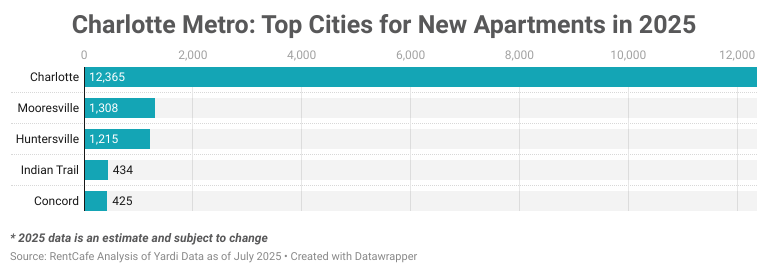
Nationwide, more than half a million new rentals are expected to open in 2025, with the South claiming the lion’s share. North Carolina stands out as a major player — ranking #4 in the nation for new apartments this year.

  • The Charlotte metro is projected to add 16,995 new apartments — more than Raleigh, Durham, Greensboro, Wilmington, and Asheville combined. The metro ranks 6th nationwide, just behind Atlanta (by 517 units) and slightly ahead of Miami.
  • This activity reflects a 12.4% year-over-year increase, bucking the slowdown seen in many other metros. By contrast, Raleigh is expected to see a 44% decline, while Wilmington is projected to be down about 29%.
  • At the city level, Charlotte shines even brighter: with 12,365 new apartments, it ranks 2nd nationwide, behind only Austin (15,195 units).
  • Altogether, North Carolina is expected to add 35,502 apartments in 2025, with nearly half concentrated in Charlotte.

SouthPark’s Symphony Park About To Receive A $26 Million Facelift

0
via SouthParkCLT.org

Charlotte’s Symphony Park in SouthPark is about to get a $26 million facelift.

The project is being led by SouthPark Community Partners (SCP) with $13 million in private funding, including a major investment from Simon Property Group to build two permanent anchor restaurants. $8 million will come from the City of Charlotte, using existing bond funds, and an additional $5 million capital campaign has been launched for the remainder.

Planned upgrades include new public restrooms, terraced and flat lawn spaces for events, interactive children’s areas, micro-retail spaces for local entrepreneurs, and enhancements to the park’s bandshell. Public art and a segment of the SouthPark Loop trail—with two pedestrian bridges—will further connect the park to the community.

via SouthParkCLT.org

The redesign builds on years of public input and the SouthPark Forward 2035 Vision Plan.

Carolina Panthers Collapse in Week 1: Offense Stalls, Defense Crumbles in Jacksonville

0

The Carolina Panthers’ season could hardly have started worse. In a sloppy and uninspired Week 1 showing, Carolina looked outmatched in every phase of the game against the Jacksonville Jaguars, raising immediate doubts about whether this team can contend in the NFC South. A lightning delay paused the matchup for more than an hour, but it didn’t slow Jacksonville, which ultimately dominated in a 26-10 win that exposed glaring issues on both sides of the ball.

Quarterback Bryce Young’s opening struggles continued for the third straight year, as he completed just 18 of 35 passes for 154 yards with two interceptions, a fumble, and a lone touchdown pass to Chuba Hubbard. His decision-making faltered in key moments, including an errant throw out of the end zone on fourth down that left him slamming his helmet in frustration.

The defense fared no better, failing to stop Jacksonville’s rushing attack and allowing explosive plays at critical times. Travis Etienne gashed Carolina for more than 100 yards, including a 71-yard run that set up a score, while the Jaguars’ revamped defense easily handled the Panthers’ offense.

Rookie wideout Tetairoa McMillan was one of the few positives, showing flashes of promise in his debut, but it wasn’t enough to mask the Panthers’ deeper problems.

Between turnovers, poor execution, and a lack of cohesion, Sunday’s performance offered little hope for a quick turnaround and instead signaled that another long season may already be looming.

New 43-Story Tower to Transform Charlotte’s South End Skyline

0
via Riverside Investment & Development

South End is once again giving Uptown a run for it’s money with the announcement of a new 43-story tower to be built at the new Queensbridge Collective project.

The new tower, 1111 South Tryon, will rise next to Riverside’s 42-story residential building, now under construction and scheduled to open in 2026. The office and mixed-use tower is expected to open in 2028.

Moore & Van Allen, the state’s largest law firm with more than 300 attorneys, will occupy 206,000 square feet — a 25% expansion from its current uptown offices.

Riverside originally proposed a 36-story office building but expanded the project to accommodate demand. The new 43-story tower will integrate office, residential, and retail spaces, plus extensive amenities including:

  • One-acre of outdoor green space and parking
  • 10,000-square-foot fitness center
  • Event and conference spaces
  • Rooftop terrace with city views

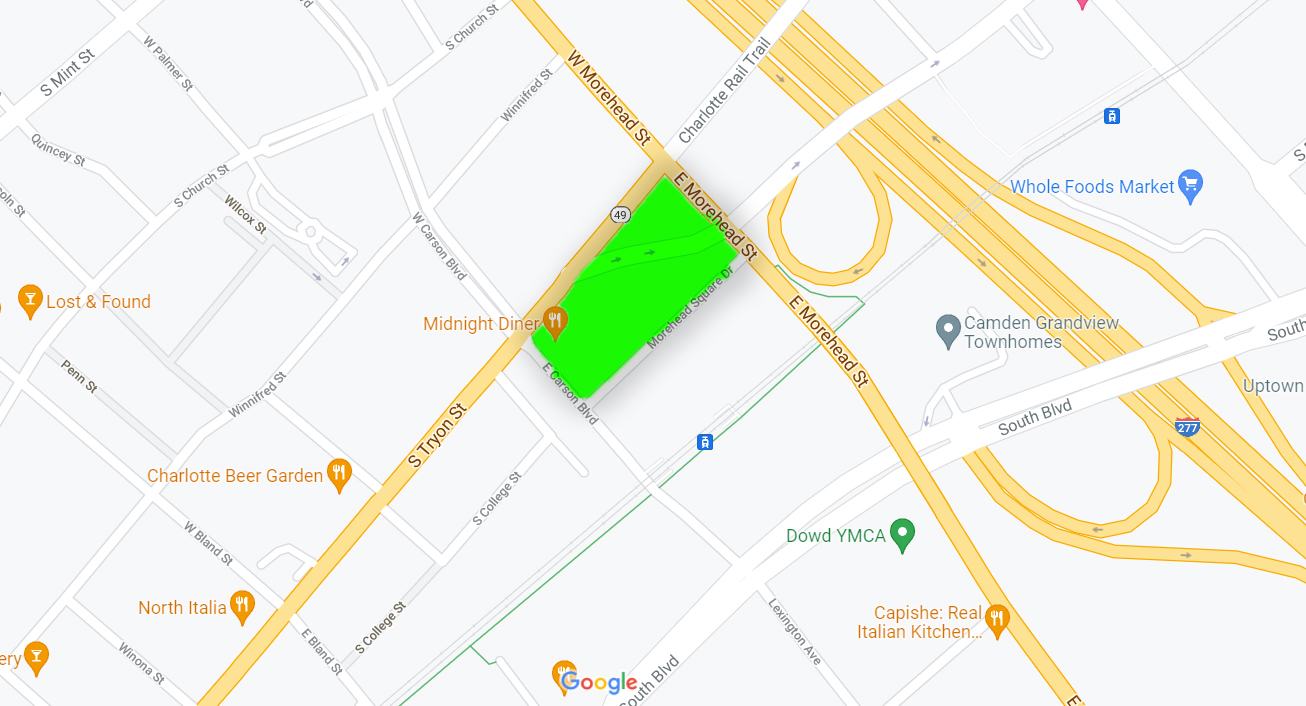
The site, formerly home to the Midnight Diner and Uptown Cabaret, is being redeveloped under a city agreement that requires significant street and traffic improvements around Morehead Square Drive, South Tryon, and East Carson.

With construction underway, Queensbridge aims to connect Uptown and South End, further strengthening Charlotte’s reputation as a hub for large-scale mixed-use development.

Creating A Balanced Financial Plan

0

When it comes to managing money, people often focus too heavily on one side of the picture. Some prioritize saving for the future but struggle to enjoy their income in the present, while others focus on day-to-day spending and end up unprepared for emergencies or retirement. A balanced financial plan helps you meet both immediate needs and long-term goals without sacrificing stability. Just as some people turn to debt consolidation in Florida to regain control over their financial situation and create structure, building a balanced plan provides a clear, sustainable framework to manage money with confidence.

Step One: Understand Your Current Financial Picture

Before you can create a plan, you need to know where you stand. This means taking a close look at your income, monthly expenses, debts, and assets. Think of it as taking an inventory of your financial life. Write down everything you earn, everything you owe, and everything you own. This process may feel intimidating at first, but it provides a baseline that allows you to make realistic decisions. Without this clarity, it’s easy to build a plan that looks good on paper but doesn’t fit your actual circumstances.

Step Two: Define Clear Goals

A balanced plan isn’t just about covering expenses—it’s about making your money work for you. That starts with defining goals. Do you want to build an emergency fund, pay off student loans, save for a home, or prepare for retirement? Writing down specific goals helps you prioritize where your money should go. Some goals will be short-term, like saving for a vacation, while others will be long-term, like building retirement savings. A balanced plan makes room for both, ensuring you can enjoy life now while preparing for the future.

Step Three: Create a Realistic Budget

A budget is one of the most important tools for balance. Instead of treating it as a restriction, see it as a plan for how to use your money effectively. Start by covering essential needs like housing, food, and transportation. Then allocate money toward savings, debt repayment, and discretionary spending. A good rule of thumb is to use something like the 50/30/20 framework, but adapt it to your lifestyle. The key is to ensure that every dollar is accounted for, giving you both structure and flexibility.

Step Four: Build an Emergency Fund

An emergency fund is your first line of defense when life throws the unexpected your way. Whether it’s a medical bill, a car repair, or a sudden job loss, having cash set aside can prevent you from relying on credit cards or loans. Aim for at least three months of essential expenses, and gradually build up to six months or more. Even if you start small, consistency is what matters. An emergency fund doesn’t just provide financial support—it also provides peace of mind.

Step Five: Manage and Reduce Debt

Debt can be one of the biggest obstacles to financial balance. High-interest debt in particular can drain your resources and make it difficult to save. Tackling debt strategically—whether through the snowball method, avalanche method, or consolidation—creates breathing room in your budget. By reducing debt, you free up more money for savings and investments. Managing debt is not about shame or blame—it’s about making steady progress toward freedom and stability.

Step Six: Save and Invest for the Future

While it’s important to handle today’s needs, building wealth for tomorrow is equally critical. Saving and investing are what allow you to create long-term security. Start with retirement accounts like a 401(k) or IRA, especially if your employer offers matching contributions. Even small amounts can grow significantly over time thanks to compound interest. Beyond retirement, consider other investments or savings vehicles for medium-term goals. The earlier you start, the more powerful your money becomes.

Step Seven: Protect What You’re Building

A balanced financial plan also includes protecting yourself and your family from risks. Insurance plays a major role here—health, life, disability, and property insurance can all provide safeguards against unexpected events. Estate planning tools like wills or trusts can also protect your loved ones and ensure your assets are managed according to your wishes. Protection ensures that the financial foundation you’re building isn’t undone by one unforeseen event.

Step Eight: Review and Adjust Regularly

Life changes, and so should your financial plan. A new job, marriage, children, or moving to a new city all affect your financial needs and priorities. That’s why reviewing your plan regularly is essential. Even small adjustments, like increasing savings contributions or shifting investment strategies, can make a big difference over time. Flexibility is what keeps your financial plan strong and relevant as your life evolves.

Final Thoughts

Creating a balanced financial plan isn’t about choosing between living in the present or planning for the future—it’s about doing both thoughtfully. By assessing your current situation, setting goals, budgeting wisely, managing debt, saving for the future, and protecting your progress, you create a framework that supports every stage of life. Balance allows you to enjoy today without fear of tomorrow, giving you both stability and freedom. With the right approach, your financial plan becomes not just a tool for survival, but a roadmap for growth and peace of mind.