
Why Choosing the Right Neighborhood Matters More Than Finding the Perfect House

0

A beautiful house can catch your attention immediately. Spacious rooms, modern kitchens, and attractive outdoor spaces make it easy to imagine living there.

However, even the most appealing property may not feel right if the surrounding neighborhood does not support your daily needs.

Choosing the right neighborhood is about more than finding a pleasant street. It involves understanding commuting distances, nearby services, community atmosphere, and long-term convenience.

While you can renovate a kitchen or repaint a bedroom, changing your neighborhood usually means finding another home. That makes location one of the most important considerations when buying a property.

Your Neighborhood Shapes Your Everyday Routine

The place you live influences how you spend your time, manage responsibilities, and enjoy your surroundings. A house might offer everything on your wishlist, but its location can create challenges that become noticeable after moving in.

Consider Your Daily Commute

A longer commute affects more than transportation expenses. It also reduces the time available for family activities, relaxation, and personal interests.

Before choosing a neighborhood, consider:

  • How long does traveling to work take during busy hours?
  • Are grocery stores, pharmacies, and healthcare facilities nearby?
  • Is public transportation available if needed?
  • Can you reach frequently visited places without unnecessary driving?

For example, a slightly smaller house near your workplace might provide a more comfortable lifestyle than a larger property requiring lengthy daily travel.

Community Atmosphere Matters More Than Appearance

Two neighborhoods with similar houses can offer completely different living experiences. Street activity, public spaces, traffic patterns, and community facilities all influence how comfortable residents feel.

Understanding these differences requires looking beyond property photographs and online descriptions.

Visit the Area at Different Times

A neighborhood that appears peaceful during a weekday afternoon may feel considerably busier during evening traffic.

Try visiting during mornings, evenings, and weekends. Observe parking availability, road conditions, lighting, and nearby activities.

If possible, speak with residents about everyday experiences. Their observations may reveal practical details that are difficult to identify during a short property viewing.

Think About Future Needs Before Making a Decision

Your housing requirements today may not remain the same several years from now. Career changes, growing families, and changing personal priorities can influence what makes a location suitable.

Considering future needs helps reduce the likelihood of another residential change sooner than expected.

Look Beyond Your Current Lifestyle

Families with young children may prioritize nearby schools, parks, and childcare facilities. Remote workers might value reliable internet connectivity and quieter surroundings.

Before making a decision, consider whether the neighborhood can accommodate possible changes in your routine.

For Charlotte residents, reviewing local neighborhood information about transportation, housing, education, and community facilities can provide a useful starting point for comparing different areas. 

Such research helps buyers make decisions based on everyday needs rather than property appearance alone.

Understand the Practical Costs of Your Location

A property’s purchase price represents only part of the financial commitment. Neighborhood characteristics can influence transportation costs, insurance expenses, and ongoing household budgets.

Comparing these expenses helps buyers understand what living in a particular area may actually cost.

Plan for the Complete Residential Transition

Moving expenses also deserve attention when comparing housing options.

For example, families relocating across the Charlotte area may need to consider transportation distances, packing requirements, and scheduling arrangements.

Researching Movers in Charlotte, NC can help residents estimate relocation costs and understand what services they may need.

Other expenses worth reviewing include property taxes, homeowners association fees, parking charges, and utility costs.

A home with a lower asking price is not necessarily the more affordable option when regular expenses are considered.

Compare Neighborhoods Before Comparing Houses

Property features are easy to compare because buyers can measure room sizes, count bedrooms, and examine photographs. Neighborhood quality requires a more thoughtful approach.

A simple comparison process can prevent attractive interior features from distracting you from important location concerns.

Create a Neighborhood Priority Checklist

Before scheduling additional property viewings, follow these steps:

  1. Identify your three most important location requirements.
  2. Visit shortlisted neighborhoods during different periods.
  3. Test actual commuting routes rather than relying only on estimated travel times.
  4. Research nearby services, transportation options, and planned developments.
  5. Compare recurring living expenses before making a final choice.

This approach helps separate essential requirements from features that would simply be nice to have.

Conclusion

Choosing the right neighborhood matters because your surroundings influence everyday comfort long after the excitement of buying a house fades.

An attractive property may offer impressive features, but convenient services, manageable commutes, and a suitable community can contribute more to long-term satisfaction.

The best decision is not necessarily the biggest house or the most modern interior. It is finding a home in a neighborhood that supports your lifestyle, fits your budget, and remains practical as your needs change.

Moving From New Jersey to Charlotte? The Fixes That Help Your NJ House Sell Faster

0
810811

Spend a Saturday at any open house in Ballantyne, Huntersville or Fort Mill and you will hear the accents. New Jersey has topped the United Van Lines list of states people leave for eight years running, and in the company’s 2025 study about 62% of its New Jersey moves were outbound. The Carolinas sit on the other side of that trade: South Carolina ranked third and North Carolina seventh among the top inbound states.

For a lot of those families, the Charlotte house is the easy part. The hard part is the colonial or split-level still sitting in Morris County or Monmouth County, waiting to sell while the moving truck is already booked. A handful of practical repairs, from fresh paint to replacing tired gutters, can shorten that wait, and pre-listing jobs like gutter installation NJ buyers’ inspectors will not flag tend to pay back more than most sellers expect.

Why the NJ Sale Shapes Your Charlotte Move

Most transplants need the equity from the New Jersey sale to buy here, or at least to stop carrying two mortgages. Every week the old house sits on the market is another week of property taxes, utilities and insurance on a home nobody lives in. New Jersey’s property taxes are among the highest in the country, so that carrying cost adds up quickly.

The sale also runs on New Jersey rules. Since August 2024, sellers in the state must hand buyers a completed Seller’s Property Condition Disclosure Statement, a 108-question form, before the buyer is bound by the contract. New Jersey deals also include a three-business-day attorney review period, when either side’s attorney can propose changes. Inspection findings often land during that window, and every open item gives a buyer a reason to ask for money back.

Water Is the First Thing NJ Buyers Look For

Charlotte homebuyers spend a lot of time talking about crawl spaces and slab foundations. In New Jersey, the conversation is about basements, and the disclosure form asks directly whether the seller knows of any water leakage or dampness there.

Most basement water problems start on the roof edge. Gutters that sag, overflow or dump water right at the foundation send hundreds of gallons against the basement walls during a single heavy storm. Inspectors know that pattern, and stained basement walls, a musty smell or a dehumidifier running in the corner all point straight back to the drainage outside.

That is why gutters punch above their weight before a listing. New seamless aluminum gutters with properly sized downspouts and extensions that carry water 4 to 6 feet away from the house fix the most common cause of a wet basement, and the receipt goes right into the disclosure package.

The Pre-Listing Fixes That Pay Off

Not every repair is worth doing from 600 miles away. The ones below tend to matter most to New Jersey buyers and their inspectors. Costs are typical ranges for an average-size home in the state.

Fix Typical NJ cost Why it helps the sale
New seamless gutters and downspouts $1,500 to $4,000 Shows buyers the basement drainage problem is handled; reduces wet-basement findings at inspection
Interior paint in neutral colors $3,000 to $8,000 The project agents most often recommend before listing; photographs well and makes rooms feel larger
Roof repair or leak fix $300 to $1,500 Roof age and past leaks are on the disclosure form; a documented repair calms buyer attorneys
HVAC service and safety check $150 to $400 A clean service record answers the first question about an aging furnace or boiler
Regrading soil away from the foundation $500 to $2,500 Works with the gutters to keep water moving away from basement walls
Small electrical and plumbing fixes $200 to $1,000 Clears the minor items that pile up on an inspection report

Big remodels rarely make sense at this stage. A new kitchen in a house you are leaving recovers only part of its cost, and it can push your listing date back by months.

Running Repairs From Charlotte

Plenty of transplants handle the whole process without flying back. It takes a local listing agent you trust, a lockbox, and contractors who are comfortable sending photos instead of meeting the owner on site. A few habits make the remote version work:

  • Order a pre-listing home inspection so you see the report before a buyer does
  • Get two quotes for any job over $1,000 and ask each contractor for photos of the problem
  • Confirm every contractor is registered with the New Jersey Division of Consumer Affairs
  • Ask for before-and-after photos and keep every invoice in one shared folder
  • Schedule exterior work like gutters and grading before late fall, when crews slow down for winter
  • Give your agent and attorney access to the folder so repair records reach the buyer’s side quickly

Honestly, that shared folder is the piece most sellers skip. When a buyer’s inspector flags something, an agent who can answer within an hour with an invoice and a photo usually keeps the deal moving, while an agent waiting on a seller in another state can lose days.

Timing the Move and the Listing

Spring is the busiest season for home sales in New Jersey, and many transplants list in March or April so the house shows at its best. That means the repair window falls in the fall and winter before, which happens to be when many Charlotte families are getting settled after a summer move. Exterior jobs need decent weather, so gutters, grading and roof work should be finished by November or early December if possible.

If the house is going on the market in the fall instead, move the inspection up and treat the drainage fixes as the first job. Leaves clog gutters fastest in October and November, and an inspector who visits after a rainy week will see exactly how well the water is moving.

Settling In on This Side of the State Line

Many New Jersey families pick their Charlotte-area neighborhood based on schools, and some of the strongest districts sit just across the border in York County, South Carolina. Charlotte Stories reported this week that Fort Mill’s schools ranked first in South Carolina and among the top 1% nationally. Buying on the South Carolina side changes your tax picture and your commute across the state line on I-77, and both are worth pricing out before you commit.

Whichever side of the line you land on, the house in New Jersey keeps costing money until it closes. Booking the inspection, the gutters and the paint before your agent takes listing photos is the cheapest way to make that last New Jersey bill arrive sooner.

York County Approves Massive Fort Mill Industrial Rezoning Despite Resident Concerns

0

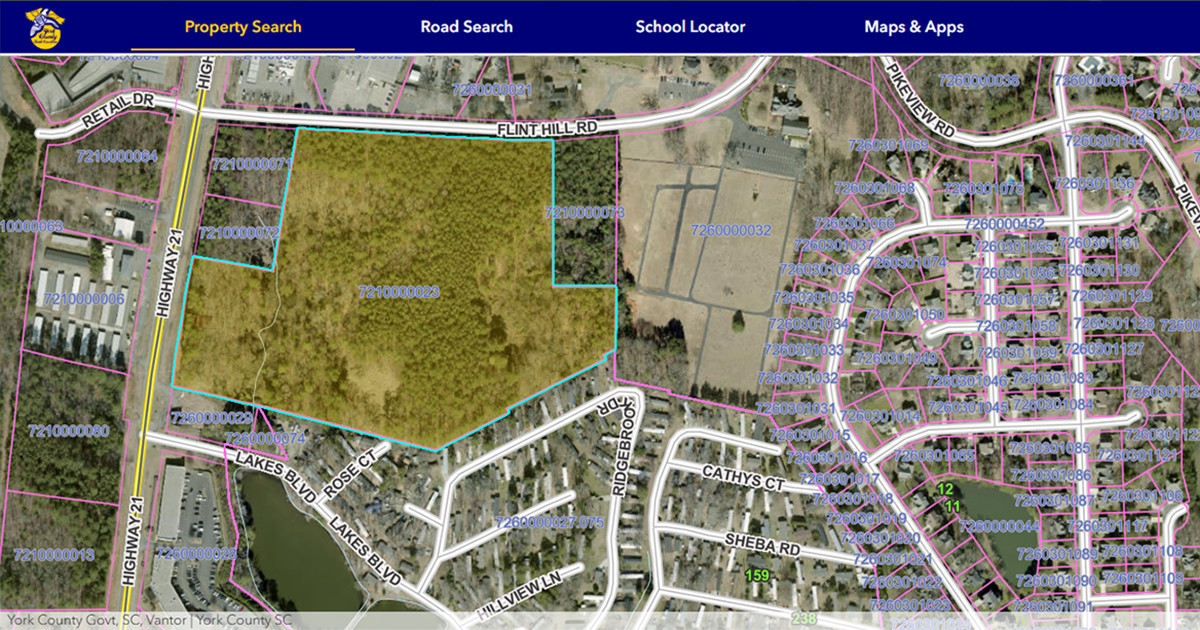
York County has approved a controversial Light Industrial rezoning near Fort Mill, clearing the way for two massive warehouses along U.S. 21.

Council gave final approval Oct. 5 to rezone about 24 acres at U.S. 21 and Flint Hill Road. The property will now shift from General Commercial to Light Industrial despite opposition from nearby residents and the county’s own planning bodies.

The project would include 270,500 square feet of industrial space across two buildings. Plans show about 105 truck-loading docks between them.

County staff recommended denying the rezoning, and the Planning Commission also recommended denial. The county’s 2035 plan envisions residential and complementary development in the area instead of additional industrial uses.

Some residents raised concerns about truck traffic, noise, nearby homes and Flint Hill Baptist Church’s cemetery. Flint Hill Road remains a two-lane roadway and is not currently slated for widening. For other residents, the biggest concern is not simply the proposed warehouses – it’s what could happen later if another industrial use seeks to locate on the property.

Residents have pointed to York County’s corrupt dealings with Silfab, a Canadian chemical manufacturing operation that was ruled heavy industrial by the Board of Zoning Appeals before any permits were issued for their factory or chemical storage facilities.

Silfab’s chemical manufacturing operation plans on using over 1 million lbs of toxic and explosive chemicals next door to schools and homes, and the property they are renting is zoned Light Industrial, which expressly prohibits “chemical storage and treatment facilities”.

Council Added Restrictions

Council attempted to address some of those concerns for the Walmart property through deed restrictions.

The developer agreed to prohibit manufacturing, data centers, shooting ranges, crematories and several other industrial uses. Loading docks must face inward, and buildings must maintain roughly 250 feet of separation from adjoining properties.

The developer must also build several road improvements:

  • A right-turn lane from U.S. 21 into the development
  • A separate right-turn lane from U.S. 21 onto Flint Hill Road
  • A right-turn lane from Flint Hill Road into the development

Council had previously required a traffic impact analysis before final approval. The project has now received the rezoning, although the county must still approve the developer’s traffic study before the project advances.

Rezoning Could Outlast the Current Proposal

Walmart owns the property and plans to sell it to SDP Charlotte LLC, an affiliate of Atlanta-based Strategic Real Estate Partners.

The agreement gives the parties 24 months to complete the sale. If the transaction does not close within that period, the property would revert to General Commercial zoning.

That safeguard applies to the sale, but residents remain focused on the broader zoning question.

After the prolonged Silfab fight, opponents say they are wary of relying only on what a developer currently promises to build. Their concern is whether future owners or corrupt county officials will be willing to follow York County’s Light Industrial zoning laws in the future.

Gastonia Man Drives Into Pole on Cox – Police Warn Drives to Avoid The Area

0

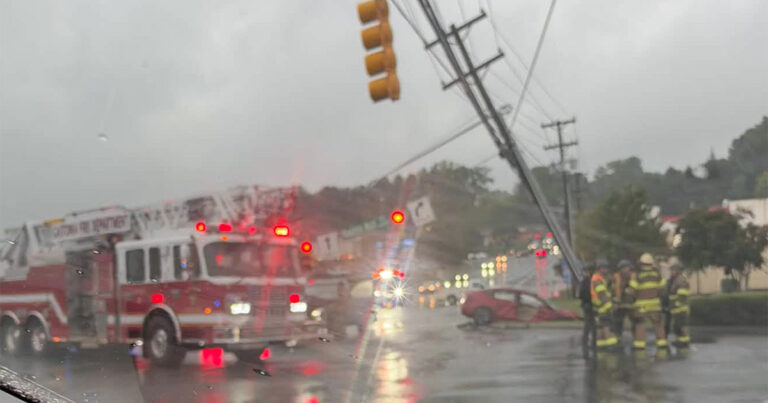
A Gastonia man crashed his red sedan directly into a utility pole near the entrance to the Target shopping plaza and Chuck E. Cheese this evening. The impact damaged the pole and disrupted traffic controls at the intersection.

Gastonia Police and Gastonia Fire crews have since responded to the scene. Authorities have not yet released information about possible injuries or what caused the driver to leave the roadway.

The damaged traffic light is creating an additional hazard at the already busy intersection. Drivers should expect delays and possible closures while crews secure the area and repair the damaged equipment.

Police are asking motorists to avoid the area for the rest of Saturday night and use alternate routes.

This Charlotte-Area Farm Has Pumpkins, Ropes Course, Curved Zip Rail, and America’s Best Corn Maze

0

One of the country’s best fall farm experiences is hiding just south of Charlotte.

Hall Family Farm in Lancaster was just ranked the No. 9 corn maze in America by USA TODAY’s 2026 10Best Readers’ Choice Awards. It was the only South Carolina farm to make this year’s national top 10.

The recognition is not a fluke. Time Out ranked Hall Family Farm No. 4 among America’s best corn mazes in 2025, praising its unusually elaborate puzzle-based design.

What visitors find today goes far beyond a traditional pumpkin patch.

The fourth-generation family farm combines a massive interactive maze, real pick-your-own crops, aerial ropes courses, a curved zip rail and a full restaurant. There is even a bakery and coffee shop serving homemade doughnuts and espresso drinks.

The Corn Maze Is More Like an Outdoor Escape Room

Hall’s centerpiece is a seven-acre corn maze, but simply finding the exit is only part of the challenge.

For 2026, the maze celebrates United States history and hides nine puzzle challenges throughout the field. Visitors must explore the maze and solve the puzzles as they work toward completing the game.

The corn reached roughly 8 to 10 feet tall this season. The farm estimates the full maze can take one to two hours to complete.

That approach helped earn the farm national recognition. Last year’s pirate-themed maze also contained nine escape-room-style puzzles, which helped land Hall at No. 4 on Time Out’s national list.

Visitors who want an easier challenge can tackle a separate 15-minute maze. It is designed for all ages and is also stroller and wheelchair accessible.

The Farm Has a Ropes Course — and a Curved Zip Rail

One of Hall’s most unusual attractions sits high above the traditional hayrides and pumpkin fields.

The Goat Walk is a custom two-level aerial ropes course with more than 20 obstacles. It also includes a Sky Rail zip line that curves 180 degrees around part of the course.

The attraction’s manufacturer, RCI Adventure Products, specifically featured Hall Family Farm as an example of bringing major adventure attractions into agritourism. A separate Kid Walk places platforms about three feet above ground for smaller children.

Despite the name, the Goat Walk does not actually involve goats.

What Makes Hall Family Farm Stand Out

Some farms specialize in pumpkins. Others focus on rides, food or corn mazes. Hall has developed an unusual combination of all of them.

Among its biggest can’t-miss features:

  • No. 9 corn maze in America for 2026 — and the only South Carolina farm in USA TODAY’s national top 10.
  • Seven-acre U.S. History maze with nine escape-room-style puzzle challenges and a one-to-two-hour completion time.
  • Two-level Goat Walk ropes course with more than 20 elements and a 180-degree curved Sky Rail.
  • Real pick-your-own pumpkins still growing on the vine. The farm even provides pruners so visitors can cut their own.
  • Two acres of play areas, including duck races, a bamboo maze, fire truck slide, 30-foot spider web and sandbox.
  • Musical hayrides, pedal cars, a corn pit, gem mining and a separate ropes course for younger children.
  • Hall’s Kitchen, a bakery and coffee shop, turning the property into more of an all-day destination than a quick pumpkin stop.
  • The apple cider doughnut sundae, made with a homemade cider doughnut, vanilla ice cream, caramel and whipped cream. Time Out specifically singled it out when ranking the farm nationally.

Perhaps most unusually, general admission to the farm is still free. Visitors pay separately for premium attractions, food and anything they pick.

From Ballantyne Cotton Farm to National Attraction

Hall Family Farm also has deep Charlotte roots.

Kevin Hall’s great-grandfather bought farmland along Providence Road West during the 1920s. The property eventually grew to roughly 600 acres, including land where Ballantyne Country Club now sits.

For generations, the land produced cotton, vegetables and other crops. Kevin and Lara Hall, both Virginia Tech engineering graduates, eventually transformed what remained into a modern agritourism business.

Their first pick-your-own strawberry crop opened in 2008. The farm quickly became a South Charlotte tradition for strawberries, pumpkins, hayrides and corn mazes.

Development eventually caught up with the property.

The family sold its remaining Ballantyne land to Novant Health in 2019 for $21 million. Instead of ending the farm, the Halls moved about 14 miles south and rebuilt on roughly 160 acres near Van Wyck.

The Lancaster location opened in 2021 with far more room to expand. The property also includes a six-acre irrigation pond and enough space for attractions that would have been difficult at the old Ballantyne site.

Kevin Hall’s engineering background still plays a role. UNC Charlotte’s oral-history project documented how the family uses engineering skills, GPS technology and custom equipment throughout the farming operation.

What To Know Before Going

Hall Family Farm is located at 445 W. Rebound Road in Lancaster, near Van Wyck.

The 2026 fall season runs through Nov. 1, with the farm typically open Friday through Sunday and select additional dates. Saturday hours extend until 10 p.m., allowing visitors to attempt the corn maze after dark.

Reservations are not required, and there is no general admission fee. Because hours can change with weather, the farm recommends checking its website or calling before making the drive.

For a farm that began with one acre of pick-your-own strawberries in 2008, Hall has become something far different.

It is now a nationally ranked fall attraction that combines a working farm with an escape room, adventure park and some of the most elaborate seasonal attractions near Charlotte.

Charlotte FBI Investigation Takes Down Leader of $14.7 Million International Cybercrime Network

0

A Charlotte-led FBI investigation has finally reached one of its biggest targets after more than a decade of international pursuit.

Oleg Korniev, a 42-year-old Ukrainian-Russian dual citizen, just pled guilty from a Gaston County jail to running a massive global money-laundering operation. Federal prosecutors say the network moved millions stolen from American businesses and bank accounts.

“For years, the FBI has worked tirelessly to unravel the layers of this international money laundering operation and bring Mr. Korniev to justice,” said Special Agent in Charge Reid Davis of FBI North Carolina. “This case reflects the Bureau’s enduring commitment to following the evidence — no matter how long it takes, how far it leads, or how deliberately criminals try to hide behind borders and technology. We will continue pursuing those who enable cybercriminals until every responsible individual is held to account.” 

Korniev was a leader of Your Mule Cashout, known as YMCO. The organization recruited more than 15,000 people across the United States to move stolen money overseas.

The network recruited unsuspecting money mules from Charlotte and communities across North and South Carolina. Those victims often believed they had landed legitimate work-from-home jobs.

Instead, hackers deposited stolen money into their personal bank accounts.

The recruits were instructed to withdraw the funds and wire them to supposed business partners overseas. Those transfers actually sent stolen money to YMCO conspirators, primarily in Eastern Europe.

Hackers compromised accounts at more than 35 financial institutions, according to earlier court filings. Those institutions included Charlotte-based Bank of America.

Federal authorities say YMCO ultimately targeted more than 750 U.S. bank accounts and laundered at least $10 million.

Korniev admitted the organization caused more than $14.7 million in actual and intended losses to confirmed victims. He personally intended to launder more than $9.7 million and successfully moved at least $7 million.

His role went far beyond processing transactions.

Prosecutors say Korniev helped establish company policies, hired and fired workers, managed employees and secured illegal services supporting the operation.

He was eventually arrested in the Republic of Georgia with help from international authorities. Korniev has agreed to forfeit cash seized during that arrest and pay restitution to victims.

The case has deep roots in Charlotte.

Four other YMCO members were previously arrested overseas and extradited to the Western District of North Carolina. They received prison sentences ranging from roughly 37 to 63 months.

Each was also ordered to pay more than $9.1 million in restitution.

Korniev pleaded guilty to five federal charges, including money laundering, computer fraud and aggravated identity theft.

He now faces between two and 50 years in federal prison. A sentencing date has not yet been announced.

The FBI in Charlotte is continuing to investigate the wider network.

First mRNA Flu Shot Arrives in Charlotte With New Benefits and Safety Questions

0

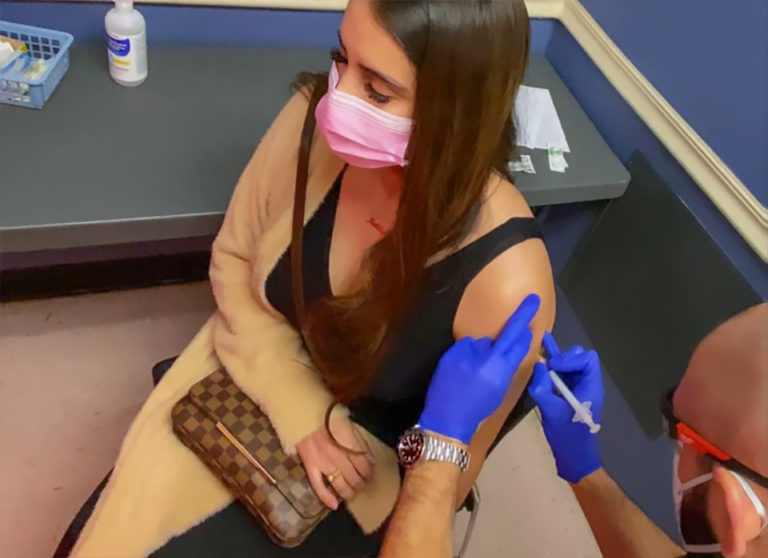
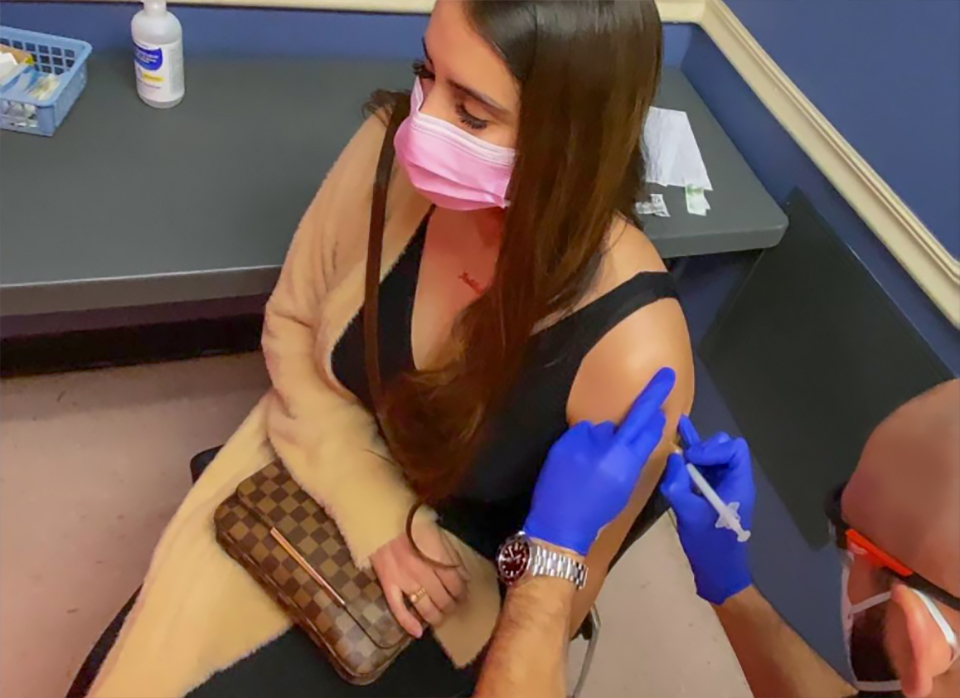
Charlotte-area adults now have access to the nation’s first mRNA flu vaccine as flu season begins across North Carolina.

Moderna’s mFLUSIVA is approved for adults 50 and older and is available at some Charlotte-area pharmacies. The rollout comes as North Carolina reports its first flu death of the season.

mFLUSIVA uses messenger RNA technology similar to Moderna’s COVID vaccines. Unlike traditional flu shots, mRNA vaccines can be redesigned and manufactured faster when circulating strains change.

Clinical trials found mFLUSIVA delivered 26.6% greater relative effectiveness than the standard-dose flu vaccine used for comparison.

Researchers recorded confirmed influenza in about 2% of mFLUSIVA recipients. About 2.8% of people receiving the conventional vaccine developed confirmed flu.

However, the vaccine also caused more short-term side effects.

About 75.7% of mFLUSIVA recipients reported expected reactions, compared with 46.7% receiving the traditional vaccine.

Common symptoms included injection-site pain, fatigue, headaches, chills and muscle or joint pain. Most disappeared within several days.

More severe systemic reactions occurred in 5.5% of mFLUSIVA recipients, compared with 0.9% in the comparison group.

Serious adverse events occurred in 2.2% of mRNA recipients and 1.9% of conventional-vaccine recipients. Investigators did not identify a pattern showing those events were caused by mFLUSIVA.

Still, several safety questions will continue being studied as millions more people potentially receive the vaccine.

FDA reviewers noted an imbalance in deaths classified as sudden, cardiac or unspecified across Moderna’s combined trials.

Researchers recorded 29 such deaths among mRNA recipients and 12 among comparison groups. Overall deaths were much closer at 102 versus 97.

Reviewers did not conclude the vaccine caused that imbalance. However, limited autopsy information prevented researchers from completely explaining it.

Moderna will continue monitoring mortality data after the vaccine enters widespread use.

Myocarditis also remains closely watched because rare cases followed some mRNA COVID vaccinations. Regulators will also monitor Guillain-Barré syndrome, seizures, thrombocytopenia, Bell’s palsy and severe allergic reactions.

Those conditions are not established side effects of mFLUSIVA. Post-market monitoring can identify rare problems too uncommon to appear during clinical trials.

Some researchers remain concerned about broader questions involving lipid nanoparticles, residual DNA and longer-term immune effects. Critics also question whether active-comparator trials can fully identify uncommon risks.

Traditional flu vaccines remain available, including high-dose and adjuvanted options commonly used for seniors.

For Charlotte residents, mFLUSIVA brings a new choice with potentially stronger protection than the standard vaccine used in its trial.

It also produced more short-term reactions and enters its first season with several safety questions still under active surveillance.

Northern Lights and Meteor Shower Could Create Rare Double Sky Show Over The Carolinas Tonight

0

NC skywatchers could get a rare double feature tonight, with shooting stars overhead and a possible aurora before sunrise.

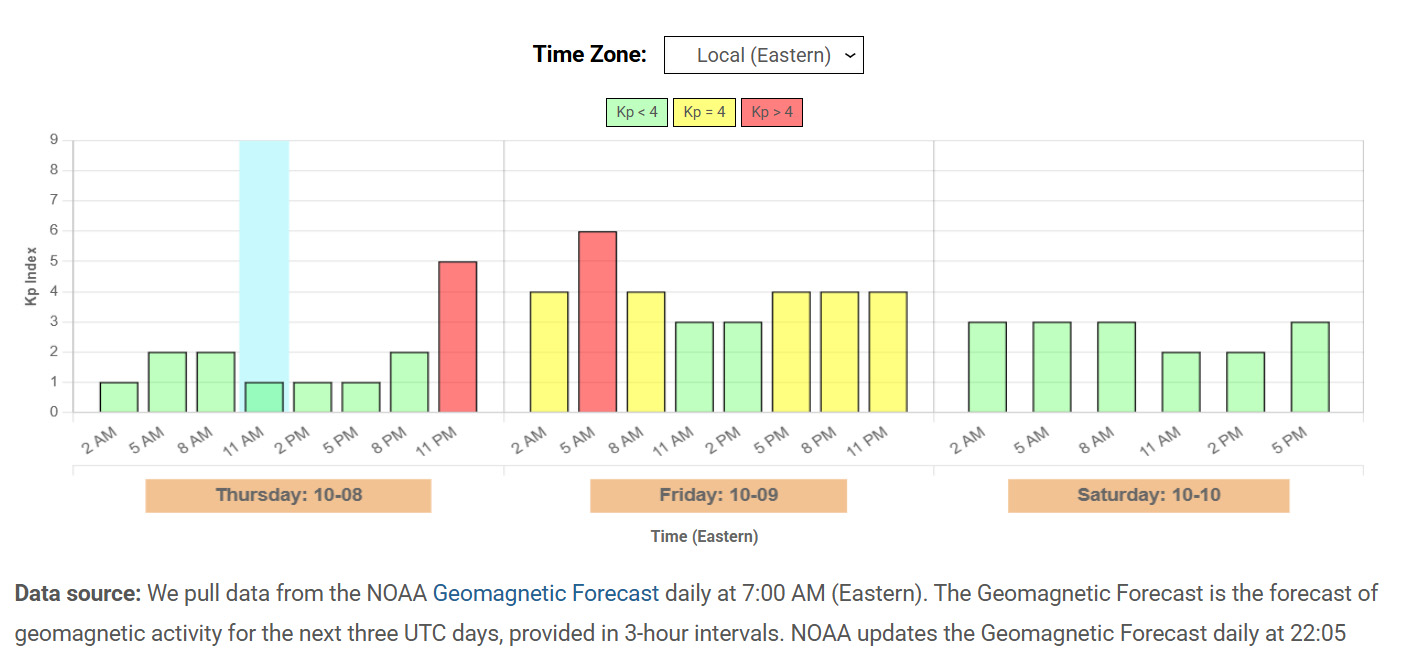
The Draconid meteor shower peaks Thursday evening, while multiple solar eruptions are also heading toward Earth, with the KP index forecast to reach 6 at around 5 am.

The meteor shower could produce around 10 meteors per hour under dark skies. Unlike many showers, the Draconids are best viewed during the evening. The shower comes from debris left behind by Comet 21P/Giacobini-Zinner.

On top of the meteor shower, three coronal mass ejections are heading toward Earth, potentially triggering geomagnetic storm activity overnight, according to space.com.

Stronger-than-expected solar activity could push visible auroras farther south into the Carolinas.

Charlotte has seen northern lights during stronger geomagnetic storms before.

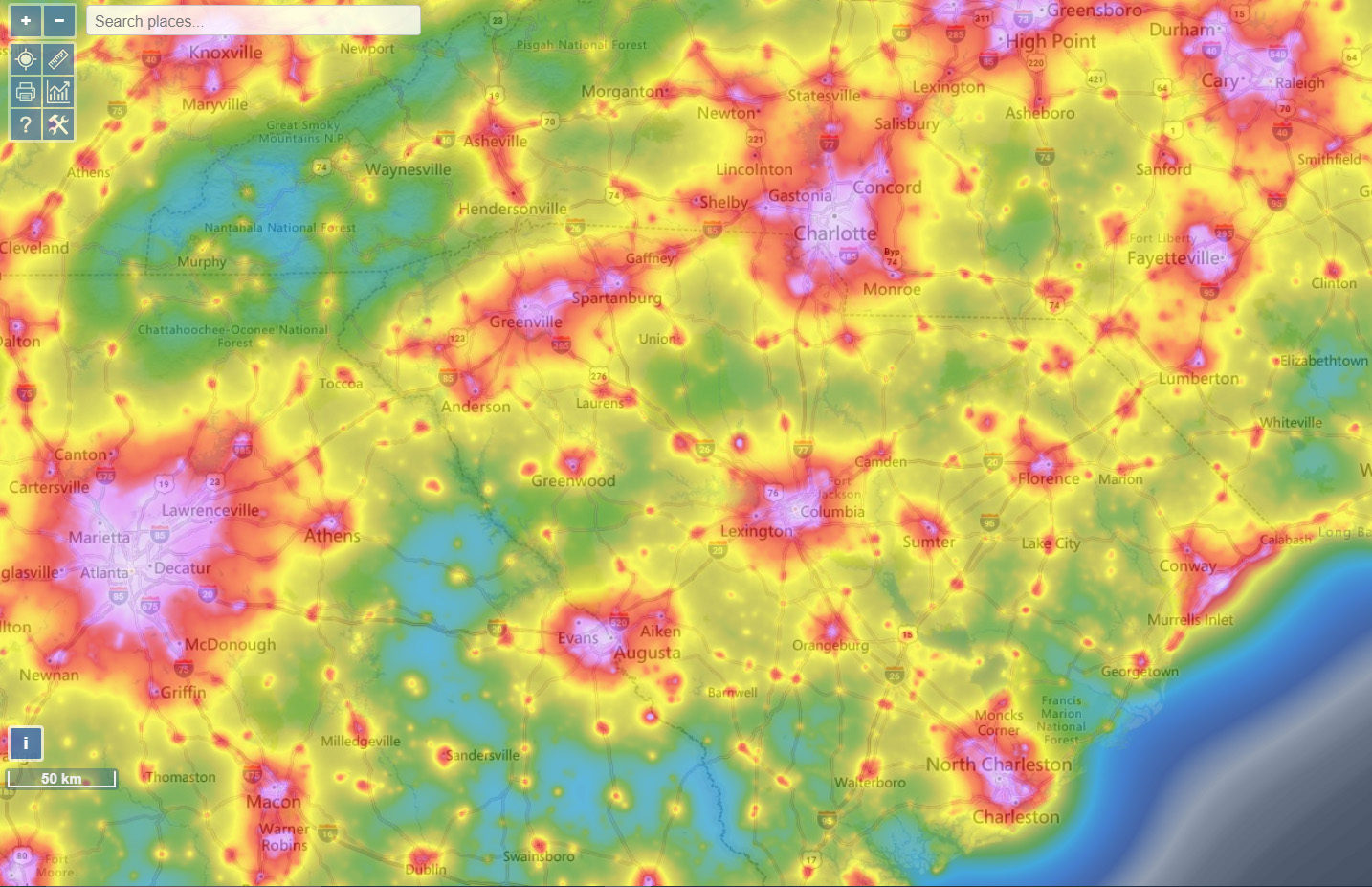
If you want the best possible shots with the brightest colors, you’ll need a long-exposure camera. Go to a very dark place where you have an unobstructed view toward the northern sky. The best place would be a remote mountain with north-facing views.

You can find the dark spots in your area using the official light pollution map here.

Happy aurora hunting!

North Carolina Moves To Suspend 41-Cent Gas Tax to Cut Prices at the Pump

0

North Carolinians will soon see gas prices drop after lawmakers overwhelmingly approved a temporary suspension of the state’s 41-cent fuel tax.

The Relief at the Pump Act would temporarily reduce the state gas tax to zero. The measure now needs Gov. Josh Stein’s signature.

The House approved the bill 111-1, while the Senate passed it 41-0. If signed, the suspension would run through November 30.

However, drivers should not expect prices to instantly fall by the full 41 cents.

Lawmakers estimate motorists could save roughly 25 to 30 cents per gallon. A 15-gallon fill-up could save about $3.75 to $4.50.

Fuel prices would still depend on oil markets, wholesale costs and competition between stations.

The proposal comes as regular gas prices remain well above last year’s levels. According to GasBuddy, North Carolina’s regular gas price is now $4.03 per gallon, compared with $2.82 one year earlier.

The tax holiday would reduce transportation revenue by roughly $360 million. State reserve funds would be used to replace that money, helping protect road and highway funding during the temporary suspension.

Opera Carolina Bringing Menotti’s The Medium to Charlotte With Grammy-Winning Star

0

Opera Carolina is bringing a rare piece of opera history to Charlotte this fall.

Grammy Award-winning contralto Victoria Livengood will star in Gian Carlo Menotti’s The Medium at Halton Theater on November 14.

Livengood brings an extraordinary connection to the production. She personally knew Menotti and developed Madame Flora under his direct guidance.

Menotti later called Livengood his “ideal Baba,” referring to the opera’s troubled central character.

The pair also worked together on a televised production recorded in Italy for RAI. Menotti directed that performance himself.

Their relationship continued until Menotti’s death in 2007, giving Livengood unusual firsthand insight into the role.

A Psychological Thriller Told Through Opera

The Medium follows Madame Flora, a fraudulent medium who stages séances for grieving clients.

She performs the deceptions with her daughter Monica and a mute servant named Toby.

However, one séance suddenly changes everything when Flora experiences something she cannot explain.

That moment sends her into a psychological collapse driven by fear, guilt and paranoia.

The English-language opera explores grief, manipulation, and the unstable boundary between reality and belief.

Opera Carolina selected the work partly for its accessibility to newcomers and theater fans.

Cast and Creative Team

Kristin Sampson will perform as Monica, while Tim Bostwick will portray Mr. Gobineau.

Aubrey Cole will appear as Mrs. Gobineau, with casting for Toby coming later.

Opera Carolina General Director Stefano Vignati will conduct, while Steven LaCosse will direct.

LaCosse is a distinguished opera professor and artistic director at UNC School of the Arts.

Menotti also has a major Carolina connection. His Festival dei Due Mondi eventually inspired Charleston’s Spoleto Festival USA in 1977.

Performance Details

  • Production: Gian Carlo Menotti’s The Medium
  • Date: Saturday, November 14, 2026
  • Location: Halton Theater
  • Presented by: Opera Carolina
  • Madame Flora: Victoria Livengood
  • Conductor: Stefano Vignati
  • Director: Steven LaCosse

The production combines psychological drama, opera history and a direct artistic connection to Menotti himself.