
NOAA Issues Geomagnetic Storm Warning – Northern Lights Possibly Visible Tonight Across The Carolinas

0

A powerful solar storm is expected to bring the Northern Lights to the Charlotte region late tonight into Saturday morning.
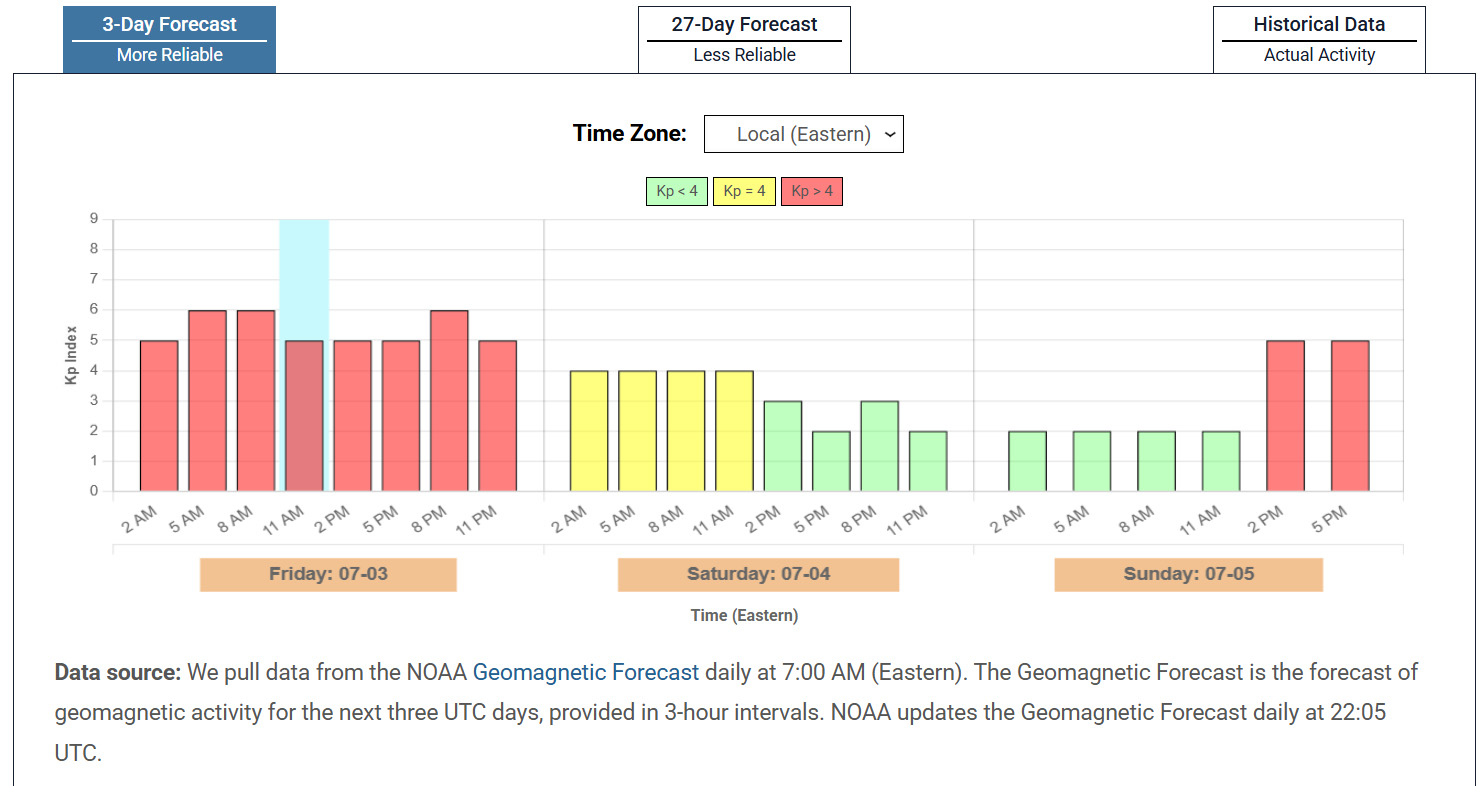

Another coronal mass ejection is arriving today, following a strong solar flare from earlier this week.

The KP index is forecast to reach 6, a level that often allows aurora viewing across the Carolinas. The best chance to see the lights will be from around 8pm to 9pm tonight, according to NOAA.

If you want the best possible shots with the brightest colors, you’ll need a long-exposure camera. Go to a very dark place where you have an unobstructed view toward the northern sky. The best place would be a remote mountain with north-facing views.

You can find the dark spots in your area using the official light pollution map here.

Happy aurora hunting!

Atrium Health Agrees To Pay $1.8 Million In Class Action Settlement – You May Be Owed Money

0

Thousands of Charlotte-area residents who have used an Atrium Health patient portal over the past decade could be eligible for a cash payment after the healthcare system agreed to a $1.8 million class action settlement over alleged patient privacy violations.


The Charlotte-Mecklenburg Hospital Authority, which operates as Atrium Health, agreed to settle claims that it embedded tracking pixels on its website and, for a limited time, its patient portal without patients’ consent. The lawsuit alleged the technology disclosed users’ personal and health-related information to third parties, including Meta, for advertising purposes.

The settlement received preliminary court approval on May 22, 2026. Atrium Health denies any wrongdoing as part of the agreement.

The settlement applies to all U.S. residents who had a MyAtriumHealth or MyCarolinas patient portal account between January 1, 2015, and April 10, 2024.

Eligible patients fall into two groups:

Group 1: People who accessed or used their patient portal between January 1, 2015, and July 31, 2019. These claimants will receive a proportional share of a $1.5 million settlement fund after court-approved fees and expenses.
Group 2: People who had a patient portal account between January 1, 2015, and April 10, 2024, but do not qualify for Group 1. They may receive up to $10 from a separate $300,000 fund. Those eligible for Group 1 cannot also receive a Group 2 payment.

Eligible patients can submit a claim online or by mail through the court-approved settlement website. Claims must be filed by September 28, 2026. Alternatively, you could have a claim advisors handle it for you here.

A final approval hearing is scheduled for September 30, 2026. Payments will be distributed only if the settlement receives final approval and any appeals are resolved.

The lawsuit alleged Atrium Health failed to obtain patients’ consent before using website tracking technology that transmitted certain personal and health-related information to third-party companies for advertising and analytics purposes.

Homeland Security Uncovers Gaston County Man’s $7.8 Million Counterfeit Operation

0

Authorities have just uncovered one of the largest counterfeit merchandise busts in the Charlotte region, seizing more than 96,000 fake items with an estimated retail value of $7.8 million from a home in Gaston County.

The Gaston County Police Department said investigators began looking into the alleged sale of counterfeit merchandise from a Gaston County man last month. After a weeks-long investigation, officers executed a search warrant at the home on June 25.

During the search, investigators seized 96,108 suspected counterfeit items with an estimated manufacturer’s suggested retail price (MSRP) of $7,845,817.

As a result of the investigation, authorities obtained arrest warrants for Adela Ortiz-Portillo and Ever Roberto Martinez-Olivia. Each faces two counts of criminal use of a counterfeit trademark and one count of felony conspiracy.

The investigation involved the Gaston County Police Department, Homeland Security Investigations, the North Carolina Secretary of State’s Office, and Blazer Investigations.

Officials said counterfeit products can harm consumers, legitimate businesses, and trademark owners by flooding the market with fake goods that often fail to meet safety and quality standards.

The Gaston County Police Department thanked its partner agencies for their assistance and said the investigation reflects an ongoing effort to combat counterfeit merchandise throughout the region.

Anyone with information about this case or similar activity is encouraged to contact Officer Rogers with the Gaston County Police Department at 704-866-3320.

Advanced Drone Warfare Company Opening 200,000 SqFt Factory in Charlotte

0

Charlotte is set to gain another major manufacturing operation as advanced weapons contractor INKAS expands its North American footprint with a new 200,000-square-foot production facility.

The company announced the new Charlotte factory as a part of a historic expansion that will more than double its manufacturing capacity across North America. INKAS expects the new facilities to be fully operational by July 31, 2026.

The Charlotte facility is expected to support production for INKAS’ growing portfolio of advanced defense technologies. The company has invested heavily in counter-drone and autonomous drone systems designed for military and government customers. Its product lineup includes AI-powered interceptor drones capable of autonomously tracking and destroying hostile drones, electronic warfare systems that jam or disrupt enemy drone communications, and mobile command-and-control platforms integrated into armored tactical vehicles.

INKAS also develops radio-frequency detection systems that can locate hostile drone operators and autonomous maritime platforms capable of deploying drones during naval operations. While the company has not specified which individual products will be manufactured in Charlotte, the expansion is intended to increase production capacity across its armored vehicle and advanced defense systems businesses as demand continues to grow worldwide.

Code Orange Air Quality Alert Issued for Mecklenburg County Today

0

Residents across Mecklenburg County are being urged to limit outdoor activity today after officials issued a Code Orange Air Quality Alert for elevated ozone levels.


The alert is in effect from 10 am to 8 pm Thursday and means air pollution could reach levels that are unhealthy for sensitive groups, including children, older adults, and people with asthma, heart disease, or other respiratory conditions.

According to the North Carolina Division of Air Quality, a persistent area of high pressure has created ideal conditions for ground-level ozone. Sunny skies, light winds, and little rainfall are allowing pollution to build throughout the day, especially during the afternoon and early evening.

Sensitive individuals should avoid prolonged or strenuous outdoor activity during peak hours. Residents are also encouraged to help reduce pollution by limiting driving, avoiding engine idling, conserving electricity, and walking or biking when possible.

The air quality outlook shows gradual improvement after today:

  • Thursday (July 2): Green to Orange AQI, with Mecklenburg County under a Code Orange ozone alert.
  • Friday (July 3): Green to Yellow AQI as ozone levels are expected to improve.
  • Saturday (July 4): Code Yellow air quality is forecast across much of North Carolina, meaning moderate conditions that could still affect unusually sensitive individuals.

Forecasters say isolated afternoon thunderstorms in western North Carolina could provide localized relief by reducing ozone levels.

A Code Orange alert means air quality may pose a health risk for sensitive populations, while most healthy adults are not expected to experience significant effects.

Plane Crashes and Bursts Into Flames Near Charlotte

0

A twin-engine plane crashed and caught fire in the Charlotte region early Thursday, seriously injuring two men and prompting a large emergency response.


The crash happened just before 1 a.m. in a wooded area off Brooklyn Avenue near Springdale Road in Lancaster, South Carolina.

According to the Lancaster County Sheriff’s Office, the aircraft struck trees before coming to rest on a hillside, where it burst into flames.

The two men aboard, believed to be the pilots, were found near the wreckage. Both were conscious but suffered serious burns and were airlifted to hospitals. Their current conditions have not been released.

The aircraft, a twin-engine Beechcraft BE55 owned by North Carolina-based Pressley Aviation, was traveling from Poplarville, Mississippi, to Stanly County Airport in Albemarle. Investigators said the pilot reported engine failure and attempted an emergency landing before the crash.

The FAA and National Transportation Safety Board are investigating the incident, while local authorities continue to secure the crash site.

New Development Coming To Lake Norman With Townhomes Starting At $2.5 Million Each

0

One of the most expensive townhome developments ever planned in the Charlotte region is coming to Lake Norman, with townhome prices starting at $2.5 million (dwarfing the Toll Brothers townhome development with townhomes starting in the upper $900,000s).

The Cape Lake Norman will feature 27 upscale townhomes on a peninsula in eastern Lincoln County near Denver, about 26 miles northwest of Uptown Charlotte.

Developed by Charlotte-based Roland Development Group, the boutique community draws inspiration from the coastal architecture of Florida’s Alys Beach, featuring clean, minimalist designs and expansive indoor-outdoor living spaces.

According to their website, the development will include “three floor plan options ranging from 3,500 to 4,000 square feet, each residence is planned for open living, private outdoor space, and days centered around the water”.

The community will also include boat access, private docks, and shared gathering spaces.

Located off Ranger Island Marina Road, The Cape Lake Norman has already launched VIP reservations for its first phase. The first homes are expected to be completed this fall, with move-ins beginning in November.

North Carolina Construction Giant Expands With Historic $13.5 Billion Acquisition

0

One of North Carolina’s largest companies has announced the biggest acquisition in its history, creating a global building materials powerhouse with a deal valued at $13.5 billion.
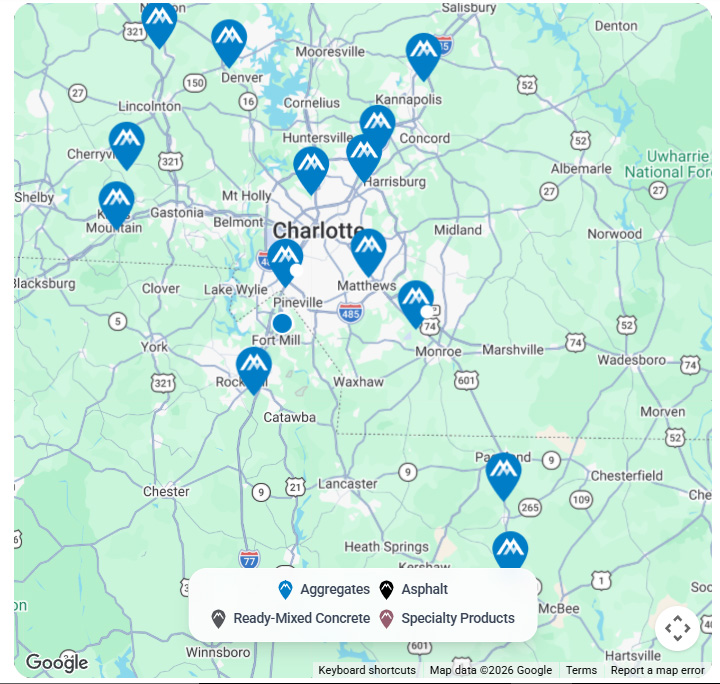

NC-based Martin Marietta has just announced the acquisition of limestone supplier Lhoist North America in a transaction that includes approximately $7 billion in cash and $6.5 billion in company stock.

The acquisition is the largest ever for Martin Marietta, which has a market value exceeding $36 billion and is one of the nation’s leading suppliers of construction materials.

Martin Marietta produces crushed stone, sand, gravel, asphalt, and specialty materials used to build highways, bridges, commercial developments, and other major infrastructure projects. Lhoist North America manufactures lime, limestone, and other mineral products used in steel production, water treatment, agriculture, and construction.

Company leaders say the combined business will be better positioned to meet growing demand from data center construction, semiconductor manufacturing, and infrastructure projects across the United States.

The acquisition also expands Martin Marietta’s footprint throughout the fast-growing Sun Belt, where both companies already have significant operations.

The historic deal will strengthen the supply chain for major construction projects across the Carolinas. Martin Marietta already operates numerous quarries in the Charlotte region, and Lhoist’s network of facilities across the Southeast could improve access to key construction materials for contractors working throughout the region.

Industry analysts say the acquisition further cements Raleigh-based Martin Marietta’s position as one of the world’s leading building materials companies while reinforcing North Carolina’s growing influence in the infrastructure and construction industries.

The announcement follows a wave of consolidation across the building materials sector as companies race to expand capacity and meet demand fueled by population growth and large-scale development projects.

Beat the Heat with NC’s Only 180 Degree Ocean Tunnel in Concord

0

With temps topping upper 90’s all week and no relief in sight, Concord Mills has indoor, air conditioned activities to cool you off and keep you entertained, including Sea Life’s new 117,000 gallon ocean tunnel (the only 180 degree tunnel in the state).

Visitors can get up-close and personal with sting rays, sea turtles, and other unique sea creatures from around the world.

Additionally, Concord Mills also features:

  • AMC Concord Mills 24: Featuring IMAX and luxury recliners, families can kick back and enjoy the season’s hottest movies, which currently include “Elvis”, “Jurassic World: Dominion”, “Minions: The Rise of Gru” and “Paws of Fury.”
  • Dave & Busters: The perfect place for kids to play interactive arcade games and enjoy chef-crafted dishes – while adults enjoy Dave & Buster’s signature cocktail creations.
  • Indoor Play Area: Concord Mills’ offers indoor play areas for all ages with climbable features, an electronic piano, a light tower challenge, interactive electronic games, a bungie jump attraction and rentable car-themed rides.
  • Dining: Concord Mills features a roster of family-friendly American restaurants, steakhouses and pubs with casual atmospheres, alongside the newly renovated Dining Pavilion and the recently opened BJ’s Restaurant and Brewhouse.
  • The Speedpark at Concord Mills (Outdoor Activity): Families can play all day at The Speedpark, including at 4 Go Kart Racetracks, the 18-Hole Miniature Golf course, a 110-foot slide, a bungee jump and more. This outdoor activity can still keep you cool if you drive fast enough!

What Catheter Migration Means and How It Impacts Patient Health

0

When a catheter migrates, the priority is getting it back in place or replaced so treatment can continue. That usually happens, and the patient moves on. What often does not happen is anyone explaining whether the device should have moved in the first place. Migration can be a one-off event, or it can point to a problem with how the device was made. Most patients are never told which one applies to them.

If your catheter migrated and caused harm, that is a question worth answering. An attorney can review your records and tell you whether it was likely a defect. These cases are being handled together in a federal multidistrict litigation, and a firm experienced with claims involving port catheter migration can compare your situation against the others already filed. From there, you decide whether to take further action.

Why Movement Matters

A shifted device can scrape vessel lining, change pressure dynamics, or compromise medication delivery. Initial signs of migration are often subtle and may include swelling, tenderness, poor blood return, or resistance during flushing. These symptoms warrant careful review because accurate placement protects patient health, supports therapy schedules, and reduces preventable injuries.

How Migration Happens

Movement may occur soon after insertion or later on. Contributing factors include forceful coughing, repetitive arm motions, chest trauma, loose tissue, or pressure changes within the chest. Device materials, insertion angle, catheter length, and the shape of the vein also influence stability. Since no single factor explains every case, clinicians compare symptoms, imaging findings, and treatment history to determine what happened.

Common Warning Signs

Patients may feel pain near the port, shoulder, neck, chest, or arm. Swelling, redness, warmth, bruising, or a raised area can appear around the site. Some people report shortness of breath, lightheadedness, or unusual fatigue. If a line does not flush, loses blood return, or causes a burning sensation during infusion, it should promptly be assessed by trained staff.

Treatment Problems

A migrated catheter tip may deliver medication to a less effective or unsafe location. Therapy can become less predictable when flow slows, stops, or causes pressure during use. Patients requiring chemotherapy, antibiotics, parenteral nutrition, or frequent blood draws depend on reliable access. Delays can disrupt dosing schedules, prolong visits, and add strain during an already difficult treatment.

Vessel Irritation

Veins react poorly to repeated friction, abnormal pressure, and concentrated medications. When a catheter presses against a vessel wall, it can cause inflammation or injury to the lining. This can lead to pain, swelling, and clot formation. A clot can block access and, in serious cases, travel through circulation. Sudden chest pain, breathing trouble, or faintness requires emergency evaluation.

Infection Risk

Any implanted access device carries a risk of infection. Concerns about migration arise when tissue irritation, leakage, or fluid pockets develop near the port. Warning signs include fever, chills, drainage, tenderness, redness, or skin breakdown. Bloodstream infections can worsen quickly, especially in people with weakened immune systems. Care teams may inspect the site, order cultures, start antibiotics, or remove the device.

Diagnosis

Evaluation usually begins with an examination and questions about recent symptoms. Nurses or clinicians may check flushing resistance, blood return, swelling, and tenderness. Imaging confirms the catheter’s position. Chest X-ray, ultrasound, fluoroscopy, or computed tomography may be used. These tests can reveal tip movement, kinking, fractures, vessel entry, or improper placement.

Who Faces Higher Risk

Individuals who require repeated venous access, such as those undergoing cancer treatment, dialysis planning, or needing long-term antibiotics, are at higher risk. Prior clots, unusual vein anatomy, kidney disease, and previous placement difficulty are also important factors. Heavy lifting, active work, and chest injury can add mechanical strain. Smaller adults and children may need closer sizing review because body dimensions can affect the fit.

Follow-Up and Response

Regular follow-up ensures that minor concerns are not overlooked. Patients should report new pain, swelling, fever, leakage, drainage, or changes during infusion. Nurses can record blood return, flushing pressure, and skin appearance at each visit. A symptom log helps clinicians connect patterns over time. Clear notes are useful for coordinating care among oncology, radiology, surgery, and infusion teams.

If migration is suspected, the device should remain unused until placement is verified. Treatment depends on location, symptoms, infection status, clot risk, and therapy needs. A clinician may reposition the catheter, replace the port, remove it, or treat related complications. Timely communication between patients and providers is vital for preventing missed doses, tissue injury, and unnecessary hospital visits.

Conclusion

Catheter migration can cause pain, swelling, infusion difficulties, clots, infections, or delays in therapy. It is crucial to report any symptoms early, as they may indicate a more significant placement issue and allow doctors to take prompt action.