
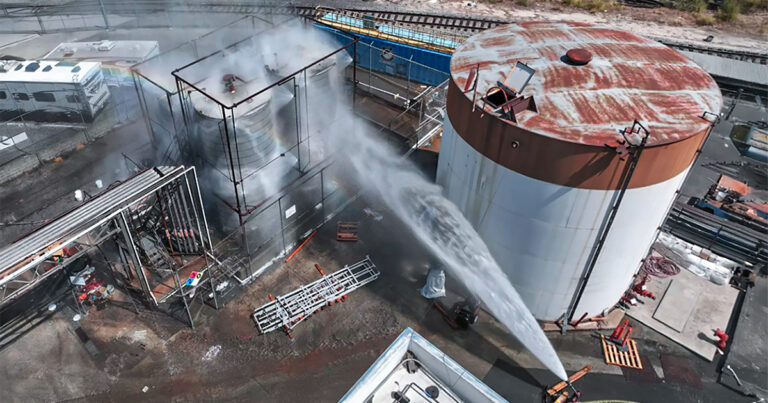
 A 34,000-gallon tank of methyl methacrylate (MMA) at the GKN Aerospace facility in Garden Grove, CA continues to overheat and vent vapors, with 6,000–7,000 gallons at immediate risk of catastrophic spill or explosion. The incident has forced the evacuation of more than 40,000 residents (some reports cite up to 79,000 impacted), closed schools, shut down roads, and prompted Governor Gavin Newsom to declare a state of emergency.
MMA is a volatile, flammable liquid and respiratory irritant/sensitizer. A large release produces heavy vapors that can travel along the ground, causing widespread eye/throat irritation, dizziness, nausea, and potential asthma-like symptoms. While serious, it is considered a moderate-hazard industrial chemical compared to many others.
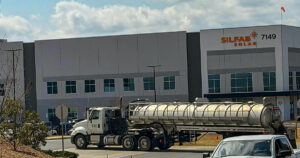 Now consider a significantly more severe incident at Silfab Solar’s heavy industrial factory at 7149 Logistics Lane in Fort Mill, located immediately adjacent to Flint Hill Elementary School and near residential neighborhoods and major roadways.
Silfab’s Hazardous Materials Inventory: Vastly More Dangerous Than GKN’s MMA
Silfab’s official Hazardous Materials Inventory System (HMIS) report, DES Air Permit, and Industrial Wastewater Treatment Plans all detail massive quantities of chemicals that far exceed MMA in acute toxicity, corrosivity, reactivity, and potential for chain-reaction disasters. The Wastewater Treatment/Chemical storage area is classified as a High-Hazard Group H-3/H-4 occupancy because quantities vastly exceed Maximum Allowable Quantities (MAQs) under the South Carolina Fire Code.
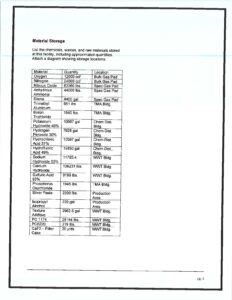
Key chemicals and quantities include:
- Hydrofluoric Acid: 17,435 gallons in bulk storage
- Anhydrous Ammonia: 1,020,408 cubic feet in exterior bulk storage
- Silane Gas (SiH₄): 289,210 cubic feet in tube trailers (pyrophoric)
- Liquid Oxygen (LOX): 13,000 gallons (powerful oxidizer)
- Nitrous Oxide (N₂O): 245,614 cubic feet (oxidizing gas)
- Trimethylaluminum (TMA): 100 gallons in a dedicated 4-hour fire-rated H-3 building (extremely pyrophoric and water-reactive)
- Phosphorus Oxychloride (POCl₃): 59.4 gallons (plus process quantities; violently water-reactive, releases HCl gas)
- Boron Trichloride (BCl₃): 1,348 cubic feet (corrosive/toxic gas; reacts with moisture to form HCl fumes)
- Sulfuric Acid: 1,500 gallons
- Additional bulk corrosives: Hydrochloric Acid and Potassium Hydroxide at 11,095 gallons each, plus Hydrogen Peroxide at 7,978 gallons.
Real-World Precedents: These Exact Chemicals Have Already Caused Mass Casualties
History shows the deadly consequences of these chemicals — especially when stored or handled in large quantities:
- Silane Gas: Silane is notoriously pyrophoric and has caused a long history of fatal explosions in semiconductor and solar/PV manufacturing. A 2023 overview of silane incidents documents at least 12 fatalities across major events, including two separate backflow incidents (1988 in the US and 1991 at Osaka University in Japan) that each killed 5 people when nitrous oxide contaminated silane cylinders, creating explosive mixtures. Gas cabinet explosions alone have caused 7 fatalities worldwide between 1976 and 2012, often due to human error during cylinder changes. In solar plants specifically, silane leaks have led to fires, explosions, and worker deaths, including a 2007 incident in India that decapitated a worker and a 2005 Taiwan factory explosion that killed one worker and shut down production for months.
- Anhydrous Ammonia: In September 2023, a tanker truck carrying anhydrous ammonia overturned in Teutopolis, Illinois, releasing approximately 15,000 liters (~4,000 gallons). The resulting toxic vapor cloud killed five people (including a father and his two young children) and injured seven others. Hundreds of residents within a 1.6 km radius were evacuated. This was from a single tanker — far smaller than Silfab’s stored inventory of over one million cubic feet.
- Hydrofluoric Acid: A 2015 HF leak in China injured 253 workers, demonstrating the chemical’s ability to cause rapid systemic poisoning, severe burns, and cardiac effects even from limited exposure.
- Sulfuric Acid: In September 2025 at Hexin Chemical Industry in Henan Province, China, a sulfuric acid leak reacted in a septic tank to produce hydrogen sulfide gas, killing five people in a factory restroom.
These incidents involved the exact same classes of chemicals Silfab stores and uses in much larger volumes.
Why Silfab’s Placement in a Light Industrial Zone Is So Alarming
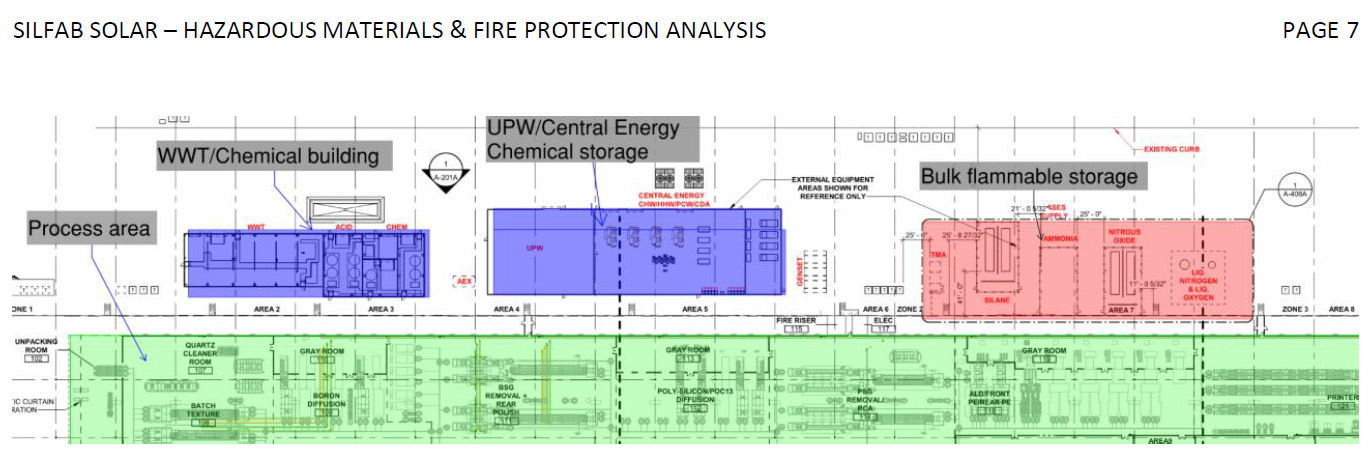
 Silfab’s operation is not light industrial assembly — it is a full-scale chemical manufacturing plant using High-Hazard Group H-3/H-4 processes and quantities. Placing it in a light industrial zone next to an elementary school and residential areas creates unacceptable risk. Real-world accidents prove that leaks, backflows, rollovers, or unintended reactions with these chemicals can kill or injure dozens to hundreds of people in minutes through toxic plumes, fires, explosions, and systemic poisoning.
A failure at Silfab could trigger cascading reactions: TMA or silane igniting spontaneously and being supercharged by LOX or nitrous oxide; POCl₃ or boron trichloride releasing HCl gas clouds; HF causing delayed cardiac arrests; ammonia forming ground-hugging lethal plumes; and sulfuric acid generating exothermic steam explosions and acidic mists.
Community impacts could be devastating:
- Children at Flint Hill Elementary facing immediate corrosive burns, respiratory failure, or cardiac effects from HF.
- Nearby homes and residents suffering toxic contamination and long-term health damage.
- Drivers on Logistics Lane and I-77 trapped in drifting plumes, leading to mass casualties and accidents.
 Previous smaller releases at Silfab (KOH spill and HF leak in March 2026) already preceded school closures and 911 surges, including vomiting blood, trouble breathing, and seizures. A major event would dwarf the current Garden Grove crisis.
The Garden Grove incident shows how seriously even moderate chemicals like MMA are treated. Silfab’s far more hazardous mix, operating in improper zoning near sensitive populations, represents an unacceptable public safety risk that demands immediate action.

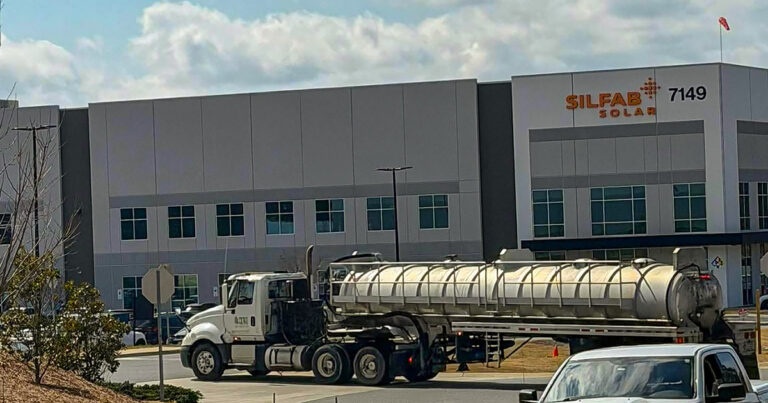
 New analysis of federal Pipeline and Hazardous Materials Safety Administration (PHMSA) data shows America’s hazardous materials transport incidents have skyrocketed — up 84.8% since 2010 — with highway trucking responsible for the overwhelming majority of the chaos.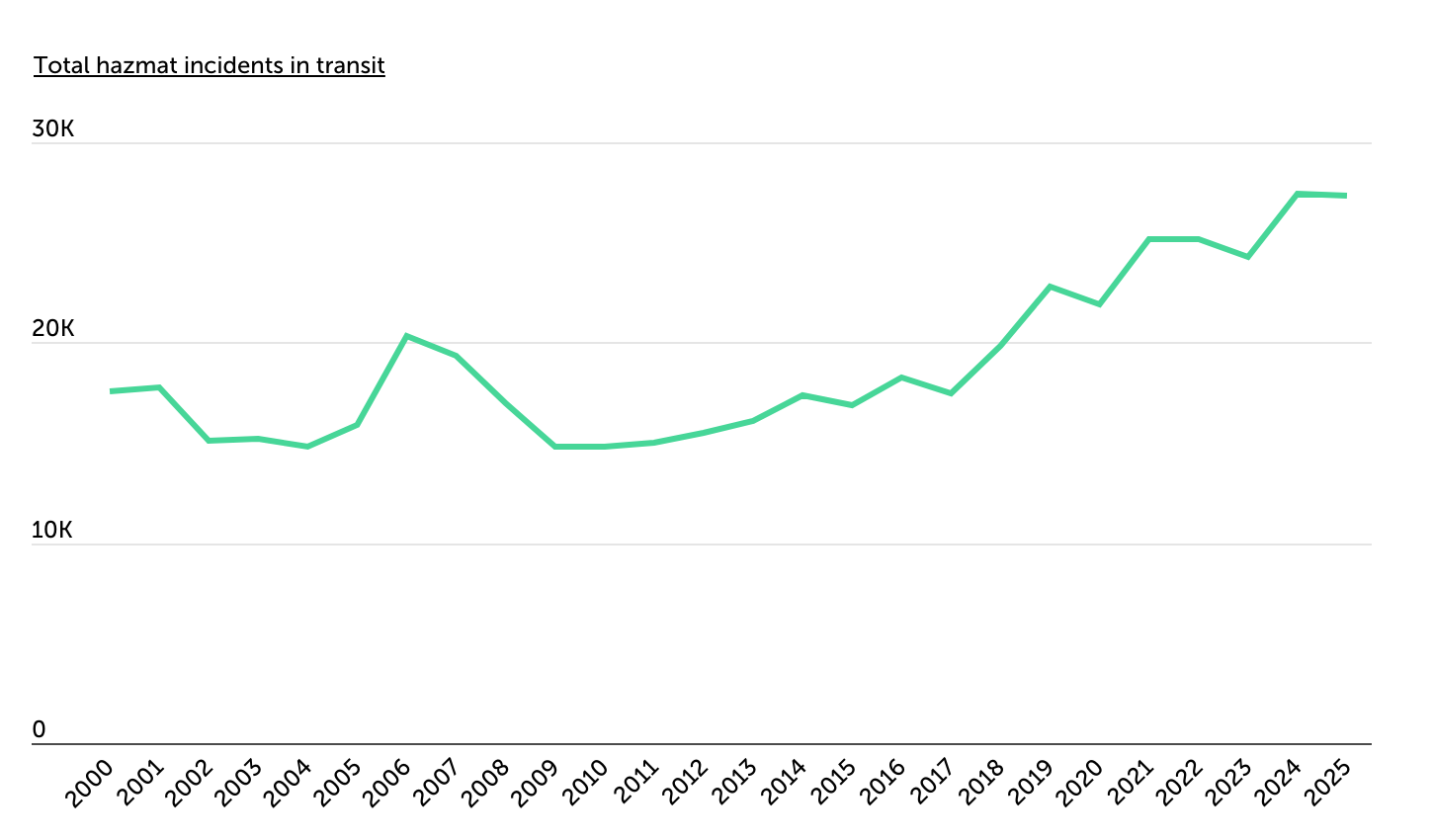
 We’ve already seen what happens when things go wrong at Silfab. In March 2026, a potassium hydroxide spill triggered a hazmat response that required
 A U.S. military infrared video showing a
 Two-time NASCAR Cup Series champion
 Across the Charlotte area, healthcare demand is growing almost as fast as the housing market. New neighborhoods continue to expand into the suburbs surrounding the city, but medical infrastructure often struggles to keep up. In some parts of the region, residents already drive across multiple towns just to find same-week specialist appointments or avoid packed urgent care waiting rooms. That demand is creating major opportunities for new medical centers and outpatient clinics. However, a project can look promising on paper but still run into problems once patients, staff, and daily operations come into play. Before construction begins, developers and medical providers need to think beyond the building itself.
 Divorce can create serious financial and emotional challenges for business owners, especially in smaller coastal communities where personal and professional relationships are closely connected. Many individuals searching for a
 Every unanswered call means lost business. The phone remains a primary point of contact for small businesses, medical offices, legal firms, and service providers. Round-the-clock front desk staffing is costly, and no receptionist can handle three simultaneous calls. This reality has pushed thousands of businesses toward voice-powered artificial intelligence that picks up the phone, understands the caller’s intent, and responds with natural-sounding conversation. The shift is not about replacing people but rather about supporting them, since the goal is to fill in the gaps that human staff cannot reasonably cover on their own. It is about filling the gaps that human teams simply cannot cover by themselves. Below, you will find a thorough look at how AI phone services work, what real benefits they offer, and how to adopt one without disrupting your current setup.
 Ask ten home cooks what their biggest grilling frustration is, and at least eight will say dry chicken breast. You know the scene: beautiful sear marks on the outside, but inside it’s pale, crumbly, and about as juicy as a cardboard box. The good news? That doesn’t have to be your dinner.

 Just two weeks after the