

Why Premium E-Bike Brands Are Choosing France for Assembly and European Production

0

The European electric-bike industry is entering a different stage of development. After years in which much of the conversation focused on rapid sales growth, brands are now paying closer attention to product quality, delivery reliability, after-sales support and the cost of keeping a bicycle on the road for many years.

France offers an interesting example of this shift. Established French manufacturers have long maintained local design and assembly operations, while newer international companies are beginning to locate parts of their European production process there. Fiido, for example, has established French assembly operations for selected models as part of its expansion in Europe.

Yet the distinction between manufacturing and assembly matters. A bicycle assembled in France may contain a frame made in Asia, a motor supplied by a German company and a battery system sourced internationally. The value of the French operation lies in the work actually performed there, rather than in an assumption that every component is French.

Understanding why brands make these decisions requires looking at the European market first.

Europe’s E-Bike Market Has Become a Long-Term Mobility Market

Electric bicycles are no longer limited to recreational cycling or riders seeking help on hills. Across Europe, they are used for commuting, shopping, touring, family transport and sport. Their appeal comes from reducing some of the practical barriers that prevent people from cycling regularly.

For a commuter, electric assistance makes distance, headwinds and moderate gradients easier to manage. It can make arriving at work without excessive physical exertion more realistic, while still providing exercise and avoiding many of the costs associated with car ownership. Cargo and longtail models extend the same principle to journeys involving children, groceries or equipment. E-bikes do not replace every car journey, but they can make a wider range of ordinary trips practical without one.

The market is not growing at the same pace in every country, however. The latest complete annual figures available in 2026 show a mixture of mature demand, post-pandemic adjustment and renewed growth.

Country 2025 market evidence What it reveals
Germany Approximately 2 million e-bikes sold, representing more than half of new bicycle sales E-bikes are an established mainstream category
Netherlands Approximately 391,000 e-bikes sold, accounting for 49% of new bicycle sales and 73% of market revenue Electric cycling is deeply integrated into everyday mobility
France 1.836 million bicycles sold overall; VAE sales declined by 16% A more selective market where value and long-term ownership matter
United Kingdom Cycling market value grew by 5%, with e-bike sales volumes increasing by 2% Signs of recovery after several difficult years
Italy 256,000 e-bikes sold, down 7%, within a total bicycle market of 1.303 million units Continued interest in electric cycling despite weaker demand

These figures should not be compared as though they measure identical things. Some describe e-bike unit sales, while others describe the entire bicycle market or its revenue. Their value is in showing how differently European markets are developing.

Germany and the Netherlands demonstrate the scale that electric cycling can reach when it becomes part of ordinary transport. France and Italy show that the industry is also experiencing price pressure and more cautious purchasing. The UK, meanwhile, is showing early signs of recovery. For manufacturers, the challenge is no longer simply to sell more bicycles. It is to build products and support systems that can succeed in markets with different expectations.

Five Brands That Illustrate Different Approaches to the E-Bike Industry

The following five brands were selected to illustrate distinct positions within the European and international market. Four have a strong European market orientation, including Fiido as a newer international entrant, while Specialized represents a major US-founded cycling brand. They are not all French manufacturers, nor do they all operate factories in France. That difference is central to understanding the choices available to the industry.

Moustache — French Design and a Locally Integrated Assembly Model

Moustache is one of the clearest examples of how a French e-bike brand can build its identity around a local industrial base without claiming that every component is manufactured domestically. Founded in 2011, the company designs, tests and assembles its bicycles in the Vosges region.

The Lundi 27 is a representative urban model. Its low-step frame, distinctive handlebar and comfortable riding position reflect the needs of commuters who make frequent stops and want a bicycle that is easy to use in ordinary clothing. The design is not focused on maximum speed; it is focused on making everyday cycling practical.

The Samedi 27 Xroad demonstrates the brand’s trekking philosophy. It combines road efficiency with equipment and geometry suited to longer rides and easier unpaved routes. This makes it relevant to riders who use one bicycle for weekday travel and weekend excursions.

Moustache’s manufacturing model is particularly instructive. The company explains that its frames are produced by a long-standing partner in Taiwan, while components such as Bosch motors and other specialist parts arrive from international suppliers. Final assembly takes place in France, with individual assemblers responsible for completing bicycles. Moustache has also developed additional local production activities, including wheel manufacturing.

This arrangement shows why European assembly and global sourcing are not contradictory. A manufacturer can retain the benefits of specialist suppliers while keeping product completion, quality oversight and technical expertise close to its main market.

O2feel — French Assembly Focused on Premium and Practical Mobility

O2feel, founded in France in 2009, has developed a range that includes city bicycles, trekking models and cargo solutions. Its products are generally designed around comfort, practical equipment and regular use rather than a single performance category.

The iSwan 6.1 Explorer is an example of this approach. Its Shimano STEPS motor, low-step frame, suspension fork, mudguards and luggage equipment form a package intended for commuting and mixed-surface leisure rides. The value comes from the combination of components, not simply from the motor’s output.

The Equo Cargo represents O2feel’s move toward transport-oriented electric mobility. Cargo bicycles require more than a strong motor: frame stability, braking, load distribution and compatible accessories must work together to support the intended use.

O2feel has announced French assembly operations at La Roche-sur-Yon for selected premium models, including the Equo Cargo, with further compact and folding models included in its plans. At the same time, the company has historically relied primarily on assembly in Portugal and Taiwan. Its French operation therefore represents an expansion of local capabilities, not a claim that the entire catalogue is produced in France.

The company has described local assembly as a way to improve technical oversight, responsiveness and product development. For a brand that sells through European retailers, bringing selected production activities closer to its customers can also help connect factory decisions with feedback from dealers and service teams.

Riese & Müller — A German Premium Manufacturer with a European Production Strategy

Riese & Müller provides a useful contrast because it is a major European premium brand whose main production base is in Germany, rather than France. Its campus in Mühltal brings together manufacturing, logistics and product-related activities, demonstrating that European localization does not require every company to choose the same country.

The Charger series represents the brand’s premium trekking and everyday-mobility approach. Different configurations offer choices of transmission, motor system and equipment, allowing riders to select a bicycle for regular commuting, long-distance travel or more demanding use.

The Multicharger family illustrates the company’s strength in cargo and family mobility. Its longtail format is designed to carry additional loads and, with the appropriate approved accessories, accommodate certain passenger-carrying uses. The engineering challenge is not merely increasing payload; it involves frame behaviour, braking, stability and the way the bicycle handles when loaded.

Riese & Müller has continued to develop its cargo range, presenting updates for the 2026 model year in June 2025. The company also announced in April 2026 that it would concentrate more strongly on its European core markets and withdraw from the United States by the end of July.

This is an important industrial lesson. Localizing production or strengthening regional operations is not always about entering a new market. It can also be about concentrating resources where a company has the strongest dealer network, customer base and long-term business opportunity. France is one attractive European location, but it is part of a broader regional manufacturing and service ecosystem.

Specialized — A US-Founded Brand Showing the Value of Global Engineering

Specialized represents the American side of the comparison. Founded in California, it is internationally recognized for cycling technology and performance-oriented bicycles, with a strong presence in both sport and urban electric categories.

The Turbo Vado demonstrates how the brand applies its engineering approach to everyday mobility. Depending on the configuration, it combines integrated assistance, practical urban equipment and transmission options designed to reduce routine maintenance. Its appeal lies in the way the motor, frame, controls and riding position operate as a complete system.

The Turbo Levo 4 represents the performance side of the business. Its advanced motor, battery and suspension systems are designed for technical off-road riding, where control, traction and power delivery matter as much as peak output. These features are valuable for a mountain biker, but unnecessary for someone whose main journey is a flat urban commute.

Specialized’s relevance to this discussion is that it demonstrates another successful model: global product development, international sourcing and market-specific distribution. Its presence in Europe does not establish that it operates a French bicycle factory. Instead, it shows that brands can serve European riders through different combinations of manufacturing locations, technical partners and local service networks.

The question for any international manufacturer is which activities should remain globally centralized and which should be brought closer to the customer.

Fiido — A Rising International Brand Expanding Across E-Bike Categories

Fiido is a newer international brand compared with the traditional European manufacturers above. Founded in Shenzhen, it has built its reputation through distinctive designs, direct-to-consumer sales and products aimed at specific mobility needs. Its development illustrates how a brand can move beyond a single niche to cover lightweight commuting, folding bicycles, touring and cargo transport.

The Fiido Air is a strong example of its design-led approach. With an announced weight of 13.75 kg, a carbon-fibre structure, torque-sensing assistance and a Gates belt drive, it is designed for riders who want electric assistance without the bulk of a conventional heavy e-bike. The model received the Red Dot Design Award in 2024, providing independent recognition of its design.

Its lightweight construction is particularly useful when the bicycle must be carried upstairs, stored in a small apartment or moved through confined spaces. The trade-off is that its compact battery and single-speed transmission are better suited to urban and moderate routes than heavily loaded touring in steep terrain.

The Fiido Nomads Pro demonstrates the breadth of the company’s newer range. It uses a 250W mid-drive motor rated at 100 Nm, a torque sensor, a nine-speed Shimano CUES drivetrain and a removable 417.6Wh battery. Its modular battery system allows two additional batteries to be fitted for longer-distance use. Fiido quotes up to 74.85 km with one battery and 224.55 km with three batteries under its test conditions. The larger figure must not be mistaken for the standard bicycle’s range.

These models address very different problems: the Air reduces the physical inconvenience of handling an e-bike, while the Nomads Pro focuses on touring capability and additional energy reserves. Together with the company’s folding and cargo categories, they show why Fiido is increasingly discussed as a broader mobility brand rather than only a compact e-bike specialist.

Fiido’s French assembly operations are also part of that development. The company states that selected models are assembled in France, with the Nomads Pro among those listed by its French operation. Its published description includes local assembly, final inspection and road testing. This does not mean that every Fiido bicycle is assembled there, nor that its frames, motors and batteries are all French-made. It is a specific localization step intended to bring parts of the production and quality-control process closer to European customers.

Why France Is Attractive for E-Bike Assembly and Production

The examples above reveal that France’s appeal is not based on one universal manufacturing model. It offers a combination of market access, industrial expertise, established cycling culture and proximity to European customers. The advantages become clearer when considered through the practical problems manufacturers need to solve.

1. Local assembly can shorten the final delivery chain

A bicycle is not finished merely because its components have been produced. It must be assembled, adjusted, inspected and prepared for delivery. These final stages can be carried out near the destination market rather than requiring every completed bicycle to travel through the same long-distance logistics chain.

For a company serving European customers, this can reduce some of the uncertainty associated with shipping fully assembled products across continents. It may also allow final configuration and inspection to take place closer to the market where the bicycle will be sold.

The advantage is not automatic. The result depends on where components originate, how they are transported, the scale of the assembly operation and the efficiency of the distribution network. A local facility should therefore be evaluated by what it actually changes in the supply chain.

2. Quality control becomes closer to real customer use

Electric bicycles combine mechanical components with electrical systems, sensors, batteries and software. A small assembly or adjustment issue can affect the entire riding experience. Final inspection is therefore an important part of delivering a consistent product.

A local operation can make it easier to connect production teams with market-specific feedback. If dealers or customers repeatedly report a problem involving an accessory, adjustment or component, the information can potentially reach assembly and quality-control teams more directly.

Fiido has identified localized final inspection and road testing as part of its French operations. O2feel and Moustache similarly demonstrate how local assembly can sit alongside design, testing and product-development expertise. These processes do not guarantee that every bicycle will be defect-free, but they create opportunities for closer oversight and faster feedback.

3. France offers access to a substantial European cycling market

France is an important bicycle market in its own right, with established cycling traditions, urban mobility initiatives and a wide range of recreational routes. Its geographic position also makes it a practical location for serving neighbouring European markets.

For manufacturers, proximity matters because European demand is not uniform. A bicycle intended for Dutch urban commuting may face different expectations from one sold for Alpine touring, British city travel or French family transport. Local teams can help brands understand these differences and adapt product configurations, accessories and service arrangements accordingly.

The broader European market also gives manufacturers a reason to invest beyond one country. France can function as part of a regional production and distribution strategy rather than as a facility serving French customers alone.

4. Established skills and suppliers support industrial development

France has a history of bicycle manufacturing and assembly, as well as companies working in engineering, materials, mechanical production and mobility technology. Brands such as Moustache and O2feel demonstrate that local expertise can be developed around design, testing, assembly and selected component production.

However, modern e-bike manufacturing remains international. Motors, battery cells, electronic controls, frames and transmissions often come from specialist suppliers in different countries. A French assembly operation can create local employment and technical capability while continuing to depend on these international supply chains.

The meaningful question is therefore not whether a bicycle is entirely domestic, but which activities are performed locally and how much technical and economic value those activities create.

5. European market requirements favour stronger local coordination

European e-bikes must meet applicable product-safety and regulatory requirements. For a conventional electrically assisted bicycle, this generally includes pedal-dependent assistance, a maximum continuous rated motor power of 250W and assistance that cuts off at 25 km/h. Battery, electrical and other product requirements must also be considered.

A French assembly facility does not automatically make a bicycle compliant, and compliance is not determined simply by the country of assembly. Nevertheless, local engineering, inspection and documentation teams can help a manufacturer coordinate testing, product configurations and market requirements more effectively.

This becomes especially relevant for brands selling across several European countries, where the underlying EU framework is accompanied by national differences in road use, equipment expectations and consumer requirements.

6. Sustainability depends on the complete supply chain

Producing or assembling closer to customers can reduce certain transport distances and support local employment. It may also make repairs, refurbishment or spare-parts coordination easier when those activities are integrated into the local operation.

But it would be misleading to claim that French assembly automatically makes an e-bike carbon-neutral or more sustainable than every imported alternative. Battery production, component sourcing, energy use, transport methods and the bicycle’s useful life all contribute to its environmental impact.

The strongest sustainability argument is therefore based on measurable improvements: fewer unnecessary transport stages, durable products, repairability, responsible component sourcing and a longer service life. Local assembly can contribute to these goals, but it is one part of the picture.

Assembled in France Is Not the Same as Made in France

The terminology is particularly important for consumers and publishers. A French brand, a bicycle designed in France, a bicycle assembled in France and a bicycle legally entitled to a French-origin claim are not necessarily the same thing.

French customs rules generally determine origin according to where a product is wholly obtained or undergoes its last substantial transformation. Simple assembly alone does not automatically confer French origin. Whether a specific bicycle qualifies for a “Made in France” claim depends on its actual production process and the applicable rules.

Term What it establishes
French brand The company has a French identity or origin
Designed in France Design or development work takes place in France
Assembled in France Assembly operations take place in France
Made in France A claim that must satisfy applicable origin rules
100% French-made A much stronger claim requiring evidence across the relevant production process

For Fiido, the accurate description is that selected e-bikes are assembled in France. This is a meaningful industrial and commercial fact without needing to exaggerate it into a claim that all Fiido products or components are French-made.

What Does Local Assembly Mean for the Buyer?

The location of a factory should never replace an assessment of the bicycle itself. A customer still needs to consider whether the frame fits, whether the motor and battery suit the intended journeys, and whether the bicycle can be maintained over several years.

Local assembly may offer advantages through closer quality oversight, regional logistics and more direct communication between production and market teams. However, buyers should also check whether spare parts are available locally, how warranty claims are handled and which workshops can service the electrical system. A bicycle assembled nearby is not automatically supported by a nearby repair network.

For consumers comparing E Bikes, the most useful approach is to examine the complete ownership experience. A lightweight city model, a fully equipped trekking bicycle and a cargo bike may all be excellent products, but they solve different problems. The right choice depends on the journeys, storage conditions, maintenance requirements and transport needs of the rider.

The Future of European E-Bike Manufacturing

The European e-bike industry is unlikely to move toward a single production model. Established manufacturers may continue to combine European assembly with international component sourcing, while newer brands may establish regional facilities to support growing customer bases. Others will retain production in different countries while strengthening their European dealer and service networks.

France’s opportunity lies in the activities that can create genuine value locally: assembly, engineering, testing, specialized component production, quality control and the development of skills. The examples of Moustache, O2feel and Fiido show different ways these capabilities can be integrated into a brand’s business model, while Riese & Müller and Specialized demonstrate that successful manufacturers can follow other international strategies.

The most important shift is not the label on the frame. It is the growing recognition that an e-bike is a long-term mobility product. As European customers become more demanding, manufacturers must compete not only on motor power, battery capacity or purchase price, but also on delivery consistency, repairability, product support and the ability to respond to changing needs.

French assembly can be one part of that strategy. Its value is strongest when it is described accurately and supported by the work actually carried out there.


Mini E-Bikes: When a Smaller Electric Bike Makes More Sense

0

Electric bikes have become larger, more powerful and more capable. Long-range batteries, fat tires, suspension forks and cargo racks all have clear advantages when the ride demands them.

But many everyday trips are much simpler.

A ride to a coffee shop, a few miles across town, a campground loop or a short commute does not necessarily require a 70-pound bike with enough battery for an all-day tour. For riders whose daily journeys are short and storage space is limited, a smaller electric bike can sometimes be the more practical tool.

That is the role of the mini e-bike. Rather than trying to compete with touring or cargo models on range and carrying capacity, it prioritizes compact dimensions, simple handling and easier storage.

Small Bikes Solve a Different Problem

A compact electric bike should not be viewed simply as a reduced version of a conventional e-bike.

Its design starts with a different question: how much bicycle does someone actually need for routine transportation?

For many riders, the most common journeys are relatively short. Grocery stores, restaurants, offices, parks and downtown destinations may all sit within a few miles of home. In those circumstances, carrying a very large battery and a heavy-duty frame every day may offer little practical benefit.

A mini e bike instead places more emphasis on keeping the overall package manageable.

That can matter when a bike needs to fit into an apartment, office, garage corner, car or RV. Compact dimensions can also make parking and maneuvering easier in crowded spaces.

Portability Is About More Than Weight

People often assume that a portable bike simply needs to be light. Weight matters, but dimensions are equally important.

A relatively light full-size bicycle can still be awkward to place in a small vehicle because of its wheelbase and handlebar width. A compact bike may be easier to store even when the difference on the scale is not dramatic.

The Fiido D3 Pro is one example of this approach. Fiido currently lists the bike at about 38.1 pounds, with a foldable stem rather than a fully folding main frame. Its smaller format therefore reduces storage space without turning it into a conventional folding bicycle.

That distinction is worth understanding. “Compact,” “mini” and “folding” describe related ideas, but they are not interchangeable.

Someone who needs to carry a bicycle onto public transportation several times a day may prefer a model that folds completely. Someone who mainly wants to fit a bike into a car trunk, office or small storage area may find a compact frame with a folding stem sufficient.

Shorter Trips Change the Battery Equation

Battery size is another area where bigger is not always automatically better.

A large battery can extend range, but it also adds weight, cost and volume. For someone regularly riding 40 or 50 miles between charges, that tradeoff may be worthwhile.

For someone traveling five miles to work and five miles home, the calculation changes.

The D3 Pro, for example, is currently rated by Fiido for up to 20.5 miles of pedal-assist range under its test conditions. Actual range will vary with rider weight, terrain, weather, tire pressure and assistance level, but the specification illustrates the basic idea: a compact bike can use a smaller energy reserve because it is designed around shorter trips.

Instead of asking for the largest possible battery, riders can ask a more useful question: how far do I normally ride before I have an opportunity to recharge?

Where Small Wheels Help — and Where They Do Not

Many mini electric bikes use smaller wheels than traditional city bikes.

One benefit is packaging. Smaller wheels help shorten the overall bicycle and make it easier to fit into limited spaces. They can also make the bike feel easy to maneuver during slow-speed urban riding.

There is a tradeoff, however.

A large wheel generally rolls over potholes, rough pavement and other obstacles more gradually. Smaller wheels can react more sharply to the same surface irregularities. Tire width, pressure and frame geometry can reduce the difference, but they cannot make wheel size irrelevant.

That means a mini e-bike makes the most sense when its environment matches its design.

Smooth streets, bike paths and short neighborhood trips are very different from long gravel routes or badly broken roads.

A Useful Option for RV and Car-Based Travel

Compact e-bikes also make sense outside traditional commuting.

Travelers using an RV, camper or car frequently face a simple limitation: storage space.

Full-size electric bikes can require external racks, and heavier models may push the limits of some rack systems. A smaller bike can be easier to organize alongside luggage and other travel equipment.

Once at a destination, the bike can then handle the trips that feel too far to walk but too short to justify moving the vehicle.

That might mean riding from a campground to a nearby store, exploring a downtown district or making a quick trip for breakfast.

In this setting, the bike does not need to be a long-distance touring machine. Its value comes from being available when a car feels unnecessarily cumbersome.

When a Full-Size E-Bike Is Still the Better Choice

Compactness always involves tradeoffs.

Riders planning long recreational trips may prefer a conventional ebike with larger wheels, a higher-capacity battery and more room for racks or panniers.

The same applies to anyone carrying significant cargo or spending several hours at a time in the saddle. A longer wheelbase, larger tires, suspension and more substantial contact points can become more valuable as distances increase.

A mini model may also be less suitable when rough surfaces form a regular part of the route.

This is why choosing between a mini and full-size electric bike should begin with actual riding patterns rather than specifications.

The Best Bike May Be the One You Can Use More Often

It is easy to compare electric bikes by motor power, battery capacity or maximum range. Those numbers matter, but they do not describe every part of ownership.

A bike that is difficult to store may be used less often. A heavy model that requires a special rack may stay home on trips. A large battery may add weight every day even if most rides use only a small fraction of its capacity.

For short trips, compact storage and everyday errands, a mini e-bike can remove some of those barriers.

It will not replace a touring bike, cargo bike or mountain e-bike. It is not supposed to.

Its advantage is more specific: offering enough electric assistance for ordinary journeys while keeping the bicycle itself relatively simple and easy to live with.

For riders whose real-world trips are measured in neighborhoods rather than counties, that smaller approach may be exactly the right size.

Surveillance Video Captures Man Filming Under Teen Girls’ Skirts at Charlotte Target

0

CMPD has just arrested a 31-year-old man for using his cellphone to film underneath teenage girls’ skirts at a south Charlotte Target.

Court records say store security captured the incidents on surveillance video.

Target Loss Prevention alerted police after noticing Adam Tyler Shrader following girls around the Blakeney store on Rea Road. Officers reviewed surveillance footage after arriving.

According to an affidavit, Shrader approached a 17-year-old from behind and crouched near her. He allegedly extended his phone beneath her skirt without her knowledge.

Investigators also say Shrader followed three 15-year-old girls into the clothing section. Surveillance reportedly showed him crouching behind a clothing rack and extending his phone toward them.

Police detained Shrader after he followed the teenagers toward the checkout area, according to court records.

Carowinds’ Fury 325 Officially Named Best Steel Roller Coaster in the World

0

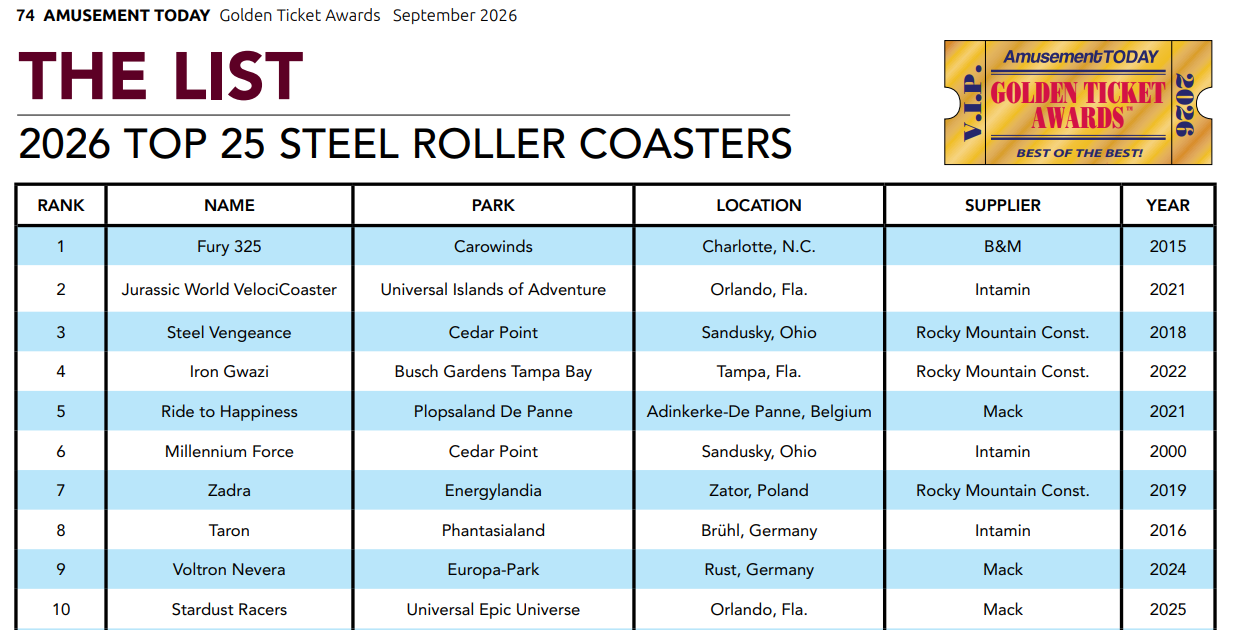
Carowinds’ Fury 325 has just been ranked the Best Steel Roller Coaster in the world by Amusement Today. The international awards are determined through voting by experienced amusement-industry participants.

Fury beat some of the world’s most celebrated coasters, including; Jurassic World VelociCoaster at Universal Islands of Adventure in Orlando (#2), Steel Vengeance at Cedar Point (#3), and the new Iron Gwazi at Busch Gardens Tampa (#4).

The victory continues a remarkable run for Fury, which opened at Carowinds in 2015. It first won the Golden Ticket for Best Steel Roller Coaster the following year and every year since.

“Ten Golden Ticket Awards and a decade as the world’s best steel roller coaster is an amazing milestone for Fury 325, Carowinds and the Carolinas,” said Carowinds Park President Bridgette Bywater. “Records can be broken, and titles often change hands, but enduring greatness is the ultimate testament of a world-class ride. Since it opened in 2015, guests from across the globe have made the journey to Carowinds to feel the speed, scale and exhilaration that only Fury 325 can deliver. Its reign atop the thrill ride industry reflects the passion of our team, the loyalty of our fans and the enduring power of an attraction that still leaves riders in awe with each lap across the state line. We’ll forever be grateful for the loyalty and love from our guests and fans that have helped turn Fury 325 into a true industry icon.”

Fury 325, which debuted in 2015, towers 325 feet high and reaches speeds of 95 miles per hour. Known for its steep drops, high-speed turns, and smooth ride experience, it continues to set the standard for ‘giga-coaster’ design.

Its roughly 1.25-mile track crosses the North Carolina-South Carolina state line, making the attraction uniquely connected to both states.

The latest award also follows a challenging summer for the legendary coaster.

Carowinds temporarily closed Fury in July after discovering an issue with the ride’s foundation. Crews completed repairs, and the coaster reopened about a week later.

CMS Leadership Fight Erupts as 3 Board Members Move to Remove Chair Stephanie Sneed

0

A new power struggle is unfolding inside Charlotte-Mecklenburg Schools after months of investigations and leadership changes.

Board members Cynthia Stone, Lenora Shipp and Dr. Monty Witherspoon are seeking to remove Stephanie Sneed as board chair. Stone requested the issue be placed on the board’s Sept. 22 agenda.

The three board members said they no longer feel comfortable with the board’s current leadership. They cited information shared with members during recent months but did not publicly explain those concerns.

However, Sneed also has support on the nine-member board. WSOC reported that five members support Sneed, potentially leaving opponents without enough votes to remove her. Board member Liz Monterrey Duvall questioned why leadership should change shortly before the board’s regular December elections.

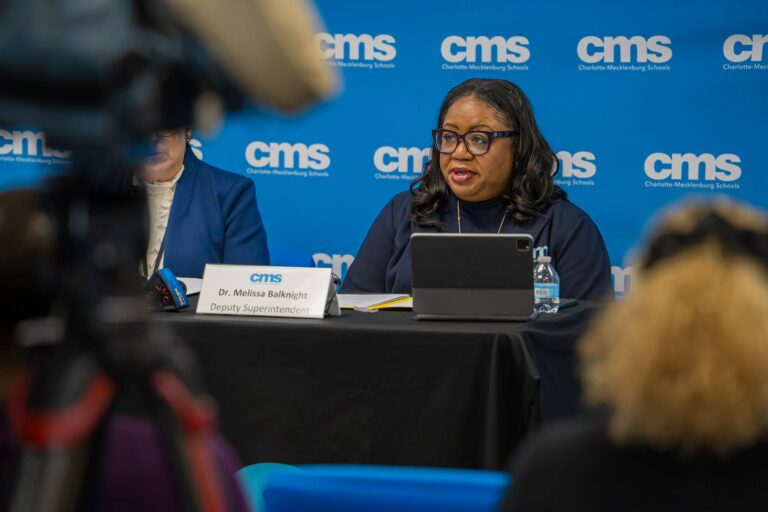
The dispute comes as CMS faces another major leadership shakeup. Deputy Superintendent Melissa Balknight and Chief Financial Officer Kelly Kluttz plan to retire. Chief Human Resources Officer Angela Wood has also resigned.

Meanwhile, Superintendent Dr. Crystal Hill recently returned after spending nearly two months on paid leave. The board launched an investigation into administrative and operational issues before voting to reinstate her.

That investigation cost roughly $379,000, according to the Charlotte Observer. Board members have pledged to release its findings by the end of September.

Hill has said her attorneys told her investigators found no wrongdoing. However, the board has not yet released the report publicly.

The Sept. 22 discussion now puts the focus on Sneed, who remains listed by CMS as board chair.

If the motion moves forward, the meeting could reveal whether recent turmoil has created a deeper split among the nine members governing Charlotte-Mecklenburg Schools.

York County Council Moving To Rezone Fort Mill Property To Industrial Despite Large Opposition

0

A major rezoning fight is unfolding in Fort Mill as York County considers bringing more industrial zoning closer to residential neighborhoods.

The proposal would rezone about 24 acres at U.S. 21 and Flint Hill Road from General Commercial to Light Industrial. Walmart owns the vacant property and plans to sell it if the rezoning receives final approval.

An Atlanta-based developer proposes two warehouse and distribution buildings totaling roughly 275,000 square feet. Plans include more than 100 semi-truck loading docks, with commercial outparcels remaining along U.S. 21.

However, York County’s own planning staff recommended denying the industrial rezoning. The Planning Commission also voted 4-2 to recommend denial. County plans envision neighborhood residential and complementary development in this area, rather than extending industrial uses toward nearby homes.

Silfab Raises Bigger Questions About Light Industrial Zoning

Fort Mill residents have already seen how disputes over Light Industrial zoning can become much larger than an original development proposal.

York County officials mistakenly gave unlawful permits to Silfab Solar to build a chemical manufacturing operation on Light Industrial property near Flint Hill schools and residential areas. The county continued recognizing Silfab’s approvals even after the BZA ruled their intended use was not permitted under ‘light industrial’ classification.

This past July, Circuit Judge William McKinnon upheld the BZA’s decision in all respects. His ruling affirmed that the manufacturing use at issue was not permitted under the Light Industrial category relied upon by county officials.

The County Council has thus far ignored the ruling and has refused to revoke Silfab’s unlawful permits. York County maintains that earlier approvals remain valid and says the BZA ruling applies prospectively.

That history makes the Walmart rezoning particularly consequential.

If Council changes this property to Light Industrial, that zoning remains with the land even if the proposed warehouse project changes or disappears. Future owners could seek other industrial uses that could endanger the health and safety of nearby residents.

The rezoning still needs two additional County Council approvals. Council could vote again Sept. 21, with a final decision possible Oct. 5.

Panthers Make NFL History Despite Wild 59-37 Loss to Bears in Charlotte

0

The Carolina Panthers just scored 37 points in their season opener — and somehow still lost by 22. Carolina’s offensive explosion became the bright spot of a wild 59-37 loss to Chicago Sunday at Bank of America Stadium – the highest scoring season opener in NFL history.

The teams combined for an incredible 96 points and 1,030 yards. Carolina produced 478 yards while averaging 7.7 yards per play.

Bryce Young delivered one of the day’s biggest positives. He threw for 361 yards and three touchdowns, while completing 23 of 37 passes.

Jalen Coker also broke out with eight catches for 138 yards and two touchdowns. Carolina battled back from a 21-7 deficit and eventually tied Chicago at 31-31.

However, the Panthers couldn’t stop Chicago’s offense.

Caleb Williams threw for 269 yards and two touchdowns. He added 65 rushing yards and two more scores. D’Andre Swift rushed for 124 yards and three touchdowns.

Chicago finished with 552 yards and scored 28 points after Carolina tied the game. The Panthers also committed three turnovers compared with Chicago’s one.

The loss leaves Carolina with a clear contrast entering Week 2. The offense showed considerably more explosiveness, but the defense surrendered 59 points at home.

Betting Big on AI: Duke Energy’s $103 Billion Plan Signals Rising Debt and Rapid Growth

0

Charlotte-based Duke Energy just unveiled the largest spending plan in company history — a staggering $103 billion through 2030 — as artificial intelligence and data centers drive what executives describe as unprecedented electricity demand, according to their latest earnings release. Even more striking, the utility has already locked in 4.5 gigawatts of new data center load, with another 9 gigawatts waiting in the pipeline.

The record-breaking capital plan represents a 13.7% increase — or $16 billion more — than Duke’s previous five-year outlook. Company leaders said the surge in demand, particularly from AI-powered data centers across the Carolinas and Southeast, is forcing utilities to scale faster than ever before.

Duke reported fourth-quarter revenue of $4.9 billion, up 7% year over year. Executives told investors that energy-hungry data centers are now one of the fastest-growing parts of their customer base.

To meet that demand, Duke plans massive investments in generation, grid upgrades, and transmission infrastructure. However, the expansion also means higher borrowing levels. The company acknowledged it will rely heavily on long-term financing to fund the buildout, while aiming to maintain credit stability and steady earnings growth.

Duke Energy projected adjusted 2026 earnings between $6.55 and $6.80 per share and expects annual earnings growth near 9% through 2030.

The biggest takeaway from the report is clear: AI is reshaping the power industry. Data centers now represent one of the most significant load growth stories in decades, and Duke Energy is positioning itself to become one of the primary power providers fueling that digital expansion across the Carolinas.

Cost Segregation Firms: 4 Options for Real Estate Investors

0

Depreciation is one of the few tax breaks real estate investors get automatically. Cost segregation is what happens when someone actually engineers that break instead of letting it trickle out over decades. A study reclassifies parts of a building, wiring, fixtures, and certain site improvements, into shorter recovery periods, which front-loads deductions into the early years of ownership instead of spreading them over 27.5 or 39 years.

The firms that do this work range from boutique specialists to divisions inside massive advisory groups. Some only touch cost segregation. Others fold it into a much broader menu of tax and consulting services. That distinction matters more than it sounds like it should, because who else the firm serves and what else it’s doing with its time shapes how much attention your building actually gets. Strong internal processes can also help firms streamline operations while keeping client work organized and responsive. 

Here are four firms worth knowing if you’re an investor, CPA, or financial advisor weighing where to send a cost segregation study.

Best for Dedicated Cost Segregation Focus – R.E. Cost Seg

R.E. Cost Seg helps property owners accelerate depreciation, reduce taxes and improve cash flow through a cost segregation study. It’s built as a firm that does this one type of work rather than a general tax practice that offers it as an add-on.

That singular focus tends to show up in the depth of the analysis and how quickly a study gets turned around, since the team isn’t splitting attention across audits, filings, or unrelated advisory work. For an investor comparing quotes, that’s a real difference from a generalist CPA squeezing a study in between other client work.

CPAs and financial advisors who don’t want to run a study in-house can hand off the entire process, the technical engineering side and the direct client communication and stay focused on their own advisory relationship. That matters for firms that want the tax benefit delivered to their clients without adding a new service line themselves. Reviews of the firm’s work are a reasonable starting point if you want to see how that partnership plays out in practice before committing to a study.

Best for Bundled Specialty Tax Credits – CSSI

CSSI sits at the intersection of a few different incentive programs rather than cost segregation alone. Alongside cost segregation for property owners, it also handles R&D tax credits for businesses and 179D deductions for energy-efficient buildings.

That range is useful if a client’s tax picture involves more than just a building. An owner who’s also investing in research or energy upgrades can potentially work with one firm across multiple credit types instead of coordinating separate specialists. Investors whose situation is a straightforward single-property cost segregation study may not need that breadth, but it’s a genuine advantage for anyone juggling several types of incentives at once.

Best for High-Volume Study Output – ETS

ETS is an independent, professionally licensed engineering firm built to help clients around the country reduce income taxes through legal, strategic planning. It performs over 10,000 cost segregation, 179D and R&D tax studies a year, a volume that suggests a firm with established internal processes for moving studies through efficiently.

That kind of scale can be reassuring if you want a firm that’s clearly done this work at high volume. It can also mean less of a boutique, hands-on relationship than a smaller shop offers, since a firm processing that many studies annually is running a more standardized pipeline than a firm dedicated purely to one-on-one engagements.

Best for Global Innovation Funding and Tax Support – Leyton Deutschland

Leyton describes itself as a global market leader in innovation funding. It’s a meaningfully different service than a U.S. Property depreciation study. It suits businesses looking for funding and compliance support tied to Germany and the EU rather than American real estate investors chasing accelerated depreciation. Worth knowing about if your tax questions cross into that market, less relevant if they don’t.

Which One Is Right for You

The right firm depends on what else you need alongside the depreciation study itself. If your tax situation already touches R&D credits or energy incentives, a firm like CSSI that bundles multiple programs saves you from coordinating separate vendors. If you’re already deep into multi-state or international tax planning, a firm structured like McGuire Sponsel or Baker Tilly folds cost segregation into a bigger advisory relationship you may already want. High-volume shops like ETS suit investors who value established process and scale and a figure like Seneca’s average first-year deduction gives you a quick benchmark to sanity-check quotes against.

But if the study itself, its depth, its speed and how much depreciation it actually recovers, is the whole reason you’re calling, a firm built around nothing else has an edge. R.E. Cost Seg’s entire practice is studying buildings and reclassifying their components and for investors or advisors who want a partner that treats the study as the main event rather than one line item on a longer service menu, that focus is hard for a broader firm to match. CPAs who’d rather hand off the technical and client-facing work entirely get that same advantage without giving up the relationship with their own client.

Compare quotes before choosing a cost segregation provider, and ask each firm what a typical turnaround looks like for a property like yours. Review the scope of each study and confirm what engineering and tax expertise the firm provides. You should also weigh whether you want a dedicated specialist or a broader advisory firm that can handle several areas of your tax strategy. Consider the firm’s experience with properties similar to yours, its communication process, and how clearly it explains potential deductions. A lower fee does not always mean better value if the study lacks depth or misses qualifying components. The right provider should make the process easier while helping you understand the potential benefits and limitations. Taking time to compare your options can help you choose a firm that fits your investment strategy and long-term financial goals. 

North Carolina Women Rank Among the Nation’s Most Mentally Overwhelmed

0

The errands may eventually get done. The work of remembering them rarely does.

For many women, pressure does not come from one dramatic source. It accumulates quietly: work deadlines, household bills, grocery lists, medical appointments, childcare, aging relatives and the expectation that someone will remember what needs doing next.

AMFM Mental Health Treatment surveyed 3,004 women to examine the weight of this largely invisible mental load – and determine where women are feeling it most acutely.

The study ranked states according to the percentage of women who said they feel mentally overwhelmed at least a few times a month. The results suggest that women in some parts of the country are carrying a considerably heavier burden than those elsewhere.

Maine Has America’s Most Mentally Overwhelmed Women

Maine topped the ranking, with 82% of women surveyed in the state saying they regularly feel mentally overwhelmed. That equates to an estimated 496,987 adult women statewide.

North Carolina placed 7th nationally, with 69% of women surveyed in the state saying they feel mentally overwhelmed at least a few times a month. Based on North Carolina’s adult female population, that equates to an estimated 3,168,840 women statewide. Put another way, a significant proportion of women are regularly contending with the feeling that they have too much to think about, organize, or remember. The findings suggest that, for many North Carolina women, feeling overwhelmed is not an occasional response to a particularly difficult day but a recurring part of everyday life.

At the opposite end of the table, Nevada recorded by far the lowest rate, at 25%.

Estimated numbers were calculated using the underlying unrounded survey results and adult female population figures.

For Nearly Half of Women, Overwhelm Is a Near-Daily Experience

69% of women said they feel mentally overwhelmed at least a few times a month. For many, however, it happens considerably more often:

  • 21% feel overwhelmed every day.
  • 25% experience it several times a week.
  • 9% feel that way about once a week.
  • 13% experience it a few times a month.
  • 23% said they rarely feel overwhelmed.
  • Just 8% said they never do.

Even when women manage to carve out a little time for themselves, switching off is not necessarily part of the package. While 53% said they find it easy to mentally disconnect, 42% find it difficult. A further 6% said they almost never have time to themselves in the first place.

Money Is the Biggest Weight on Women’s Minds

Finances emerged as the single largest source of mental load, named by 37% of women – more than twice the share who selected any other area of life.

The leading sources of pressure were:

  • Money and finances: 37%
  • Personal health: 15%
  • Household responsibilities: 13%
  • Work: 11%
  • Relationships or marriage: 6%
  • Parenting and children: 6%
  • Caring for aging parents or relatives: 4%
  • Another person’s health: 4%
  • Social and family obligations: 4%

The household workload was spread across a long list of individual responsibilities. Grocery shopping and cleaning were the most commonly identified, each accounting for 10% of responses. Household bills, supplies, meal planning and medical appointments also featured prominently.

The List Is Getting Longer

For most women, the mental load is either holding steady or increasing.

More than half said the number of things they are responsible for remembering has grown over the past five years: 31% said it had increased significantly, while another 26% said it had increased somewhat. One-third reported no real change, and only 10% said their responsibilities had decreased.

Yet much of that pressure remains hidden. Almost three-quarters of women – 72% – admitted that they have concealed how overwhelmed they felt because they did not want others to worry or believed they needed to keep everything running.

That instinct to carry on quietly may also come at the expense of getting support. Half of those surveyed said they had delayed seeking help for their mental well-being simply because they did not feel they had the time.

Sleep, Exercise and Appointments Get Pushed Aside

When other people’s needs take priority, women’s own rest and well-being are often the first things removed from the schedule.

Women reported postponing:

  • Sleep or rest: 16%
  • Personal errands: 12%
  • Exercise: 12%
  • Medical appointments: 12%
  • Seeing friends: 11%
  • A hobby: 10%
  • A vacation or break: 9%
  • Dental appointments: 8%
  • Mental health support or therapy: 8%
  • Career development: 4%

Nearly half of women (47%) also said they sometimes feel guilty about spending time on something purely for themselves.

Taking a break does not always provide much relief, either. Three-quarters said time off can simply create more work for them later, including 30% who experience this very often and 45% who said it happens sometimes.

“What Can I Do?” May Be the Wrong Question

The survey also revealed a clear preference when it comes to receiving help at home.

While 31% of women would prefer a partner or household member to ask what they can do, 69% would rather that person identify what needs doing and take care of it without being asked.

That distinction matters. Asking for instructions may offer help with the physical task, but it can leave the work of noticing, planning and delegating firmly in the same hands.

Perhaps unsurprisingly, 61% of women said the people closest to them do not fully understand how much they are mentally keeping track of.