Just Announced: Charlotte to Host 2026 MLS All-Star Game at Bank of America Stadium

0

Major League Soccer just announced that the 2026 MLS All-Star Game will take place at Bank of America Stadium, marking the first time Charlotte FC will host the league’s premier summer event.

MLS Commissioner Don Garber made the announcement in Uptown Charlotte this morning alongside local officials, calling the Queen City a “world-class soccer destination.” The event will highlight the league’s 30th All-Star matchup and bring a full week of festivities to the city next summer.

“The success of soccer matches at Bank of America Stadium has helped position Charlotte on the global stage as a premier destination for hosting some of the world’s top players and teams,” said Panthers owner David Tepper in a press release. “With 2026 set to be a landmark year for soccer in the United States, we’re honored to play a part by hosting the MLS All-Star Game.”

All-Star Week will feature a lineup of fan-friendly events, including the MLS All-Star Skills Challenge presented by AT&T, the MLS NEXT All-Star Game presented by Allstate, and the MLS All-Star Soccer Celebration. Organizers say venues across Charlotte will host soccer-themed programming, entertainment, and community engagement initiatives.

Since launching in 2019, Charlotte FC has emerged as a rising force in MLS, regularly drawing league-leading attendance. The club’s debut in 2022 set a league record with over 74,000 fans at Bank of America Stadium. The facility has welcomed global giants like Bayern Munich and Benfica and hosted high-profile tournaments such as Copa América and the FIFA Club World Cup.

The 2026 All-Star festivities mark another milestone for Charlotte, adding to its growing reputation on the global soccer stage.

Additional details, including ticket availability and the opponent for the All-Star Game, will be released in the coming months.

Daimler Truck to Lay Off 573 Workers in Gaston County Amid Industry Slowdown

0

Daimler Truck North America will temporarily lay off approximately 2,000 employees at five production sites due to continued instability in the freight market, the company announced in a statement.

The layoffs will impact employees at facilities in Mount Holly and Gastonia, North Carolina; Detroit, Michigan; Portland, Oregon; and Saltillo, Mexico. The company cited a sustained reduction in orders and diminished build rates as the primary cause.

In North Carolina, 573 employees at the Mount Holly plant will be affected. These workers will continue to receive regular wages through September 9, 2025, despite the work stoppage. Layoffs at Mount Holly and Portland are scheduled for July 18, while Gastonia layoffs are expected on July 25. The Detroit facility will implement layoffs on September 18, according to a company spokesperson on July 15.

Although labeled temporary, Daimler said the duration of the layoffs remains uncertain. The impacted Mount Holly site sits near Mountain Island Lake and the Catawba River and is one of several Daimler locations across the Carolinas, including Charlotte, Cleveland, High Point, Fort Mill, and York.

Daimler Truck is among the world’s largest commercial vehicle manufacturers, employing more than 100,000 workers globally. Its brands include Freightliner, Western Star, Mercedes-Benz, and Thomas Built Buses.

Daimler Truck Financial Services USA recently announced plans to move its entire U.S. headquarters to Charlotte, bringing 276 new jobs and more than $7.8 million in investment to Mecklenburg County.

The new Mecklenburg County jobs will average $133,940 annually—well above the county’s $86,830 average—and generate a projected $36.9 million in payroll impact.

Tropical Storm Dexter? Meteorologists Eying Southeast as System Gains Strength

0

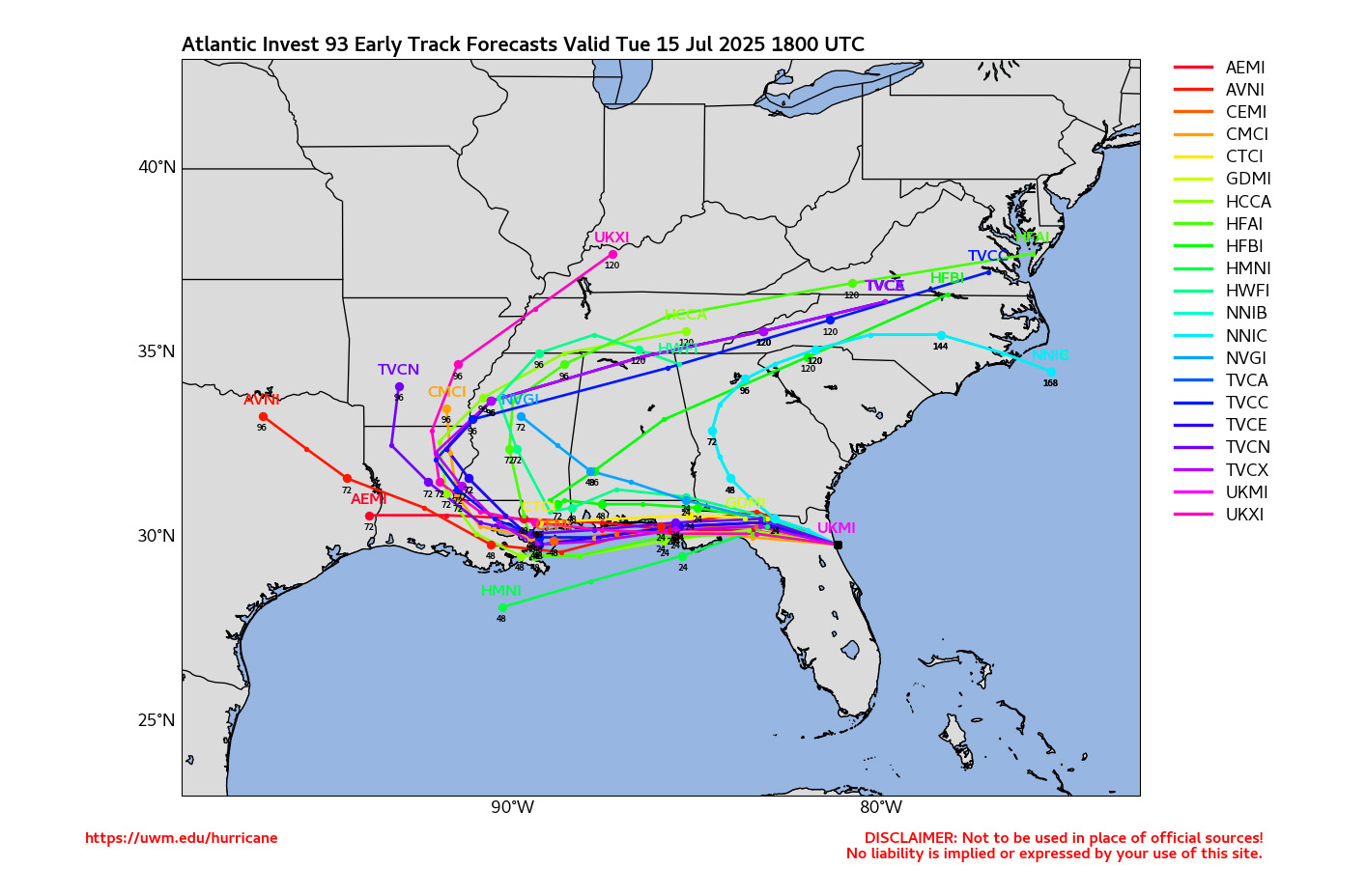
Meteorologists are closely monitoring a low-pressure system, designated as Invest 93L, which could develop into Tropical Storm Dexter later this week.

The National Hurricane Center said the system, currently moving west across Florida from the Atlantic, has a 40% chance of developing into a tropical depression within the next 48 hours.

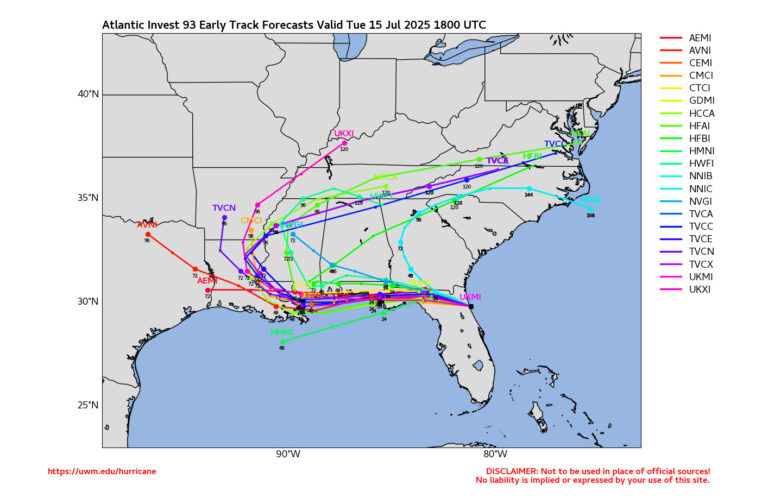
Invest 93 Forecast Map via UWM.edu

Even without further development, the system is expected to bring widespread rainfall across the Southeast.

Southeast Louisiana is already under a flood watch as the storm moves through the Gulf. Forecasters are warning that the Carolinas, including areas around Charlotte, could see locally heavy rain and flash flooding through mid-week.

The National Weather Service continues to monitor changing conditions and advises residents to stay updated on potential flood alerts.

During this hurricane season, officials are also recommending that all North Carolina residents prepare for possible power outages from hurricane damage. The following emergency items are suggested for all homes in our our state;

8 North Carolina Cities Rank Among The Best In America for Rain Gardens

0

Rain gardens are gaining ground (literally).

As stormwater runoff worsens and butterflies disappear, cities across the U.S. are rethinking how they manage their landscapes.

Lawn Love ranked 2025’s Best Cities for Rain Gardens using 4 metrics, and the Tar Heel State had a strong showing. We analyzed the 500 largest U.S. cities, looking at average monthly precipitation, supply access, public interest, and groundwater pollution risk.

How do North Carolina’s top 10 cities stack up for rain gardens? 

  • Wilmington: 8th
  • Asheville: 39th
  • Raleigh: 43rd
  • Durham: 70th
  • Greenville: 76th
  • Cary: 136th
  • Gastonia: 145th
  • Charlotte: 146th
  • Winston-Salem: 171st
  • High Point: 175th

Key insights:

  • 10 North Carolina cities in the ranking average between 3.6 to 3.8 inches of rain monthly, with 3 additional cities averaging 4 or more. Monthly rain peaks in Wilmington (No. 8), averaging 5 inches.

  • Charlotte (No. 146) and Raleigh (No. 43) offer some of the best supply access in the ranking and lead North Carolina in availability, thanks to larger metro populations and well-developed landscaping industries.

  • Raleigh (No. 43) and Asheville (No. 39) rank high overall and lead North Carolina for Google search interest in rain gardens.

Startup Launches Armed Drone Program to Patrol School Campuses

0

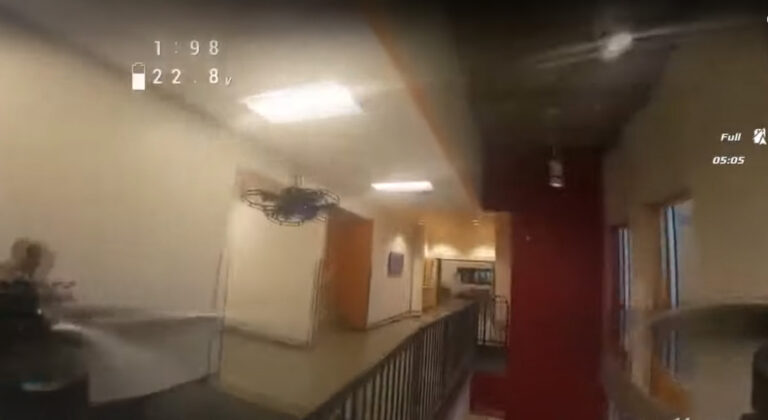
A new startup has introduced a controversial school safety system using high-speed drones called “Campus Guardian Angel,” aimed at enhancing security and assisting first responders during emergencies.

The drones, small enough to fit in a backpack, are equipped with cameras, glass-shattering metal tips, and pepper ball guns. According to the company, each drone can travel up to 100 miles per hour and reach any location on a school campus within seconds.

Company officials say the drones can reach a misbehaving student in as little as 15 seconds. Designed to support school resource officers, the drones can fire pepper balls and track movement across a digital twin of the school building in real-time.

The drones operate through a centralized managed response service. From a national operations center, remote pilots oversee surveillance, control flight paths, and respond to alerts. Multiple six-drone boxes are pre-placed throughout schools to allow the system to quickly launch from the nearest location.

The drones can move inside buildings at 30 to 50 mph and reach up to 100 mph outdoors. The company claims their drones can cross a typical high school campus in just eight seconds—two minutes faster than an officer on foot.

The company has not disclosed which school districts, if any, have adopted the technology. Critics and civil liberty groups have already raised concerns about student privacy and use-of-force protocols.

Former York County Sheriff Kevin Tolson Arrested in Connection With Hit-and-Run Investigation

0

Former York County Sheriff Kevin Tolson was arrested Monday in connection with a hit-and-run crash.

South Carolina Highway Patrol said the incident occurred on Airport Road in Rock Hill, where a vehicle struck both a telephone pole and a nearby fence before leaving the scene. Authorities later identified Tolson as the driver.

He was booked into the York County Detention Center on July 14, 2025, at 11:00 a.m. and released shortly afterward on a personal recognizance bond, according to the York County Sheriff’s Office.

No further details have been released.

Report: Charlotte is Building 6th Most Homes in US

0

After years of underbuilding and rising costs, the U.S. still faces a multi-million-unit housing shortfall. Meanwhile, elevated rates, high costs, and long delays continue to constrain the pace of new home construction.

Fortunately, some markets have taken more aggressive steps to expand their housing stock. A new report from Construction Coverage identifies which metros and states are building the most new homes—and which ones are falling further behind.

New Housing Construction in Charlotte-Concord-Gastonia, NC-SC

  • 2024 Snapshot: Last year, the Charlotte metro area authorized 21.3 new units per 1,000 existing homes, the 6th most of any large U.S. metro. For context, there were 10.1 authorizations per 1,000 existing homes across the U.S.
  • Then vs. Now: A total of 27,212 units were authorized in the Charlotte metro in 2022, compared to 25,935 new homes in 2024—a decrease of 4.7% in two years. Meanwhile, the nation as a whole saw a decrease of 12.0% during that span.

One Dead and Five More Rushed To Hospital in Uptown Charlotte Mass Shooting

0

A mass shooting near an Uptown nightclub early Sunday left one person dead and five others hospitalized, according to CMPD.

Officers responded around 2 a.m. on July 13 to reports of gunfire in the 300 block of North College Street, near The Hive nightclub on East 6th Street.

Upon arrival, police found 37-year-old Arleigh Alexzander Bryant suffering from a gunshot wound. He was pronounced dead at the scene.

Three additional victims were transported to the hospital with non-life-threatening injuries. Two more individuals with similar injuries later arrived at local hospitals on their own.

Detectives with CMPD’s Homicide Unit are leading the ongoing investigation. No arrests had been announced as of Sunday afternoon.

The victim’s next of kin has been notified, and authorities continue to gather information. Police urge anyone with knowledge of the incident to contact Detective Haulsee at 704-432-TIPS or Crime Stoppers at 704-334-1600. Anonymous tips are also accepted.

This case has been assigned report number: 20250713-0200-00.

Meeting Charlotte’s Social Impact Needs: How Online MSW Degrees Prepare the Next Generation of Change-Makers

0

College Essay article headerStep into Charlotte’s neighborhoods, where hope and hardship walk hand in hand. From Grier Heights’ health challenges to the quiet loneliness of new arrivals, the city’s social needs call for bold change-makers. Online Master of Social Work (MSW) programs are answering, equipping locals with flexible, powerful training to transform lives. Here’s how these degrees are shaping a new wave of social workers to tackle Charlotte’s toughest issues.

Charlotte pulses with growth, yet beneath the skyline, stark divides persist—poverty, isolation, and health disparities shape daily life. Online MSW programs are forging a path forward, training Charlotteans to bridge these gaps with skill and heart. From working parents to rural nurses, these flexible degrees open doors for diverse learners to become social work leaders. For a city wrestling with rapid change and deep-rooted inequities, this education model is a vital solution.

Tackling Charlotte’s Health Disparities

A short stroll from Mint Museum Randolph to Grier Heights reveals a jarring truth: life expectancy plummets by 12 years, with cancer and diabetes rates spiking 50%, per Centers for Disease Control and Prevention data. Social workers are vital in closing these gaps, linking residents to resources like Atrium Health’s mobile vaccination units or nutrition programs.

For busy professionals balancing work or family, online MSW programs in North Carolina, such as those at Florida State University, offer robust training in clinical practice and advocacy. FSU’s program website outlines a flexible curriculum, with courses in trauma-informed care and policy analysis. Students master skills to address social determinants—like food access or safe housing—that drive 80% of health outcomes, according to Atrium Health.

In Grier Heights, social workers with online training may provide solutions for leaders like Rev. Donnie Garris, who observe families having to choose between healthcare and food.

Easing Loneliness in a Booming City

Charlotte welcomes over 100 new residents daily, yet many feel adrift in the crowd. The CLT Social Club, launched by Katey Shehan after her own battle with isolation, fosters connection through intentional events, as reported by WBTV in February 2025. Could you help build a community where no one feels alone?

Social workers are key to addressing this loneliness epidemic, linked by former Surgeon General Vivek Murthy to heart disease and depression. Online MSW programs teach community-building strategies, preparing graduates to design programs like Shehan’s or bolster mental health initiatives.

A Charlotte teacher, juggling lesson plans and parenting, can study asynchronously, gaining skills to lead support groups or advocate for community centers. Courses in group therapy and community organizing arm students with tools to weave stronger social fabrics.

Dr. Michael Clark of Novant Health stresses deliberate relationships as a remedy for loneliness—online-trained social workers make this vision real, fostering connection across Charlotte’s neighborhoods.

Driving Economic Mobility Forward

Charlotte’s rise from last to 38th in economic mobility among major U.S. cities, per Harvard’s 2024 Opportunity Insights report, signals progress but underscores ongoing challenges. Social workers fuel this change, connecting low-income families to education and jobs.

Online MSW programs train students in case management and policy advocacy, enabling them to support efforts like the Mayor’s $250 million Racial Equity Initiative.

Fostering Economic Connectedness

“Economic connectedness”—interactions across socioeconomic divides—is a key mobility driver, as Sherri Chisholm of Leading On Opportunity highlights. Social workers can:

  • Link families to job training programs.
  • Advocate for equitable education policies.
  • Build networks bridging wealth gaps.

Take Jamese Ivy, a Charlotte native who climbed from poverty through education and diverse networks. Online programs make this career accessible to those unable to attend traditional classes. Evening courses and virtual internships fit local schedules, empowering more Charlotteans to champion equitable opportunities.

Bridging Urban and Rural Service Gaps

North Carolina’s social work shortage hits rural areas hardest, but Charlotte’s urban challenges—like youth trauma in Grier Heights—demand skilled professionals too. Online MSW degrees bridge this divide, allowing rural residents near Charlotte to train without relocating. Programs cover adverse childhood experiences (ACES), which Atrium Health’s Dr. Shivani Mehta ties to a 20-year life expectancy drop.

Students learn trauma-informed interventions to support kids facing violence or poverty, addressing needs in Charlotte’s high-risk ZIP codes. A Mecklenburg County social worker or a Union County nurse can earn an MSW online, studying asynchronously and applying skills locally. Graduates tackle issues from substance abuse to housing insecurity, strengthening both urban and rural safety nets.

Opening Doors for Career Changers

Charlotte’s workforce spans career changers and professionals seeking advanced credentials. Online MSW programs cater to both, offering part-time tracks that fit full-time jobs. A bank employee inspired by volunteering at a local shelter can pivot to social work without financial strain. Programs include fieldwork in Charlotte, letting students hone skills locally while earning their degree.

The Bureau of Labor Statistics projects 7% growth in North Carolina’s social work jobs by 2030, driven by healthcare and mental health demand. Online MSW graduates are ready for roles in hospitals, schools, or nonprofits, addressing Charlotte’s complex needs. From combating loneliness to boosting mobility, these change-makers are reshaping the city’s future.

The rise of online MSW programs signals a shift in how Charlotteans can drive social impact. Flexible, accessible education empowers locals to address health disparities, loneliness, and economic gaps with expertise and empathy. As Charlotte grows, these programs ensure a steady stream of skilled social workers, ready to build a stronger, more connected community. Consider how your skills could shape Charlotte’s future, one connection at a time.

By Archer Education

How Online Criminal Justice Degrees Are Expanding Career Options Across North Carolina

0

There’s a hum of possibility in Charlotte and across the state. People are finishing shifts at the fire station, closing out retail days, or wrapping up lessons. They’re thinking: what’s next? Online education in criminal justice isn’t a side note anymore. It’s a pathway.

A flexible, accredited online criminal justice degree in NC offers that pathway. Tailored to working adults and career changers, it respects time and commitments. Classes happen in the living room or on a break at work. No campus commute, no rigid schedule. It’s education shaped around a real life.

The Flexibility and Accessibility of Online Learning

The beauty of online learning is that it doesn’t pause when life does. A paramedic on the overnight shift can log on after coffee rounds. An administrative professional finishing an eight-hour day can enter coursework when their mind is clear. That flexible rhythm is more than convenience. It’s necessity.

Programs pack theory, ethics, and field insights into modules that feel direct, not dense. Students explore criminal law or cybersecurity through video lectures, interactive case studies, and live discussions. They work on professional writing, research methods, crime scene basics—all online. The result is a steady, sustainable pace, not an overwhelming sprint.

This format doesn’t just let learners attend class. It lets them build a bridge between what they already know and what they’re aiming to do. And that bridge matters in a place where police, corrections, and private security jobs are growing—but only if you have the credentials to step in.

Responding to North Carolina’s Evolving Workforce Needs

Law enforcement, corrections, and private security are not small sectors here. Charlotte remains one of the fastest-growing metro areas in the country, and its institutions need trained professionals who understand both policy and community. Meanwhile, regional security operations are expanding around data centers, new housing, and cultural facilities.

Across the Piedmont and Coastal Plain, sheriffs, probation officers, and security supervisors are in demand. Statewide, vacancies exist where experience or credentials used to stand in the way. Employers are not only seeking numbers—degrees—they’re looking for people who understand digital crime reporting, de-escalation techniques, and the law as it’s written and applied.

That’s where an online criminal justice degree in NC fits neatly. It fills skill gaps with targeted coursework. It teaches evidence-based interviewing. It addresses ethics. And it does it all in a format that works if you’re already working.

Career Pathways: Law Enforcement, Corrections, and Beyond

Completing the degree opens a variety of doors. Here are some pathways:

  • Law enforcement: Patrol, investigations, special units. The degree adds context and credibility.
  • Corrections: Roles supervising inmates, training staff in behavior management, or designing reentry programs.
  • Private security: Risk assessment, corporate security, digital forensics, protective services.
  • Probation and parole: Guiding individuals toward rehabilitation, with knowledge of the legal system and community resources.
  • Policy and administration: Working with local agencies, supporting research, training, compliance.

None of this requires starting from scratch. An existing firefighter, mechanic, or community service worker can add the degree and step into a new role, often with the same employer or with a promotion-ready mindset.

Local Student Profiles: Learning That Fits Charlotte

Think of the commuter from Gastonia who works as a security officer by night. They finish the 11pm check-ins, grab a coffee, then log into class by midnight. It’s fuelled by ambition, not adrenaline. The same person might be able to join a criminal investigations unit by next year—not by quitting the job, but by adding the degree.

Picture the HR administrator in Uptown Charlotte who wants to shift into policy or training within a sheriff’s office. After work, she watches lectures on juvenile justice. Her notes appear in an email the next morning. A month later, she’s proposing a new internal training session on bias awareness.

Students report feeling more confident in professional conversations. They’re no longer talking in hypotheticals. They have the degree and the vocabulary—terms like due process, chain of custody, risk mitigation—to step into those conversations with ease. They’re learning on the job, with the benefit of immediate application.

How to Take the Next Step: Enrolling in an NC Online Criminal Justice Program

If this sounds like the route forward, here’s what to consider:

  1. Accreditation matters: Choose a program that’s recognized by regional or national agencies. It ensures your degree has value and meets industry standards.
  2. Check for advanced standing: Some programs allow credit for prior relevant learning or professional experience. That can shorten your time to degree and reduce cost.
  3. Plan your term: Online courses move fast. Each module might last six to eight weeks. Make sure you can commit to study blocks.
  4. Understand career supports: Internship placement, resume coaching, virtual networking—these services can make the difference between a paper and a position.
  5. Be ready to engage: Online work is not private study. Discussion forums and live chats mirror teamwork on real cases.

Why It Matters

North Carolina’s future depends on people who know systems inside and out. People who’ve walked shifts and sat in school. People who understand equity, fairness, risk, and response. People ready to step into clean but complicated roles and do right by them.

And thanks to flexible, accredited online degrees, those pathways no longer depend on quitting work or uprooting life. They’re built into it.