Another Sewage Spill just hit Lake Norman After Contractor Damages Sewer Line

0

Another sewage spill has just occurred on Lake Norman after a wastewater line was damaged in Cornelius, according to local officials.

The overflow happened near Harbor Light Boulevard, where officials estimate about 100 gallons of sewage entered the lake.

Officials with Charlotte Water said a contractor accidentally damaged a low-pressure sewer pipe, triggering the spill.

Many homes along Lake Norman rely on low-pressure sewer systems that pump wastewater to Charlotte Water’s treatment plants.

Although this spill resulted from construction damage, officials say many sewage spills can be prevented with proper household habits.

Charlotte Water urges residents to throw items like wipes, paper towels, hair, cotton swabs, feminine products, dental floss, coffee grounds, and excess food in the trash.

Only toilet paper should be flushed, officials said.

Used oils and grease should also be taken to a full-service recycling center instead of poured down drains.

Anyone who suspects a sewage spill is encouraged to call 311 or 704-336-7600, which are monitored 24 hours a day.

University City Wine Fest Returns for Its 10th Annual Celebration on April 11

0

University City Partners, the nonprofit focused on strengthening University City through economic development and community-building events and activations, is proud to announce the details of its 10th annual University City Wine Fest, returning on April 11th. The weekend will kick off with a Royal Wine Dinner on April 9th and Wine on the Water experience on April 10th. More details and ticket information can be found here.

Royal Wine Dinner on April 9 from 6:30 p.m. to 8:30 p.m. ET: The Royal Wine dinner will return this year, taking place at one of University City’s newest restaurants and a Charlotte favorite, Sol’ Delish. Menu and ticket details will be announced closer to the event.

Wine on the Water on April 10 from 6 p.m. to 9 p.m. ET: Set against the scenic backdrop of the Boardwalk’s lakefront,  Wine on the Water offers guests a one-of-a-kind date night made easy. It’s the perfect excuse to sip on wines, listen to live music, and soak in the views. The wines provided are brut, pinot grigio, brut rosé, and a red blend. There will be two times available for booking: 6:00 p.m. and 7:30 p.m. Tickets cover two people and cost $45.

Wine Fest on April 11 from 1 p.m. to 6 p.m. ET: Attendees are invited to savor over 100 wines from North Carolina’s top wineries and vendors, as well as a curated selection of craft brews from the Queen City’s favorite breweries, including but not limited to Armored Cow, Pilot, and Petty Thieves. Cocktails will also be available, served by iconic local bartenders from Lucky Dog, Side Eye, Sol Delish, and Soul Gastrolounge.

There are three types of tickets available, which can be purchased in advance or on the day of the event, though same-day availability is not guaranteed.

  • General Admission ($35): Four hours of boundless wine, craft brew, and cocktail tastings, and a festival souvenir sampling glass. Starting at 2 p.m. ET.

  • Early Admission ($45): Five hours of boundless wine, craft brew, and cocktail tastings, and a festival souvenir sampling glass. Starting at 1 p.m. ET.

  • VIP Admission ($500): Early entrance, ten tickets for a special VIP experience with a reserved covered table perfect to kick your feet up and enjoy some shade, four bottles of wine, unlimited tastings, and a souvenir glass. Entrance starting at 1 p.m. ET.

This year’s festival is brought to life by incredible sponsors, Greystar, Tito’s, and Mi Campo, who will help make the day a success and believe in the community of University City. Those interested in getting involved as a volunteer or a sponsor, please fill out the contact form here.

For all events, all attendees must be 21+ and present a valid government-issued ID for entry, and those under 21+ must be accompanied by an adult. A portion of this year’s proceeds will benefit University City Foundation, the funding and fundraising tool to advance community development, community building, and placemaking programs and projects in the University City market area. For more information, visit https://universitycitywinefest.org/ or follow @univcitywinefest on Instagram.

One of America’s Largest Old-Growth Forests With 400+ Year Old Trees Lies A Short Drive From Charlotte

0

Drive west for about 3 hours from Charlotte and you’ll run into one of America’s most untouched and ancient woodlands – North Carolina’s legendary Joyce Kilmer Memorial Forest. This magical place hosts over 100 varied species of trees, some of which are as old as 400 years and reach heights in excess of 100 feet.

Spanning an impressive 3,800 acres, this expansive woodland was designated as a protected national forest in 1936. The forest serves as a tribute to Joyce Kilmer, the writer of the poem “Trees”, who tragically lost his life while serving with the Allies in WW1.

The forest’s trees are not merely ancient and lofty, but also notable for their substantial girth, with some measuring over 20 feet around (wide enough to drive a small car through).


View this post on Instagram


A post shared by Travanon (@trophytruck1)


The park includes a 2 mile walking trail that crosses a moss covered bridge and a waterfall;

Joyce Kilmer Memorial Forest is located in Robbinsville, NC. It’s open year-round and admission to the park is free.

You can check out more about the park Learn more at this here on the US National Forest Service’s website.

Fort Mill School Board Passes Resolution To Have All of Silfab’s Hazardous Chemicals Permanently Removed

0


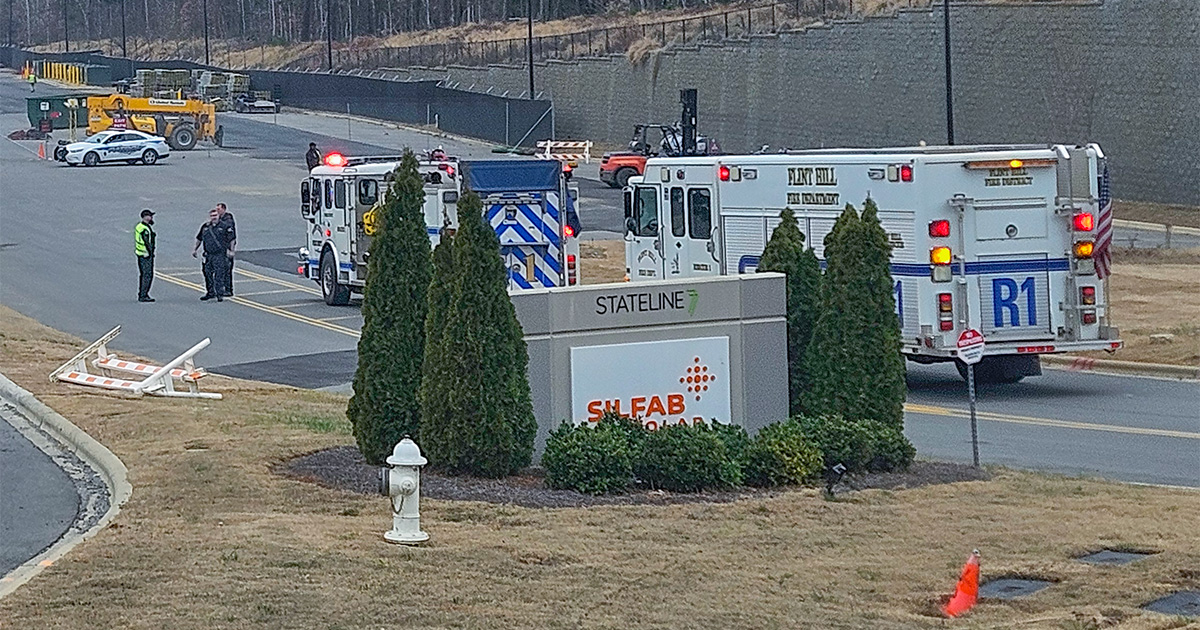
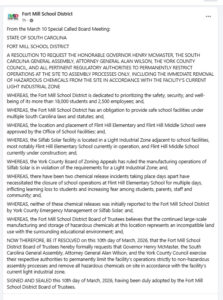
After two separate chemical spills last week at Silfab Solar’s factory in Fort Mill, the Fort Mill School Board has just passed a major resolution calling on top state officials to permanently restrict Silfab’s operations and require all hazardous chemicals be permanently removed from the site.

The new resolution specifically reads:

“NOW THEREFORE, BE IT RESOLVED on this 10th day of March, 2026, that the Fort Mill School District Board of Trustees hereby formally requests that Governor Henry McMaster, the South Carolina General Assembly, Attorney General Alan Wilson, and the York County Council exercise their respective authorities to permanently limit the facility’s operations strictly to non-hazardous assembly processes and remove all hazardous chemicals on site in accordance with the facility’s current light industrial zone.”

The Tuesday night vote follows a series of chemical leaks at the facility located adjacent to Flint Hill Elementary School and within close proximity to several other Fort Mill schools.

Last week, a major Potassium Hydroxide (KOH) spill triggered a hazardous-materials response at the Fort Mill plant. According to York County officials, “there was an incident at 7149 Logistics Lane, which resulted in 1,530 gallons of potassium hydroxide being released”. The chemical spilled into Silfab’s retention pond bordering Flint Hill Elementary School and connected to the Fort Mill watershed. Over the weekend, Silfab pumped out roughly 300,000 gallons of liquid from the retaining pond for disposal off site, according to DES.

According to employees at the factory, the KOH spill began at around 7:30am on Tuesday morning. According to York County, the first emergency crews arrived at 9:45am. According to eye witnesses, the first emergency HAZMAT crew arrived on site at 10:36am.

At the time of the spill, school was in session and children were outside playing near the retention pond, according to parents.

SCDES later ordered Silfab to pause certain operations while investigators reviewed the incident.

The KOH spill was followed days later by the community being made aware of another chemical leak involving hydrofluoric acid at the factory.

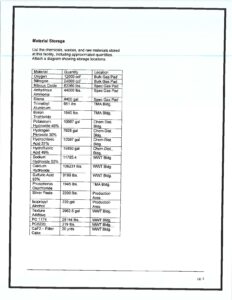
Silfab’s full list of chemicals and the quantities they would need to store on site.

York County officials confirmed the HF leak and Flint Hill Elementary was forced to close the school Thursday and Friday out of an abundance of caution. It’s still unclear exactly how much HF leaked and how much of it became airborne.

Beyond the chemical incidents, the Silfab project has been at the center of a long-running zoning dispute in York County.

The factory sits on property zoned Light Industrial, and the York County Board of Zoning Appeals ruled in May of 2024 that Silfab’s operations cannot take place in a light industrial zone. That ruling occurred before any permits were issued to Silfab, and to this day, Silfab has still not received any change of use, zoning change, or zoning compliance from the county.

There are currently multiple active lawsuits that various organizations and community members have filed against Silfab and York County regarding the legality of their operations. There are even rumors that the legal fight could make it’s way up to the Supreme Court of the United States.

Over the past week, numerous high ranking politicians and officials across South Carolina have spoken out against Silfab, including Senator Tim Scott, Nancy Mace, Pamela Evette, and the Attorney General of South Carolina, Alan Wilson, who has called for full investigations into the chemical spills, and confirmed that county officials and the County Council has the authority to revoke Silfab’s permits.

With multiple investigations ongoing, several active lawsuits pending, and school officials now formally weighing in, the future of Silfab’s operations in Fort Mill are now more uncertain than ever.

Charlotte Selected to Host Gospel Music Awards

0

Charlotte will soon take center stage in the gospel music world. City leaders announced Tuesday that the Queen City will host the Stellar Gospel Music Awards, one of the most influential celebrations in gospel music.

The announcement came from the Charlotte Regional Visitors Authority in partnership with the awards’ producers.

The event will bring gospel artists, faith leaders, and fans from across the country to Charlotte. Officials say it highlights the city’s strong faith community and ties to gospel music and Black cultural expression.

The awards were established in 1985 and are produced by Central City Productions. The nationally televised ceremony airs on networks including the Stellar Network, BET, and Bounce TV.

Together, those broadcasts reach more than 3.6 million television viewers nationwide, with millions more watching online.

Local leaders say hosting the awards could also boost Charlotte’s visitor economy.

Michael Smith of Charlotte Center City Partners joined faith and hospitality leaders in highlighting the expected tourism and economic benefits tied to the nationally broadcast event.

CLT Travelers Urged to Arrive Early as Shutdown May Slow TSA Checkpoints

0

Travelers heading through Charlotte’s airport this spring break may encounter longer security lines as the busy travel season overlaps with a partial federal government shutdown.

Officials at Charlotte Douglas International Airport warned this week that the combination of increased travel and fewer available security officers could lead to extended wait times at checkpoints.

Airport leaders urged passengers to arrive earlier than usual to avoid missing flights.

Spring break already ranks among the busiest travel periods of the year. However, the shutdown has also reduced staffing among officers with the Transportation Security Administration, which could slow screening operations.

Travelers departing from Charlotte can also monitor current checkpoint delays before leaving home. Real-time security wait times are available through the airport’s website and mobile app.

The warning comes as passenger volumes at Charlotte Douglas continue to climb. The airport consistently ranks among the busiest in the nation for total aircraft movements.

For travelers in the Charlotte region, the advice is simple: arrive early, check wait times online, and prepare for potential delays during the peak spring break travel period.

NC Governor Proposes $1.4 Billion Budget Boost to Fund Medicaid and More Teacher Pay

0

North Carolina Gov. Josh Stein unveiled a $1.4 billion “Critical Needs Budget” this week to address urgent funding gaps while lawmakers continue negotiating a full state spending plan. The proposal would add about $1.4 billion to the state’s roughly $31–32 billion annual budget, representing an increase of about 4–5% compared with last year’s spending level.

The governor urged the North Carolina General Assembly to approve the targeted package quickly so agencies can address immediate financial needs.

Key spending priorities

A large portion of the proposal focuses on health care. The plan includes $319 million to fully fund the state’s Medicaid program, which provides coverage to more than 3 million North Carolinians.

The proposal also includes pay increases and workforce funding across several sectors, including:

  • 2.5% raises for most state employees

  • Average teacher pay increases of roughly 6%

  • Pay raises for law enforcement officers

  • Salary adjustments for nurses and behavioral-health workers

Stein said the funding is needed to maintain staffing levels and keep critical services operating smoothly.

Why the proposal was introduced

North Carolina lawmakers have not passed a full state budget since 2023, leaving many agencies operating with baseline funding levels.

“North Carolina has gone nearly two and a half years without passing a new state budget – the only state in the country to finish 2025 without one,” said Governor Josh Stein in a press release. “While lawmakers work toward a full, fiscally responsible budget this spring, there are urgent needs facing our state right now like fully funding Medicaid and giving law enforcement, teachers, and other public servants a long-deserved pay raise. This budget invests in critical public safety, education and health care services for the people of North Carolina that cannot wait.”

During that time, population growth and rising costs have increased pressure on programs such as Medicaid and public education.

Stein’s proposal is designed as a temporary “mini-budget” that fills urgent funding gaps while lawmakers continue negotiating a comprehensive spending plan for the state.

How to Plan the Ultimate Tropical Getaway to Phuket, Thailand

0

When you picture the quintessential tropical holiday, your mind likely drifts to white sandy beaches, crystal-clear waters, and a vibrant local culture. Phuket, Thailand, offers all of this and so much more. As the largest island in the country, it caters to virtually every type of traveller. Whether you are seeking high-energy nightlife, serene coastal retreats, or authentic culinary experiences, a trip to this paradise is unforgettable. However, crossing the globe requires thoughtful preparation. From navigating international logistics to figuring out the perfect place to sleep, here is how to plan your ultimate getaway to this mesmerising island.

Choosing Your Perfect Island Base

Phuket is a massive island boasting distinctly different neighbourhoods. Your choice of accommodation heavily dictates the pace and convenience of your holiday. If you want to be right in the heart of the action, Patong is an exceptionally popular choice. This bustling area offers immediate access to local markets, vibrant nightlife venues, and a lively coastline.

When selecting where to sleep, remember that your environment is crucial to your daily relaxation. A beautiful and restful space helps you recharge properly after a long day in the tropical sun. If you evaluate the key elements that make the design and comfort of your hotel room truly successful, you will notice that details like high-quality beds, thoughtful lighting, and smart bathroom layouts drastically improve your overall guest experience. To achieve the perfect balance of luxury and value, booking one of the premium 4 star hotels in Phuket Patong Beach is a brilliant strategy. These properties offer fantastic on-site amenities like expansive swimming pools and spa services without the astronomical price tags associated with five-star mega-resorts. This allows you to allocate more of your holiday budget towards exploring the wider island.

Preparing for Your Journey and Logistics

Before packing your swimwear, it is essential to sort out the practical details of international travel. First, double-check your documents. You must ensure your passport is valid for at least six months from your date of entry, which is a strict legal requirement for visiting Thailand. Additionally, planning your trip between November and April ensures you will experience the driest and sunniest weather. Make sure you book your flights well in advance to secure the best possible rates.

Furthermore, staying informed about local safety guidelines is a vital step for a stress-free trip. For comprehensive preparation, consult the official U.S. Department of State Thailand travel advisory before departure. Their portal provides crucial, up-to-date information on regional safety and entry guidelines. Notably, the advisory highly recommends enrolling in the Smart Traveler Enrollment Program to receive vital security updates while travelling. The department also explicitly stresses the importance of securing adequate medical and evacuation insurance before you fly, giving you complete peace of mind throughout your journey.

Crafting an Unforgettable Itinerary

Once your logistics and accommodation are sorted, the truly fun part of holiday planning begins. Phuket is an incredibly diverse destination, meaning you can easily mix total relaxation with thrilling adventure. While you could happily spend an entire week lounging by the pool, venturing out is highly rewarding and gives you a taste of authentic Thai culture.

Consider adding these engaging experiences to your itinerary:

  • Island Hopping: Book a speedboat tour to the nearby Phi Phi Islands or the famous James Bond Island. The towering limestone karst formations and bright emerald waters are absolutely breathtaking. You can also rent a longtail boat for a more traditional maritime experience.
  • Cultural Landmarks: Take an early morning trip to the magnificent Big Buddha. This marble statue sits atop Nakkerd Hill and offers sweeping panoramic views. Afterwards, visit Wat Chalong, the largest and most revered Buddhist temple complex in Phuket.
  • Old Town Exploration: Spend an afternoon wandering through the historic streets of Phuket Old Town. The colourful Sino-Portuguese architecture provides a stunning backdrop for boutique shopping and sipping iced Thai tea.
  • Night Market Excursions: No trip to Thailand is complete without sampling the incredible street food. The Sunday Walking Street Market or Chillva Market are perfect spot to try authentic Pad Thai and sweet mango sticky rice.

Planning a major trip to Southeast Asia might seem daunting at first glance, but breaking the process down into manageable steps makes it incredibly exciting. By handling your travel advisories early, choosing a comfortable and well-located hotel, and mapping out a balanced itinerary of sights and flavours, you are setting yourself up for the trip of a lifetime. Take the time to research your options, pack your bags, and get ready to experience the unmatched natural beauty and warm hospitality of Phuket.

North Carolina Employers Hit With 1,612 OSHA HazCom Violations Over Last 5 Years

0

Millions of U.S. workers handle, store, or work near hazardous chemicals every day—from cleaning solvents and industrial adhesives to flammable gases and corrosive substances. Without proper training, clear labeling, and accessible safety data sheets, employees may not fully understand the health risks they face, including respiratory illness, chemical burns, or fire and explosion hazards. Federal regulators and occupational health experts widely view hazard communication as a foundational component of workplace safety because it determines whether workers have the information needed to protect themselves.

To address these risks, the Occupational Safety and Health Administration (OSHA) established the Hazard Communication Standard (HazCom) in 1983. Often referred to as the “right-to-know” rule, the standard requires employers to classify chemical hazards, label containers, maintain safety data sheets, and train workers on safe handling procedures. Yet more than four decades after its adoption, HazCom remains one of OSHA’s most frequently cited workplace safety standards, indicating persistent compliance gaps across industries and regions.

To identify where U.S. employers are failing to warn workers about chemical dangers, Trace One—an SDS, regulatory compliance, and PLM software company serving the chemicals, food & beverage, and cosmetics sectors—analyzed OSHA enforcement data from 2021 through 2025. The analysis investigates which states and industries account for the most HazCom violations, as well as how these citation trends have evolved over time.

Which Industries Have the Most Hazard Communication Violations?

The manufacturing and construction industries account for more than half of all HazCom violations in the U.S.

CID-870-Chart1_Which Industries Have the Most Hazard Communication Violations

Source: Trace One analysis of Occupational Safety and Health Administration (OSHA) data

HazCom violations are heavily concentrated in a small number of industries. From 2021 to 2025, the manufacturing industry recorded 10,021 violations—the highest total of any sector—followed by the construction industry with 8,678 violations. Together, these two sectors account for 50.6% of all HazCom violations nationwide during the five-year period. The next tier of industries reported significantly lower totals, including Accommodation & Food Services (2,189 violations), Retail Trade (2,005), and Public Administration (1,756), while sectors with less frequent exposure to chemical hazards, such as Finance & Insurance (13) and Information (81), recorded comparatively few citations.

Inspection totals provide additional context. OSHA does not inspect workplaces solely on a fixed schedule. Instead, the agency prioritizes inspections based on imminent danger situations, severe injuries or fatalities, and formal complaints—many of which originate from employees or labor representatives. In addition, 22 states and jurisdictions operate OSHA-approved State Plan programs that conduct their own inspections and share enforcement data with federal OSHA.

From 2021 to 2025, OSHA conducted 150,832 inspections in construction, more than twice the 64,971 inspections in manufacturing, reflecting construction’s size and risk profile. Yet despite this heightened scrutiny, only 2.5% of construction inspections resulted in at least one HazCom violation—one of the lowest rates among major industries. By contrast, 8.8% of manufacturing inspections led to a violation, suggesting that while construction is inspected more frequently, manufacturing inspections are more likely to uncover HazCom deficiencies.

Where Are Hazard Communication Violations Occurring?

Maryland leads the U.S. in HazCom violations with 4,370 from 2021 to 2025

CID-870-Chart2_Where Are Hazard Communication Violations Occurring

Source: Trace One analysis of Occupational Safety and Health Administration (OSHA) and U.S. Bureau of Labor Statistics data

HazCom violations are not evenly distributed across the country. Maryland recorded the most violations (4,370), followed by Tennessee (3,159) and Michigan (2,113)—states with substantial manufacturing and construction activity, the two industries that account for more than half of all HazCom citations nationwide. Michigan and Tennessee rank among the nation’s leading manufacturing states, particularly in motor vehicle production and advanced manufacturing. Maryland’s elevated totals align more closely with its significant construction sector, supported in part by defense-related infrastructure spending and federal contracting around the Washington, D.C. region, where the federal government is a major economic driver.

When adjusted for workforce size, the geographic landscape shifts. Alaska records the highest rate at 44.7 HazCom violations per 100,000 workers, followed by Maryland (39.0) and Delaware (26.5), while Tennessee (22.2) and Oregon (21.5) also rank among the highest on a per-worker basis. Because OSHA inspections are often complaint-driven or targeted rather than uniformly distributed across all workplaces, measuring violations on a per-worker basis provides a clearer view of enforcement intensity relative to a state’s labor force size. In smaller states such as Alaska and Delaware, concentrated industrial activity within a relatively small workforce can translate into elevated violation rates, even when total citation counts are lower than those in larger manufacturing states. Conversely, a populous state like California with a vast and diverse workforce only has 0.3 HazCom violations per 100,000 workers.

How Are Hazard Communication Violations Trending?

After peaking in 1989, HazCom violations have been declining ever since

CID-870-Chart3_How Are Hazard Communication Violations Trending

Source: Trace One analysis of Occupational Safety and Health Administration (OSHA) data

HazCom violations peaked at 37,134 citations in 1989, shortly after OSHA’s Hazard Communication Standard—first issued in 1983—was fully implemented and expanded to cover most private-sector employers. The rule was adopted to address widespread worker exposure to hazardous chemicals without consistent labeling, safety data sheets (SDS), or training requirements. Aside from a pronounced decrease in 1995—when the Clinton administration shifted OSHA to emphasize cooperative programs and reduce regulatory burden—annual HazCom violations remained relatively flat through the early 2000s.

More recently, 6,130 HazCom violations were recorded in 2025, representing a decline of 83.5% from the 1989 peak. While enforcement levels remain far lower than the decades prior, thousands of citations are still issued annually. The broader adoption of digital compliance systems—including automated Safety Data Sheet (SDS) management platforms that centralize chemical inventories, update hazard classifications, and standardize labeling—has likely contributed to improved documentation accuracy and regulatory alignment, helping large employers reduce compliance gaps over time.

To identify where these compliance gaps persist today, researchers at Trace One analyzed the latest OSHA compliance data to break down results for all 50 states and Washington, D.C. below. For more information, refer to the Methodology section.

Here is a summary of the data for North Carolina:

  • HazCom violations per 100k workers: 7.8
  • Total HazCom violations: 1,612
  • Share of inspections with a HazCom violation: 7.2%
  • Total HazCom violation penalties: $587,259
  • Most common HazCom violation: No written safety plan
  • Most common industry for HazCom violations: Manufacturing

For reference, here are the statistics for the entire United States:

  • HazCom violations per 100k workers: 5.6
  • Total HazCom violations: 36,984
  • Share of inspections with a HazCom violation: 5.5%
  • Total HazCom violation penalties: $32,393,120
  • Most common HazCom violation: No written safety plan
  • Most common industry for HazCom violations: Manufacturing

Methodology

The data used in this study is from OSHA’s Enforcement Data and the U.S. Bureau of Labor Statistics’ Current Employment Statistics. To determine the states where U.S. employers most frequently fail to warn their workers about chemical dangers, researchers at Trace One analyzed and ranked states based on their total HazCom violations per 100,000 workers from 2021 through 2025. Violations were considered to be HazCom-related if the enforcement record referenced OSHA’s 1910.1200 standard and any of its subsections. For additional context, the total HazCom violations, share of inspections with a HazCom violation, total HazCom violation penalties, the most common HazCom violation, and the most common industry for HazCom violations were calculated for each state.

Charlotte’s 10 Worst Restaurant Health Scores in February 2026

0

Health inspectors cited a range of sanitation, food safety, and pest control problems at several Charlotte-area restaurants during February inspections.

The lowest score of the month went to SOMA Bistro Curry N Cake in University City, where inspectors documented a severe roach infestation and issued an immediate suspension of the restaurant’s permit.

Several other establishments scored in the mid-80s. While those grades still fall into the “B” category, inspectors documented numerous repeat violations involving food temperature control, employee hygiene, and sanitation.

Below are the 10 lowest Mecklenburg County restaurant health scores in Charlotte during February 2026, ranked from #10 to #1, with increasing numbers of observations as the scores worsen.


10. CO

4201 Park Rd — 86.5/B — Inspected Feb. 5

Inspectors cited repeat violations involving sanitation and temperature control.

Notable observations from inspectors:

  • “Observed raw shrimp being stored above RTE foods inside lowboy cooler.”

  • “Observed multiple plastic containers, squeeze bottles, and utensils soiled with food debris while being stored as clean.”

  • “Observed cooked chipotle peppers with a prep date of 12/5.”


9. Honest Indian Vegetarian Restaurant

8109 University City Blvd Unit C — 85.5/B — Inspected Feb. 17

Inspectors cited repeat violations involving food storage, labeling, and sanitation.

Notable observations from inspectors:

  • “Observed a dirty dicer stored as clean on the storage rack adjacent the WIC.”

  • “Observed multiple stacks of metal insert containers… stored as clean to have food debris/sticker residue on them.”

  • “Observed a bowl and 2 packages of cheddar cheese stored outside of refrigeration… at temperatures of 75-79F.”

  • “Observed containers of cooked cauliflower balls, cooked vegetable balls, and cooked noodles to have incorrect date marks.”


8. Los Sabrosos Cocina Mexicana

500 W Summit Ave Ste 124 — 85.5/B — Inspected Feb. 12

Inspectors documented several repeat violations involving handwashing and temperature control.

Notable observations from inspectors:

  • “Observed the PIC wash their hands for less than 10 seconds with only water.”

  • “Observed PIC utilize hand sink to wet wiping cloth and wring out the water into the hand sink.”

  • “Observed pre portioned rice and salsas in prep top temping above 41°F.”

  • “Observed container of raw shrimp stored above container of cooked chicken.”

  • “Observed queso not meet proper reheating temperatures.”


7. The Imperial Treasure Ballantyne

14815 Ballantyne Village Way Ste 250 — 85.5/B — Inspected Feb. 25

Inspectors cited sanitation and food storage violations.

Notable observations from inspectors:

  • “Observed no CFPM during inspection.”

  • “Observed numerous raw proteins in WIC being stored over RTE foods.”

  • “Observed various different proteins… placed all in the same container.”

  • “Observed pans stacked by dish machine stored as clean with residue present.”

  • “Observed no date marking system in place during inspection.”

  • “Observed numerous sauces and seasonings on wok line without proper labels.”


6. Nalan Indian Cuisine

1600 E Woodlawn Rd Ste 150 — 85.5/B — Inspected Feb. 24

Inspectors cited repeat violations involving food storage and cooling procedures.

Notable observations from inspectors:

  • “Observed food employee handle raw chicken… and don new gloves without hands washing.”

  • “Observed kadhai sauce cooling in two door reach in cooler.”

  • “Observed multiple items throughout the facility without date marks present.”

  • “Facility had items held beyond 7 days.”

  • “Observed several food items stored on the floor inside of the walk in cooler.”

  • “Observed several food items stored on the floor inside of the walk in freezer.”

  • “Observed employee medication stored above food used for the facility.”


5. Luisa’s Brick Oven Pizzeria

1730 Abbey Pl — 85/B — Inspected Feb. 12

Inspectors documented multiple repeat violations involving sanitation and food temperature control.

Notable observations from inspectors:

  • “Observed food employee wipe hands on apron and attempt to continue working.”

  • “Observed a very large amount of dishes in clean dish storage with sticker residue present.”

  • “Observed three 5 gallon buckets of pizza sauce… placed in the walk in cooler to cool overnight at 44F.”

  • “Observed facility holding garlic butter on counter at 70F.”

  • “Observed two pans with cut tomatoes without a date mark.”

  • “Observed sliced ham with a date mark of 1/19.”

  • “Observed employees prepping and handling food without the use of a hair restraint.”

  • “Observed rust accumulating on bottom prep surface of prep table.”


4. Queen’s Soul Food

7308 E Independence Blvd Ste D — 85/B — Inspected Feb. 19

Inspectors cited multiple food safety and pest-related violations.

Notable observations from inspectors:

  • “Observed facilities lack of control of food safety measures.”

  • “Observed heavy soiling on pots and pans in the clean dish rack.”

  • “Observed food residue and debris present on knives stored adjacent to the 3-comp sink.”

  • “Observed several cockroaches on the floors throughout the facility.”

  • “Observed 2 small cockroaches present within a bin of sugar.”

  • “Observed crack in the back door… entry point for pests.”

  • “Observed several foods below 135F present on the hot holding line.”

  • “Observed heavily soiled shelving and handles on cold holding equipment.”


3. BAKU

4515 Sharon Rd — 85/B — Inspected Feb. 10

Inspectors cited several repeat violations involving food handling and storage.

Notable observations from inspectors:

  • “Observed food employee enter kitchen… put on gloves and proceed to handle food items without washing hands.”

  • “Observed food employee cutting sushi fish with bare hands.”

  • “Observed raw beef being stored over tofu and sauces inside walk in cooler.”

  • “Observed crispy rice holding above 41F in prep unit.”

  • “Observed sushi rice sitting out on counter above 41F.”

  • “Observed prawn sauce, fried onions and sushi rice without time labels.”

  • “Observed toro cooling at a rate of 0F/min.”

  • “Observed rusted shelving in prep unit.”

  • “Observed cracked floor tiles in main kitchen area.”


2. Nikko Japanese Restaurant

325 Arlington Ave — 80/B — Inspected Feb. 18

Inspectors conducted a complaint investigation and documented serious sanitation and staffing issues.

Notable observations from inspectors:

  • “Observed no manager on site at the time of the inspection.”

  • “Employees… stated they have not had a manager working for some time now.”

  • “Observed the chemical dishwasher to be off at the time of the inspection.”

  • “Facility does not have bottles of bleach on site and has no current way of washing any dishes.”

  • “Observed all trays of cleaned drinking glassware to be cloudy and have lip smudge marks.”

  • “Observed multiple dishes stored as clean to have food debris on them.”

  • “Observed a rice cooker with rice at temperatures of 94-107F.”

  • “Observed gap at the base of where the 2 back doors meet allowing for entry of vermin.”

  • “Observed a live roach on the wall at the mop sink.”

  • “Observed dead roaches of all life stages, too numerous to count.”


1. SOMA Bistro Curry N Cake

2015 East Arbors Dr — 71/C — Inspected Feb. 11

This restaurant received the lowest score of the month and inspectors issued an immediate suspension due to a severe roach infestation.

Notable observations from inspectors:

  • “Roaches found on food contact surfaces and prep surfaces.”

  • “EHS observed severe roach infestation during visit.”

  • “Observed roach crawling on clean dishes.”

  • “Observed roach crawling on cleaned pans.”

  • “Observed roach crawling under microwave.”

  • “Observed roaches in light fixtures and on walls.”

  • “Observed dead roaches under microwave and throughout facility.”

  • “Observed roach at 3 comp sink on drainboard with clean dishes.”

  • “Observed raw containers of chicken stored above ready to eat items.”

  • “Observed potatoes and veg mix holding above 41F.”

  • “Observed cut tomato, heavy cream and coconut milk held out on prep table.”

  • “Observed several food items made days prior without date mark.”

  • “Observed household pesticides in kitchen.”

  • “Observed food stored on the floor.”

  • “Observed clean dishes stored in mop sink area.”


Health inspection scores reflect conditions observed at the time of inspection. Restaurants can request reinspections once violations are corrected.

Across February’s lowest scores, inspectors most frequently cited problems with pest control, improper temperature holding, sanitation of food-contact surfaces, and repeat food safety violations.