 Conversations around safety and personal protection have become increasingly common across Charlotte over the past several years. As the city continues to grow, concerns around violent crime, car break-ins, home security, and personal safety have pushed more residents to rethink how they protect themselves and their families.
Over the last decade, one of the clearest shifts has been the growing number of women purchasing firearms for the first time.
National studies and firearm industry data continue to show that women are one of the fastest-growing groups of gun owners in the country, with many citing personal safety and home defense as their primary reasons for purchasing a firearm.
While exact Charlotte-specific ownership numbers can be rather elusive, local firearm retailers, instructors, and shooting ranges have all seen the trend play out across the region for years.
Charlotte’s rapid population growth, changing urban landscape, and ongoing conversations around public safety have all contributed to more women exploring firearm ownership, concealed carry, and professional training.
A National Trend That’s Becoming Visible in Charlotte
While the increase in female firearm ownership started as what some call a pandemic-era surge, the trend is proving to be anything but temporary.
According to recent firearm ownership research, an estimated 25% of women in the United States now report owning firearms, compared to roughly 10% in 1980.
Other reports estimate that millions of women became first-time gun owners between 2020 and 2025 alone.
The National Shooting Sports Foundation (NSSF) has repeatedly reported that women represented a major share of first-time gun buyers in recent years, especially following 2020. https://www.nssf.org/articles/update-make-that-26-million-new-first-time-gun-owners-since-2020/
Charlotte experienced similar spikes in firearm purchases during that period. One report actually found that North Carolina saw massive increases in firearm background checks in 2020 and 2021, while local gun shops describe an influx of first-time buyers looking for training and safety instruction.
This momentum appears to have continued well beyond the pandemic years.
Why More Women in Charlotte Are Purchasing Firearms
The personal reasons for a firearm purchase vary from person to person, but safety consistently ranks at the top.
From the same studies cited earlier, women are significantly more likely than men to cite protection as their primary reason for owning a firearm.
In Charlotte, especially following some of the light rail events and other increases in crime over the last few years, many of the concerns mirror what residents in other growing cities are experiencing:
- Living alone in apartments or urban neighborhoods
- Parking garage and commuting concerns
- Home invasions and break-ins
- Traveling and using public transport for work
- Protecting children or family members
- Feeling more prepared in uncertain situations
Unlike traditional firearm culture centered around hunting or sport shooting, many new female gun owners are entering the space specifically out of self-defense concerns.
That has also changed the kinds of firearms, accessories, and training programs that are seeing increased interest.
The Shift Toward Training and Education
One of the biggest differences experts have noted with newer female firearm owners is the emphasis on education and training.
Rather than simply purchasing a firearm and storing it away, many first-time buyers are actively seeking instruction, concealed carry courses, and safety training before they ever begin carrying a weapon.
NSSF retailer surveys found that nearly half of first-time firearm buyers asked about professional training, while large numbers enrolled in firearm safety programs shortly after purchasing.
That trend has helped fuel the growth of:
- Women-only shooting classes
- Beginner handgun courses
- Concealed carry instruction
- Defensive shooting programs
- Firearm safety workshops
For many women, the environment and learning experience matter just as much as the firearm itself. Smaller class sizes, beginner-friendly instruction, and less intimidating training spaces have become increasingly important.
Why is Concealed Carry Unique for Different Women?
As more women begin carrying firearms for personal protection, concealed carry habits and options have evolved as well.
Unlike traditional men’s carry setups that often rely heavily on belt-mounted holsters and loose clothing, many women face different challenges with business attire, athletic clothing, handbags, and everyday comfort.
That has led to increased demand for:
The firearm industry has increasingly responded to that demand by designing products and training specifically for female buyers.
However, instructors continue to stress that carrying a concealed weapon involves much more than simply purchasing a firearm.
Consistency, training, situational awareness, and understanding North Carolina firearm laws all remain critical parts of responsible ownership.
Safe Storage Has Become a Major Focus
As firearm ownership rises, so do conversations around safe storage and responsible handling.
This has become especially important in households with children or multiple family members.
North Carolina has participated in several safe-storage awareness campaigns in recent years, including initiatives that promote free gun locks and firearm safety education. Many instructors and safety advocates encourage gun owners to use:
- Trigger locks
- Biometric handgun safes
- Locked storage cabinets
- Separate ammunition storage
- Quick-access bedside safes
Safety experts also stress that firearm ownership should come with ongoing training and regular practice, especially for first-time owners unfamiliar with defensive firearms.
How Social Media and Online Communities Are Influencing New Female Gun Owners
One major reason female firearm ownership has accelerated so quickly in recent years is the rise of online communities centered around women, self-defense, and firearm education.
What was once considered an intimidating or overwhelmingly male-dominated space has become far more accessible through platforms like YouTube, Instagram, TikTok, and Reddit. Platforms like Elegant and Armed are not only educating women on carrying concealed firearms, but are also helping teach women that you can still be fashionable while carrying concealed.
Instead of walking into a gun shop with little background knowledge, many first-time buyers now spend weeks or months researching firearm safety, concealed carry options, and beginner training online before ever making a purchase.
That shift has helped normalize firearm ownership for many women who may not have grown up around guns or traditional shooting culture.
At the same time, social media has created an entirely new category of firearm content focused less on politics and more on:
- Personal safety
- Situational awareness
- Concealed carry setups
- Safe storage practices
- Firearm education
- Lifestyle-focused training
The trend has become especially visible among younger women and professionals who view firearm ownership similarly to other forms of personal preparedness rather than as part of a traditional gun culture identity.
In Charlotte, where younger residents continue pouring into urban neighborhoods and fast-growing suburbs, that digital influence is helping reshape who enters the firearm space and how they approach it.
Charlotte reflects much of that broader national shift.
The city continues to experience rapid growth, rising housing density, and changing conversations around crime and public safety. As those discussions evolve, more women are viewing firearm ownership through the lens of preparedness and personal protection rather than politics or tradition.
At the same time, many firearm instructors and safety advocates in the region emphasize that responsible ownership matters just as much as the decision to purchase a firearm in the first place.
For Charlotte residents considering firearm ownership for the first time, education, training, and safe handling remain central to the conversation.


 Charlotte Premium Outlets is continuing its retail momentum this summer with the addition of Timberland and Champs Sports, joining a strong lineup of recently announced brands including Ulta Beauty, Portland Leather Goods and OFFLINE by Aerie.
 There’s something about hitting a trail with your dog that feels like the purest version of spending time together. No distractions, no screens, just you, your dog, and whatever the trail throws at you. But as simple as it sounds, hiking with a dog takes more planning than most people expect, especially in the summer, when heat, terrain, and distance all become bigger factors.

 Orders can leave the main warehouse on time and still fail at the doorstep. That gap usually starts in the handoff between fulfillment and delivery execution, where sorting errors, late route staging and weak carrier coordination create delays before vehicles even depart.

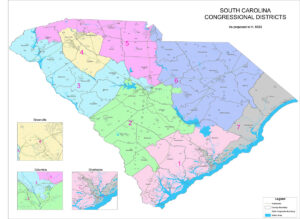 South Carolina lawmakers have released a proposed congressional map that could significantly reshape the state’s political landscape ahead of the 2026 elections. The draft was introduced during a Judiciary subcommittee hearing, marking


 North Carolina’s tourism industry just hit a historic milestone, with visitors spending a record $37.2 billion across the state in 2025. The total tops last year’s $36.7 billion and marks continued growth in one of the state’s largest economic drivers.



 South Carolina lawmakers have just approved a controversial bill that would allow
 Manufacturing is critical to U.S. economic growth, but projecting what kind of growth we will actually see is difficult. With forecasts ranging from as few as 100,000 new jobs over 10 years to as many as 3.8 million, the real question is where that growth will occur—and at what pace.