
Rock Hill Lands Massive New Industrial Development Along I-77

Via The Keith Corp

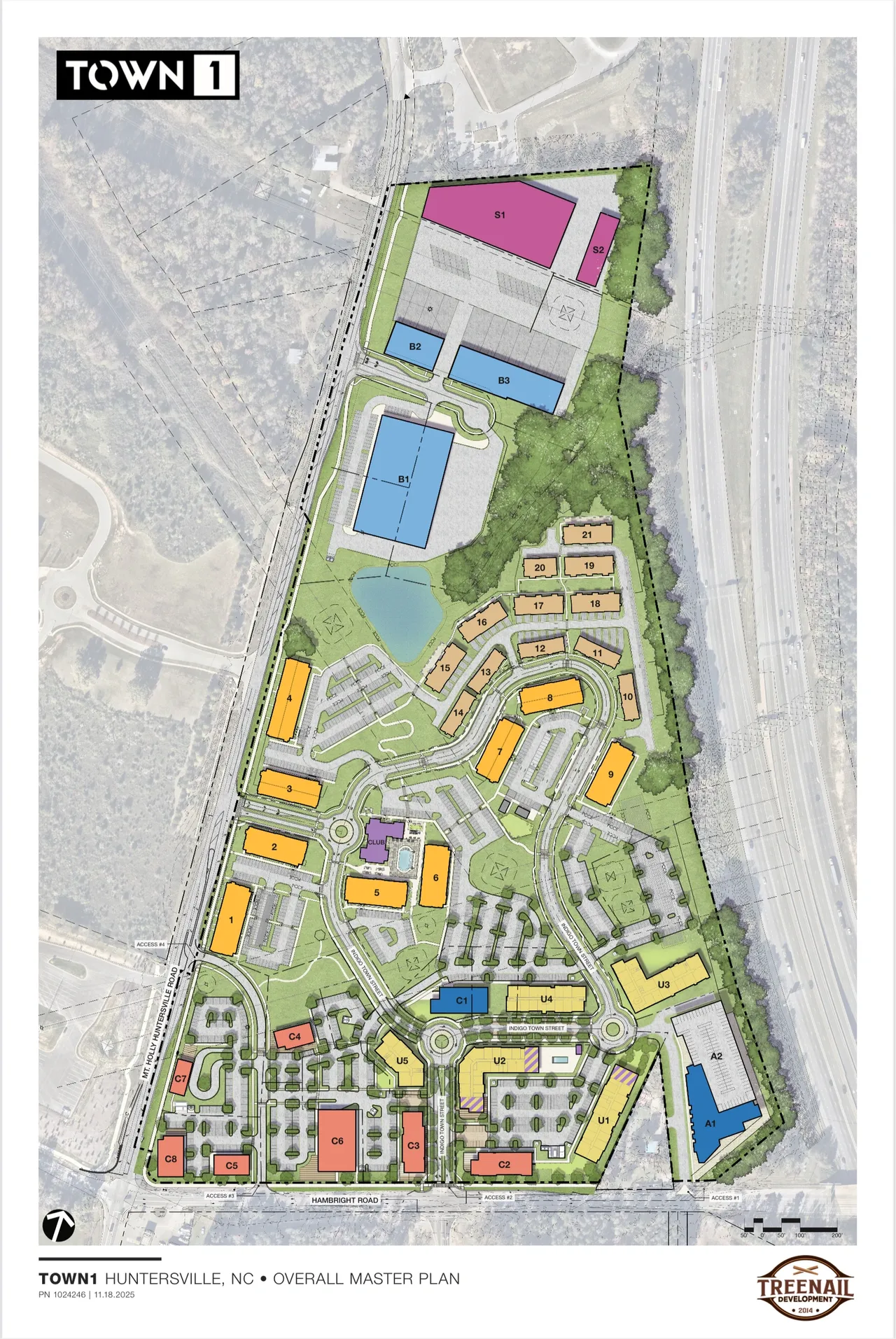
A major new industrial expansion is taking shape just outside Charlotte. The Keith Corporation has just acquired 178 acres in Rock Hill for the next phase of the Legacy Park East business park.

The site could support up to 1.7 million square feet of industrial space across three to seven buildings. Plans allow for flexible layouts, including rear-load and cross-dock configurations.

Developers say the project can accommodate tenants ranging from 100,000 to 1 million square feet. The space is targeted for manufacturing, warehousing, and distribution users.

The property is zoned Industry General, allowing for a wide range of industrial uses, including “heavy industrial” that use high quantities of toxic and explosive chemicals like Silfab. Its location offers direct access to Interstate 77, connecting tenants to the broader Charlotte region and beyond.

The new phase builds on the success of the existing Legacy Park East campus. Current tenants include major names such as Pratt Industries, Ross Stores, Pepsi, Scentsy, and Elite Logistix.

Company leaders say Rock Hill remains one of the strongest-performing submarkets in the Charlotte area. They point to continued demand from companies seeking modern industrial space near a growing population base.

The site’s scale and location are key advantages. It sits near retail centers and within close reach of South Charlotte, one of the fastest-growing parts of the metro.

OceanaGold Announces $240 Million Investment in Historic Charlotte-Area Gold Mine

With gold prices now surpassing $4,600 per ounce, the Charlotte area’s largest gold mine has just announced a historic $240 million investment, bringing 200 new jobs to our area.

OceanaGold is expanding its Haile Gold Mine near Kershaw as it ramps up production and transitions operations.

The gold mine, estimated to be sitting on over $5 billion worth of gold, already employs roughly 850 full-time workers and 150 contractors. New hires will span engineering, operations, and heavy equipment roles.

Company leaders say the investment will support both current production and future growth. The site is shifting between underground and open pit mining, increasing demand for skilled workers.

The expansion follows a strong year for the company, including record production and increased exploration activity. OceanaGold also began trading on the New York Stock Exchange in April to attract more U.S. investment.

The economic impact is substantial. A 2025 University of South Carolina study estimates the mine generates $717.5 million annually across the state, with a projected $9.3 billion impact by 2037.

The World’s Largest Flying American Flag in Gastonia Is Over 225 Feet Tall (Video)

The largest flying American flag in the world measures a total of 7,410 square feet and is a hung on a pole that stands over 225 feet in the air.

It was initially erected by the Gastonia AMVETS Post 920 in 1999:

The actual flag measures 65 feet tall and 114 feet wide with a total weight of 180 pounds. It can be clearly seen from over 30 miles away.

There are 2 flags larger than this in California, but neither is flown, and there is a larger ‘free-flying’ flag that not hangs over the George Washington Bridge, that was installed in 2013.

Charlotte Announces New Water Restrictions and Fines as Drought Worsens

Charlotte is moving into mandatory water restrictions as drought conditions worsen and recent rainfall falls far short of what the region needs. Officials warn a hot, dry summer is ahead, increasing pressure on already strained water supplies.

Charlotte Water will officially implement Low Inflow Protocol Stage 2 beginning May 15, requiring residents to cut back on non-essential water use. At the same time, Charlotte Fire has issued an immediate burn ban due to dry conditions.

Charlotte Water says the restrictions are necessary to protect the system and maintain reliable service. The measures align with other utilities across the Catawba River basin, where water levels continue to drop.

Under the new rules, lawn watering will be limited to two days per week. Odd-numbered addresses can water on Tuesdays and Saturdays, while even-numbered addresses are limited to Wednesdays and Sundays.

Watering is only allowed before 6 a.m. or after 6 p.m., with a maximum of one inch per week including rainfall.

Additional restrictions go further. Residents cannot wash vehicles at home, fill swimming pools, or operate decorative water features without aquatic life. Limited pool top-offs are allowed during designated times.

Enforcement will also ramp up. Starting May 15, residents can report violations by calling 311 or submitting an online form. Charlotte Water says fines will begin at $100 for non-compliance.

Officials are urging both city water users and those on private wells to conserve. In some nearby areas, including parts of Belmont, river levels have already dropped significantly.

Charlotte Water says conditions will be reviewed every two weeks, but for now, the message is clear: reduce usage immediately.

For the Charlotte region, the early timing of these restrictions signals a potentially severe summer ahead, with conservation efforts now critical to protecting water supplies.

NC Police Respond to Grenade Threat at Walmart

A reported grenade threat triggered a Walmart evacuation and standoff in Caldwell County on Friday, ending with one man in custody.

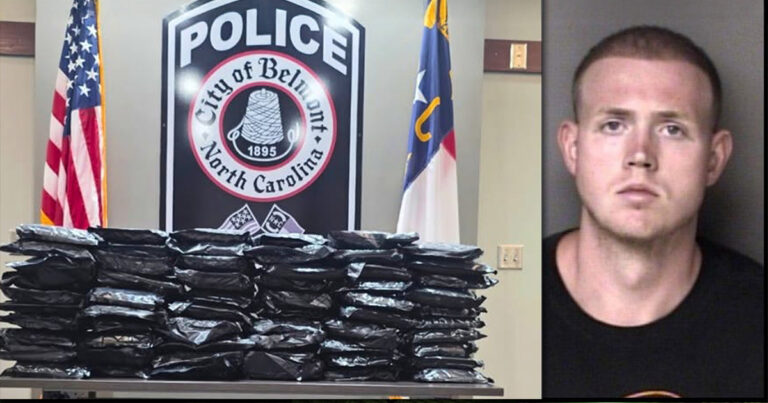
According to the Hudson Police Department, 911 received a call around 1 p.m. from 24-year-old Alexander Little, who claimed someone in the Walmart, off Hickory Blvd just south of Lenoir, had a live grenade.

When officers arrived, they located Little inside and say he pulled out what appeared to be the device. Police immediately evacuated the store and set up a perimeter.

During the standoff, officers say Little made threatening gestures and statements suggesting he intended to detonate it. Authorities later determined the grenade was inert.

Officers used less-lethal force to take him into custody without injuries.

Little now faces charges including possession of a weapon of mass destruction, false bomb report, and going armed to the terror of the public. He is being held without bond.

Multiple agencies responded, including the Caldwell County Sheriff’s Office, North Carolina State Highway Patrol, Granite Falls Police Department, and the Federal Bureau of Investigation.

The incident briefly shut down the store and drew a large emergency response before ending safely.

Real Results: Do Customized Hair Growth Plans Actually Work?

Most people dealing with hair loss have tried at least three or four things before they find something that actually helps. A shampoo here, a supplement there, maybe an oil someone recommended. And when none of it works, the frustration isn’t just about the hair — it’s about not knowing why it’s falling out in the first place.

That’s where customized hair growth plans come in. The idea sounds logical: if hair loss has different causes for different people, the solution probably shouldn’t be the same for everyone either. But do these personalized approaches actually deliver results, or is “customized” just a marketing word?

Why One-Size-Fits-All Rarely Works for Hair Loss

Hair loss isn’t a single condition. It’s more like a symptom that can come from many different directions — hormonal imbalance, nutritional deficiency, scalp inflammation, chronic stress, thyroid dysfunction, or genetic sensitivity to DHT (a hormone that shrinks hair follicles over time).

When someone buys a generic hair growth kit, it’s designed around the most common causes. But if your hair loss is driven by iron deficiency or elevated cortisol levels, a DHT-blocking shampoo isn’t going to solve much. You’re treating a different problem than the one you actually have.

This mismatch is why so many people feel like “nothing works” — when in reality, the wrong things were being tried.

What a Real Customized Plan Actually Involves

A genuinely personalized hair growth plan goes beyond a quiz that recommends a product bundle. It starts with understanding what’s happening at the root level — sometimes literally.

A thorough approach typically includes:

  • Reviewing blood work to check for deficiencies (iron, vitamin D, B12, thyroid hormones)
  • Assessing scalp health — whether there’s dandruff, excess oil, inflammation, or follicle miniaturization
  • Understanding lifestyle patterns like sleep, diet quality, and stress load
  • Mapping out family history to gauge genetic contribution

Based on this, a plan might include a combination of topical treatments, oral supplements, dietary changes, and sometimes Ayurvedic or dermatological interventions — not all at once, but sequenced in a way that makes sense for that person’s specific situation.

Do These Plans Actually Show Results?

The honest answer is: yes, but not quickly, and not without consistency.

Hair grows in cycles. The growth phase (anagen) lasts months, and when follicles are damaged or dormant, it takes time to revive them. Most people who stick with a well-designed plan start seeing reduced shedding within 8–12 weeks, and visible regrowth typically takes 4–6 months.

Reading through a Traya Hair Growth Review gives you a realistic picture of what this journey looks like for real users — the early frustration, the gradual turning point, and what actually made the difference. What stands out in many of these accounts isn’t a dramatic overnight transformation, but a slow, measurable improvement that continues as long as the underlying causes are being addressed.

That’s an important distinction. Results from a customized plan tend to last longer because the root problem is being treated — not just the visible symptom.

The Role of Topical Care in Personalized Treatment

Scalp and hair care products still play a role, but they work best when chosen for your specific hair type and scalp condition. Someone with a dry, flaky scalp has different needs than someone dealing with excess sebum and clogged follicles.

Oils, for example, aren’t universally beneficial — the wrong one can worsen buildup on an already oily scalp. Choosing the best oil for hair growth means understanding your scalp’s current state, not just picking whatever has the most reviews online.

The same logic applies to shampoos, serums, and masks. Personalization here isn’t about luxury — it’s about not doing more harm while the internal treatment does its work.

Final Thoughts

Customized hair growth plans work when they’re genuinely built around the individual — not just branded that way. The difference lies in the depth of assessment, the combination of internal and external care, and realistic timelines that match how hair biology actually functions.

If you’ve tried multiple products without results, the problem probably isn’t that nothing works. It’s that the underlying cause hasn’t been identified yet. Starting there — with the why — is almost always the better place to begin.

Spectrum to Award $23,000 to Several Nonprofits Across the Charlotte Area

Spectrum today announced a donation of $23,000 to seven different nonprofits in the Charlotte area through the company’s employee-driven grants program that recognizes the value of community service, Spectrum Employee Community Grants.

The recent Spectrum Employee Community Grant recipients are:

  • Autism After 18 – $1,000 to provide regular, ongoing classes, workshops, and social events for young adults with autism in the Charlotte area.
  • The Bulb Gallery – $1,000 to support mobile farmers markets that distribute fresh, nutritious produce directly in underserved neighborhoods.
  • Charlotte Bilingual Preschool – $1,000 to support free early education to children facing language and economic barriers.
  • Florence Crittenton Services – $5,000 to provide basic needs including a safe place to live, healthy meals, medical care and trauma-informed therapy for pregnant and single mothers aged 14-20.
  • Handz of Hope – $5,000 for basic need services to individuals and families in the community that are experiencing food insecurity, homelessness, and financial hardship.
  • Matthews HELP Center – $5,000 for families needing financial assistance with rent, utilities and childcare.
  • Transformation by Charlotte Angels – $5,000 to fund their Bright Futures program to provide trauma-informed mental health and wellbeing initiatives supporting children in foster care.

“Spectrum Employee Community Grants support local nonprofits that hold a meaningful connection to the Spectrum employees who nominate them, and to the communities they serve,” said Rahman Khan, Group Vice President, Spectrum Community Impact. “We’re increasing our investment in the program, in support of our employees’ dedication to volunteer work and vital community organizations that enhance the lives of local residents.”

Launched in 2019, Spectrum Employee Community Grants support nonprofits nominated by employees with a personal connection to the organization through at least one year of their own volunteer work. Recipients deliver a broad range of critical social services to underserved community members, including food pantries, homeless shelters, clothing distribution, job training for veterans and paying overdue rent and utility bills for those in crisis.

More information about Spectrum Community Employee Grants is available here.

After 10 Years of Delays, Charlotte Rail Trail Bridge Finally Gets Fully Funded

After nearly a decade of delays, Charlotte’s long-planned Rail Trail bridge has now finally been fully funded.

City Council just approved more than $3 million in new funding to help finally connect South End to Uptown across Interstate 277.

The funding includes over $2.5 million from the Charlotte Regional Transportation Planning Organization and a $511,500 donation from Queen’s Table, a nonprofit backed by the Foundation for the Carolinas.

The project will create a continuous path along the Rail Trail, eliminating a long-standing gap near the I-277 overpass. Today, pedestrians and cyclists must leave the trail and navigate narrow sidewalks and traffic along Morehead Street.

Originally proposed in the late 2017, the bridge was cut due to budget constraints and remained stalled for years. It was revived in 2019, but costs have since climbed from $11 million to about $16.4 million.

The 280-foot bridge will feature a 16-foot-wide path for both cyclists and pedestrians, along with arches, cables, and lighting. It will connect directly to the CATS Brooklyn Village Station.

Charlotte-based Blythe Construction is building the project, which broke ground last October. Completion is now expected by mid-2028.

For Charlotte, the bridge will close one of the city’s most frustrating gaps, finally creating a safer and seamless link between two of its busiest neighborhoods, and establishing another icon for our city.

Bigfoot Lure Is Exploding in NC – 2 Bigfoot Festivals This Summer To The East and West of Charlotte

Two separate Bigfoot festivals will take place this summer in North Carolina, as bigfoot lure and sightings continue to increase across our state.

First, the longstanding WNC Bigfoot Festival marks its 6th year on August 29th in Marion, NC (about an hour north west of Charlotte), hosted by the nonprofit Bigfoot 911.

That group has explored Western North Carolina for years, gathering extensive evidence of the elusive cryptid. More than 40,000 attendees have enjoyed past WNC bigfoot festivals, which feature Bigfoot-style food, interactive panels, and a calling contest.

The Uwharrie Bigfoot Festival will also kick off in Denton, NC (about an hour north east of Charlotte) on Sept 4th.

Attendees to the second annual ‘Uwharrie Bigfoot Festival‘ can expect:

  • Live music
  • Tasty food
  • Unique entertainment
  • Bigfoot Call Contest
  • Guest speakers
  • Craft and merchandise vendors
  • Kid Zone with bounce houses and a petting zoo
  • “The Floating Sasquatch” attraction
  • TurtleMan appearances
  • Sasquatch Monster Truck rides

Event organizers are now accepting vendor applications. For details or a vendor form, email Angie at angie.uwharriebigfootfestival@gmail.com.

Free Fans Available in NC as Heat Relief Program Kicks Off May 1

North Carolina is launching its annual heat relief program to help vulnerable residents stay safe this summer. Free fans will be distributed statewide starting May 1 through Operation Fan Heat Relief.

The program, led by the North Carolina Department of Health and Human Services Division of Aging, runs through October 31. It partners with local agencies to reach residents in need.

Adults age 60 and older, along with people with disabilities, can apply through local area agencies on aging.

The program has operated since 1986. Last year, $85,000 in donations helped distribute more than 3,600 fans and 23 air conditioners across 93 counties.

Health officials warn that extreme heat is especially dangerous for older adults. Many are less able to sense temperature changes or take medications that increase heat risk.

Residents are also encouraged to drink more fluids, avoid peak heat, and spend time in air-conditioned spaces when possible.