
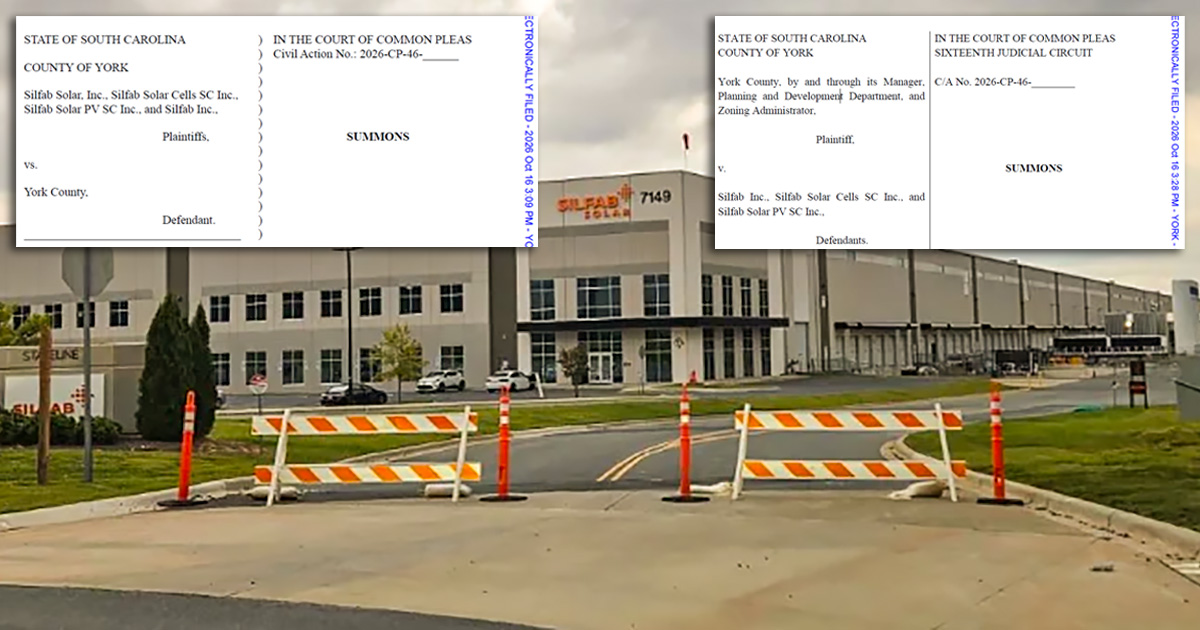
Today, Silfab and York County both filed new lawsuits against each other in unique legal strategy that attempts to both skirt responsibility and attain protection from having to uphold the zoning code and recent court rulings against the chemical factory currently being constructed next door to 2 new schools in Fort Mill.
Silfab filed the first complaint at 3:09 pm, Friday, October 16 (Silfab vs York County – case #2026-CP-46-03785). York County followed at 3:28 pm, just 19 minutes later (York County vs Silfab – case #2026-CP-46-03786). The mirrored lawsuits name each other as defendants yet share smokescreen arguments that could protect the heavy industrial use at 7149 Logistics Lane in Fort Mill.
Silfab argues that the County’s internal e-mails and FILOT tax deal should protect its factory “regardless of the outcome of the BZA Appeal” (paragraph 65). York County asks whether it must enforce the zoning ruling while arguing that zoning interpretations “do not retroactively render approvals null and void” (paragraph 75(d)). Put simply, Silfab wants its earlier promises to shield the factory even if it loses its appeal, and the County advances arguments supporting that protection.
On May 9, 2024, the Board of Zoning Appeals voted 5–0 to reverse the administrator’s classification of solar-panel manufacturing before any permits were issued for Silfab’s factory or chemical storage buildings or bunkers. The ruling expressly found that Silfab’s proposed future use was prohibited in their current zoning designation.
Judge William McKinnon affirmed the BZA this past July and issued an amended order August 27 using even clearer language. He upheld its rejection of the “Computer and Electronic Products Manufacturing” classification. He also rejected the argument that the 2023 tax-incentive agreement amended the zoning code. McKinnon also described the 2022 verification letter as an informal communication that expressly was not a permit. His order recognized that the zoning dispute had concrete consequences for neighboring property owner Walter “Wally” Buchanan.
To be clear, Judge William A. McKinnon’s specifically ruled Silfab’s operations unlawful, stating:
“…the record affirmatively supports the BZA’s finding that the manufacturing process at issue is qualitatively distinct from the listed Computer and Electronic Products Manufacturing examples and is more consistent with heavy industrial activity than light. The Code defines Light Industrial as activity that “ordinarily do[es] not create noise, smoke, fumes, odors, glare, or health or safety hazards outside of the building or lot” and expressly excludes “hazardous material treatment and storage facilities…”
According to three technical documents submitted for the Fort Mill plant – including the facility’s Hazardous Materials Inventory System (HMIS) report, DES Air Permit, and Industrial Wastewater Treatment Plans — the factory is designed to transform raw silicon wafers into finished solar panels through a multi-stage industrial process involving strong acids, explosive gases, and chemical wastewater treatment systems.
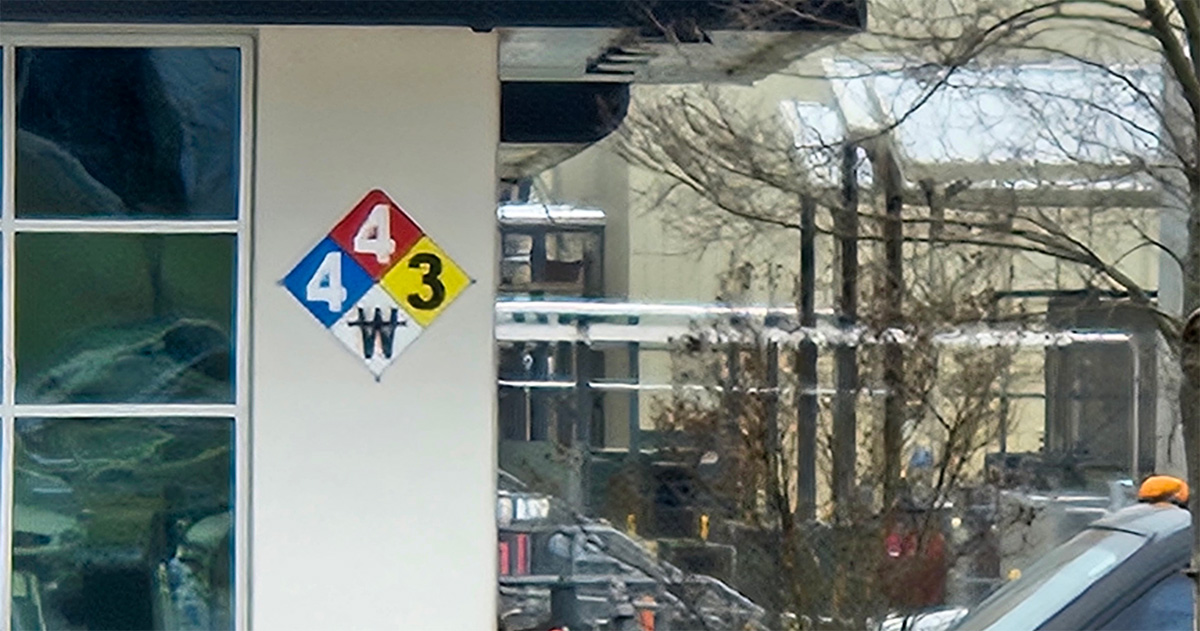
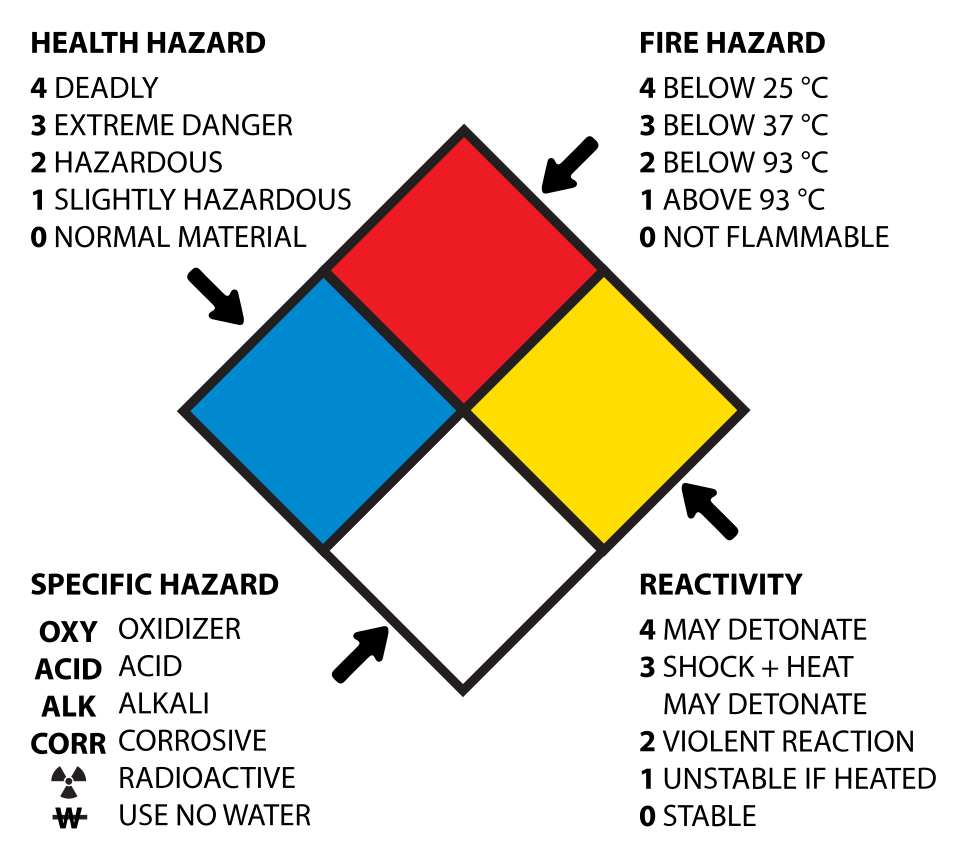 The NFPA Fire Diamond posted on the side of Silfab’s building has a 4-4-3-W Rating.
Blue (Left — Health Hazard: 4): Indicates a severe health risk. Short exposure could cause death or major residual injury even with prompt medical treatment. Red (Top — Flammability Hazard: 4): Indicates extreme flammability. The material rapidly or completely vaporizes at atmospheric pressure and ambient temperature, or is readily dispersed in air and burns easily (flash point below 73°F). Yellow (Right — Instability/Reactivity Hazard: 3): Indicates serious reactivity. The material is capable of detonation, explosive decomposition, or explosive reaction if subjected to a strong initiating source, or when mixed with water under heat or pressure. White (Bottom — Special Hazard: W): The symbol is a stylized “W” (W with a slash through it), meaning water-reactive. It reacts violently or explosively with water and poses an unusual hazard when water is used as an extinguishing agent.
Some of the most hazardous materials Silfab’s documents state they plan on store and use (with frequent refills) include; 44,000 lbs of anhydrous ammonia gas, 26,456 lbs of (pyrophoric) silane gas, 15,850 gallons of hydrofluoric acid, 10,560 gallons of hydrochloric acid, 13,000 gallons of liquid oxygen (used as rocket fuel), 9,198 lbs of sulfuric acid, 1,945 lbs of phosphorus oxychloride gas, 1,540 lbs of boron trichloride gas, 951 lbs of (pyrophoric) trimethylaluminum gas, and 63,360 lbs of nitrous oxide.
For nearby families, this dispute carries consequences far beyond court filings.
Two March chemical incidents disrupted school operations at Flint Hill Elementary, beside the facility. The Fort Mill school board subsequently requested permanent limits to non-hazardous assembly and removal of hazardous chemicals. Its March 10 resolution also stated that neither Silfab nor County Emergency Management initially notified the district of the releases.
The district renewed its objections this month. An October 2 letter challenged restarting commissioning before applicable safety recommendations were completed and demonstrated.
The district’s objection makes clear that families’ safety concerns remain unresolved from its perspective, whatever happens in the zoning cases.
York County Staff and Council are playing a dangerous game
S.C. Code § 15-78-60(12) expressly addresses issuing permits and certificates—and failing or refusing to revoke them. It permits governmental liability when those licensing functions are exercised with gross negligence. Additionally, under S.C. Code §6-29-950, “No permit may be issued or approved” unless state planning law and local zoning ordinances are followed. The same statute states, “A violation of any ordinance adopted pursuant to the provisions of this chapter is a misdemeanor… Each day the unlawful erection, construction, reconstruction, alteration, conversion, maintenance, or use continues is considered a separate offense.“
The strongest South Carolina analogy is Steinke v. S.C. Department of Labor, Licensing & Regulation, 336 S.C. 373 (1999). Two young people died after a cable-car accident. Regulators had received repeated warnings about unsafe equipment. The Supreme Court recognized licensing-related gross-negligence liability and held that injured third parties could invoke the statutory exception.
The argument here would be specific: officials received warnings identifying a potentially lethal hazard, possessed applicable permit or certificate powers, and exercised those functions with gross negligence, causing preventable deaths or injuries.
Jensen v. Anderson County DSS, 304 S.C. 195 (1991) supplies the framework for establishing a duty to an identifiable protected class. A Silfab claim should connect applicable zoning and life-safety provisions to the affected schoolchildren, staff and nearby residents.
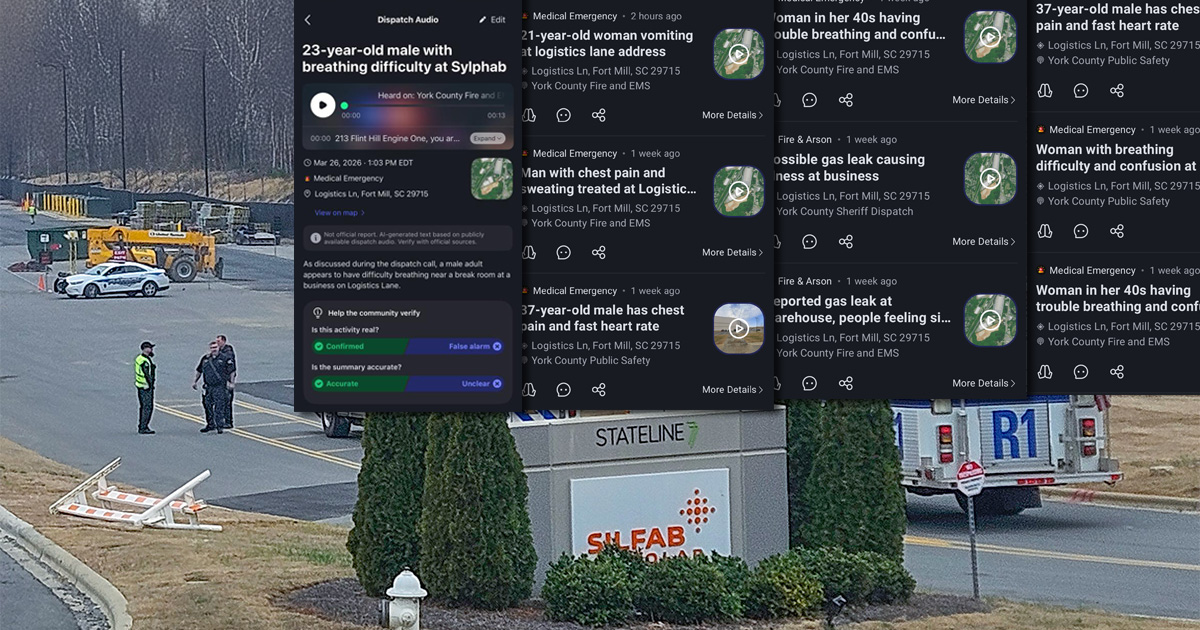 York County officials have repeatedly received warnings about Silfab’s zoning status, chemical hazards and proximity to schools and neighborhoods. South Carolina law can allow governmental liability for gross negligence involving permits and certificates, and potential federal civil-rights claims could also apply.
In a worst-case catastrophic scenario, the financial exposure could potentially reach hundreds of millions or even exceed $1 billion, when damages, emergency response, cleanup, school disruption, litigation costs and other expenses are considered.
If another chemical spill occurs at Silfab (after they truck in the high quantities of deadly and explosive chemicals) and serious injuries occurs, records showing what county officials knew, when they knew it, what they authorized and what they could have lawfully prevented could become central evidence in subsequent litigation and substantial taxpayer expenses.