
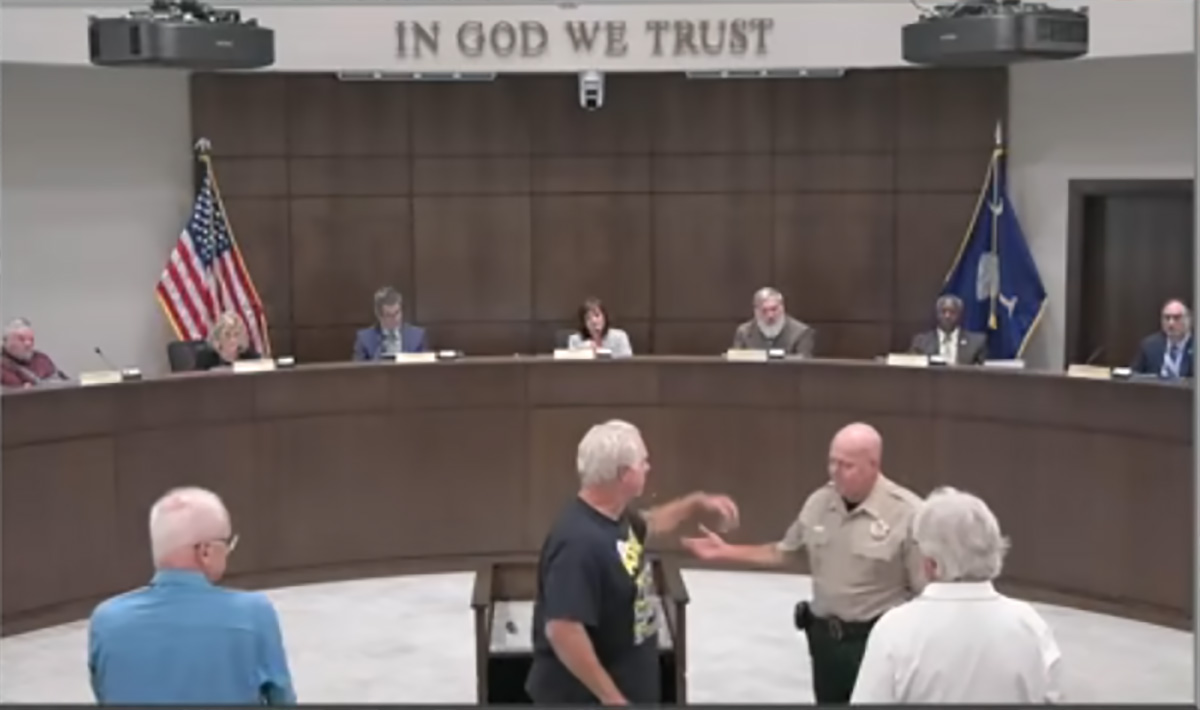
 A longtime local pastor and one of the central figures in the Silfab Solar zoning fight was escorted from Monday night’s York County Council meeting after calling the company’s Fort Mill operations unlawful.
Walter “Wally” Buchanan spoke during a second public-comment period in the middle of the Oct. 5 meeting. Buchanan criticized York County’s continued handling of Silfab and said the company’s manufacturing operation violates county zoning law.
Before being removed by the sheriff, Wally told the York County Council, “You have disrupted my life for 2 and a half years…you will not go by the law, you expect everybody else to go by the law, but you will not make yourself go by the law… if you don’t stand up for what’s right, you’ll stand up for what’s wrong – Jesus love you and you gonna be accountable…”
After York County Council spent several hours behind closed doors in executive session, Interim County Manager Jim Baker announced that the county intends to seek a declaratory judgment from a court.
Baker said, “York County is unequivocally committed to following the law and respecting Judge McKinnon’s order, however, Judge McKinnon’s order did not specifically address how his decision impacts Silfab Solar’s existing operations, that were approved before the BZA decision was made. In addition, the decision is stayed currently while on appeal. The County staff believes the BZA’s decision applies only prospectively. By promptly seeking [sir, don’t try to shout me down] that’s not respectful, by promptly seeking a declaratory judgement the County will be asking the Court to resolve this issue.”
York County’s position centers on its claim that Silfab’s existing operations were approved before the BZA acted.
However, Judge McKinnon recently struck down that theory. Last month, Judge William McKinnon affirmed in finality the BZA’s decision that solar-panel manufacturing is prohibited in Light Industrial zoning (a decision that was made before Silfab received any permits to build their factory). The order rejected the proposed computer/electronics classification, treated the 2022 verification letter as an informal communication rather than a permit, and rejected FILOT as zoning authorization.
Chemical manufacturing could resume within two weeks
The confrontation comes at a particularly sensitive moment.
Silfab has told state regulators that commissioning involving gases and chemicals could restart no earlier than Oct. 19. York County has publicly acknowledged that schedule. York County Government also said its staff will continue working with Silfab as the company moves toward “full commissioning.”
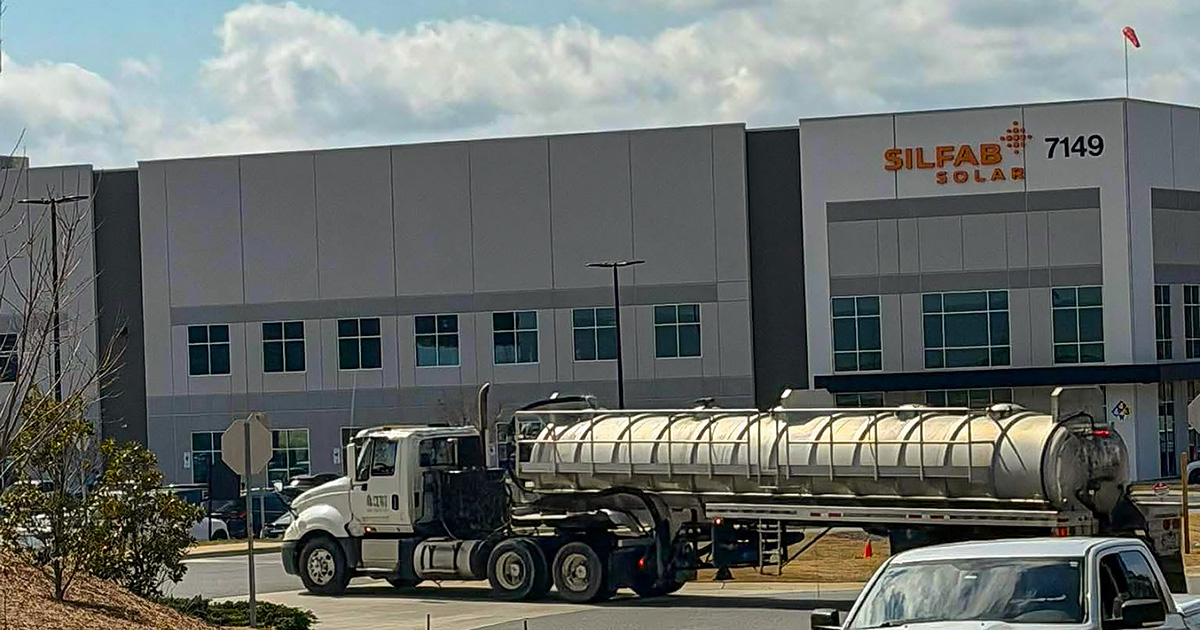 According to three technical documents submitted for the Fort Mill plant – including the facility’s Hazardous Materials Inventory System (HMIS) report, DES Air Permit, and Industrial Wastewater Treatment Plans — the factory is designed to transform raw silicon wafers into finished solar panels through a multi-stage industrial process involving strong acids, explosive gases, and chemical wastewater treatment systems.
Some of the most hazardous materials Silfab’s documents state they plan on store and use (with frequent refills) include; 44,000 lbs of anhydrous ammonia gas, 26,456 lbs of (pyrophoric) silane gas, 15,850 gallons of hydrofluoric acid, 10,560 gallons of hydrochloric acid, 13,000 gallons of liquid oxygen (used as rocket fuel), 9,198 lbs of sulfuric acid, 1,945 lbs of phosphorus oxychloride gas, 1,540 lbs of boron trichloride gas, 951 lbs of (pyrophoric) trimethylaluminum gas, and 63,360 lbs of nitrous oxide.
York County Staff and Council are playing a dangerous game
S.C. Code § 15-78-60(12) expressly addresses issuing permits and certificates—and failing or refusing to revoke them. It permits governmental liability when those licensing functions are exercised with gross negligence. Additionally, under S.C. Code §6-29-950, “No permit may be issued or approved” unless state planning law and local zoning ordinances are followed. The same statute states, “A violation of any ordinance adopted pursuant to the provisions of this chapter is a misdemeanor… Each day the unlawful erection, construction, reconstruction, alteration, conversion, maintenance, or use continues is considered a separate offense.“
The strongest South Carolina analogy is Steinke v. S.C. Department of Labor, Licensing & Regulation, 336 S.C. 373 (1999). Two young people died after a cable-car accident. Regulators had received repeated warnings about unsafe equipment. The Supreme Court recognized licensing-related gross-negligence liability and held that injured third parties could invoke the statutory exception.
The argument here would be specific: officials received warnings identifying a potentially lethal hazard, possessed applicable permit or certificate powers, and exercised those functions with gross negligence, causing preventable deaths or injuries.
Jensen v. Anderson County DSS, 304 S.C. 195 (1991) supplies the framework for establishing a duty to an identifiable protected class. A Silfab claim should connect applicable zoning and life-safety provisions to the affected schoolchildren, staff and nearby residents.
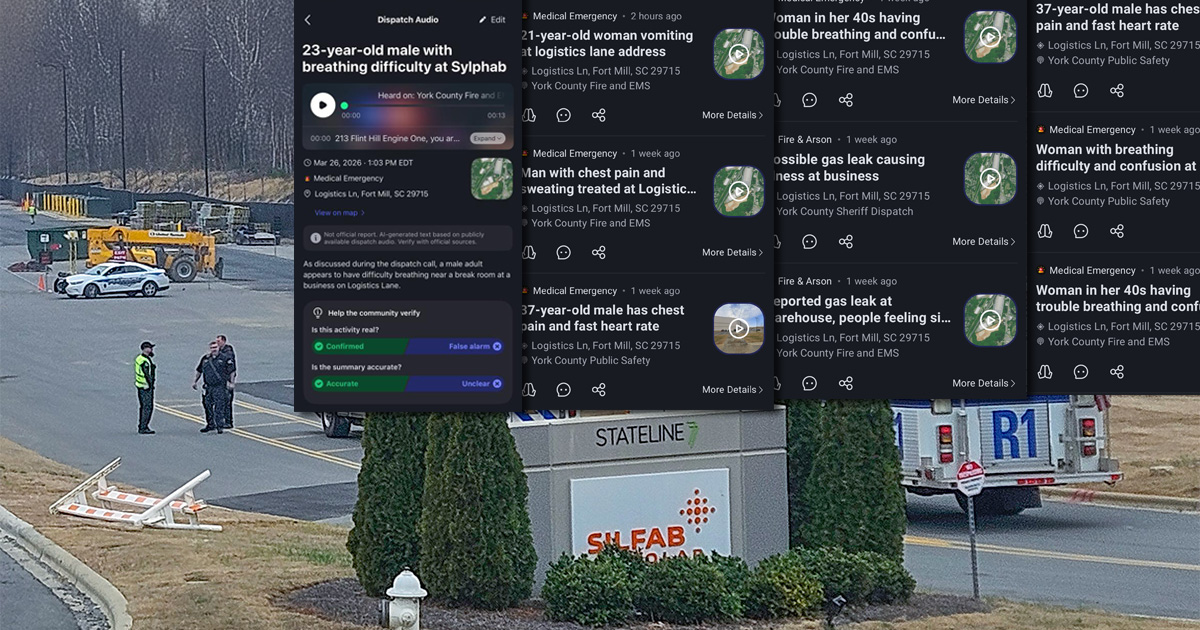 York County officials have repeatedly received warnings about Silfab’s zoning status, chemical hazards and proximity to schools and neighborhoods. South Carolina law can allow governmental liability for gross negligence involving permits and certificates, and potential federal civil-rights claims could also apply.
In a worst-case catastrophic scenario, the financial exposure could potentially reach hundreds of millions or even exceed $1 billion, when damages, emergency response, cleanup, school disruption, litigation costs and other expenses are considered.
If another chemical spill occurs at Silfab (after they truck in the high quantities of deadly and explosive chemicals) and serious injuries occurs, records showing what county officials knew, when they knew it, what they authorized and what they could have lawfully prevented could become central evidence in subsequent litigation and substantial taxpayer expenses.