
 Charlotte’s industrial market is still growing, but new national data shows the region is also feeling the pressure of a cooling warehouse boom.
According to CommercialCafe’s new March 2026 Industrial Report, the Charlotte market posted an average industrial rent of $7.68 per square foot in January, up 3.1% from a year earlier. At the same time, the market’s vacancy rate climbed to 11.6%, one of the highest among major U.S. industrial markets tracked in the report.
That puts Charlotte in an unusual position. Rents are still rising, but empty space is rising faster.
Charlotte’s rent growth lagged well behind other Southern rivals. Atlanta posted 7.9% annual rent growth, Dallas-Fort Worth hit 6.5%, Houston reached 5.8%, and Nashville came in at 6.0%. Charlotte’s 3.1% increase matched Memphis and trailed nearly every major Southern logistics hub in the comparison.
The bigger headline may be vacancy. Charlotte’s 11.6% vacancy rate matched Miami and sat above the national average of 9.2%. Only a few major markets in the report, including Denver, Memphis, Boston, Tampa, and the Central Valley, posted higher vacancy levels.
CommercialCafe highlighted Charlotte as a prime example of rising Southern vacancies, noting that the market jumped 440 basis points year over year, from 7.2% to 11.6%.
Even so, leasing prices show demand has not disappeared. Space leased in Charlotte over the past 12 months averaged $8.03 per square foot, above the market’s in-place average of $7.68. That suggests new deals are still being signed at a premium, even as more industrial space sits available.
Nationally, industrial rents reached $8.99 per square foot in February, up 5.5% year over year, while vacancy hit 9.2%. The report said supply growth has started to normalize, but vacancies remain elevated after several years of rapid development.
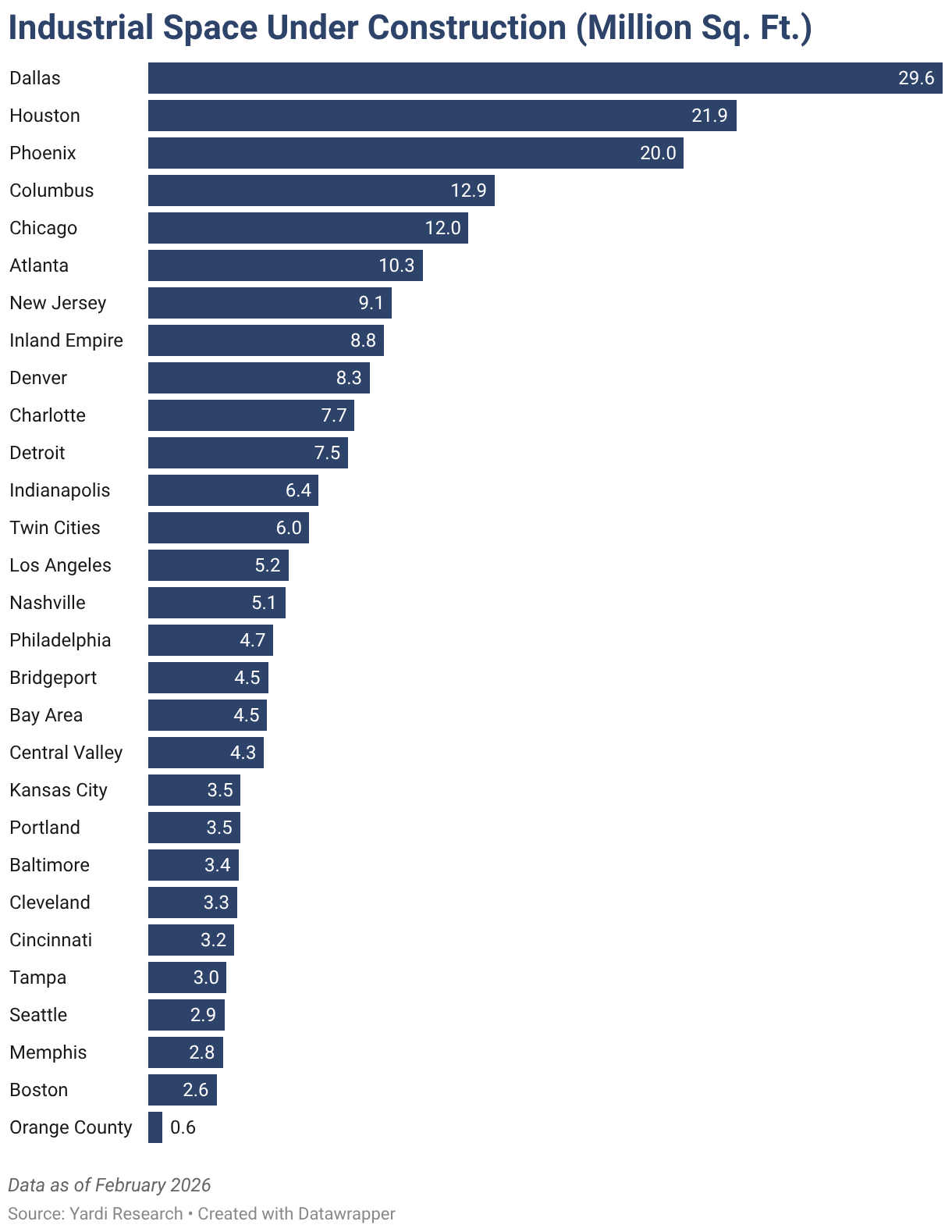
For Charlotte, that likely means the market is shifting from breakneck expansion to a more competitive phase. Developers and landlords are no longer operating in a near-zero-vacancy environment. Instead, tenants now have more options, and pricing power may be softer than it was during the peak warehouse rush.
That matters in a region where heavy industrial growth has been a major part of the local economy. Charlotte has benefited for years from its location, highway access, airport cargo activity, and growing population. But the latest figures suggest the market is no longer as tight as it once was.
Locally, the takeaway is clear: Charlotte remains a significant industrial hub, but it is now carrying more vacant warehouse space than many of its peers, even as rents continue to edge up. In other words, the market is still expanding, but the balance of power may be starting to shift.