
 South Carolina Attorney General Alan Wilson has now stepped into one of the Charlotte region’s most contentious development fights, demanding answers from York County Council over how Silfab Solar was allowed to move forward in Fort Mill despite a 5-0 York County Board of Zoning Appeals ruling that solar panel manufacturing is not a permitted use under the site’s Light Industrial zoning. Wilson said there appears to be “confusion” over the status of Silfab’s manufacturing operations and asked York County Chairwoman Christi Cox to explain.
“As I have reviewed questions from concerned citizens, there appears to be some confusion over the status of some of Silfab’s manufacturing operations under its present zoning,” Attorney General Alan Wilson stated in a press release. “As the Chief Legal Officer of the State, I would like to understand the process of how Silfab received their current zoning and permits.”
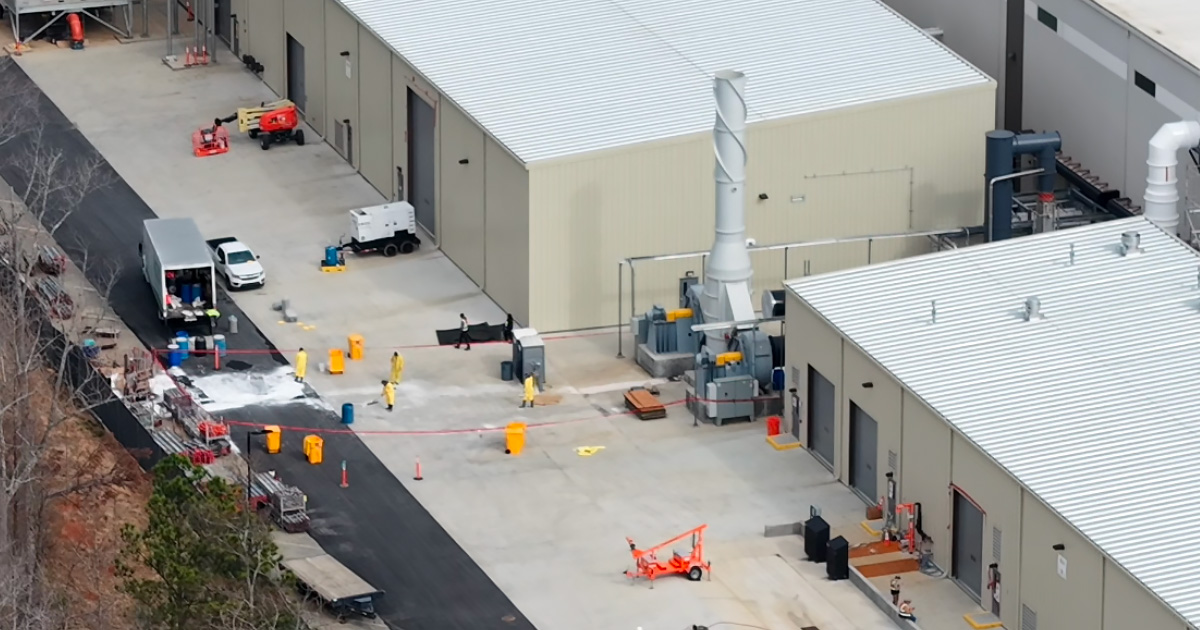
The stakes are no longer just legal. In recent weeks, York County reported that 1,530 gallons of potassium hydroxide spilled into a retention pond next to Flint Hill Elementary School, Silfab later pumped roughly 300,000 gallons of liquid from that pond for hazmat disposal.
Officials later confirmed a second leak involving hydrofluoric acid that led Flint Hill Elementary to close for two days while the South Carolina Department of Environmental Services ordered certain operations paused.
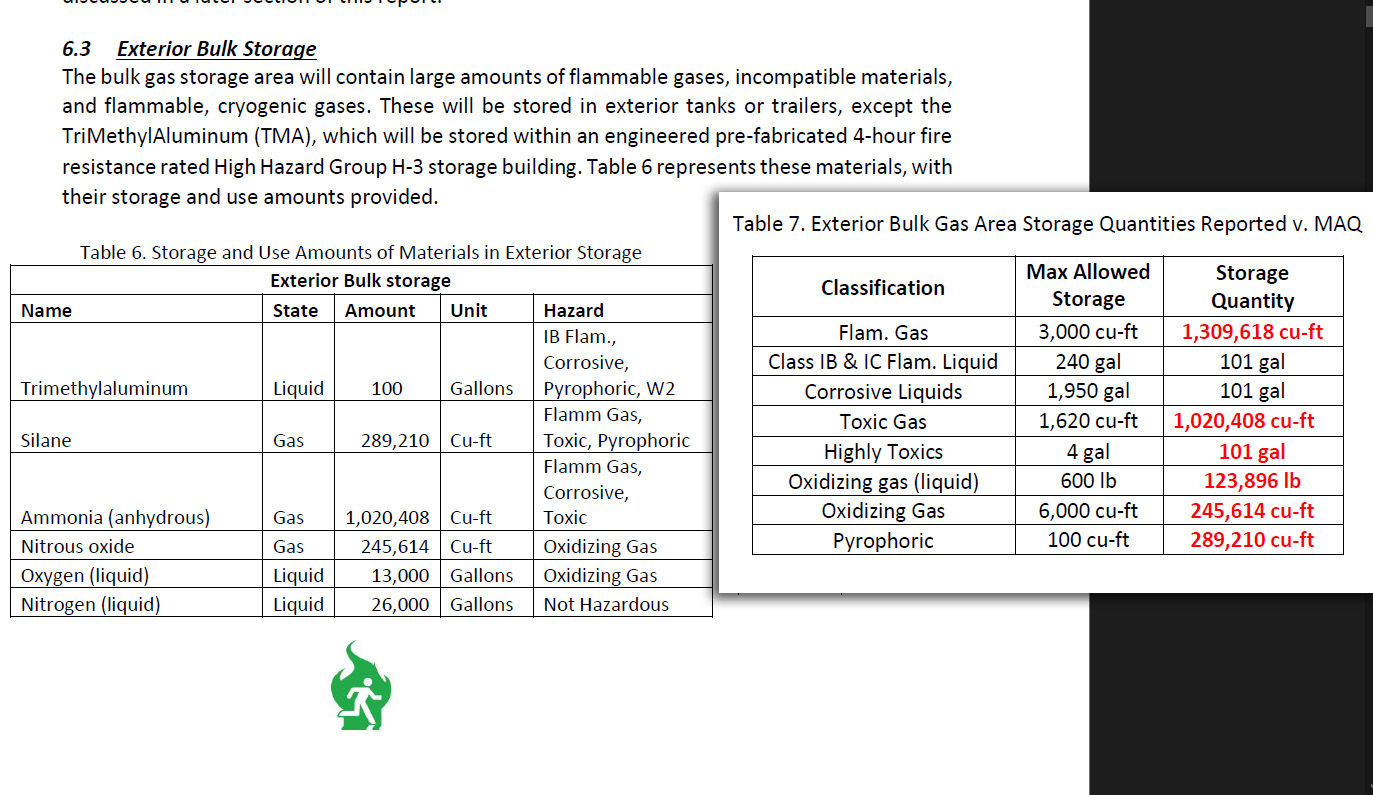
According to public documents from Silfab, once operational, their 900,000-square-foot TOPCON solar cell and module factory would convert raw silicon wafers into finished panels through a multi-stage industrial process involving strong acids, explosive gases, chemical wastewater treatment, air emissions, and industrial sludge. The reported chemical list includes the storage of over 1 million lbs of hydrofluoric acid, hydrochloric acid, potassium hydroxide, phosphorus oxychloride, nitric acid, sulfuric acid, boron trichloride, silane, ammonia, trimethylaluminum, liquid oxygen, and other hazardous chemicals.
That backdrop also helps explain why the Fort Mill School Board took the rare step of passing a formal resolution on March 10 asking Governor Henry McMaster, the General Assembly, Attorney General Wilson, and York County Council to permanently limit the site “strictly to non-hazardous assembly processes” and remove all hazardous chemicals from the property “in accordance with the facility’s current light industrial zone.”
Silfab’s project has drawn years of public opposition, numerous still-pending lawsuits, and controversial tax incentives and state and federal grants, yet citizens still don’t have clear answers about how this project sidestepped required zoning approvals.
York County’s own website shows that rezoning, zoning compliance, zoning verification, and BZA appeals are all separate legal processes. Yet the county’s public record still points back to a staff-issued zoning verification letter, not a rezoning or other clear final zoning action authorizing solar manufacturing in a Light Industrial district.
The starting point is South Carolina law. Under S.C. Code § 6-29-950, “It is unlawful to construct, reconstruct, alter, demolish, change the use of or occupy any land, building, or other structure without first obtaining the appropriate permit or permit approval.” The same law adds, “No permit may be issued or approved unless the requirements of this chapter or any ordinance adopted pursuant to it are complied with,” and, even more directly, “It is unlawful for other officials to issue any permit … without the approval of the zoning administrator.”
That matters because York County’s zoning page publicly lists a Rezoning Application, a Zoning Compliance General Application, and a Zoning Verification Request Form as different processes. But York County’s Silfab materials say the company received a staff zoning verification letter in 2022, not that the property was rezoned. Meanwhile, York County’s own Silfab FAQ says the BZA concluded in a unanimous 5-0 ruling on May 9th, 2024 that “Solar Panel Manufacturing is not listed as a Use applicable for the Light Industrial Zoning District and is therefore prohibited pursuant to § 155.270(G), York County Code of Ordinances,” and adds that the Use Table is what determines which uses are allowed or prohibited.
That is the core zoning problem. If the Use Table controls, and if the BZA found solar panel manufacturing is prohibited in LI under § 155.270(G), then a staff verification letter could not lawfully substitute for a rezoning or other valid zoning authorization. State law also limits the variance route. S.C. Code § 6-29-800 says, “The board may not grant a variance, the effect of which would be to allow the establishment of a use not otherwise permitted in a zoning district.”
York County’s Silfab page states that the county issued Silfab a Certificate of Occupancy on February 13, 2026. Additionally, according to public records, all of Silfab’s permits for upfit and new construction were issued after the May 2024 BZA ruling.
That sequence is why critics say the zoning law was never followed. Under § 6-29-950, permits cannot be issued unless local zoning ordinances are complied with (including standing BZA rulings). The same statute also says that when land “is or is proposed to be used in violation of any ordinance,” the zoning administrator, county attorney, or even a specially damaged neighboring owner may seek “injunction, mandamus, or other appropriate action” to stop the unlawful use, construction, conversion, or occupancy.
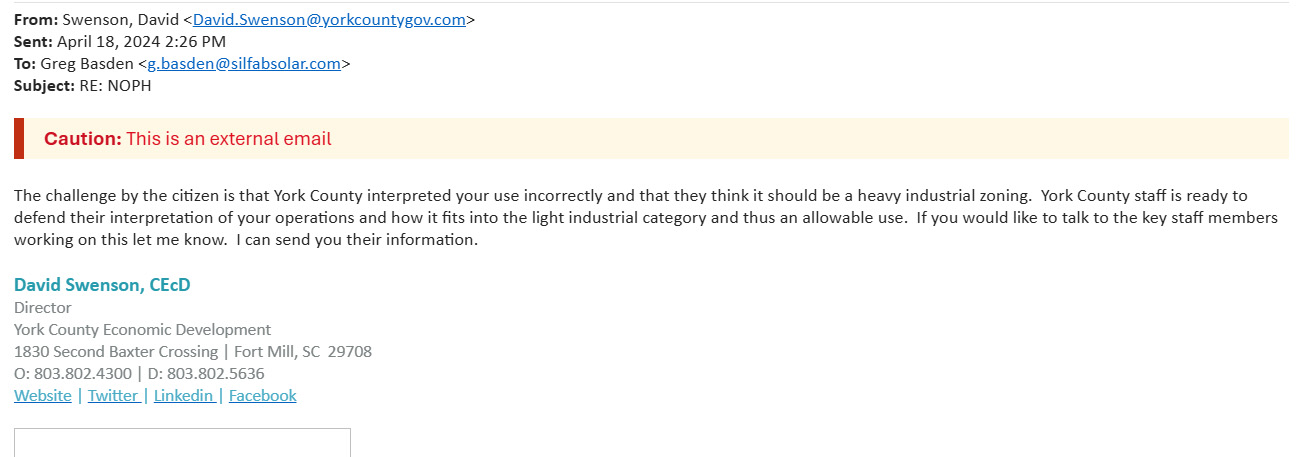
York County continues to maintain that staff made the zoning decisions beginning in 2022 and that council itself did not rezone the property. But that defense does not erase the conflict in the county’s own record: the county had separate legal pathways for zoning decisions, relied on a staff verification letter, then saw its own BZA rule unanimously that solar panel manufacturing is prohibited in Light Industrial, and then started issuing permits and a certificate of occupancy afterward.
That is why the attorney general’s letter matters. The public record already points to the same basic question residents have raised for years: whether York County followed the zoning code, or allowed a Heavy Industrial use to advance on Light Industrial land without the kind of clear, lawful zoning approval South Carolina law requires.