
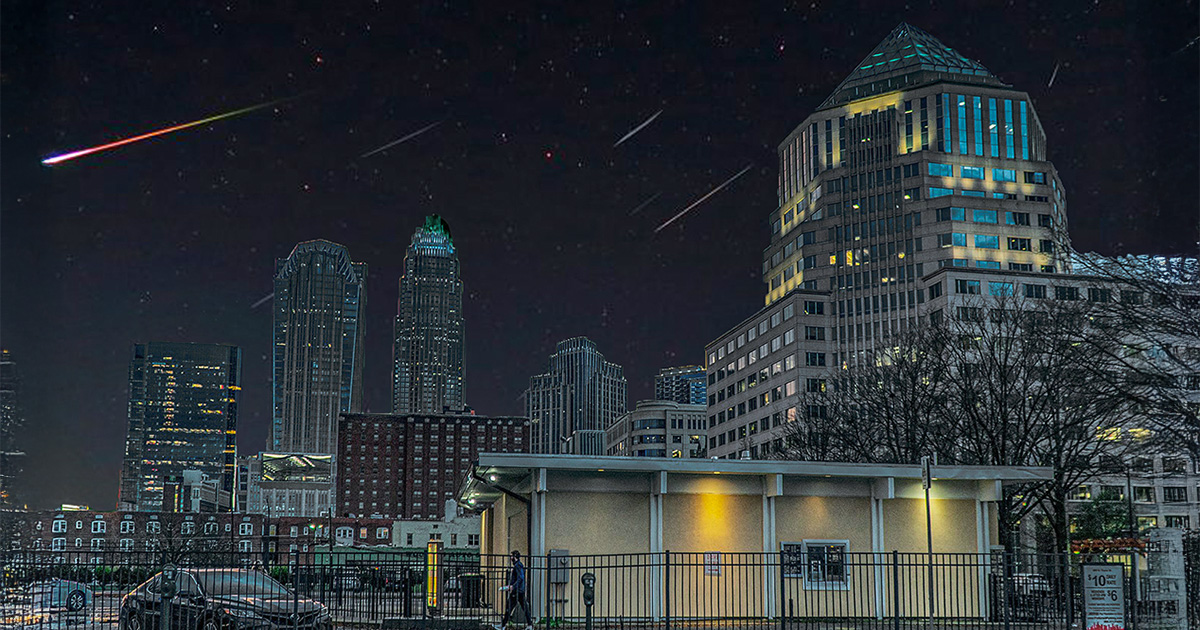
 If you only make time for one meteor shower this year, make it tonight. The annual Perseid meteor shower reaches its peak over the Charlotte night sky tonight, and this year’s display could be the best in years thanks to perfectly dark, moonless skies.
While many meteor showers receive plenty of hype, astronomers generally consider only two must-see events each year: the Geminids in December and the Perseids in August. This year’s Perseids are especially promising because the peak coincides with a new moon, eliminating bright moonlight that often washes out fainter meteors.
According to NASA, the Perseids shower peaks Wednesday and Thursday nights (Aug. 12-13), with the best viewing expected from 11 p.m. until sunrise. Activity typically increases after midnight and is highest just before dawn.
Under ideal dark-sky conditions, observers could see 30 or more meteors per hour, while truly remote locations may experience even higher rates. Although the Perseids are capable of producing up to 100 meteors per hour, light pollution around Charlotte will reduce the number visible to most residents.
For the best experience, head to the darkest location you can find, lie back and look straight up. Allow your eyes at least 20 to 30 minutes to adjust to the darkness, and avoid checking your phone, since bright screens can quickly ruin your night vision. If you want to take pictures, you’ll need a long-exposure camera for the best chances at getting that poster-worthy shot.
The Perseids occur each year as Earth passes through a trail of dust and rocky debris left behind by Comet 109P/Swift-Tuttle. As those tiny particles, many no larger than grains of sand, slam into Earth’s atmosphere at roughly 133,000 mph, they burn up and create the brilliant streaks of light visible across the night sky.
With clear skies and no moonlight competing for attention, tonight could offer one of the best opportunities in years for Charlotte-area residents to enjoy one of nature’s most spectacular celestial shows.