 One good day in Charlotte can begin with espresso inside an 1892 gingham mill. It can end at a show on Tryon Street, in a theater that dates to 1927. Lunch happens where Ford once put cars together. The afternoon goes to a museum inside the reconstructed Charlotte Mint, and dinner arrives in a midcentury church.
This itinerary takes you beyond Uptown, with stops in Optimist Park, Camp North End, Eastover, and Plaza Midwood before returning downtown. Since the attractions aren’t all within walking distance, plan how you’ll get between them before setting out. Parking is available at several stops, but the evening requires extra planning if you’ve reserved dinner before a performance at Carolina Theatre.
Morning Coffee in a Gingham Mill
Looms filled these brick halls long before the espresso machines arrived. Highland Park Mill No. 1 opened in 1892. By 1907, its parent company had grown to three mills and ranked as the third-largest gingham producer in the country.
Today, the mill houses Optimist Hall at 1115 N. Brevard St. The food hall opens at 7 a.m. on weekdays and 8 a.m. on weekends, though each counter sets its own hours. Undercurrent Coffee pours drip, espresso, cold brew, and seasonal lattes, while Village Juice blends something greener for anyone skipping caffeine.
Register your vehicle when you arrive to get 90 minutes of free parking. The LYNX Blue Line also stops at Parkwood Station, within walking distance.
Lunch on Ford’s Former Assembly Floor
In the early 1920s, Ford picked a nine-acre site on Statesville Avenue for one of its new assembly plants. At full speed, the plant could turn out about 400 cars a day, but falling sales and the 1929 crash shut it down by 1932.
The Army took over during World War II, and Douglas Aircraft later produced Nike missiles on the site until 1967. After decades as a drugstore distribution center, the complex opened to the public as Camp North End in 2017. It now spreads across 76 acres, with more than 100 murals on its walls.
Reasons to linger past noon include:
- A long coffee bar anchors HEX Coffee, Kitchen & Natural Wines, where the breakfast and lunch menu leans Japanese.
- Sourdough pies, sandwiches, and salads come out of the kitchen at Gravity Pizza, a diner beside the Thrift Pony vintage shop.
- Between bites, browse used books at That’s Novel or vinyl at Hardy Boys Records and Comics.
- Free public events come from Goodyear Arts, a nonprofit that runs studio residencies on the campus.
Free surface lots sit on Statesville Avenue and North Graham Street, and the garage on Razades Way costs nothing for three hours.
An Afternoon in a Former Gold Mint
Gold coins once came out of the building that now holds the Mint Museum Randolph. Architect William Strickland created the original for the first branch of the U.S. Mint, which opened on West Trade Street in 1837. After a fire in 1844, the mint rose again on the same site. Before the Civil War, the branch coined about $5 million in gold.
When a post office expansion threatened the building, preservationists led by Mary Myers Dwelle bought it for $950 in 1933. With New Deal relief funds and donated land, they reconstructed it on Randolph Road in Eastover, where it debuted in 1936.
Permanent galleries cover art of the ancient Americas, Africa, Europe, and Native American cultures. Rotating shows fill the rest, including a long-running display of British ceramics.
Galleries open at 11 a.m. Tuesday through Saturday and at 1 p.m. on Sunday, and the museum closes on Mondays. An adult ticket costs $15 and also covers Mint Museum Uptown on two consecutive days. Admission is free at both Mint locations on Wednesdays from 5 p.m. to 9 p.m., and parking in the lot out front is free.
If you would rather stay downtown, two more museums share a block on South Tryon Street. Mint Museum Uptown, at 500 S. Tryon St., is home to the craft and design wing and opens late on Wednesdays and Fridays. Next door, the Bechtler Museum of Modern Art shows mid-20th-century works by artists such as Giacometti, Miró, Picasso, and Warhol, and Niki de Saint Phalle’s mirrored Firebird rises more than 17 feet outside.
An Evening on The Plaza
A Second Cup on The Plaza
Before dinner, Plaza Midwood has two very different cups to choose from. The Giddy Goat Coffee Roasters roasts its own beans on The Plaza, a short walk from the restaurant. Nearby, Qahwah House brews coffee the Yemeni way and serves late into the night.
Steak Beneath a Vaulted Ceiling
Pews once filled the sanctuary of the church that began holding services at 1212 The Plaza in 1956. Supperland now sets dining tables there and serves Southern steakhouse dishes meant for sharing. A wood-fired grill handles the steaks and larger plates. Sides run to miso mac and cheese.
Supper begins at 5 p.m. six nights a week, with Mondays off. Beneath the smaller church building, the speakeasy runs reservation-only tasting experiences, though walk-ins may find room on select à la carte evenings. Street parking runs short around The Plaza, so arriving with a Charlotte limo service spares you a search for a space before the show.
Showtime at a 1927 Movie Palace
Silent films and vaudeville acts shared the bill when the Carolina Theatre opened at 230 N. Tryon St. The opening feature was A Kiss in a Taxi. Bruce Lee’s Fist of Fury was the final movie before the doors closed on November 27, 1978. The auditorium then sat dark for nearly five decades.
Opera star Renée Fleming sang with the Charlotte Symphony at the first concert after the reopening. The restored theater now forms part of Belk Place, a civic campus. It hosts films, live music, comedians, and talks, so see what’s playing on the night you’re in town.
If nothing on that marquee appeals, Uptown has other stages within a short walk:
- A block south, the Belk Theater seats 2,100 for Broadway shows.
- On game nights, the Charlotte Hornets play NBA basketball at Spectrum Center on East Trade Street.
- For a smaller room, Middle C Jazz runs a 200-seat club on South Brevard Street, with food and drinks alongside the music.
The Rooms Behind Charlotte’s Skyline
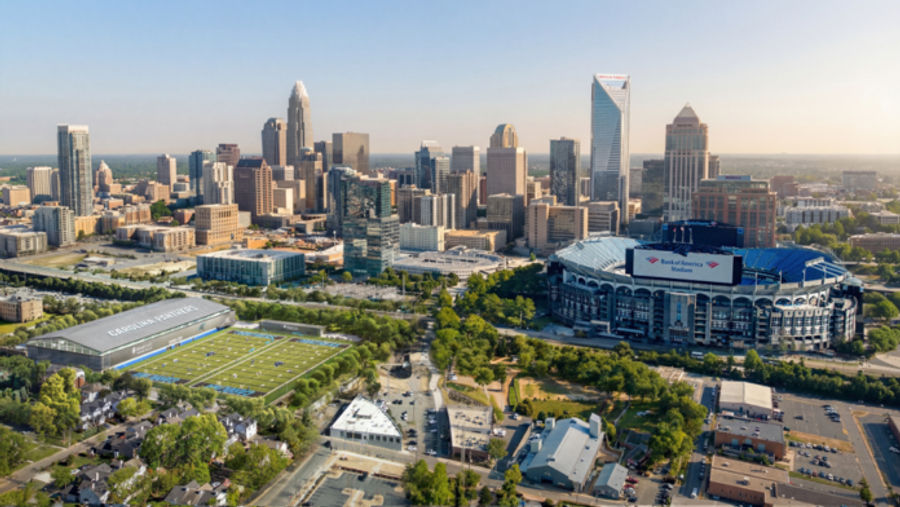
Charlotte’s first impression usually comes from glass towers and bank logos. A day spent in reused buildings paints a different picture: mills, factories, and churches now doing jobs their first owners never planned.
None of that history asks you to read a plaque or sit through a lecture. It arrives with the meals and the opening number, tucked into brick walls and high ceilings. By the end of the night, the skyline looks different too, because you know what kind of city stands underneath it.