

When Campaign Messaging Misses — The Value of an Outside Strategic Writer

0

Campaign messaging defines how a candidate is understood long before voters read a policy paper. The phrases repeated in speeches, interviews, and press releases become the lines reporters quote and supporters remember. When that language stays consistent, the campaign’s priorities come across as deliberate and organized. When it varies, even slightly, the public record grows less clear.

Most messaging problems do not begin with a dramatic mistake. They develop through small wording differences that accumulate across appearances. A softened commitment or an imprecise statistic can redirect coverage for days and prompt repeated clarification. Under steady media review and donor scrutiny, those variations pull teams into correction cycles instead of disciplined message execution.

Diagnose the Breakdown

Mixed phrasing across speeches and interviews signals message instability. Headlines quote different lines from the same appearance, reporters press for clarification, and coverage shifts toward wording instead of policy substance. Surrogates reference the issue but use inconsistent language. Staff spend time reconciling drafts and correcting transcripts rather than advancing strategy. Repeated variation weakens message control and creates a fragmented public record.

A senior speech writer conducts a structured audit of speeches, debate transcripts, press releases, and recorded remarks. The review flags inconsistent framing, unsupported claims, and lines vulnerable to follow-up questioning. Findings translate into standardized language, documented proof points, and approved revisions that restore a single, repeatable argument before the next major appearance.

Restore Message Discipline

Five to seven fixed core lines create a controlled verbal framework that can be repeated across fundraisers, interviews, and town halls without variation. When answers shift slightly between appearances, transcripts expose inconsistencies and opponents highlight contrasts. A defined set of approved lines reduces improvisation risk and gives staff a stable reference for drafting remarks and briefing materials.

Surrogate talking points must mirror the candidate’s exact phrasing, not just the policy topic. A senior outside writer can standardize language across briefing documents, test responses against likely follow-up questions, and finalize speech drafts before delivery. Locked phrasing across platforms limits misquotation, shortens media clarification cycles, and reinforces a consistent public record that supporters and reporters can track.

Reclaim Public Credibility

Public trust drops fastest when a candidate sounds evasive on a clear issue. Speeches in that moment need direct, controlled language that names the criticism and answers it without extra qualifiers. Senior speechwriting support can rework major remarks so the response is clear, the tone stays steady, and the message is consistent across prepared statements and live Q&A. Abstract promises get swapped for specific commitments that people can check and remember.

Reporters and editors look for clean lines that match what was said, not what the campaign later explains. A seasoned writer builds headline-ready phrasing that stands on its own, reduces the chance of a quote being clipped into something misleading, and keeps the candidate away from defensive improvisation. The result is a message that holds up in coverage, donor conversations, and voter skepticism, giving the campaign firmer ground for the next set of issues.

Strengthen Persuasive Impact

High-visibility speeches require structural discipline as much as precise wording. Each address should center on one clearly stated thesis that can be repeated in interviews and quoted without revision. Three defined proof points support that thesis, each tied to verifiable data, legislative proposals, or documented outcomes. This structure limits drift into secondary issues and reduces reliance on internal shorthand unfamiliar to public audiences.

Every major section should connect to a measurable campaign objective such as fundraising response rate, volunteer registrations, or earned media pickup. Draft length, emphasis, and repetition can then be calibrated against that objective. Lines that lack a defined purpose are removed. The final text is evaluated against its operational goal before delivery.

Gain a Senior-Level Advantage

Internal communications teams operate under compressed timelines during policy rollouts, travel, and stakeholder review. Drafts accumulate technical detail, last-minute revisions multiply, and political caution softens key lines. The result is language that passes internal approval yet lacks clarity and repeatability in public settings where transcripts and clips circulate within minutes.

An experienced outside strategic writer provides independent critique unconstrained by internal hierarchy. Policy detail is translated into audience-ready phrasing while preserving factual accuracy. Structured rehearsal review before debates and major speeches tests transitions, stress points, and quotability. This process reduces corrective follow-ups, limits unforced errors, and maintains consistent language across appearances.

High-visibility political campaigns operate in environments where language carries immediate operational consequences. A single unclear line can dominate headlines, distract staff, and raise avoidable doubts among donors and voters. Clear claims, disciplined repetition, and specific commitments keep public appearances focused on the intended argument. Senior-level speechwriting support adds structure, sharper quotation lines, and tighter alignment across spokespeople. That discipline reduces internal confusion, limits cleanup after interviews, and strengthens media pickup. With structured preparation before major moments, leaders protect credibility, stabilize messaging, and move into the next phase with steadier control and clearer strategic direction.


How the Humble Bikini Changed the World of Fashion Forever

0

Ever since the dawn of civilization, the diversity of human cultures and fashion has been beautifully manifesting itself. From long, draped robes of ancient Egyptians to the elaborate gowns of the English Victorian era, our fashion choices have left indelible imprints on human history. One such remarkable instance is the creation of a simple yet revolutionary piece – the bikini. This seemingly negligible item of clothing remarkably changed the world of fashion, breaking barriers and paving the way for new norms.

A Riveting Introduction

The first bikini was invented by a Parisian fashion designer, Louis Réard, in 1946. He daringly sliced the conventional one-piece swimsuit into a matching two-piece at the beach and named it after the Bikini Atoll, the site of nuclear bomb tests, predicting the explosive reaction it might receive. Despite the criticism, he knew that this unique swimwear could command attention and reshape fashion norms. 

The New Paradigm of Empowerment

As with all path-breaking ideas, the bikini too faced fierce resistance. It was initially perceived as bold, rebellious, and obscene. But over time, it became emblematic of women’s freedom, their determination to be seen and heard, and their audacity to break away from the expectations of society. Fashion became a platform for liberation, and the bikini was its flagbearer, symbolizing a woman’s right to determine what she wears and how she displays her body. The commercial success of the bikini paralleled the surge of feminist movements, cementing its status as a powerful beacon of women’s empowerment and societal transformation.

Pushing the Envelope in Fashion Design

The bikini’s invention also kindled a shift within the fashion industry, compelling designers to experiment, innovate, and step outside their comfort zones. Its creation marked an era of functional and minimalistic designs, influencing other aspects of fashion beyond swimwear. It led to the popularization of crop tops, high-waist skirts, and body positivity, decoupling fashion from rigid societal norms and creating a more inclusive platform for personal expression.

Revolution in Modesty Norms

Long before the bikini, modesty dictated the styles and designs of women’s clothing. The introduction of the bikini, however, began to redefine these norms. It’s not that modesty diminished, but rather it evolved. The bikini showcased that modesty was a subjective concept differing from individual to individual. This evolution offered women the freedom of choice, allowing them to decide what felt right and comfortable for their bodies. The bikini taught society to accept and respect these decisions, leading to a profound change in our perception of modesty and fashion.

Catapulting Pop Culture

Pop culture, too, embraced the bikini with open arms. It became a vital aspect of summer fashion, beach-themed movies, magazines, and advertising. Iconic moments like Ursula Andress emerging from the sea in a bikini in “Dr. No” and Farrah Fawcett gracing the cover of Playboy in a red high-cut bikini made this iconic two-piece swimsuit an unforgettable part of popular culture.

A Legacy of Change

In retrospect, the humble bikini has done far more than redefine beachwear or push the boundaries of the fashion world. It altered societal norms, shattered stereotypes about modesty, and gave women a powerful platform to express their individuality and strength. The bikini unraveled an emancipating narrative that still echoes in our progressive world today, truly a testament to how profoundly the world of fashion alters with a speck of ingenuity and audacity.

After Years of Delays, I-485 Toll Lanes Have Just Officially Opened

0

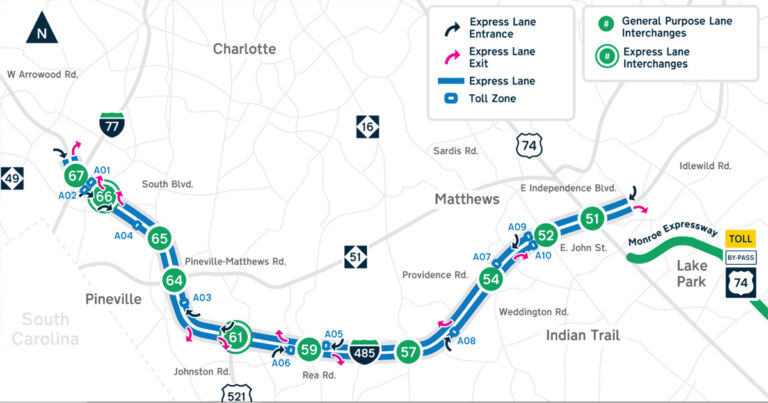
After nearly a decade of construction and delays, I- 485’s new toll lanes are now officially open.
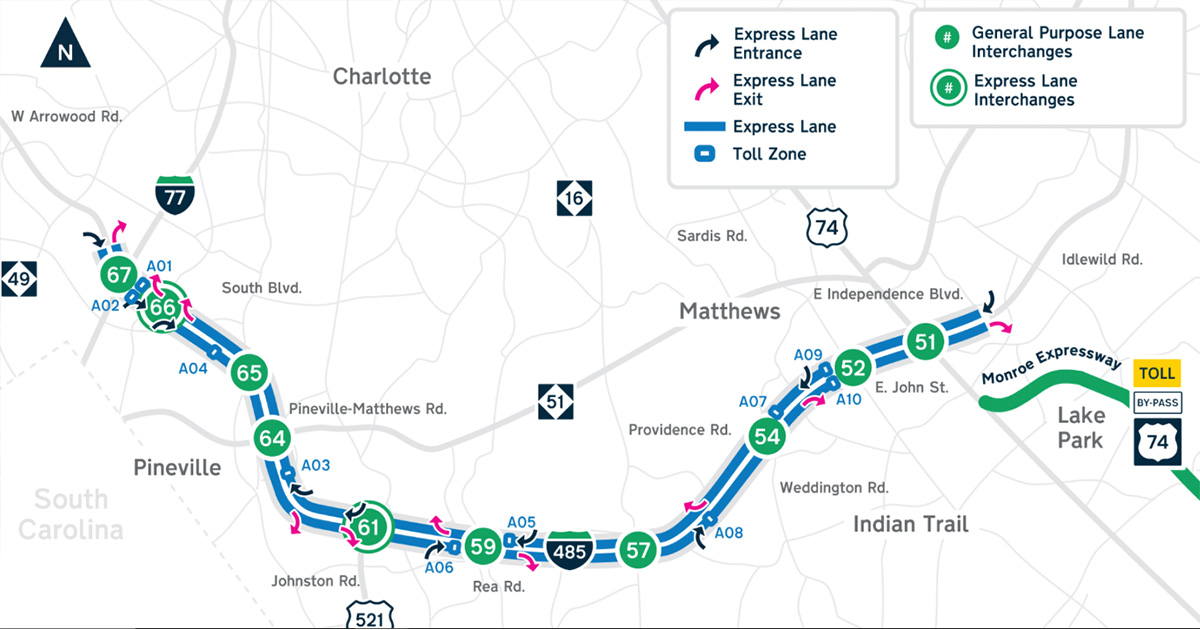
The North Carolina Department of Transportation joined local leaders this weekend to cut the ribbon on the long-awaited express lane project. Drivers can now begin using the lanes in both directions.

According to North Carolina Quick Pass, toll rates will vary based on vehicle length, time of day, and day of the week. Officials also expect pricing to remain dynamic during the first year.

The project was added to the 2040 Metropolitan Transportation Plan in 2014 and has been a regional priority ever since. As growth accelerated in areas like Ballantyne, traffic volumes steadily increased along the southern loop.

The new lanes now offer high-income commuters across Mecklenburg County an option for avoiding I-485 nightmarish rush hour traffic.

6 Reasons a Simple Checking Option Can Transform Your Finances

0

A simple checking option can create structure and clarity in daily finances. Clear terms and practical features often reduce confusion around fees and access. Small changes in how an account is set up may lead to meaningful financial progress over time.

1. Clear Fee Structure Supports Better Budget Control

A straightforward account makes it easier to see where money goes each month. Fewer surprise charges help keep spending aligned with a plan. Many people find that simple checking tools reduce the need to track multiple rules or tiered requirements. Nusenda Credit Union essential checking accounts offer an example of how basic features can support everyday financial habits.

When account terms are easy to read, monthly planning becomes less stressful. Clear information about minimum balances and service fees helps with realistic budgeting. This clarity may help improve confidence in money decisions. Financial organizations often start with a clear view of costs.

2. Easy Access to Funds Encourages Consistent Money Habits

Quick access to funds plays a major role in financial stability. Debit cards, online account views, and mobile deposit features support regular account use. A simple checking option removes extra steps that can slow down daily transactions. Consistency in access often leads to better tracking of spending patterns.

Immediate balance visibility supports smarter purchase decisions and reduces the risk of accidental overspending. Easy transfers between accounts help manage bills and savings goals without added hassle. When funds are simple to reach, account holders tend to stay more engaged with activity. Active engagement supports stronger control over day-to-day expenses.

3. Digital Tools Add Practical Convenience

Modern checking options often include digital services that support personal funding organization. Online bill pay and account alerts reduce the risk of missed payments. These tools create a routine that supports steady money management. Reliable digital access adds convenience without adding complexity.

Smart Alerts Keep Finances on Track

Account notifications offer helpful reminders about balances and transactions. Alerts may help prevent overdrafts or unexpected declines. Clear updates provide insight into spending without constant manual checks. This steady awareness supports thoughtful financial decisions.

Digital statements also reduce paper clutter and keep records easy to locate. Organized records support tax preparation and monthly review. A streamlined digital setup aids long-term tracking of financial patterns. Practical tools can simplify daily money tasks.

4. Basic Features Reduce Cash Stress

Complex accounts sometimes include conditions that are hard to meet. A simple checking option limits confusion around requirements. Straightforward terms help avoid penalties tied to unclear guidelines. Reduced stress supports healthier financial behavior.

Key elements that contribute to this clarity include:

  • Clear monthly fee details 
  • Simple minimum balance expectations 
  • Transparent overdraft policies 
  • Easy to review transaction history 

When an account focuses on core features, attention shifts toward goals. Energy can move from rule management to money management. Clear overdraft information supports informed decisions during tight months. Predictable structures may help improve overall financial confidence.

5. Accessible Entry Point for Growth

A basic checking account often serves as a starting point for broader personal financial goals. Establishing a reliable account history supports future applications for loans or credit products. Consistent account activity builds a positive personal funds record. This record may help improve long-term opportunities.

Build a Strong Financial Foundation

A steady account history reflects responsible money habits. Lenders and funding institutions often review transaction patterns and account stability. Responsible use of a simple checking option can demonstrate consistency over time. That consistency supports gradual monetary progress.

Simple accounts also support savings efforts through linked transfers. Regular deposits into savings become easier with automated options. Financial discipline grows through steady habits. Over time, those habits support stronger money management.

6. Local Support Strengthens Everyday Banking

Community-based financial institutions often offer direct support and practical guidance. Access to nearby branches and knowledgeable service teams adds a personal dimension to routine banking. Questions about account terms, fees, or transactions receive clear and timely responses. This kind of interaction supports stronger financial clarity and informed decision-making.

Face-to-face assistance can make complex topics feel more manageable. Service representatives who understand local needs may offer relevant insights and helpful solutions. Nusenda Credit Union essential checking accounts, for instance, reflect how a simple structure can align with community-focused service. Transparent features and steady support help build trust over time, and reliable assistance strengthens daily account use.

A straightforward checking account can influence financial habits in meaningful ways. An essential checking account demonstrates how simple features can help improve clarity and organization. Clear terms, practical tools, and consistent access all contribute to stronger money management. Small adjustments in account choice can lead to steady financial progress.

More Growth Near Charlotte: Eli Lilly Moves Forward With $77M Concord Project

0

Eli Lilly just pulled a $77 million building permit for its Concord campus, signaling the next major step in a local expansion that’s tied to the drugmaker’s $50+ billion U.S. manufacturing push. The project includes a new manufacturing line being built by McFarland Construction.

The latest permit focuses on interior upgrades and equipment installation inside an existing building. The work supports injectable production and packaging, continuing the multi-year buildout at “The Grounds at Concord.”

The Concord expansion ties into Lilly’s broader U.S. manufacturing surge. The company just announced that it would build four new domestic manufacturing sites and push its U.S. capital expansion commitments to $50 billion.

“To deliver on our big bets on next-generation modalities like small molecules, biologics and nucleic acid therapies, Lilly is investing in the state-of-the-art manufacturing infrastructure needed to deliver tomorrow’s safe and reliable medicines,” said Edgardo Hernandez, executive vice president and president of Lilly Manufacturing Operations in today’s press release. “We are not just building facilities. We are creating a future where American innovation leads the world in pharmaceutical manufacturing, requiring a highly skilled workforce prepared to shape the future of health care. This is a significant step for our company, our communities and the patients we serve.”

For the Charlotte area, the $77 million permit signals continued construction and contracting activity in Cabarrus County. It also reinforces the region’s growing role in pharmaceutical manufacturing, with more specialized production work moving closer to Charlotte’s labor pool and logistics network.

Warning Period Ends: SC Drivers Face Fines for Holding Phones Starting Saturday

0

South Carolina’s new Hands-Free Law shifts from warnings to tickets on Saturday, Feb. 28, 2026, ending the 180-day grace period.

Under the law, drivers cannot hold or support a mobile electronic device with any part of their body, including phones, tablets, and portable computers. Drivers also cannot read, write, or send texts, emails, app messages, or website information while driving. If you are fully stopped at a light or stop sign, you can briefly pick up a phone to receive a call, but you must put it down before moving again.

The Hands-Free and Distracted Driving Act took effect Sept. 1, 2025. During the warning period, law enforcement focused on education. Now, a first violation can bring a $100 fine. A second ticket within three years increases the penalty to a $200 fine and two points on the driver’s license.

State officials say the law aims to reduce distracted-driving crashes. Enforcement data suggests the issue is widespread. DPS agencies issued 6,983 warnings statewide, including more than 2,000 warnings in Troop 3 counties alone—Anderson, Greenville, Oconee, Pickens, and Spartanburg.

For the Charlotte region, the change is especially relevant for commuters into South Carolina. Drivers in York County and along I-77 should expect stricter enforcement beginning Saturday.

South Carolina Rumbles as 3.0 Magnitude Earthquake Strikes Under Lake Murray

0

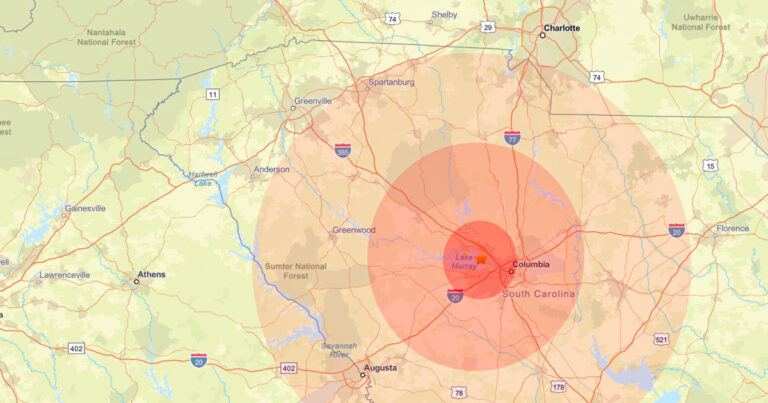
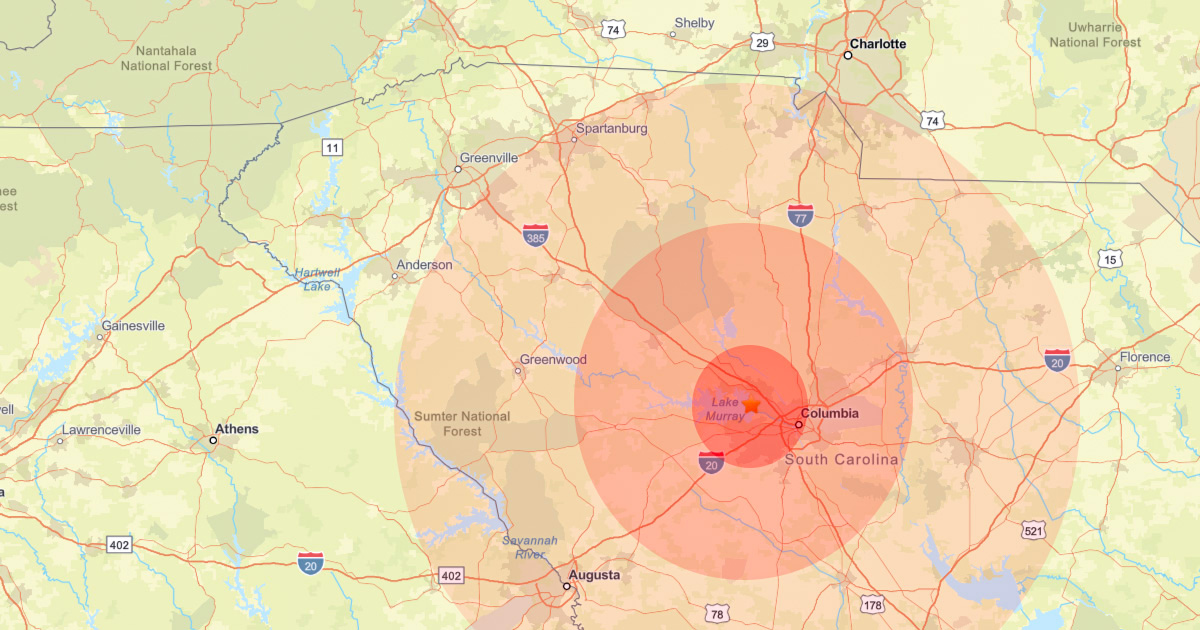
Another earthquake rattled the Carolinas this afternoon, this time near Lake Murray.

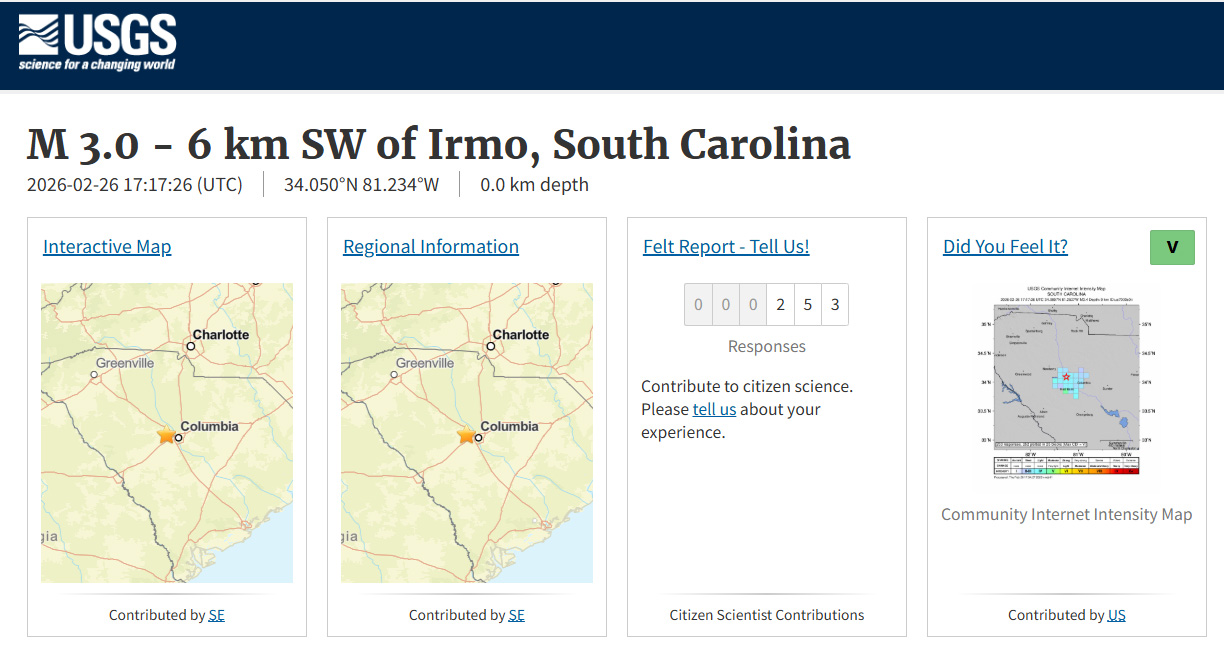
According to the US Geological Survey confirmed a 3.0 magnitude quake struck at 12:17 pm. Initial estimates placed the epicenter under Lake Murray due north of Lexington.

More than 100 people reported feeling the tremor within minutes. Most described brief indoor shaking with minor damage.

At 3.0 magnitude, the quake is strong enough to be felt in most communities between Columbia and Charlotte.

Earthquakes have been increasing in frequency around the Charlotte region over the past few years. Last year, we experienced the largest earthquake in over 100 years when a 5.1 magnitude quake hit Sparta, NC, and since then, dozens of aftershocks have continued to rattle our state.

According to USGS.gov, “Moderately damaging earthquakes strike the inland Carolinas every few decades, and smaller earthquakes are felt about once each year or two.”

Have you felt any of the quakes?

Concord Mills Adding Dinosaur Safari, VR Ride, and New Kids Attractions This Spring

0

One of North Carolina’s most popular tourist destinations is expanding its focus on families. Concord Mills Mall announced several new attractions aimed at bringing more children through its doors this spring.


The additions blend immersive exhibits, active play spaces, and new dining options. Mall officials say the goal is to create more year-round, weatherproof entertainment inside the property.

Here’s what’s coming:

  • LuminoCity Dino Safari (arriving May 6): an immersive, walk-through dinosaur experience with illuminated, larger-than-life displays and interactive photo moments.

  • SEA LIFE Charlotte-Concord: a new “Become an Undersea Explorer” VR ride experience coming this spring.

  • Kids Jungle Playground: an indoor, high-energy play space coming soon.

  • Paranormal Cirque Specter (March 6-9): a limited-time, adults-night-out tented show steps from shopping and dining.

  • Latte Factory: a new coffee spot debuting in the Dining Pavilion for when parents need a break.

These additions arrive alongside Concord Mills’ Youth Supervision Program for guests under 18 (after a number of high profile shootings at the mall).

For families across the Charlotte region, the updates mean more interactive entertainment options without leaving the mall.

Charlotte FC Launches $26 Tickets for Every 2026 Home Match

0

Charlotte FC is cutting the price of entry for the 2026 season with a new $26 ticket available for every home match.

The club says fans can buy the $26 tickets on Ticketmaster or at the Bank of America Stadium box office. Charlotte FC framed the offer around a “historic year” for U.S. soccer, with international attention rising ahead of the 2026 World Cup.

The club plans to release a limited number of these $26 seats for each match. The new offer also replaces Charlotte FC’s previous low-cost strategy, which relied on last-minute box office deals closer to matchday.

Charlotte FC opens Season Five at home on Saturday, March 7, with a 7:30 p.m. kickoff against Austin FC. The match will again anchor “The Fortress” atmosphere in Uptown as the club pushes for another playoff run.

Charlotte FC enters 2026 coming off a stronger regular season finish. The club posted 59 points in 2025 and finished fourth in the Eastern Conference, which delivered home-field advantage in Round One. Still, the season ended early again, with a second straight first-round playoff exit.

For Charlotte, the $26 ticket is a direct play at accessibility. Bank of America Stadium draws one of MLS’s biggest crowds, but prices can keep casual fans out. The club is now betting that lower entry seats can broaden the base, fill the building earlier, and keep momentum high across the full home schedule.

The 5AM Club: Charlotte Named North Carolina’s Earliest-Rising City; Wilmington Ranks Last

0

As productivity trends swing wildly between hustle culture and burnout, one movement keeps resurfacing: the 5AM Club, popularized by Robin Sharma’s bestselling book encourages people to reclaim their mornings through discipline, focus, and early starts.

But in 2025, how many people were truly living it? PDF Expert, a productivity app for all things PDF, analyzed thousands of Instagram posts across major US cities using the #5amclub hashtag to uncover which cities were the most “productive” in 2025.

The top 5 were as follows (no. of #5amclub hashtags per 10,000 posts):

#1. New York, New York (92)
The city’s mix of shift workers, fitness die-hards, and round-the-clock creatives keeps the 5AM hashtag buzzing harder than the subway at rush hour.

#2. Los Angeles, California (91.4)
From surfers chasing dawn swells to influencers chasing golden hour, LA’s early risers make sunrise feel like a built-in lifestyle accessory.

#3. Chicago, Illinois (90.8)
Chicago’s commuters and competitive corporate crowd fuel a strong pre-sunup culture where getting ahead often starts in the dark.

#4. Houston, Texas (90.1)
Houston’s blend of medical workers, energy professionals, and ambitious entrepreneurs drives a surprisingly strong early-morning posting routine.

#5. San Diego, California (89.5)
With perfect weather and endless coastline, San Diegans seem more than happy to start the day before the sun does.

5 North Carolina cities emerged among the earliest risers in the nation, according to #5amclub Instagram posts:

#23. Charlotte (80.3)
Charlotte’s banking professionals and booming business scene support a lively early-morning rhythm. It’s the kind of place where “first to the office” still carries bragging rights.

Charlotte was followed by:
#30. Raleigh (76.7)
#59. Greensboro (63.1)
#67. Durham (60.7)
#82. Fayetteville (55.6)

However, 1 North Carolina city placed among the least likely to rise at 5am:

#203. Wilmington (17.2)
Wilmington’s coastal ease shows up in its morning rhythm. Locals greet the day without urgency — and without many 5AM declarations.

Infographic with study results

Digging Into America’s Work-Hard, Sleep-Later Culture
Surveying 500 Americans, PDF Expert uncovered a mix of ambition, fatigue, and quiet rebellion beneath the glossy #5AMClub aesthetic.

How do we feel about the bragging rights?
Nearly 48% admit they negatively judge people who boast about their 5AM grind. In other words, early risers may earn productivity points – but not always popularity points.

But incentives still matter
More than half of respondents (51%) say they would start getting up before 5AM if their employer paid them to do it. It seems even the most committed night owls have a price.

Morning messages: the inbox problem
Americans are glued to work before they have even had coffee:
52% check emails or messages every day before getting out of bed.

Employer expectations
Attitudes toward early productivity culture are surprisingly split:
34% say their employer strongly encourages early starts
Another 32% say their employer is neutral

Why waking early is so hard
The biggest obstacles?

  • 39%: Stress or poor sleep quality
  • 28%: Going to bed too late
  • 16%: Pure lack of motivation

Children, shift patterns and household demands make up the rest.

Very little consistency
A narrow majority, 51%, say they wake up at the same time daily.
About 29% admit their routine is all over the place.
The remaining group lives in the grey zone of “mostly consistent.”

What would actually help to wake up earlier?
Respondents were refreshingly honest:

  • 41% want a better sleep schedule
  • 23% want less stress
  • 18% want less late-night scrolling
  • Another 18% just want more motivation